Hubbry Logo
KasolKasolMain
Open search
Kasol
Community hub
Kasol
logo
8 pages, 0 posts
0 subscribers
Be the first to start a discussion here.
Kasol
Kasol
from Wikipedia

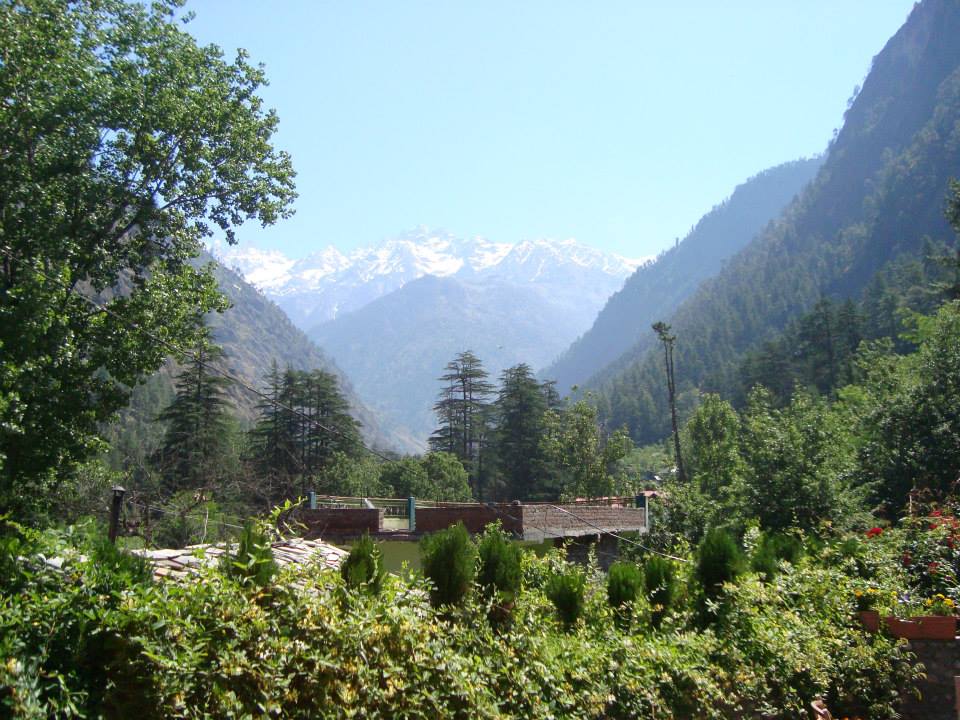
Kasol is a hamlet in the Kullu district of the Indian state of Himachal Pradesh. It is situated in Parvati Valley, on the banks of the Parvati River between Bhuntar and Manikaran.[4] It is located 30 km (19 mi) from Bhuntar, 3.5 km from Manikaran and 36 km (22 mi) from Kullu town, the district headquarters. Kasol is the Himalayan hotspot for backpackers and acts as a base for nearby treks to Malana and Kheerganga.[5] It is called Mini Israel of India due to a high percentage of Israeli tourists here.[6]

Key Information

Nearby airport and railway station

[edit]

Due to its high altitude, Kasol is only connected to the rest of India by well-developed roads.[7]

Kullu-Manali Airport (IATA: KUU, ICAO: VIBR) in Bhuntar is about 31 km away and is the closest airport to the village. It connects cities like Delhi, Shimla, Kolkata and more. Joginder Nagar is the nearest railway station and is about 144 km away.[8]

Also, Chandigarh Airport (IXC) is 260 km from Kasol.

Climate

[edit]

Kasol has good weather for several months of the year and receives a fair amount of snowfall from late December to February. Köppen-Geiger climate classification system classifies its climate as humid subtropical (Cwa).[9]

Climate data for Kasol, Himachal Pradesh
Month Jan Feb Mar Apr May Jun Jul Aug Sep Oct Nov Dec Year
Mean daily maximum °C (°F) 11.6
(52.9)
14.2
(57.6)
18.8
(65.8)
24
(75)
28.2
(82.8)
29.3
(84.7)
25.9
(78.6)
25
(77)
24.6
(76.3)
22.2
(72.0)
18.3
(64.9)
14.2
(57.6)
21.4
(70.4)
Daily mean °C (°F) 7.4
(45.3)
9.7
(49.5)
14
(57)
18.7
(65.7)
22.9
(73.2)
24.3
(75.7)
22.3
(72.1)
21.7
(71.1)
20.6
(69.1)
17.5
(63.5)
13.3
(55.9)
9.7
(49.5)
16.8
(62.3)
Mean daily minimum °C (°F) 3.2
(37.8)
5.2
(41.4)
9.2
(48.6)
13.4
(56.1)
17.6
(63.7)
19.4
(66.9)
18.8
(65.8)
18.4
(65.1)
16.7
(62.1)
12.8
(55.0)
8.4
(47.1)
5.3
(41.5)
12.4
(54.3)
Average precipitation mm (inches) 111
(4.4)
108
(4.3)
155
(6.1)
103
(4.1)
100
(3.9)
93
(3.7)
324
(12.8)
276
(10.9)
160
(6.3)
70
(2.8)
27
(1.1)
55
(2.2)
1,582
(62.6)
Source: Climate-Data.org (altitude: 1582m)[9]

Festivals

[edit]

Kasol Music Festival happens in Kasol on New Year's Eve. People from around the world gather for this festival.[10]

[edit]

References

[edit]
Revisions and contributorsEdit on WikipediaRead on Wikipedia
from Grokipedia
Kasol is a small hamlet in the of , , situated on the banks of the Parvati River in the . Located at an elevation of 1,580 meters (5,180 feet) above sea level, it serves as a picturesque gateway to the higher reaches of the , approximately 36 kilometers east of town and 30 kilometers from Bhuntar Airport. The village's coordinates are roughly 32°00′35″N 77°18′55″E, placing it in a region characterized by lush pine forests, steep valleys, and the Parvati River system, which joins the near . Once a quaint settlement known primarily for its serene riverside location on a sloping open space leading to white sandy riverbanks, Kasol has transformed into a vibrant tourist hub attracting domestic and international visitors, particularly backpackers and adventure enthusiasts. Its popularity surged in the late due to the influx of foreign travelers seeking tranquility and cultural immersion, earning it nicknames like the " of " for its laid-back vibe and the "Mini " for the significant presence of Israeli tourists who have established cafes and guesthouses serving . The area's geography supports a range of activities, including river on the and short hikes through coniferous woodlands, while nearby hot springs at add to its appeal as a wellness destination. Kasol acts as a base for exploring the Parvati Valley's trekking trails, such as the moderate 12-kilometer route to Kheerganga, a site at 2,960 meters, and longer expeditions toward Tosh and Pulga villages. The region borders the buffer zone of the , a , providing opportunities to observe Himalayan and fauna, including species like the and . infrastructure has grown with homestays, budget lodges, and eateries offering fusion foods, and as of 2025, efforts focus on amid post-pandemic recovery; the village remains small, primarily engaged in , , and . Seasonal visits peak from to and to , when the monsoon-influenced yields mild temperatures of 10-25°C (50-77°F).

Geography and Environment

Location and Topography

Kasol is a situated in the of , , , at coordinates 32°00′35″N 77°18′55″E. It lies within the administrative jurisdiction of the and serves as a key settlement along the valley's length. The is positioned at an elevation of approximately 1,600 meters above , nestled directly on the banks of the Parvati River, which flows southward through the region before joining the near Bhuntar. The , where Kasol is located, is a prominent Himalayan valley carved by the , originating from the high-altitude Mantalai Lake and descending through steep gradients that facilitate significant al activity. Geologically, the area features a complex spanning metamorphic rocks to more recent sedimentary formations, shaped by tectonic thrusting associated with the Himalayan . The river's flow has played a crucial role in valley formation, eroding V-shaped profiles and depositing alluvial sediments that define the narrow, elongated topography tapering southwestward. This dynamic process contributes to the valley's high susceptibility to , influencing local landforms and occasionally affecting climate patterns through altered micro-relief. Kasol's is dominated by the rugged of the , rising sharply from the riverbanks to form steep slopes and terraced landscapes. The surrounding terrain is richly vegetated with coniferous forests, including species such as deodar (), chir pine (), and kail (), which thrive in the moist, temperate conditions of the subalpine zone. These forests cloak the hillsides, providing a dense canopy that enhances the valley's scenic depth and amid the Himalayan front.

Climate

Kasol exhibits a subtropical highland , characterized by significant seasonal variations influenced by its elevation in the of the . Winters from December to February are cold, with average temperatures ranging from 0°C to 10°C during the day and dropping as low as -5°C at night, accompanied by occasional snowfall that blankets the higher slopes. This period features clear skies and low humidity, though frost is common due to the altitude around 1,600 meters. Summers, spanning to , bring mild and pleasant conditions, with daytime highs reaching up to 25°C in and cooler nights around 10°C. The transition into pre-monsoon warmth in and May sees blooming alpine , enhancing the valley's scenic appeal. Annual totals approximately 1,800 mm, predominantly during the monsoon season from to , when heavy rainfall—peaking at over 300 mm in —transforms the landscape into lush greenery but also triggers environmental hazards like landslides and flash floods along steep slopes. The optimal periods for visitation are spring (March to May) and autumn (October to November), offering stable weather with temperatures between 10°C and 20°C, minimal , and vibrant natural displays such as blooms in spring and golden foliage in fall. During monsoons, the Parvati River often swells with runoff, increasing flood risks, while the region's high altitude contributes to generally clean air quality, with low levels year-round except for occasional from seasonal inversions. creates localized microclimates, where valley floors remain milder than surrounding peaks.

History

Early Settlement and Trade Routes

Kasol originated as a seasonal village in the pre-colonial era, serving as a ground for local Himachali herders from nearby communities such as Malana in the . These agropastoralists, primarily from Pahari groups, practiced migratory integrated with limited , moving through the valley's meadows during summer months to sustain sheep and herds essential for production and local sustenance. The area's rugged terrain and alpine pastures supported this semi-nomadic , with herders establishing temporary camps rather than fixed habitations, reflecting the ecological adaptations of western Himalayan communities. Strategically located along ancient trade routes traversing the , Kasol facilitated exchanges between and , particularly via the Pin Parvati Pass connecting to Valley and onward to the . These paths, active from at least the medieval period (10th-15th centuries), enabled the barter of , salt, and spices, with Tibetan salt and flowing southward in exchange for Indian grains, textiles, and herbs. Pahari traders and herders, using pack animals like sheep, played a key role in these networks, which linked the region to broader trans-Himalayan commerce without relying on major passes like Rohtang. The routes' importance stemmed from the valley's position as a corridor for essential commodities, fostering economic ties among highland communities long before colonial interventions. Under the influence of local Pahari communities, such as and other agropastoral groups, Kasol maintained minimal permanent structures—primarily wooden shelters and stone enclosures—until the , prioritizing mobility for herding and trade. British colonial surveys of Himalayan trade paths, conducted in the mid-, documented these routes in the and Valleys as vital links to Tibetan markets, noting their role in procurement and regional systems. These records, part of broader efforts to map frontier trade during the era, highlighted the valley's pre-existing networks while marking the onset of administrative changes.

Rise as a Tourist Destination

Kasol's emergence as a tourist destination began in the and 1970s, when it attracted Western hippies drawn to the Parvati Valley's serene landscapes and spiritual ambiance as part of the broader across . These travelers sought affordable escapes from Western societal norms, finding in Kasol a haven for introspection amid the Himalayan foothills, facilitated by its position along ancient trade routes that had long connected the region to broader networks. The village experienced a significant boom in the 1980s and 1990s with the influx of Israeli backpackers, many completing mandatory and traveling to for relaxation and cultural exploration. This wave transformed Kasol into a vibrant hub, earning it nicknames such as "Mini Israel" and "Amsterdam of " due to the prevalence of Hebrew signage, like , and a among visitors. The influx solidified its reputation as a backpacker enclave, with guesthouses and cafes catering specifically to this demographic. In the 2000s, the government bolstered Kasol's accessibility through infrastructure initiatives outlined in the state's 2000 Tourism Policy, which emphasized rural and eco- development, including road upgrades to the . These efforts, such as improved connectivity from Bhuntar Airport and enhanced pathways, aimed to promote sustainable growth while integrating local communities into activities. Post-2010, Kasol has seen accelerated growth in adventure tourism, with increased interest in trekking and nature-based experiences drawing diverse visitors and amplifying its global appeal. However, this surge has prompted challenges from , leading to regulations like the Tourism Development and Registration Act amendments and eco-tourism guidelines to curb and illegal constructions. In 2024, amid a tourism surge with over 74 lakh visitors to from January to May (a 3.5% increase from the previous year), the state launched the Eco-Tourism Policy 2024, developing 77 sites including in Kasol to promote sustainable practices, generate ₹200 crore in revenue over five years, and balance growth with conservation as of August 2025.

Demographics and Society

Population and Communities

Kasol maintains a small permanent resident population of approximately 1,000, primarily drawn from local Pahari communities who form the core of village life in the . According to the , the broader , which includes Kasol, has a population dominated by at 94.92%, with smaller proportions of Buddhists (3.51%), (0.68%), and (0.32%). These figures reflect the religious composition in Kasol, where Pahari constitute the majority, supplemented by minor Muslim, Sikh, and Buddhist minorities engaged in daily village activities. The area's remoteness and limited infrastructure contribute to its modest scale, with permanent households centered around and traditional livelihoods. Administratively, Kasol operates under the Bhuntar tehsil of , facilitating oversight of local affairs through the tehsil's revenue and development offices. Community governance is handled by the Kasol , an elected body responsible for village-level decision-making, infrastructure maintenance, and in line with India's system. This structure ensures participatory management among residents, addressing needs such as and road access in the hilly terrain. Migration patterns among Kasol's locals often involve seasonal movements for work, particularly during winter months when declines and agricultural opportunities wane, leading some to seek employment in nearby urban centers like or Manali. Concurrently, the community has seen integration of transient tourist populations, including a notable influx of international backpackers, which temporarily boosts the area's demographics and fosters interactions between locals and visitors. This blending subtly influences daily life, though permanent residents remain anchored to their Pahari roots.

Cultural Influences

Kasol's cultural fabric weaves together the enduring traditions of the Himachali Pahari people with the eclectic influences of international visitors, particularly from and the West. Local Pahari customs, including performed on instruments like the algoza and traditional attire such as vibrant woolen shawls and caps from the region, form the indigenous core, often showcased during community gatherings. These elements intersect with global contributions, such as the adoption of relaxed Western fashion and Israeli artistic motifs in local handicrafts, resulting in a distinctive sociocultural synthesis that reflects Kasol's role as a crossroads of cultures. This multicultural evolution traces back to the influx of Western hippies drawn to the Valley's spiritual aura, which paved the way for subsequent waves of backpackers. remains a cornerstone, amplified by numerous retreats that attract practitioners worldwide to Kasol's tranquil settings. The area's mythology, rooted in Hindu lore, enhances this draw; legends hold that Lord and meditated in the valley, infusing the landscape with sacred significance and inspiring contemplative practices among residents and visitors alike. Cafes and guesthouses serve as vital social anchors, cultivating a bohemian atmosphere where locals and expatriates mingle amid laid-back decor and panoramic views of the Himalayas. These spaces, often adorned with global artwork and hosting impromptu music sessions, embody Kasol's inclusive ethos, bridging Pahari hospitality with the nomadic spirit of international travelers. Amid rising tourism, preservation initiatives safeguard indigenous crafts like handloom weaving, a Pahari heritage centered in nearby Kullu. Local cooperatives and government programs promote traditional techniques using local wool, countering commercialization by emphasizing sustainable production and cultural education for artisans, ensuring these practices endure as a living testament to Himachali identity.

Economy and Infrastructure

Local Economy

Kasol's local economy is predominantly driven by , which serves as the primary source of for most residents through operations of homestays, cafes, and guiding services for trekkers and adventure enthusiasts. This sector has transformed the once-quaint village into a bustling hub, attracting a mix of domestic and international visitors and generating substantial income during peak seasons from March to June and September to November. Complementing tourism are traditional sectors such as apple orchards, which thrive in the fertile soils and provide seasonal harvests that support local processing and sales. remains a key activity among communities like the , who manage sheep and goat flocks across alpine meadows, while small-scale agriculture focuses on staple crops including potatoes and to meet local food needs and enable limited surplus trade. The plays a vital role, encompassing sales of handicrafts such as shawls, carpets, and wooden carvings produced by local artisans, often sold directly to tourists. Seasonal labor migration is common, with many residents seeking work in urban centers or other tourist areas during winter months when local opportunities dwindle. Despite these dynamics, Kasol grapples with challenges like seasonal , exacerbated by tourism's heavy reliance on weather-dependent visitation, leading to income instability for off-season periods. In response, initiatives have gained momentum post-2015, including the state's revised eco-tourism policies that emphasize community involvement, , and upgrades, with a new policy in 2025 aiming to develop 77 eco-tourism sites across the state to foster year-round economic resilience while preserving environmental integrity.

Transportation Access

Kasol is primarily accessible by road, with air and rail options requiring additional ground transport. The nearest airport is Bhuntar Airport in , approximately 30 kilometers away, which receives domestic flights from major cities such as and via airlines like and . From the airport, travelers can hire taxis or take local buses to cover the remaining distance to Kasol in about 1 to 1.5 hours, depending on traffic. For rail travel, the closest railway stations are Joginder Nagar, about 140 kilometers from Kasol, and , roughly 280 kilometers away. Trains connect these stations to cities like and through the network. Upon arrival, options include buses from Joginder Nagar's bus stand to (passing through Kasol), taking 4 to 5 hours, or taxis for a faster journey of around 3 hours. Road access to Kasol is well-established via National Highway 3 (NH-3), with the most common route from spanning about 520 kilometers and taking 12 to 14 hours by or bus. Buses operated by the (HRTC) run frequently from 's Kashmiri Gate or to Bhuntar or , from where local buses or shared jeeps proceed to Kasol in 1 to 2 hours. Alternative routes include the scenic Manali-Kullu road, covering around 75 kilometers from Manali in 2 to 3 hours. Within Kasol and its vicinity, shared taxis and local buses provide affordable mobility along the road, while trekking paths offer access to nearby areas for adventure enthusiasts. However, roads may experience seasonal closures or disruptions due to heavy rains from June to September or winter snowfall from December to February, necessitating checks on weather advisories before travel.

Tourism and Attractions

Natural and Adventure Sites

Kasol, nestled in the , is renowned for its pristine natural landscapes that attract nature enthusiasts and adventure seekers. The Parvati River, flowing through the valley, provides serene riverside walks along its banks and opportunities for fishing in its clear waters, subject to obtaining permits from the fisheries department and seasonal bans (November to February). These activities allow visitors to immerse themselves in the tranquil environment surrounded by towering and . Prominent trekking routes originate from Kasol, offering access to remote alpine meadows and villages. The Kheerganga trek, spanning about 12 km from Barshaini village, ascends through dense forests to reach hot springs at an elevation of around 2,960 meters, where trekkers can relax in the geothermal pools. Similarly, trails lead to Tosh and Pulga villages, providing moderate hikes with panoramic views of snow-capped peaks and lush valleys, typically taking 4-6 hours depending on the route. The surrounding forests of the feature well-marked nature trails ideal for and , with spots like Grahan village accessible via an easy 5-6 km trail from Kasol that winds through oak woodlands and offers elevated viewpoints. is popular in designated areas along these trails, allowing overnight stays amid the wilderness, though visitors must adhere to no-trace principles to preserve the . Adventure activities in the region include from nearby hills, providing breathtaking aerial views of the valley, and seasonal white-water on the Parvati River during the summer months when water levels are suitable. Waterfall hikes, such as the one to Rasol village, involve a 3-4 hour steep ascent from Kasol, culminating in cascades amid groves. The lies within eco-sensitive zones, where conservation efforts focus on to protect , including a ban on overnight enforced since at high-altitude sites like Kheerganga to mitigate environmental impact. In August 2025, the government launched an Eco-Tourism Policy to develop 77 sites across the state, including in the , to promote sustainable practices and generate Rs 200 in revenue over five years. Permits are required for high-altitude treks such as the Pin-Parvati Pass, obtainable from forest department offices, while most lower-elevation routes like Kheerganga do not need special approvals. Activities are best enjoyed from March to June or September to November, avoiding the and winter closures.

Cultural and Culinary Experiences

Kasol's cultural landscape is enriched by nearby sacred sites that draw pilgrims and visitors alike. The Manikaran Gurudwara, located approximately 5 kilometers from Kasol, serves as a key pilgrimage center for , commemorating the visit of Dev in the 16th century, where legend holds he caused hot springs to emerge to prepare food for his followers. These geothermal springs, reaching temperatures up to 90°C, are believed to have therapeutic properties and are used traditionally to cook rice during communal langar meals at the gurdwara. Adjacent to the gurdwara stands the ancient Shiva Temple, dating back centuries and tied to wherein lost her earring in the Parvati River, prompting Lord Shiva to summon Sheshnag to create the hot springs in its recovery. The temple, partially tilted by a 1905 earthquake, features intricate architecture reflecting Pahari styles and remains a focal point for devotees seeking spiritual solace. Local arts in Kasol embody the broader Himachali heritage, with Pahari miniature paintings originating from the hill kingdoms of the region, including , showcasing vibrant depictions of Radha-Krishna themes and seasonal landscapes using natural pigments and squirrel-hair brushes. Traditional wood carvings, prominent in local temples and Pahari homes around Kasol, illustrate mythological motifs and floral patterns, crafted from deodar wood to enhance spiritual and aesthetic elements in . Cafes along the Parvati River, such as Evergreen and Moon Dance, host informal live music sessions featuring acoustic folk and fusion performances, fostering a creative atmosphere influenced by the area's bohemian cultural vibe. The culinary scene in Kasol blends Himachali traditions with international influences from its diverse visitors. Himachali staples like siddu—steamed wheat buns stuffed with spiced nuts, poppy seeds, or lentils and served with — and , a creamy yogurt-based gravy from the Chamba region, are available at local eateries, offering hearty, warming flavors suited to the Himalayan climate. Fusion cafes like and Moon Dance specialize in Israeli-inspired dishes such as , , and shakshuka, introduced by the influx of Israeli backpackers since the , creating a unique "mini-Israel" dining experience amid the valley's cafes. Kasol's bustling market along the main road provides opportunities for souvenirs that reflect regional craftsmanship, including hand-knitted woolens like shawls, caps, and socks made from local sheep for the cold winters. The area also carries tied to production from nearby Malana village, where the renowned "Malana Cream" is woven into local myths as a sacred offering to the Jamlu , descendant of ancient sage , symbolizing the valley's historical isolation and spiritual traditions.

Culture and Festivals

Traditional Practices

In the Parvati Valley, including Kasol, Pahari folk traditions emphasize communal living through joint family systems, where multiple generations reside together, sharing resources and responsibilities to sustain mountain life. This structure fosters social cohesion amid harsh terrains, with families pooling labor for and , though it faces gradual shifts due to modernization. Religious practices revolve around devotion to local deities, notably Jamlu Devta in nearby Malana village, where the deity is revered as the supreme authority governing social norms through oracles and rituals at ancient wooden shrines. Worship involves offerings and consultations for village decisions, reflecting a pre-Hindu animistic heritage integrated with Shaivite elements, conducted at small, community-maintained temples that underscore the spiritual bond with the landscape. forms a cornerstone of health customs, drawing from local flora like and species; inhabitants prepare decoctions and pastes for ailments such as fever and wounds, passed down orally by elders in daily routines. Daily life centers on shepherding and , with Gaddi herders migrating seasonally with sheep flocks from high pastures in summer to lower valleys in winter, navigating the Parvati's trails for and production. Community gatherings occur around hearths for and decision-making, preserving oral of Himalayan myths involving deities and migrations. Gender roles in highlight women's central involvement in sowing, weeding, and harvesting terraced fields of and apples, often comprising over 50% of labor in hill households, while men handle heavier plowing and . These practices, though enduring, subtly blend with tourist influences through shared economic activities.

Key Festivals and Events

One of the most prominent events in Kasol is Maha Shivratri, observed in February or March according to the , attracting thousands to the for spiritual and communal gatherings. The festival features massive congregations of sadhus and pilgrims around bonfires, accompanied by devotional music, chants, and traditional rituals honoring , often evolving into lively night-long celebrations with contemporary elements like psytrance performances in the surrounding forests. This blend of ancient devotion and modern festivity underscores Kasol's unique cultural crossroads. Holi, celebrated in March, transforms Kasol into a vibrant canvas of colors, where locals and international visitors unite in playful festivities blending Pahari traditions with global party vibes. Participants throw (colored powders), splash water, and dance to folk songs and electronic beats against the backdrop of snow-capped peaks, fostering a sense of unity and joy that lasts several days. The event highlights the valley's cosmopolitan appeal, drawing backpackers for its energetic, inclusive atmosphere. Complementing this is the grand Dussehra festival in adjacent , held in as a week-long of over 200 deities culminating in rituals at Dhalpur Maidan, without the typical effigy burning, symbolizing divine harmony and drawing crowds from for its UNESCO-recognized cultural significance. Since the early , the annual Kasol has gained prominence as an emerging event, fusing (EDM) with local folk traditions through multi-day lineups of international and Indian artists in scenic valley venues. Held typically in winter months, it emphasizes sustainable practices and community bonding, attracting a diverse to experience Himalayan rhythms alongside global beats, thereby boosting Kasol's reputation as a music haven.

References

Add your contribution
Related Hubs
User Avatar
No comments yet.