Hubbry Logo
Keith WhitleyKeith WhitleyMain
Open search
Keith Whitley
Community hub
Keith Whitley
logo
8 pages, 0 posts
0 subscribers
Be the first to start a discussion here.
Keith Whitley
Keith Whitley
from Wikipedia

Key Information

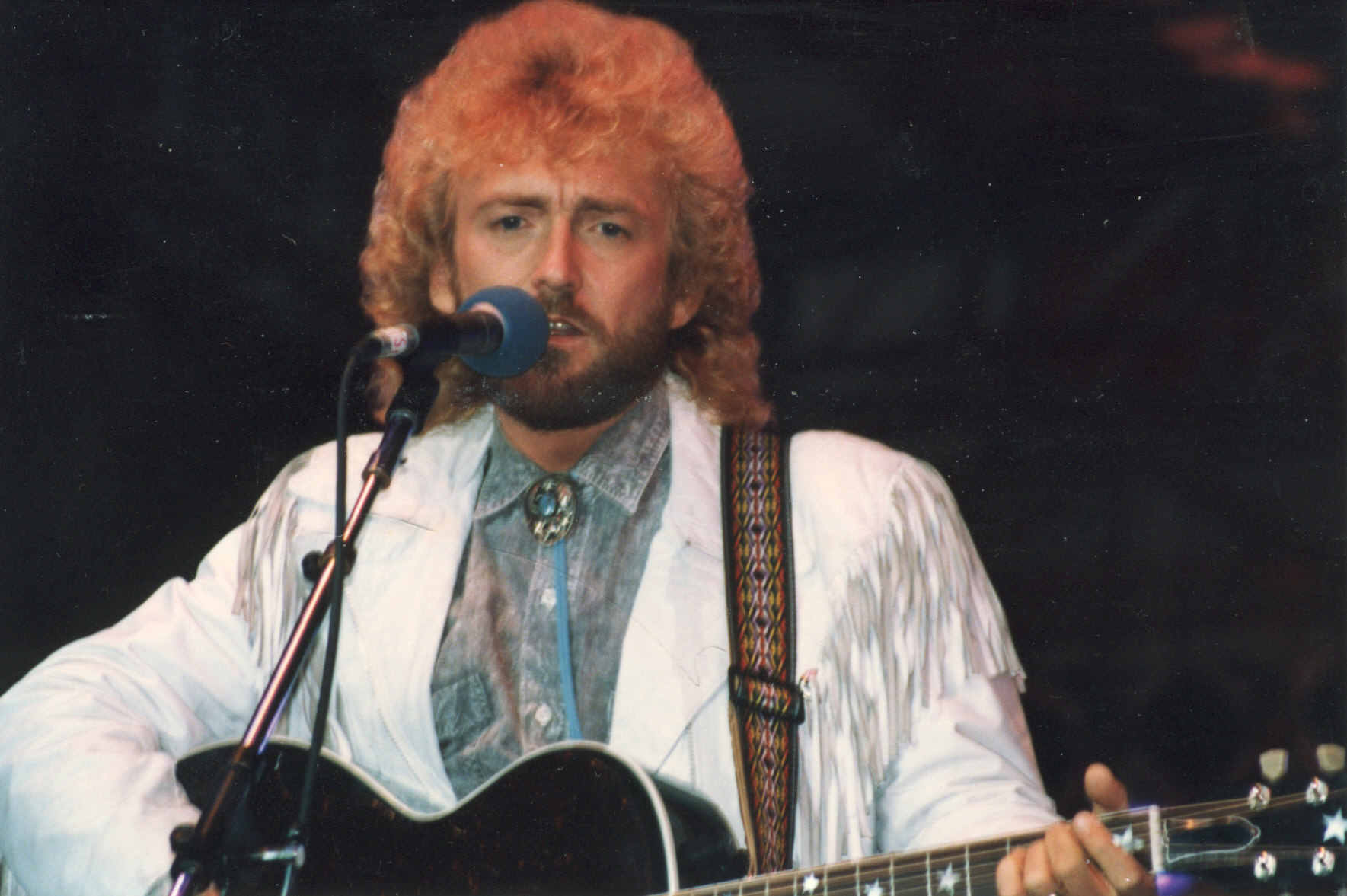
Jackie Keith Whitley (July 1, 1954 – May 9, 1989) was an American country music and bluegrass singer and songwriter. During his career, he released only two albums, but charted 12 singles on the Billboard country charts, and seven more after his death.

Born in Ashland, Kentucky, Whitley grew up in nearby Sandy Hook. He began his career there in 1970, performing in Ralph Stanley's band. Establishing himself as a lead singer in bluegrass music, Whitley moved to Nashville in 1983 and began his recording career there. His first top-20 country hit single, "Miami, My Amy", was released in 1986. In 1988, his first three singles from his second studio album Don't Close Your Eyes, the title song, "When You Say Nothing at All", and "I'm No Stranger to the Rain" were number-one hits. During the final years of his life, Whitley struggled with a lifelong alcohol addiction. He completed his sessions for his follow-up album, I Wonder Do You Think of Me, before dying of acute alcohol poisoning in 1989 at his Goodlettsville home at age 34. The album's "title song", along with "It Ain't Nothin'" and "I'm Over You", were released as singles after his death.

In 2022, Whitley was posthumously inducted into the Country Music Hall of Fame.[2]

Early life

[edit]

Whitley was born to Faye Ferguson (editor of The Elliott County News) and Elmer Whitley (an electrician) in Ashland, Kentucky, but was raised 46 miles away in Sandy Hook, and attended Sandy Hook High School.[3][4] He had two brothers, Randy and Dwight, and a sister, Mary.[5][6] The Whitley family is of English and Scots-Irish descent and has lived in the Elliott County area since the 1840s.

While Whitley was a teenager in Sandy Hook, his friends and he would pass the time drinking bootleg bourbon and racing their cars down mountain roads at dangerous speeds. Whitley was once in a car whose driver attempted to round a curve at 120 miles per hour (190 km/h). The car wrecked, killing his friend and almost breaking Whitley's neck. In another incident, he drove his car off a 120-foot (37 m) cliff into a frozen river, escaping with only a broken collar bone.[7] Whitley's older brother Randy was killed in an October 1983 motorcycle accident.[3][5]

Musical style and influences

[edit]

Keith Whitley's musical style was rooted in Kentucky bluegrass in his early career as a member of Ralph Stanley's Clinch Mountain Boys, but Whitley later shifted towards neotraditional country and honky-tonk during the peak and end of his career.[8][9] Whitley's influences ranged from Appalachian bluegrass performers such as Ralph Stanley to traditional country and honky-tonk musicians such as Hank Williams, George Jones, Merle Haggard, and Lefty Frizzell.[8]

Musical career

[edit]

In 1969, he performed in a musical contest in Ezel, Kentucky, with brother Dwight on five-string banjo. Ricky Skaggs was also in the contest. Skaggs and Whitley instantly bonded and subsequently became close friends.[10]

Whitley and Skaggs, both 16 years old, were discovered in Ft. Gay, West Virginia, by Ralph Stanley, who was 45 minutes late for a gig due to a flat tire.[citation needed] Stanley opened the door of the club and heard what he thought was the Stanley Brothers playing on a jukebox. However, it was Whitley and Skaggs, who "sounded just like me and Carter in the early days".[citation needed] The two soon joined Stanley's band. Whitley became lead singer for Stanley in 1974.[citation needed] Whitley also played with J.D. Crowe and the New South in the mid-1970s.[7] During this period, he established himself as one of the most versatile and talented lead singers in bluegrass. His singing was heavily influenced by Carter Stanley and Lefty Frizzell. He moved to Nashville in 1983 to pursue a country music career, and soon signed a record deal with RCA Records.[7]

Whitley's first solo album, A Hard Act to Follow, was released in 1984, and featured a more mainstream country style. While Whitley was working hard to achieve his own style, the songs he produced were inconsistent. Critics regarded the album as too erratic. Whitley honed his sound within the next few years for his next album, L.A. to Miami, which, released in 1985, would give him his first top-20 country hit single, "Miami, My Amy". The song was followed by three more hit songs: "Ten Feet Away", "Homecoming '63", and "Hard Livin'", The album also included "On the Other Hand" and "Nobody in His Right Mind Would've Left Her". "On the Other Hand" was pitched to Whitley before Randy Travis released the song as a single, and when Whitley's version was not released as a single, Travis released his version in 1986, as did George Strait. During his tour to promote L.A. to Miami, he met and began a romantic relationship with country singer Lorrie Morgan. They were married in November 1986, and had their only child, a son, Jesse Keith Whitley, in June 1987. Whitley also adopted Lorrie's daughter, Morgan, from her first marriage.

During the new recording sessions in 1987, Whitley began feeling that the songs chosen were not up to his standards, so he approached RCA and asked if the project of 15 songs could be shelved. He also asked if he could take a major role in creating the songs and in production. The new album, titled Don't Close Your Eyes, was released in 1988, and the album sold extremely well. The album contained one of the many songs that Whitley had a hand in writing in his years at Tree Publishing, "It's All Coming Back to Me Now". On the album was a remake of Lefty Frizzell's classic standard "I Never Go Around Mirrors", and the song became a huge hit at Whitley's concerts. The first three singles from the album—"When You Say Nothing at All", "I'm No Stranger to the Rain", and the title cut—all reached number one on Billboard's country charts during the autumn of 1988 and the winter of 1989, with the title track "Don't Close Your Eyes" being ranked as Billboard’s number-one country song of 1988. Shortly thereafter, "I'm No Stranger to the Rain" also earned Whitley his first and only Country Music Association award as a solo artist and a Grammy nomination for Best Country Vocal Performance, Male.

In early 1989, Whitley approached RCA chairman Joe Galante with the intention of releasing "I Never Go Around Mirrors" as a single. Galante approved of the musical flexibility that Whitley achieved with the song; however, he suggested that Whitley record something new and more upbeat. The result was a song Whitley had optioned for his previous album called I Wonder Do You Think of Me, and was to result in his next album release.

Whitley was scheduled to be invited to join the Grand Ole Opry in late May 1989. He was posthumously inducted as a former member on October 14, 2023, in a tribute concert held during that night's Opry broadcast.[11] His final concert was held in Brazoria, Texas, at the Armadillo Ballroom on May 6, 1989.[12]

Death

[edit]

On May 9, 1989, Whitley had a brief phone call with his mother, and was later visited by his brother-in-law, Lane Palmer. The two had coffee and were planning a day of golf and lunch, after which Whitley planned to start writing songs to record with Lorrie Morgan when she returned from her concert tour. Palmer left around 8:30 am,[13] asking Whitley to be ready to leave within an hour. Upon returning, Palmer found Whitley unresponsive on his bed and called an ambulance. Whitley was taken to the hospital, where he was pronounced dead; he was 34.

The official cause of death was acute ethanol poisoning.[4] Davidson County Medical Examiner Charles Harlan stated that Whitley's blood alcohol level was 0.47 (the equivalent of 20 one-ounce shots of 100-proof whiskey).[14][15][16][17][18] He was born in 1954 per his birth certificate and passport, but his grave marker erroneously recorded his birth year as 1955.[19][20]

The day after his death, Music Row was lined with black ribbons in memory of Whitley. He is buried in the Spring Hill Cemetery outside Nashville. His gravestone reads, "Forever yours faithfully" (part one) and "His being was my reason" (part two).

Posthumous releases

[edit]

At the time of his death, Whitley had just finished work on his third and final studio album, I Wonder Do You Think of Me. The album was released three months after his death, on August 1, 1989. The album produced two more number-one hits, with the title track and "It Ain't Nothin'." "I'm Over You" also was in the top five in early 1990, reaching number three.

Two new songs were added to Greatest Hits: The first, "Tell Lorrie I Love Her" was written and recorded at home by Whitley for Morgan, originally intended as a work tape for Whitley's friend Curtis "Mr. Harmony" Young to sing at Whitley's wedding. The second was "'Til a Tear Becomes a Rose", a 1987 demonstration recording taken from Tree that originally featured harmony vocals by childhood friend Ricky Skaggs. Lorrie Morgan, with creative control and license to Whitley's namesake, recorded her voice alongside Whitley's, and released it as a single, which rose to number 13 and won the 1990 CMA award for Best Vocal Collaboration, as well as a Grammy nomination for Best Country Vocal Collaboration.

RCA also released a compilation of performance clips (from his days in the Ralph Stanley-fronted Clinch Mountain Boys), interviews, and some previously unreleased material under the title Kentucky Bluebird. The album produced hits for Whitley, as well, including a duet with Earl Thomas Conley, named "Brotherly Love", which peaked at number two in late 1991 and gave Whitley his second consecutive posthumous Grammy nomination for Best Country Vocal Collaboration.

In 1994, Whitley's widow, Lorrie Morgan, organized several of Whitley's friends in bluegrass and some of the big names in country at the time to record a tribute album to Whitley. Keith Whitley: A Tribute Album was released in September 1994 via BNA. It included covers of Whitley's songs from artists such as Alan Jackson, Diamond Rio, and Ricky Skaggs. The album also included four previously unreleased tracks recorded by Whitley in 1987, one of which had Morgan dubbed in as a duet partner. The album also included two original songs: "Little Boy Lost", co-written and sung by Daron Norwood, and "A Voice Still Rings True", a multiple-artist song.[21] Alison Krauss's rendition of "When You Say Nothing at All" was released as a single from the album, reaching number three on the country charts in 1995.

In 1995, the album Wherever You Are Tonight was released, produced by Lorrie Morgan, featuring restored demos of 1986–1988, with crisper 1990s recording techniques and a full orchestra. The album and single of the same name both did very well on the Billboard and R&R charts, and Super Hits and The Essential Keith Whitley followed in 1996. The Essential contained the remastered and long-since unavailable LP and Whitley's debut, the six-track "A Hard Act to Follow", and a scrapped song from 1986's L.A. to Miami, "I Wonder Where You Are Tonight".

Legacy

[edit]

Several film projects depicting Whitley's life were slated, but none has yet come to fruition. One idea was a film version of the George Vescey and Lorrie Morgan-penned Forever Yours, Faithfully. While Morgan's book was a benchmark in piecing together Whitley's final moments, perhaps the most research went into a project titled Kentucky Bluebird, which was to star writer/actor/director David Keith.

Despite his brief moment in the spotlight, Whitley's legacy remains.[22][23] He was inducted into the Country Music Hall of Fame in 2022;[2] prior to that, he was the subject of an exhibit detailing his life and legacy.[24] Whitley retains a persistent influence on country artists, including Tim McGraw, Ronnie Dunn, and Dierks Bentley.[25] He is also the progenitor of newer artists like Morgan Wallen; a song named after Whitley features on Wallen's 2023 double album, One Thing at a Time,[26] which won the approval of Whitley's widow and son.[27]

Whitley is the only person to be posthumously recognized as a former member of the Grand Ole Opry, without ever being an active member. Management had scheduled Whitley for an appearance in late May 1989, where he was to be invited to join, but his death on May 9 interrupted those plans. As the Opry has a policy only inducting living artists as members, Whitley's induction was scrapped. During a Keith Whitley tribute show at the Opry on October 14, 2023, Garth Brooks and Lorrie Morgan announced that Whitley's name would be engraved on a plaque and included in the Opry's Member Gallery backstage, alongside every act who has held Opry membership at some point in the show's history, dating to 1925.

Discography

[edit]

Billboard number-one hits

[edit]

Awards and nominations

[edit]

Grammy Awards

[edit]
Year Nominee / work Award Result
1990 "I'm No Stranger to the Rain" Best Male Country Vocal Performance Nominated
1991 "'Til a Tear Becomes a Rose" Best Country Collaboration with Vocals Nominated
1992 "Brotherly Love" Nominated

Music City News Country Awards and TNN/Music City News Country Awards

[edit]
Year Nominee / work Award Result
1989 Keith Whitley Star of Tomorrow Nominated
1990 I Wonder Do You Think of Me Album of the Year Nominated
"I'm No Stranger to the Rain" Single of the Year Nominated
1991 "'Til a Tear Becomes a Rose" Nominated
[Lorrie Morgan and Keith Whitley Vocal Collaboration of the Year Won
1994 Alan Jackson and Keith Whitley Nominated

TNN Viewers' Choice Awards

[edit]
Year Nominee / work Award Result
1989 Keith Whitley Favorite Newcomer of the Year Nominated
"Don't Close Your Eyes" Favorite Song of the Year Nominated

Academy of Country Music Awards

[edit]
Year Nominee / work Award Result
1986 Keith Whitley Top New Male Vocalist Nominated
1989 "Don't Close Your Eyes" Song of the Year Nominated
Single Record of the Year Nominated
1990 "I'm No Stranger to the Rain" Nominated
"I Wonder Do You Think of Me" Song of the Year Shortlisted
Keith Whitley Top Male Vocalist of the Year Shortlisted
1992 "Brotherly Love" Video of the Year Nominated
2013 Keith Whitley Cliffie Stone Pioneer Award Awarded

Country Music Association Awards

[edit]
Year Nominee / work Award Result
1989 "I'm No Stranger to the Rain" Single of the Year Won
Keith Whitley Horizon Award Nominated
Male Vocalist of the Year Nominated
1990 I Wonder Do You Think of Me Album of the Year Nominated
Keith Whitley and Lorrie Morgan Vocal Event of the Year Won
1992 Keith Whitley and Earl Thomas Conley Nominated

References

[edit]
Revisions and contributorsEdit on WikipediaRead on Wikipedia
from Grokipedia
Keith Whitley (July 1, 1954 – May 9, 1989) was an American singer and songwriter renowned for his emotive, honky-tonk-infused vocals and contributions to the movement of the 1980s. Born Jackie Keith Whitley in , and raised in nearby , he emerged as a musical prodigy in bluegrass circles before transitioning to mainstream country, achieving five consecutive No. 1 hits on the chart, including "When You Say Nothing at All" and "I'm No Stranger to the Rain." His brief but influential career, marked by albums like (1985) and Don't Close Your Eyes (1988), ended tragically due to acute alcohol poisoning at age 34, leaving a legacy that inspired artists such as and earned him posthumous induction into the Country Music Hall of Fame in 2022. Whitley's early life was steeped in music, influenced by his family's involvement in bluegrass and traditions from artists like , , and . He began performing publicly at age four, winning talent contests by six, and by his early teens had formed a band with his brother Dwight, later teaming up with childhood friend to honor bluegrass pioneers. At 16, he joined Ralph Stanley's Clinch Mountain Boys as lead singer and guitarist, touring extensively from 1970 to 1977 and contributing to the band's sound during a pivotal era in bluegrass revival. Transitioning to progressive bluegrass, Whitley became the lead vocalist for J.D. Crowe's New South from 1978 to 1982, appearing on their album Somewhere Between and honing a style that blended high lonesome harmonies with emerging country sensibilities. Signing with RCA Records in 1983, he debuted with the EP A Hard Act to Follow in 1984, followed by his breakthrough album L.A. to Miami in 1985, which featured hits including the Top 10 single "Ten Feet Away" and "Miami, My Amy." His 1988 release Don't Close Your Eyes solidified his stardom, yielding three No. 1 hits and showcasing his interpretive depth on ballads of love and loss. The posthumous album I Wonder Do You Think of Me (1989) continued his chart dominance with two more No. 1s, while Greatest Hits (1990) achieved platinum status. In his , Whitley married fellow artist in 1986; the couple had a son, Jesse Keith Whitley, in 1987, and he adopted her daughter from a previous relationship. Despite professional success, he battled and depression, which contributed to his from acute ethanol poisoning in , with a blood alcohol level of 0.47%. Whitley's awards included the 1989 CMA Single of the Year for "I'm No Stranger to the Rain" and a 1990 CMA Vocal Event of the Year for his duet with Morgan, "'Til a Tear Becomes a Rose." Whitley's legacy endures through his soulful delivery and role in revitalizing traditional sounds amid pop crossovers, influencing generations of singers and leading to tributes like the 2022 Hall of Fame induction, the June 2025 unveiling of a memorial in his hometown of , an upcoming documentary produced by , and ongoing releases of his unreleased material. His music, charting 19 singles including five No. 1s, remains a cornerstone of country canon, celebrated for its raw emotional authenticity.

Early life

Childhood in Kentucky

Jackie Keith Whitley was born on July 1, 1954, in , and was raised in the small town of in Elliott County, approximately 46 miles away. The Whitley family had deep roots in the region, having lived in Elliott County since the 1840s. Whitley's parents were Elmer Whitley, an electrician, and Norma Faye Whitley, a who also served as the editor of The Elliott County News. He grew up in a working-class household with three siblings: an older sister, Mary Loena; and two older brothers, Randy Edmon and Dwight. The family was deeply immersed in music-making, with Faye encouraging her children's interests through her own playing of multiple instruments. From an early age, Whitley was exposed to the rich Appalachian musical traditions of eastern , including bluegrass sounds influenced by local artists like , as well as country icons such as , , , and . Family gatherings often featured informal music sessions, fostering a nurturing environment for his budding talents. At age six, after winning a local talent contest, Whitley's father purchased his first guitar, and his mother taught him the basic techniques to get started.

Initial musical experiences

Whitley demonstrated an early aptitude for music, forming his first band with his older brother Dwight on before turning 14; this straight bluegrass group debuted on local radio and television stations in , reflecting the strong familial support for his musical pursuits that began in childhood. In his early teens, Whitley met fellow teenager , and together with other local musicians they formed the Lonesome Mountain Boys, focusing on traditional bluegrass as a to . The performed regionally in and nearby areas, including underage appearances in nightclubs and bars, where they honed their harmonies despite legal restrictions on minors in such venues. These local gigs, often at events and small establishments around and Ashland, exposed Whitley to live audiences and solidified his commitment to bluegrass as his primary genre. A pivotal moment came in 1970, when Whitley, then 16, and his band filled in for a delayed & the Boys at a nightclub show in Fort Gay, ; impressed by the teenagers' vocal blend, Stanley invited them to join his band, marking Whitley's entry into professional bluegrass circuits. This encounter immersed Whitley deeply in mountain music traditions, with Stanley becoming a key early influence whose style shaped Whitley's singing approach during his formative years. By his sophomore year in high school, Whitley had prioritized music professionally, traveling with Stanley's group and forgoing further formal education to focus on performing full-time.

Musical career

Bluegrass phase with Clinch Mountain Boys

Whitley's professional bluegrass career began in 1970 when, at age 15, he and close friend joined Ralph Stanley's Clinch Mountain Boys after performing songs at a local show in Fort Gay, , which impressed the bandleader enough to hire them on the spot. The duo quickly became the band's lead vocalists, with Whitley's clear, high tenor voice complementing Skaggs's style and helping to revitalize the group's sound during a period of transition in traditional bluegrass. Whitley toured extensively with the Clinch Mountain Boys from 1970 to 1972, and again from 1974 to 1977, performing across the and at major bluegrass festivals, contributing to the band's reputation for authentic, high-lonesome singing. Key recordings from this era include the album Cry from the Cross (Rebel Records, 1971), where Whitley sang lead on several tracks, and Something Old, Something New (Rebel Records, 1971), showcasing his versatility on both classic bluegrass numbers and newer material. These efforts helped the band maintain relevance amid the emerging progressive bluegrass movement, with younger talents like Whitley bringing fresh energy to the genre. Although Whitley's older brother occasionally joined family jam sessions and early local gigs during his teenage years, the Boys lineup primarily featured Whitley alongside Skaggs, with no formal collaboration from Randy in the band's professional recordings or tours. Whitley's vocal prowess during this phase earned him early acclaim within the bluegrass community; later recalled that the teenagers "did better than themselves," highlighting Whitley's growing reputation as one of the finest young singers in the style. This period solidified his foundation in bluegrass traditions while exposing him to the evolving scene, where bands began incorporating more diverse influences, setting the stage for his later musical explorations.

Work with J.D. Crowe and the New South

In 1978, following his time with , Keith Whitley joined and the as lead vocalist and guitarist, infusing the band with his high tenor voice and building on his foundational bluegrass experience from earlier groups. This progressive bluegrass ensemble, already known for pushing boundaries with country-tinged arrangements, benefited from Whitley's smooth harmonies and song interpretations that bridged traditional bluegrass and emerging country sounds. Whitley's arrival marked a shift toward more honky-tonk influences within the band's repertoire, enhancing their appeal in both bluegrass festivals and broader music circuits. Whitley's contributions were prominent on key albums during his five-year tenure, including My Home Ain't in the Hall of Fame (Rounder, 1979), where he handled lead vocals on multiple tracks such as the title song and "(I'll Be Your) Stepping Stone," tracks that highlighted his emotive delivery and helped the album resonate in bluegrass communities. The band lineup at the time featured J.D. Crowe on banjo, Bobby Slone on fiddle, and Mike Gregory on bass, creating tight-knit dynamics that emphasized vocal precision and instrumental interplay—though earlier members like Tony Rice and Ricky Skaggs had departed by Whitley's arrival, their progressive legacy influenced the group's sound. Subsequent releases like the live album Live in Japan (Rounder, 1980) and Somewhere Between (Rounder, 1981) further showcased Whitley's leads, with performances capturing the band's energetic stage presence and contributing to their reputation as innovators in bluegrass evolution. While achieved steady acclaim in bluegrass circles rather than mainstream chart dominance, Whitley's vocals on songs like "Bartender's Blues" from Somewhere Between exemplified the group's fusion style, earning praise for blending heartfelt country narratives with acoustic drive. However, by 1983, Whitley's growing struggles with , coupled with his ambition to pursue a solo career in mainstream country, led to his departure from the , allowing him to transition toward Nashville's commercial scene.

Solo country career and breakthrough

After years in bluegrass ensembles, Keith Whitley transitioned to a solo career in mainstream by signing with in 1983 and releasing his debut EP A Hard Act to Follow in 1984. This move marked his shift from collaborative bluegrass work to individual stardom, allowing him to showcase his versatile voice in a broader commercial context. Whitley's debut solo album, , was released in 1985 and introduced his polished sound to a wider audience. The lead single, "," peaked at number 14 on the Hot Country Songs chart, marking his first significant solo hit and demonstrating his ability to blend heartfelt storytelling with radio-friendly production. Other singles from the album, including "Ten Feet Away," which reached number 9, further established his presence, with the record earning multiple top-10 entries and solidifying RCA's investment in his talent. His breakthrough arrived with the 1988 album Don't Close Your Eyes, produced by Garth Fundis, which captured Whitley's maturing artistry and propelled him to the forefront of . The title track, "Don't Close Your Eyes," topped the chart, while follow-up "When You Say Nothing at All" also hit number 1, earning widespread acclaim for its emotional depth and Whitley's expressive delivery. These consecutive chart-toppers highlighted the album's commercial success and positioned Whitley as a rising star in the late neotraditionalist movement. Whitley's musical style during this period evolved to fuse traditional country elements, such as phrasing influenced by and , with subtle pop-crossover appeal through smooth arrangements and universal themes of love and longing. This blend retained bluegrass-infused vocal purity from his roots while broadening his accessibility, contributing to his appeal beyond niche audiences. As his recordings gained traction, Whitley's live performances in the late amplified his growing stardom, with appearances at venues like the Grand Ole Opry and awards shows showcasing his commanding stage presence and improvisational flair. These shows, often featuring raw, emotive renditions of his hits, drew enthusiastic crowds and cemented his reputation as one of country's most promising talents heading into 1989.

Personal life

Marriage to Lorrie Morgan

Keith Whitley first met fellow country singer in 1986 while on tour promoting his debut solo album , during a period when both were establishing their places in Nashville's music scene. The two quickly bonded over their mutual love of traditional country sounds and vocal harmonies, with Morgan, daughter of star George Morgan, already performing as a rising artist. Their shared musical interests fostered a deep connection, leading to a romantic relationship that same year. Whitley and Morgan married on November 21, 1986, marking the beginning of a high-profile partnership in Nashville's community. As both artists were signed to , they seamlessly blended their professional lives, supporting each other's careers amid the competitive environment of 1980s . The couple frequently appeared together at industry events and performances, showcasing their chemistry both on and off stage. On June 15, 1987, Whitley and Morgan welcomed their only child together, son Jesse Keith Whitley, into the world, further solidifying their family life in Nashville. Whitley also adopted Morgan's daughter, Gaddis, from her previous marriage. Jesse, named in honor of his father, would later pursue a career in country music as a singer and songwriter. The couple's supportive dynamic extended to collaborative efforts, including their duet "'Til a Tear Becomes a Rose," released posthumously in 1990, which highlighted their harmonious voices and became a notable example of their joint musical endeavors.

Battles with alcoholism

Keith Whitley's struggles with began during his teenage years in the early 1970s, as he embarked on rigorous bluegrass tours with bands like Ralph Stanley's Clinch Mountain Boys and and the New South. At around age 16, he started drinking heavily, influenced by the hard-partying culture of the music scene and his admiration for legends, which nearly cost him his life in alcohol-fueled car accidents, including one where he was a passenger in a high-speed crash and another where he drove off a cliff, breaking his collarbone. These early incidents set a pattern of dependency that persisted through his career transitions. The addiction escalated in the 1980s amid his transition to mainstream country and rising fame after signing with in 1984, when the pressures of Nashville's exacerbated his private and increasingly severe habits. Whitley made multiple attempts at , including a notable rehab stint in 1988, during which he achieved temporary success, but frequent relapses followed, often triggered by career stresses and personal challenges. These relapses directly impacted his professional life, leading to missed performances and frustrations in the studio, such as recording sessions where he performed under the influence, including his 1988 hit "I'm No Stranger to the Rain." RCA executives applied significant pressure on Whitley to maintain sobriety to sustain his momentum, as his string of No. 1 hits in 1988—capped by the birth of his son Jesse Keith—offered a brief window of stability that the label sought to protect. However, the 's toll strained his relationships and career trajectory, with his wife providing temporary support through desperate measures like tying him to the bed to prevent nighttime binges, though he often evaded them. Despite these efforts, the cycle of addiction continued to undermine his achievements during this pivotal period.

Death

Final days and circumstances

In the months leading up to his death, Keith Whitley continued to struggle with , having achieved brief in 1987 that lasted only about six months before relapsing. However, this period of abstinence ended abruptly in early May 1989 when his wife, , departed for a performance in , prompting Whitley to embark on a weekend of heavy drinking. On the morning of May 9, 1989, Whitley awoke at his home in , spoke briefly with his mother by phone, and shared coffee with his brother-in-law, Lane Palmer, around 8:30 a.m. Palmer left to run errands and returned approximately two hours later to find Whitley deceased, face down and fully clothed on his bed; he was 34 years old. The official was acute alcohol poisoning due to intoxication, as determined by the Davidson County medical examiner. Toxicology results revealed a blood alcohol level of 0.477%, nearly five times the legal limit for intoxication in at the time.

Funeral and immediate reactions

Keith Whitley's funeral took place on May 12, 1989, at St. Joseph's Catholic Church in , drawing hundreds of mourners from the community. Among the attendees were his wife, , and close friend , who served as a and delivered the . In his remarks, Skaggs expressed profound grief over the loss of his boyhood friend, emphasizing Whitley's lasting impact while urging those battling to seek support, warning, "Don't let this happen to you. I've lost so many friends." The service underscored the immediate emotional toll on Nashville's music scene, where Whitley's sudden death from acute alcohol poisoning amplified concerns about among performers. Following the funeral, Whitley's body was buried at Spring Hill Cemetery in Nashville, with pallbearers carrying the casket to the site. At the graveside, Morgan placed a red rose on the casket, and Skaggs added a red guitar pick as a personal tribute. Morgan continued the remembrances the next day with two emotional tribute performances dedicated to Whitley at the Grand Ole Opry. Later that year, at the 1989 CMA Awards on October 9, Morgan accepted the Single of the Year honor for Whitley's "I'm No Stranger to the Rain" on his behalf, tearfully declaring, "He did it." This posthumous recognition highlighted the industry's swift acknowledgment of Whitley's talent and the lingering shock of his passing just five months earlier.

Posthumous career

Released albums and singles

Following Keith Whitley's death in May 1989, his label released the studio album I Wonder Do You Think of Me later that year, which he had largely completed prior to his passing under the production of Garth Fundis. The project featured 10 tracks showcasing Whitley's signature blend of traditional storytelling and emotive vocals, with the title track serving as the lead single drawn from sessions recorded in Nashville. Additional singles from the album included "I'm Over You" and "It Ain't Nothin'," both pulled from the same pre-death recordings to highlight his ongoing artistic momentum. In 1990, RCA issued Greatest Hits, a compilation drawing from Whitley's earlier work alongside previously unreleased vault material, including the home-recorded worktape "Tell Lorrie I Love Her," a poignant dedication to his Lorrie Morgan captured informally in their residence. This release incorporated tracks like "Sad Country Song," an archival cut reflecting Whitley's early influences, assembled to preserve his catalog shortly after his . The following year, RCA followed with Kentucky Bluebird, Whitley's second major posthumous project and a compilation of 15 tracks, eight of which were newly surfaced from vault sessions produced during his solo career. Key singles from this effort included "Somebody's Doin' Me Right," with harmony vocals by and , and by , emphasizing Whitley's collaborative bluegrass roots in a contemporary context. Later compilations continued to draw from Whitley's extensive unreleased recordings. In 2000, Sad Songs and Waltzes emerged as an archival collection of tracks from his time with J.D. Crowe's and early solo recordings, including reworked material from the 1982 album Somewhere Between, remastered to highlight his foundational work in the genre. RCA's 16 Biggest Hits, released in 2006 by , assembled 16 key recordings spanning his career, including posthumous singles like "Brotherly Love" with , to encapsulate his vocal legacy without new material. A notable 2013 release, Ina Road: Original Demos, presented raw, unpolished demo versions of songs from Whitley's developmental sessions, offering insight into his songwriting process through sparse acoustic arrangements. No major new studio albums have been issued since 2013, with subsequent efforts limited to archival compilations and reissues of existing vault material through 2025, maintaining focus on Whitley's pre-recorded output rather than contemporary productions.

Chart success after death

Following Whitley's on May 9, 1989, his unreleased recordings propelled further chart dominance, beginning with the title track from his final studio album, I Wonder Do You Think of Me, which ascended to No. 1 on the chart for one week in September 1989. This posthumous hit, released just one month after his passing, highlighted the depth of his recorded catalog and public affection for his emotive style. The momentum continued with "It Ain't Nothin'," another track from the same album, which topped the chart for one week in 1990, extending Whitley's streak to five consecutive No. 1 singles—an unprecedented run that underscored his rising stardom even in absence. From the I Wonder Do You Think of Me era, "I'm Over You" also performed strongly, reaching No. 3 on the chart in 1990 and further demonstrating the album's commercial viability. These successes fueled long-term interest in Whitley's music, with his overall catalog selling more than 3.6 million units as of 2010, according to Nielsen SoundScan data, aided by reissues and greatest-hits compilations that kept his work accessible. In the , Whitley's singles have seen a notable streaming resurgence, with tracks like "When You Say Nothing at All" accumulating over 107 million plays on as of November 2025 and appearing in curated playlists that expose his neotraditional sound to younger audiences. This digital revival, bolstered by inclusions in platforms' essential collections, has amplified his catalog's popularity and cemented its lasting cultural impact.

Legacy

Influence on country music

Keith Whitley's emotive vocal delivery, characterized by a smooth, drawling style rooted in bluegrass traditions, significantly influenced the movement of the , helping to revive sounds amid pop crossovers. His phrasing and heartfelt expression bridged raw Appalachian influences with polished mainstream appeal, inspiring artists like and to emphasize authentic, honky-tonk-infused performances. Whitley's approach prioritized emotional depth over technical flash, setting a benchmark for vocalists seeking to reconnect with its traditional core. Whitley's song selections, often blending themes of heartbreak with uptempo traditional elements, resonated with later generations, as evidenced by artists like and , who credit his work for shaping their emotive storytelling and genre-blending styles. McGraw and Bentley have cited Whitley's influence on their music, while in September 2025, Bentley released a cover of Whitley's "I'm No Stranger to the Rain" on his live EP The Sessions, demonstrating ongoing inspiration. This influence extended to the broader 1980s country revival, where Whitley played a pivotal role in transitioning bluegrass sensibilities into accessible mainstream hits, paving the way for a resurgence of roots-oriented artists. Whitley's compositions and recordings continue to inspire through covers by prominent artists, such as Alison Krauss's rendition of "When You Say Nothing at All," which amplified his ballad style within bluegrass and circles. These interpretations underscore his lasting impact on how subsequent performers interpret and intimacy in country narratives.

Honors, tributes, and recent developments

In 2022, Whitley was posthumously inducted into the Hall of Fame in the Modern Era Artist category, recognizing his influential contributions to despite his early death. In December 2024, country artist announced he would co-produce an untitled documentary exploring Whitley's life, his struggles with , his marriage to , and his lasting musical impact, with filming set to begin in January 2025. By mid-2025, updates confirmed the project was progressing, featuring archival footage from the Hall of Fame and personal collections. To mark the Grand Ole Opry's 100th anniversary in November 2025, the venue released the album Opry 100: Country's Greatest Songs, which included a previously unreleased 1988 live performance of Whitley's signature hit "Don't Close Your Eyes" recorded on the Opry stage. Whitley's hometown of , maintains an ongoing tribute through the annual Keith Whitley Memorial events, organized by the nonprofit Friends of Keith Whitley, featuring a bike ride, parade, and concert that draw fans to honor his legacy each year. A of Whitley in the town cemetery serves as a central landmark for these commemorations.

Discography

Studio albums

Keith Whitley's debut studio album, , was released on October 28, 1985, by . Produced by Blake Mevis, the album showcased Whitley's early solo work following his time with the Clinch Mountain Boys, blending traditional country with mid-1980s pop influences. It peaked at number 26 on the Top Country Albums chart. The album did not receive but included several singles that introduced Whitley's vocal style to a wider audience.
No.TitleLength
1."Miami, My Amy"3:25
2."I've Got the Heart for You"2:36
3."I Get the Picture"2:54
4."On the Other Hand"3:09
5."Hard Livin'"2:54
6."Ten Feet Away"3:20
7."That Stuff"3:20
8."Nobody in His Right Mind Would've Left Her"2:24
9."Homecoming '63"3:15
10."L.A. to Miami"3:30
Whitley's second studio album, Don't Close Your Eyes, released on May 31, 1988, by RCA Records, marked a significant artistic shift toward a more traditional country sound. Co-produced by Garth Fundis and Whitley himself, the album highlighted his emotive tenor on ballads and uptempo tracks, with contributions from session musicians emphasizing acoustic elements over the pop sheen of his debut. It peaked at number 8 on the Billboard Top Country Albums chart and number 121 on the Billboard 200, and was certified gold by the RIAA for shipments of 500,000 units. Key tracks included the title song, a poignant ballad about longing, and "When You Say Nothing at All," which demonstrated Whitley's interpretive depth.
No.TitleLength
1."Flying Colors"3:35
2."It's All Coming Back to Me Now"2:49
3."Lucky Dog"1:58
4."Don't Close Your Eyes"4:12
5."The Birmingham Turnaround"2:54
6."Some Old Side Road"2:06
7."When You Say Nothing at All"3:48
8."'Til a Tear Becomes a Rose" (with )3:32
9."I Just Want You"3:05
10."Talkin' to the Wall"3:44
I Wonder Do You Think of Me, Whitley's third and final studio album, was released posthumously on August 1, 1989, by , three months after his death. Co-produced by Garth Fundis and Whitley, it compiled his last studio recordings, capturing mature performances reflective of his roots and emotional delivery. The album peaked at number 2 on the Top Country Albums chart and number 115 on the , and was certified gold by the RIAA. Standout tracks featured the introspective title song and "It Ain't Nothin'," underscoring Whitley's ability to convey heartbreak with authenticity.
No.TitleLength
1."Talk to Me Texas"3:32
2."Between an Old Memory and Me"3:19
3."It Ain't Nothin'"4:05
4."I'm Over You"3:03
5."Turn This Thing Around"3:29
6."I Wonder Do You Think of Me"3:17
7."Blame It on Time"2:42
8."Heartbreak Highway"2:23
9."Tell Lorrie I Love Her"3:38
10."I Never Go Around Mirrors"4:25

Compilation and tribute albums

Following Keith Whitley's death, released Greatest Hits in August 1990, compiling 10 key tracks from his solo career, including the chart-topping singles "Don't Close Your Eyes," "When You Say Nothing at All," and "I'm No Stranger to the Rain," as well as "" and "It Ain't Nothin'." The album reached number 5 on the chart and was certified platinum by the RIAA for one million units shipped in the United States. In 2006, Legacy Recordings issued 16 Biggest Hits, an expanded posthumous collection spanning 16 tracks that highlight Whitley's most successful recordings, such as "Don't Close Your Eyes," "Brotherly Love" (a duet with ), "Some Old Side Road," and "I Wonder Do You Think of Me," drawn primarily from his 1980s studio albums. This set provided a broader of his hits without achieving . The 1994 tribute album Keith Whitley: A Tribute Album, released by , featured 13 tracks paying homage to his catalog through covers by prominent artists and some unreleased Whitley recordings, including Alan Jackson's rendition of "Don't Close Your Eyes," Alison Krauss & Union Station's version of "When You Say Nothing at All," Clint Black's take on "I Wonder Do You Think of Me," and duets like Keith Whitley with on "'Til a Tear Becomes a Rose" and "I Just Want You." Produced as a collaborative project, it peaked at number 28 on the chart and underscored Whitley's influence on contemporary performers. Archival material appeared in releases like the 2013 compilation Country: Keith Whitley from , which included original demos and rare tracks such as early versions of "" and " '63," offering insight into his pre-fame bluegrass roots and unreleased Nashville sessions from the . In 2015, released The Essential Keith Whitley, a 2-CD compilation featuring 25 tracks of and rarities, which peaked at number 23 on the chart. No major new compilation or featuring Whitley's music have been released since 2015 as of November 2025.

Singles

Keith Whitley's solo singles career began in 1984 with releases on , marking his transition from bluegrass to mainstream country. His early singles achieved modest success, building to a series of top 10 hits and five consecutive number-one singles from 1988 to 1990. In total, Whitley charted 19 singles on the chart, with 12 released during his lifetime and the remaining seven appearing posthumously after his death on May 9, 1989. These posthumous releases, drawn from unreleased recordings, continued to showcase his emotive vocal style and contributed to his enduring chart presence into the . The following table lists Whitley's charting singles chronologically by release year, including peak positions on the chart. Pre-death singles are noted up to those recorded and released before his passing, while posthumous ones are marked accordingly.
TitleYearPeak PositionAlbumNotes
Turn Me to Love198459Hard Act to FollowPre-death
A Hard Act to Follow198576Hard Act to FollowPre-death
I've Got the Heart for You198557Pre-death
198614Pre-death; B-side: "When You Get Back (Take a Little Ride)" on some pressings
Ten Feet Away19869Pre-death
Homecoming '6319869Pre-death
Hard Livin'198710Pre-death; B-side: "I Get the Picture"
Would These Arms Be in Your Way198736-Pre-death
Some Old Side Road198716Don't Close Your EyesPre-death
Don't Close Your Eyes19881Don't Close Your EyesPre-death; B-side: "Lucky Dog"
When You Say Nothing at All19881Don't Close Your EyesPre-death
I'm No Stranger to the Rain19891Don't Close Your EyesPre-death (released shortly before death); B-side: " of a Fool"
I Wonder Do You Think of Me19891I Wonder Do You Think of MePre-death
It Ain't Nothin'19891I Wonder Do You Think of MePosthumous
I'm Over You19903I Wonder Do You Think of MePosthumous
Brotherly Love (with )19912Kentucky BluebirdPosthumous
Somebody's Doin' Me Right199115Kentucky BluebirdPosthumous
Wherever You Are Tonight199575Wherever You Are TonightPosthumous
(Sources for chart positions and details: MusicVF; B-side examples from 45cat and verified releases.) Whitley's singles often featured B-sides from his albums or previously unreleased tracks, providing additional context to his recordings. Representative examples include paired with "When You Get Back (Take a Little Ride)," "Hard Livin'" with "I Get the Picture," and "When You Say Nothing at All" with an or alternate track on promo versions. These B-sides were not always promoted separately but complemented the A-sides' themes of love and heartache. In addition to his charting releases, Whitley issued several non-charting singles, primarily promotional or seasonal tracks. Notable among these is the 1985 Christmas single "A Christmas Letter," backed by "There's a New Kid in Town," which captured his vocal warmth in a holiday context but did not enter the Hot Country Songs chart. Other non-charting efforts included promo-only singles like "I've Got the Heart for You" in various formats, aimed at radio play without commercial chart impact.

Billboard number-one hits

Keith Whitley's breakthrough to stardom in the late 1980s was marked by five consecutive number-one hits on the chart, a rare achievement in music history shared by only a handful of artists such as and during that era. These singles, spanning from 1988 to 1990, showcased Whitley's emotive vocal style and helped redefine traditional sounds amid the era's pop influences. Two of the hits were released posthumously following his death in May 1989, yet they continued his chart dominance, underscoring the enduring appeal of his recordings. The streak began with the introspective ballad "Don't Close Your Eyes," written by , which topped the chart for one week in August 1988. This was followed by "When You Say Nothing at All," penned by and , which held the top spot for two weeks late that year and later earned certification by the RIAA in 2023 for over one million equivalent units sold in the U.S. Whitley's run continued with "I'm No Stranger to the Rain," co-written by Sonny Curtis and Ron Hellard, achieving two weeks at number one in April 1989 and earning a Grammy nomination for Best Male Country Vocal Performance. The first posthumous entry, "I Wonder Do You Think of Me" from the album of the same name, was written by Sanger D. Shafer and topped the chart for one week in September 1989. Finally, "It Ain't Nothin'," written by Tony Haselden and Larry Jordan, closed the streak with two weeks at number one in January 1990, seven months after Whitley's passing.
Song TitleRelease YearSongwriter(s)Weeks at #1Notes
"Don't Close Your Eyes"19881First #1; platinum certified (2023)
"When You Say Nothing at All"1988, 2Became a country standard; platinum certified (2023)
"I'm No Stranger to the Rain"1989, Ron Hellard2Grammy nominee; last single released in his lifetime
"I Wonder Do You Think of Me"19891Posthumous release
"It Ain't Nothin'"1990Tony Haselden, Larry Jordan2Posthumous; final #1 in the streak
This sequence of hits not only propelled Whitley's albums to gold and platinum status but also cemented his influence, with songs like "When You Say Nothing at All" later covered by artists such as Alison Krauss, achieving crossover success and highlighting its timeless romantic themes.

Awards and nominations

Keith Whitley received three posthumous Grammy nominations following his death on May 9, 1989, but he did not win any awards. His first nomination was at the in 1990, in the category of Best Male Country Vocal Performance for the single "I'm No Stranger to the Rain," a poignant track from his 1988 album I Wonder Do You Think of Me that topped the Hot Country Singles chart posthumously. This recognition highlighted Whitley's emotive vocal style and came amid industry tributes to his brief but influential career, including performances and mentions at major events around the time of the ceremony. Subsequent nominations included Best Country Vocal Collaboration at the in 1991 for "'Til a Tear Becomes a Rose," a recorded with his widow and featured on his 1990 greatest hits compilation. Whitley's final nomination came at the in 1992, again in Best Country Vocal Collaboration, for "Brotherly Love," a collaborative single with , , and John Anderson.
YearCategoryWorkResult
1990Best Male Country Vocal Performance"I'm No Stranger to the Rain"Nominated
1991Best Country Vocal Collaboration"'Til a Tear Becomes a Rose" (with )Nominated
1992Best Country Vocal Collaboration"Brotherly Love" (with , , and John Anderson)Nominated
Although Whitley's early bluegrass recordings with Ralph Stanley and others garnered critical acclaim, there are no records of formal Grammy nominations for that phase of his career, though his foundational work in the genre influenced later considerations of his legacy.

Academy of Country Music Awards

Keith Whitley received multiple nominations from the Academy of Country Music (ACM) during his brief solo career, recognizing his rising influence in the genre. In 1986, he was nominated for Top New Male Vocalist, highlighting his emergence as a promising talent following the release of his debut album L.A. to Miami. He earned a nomination for Top Male Vocalist in 1990, reflecting critical acclaim for his vocal style and hit singles like "When You Say Nothing at All" and "I'm No Stranger to the Rain." In 1989, Whitley's signature ballad "Don't Close Your Eyes" was nominated for Single Record of the Year, underscoring the song's emotional impact and commercial success on the charts. That same year, the track also received a for Song of the Year, further affirming its role in revitalizing traditional country balladry. Additionally, in 1992, the duet video "Brotherly Love" with was nominated for Video of the Year, a posthumous nod to his collaborative work. Whitley's sole ACM win came posthumously in , when he was awarded the Cliffie Stone Pioneer Award at the ACM Honors, honoring his pioneering contributions to despite his tragically short career. This special recognition, presented to individuals who furthered the growth of , was accepted on his behalf and celebrated his lasting legacy as a vocal innovator.

Country Music Association Awards

Keith Whitley garnered significant recognition from the (CMA), with nominations and a win in 1989 highlighting his rising prominence just months after his death on May 9 of that year. He received posthumous nominations for Male Vocalist of the Year, the Horizon Award for emerging talent, and Single of the Year for "I'm No Stranger to the Rain." Whitley ultimately won Single of the Year, becoming the first artist to claim an active CMA award posthumously when the honor was presented in October 1989. The following year, Whitley's influence continued through collaborative work, as his duet with on "'Til a Tear Becomes a Rose"—recorded prior to his passing—earned the Vocal Event of the Year award at the 1990 CMA Awards. This posthumous honor underscored the enduring appeal of his vocal style in partnership recordings.

Other awards

In addition to major national accolades, Keith Whitley received several honors from country music organizations and regional entities, particularly those tied to media and his Kentucky roots. Posthumously in 1989, Whitley was nominated for Favorite Newcomer of the Year at the TNN Viewers' Choice Awards, reflecting fan appreciation for his chart-topping singles like "I'm No Stranger to the Rain." On a regional level, Whitley's heritage was celebrated with his 2011 induction into the Kentucky Music Hall of Fame, honoring his role in elevating the state's legacy from his beginnings in . This recognition underscored his impact on local artists and the broader Appalachian influence in Nashville's traditionalist movement.

References

Add your contribution
Related Hubs
User Avatar
No comments yet.