
Recent from talks
Keratin
Knowledge base stats:
Talk channels stats:
Members stats:
Keratin
Keratin (/ˈkɛrətɪn/) is one of a family of structural fibrous proteins also known as scleroproteins. It is the key structural material making up scales, hair, nails, feathers, horns, claws, hooves, and the outer layer of skin in tetrapod vertebrates. Keratin also protects epithelial cells from damage or stress. Keratin is extremely insoluble in water and organic solvents. Keratin monomers assemble into bundles to form intermediate filaments, which are tough and form strong unmineralized epidermal appendages found in reptiles, birds, amphibians, and mammals. Excessive keratinization participate in fortification of certain tissues such as in horns of cattle and rhinos, and armadillos' osteoderm. The only other biological matter known to approximate the toughness of keratinized tissue is chitin. Keratin comes in two types: the primitive, softer forms found in all vertebrates and the harder, derived forms found only among sauropsids (reptiles and birds).
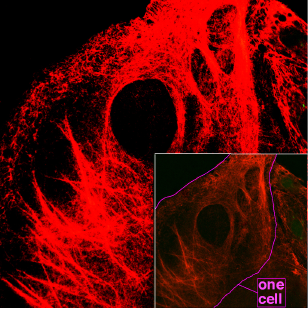
Alpha-keratins (α-keratins) are found in all vertebrates. They form the hair (including wool), the outer layer of skin, horns, nails, claws and hooves of mammals, and the slime threads of hagfish. The baleen plates of filter-feeding whales are also made of keratin. Keratin filaments are abundant in keratinocytes in the hornified layer of the epidermis; these are proteins which have undergone keratinization. They are also present in epithelial cells in general. For example, mouse thymic epithelial cells react with antibodies for keratin 5, keratin 8, and keratin 14. These antibodies are used as fluorescent markers to distinguish subsets of mouse thymic epithelial cells in genetic studies of the thymus.
The harder beta-keratins (β-keratins) are found only in the sauropsids, i.e., all living reptiles and birds. They are found in the nails, scales, and claws of reptiles, in some reptile shells (Testudines), and in the feathers, beaks, and claws of birds. These keratins are formed primarily in beta sheets. However, beta sheets are also found in α-keratins. Recent scholarship has shown that sauropsid β-keratins are fundamentally different from α-keratins at a genetic and structural level. The new term corneous beta protein (CBP) has been proposed to avoid confusion with α-keratins.
Keratins (also described as cytokeratins) are polymers of type I and type II intermediate filaments that have been found only in chordates (vertebrates, amphioxi, urochordates). Nematodes and many other non-chordate animals seem to have only type V intermediate filaments, fibers that structure the nucleus.
The human genome encodes 54 functional keratin genes, located in two clusters on chromosomes 12 and 17. This suggests that they originated from a series of gene duplications on these chromosomes.
The keratins include the following proteins of which KRT23, KRT24, KRT25, KRT26, KRT27, KRT28, KRT31, KRT32, KRT33A, KRT33B, KRT34, KRT35, KRT36, KRT37, KRT38, KRT39, KRT40, KRT71, KRT72, KRT73, KRT74, KRT75, KRT76, KRT77, KRT78, KRT79, KRT8, KRT80, KRT81, KRT82, KRT83, KRT84, KRT85 and KRT86 have been used to describe keratins past 20.
The first sequences of keratins were determined by Israel Hanukoglu and Elaine Fuchs (1982, 1983). These sequences revealed that there are two distinct but homologous keratin families, which were named type I and type II keratins. By analysis of the primary structures of these keratins and other intermediate filament proteins, Hanukoglu and Fuchs suggested a model in which keratins and intermediate filament proteins contain a central ~310 residue domain with four segments in α-helical conformation that are separated by three short linker segments predicted to be in beta-turn conformation. This model has been confirmed by the determination of the crystal structure of a helical domain of keratins.
The human genome has 54 functional annotated keratin genes, of which 28 are type I keratins and 26 are type II keratins.
Hub AI
Keratin AI simulator
(@Keratin_simulator)
Keratin
Keratin (/ˈkɛrətɪn/) is one of a family of structural fibrous proteins also known as scleroproteins. It is the key structural material making up scales, hair, nails, feathers, horns, claws, hooves, and the outer layer of skin in tetrapod vertebrates. Keratin also protects epithelial cells from damage or stress. Keratin is extremely insoluble in water and organic solvents. Keratin monomers assemble into bundles to form intermediate filaments, which are tough and form strong unmineralized epidermal appendages found in reptiles, birds, amphibians, and mammals. Excessive keratinization participate in fortification of certain tissues such as in horns of cattle and rhinos, and armadillos' osteoderm. The only other biological matter known to approximate the toughness of keratinized tissue is chitin. Keratin comes in two types: the primitive, softer forms found in all vertebrates and the harder, derived forms found only among sauropsids (reptiles and birds).
Alpha-keratins (α-keratins) are found in all vertebrates. They form the hair (including wool), the outer layer of skin, horns, nails, claws and hooves of mammals, and the slime threads of hagfish. The baleen plates of filter-feeding whales are also made of keratin. Keratin filaments are abundant in keratinocytes in the hornified layer of the epidermis; these are proteins which have undergone keratinization. They are also present in epithelial cells in general. For example, mouse thymic epithelial cells react with antibodies for keratin 5, keratin 8, and keratin 14. These antibodies are used as fluorescent markers to distinguish subsets of mouse thymic epithelial cells in genetic studies of the thymus.
The harder beta-keratins (β-keratins) are found only in the sauropsids, i.e., all living reptiles and birds. They are found in the nails, scales, and claws of reptiles, in some reptile shells (Testudines), and in the feathers, beaks, and claws of birds. These keratins are formed primarily in beta sheets. However, beta sheets are also found in α-keratins. Recent scholarship has shown that sauropsid β-keratins are fundamentally different from α-keratins at a genetic and structural level. The new term corneous beta protein (CBP) has been proposed to avoid confusion with α-keratins.
Keratins (also described as cytokeratins) are polymers of type I and type II intermediate filaments that have been found only in chordates (vertebrates, amphioxi, urochordates). Nematodes and many other non-chordate animals seem to have only type V intermediate filaments, fibers that structure the nucleus.
The human genome encodes 54 functional keratin genes, located in two clusters on chromosomes 12 and 17. This suggests that they originated from a series of gene duplications on these chromosomes.
The keratins include the following proteins of which KRT23, KRT24, KRT25, KRT26, KRT27, KRT28, KRT31, KRT32, KRT33A, KRT33B, KRT34, KRT35, KRT36, KRT37, KRT38, KRT39, KRT40, KRT71, KRT72, KRT73, KRT74, KRT75, KRT76, KRT77, KRT78, KRT79, KRT8, KRT80, KRT81, KRT82, KRT83, KRT84, KRT85 and KRT86 have been used to describe keratins past 20.
The first sequences of keratins were determined by Israel Hanukoglu and Elaine Fuchs (1982, 1983). These sequences revealed that there are two distinct but homologous keratin families, which were named type I and type II keratins. By analysis of the primary structures of these keratins and other intermediate filament proteins, Hanukoglu and Fuchs suggested a model in which keratins and intermediate filament proteins contain a central ~310 residue domain with four segments in α-helical conformation that are separated by three short linker segments predicted to be in beta-turn conformation. This model has been confirmed by the determination of the crystal structure of a helical domain of keratins.
The human genome has 54 functional annotated keratin genes, of which 28 are type I keratins and 26 are type II keratins.
Recent media