Hubbry Logo
Lazy riverLazy riverMain
Open search
Lazy river
Community hub
Lazy river
logo
8 pages, 0 posts
0 subscribers
Be the first to start a discussion here.
Lazy river
Lazy river
from Wikipedia
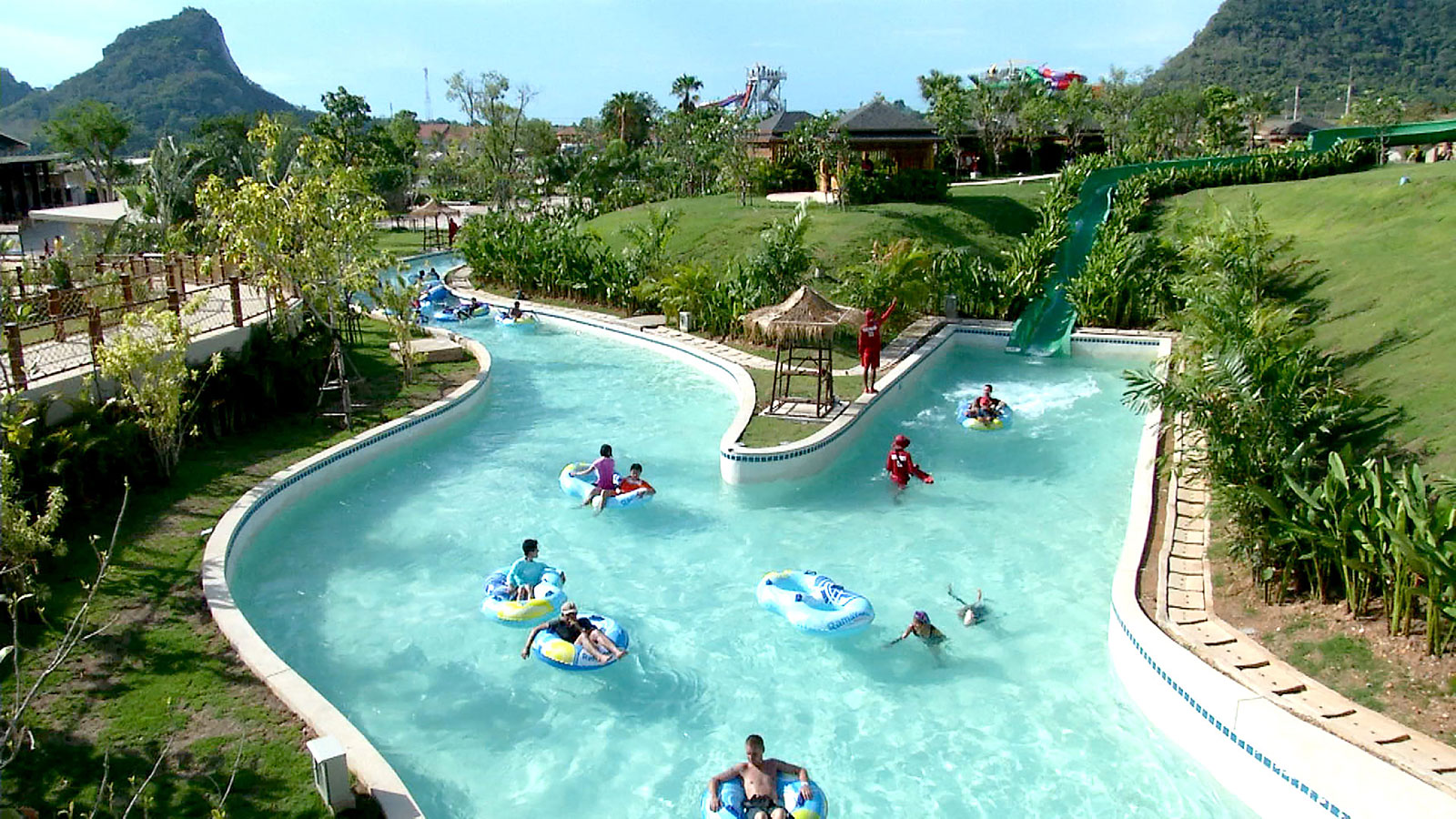
The lazy wave river at Ramayana Water Park in Pattaya, Thailand

A lazy river is a water ride found in water parks, hotels, resorts, and recreation centers, which usually consists of a shallow (2.5–3.5-foot (0.76–1.07 m)) pool that flows similarly to a river.[1] There is generally a slow current, usually just enough to allow guests to gently ride along lying on rafts. The current is generated by means of a gradual slope in the terrain, aided by a pumping mechanism that allows for the river to continue flowing indefinitely. There may also be scenic elements added, such as small waterfalls on the edge of the river. Some connect or lead into swimming pools or wave pools, while others are self-contained courses that simply complete a circuit.

A Torrent River, or wave river, is a related concept. Torrent rivers feature wave machines similar to those that are in wave pools; the waves then push riders (who are on rafts, as they are in a regular lazy river) around the river faster than they would be traveling in a regular lazy river. Torrent rivers appear at all of the Schlitterbahn water parks and Aquaventure in Dubai and the Bahamas.

A Current Channel is another water feature found in aquatic facilities that uses moving water for enjoyment. A current channel usually consists of water 3–5 feet (0.91–1.52 m) deep and the width of the channel is no greater than 10 feet (3.0 m). Water flows similarly to a lazy river but because of the depth can be used for aquatic therapy and swimming or walking against the current.

References

[edit]
[edit]
Revisions and contributorsEdit on WikipediaRead on Wikipedia
from Grokipedia
A lazy river is a popular water attraction typically found in water parks, resorts, hotels, and recreational centers, featuring a shallow, elongated channel of with a gentle, continuous current that propels participants—usually on tubes, rafts, or while swimming—in a looping path for relaxation and leisure. These attractions are designed to mimic a slow-flowing river, often spanning several hundred feet to over a mile in length, with depths generally ranging from 3 to 4 feet to ensure safety and ease of entry. The current is generated by pumps or natural circulation systems, creating a serene floating experience that contrasts with more thrilling rides. The origins of the lazy river trace back to mid-20th-century recreational tubing on natural rivers, which gained popularity in the 1940s as an accessible outdoor activity, but the modern engineered version emerged in the 1970s alongside the rise of dedicated water parks. In the 1970s, American theme park developer George Millay, founder of SeaWorld and Wet 'n Wild, trademarked the term "lazy river." The first commercial lazy rivers were introduced at Wet 'n Wild locations in the early 1980s, with one at Arlington, Texas in 1983 and another at the original Wet 'n Wild Orlando—the world's first modern water park, opened in 1977—in 1984, helping to popularize the attraction globally. By the 1980s and 1990s, lazy rivers became a staple in water park designs due to their broad appeal for families and low-maintenance operation, with innovations like themed environments, waterfalls, and integrated play elements enhancing the experience. Today, they are engineered for efficiency using propulsion systems that maintain consistent flow rates of about 1-3 miles per hour, prioritizing guest safety through lifeguard oversight and non-slip surfaces, and they continue to evolve with sustainable features like energy-efficient pumps in contemporary installations.

Overview

Definition

A lazy river is a slow-moving, artificial designed as a recreational feature in water parks, resorts, hotels, and recreational centers, typically consisting of a shallow channel where visitors float leisurely on inner tubes, rafts, or directly in the along a continuous loop that simulates a gentle natural river current. This setup allows for passive relaxation, with the water flow carrying participants without requiring or physical effort, often incorporating scenic elements like rock formations or landscaping to enhance the serene experience. These waterways are generally 3 to 4 feet deep to accommodate safe floating while permitting adults to stand if needed, with channel widths ranging from 8 to 12 feet to support multiple users side by side; dimensions vary by installation type, with commercial examples typically longer and wider than residential ones. Total lengths commonly span 400 to 2,000 feet in commercial installations, forming a closed circuit that returns floaters to the entry point, while the current speed is maintained at 1 to 2 to promote unhurried drifting. Unlike wave pools, which generate dynamic waves for active splashing and body surfing, or rapid rivers that feature high-speed currents and obstacles for adrenaline-seeking thrills, a lazy river prioritizes tranquil, low-exertion navigation focused on rest and enjoyment. This design draws brief inspiration from natural river tubing activities but adapts them into a controlled, looping aquatic environment.

Purpose and appeal

Lazy rivers serve as a primary low-energy attraction in parks, designed to offer families a relaxing way to cool off and unwind amid hot summer conditions. By providing a gentle, continuous flow that carries visitors on inflatable tubes, these features create a serene floating that contrasts with high-adrenaline , allowing guests to recharge while exploring the park's layout as a central connective element. The appeal of lazy rivers stems from their relaxing effect through gentle water movement, as well as social benefits that enhance by enabling families and friends to share the leisurely circuit together, promoting bonding and shared enjoyment without the intensity of other attractions. This combination of tranquility and interaction boosts overall visitor satisfaction and encourages prolonged stays, drawing repeat engagements. From a commercial perspective, lazy rivers drive revenue as high-capacity features that accommodate large groups with minimal queuing, attracting premium-spending visitors and supporting ancillary sales like , beverages, and event rentals. They appeal broadly to all ages but particularly to families with children aged 2 to 18, a core demographic seeking accessible, low-risk respite in settings.

History

Early origins

The concept of the lazy river, evoking serene, leisurely floating on water, found early cultural expression in the 1930 popular song "(Up a) Lazy River," composed by with lyrics by Sidney Arodin. This , first recorded by Carmichael's in , romanticized the imagery of drifting along a gentle under the sun, capturing a sense of relaxation that would later influence recreational water activities. The tune's widespread appeal, covered by numerous artists including , helped embed the "lazy river" motif in American popular culture as a symbol of unhurried leisure. A pivotal early implementation occurred in 1941 when David Breault, owner of the Terrace Nite Club in Somerset, Wisconsin, organized the first recorded mass inner-tube floating event on the Apple River to promote his business. On July 4th weekend, Breault supplied approximately 200 participants with discarded automobile inner tubes for a 45-minute downstream float, where revelers drank beer and socialized amid the gentle current, turning the activity into a novel promotional outing. This event, photographed by for magazine's July 21, 1941, issue, marked the inaugural organized tubing experience and highlighted the recreational potential of natural river floating as a communal pastime. In the 1950s, Princess Panthip Chumbhot of Nagar Svarga, a suburb of , , transformed the surrounding her palace into a paid recreational attraction by introducing inner-tube floating for visitors. As a hobbyist promoter of activities, she provided rented tubes for locals and tourists to drift leisurely around the , creating an accessible water-based diversion in a tropical setting. The endeavor gained international attention through a 1965 feature, which showcased the princess's initiative and hundreds of participants enjoying the floats, thereby elevating awareness of lazy river-style recreation beyond Western contexts. These informal precursors laid groundwork for the formalized lazy rivers that emerged in commercial water parks during the late .

Commercial development

In the 1970s, George Millay, co-founder of SeaWorld in 1964, trademarked the term "lazy river" to formalize the concept for commercial water attractions. This innovation built on earlier informal river tubing experiences, transforming them into a structured, continuous float ride designed for relaxation amid high-energy water park environments. Millay introduced the first lazy river at Wet 'n Wild Arlington, Texas, in 1983, where the one-third-mile attraction encircled the wave pool, creating an integrated layout that encouraged all-day visitation and boosted ancillary revenue from concessions. The concept was later added to , the world's first modern which he opened in 1977, in the mid-1980s to enhance guest dwell time. By the late 1980s, the lazy river had become a standard feature in U.S. water parks, complementing thrill slides with low-intensity appeal for broader audiences. From the 1990s onward, its global proliferation accelerated alongside family-oriented theme park trends, appearing in resorts and parks worldwide as a versatile, high-capacity draw that supported multi-generational entertainment.

Design and features

Basic components

A lazy river's channel structure forms the core of the attraction, typically comprising meandering or oval-shaped pathways built from or materials to ensure and smooth water guidance. These pathways feature rounded, seamless walls that minimize turbulence and promote a gentle flow, often forming continuous loops ranging from 400 to 1,000 feet in length for extended floating experiences. Entry and exit points are integrated with user-friendly features such as steps, zero-depth beaches, or conveyor lifts to allow safe and convenient access without disrupting the current. Floating aids are essential for user comfort and safety, consisting of inflatable inner tubes for single riders or multi-person rafts capable of accommodating two to six individuals. These aids are constructed from heavy-duty vinyl or PVC materials, often 30-40 gauge thick, to resist punctures and provide stable while supporting weights up to 220 pounds per tube. They are typically tethered or freely drifting, with grab handles and backrests to enhance relaxation during the ride. Aesthetic elements contribute to the immersive appeal, with average water depths of 3 to 4 feet allowing most users to touch the bottom if desired, fostering a of security. Integrated , such as artificial rocks, waterfalls, and like palm trees, lines the channels to evoke a natural riverine or resort-like environment, enhancing visual and thematic engagement. These components collectively support a leisurely floating experience that promotes relaxation and social interaction.

Engineering aspects

Lazy rivers rely on sophisticated systems to generate a continuous, gentle current that mimics natural river flow. Traditional designs employ submerged jets strategically placed along the channel walls to propel water at speeds of 1 to 2 , ensuring a relaxing drift for riders. Newer systems incorporate pumps, which provide more efficient and controllable flow by directly moving large volumes of water without excessive . The total flow rate is determined by the channel's dimensions, typically ranging from 500 to 2,000 gallons per minute (GPM) for mid-sized rivers to maintain consistent velocity across varying widths and lengths. Construction materials are selected for durability in aquatic environments, with shells being predominant due to their non-porous surfaces that resist from chlorinated water and chemicals. The smooth gel coating on prevents adhesion, simplifying initial setup and long-term integrity compared to more porous alternatives like gunite. To accommodate diverse users, engineers incorporate variable depth zones, such as shallower sections around 20 inches for children and deeper areas up to 3 feet for adults, achieved through molded sections that ensure without compromising flow. Integration challenges focus on maintaining uniform flow throughout the circuit, particularly in curved sections where stagnation can occur if not properly engineered. Corner radius designs are optimized with wider turns and supplementary wall jets on the outer edges to accelerate water velocity, preventing eddies and ensuring even circulation at 1-2 mph. Additionally, UV or systems are integrated into the hydraulic setup during initial commissioning to achieve by disinfecting the full volume without relying solely on chemicals, establishing baseline purity before operation.

Operation and maintenance

Water flow management

In lazy river operations, pump systems are central to maintaining a consistent current, typically utilizing variable-speed motors equipped with variable frequency drives (VFDs) to dynamically adjust flow rates based on operational needs. These motors compensate for variations in user density by increasing or decreasing propulsion to sustain an even current speed of approximately 1 to 2 , preventing disruptions in the rider experience. Flow is monitored continuously through sensors such as transmitters and flow meters, which detect potential issues like overflows from excessive bather load or dead zones where circulation stagnates, enabling real-time corrections to uphold hydraulic balance. The loop design ensures continuous, endpoint-free circulation, with water propelled around the closed path using low-head axial flow pumps that prioritize energy efficiency by minimizing vertical lift requirements and operating at lower energy costs compared to traditional high-head systems. Weirs or adjustable gates at entry points regulate current speed by controlling ingress and maintaining uniform , while the overall system achieves a turnover rate of 2 hours or less to support seamless looping without stagnation. This configuration, often employing centrifugal or axial pump types for high-volume, low-pressure movement, reduces through optimized recirculation paths that avoid unnecessary resistance. Daily operational protocols begin with pre-opening inspections to verify distribution across the loop, including checks of pressures, flow meter readings, and inlet velocities to confirm no blockages or imbalances. Adjustments are made as needed for environmental influences, such as repositioning skimmers to counter wind effects on surface flow or replenishing to account for temperature-driven that could alter levels and current strength. These routines ensure the system operates at design capacity throughout the day, with sensors alerting staff to deviations for immediate intervention.

Chemical and structural upkeep

Maintaining in lazy rivers requires precise chemical treatment to prevent and ensure bather safety. Disinfectants such as or are typically dosed to maintain free levels between 1 and 3 ppm or levels between 3 and 5 ppm, with regular testing to adjust for bather load and environmental factors. balance is controlled at 7.2 to 7.8 to optimize efficacy while minimizing eye and skin . These parameters align with guidelines from the Model Aquatic Health Code (MAHC), though local regulations may vary. systems, often using or cartridge filters, circulate the entire water volume every 2 hours or more frequently (achieving a turnover rate of 2 hours or less) to remove suspended particles and support chemical distribution. Cleaning routines focus on preventing buildup and maintaining through daily skimming and vacuuming, supplemented by weekly scrubbing of walls and floors to dislodge potential algae growth. In cases of visible , the may be shocked with elevated disinfectant levels, followed by partial or full draining and thorough scrubbing to restore clarity. Structural inspections are performed regularly, typically weekly or monthly, to detect cracks in linings or surfaces that could lead to leaks or safety issues. Long-term care includes seasonal winterization in cold climates, where water levels are lowered below skimmers, pipes are drained, and winterizing chemicals are added to protect against freeze damage. Inflatable tubes provided for riders are replaced every 1 to 2 years, as prolonged UV exposure causes material degradation, reducing durability and safety.

Safety and regulations

Built-in safety features

Lazy rivers incorporate structural safeguards designed to reduce the of injuries during user floating. Decks and barriers feature rounded or beveled edges to prevent cuts and abrasions from sharp corners. Padded barriers, often made of impervious, nontoxic, and slip-resistant materials, are installed around obstacles and overhead obstructions to cushion potential impacts. Depth markers are required at entry and exit points to inform users of levels, while non-slip ramps and slip-resistant flooring provide safe access and egress, minimizing slip hazards. Equipment standards enhance operational safety in lazy rivers. Lifeguard stations are strategically positioned along the course, typically at bends and intervals to ensure unobstructed of the entire flow, with elevated chairs providing clear views of bathers. shut-off valves and switches for pumps and recirculation systems allow immediate cessation of water flow and propulsion in crisis situations, such as entrapments or medical emergencies. These elements comply with established standards, including ANSI/APSP-16 for outlets and aspects of ASTM F2376 for and attraction systems, ensuring robust and protocols. Visibility aids support effective supervision and user awareness in lazy rivers. is maintained to allow visibility of the bottom and any submerged objects, achieved through regular and chemical balancing to meet standards. For evening or low-light operations, and perimeter provides a minimum of 10 footcandles (108 ) on the water surface, ensuring safe and monitoring without or shadows.

Hazards and preventive measures

Lazy rivers, while designed for relaxation, present several potential hazards that can lead to injuries or health issues. One common risk is tube pile-ups in slower sections of the current, which can cause collisions, ejections from tubes, and subsequent drownings or impacts, particularly in overcrowded conditions where riders are unrestrained and free to move. Bacterial contamination from inadequate sanitation poses another threat, with pathogens such as the chlorine-resistant parasite Cryptosporidium and, rarely in inadequately disinfected systems, free-living amoebae like Naegleria fowleri (brain-eating amoeba) thriving in warm, recirculated water, leading to gastrointestinal illnesses or rare but severe infections. Slip-and-fall incidents are frequent at entry and exit points, where wet surfaces and transitions from tubes to walkways contribute to fractures, head trauma, or sprains. To mitigate these risks, operators implement strict preventive measures aligned with industry standards. Height and weight restrictions are commonly enforced, such as prohibiting solo tube use for children under 48 inches (122 cm) tall, requiring adult supervision or U.S. Coast Guard-approved life vests for younger or weaker swimmers to prevent submersion in deeper sections. Lifeguards undergo certified training, including programs that emphasize scanning techniques, rescue protocols, and recognition of distress in low-visibility or flowing environments. Compliance with the Graeme Baker Pool & Spa Safety Act (VGB Act) mandates anti-entrapment drain covers and sump systems in lazy river circulation to prevent hair, limb, or body entrapment, reducing suction-related incidents. is maintained through regular testing and chlorination to control bacterial levels, with facilities often following Centers for Disease Control and Prevention (CDC) guidelines for recreational hygiene. Incident response protocols further enhance through structured training and communication. Facilities conduct regular drills for rescues, simulating scenarios like ejections or medical emergencies, ensuring lifeguards can perform swift extractions and CPR as per Red Cross standards. Prominent at access points warns against horseplay, mid-ride exits, and diving, while prohibiting behaviors that exacerbate pile-ups, with rules enforced by on-duty staff to maintain orderly flow. These measures, combined with emergency action plans, help minimize response times and guest harm.

Variations and modern uses

Water park implementations

In water parks, lazy rivers are engineered at a grand scale to serve as central, immersive features that integrate seamlessly with surrounding attractions. These waterways commonly exceed 1,000 feet in length, often forming looping paths that encircle high-traffic areas like wave pools or slide towers to maximize spatial efficiency and guest circulation. For example, the Castaway Creek at , which opened in 1989, measures 2,000 feet and winds around the park's expansive surf pool, providing a continuous float that enhances the overall layout. Such designs support substantial capacities, typically accommodating over 1,000 users per hour through controlled water flow rates of 1 to 2 , allowing for high-volume relaxation without congestion. To elevate the passive drifting experience, water park lazy rivers frequently incorporate subtle enhancements that introduce gentle interactivity and thematic depth. Bubbling jets and water sprays create playful currents and cooling mists, while themed obstacles like faux caves or immersive tunnels add visual and mild sensory excitement without interrupting the serene progression. Notable implementations include the Bubbly Lazy River at , where character-themed sprays and drops engage floaters from overhead structures, and the Kaleidoscope Kavern at Wilderness at the Smokies, featuring projection-mapped caverns that simulate a dreamlike, nature-inspired journey. These elements maintain the core relaxation focus while fostering repeat engagement. Economically, lazy rivers function as anchor attractions in water parks, significantly extending guest dwell time and thereby amplifying revenue streams from concessions, rentals, and ancillary services. By offering a low-energy respite amid more adrenaline-driven rides, they encourage prolonged on-site stays, with design analyses indicating boosts in overall park throughput and visitor satisfaction. At Typhoon Lagoon, the lazy river's integration has contributed to the park's enduring appeal as a multifaceted destination since its debut.

Residential and resort adaptations

Residential lazy rivers represent scaled-down adaptations of the traditional , typically featuring compact loops ranging from 200 to 500 feet in length to fit spaces. These installations often utilize shells or modular kits for in-ground or semi-in-ground , allowing for easier integration into private properties. Costs for such systems generally range from $100,000 to $300,000, depending on size, customization, and site preparation, with simpler oval-shaped configurations starting as low as $30,000 to $100,000. For more affordable options, systems like the Fastlane Swim current generator can simulate a lazy river flow in an existing pool without requiring a full loop, mounting directly to the pool wall for adjustable currents suitable for residential use. In resort and hotel settings, lazy rivers are customized to enhance guest experiences, often incorporating infinity-edge designs that seamlessly blend with main pools for a visually expansive effect. For instance, the Marriott Marquis features a rooftop Texas-shaped lazy river adjacent to an , promoting relaxation and extended stays among visitors. Luxury properties like the Four Seasons Resort Orlando include variable-speed flows in their lazy rivers, allowing adjustments for leisurely drifts or more dynamic rapids during events, which contribute to guest retention by offering unique, on-site recreational amenities. These adaptations prioritize aesthetic integration with surrounding landscapes, such as rocky formations at , to create immersive environments that encourage repeat visits. Modern trends in residential and resort lazy rivers emphasize eco-friendly features, including natural filtration systems that use in regeneration zones to purify water without heavy chemical reliance, reducing environmental impact. Saltwater chlorination systems are increasingly adopted in home installations for gentler water chemistry and lower maintenance needs compared to traditional methods. Following the 2020 pandemic, there has been a notable surge in backyard lazy river projects driven by preferences, with demand for these features rising alongside overall pool installations to create private resort-like retreats.

References

Add your contribution
Related Hubs
User Avatar
No comments yet.