Hubbry Logo
Legend trippingLegend trippingMain
Open search
Legend tripping
Community hub
Legend tripping
logo
8 pages, 0 posts
0 subscribers
Be the first to start a discussion here.
Legend tripping
Legend tripping
from Wikipedia
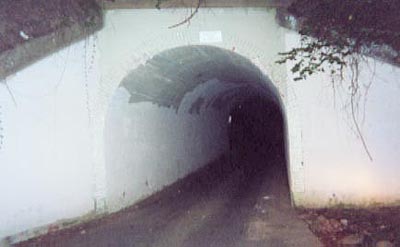
The Bunny Man Bridge, location of a 1970s urban legend about a man in a rabbit costume threatening people with an axe

Legend tripping is a practice in which a usually furtive nocturnal pilgrimage is made to a site which is alleged to have been the scene of some tragic, horrific, and possibly supernatural event or haunting.[1][failed verification] The practice mostly involves the visiting of sites endemic to locations identified in local urban legends, and can serve as a rite of passage. Legend tripping has been documented most thoroughly to date in the United States.[2]

Sites for legend trips

[edit]

While the stories that attach to the sites of legend tripping vary from place to place, and sometimes contain a kernel of historical truth, there are a number of motifs and recurring themes in the legends and the sites. Abandoned buildings, remote bridges, tunnels, caves, rural roads, specific woods or other uninhabited (or semi-uninhabited) areas, and especially cemeteries are frequent sites of legend-tripping pilgrimages.

Reactions and controversies

[edit]
Pope Lick Trestle in Louisville, Kentucky, the reputed home of the Pope Lick Monster

Legend-tripping is a mostly harmless, perhaps even beneficial, youth recreation. It allows young people to demonstrate their courage in a place where the actual physical risk is likely slight.[3] However, in what Ellis calls "ostensive abuse," the rituals enacted at the legend-tripping sites sometimes involve trespassing, vandalism, and other misdemeanors, and sometimes acts of animal sacrifice or other blood ritual.[4] These transgressions then sometimes lead to local moral panics that involve adults in the community, and sometimes even the mass media. These panics often further embellish the prestige of the legend trip to the adolescent mind.[3] In at least one notorious case, years of destructive legend-tripping, amounting to an "ostensive frenzy," led to the fatal shooting of a legend-tripper near Lincoln, Nebraska followed by the wounding of the woman whose house had become the focus of the ostension.[5] The panic over youth Satanism in the 1980s was fueled in part by graffiti and other ritual activities engaged in by legend-tripping youths.[3]

Associated places in the United States

[edit]
Bachelor's Grove cemetery (in infrared)

See also

[edit]

References

[edit]

Further reading

[edit]
Revisions and contributorsEdit on WikipediaRead on Wikipedia
from Grokipedia
Legend tripping is a folkloric practice in which individuals or small groups, often adolescents, undertake nocturnal visits to locations reputed to be the scenes of or tragic events described in local legends, aiming to experience phenomena firsthand or test the veracity of the tales. This activity, distinct from commercial ghost tourism due to its informal, non-monetized nature, typically involves furtive pilgrimages that serve as rites of passage, fostering group bonding through shared fear and defiance of adult rationality. Documented primarily in North American contexts since the late , legend tripping draws from contemporary urban legends rather than ancient , with participants engaging in rituals like chanting or leaving offerings to provoke apparitions, though empirical outcomes remain unverified beyond psychological thrill-seeking. Notable sites include abandoned cemeteries and bridges, such as in , where visitors report orbs and apparitions, but such excursions have sparked controversies over trespassing, , and risks to personal safety, prompting site closures and legal warnings in some areas. scholars like Bill Ellis have analyzed it as a of youthful , supported by surveys showing widespread participation across demographics, yet underscoring its roots in toward claims amid rationalist education.

Definition and Characteristics

Core Definition

Legend tripping is a folkloric practice in which individuals or groups, typically adolescents, undertake excursions to specific sites reputed in local legends to be locations of supernatural, uncanny, or historically eerie events, with the primary aim of testing the legend's truth through personal experience or ostensive enactment. Folklorists characterize this as a form of "ostension," where participants actively perform or provoke the legendary narrative to blur the boundary between story and reality, often under cover of night to heighten suspense and perceived authenticity. The activity frequently involves communal participation, with mixed-gender groups of youths sharing the narrative en route and engaging in rituals that mimic or challenge the legend's elements, such as calling out to spirits or searching for physical evidence. Central to legend tripping is its orientation toward empirical verification or thrill-seeking rather than passive belief; participants seek tangible proof, like apparitions or anomalous phenomena, while acknowledging the legend's probable fictionality, which distinguishes it from devout or . Scholarly analyses, drawing from behavioral surveys of U.S. adolescents in the 1980s, indicate that such trips often occur between ages 12 and 18, peaking in frequency during high school years, and may incorporate minor infractions like trespassing on private or restricted to access remote bridges, cemeteries, or abandoned structures. These outings reflect a cultural response to teenage , blending transmission with exploratory defiance, though outcomes rarely confirm the legends and instead reinforce social bonding through shared adrenaline. While not exclusively juvenile—adults occasionally participate—the practice's core manifests in youth-driven iterations, as documented in case studies of sites like haunted retreats or roadside apparitions, where the legend's narrative serves as a script for improvised performance. Empirical observations from fieldwork underscore that legend tripping perpetuates oral traditions in modern contexts, adapting pre-industrial ghost lore to vehicular mobility and suburban sprawl since at least the mid-20th century. Legend tripping entails informal, often nocturnal excursions by small groups—predominantly adolescents and young adults—to physical sites associated with local urban legends involving , tragic, or horrific events, with the explicit goal of enacting rituals to provoke or verify the lore's phenomena. These visits emphasize ostension, the folkloric practice of performing actions drawn from the legend itself, such as chanting specific phrases, scattering offerings, or simulating challenges, to elicit a response from the purported entity. The activity follows a tripartite structure: preparatory legend-sharing to build anticipation, on-site provocation amid environmental immersion, and retrospective storytelling that sustains or adapts the narrative for future participants. Central to its character is a focus on subjective, experiences and social reinforcement through , rather than solitary or profit-driven pursuits, reflecting a cultural exploration of mortality and the frontier without commercial infrastructure. Unlike , which deploys technological tools like detectors and audio recorders to gather for systematic analysis, legend tripping prioritizes personal sensory encounters and belief validation over reproducible data. It further diverges from , centered on navigating derelict buildings for architectural or historical intrigue absent any agenda, by inherently linking site selection and behavior to legendary provocation. In distinction from organized investigations, which mimic scientific to debunk or confirm hauntings, legend tripping accommodates and communal as core outcomes, eschewing formal protocols. Ghost , by contrast, commercializes such sites through guided, ticketed narratives, whereas legend tripping operates as a , furtive rite unbound by economic exchange or scripted itineraries.

Historical Development

Early Folklore Influences

The behavioral patterns observed in legend tripping trace back to pre-modern European folklore traditions, where individuals or groups visited specific locales—such as ancient barrows, fairy mounds, or reputed haunted ruins—to engage directly with supernatural narratives embedded in oral lore. These early practices often involved ritualistic elements, like reciting charms or performing dares at twilight, aimed at summoning or challenging legendary entities, thereby blending with experiential verification. Folklorists have documented analogous activities in Celtic and Anglo-Scottish traditions, where proximity to "thin places" in the landscape was believed to facilitate encounters with otherworldly beings, influencing the site-specific focus of later legend trips. Parallels also exist with medieval religious pilgrimages to saints' shrines, where devotees enacted hagiographic legends by seeking apparitions or miracles at tombs, such as those associated with in during the 7th–11th centuries, effectively ostending () the sacred narratives through physical presence and . Unlike devotional pilgrimages, however, visitations frequently incorporated elements of skepticism or bravado, as seen in 17th–18th century accounts of youths testing ghost stories at abandoned manors in rural Britain, prefiguring the adolescent rite-of-passage dynamics in modern legend tripping. These traditions underscore how early localized supernatural beliefs to tangible sites, fostering a cultural impetus for on-site experimentation that persists today. While direct ethnographic records from antiquity are sparse, literary depictions in epics and folktales—such as medieval Irish immrama voyages to spectral islands or Arthurian quests to enchanted locales—further illustrate the of perilous journeys to legendary sites for personal confrontation with the mythic, providing narrative blueprints for legend-tripping rituals. Systematic historical analysis of these precedents remains underdeveloped, with much inference drawn from surviving oral and textual rather than contemporaneous documentation, highlighting the enduring role of culture in shaping such behaviors.

Modern Recognition and Evolution

Folklorists first formally recognized legend tripping as a distinct contemporary practice in the late and early , coining the term to denote organized excursions to sites tied to narratives for the purpose of ostension—enacting or testing the through physical presence and ritualistic behavior. Early academic attention focused on its role in adolescent folklore, with scholars like Bill Ellis conducting behavioral surveys, such as his 1983 study of sites, which documented patterns of group visits to haunted bridges and tunnels to provoke ghostly encounters. During the Satanic , when public fears linked such activities to dangers, folklorists defended legend tripping as an extension of traditional belief-testing rather than evidence of ritual abuse, emphasizing its roots in oral verification over literal endorsement. By the late , legend tripping evolved beyond informal youth expeditions, incorporating automotive mobility for remote access and media amplification through horror films and compendia, which popularized sites like Bridges nationwide. The practice integrated into frameworks in the 1990s and 2000s, with commercial ghost tours emerging as structured variants; for example, organized investigations at historical haunts drew paying adults seeking experiential authenticity, blending with entertainment. Scholarly works, including the 2008 analysis of extensions in Legend-Tripping Online, highlighted how digital forums facilitated virtual ostension and crowd-sourced site mapping, expanding participation beyond physical risks. In the 21st century, legend tripping has commercialized further, with global examples like Romania's tourism generating over 250,000 annual visitors to Transylvanian castles for legend-inspired reenactments and overnight stays. Amateur ghost-hunting groups, spurred by reality TV series since the early , have formalized rituals with equipment like EMF meters, shifting emphasis from fear-testing to empirical "evidence" collection, though empirical validation remains absent in peer-reviewed analyses. Recent casebooks, such as Legend Tripping: A Contemporary Casebook (2008), underscore its persistence as a social mechanism for negotiating belief in secular contexts, evolving amid smartphone-enabled documentation that both preserves and commodifies ephemeral experiences.

Psychological and Social Motivations

Adolescent Psychology and Rite of Passage

Legend tripping functions as a contemporary, informal for adolescents, marking the shift from childhood dependency to adult autonomy through ritualized tests of bravery at sites associated with legends. This practice involves groups visiting remote or eerie locations, such as haunted roads or cemeteries, often at night, to perform acts that simulate confrontation with the unknown, thereby simulating the liminal phase of traditional rites where participants undergo trials before reintegration into with elevated status. Unlike formalized cultural initiations, legend tripping emerges organically from peer dynamics, serving to initiate newcomers—typically younger teens—under the guidance of more experienced peers, who recount legends to heighten anticipation and enforce participation rituals like chanting or physical dares. From a psychological perspective, these excursions align with adolescent developmental needs, particularly in Erik Erikson's of identity versus role confusion, where experiment with to forge a coherent amid hormonal and social pressures. Participants confront primal anxieties, including mortality and isolation, in a semi-controlled setting that builds emotional resilience without genuine peril, as the elements provide a narrative framework for processing fears through ostension—the performative enactment of . Empirical observations from a behavioral study of 41 adolescents in , conducted between July 1989 and January 1990, reveal motivations rooted in thrill-seeking to escape , achieve peer approval, and assert , with younger teens (ages 13-15) more focused on courage-testing than older ones, who treat trips as social outings. Gender socialization manifests distinctly during these events, with rigid roles reinforcing cultural norms: males typically exhibit bravado via solitary daring feats, such as approaching alleged hauntings or climbing , to demonstrate , while females prioritize interdependence, often through vocal expressions of that prompt group cohesion and male protection. No all-female groups were reported in the study, underscoring how tripping perpetuates gendered lessons in risk tolerance and relational dynamics as part of maturation. Overall, the activity's —mixed-gender groups of 3-10, recitation en route, and post-trip —fosters social bonding and status elevation for survivors, mirroring rites that integrate individuals into adult peer networks while mitigating the disorientation of modern, institutionally sparse transitions to maturity.

Social Dynamics and Group Behavior

Legend tripping frequently involves small groups of 3 to 10 adolescents, typically mixed-gender and excluding all-female compositions, where compels participation to maintain social standing within the circle. Invitations to join such trips signal peer , enhancing group cohesion and providing a structured outlet for adolescent against adult oversight. Within these groups, behavior shifts from initial rowdy excitement to ritualized seriousness en route to the site, with collective actions like chanting legends or provocative enactments amplifying shared fear and thrill. This progression fosters emotional interdependence, as participants narrate personal memorates post-event, reinforcing group narratives and bonds through ostensive validation of the lore. Gender dynamics shape interactions distinctly: males often assume leadership roles, driving vehicles and performing high-risk feats like solitary site traversals to assert bravery and masculinity, while females tend to vocalize fear, emphasize cooperation, and participate under group insistence to avoid exclusion. These patterns reflect adolescents' negotiation of sexuality, morality, and identity, with trips serving as playful yet liminal explorations of taboo themes like sin and corruption, distinct from adult-oriented legend emphases on grief. Empirical observations from interviews with 41 teens indicate such trips peak in summer nights, blending boredom escape with controlled confrontation of independence and mortality.

Practices and Rituals

Preparation and Site Selection

Participants in legend tripping select sites based on their association with specific local urban legends, prioritizing locations such as abandoned buildings, cemeteries, bridges, or forests where events are purported to occur, often chosen for their isolation, historical notoriety, or restricted access to amplify the thrill and perceived authenticity of the experience. Site choice emphasizes narrative fidelity to the legend's details, with participants verifying or adapting locations through oral accounts, printed collections, or modern digital resources like maps and online forums to ensure the site aligns with the story's geography and enhances ostensive enactment. Preparation begins with initiation into the legend through retelling or research, where group members recount the tale to build anticipation and establish the expected rituals or phenomena, serving as a psychological priming for the trip. Logistical planning follows, typically involving the assembly of a small group—often at least three individuals, including a primary challenger, companion, and witness—to distribute roles and mitigate risks, with trips scheduled for nighttime hours or seasonally significant dates like Halloween to heighten atmospheric tension. Minimal equipment is gathered, such as flashlights for navigation in darkness, and occasionally props tied to the legend (e.g., coins or offerings for specific rituals), though the focus remains on unadorned confrontation rather than elaborate gear. This phase underscores the activity's informal, peer-driven nature, drawing from adolescent social dynamics rather than formalized protocols.

Execution and Common Rituals

Legend tripping execution generally follows a structured sequence observed in : participants first familiarize themselves with the through oral or shared narration, then travel to the site—typically under nocturnal conditions to heighten atmospheric tension—and perform specific acts designed to provoke or confirm the elements described in the tale. These acts constitute the core phase, where individuals or groups mimic behaviors from the legend, such as crossing a threshold like a bridge or graveyard gate at a prescribed time, often midnight, to "test" the veracity of the story. Common rituals emphasize performative engagement, including chanting the name of the spectral entity or reciting key phrases from the legend to summon it, as documented in analyses of adolescent folklore practices. Physical interactions with the site, such as touching artifacts (e.g., statues or structures) or leaving material tokens like coins, food offerings, or graffiti, serve to mark participation and invoke reciprocity from the supernatural. In some cases, groups incorporate sensory enhancements like flashlights or audio recordings to document potential anomalies, blending modern technology with traditional invocation methods. Site-specific variations highlight adaptive rituals; for instance, at locations like the Bunny Man Bridge, trippers often convene on Halloween or full moon nights, lingering to listen for axe strikes or guttural cries while avoiding patrols, reflecting a blend of thrill-seeking and evasive execution. Similarly, graveyard trips may involve "forbidden" entries followed by vigils for ghostly apparitions, with rituals rejecting superstitious passivity in favor of active provocation. These practices, while informal, underscore legend tripping's role as a ritualized toward , where empirical "testing" through repetition yields experiential narratives rather than definitive proof.

Notable Sites and Examples

Prominent U.S. Locations

The Bridge, also known as the Colchester Overpass, in , serves as a primary destination for legend trippers drawn to its originating from two documented police incidents on October 18 and 19, 1970. In these events, encountered a man clad in a white bunny suit wielding a , who threatened a couple parked nearby and later left a -stuck carcass at another site; no arrests followed despite investigations. The evolved to depict the as an escaped asylum inmate or colonial-era butcher haunting the bridge, prompting annual October visits by groups seeking encounters, often involving rituals like chanting or waiting at midnight, though the site has seen and police interventions due to trespassing. in , abandoned since the 1960s amid declining burials and widespread vandalism, emerged as a legend tripping hotspot in the 1970s due to persistent reports of apparitions including a known as the of Bachelor's Grove and floating headstones. Visitors, primarily adolescents, have historically engaged in nighttime explorations to witness alleged phenomena such as ghostly figures or orb lights, fueled by a purportedly capturing a translucent woman; the site's isolation in Rubio Woods Forest Preserve facilitated such activities until access restrictions and cleanup efforts in the 2000s reduced uncontrolled entries. Despite lacking empirical verification of claims, the cemetery's draw persists, with documented increases in visitors following media coverage of investigations. Other notable U.S. sites include Brubaker Bridge in , where trippers test legends of ghostly vehicles or maternal spirits pushing cars over an incline, tied to fatal accidents in the mid-20th century. These locations exemplify how localized , amplified by oral transmission and occasional real events, sustains legend tripping as a , though attributes most experiences to psychological suggestion, environmental factors, or human pranks rather than verifiable hauntings.

International Variants

In , legend tripping often intersects with historical at sites tied to myths or medieval , where participants engage in ostensive acts to evoke encounters. in , associated with and popularized by Bram Stoker's Dracula, attracts groups for nighttime explorations, costume play, and rituals mimicking vampiric lore, transforming narrative into experiential verification amid the castle's . Similar practices occur at sites like Prague's Amerika quarries in the , where urban explorers seek remnants of a Nazi-era ghost legend involving a forgotten , blending physical trespass with belief-testing amid abandoned industrial ruins. These variants emphasize atmospheric immersion over adolescent dares, influenced by Europe's dense layering of documented history and myth. In , particularly , variants revolve around the legend—a spectral woman mourning her drowned children—who is said to haunt waterways, prompting youth to visit specific bridges and riversides for auditory or visual ostension. Groups in areas like or call out to summon her wails, often at midnight, replicating the tale's motifs of betrayal and loss rooted in Aztec precursors, with encounters reported as chills or unexplained cries that reinforce communal storytelling. This practice carries cultural weight as a cautionary rite, echoing pre-colonial indigenous warnings against , though empirical investigations attribute phenomena to acoustic illusions or group suggestion rather than verifiable apparitions. Asian variants, notably in , adapt urban legends to infrastructural sites like the Inunaki Tunnel in , an abandoned passage linked to 1980s murder tales and (ghost) hauntings, where thrill-seekers navigate darkness to provoke manifestations such as shadowy figures or screams, mirroring the legend's isolation and violence. These trips incorporate modern elements like for evidence-sharing, contrasting U.S. isolation with Japan's blend of Shinto-Buddhist and post-war trauma narratives, yet risks include structural collapses, as documented in local warnings. Across regions, international legend tripping shares core ostensive dynamics—narrative enactment for experiential proof—but varies by cultural substrates, with Europe's historicism, Latin America's maternal horror, and Asia's technological mediation shaping site selection and ritual intensity.

Physical and Personal Hazards

Legend tripping frequently occurs in remote, unlit areas such as forests, bridges, and abandoned structures, heightening the risk of physical injuries from falls on uneven or overgrown terrain. Participants navigating these sites in darkness without proper equipment face elevated chances of sprains, fractures, or head trauma due to hidden obstacles like roots, debris, or eroded paths. Active railroad trestles, popular for monster legends, pose severe dangers from oncoming trains, which can approach silently at high speeds. At the Pope Lick Trestle in , associated with the legend, multiple fatalities and injuries have resulted from such encounters. On May 27, 2019, a train struck two teenagers trespassing on the trestle, killing 15-year-old Roquel Butler and injuring another. Similar train strikes at this site have caused additional deaths and near-misses, with reports documenting dozens of injuries linked to legend-seeking activities. Personal hazards include isolation in unfamiliar environments, increasing vulnerability to wildlife attacks, such as encounters with coyotes or snakes in wooded areas, or disorientation leading to prolonged exposure to cold or . Group dynamics during nighttime rituals can exacerbate risks, as prompts reckless behavior like climbing unstable structures or ignoring warning signs, potentially resulting in solitary accidents if participants become separated. Substance use, common among adolescent groups, further impairs judgment and coordination, contributing to preventable injuries. Psychological strain from anticipated encounters can induce , causing participants to flee erratically and collide with hazards or vehicles on access roads. While empirical data on outcomes specific to legend tripping remains limited, the adrenaline-fueled context mirrors high-stress scenarios where overrides rational assessment, amplifying physical peril. Legend tripping often entails unauthorized entry onto , abandoned sites, or restricted public lands, constituting criminal under state laws. , such offenses are generally classified as misdemeanors, punishable by fines of $250 to $2,500 and up to six months to one year, with penalties escalating if damage occurs or if the trespass involves structures like dwellings. For example, at St. Anne's Retreat in , a group of legend trippers was arrested for trespassing on Halloween 1997, invoking property rights protections amid repeated unauthorized access to the secluded site. Property damage from these activities includes such as on tombstones, toppled markers, and disturbed graves, which can trigger additional charges like criminal mischief or grave desecration—felonies in many jurisdictions carrying sentences of one to ten years. At Stepp Cemetery in , a notorious legend tripping destination, participants have faced legal action for physical destruction, including defacement and structural harm during rituals. Similarly, Bachelor's Grove Cemetery in has suffered irreversible , with tombstones smashed, stolen, or graffitied and graves exhumed, prompting local to monitor the area heavily due to annual incidents tied to and partying. Restoration costs for such damage often fall on property owners or municipalities, exacerbating preservation challenges for historical sites. In cases of intentional harm, courts may award to deter recurrence, reflecting the willful nature of intrusions motivated by testing rather than legitimate access. Incidents at sites like these underscore how legend tripping, while culturally driven, imposes tangible economic burdens, with cleanup and repair expenses in vandalized cemeteries frequently exceeding thousands of dollars per event.

Cultural Impact and Controversies

Scholarly Analysis and Folklore Preservation

Folklorists Lynne S. McNeill and Elizabeth Tucker define legend tripping as a performative engagement with contemporary , involving visits to sites purportedly haunted or linked to events, often culminating in attempts to ostend—enact or elicit—the legend's elements. This practice, documented since the 1960s through ethnographic surveys like Linda Dégh's studies of adolescents, functions primarily as a social ritual among youth, fostering group cohesion, bravery testing, and emotional derived from the interplay of expectation, environmental cues, and peer dynamics. Scholars such as Bill Ellis emphasize its psychological realism, attributing the thrill to between disbelief and induced fear, rather than empirical validation, with no verified occurrences in controlled analyses. In folklore preservation, legend tripping sustains oral traditions by embedding them in lived experiences, enabling legends to adapt and persist across generations; for instance, retellings during trips incorporate modern details, mirroring historical evolutions from epic narratives to performances. Trey Conner's 2024 ethnographic examination of American sites reveals how such activities maintain amid , with participants inadvertently archiving through shared accounts and digital documentation. However, preservation efforts face challenges from resultant site degradation—vandalism, litter, and erosion documented at locations like —prompting folklorists to advocate balanced documentation over unchecked visitation to protect tangible heritage tied to intangible lore. Academic discourse, informed by anthropologists like , positions legend tripping within broader ostensive dynamics, where folklore's vitality stems from active participation rather than passive transmission, though empirical data from behavioral surveys indicate it rarely yields novel legend variants without media influence. Preservation initiatives, such as university-led projects, leverage tripping narratives to catalog variants, countering erosion from ; yet, sources caution against romanticization, noting that adolescent-led trips prioritize thrill over fidelity, potentially distorting core motifs. This dual role—revitalizing yet risking authenticity—underscores ' emphasis on causal mechanisms like and memetic replication over unsubstantiated claims.

Criticisms, Media Portrayals, and Broader Societal Effects

Legend tripping has faced criticism for facilitating and , particularly at cemeteries and historical sites tied to , where participants often leave behind trash, , or ritualistic debris like coins and personal items, exacerbating maintenance burdens for local authorities. Scholars note that such activities blend with partying and tourism, leading to desecration that undermines site preservation efforts, as observed in cases involving reputed "" or "" graves where legend seekers' intrusions have escalated beyond benign exploration. Additionally, it is critiqued as a vector for , with documented instances of trespassing, substance use, and reckless behavior resulting in injuries or fatalities, prompting to view it as more than harmless thrill-seeking. In media, legend tripping frequently appears as a narrative device in horror genres, depicting groups of youths venturing to alleged haunted locales only to encounter real peril, as in The Blair Witch Project (1999), which popularized the found-footage style by framing amateur investigators' pilgrimage to a woods legend site as a descent into terror. Similar portrayals in films like Butterfly Kisses (2018) reinforce the trope, often exaggerating supernatural elements while underscoring human folly and isolation in remote areas, thereby amplifying public fascination but also glamorizing risks. These depictions, rooted in folklore ostension—where legends are enacted rather than merely recounted—serve didactic purposes akin to cautionary tales, warning against taboo-breaking despite their entertainment value. Broader societal effects include the perpetuation of regional through experiential validation, enabling adolescents to assert and group bonding via shared rituals that mimic rites of passage, though this has historically sparked parental moral panics over youth safety. The has intensified these dynamics by archiving and globalizing local legends, facilitating organized trips and online that extend the practice beyond traditional oral transmission, yet this democratization risks commodifying sacred or tragic sites into attractions. Academically, it highlights tensions in cultural , where legend tripping embodies ambiguity and crisis resolution through communal , but empirical surveys reveal it rarely yields verifiable encounters, instead reinforcing or psychological priming effects among participants. Overall, while contributing to vitality, it underscores causal links between thrill-seeking behaviors and tangible harms like legal repercussions or community disruptions, without evidence of broader positive externalities outweighing these.

References

  1. https://rationalwiki.org/wiki/Legend_tripping
Add your contribution
Related Hubs
User Avatar
No comments yet.