Hubbry Logo
Long drinkLong drinkMain
Open search
Long drink
Community hub
Long drink
logo
8 pages, 0 posts
0 subscribers
Be the first to start a discussion here.
Long drink
Long drink
from Wikipedia
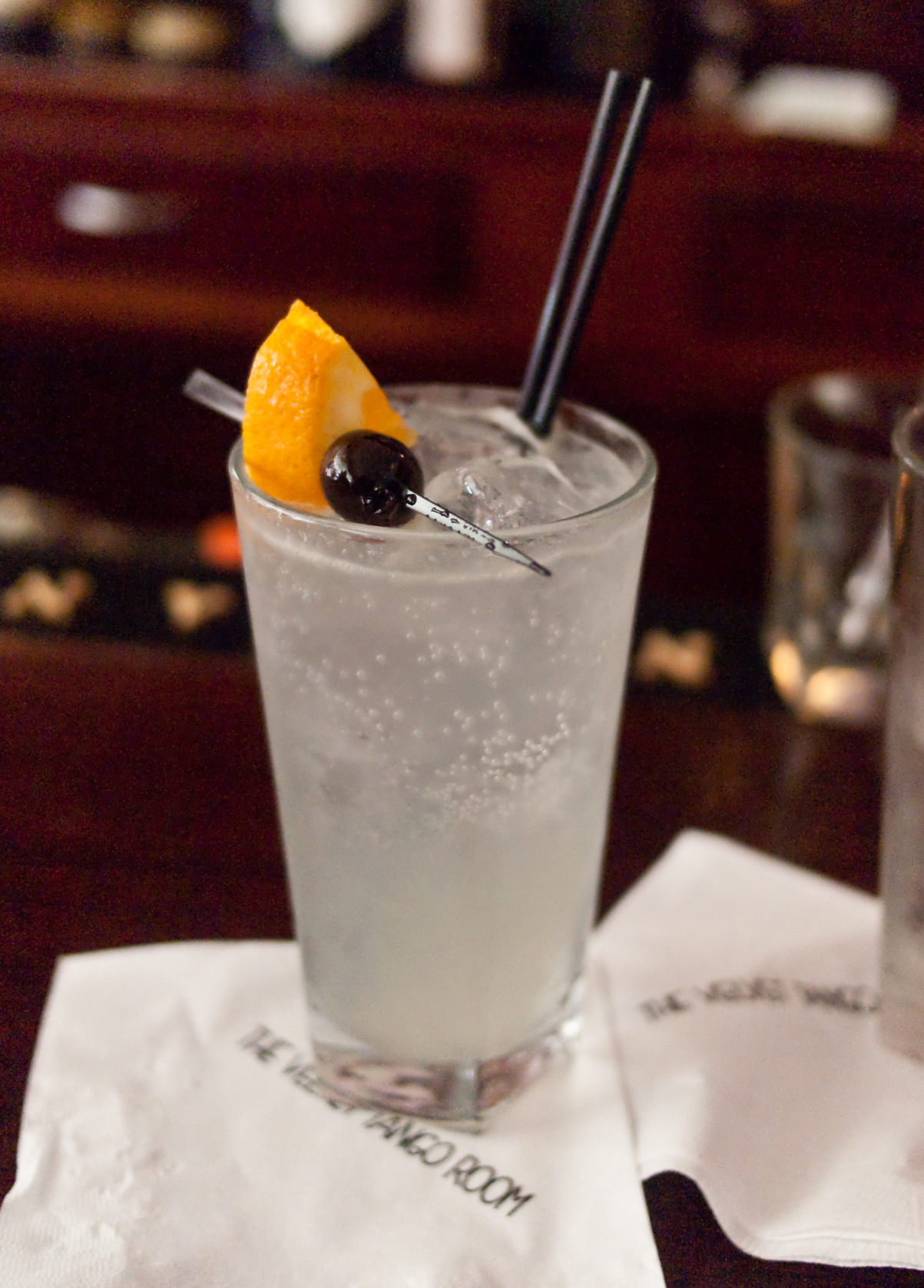
A classic long drink, the Tom Collins

A long drink or tall drink is an alcoholic mixed drink with a relatively large volume (>120 ml (4.1 US fl oz), frequently 160–400 ml (5.4–13.5 US fl oz)).[1] The phrase "long drink" is also sometimes used to refer specifically to the Finnish long drink, also known as a lonkero.

A long drink will have a tall glass full of mixer, in contrast to a short drink, or shooter, which has less mixer, or none. Short drinks are generally stronger since both types tend to contain the same amount of alcohol.

A classic long drink is a Tom Collins. A simple style of long drink is the highball, a cocktail composed of one liquor and one mixer (excluding garnish or ice). A classic example of the highball is the Scotch and soda.

Finnish long drink

[edit]

In Finland, long drink (in Finnish lonkero) refers to a very popular mixed drink made from gin and a mixer, traditionally grapefruit soda, though many other flavours (almost always fruit) are available. It is ubiquitously available in Finnish stores, bars, and restaurants, and has more recently started becoming available in international markets.[2]

See also

[edit]

References

[edit]
Revisions and contributorsEdit on WikipediaRead on Wikipedia
from Grokipedia
The Long Drink, known as in Finnish, is a premixed originating from , typically consisting of and grapefruit soda with an alcohol content of around 5.5% ABV, designed as a refreshing, ready-to-drink that distinguishes itself from hard seltzers through its juniper-forward base and profile. Developed in by the in with the Helsinki-based beverage company , the Long Drink was commissioned specifically to address the logistical challenges of serving alcohol to large crowds of international visitors during the Summer Olympics in , a time when was still recovering from and lacked sufficient bar infrastructure. This innovative solution allowed for rapid production and distribution, marking the birth of a canned that combined locally distilled —often infused with Finland's native berries—with carbonated grapefruit soda to create a light, effervescent drink suitable for mass consumption. Over the decades, the Long Drink has evolved into a cornerstone of Finnish drinking culture, enjoyed across all demographics and occasions—from casual post-sauna gatherings to weddings and national holidays—symbolizing simplicity, national pride, and social ease in a with a strong tradition of moderate alcohol consumption. , the original producer, even established an unofficial holiday called "The Greyest Day of the Year," celebrated annually on the greyest in , to celebrate the beverage's role in brightening Finland's winters. Variants have since expanded beyond the classic grapefruit flavor to include options like , zero-sugar, and stronger iterations, while maintaining the core gin-soda formula that has made it Finland's most popular ready-to-drink alcohol category. In recent years, the Long Drink has gained significant traction in the United States, introduced by Finnish expatriates and entrepreneurs who recognized its appeal in the booming ready-to-drink market; brands like The Long Drink Company, founded in 2018, have secured substantial investments—such as $25 million in funding by 2021—and achieved top sales rankings among canned cocktails, particularly in states with strong Nordic heritage like and . This transatlantic success has attracted high-profile backers, including celebrities like actor and musician , underscoring the beverage's transition from a regional staple to a global phenomenon while preserving its authentic Finnish roots.

Definition and characteristics

Volume and serving style

A long drink is defined as an alcoholic with a total volume exceeding 120 ml, distinguishing it from shorter cocktails or shots that are typically under this threshold. These beverages commonly range from 160 to 400 ml in volume, allowing for substantial dilution that enhances refreshment and extends sipping time. They are traditionally served in a tall, ice-filled glass, such as a (8–12 oz or 240–355 ml capacity) or (10–14 oz or 300–415 ml capacity), which accommodates the larger liquid measure and promotes aeration through the extended surface area. The ice and generous mixer volume—often soda water or —emphasize dilution, tempering the alcohol strength to a lower ABV compared to short drinks, typically resulting in 5–15% ABV depending on the spirit measure and mixer proportion. This serving style traces to 19th-century bartending practices, where long drinks emerged as simple mixtures of spirit and non-alcoholic extender in tall tumblers to suit leisurely consumption in saloons and clubs. Common historical ratios, such as 1:3 spirit to mixer, further moderated potency while maintaining balance, as seen in early preparations from the 1880s onward.

Common ingredients and preparation

Long drinks typically incorporate a base spirit such as , , , or whiskey, poured in quantities of 1 to 2 ounces to provide the alcoholic foundation without overpowering the overall refreshment. These spirits are selected for their versatility in pairing with mixers, allowing for a balanced profile that emphasizes lightness and ease of consumption. The non-alcoholic mixers form the bulk of the drink, comprising 70 to 90% of the total volume to achieve dilution and effervescence. Common options include , soda water, , or fruit juices, which add , subtle sweetness, or tartness while extending the spirit's reach into a taller serving format. Preparation emphasizes simplicity and preservation of fizz: fill a tall highball glass with ice, add the measured spirit, top with the mixer, and stir gently to integrate the components without shaking, which could diminish . A garnish of peel, , or fresh herbs is then added for aroma and visual appeal. The alcohol by volume (ABV) of a long drink is determined by the formula (spirit volume × spirit ABV) / total drink volume, resulting in a milder strength suitable for prolonged sipping. For instance, using 1.5 ounces of 40% ABV in an 8-ounce total volume yields approximately 7.5% ABV.

History and origins

Early development in mixology

The concept of long drinks, characterized by spirits mixed with carbonated water or soda to create a tall, refreshing beverage, emerged in the mid-19th century within British and American bar culture, influenced by the colonial trade that popularized carbonated mixers. Soda water, invented by Joseph Priestley in 1772 and commercialized in the early 1800s, became widely available through European and American manufacturers, while quinine-based tonic water was developed in the 1850s by British colonials in India to combat malaria, leading to early combinations like gin and tonic among military personnel. By the 1830s, simple mixtures such as brandy and soda had gained traction in London clubs and New York saloons, serving as elegant alternatives to straight spirits in urban settings. A key milestone in the formalization of these drinks occurred with the 1862 publication of Jerry Thomas's How to Mix Drinks, or The Bon-Vivant's Companion, the first major American bartending guide, which included recipes for "Brandy and Soda" and similar effervescent combinations served over ice in tall glasses. Thomas, often called the father of American mixology, documented these as straightforward yet sophisticated options for bar patrons, emphasizing their cooling properties in an era before widespread refrigeration. The term "highball," denoting the tall glass and fizzy nature, first appeared in print in the 1890s, with the earliest known recipe in Chris Lawlor's 1895 The Mixicologist, amid the rise of soda fountains in American drugstores and hotels, which democratized carbonated beverages and propelled the popularity of diluted spirit mixes. During the Prohibition era (1920–1933) in the United States, long drinks evolved as practical vehicles for concealing the often impure, homemade alcohol produced by bootleggers, with high dilution from soda or masking off-flavors and reducing detectability by authorities. Bartenders in speakeasies favored highballs like the whiskey soda for their simplicity and ability to stretch limited supplies, contributing to a surge in cocktail innovation focused on mixers to disguise "" or industrial alcohol. This period solidified long drinks' role in urban bar scenes across Europe and the U.S., detached from any national specificity, as a staple of sophisticated yet accessible .

Introduction in Finland

The Finnish long drink, known locally as , was invented in 1952 to address the logistical challenges of serving alcohol during the Helsinki Summer Olympics, where over 5,000 athletes and numerous visitors were expected amid Finland's post-World War II recovery. The state-owned alcohol monopoly , established in 1932 to control production, import, and retail of alcoholic beverages following the end of national prohibition, commissioned the drink to enable quick and efficient service in bars strained by wartime rationing that persisted into the early 1950s. This rationing, enforced through a "spirits card" system from 1944 to 1970, limited access to spirits and ingredients, prompting to seek a pre-mixed option that could be produced and distributed rapidly without exacerbating shortages. The initial recipe combined with grapefruit soda, chosen for its simplicity and use of readily available flavors during a time of ingredient scarcity in postwar . A brandy-based variant was also developed, but the version became the flagship, designed as a ready-to-drink product to minimize preparation time in Olympic venues and comply with strict alcohol controls. Alko outsourced production to the brewery, which bottled the beverage that year, marking an early innovation in premixed alcoholic drinks tailored to 's regulatory environment. Under Alko's monopoly, which shaped all aspects of alcohol production and sales until significant liberalizations in the late , the long drink was commercialized exclusively through state channels, ensuring controlled distribution during the Olympics and beyond. This government oversight not only facilitated the drink's debut but also embedded it within Finland's framework of moderated alcohol access, reflecting broader policies aimed at curbing consumption post-prohibition. The long drink received immediate popularity at the 1952 Games, quickly establishing itself as a convenient alternative to traditional cocktails despite Finland's stringent alcohol laws, and its growth continued in the years following . By becoming a staple in Finnish social settings, it demonstrated the viability of premixed formats even under rationed conditions, laying the foundation for its enduring cultural role.

Regional variations

General international examples

The long drink category extends far beyond its Scandinavian roots, encompassing a variety of highball-style cocktails popular in diverse cultures, where a base spirit is typically mixed with a carbonated mixer and often for refreshment. These drinks emphasize simplicity and dilution, resulting in lower (ABV) profiles that suit casual consumption. Classic examples include the , originating in 19th-century British as a medicinal (containing to combat ) mixed with to mask its bitterness, which later became a staple in the UK and beyond. Similarly, the , known as the Cuba Libre, emerged around 1900 in , , when a U.S. Army captain combined Bacardí rum, , and lime juice amid post-Spanish-American War celebrations. The soda with lime, influenced by Russian traditions but popularized in mid-20th-century America, features neutral , soda water, and a lime wedge for a crisp, low-calorie option. Regional adaptations highlight local flavors and ingredients. In the United States, the , dating to the mid-19th century and derived from earlier punches, blends , lemon juice, simple syrup, and soda water, served tall and effervescent. From , the pairs dark (traditionally Gosling's Black Seal) with spicy and lime, originating in the early 20th century as a sailor's remedy and now a trademarked national drink. In the , the , created in the 1840s by London bar owner James Pimm as a digestive aid, mixes No. 1 gin-based liqueur with lemonade, cucumber, and fruit for a fruity, summery . Modern twists reflect trends toward low-ABV beverages, such as the Italian spritz, which evolved in the from Austrian soldiers' wine-and-soda mixtures during occupation, now typically featuring , or , and soda for a bitter, sessionable aperitivo around 8-10% ABV. Across these examples, long drinks share common themes of refreshment in warm climates or relaxed social settings, often totaling 200-300 ml in volume to promote slow sipping and hydration through . Their enduring appeal lies in balancing bold spirits with , making them versatile for everyday enjoyment worldwide.

Finnish long drink specifics

The Finnish long drink, known locally as , features a core recipe centered on with an (ABV) ranging from 5.5% to 8%, typically juniper-forward, blended with grapefruit soda and flavors for a tart, refreshing profile; it incorporates natural flavors and is gluten-free. Production of the Finnish long drink began in a canned ready-to-drink (RTD) format in 1952, originally in 330 ml cans as the standard serving size in . Over time, variants have expanded to include zero-sugar options introduced in the 2020s, alongside flavors such as and , maintaining the original base while adapting to modern preferences. Brand evolution traces from the state-owned monopoly, which controlled production and distribution through exclusive contracts until Finland's accession to the in 1995, to a more competitive landscape. has been the primary producer since the 1950s, after which international entities like The Finnish Long Drink Co. emerged, launching U.S. exports in 2018 to capitalize on global interest. Regulatory changes in 2018 further expanded retail availability in grocery stores for beverages up to 5.5% ABV. Technically, the drink achieves its signature crispness through moderate that enhances the effervescent without overpowering the base, and it avoids fermented sugars entirely—relying instead on distilled liquor—distinguishing it from hard seltzers that use fermented bases for alcohol content. This formulation, originally developed for the 1952 Helsinki Olympics to meet demand during alcohol shortages, underscores its enduring emphasis on simplicity and refreshment.

Cultural and commercial significance

Popularity in Finland

The long drink occupies a dominant position in 's ready-to-drink (RTD) market, representing a significant share of sales due to its convenience and refreshment value in the country's cool climate. In 2022, domestic sales of long drinks totaled 54.4 million liters, underscoring their widespread appeal. consumption of mixed alcoholic drinks like the long drink remains notably high among those aged 15 and older, at approximately 0.5 liters of pure alcohol annually as of 2024, reflecting its role as a light, accessible option suited to 's seasonal weather patterns. Culturally, the long drink is emblematic of Finnish social life, particularly during summer festivals such as (Juhannus), where it facilitates casual gatherings at cottages and outdoor events, often paired with traditional activities like saunas and bonfires. Introduced in the post-World War II era, it gained broad, gender-neutral acceptance in the 1950s as a modern alternative to heavier spirits, appealing across demographics for its effervescent, low-commitment profile in everyday socializing. Finland's regulatory framework has profoundly shaped the long drink's prominence, with the state-owned monopoly on sales of beverages over 5.5% ABV historically restricting imports and favoring domestic production, thereby entrenching local brands like Hartwall's Original Long Drink. The 2018 Alcohol Act reform liberalized availability by raising the sales limit for fermented beverages from 4.7% to 5.5% ABV, enabling broader distribution of standard long drinks (typically 5.5% ABV) and spurring innovation in flavors while upholding traditional formulations. In 2022, annual sales totaled approximately 165 million standard 0.33-liter cans based on volume data, highlighting sustained demand amid evolving preferences. Recent trends have prompted a shift toward low-sugar and low-calorie variants, with producers introducing zero-sugar options to align with consumer priorities for reduced sugar and artificial ingredients in RTDs.

Global commercialization and modern adaptations

The Finnish Long Drink brand entered the U.S. market in 2018, launching initially in the New York City area as a ready-to-drink (RTD) canned cocktail inspired by the traditional Finnish beverage. This marked the beginning of significant international export growth, with the product expanding to countries including Canada by 2024. Sales have accelerated rapidly, doubling year-over-year to exceed 2 million nine-liter cases in 2023 and reaching 2.7 million cases in 2024, positioning it as one of the fastest-growing RTD brands globally. As of 2025, the brand is pacing for $100 million in U.S. retail sales, with projections of $160 million in 2026. Beyond its Finnish origins as a post-World War II innovation, the long drink format has inspired global adaptations in the RTD sector. Non-Finnish brands like White Claw and Truly have popularized lightly carbonated, low-calorie seltzers with fruit flavors using malt bases instead of . In regions like , craft bartenders have localized concepts with spirits, such as the Paloma, a tall drink of , grapefruit soda, and lime that echoes the long drink's simplicity. Modern trends in the 2020s have further evolved the long drink through low- and no-alcohol variants, responding to rising demand for mindful drinking options in the RTD category. The Finnish Long Drink brand supports sustainability by packaging in fully recyclable aluminum cans, capitalizing on Finland's high recycling rates exceeding 90% for beverage containers. Marketing efforts highlight the original as an "award-winning" product, earning gold medals at the 2019 American Distilling Institute awards and the New York International Spirits Competition for its taste and innovation. Despite its momentum, the long drink faces challenges from intense competition with hard seltzers, where dominant players like White Claw capture significant shelf space in the low-ABV RTD market. In alcohol-restricted markets such as , regulatory hurdles—including sales monopolies through and strict limits on advertising and availability—complicate distribution and growth for imported RTD formats.

References

Add your contribution
Related Hubs
User Avatar
No comments yet.