
Recent from talks
Lutzomyia longipalpis
Knowledge base stats:
Talk channels stats:
Members stats:
Lutzomyia longipalpis
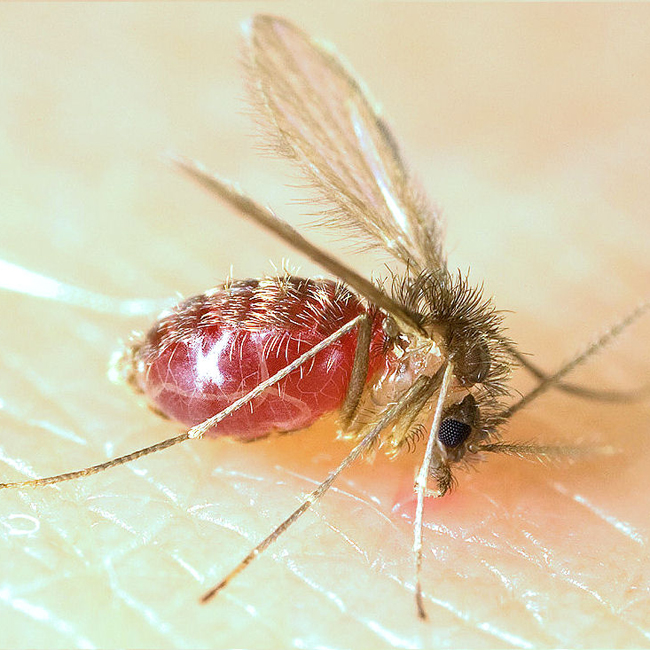
Lutzomyia longipalpis (L. longipalpis) is a species complex of sandfly belonging to the family Psychodidae. This species is primarily present in Central and South America, but has also appeared in Mexico. There have been reports of L. longipalpis as far south as Argentina, as they are found in a wide variety of ecological conditions. Both males and females feed on sugars from plants and aphids, but only adult females feed on the blood of other mammals. The species has recently begun appearing in urban areas throughout Brazil, and serves as a key vessel for the propagation of the parasite Leishmania infantum. The presence of these flies appears to be strongly correlated to the presence of domestic chickens in Latin America. The first major urban outbreak of the lethal Visceral leishmanias epidemic was detected in Teresina, Piauí State in the early 1980s following a massive planting of acacias.
L. longipalpis has only recently (2017) been accepted as a complex of sibling species as opposed to a heterogeneous species. Earlier on, there were many doubts that L. longipalpis constituted a single species due to its wide geographic distribution over Latin America. Populations of L. longipalpis and sand flies studied within Brazil showed morphological differences. Males in the northern region of Brazil had only one pair of pale tergal spots, while those in the northeastern region of Brazil had two pairs. Thus, it was hypothesized that the species might be further broken down into two different forms. This hypothesis was confirmed through insemination experiments as males from one form of the species were unable to successfully mate with females of the other form.
Since then, several studies within Brazil have been conducted to support the hypothesis that L. longipalpis is a species complex. Studies involving isoenzyme electrophoresis, genetic polymorphism assessments of DNA and mRNA, cytogenetics, analysis studies of nucleotide variation in the NADH dehydrogenase subunit 4, as well as assessments of other mitochondrial genes are all part of mounting evidence supporting the species complex hypothesis. In 2001, Lutzomyia psudolongipalpis was characterised by María Dora Feliciangeli's research group as one of the species within the complex. Subsequent research has indicated that there may be 8 distinct species within the complex.
L. longipalpis is the most abundant species of sandfly occupying northeastern Brazil, representing 97.9% of all phlebotomine sand flies present there. This species is followed in descending order of abundance by L. evandroi, L. lenti, and L. sallesi. L. longipalpis. These flies are most prevalent near animal shelters, such as chicken coops and corrals. They can also be found in houses, but only in small quantities.
L. longipalpis possesses the enzyme Trypsin in their midgut, which is responsible for the primary digestion of proteins in females. Trypsin activity is naturally decreased by 36% to 46% during the first and second days after the second gonadotrophic cycle. However, the presence of the Leishmania parasite within the sandfly is associated with even lower levels of activity of the protease enzyme. This modulation in Trypsin activity after a sandfly's second blood meal is suspected to produce a conducive physiological environment for Leishmania infections, which is exploited by the parasite. Transmission and development of the disease are consequently dependent upon the sandfly's access to multiple blood meals. Dogs that have been treated with the LJM17 salivary protein from L. longipalpis presented a more powerful cellular immune response in response to infection. Higher levels of proinflammatory cytokines and chemokines were detected with a specific increase in the production of IFN-γ and IL-10, indicating a stronger and longer-lasting immune response to the disease antigen. The strong immune reaction in response to exposure to the salivary protein indicates the protein's potential use in the field as a treatment to vaccinate dogs who then become immune to the disease.
The acidity of the sandfly midgut is maintained at a stable homeostatic pH level of ~6, even in the presence of strong buffer solutions. However, the proper digestion of blood requires an alkaline pH of 8.15 in the abdominal midgut for proteases like Trypsin to function properly. Lutzomyia longipalpis females contain the ability to abruptly alter their physiology by switching the internal environment of the abdominal midgut from acidic to alkaline. The presence of undigested proteins serves as the acting stimulus to drive female sand flies to undergo a shift in abdominal midgut pH. Even though the pH of the abdominal midgut is alkaline, carbohydrate digestion is able to function efficiently due to the maintenance of the acidic pH of the thoracic midgut.
Humans are an important blood source for these flies, but they are also known to feed on dog, chicken, and armadillo blood. Blood from horses, guinea pigs, and humans provide the best nutrients to support L. longipalpis females in their reproduction processes. Interestingly, sand flies do not feed on the blood from cats or the opossums Monodelphis domestica. Most scientific evidence points towards L. longipalpis being eclectic feeders, signifying that they acquire blood from multiple sources.
Although the feeding of blood is important for the maturation of oocytes, too many blood meals can also negatively impact the lifespan of females. Lutzomyia Longipalpis, like most other blood-sucking organisms, ingest large amounts of blood in a single meal. A female sandfly consumes between three and ten times its body weight in one feeding. Blood is rich in proteins, consisting mainly of hemoglobin (Hb), which accounts for approximately 60% of the blood protein content. The digestion of hemoglobin results in the release of high levels of the prosthetic group heme. Heme acts as a toxic molecule that can generate oxygen-reactive species and bypass membranes due to its high permeability. Elevated levels of heme in female L. longipalpis are suspected to be the cause of increased mortality for females that have ingested multiple blood meals.
Hub AI
Lutzomyia longipalpis AI simulator
(@Lutzomyia longipalpis_simulator)
Lutzomyia longipalpis
Lutzomyia longipalpis (L. longipalpis) is a species complex of sandfly belonging to the family Psychodidae. This species is primarily present in Central and South America, but has also appeared in Mexico. There have been reports of L. longipalpis as far south as Argentina, as they are found in a wide variety of ecological conditions. Both males and females feed on sugars from plants and aphids, but only adult females feed on the blood of other mammals. The species has recently begun appearing in urban areas throughout Brazil, and serves as a key vessel for the propagation of the parasite Leishmania infantum. The presence of these flies appears to be strongly correlated to the presence of domestic chickens in Latin America. The first major urban outbreak of the lethal Visceral leishmanias epidemic was detected in Teresina, Piauí State in the early 1980s following a massive planting of acacias.
L. longipalpis has only recently (2017) been accepted as a complex of sibling species as opposed to a heterogeneous species. Earlier on, there were many doubts that L. longipalpis constituted a single species due to its wide geographic distribution over Latin America. Populations of L. longipalpis and sand flies studied within Brazil showed morphological differences. Males in the northern region of Brazil had only one pair of pale tergal spots, while those in the northeastern region of Brazil had two pairs. Thus, it was hypothesized that the species might be further broken down into two different forms. This hypothesis was confirmed through insemination experiments as males from one form of the species were unable to successfully mate with females of the other form.
Since then, several studies within Brazil have been conducted to support the hypothesis that L. longipalpis is a species complex. Studies involving isoenzyme electrophoresis, genetic polymorphism assessments of DNA and mRNA, cytogenetics, analysis studies of nucleotide variation in the NADH dehydrogenase subunit 4, as well as assessments of other mitochondrial genes are all part of mounting evidence supporting the species complex hypothesis. In 2001, Lutzomyia psudolongipalpis was characterised by María Dora Feliciangeli's research group as one of the species within the complex. Subsequent research has indicated that there may be 8 distinct species within the complex.
L. longipalpis is the most abundant species of sandfly occupying northeastern Brazil, representing 97.9% of all phlebotomine sand flies present there. This species is followed in descending order of abundance by L. evandroi, L. lenti, and L. sallesi. L. longipalpis. These flies are most prevalent near animal shelters, such as chicken coops and corrals. They can also be found in houses, but only in small quantities.
L. longipalpis possesses the enzyme Trypsin in their midgut, which is responsible for the primary digestion of proteins in females. Trypsin activity is naturally decreased by 36% to 46% during the first and second days after the second gonadotrophic cycle. However, the presence of the Leishmania parasite within the sandfly is associated with even lower levels of activity of the protease enzyme. This modulation in Trypsin activity after a sandfly's second blood meal is suspected to produce a conducive physiological environment for Leishmania infections, which is exploited by the parasite. Transmission and development of the disease are consequently dependent upon the sandfly's access to multiple blood meals. Dogs that have been treated with the LJM17 salivary protein from L. longipalpis presented a more powerful cellular immune response in response to infection. Higher levels of proinflammatory cytokines and chemokines were detected with a specific increase in the production of IFN-γ and IL-10, indicating a stronger and longer-lasting immune response to the disease antigen. The strong immune reaction in response to exposure to the salivary protein indicates the protein's potential use in the field as a treatment to vaccinate dogs who then become immune to the disease.
The acidity of the sandfly midgut is maintained at a stable homeostatic pH level of ~6, even in the presence of strong buffer solutions. However, the proper digestion of blood requires an alkaline pH of 8.15 in the abdominal midgut for proteases like Trypsin to function properly. Lutzomyia longipalpis females contain the ability to abruptly alter their physiology by switching the internal environment of the abdominal midgut from acidic to alkaline. The presence of undigested proteins serves as the acting stimulus to drive female sand flies to undergo a shift in abdominal midgut pH. Even though the pH of the abdominal midgut is alkaline, carbohydrate digestion is able to function efficiently due to the maintenance of the acidic pH of the thoracic midgut.
Humans are an important blood source for these flies, but they are also known to feed on dog, chicken, and armadillo blood. Blood from horses, guinea pigs, and humans provide the best nutrients to support L. longipalpis females in their reproduction processes. Interestingly, sand flies do not feed on the blood from cats or the opossums Monodelphis domestica. Most scientific evidence points towards L. longipalpis being eclectic feeders, signifying that they acquire blood from multiple sources.
Although the feeding of blood is important for the maturation of oocytes, too many blood meals can also negatively impact the lifespan of females. Lutzomyia Longipalpis, like most other blood-sucking organisms, ingest large amounts of blood in a single meal. A female sandfly consumes between three and ten times its body weight in one feeding. Blood is rich in proteins, consisting mainly of hemoglobin (Hb), which accounts for approximately 60% of the blood protein content. The digestion of hemoglobin results in the release of high levels of the prosthetic group heme. Heme acts as a toxic molecule that can generate oxygen-reactive species and bypass membranes due to its high permeability. Elevated levels of heme in female L. longipalpis are suspected to be the cause of increased mortality for females that have ingested multiple blood meals.
Recent media