Hubbry Logo
CytogeneticsCytogeneticsMain
Open search
Cytogenetics
Community hub
Cytogenetics
logo
8 pages, 0 posts
0 subscribers
Be the first to start a discussion here.
Cytogenetics
Cytogenetics
from Wikipedia
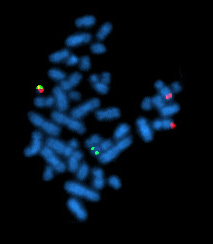
A metaphase cell positive for the BCR/ABL rearrangement using FISH

Cytogenetics is essentially a branch of genetics, but is also a part of cell biology/cytology (a subdivision of human anatomy), that is concerned with how the chromosomes relate to cell behaviour, particularly to their behaviour during mitosis and meiosis.[1] Techniques used include karyotyping, analysis of G-banded chromosomes, other cytogenetic banding techniques, as well as molecular cytogenetics such as fluorescence in situ hybridization (FISH) and comparative genomic hybridization (CGH).

History

[edit]

Beginnings

[edit]

Chromosomes were first observed in plant cells by Carl Nägeli in 1842. Their behavior in animal (salamander) cells was described by Walther Flemming, the discoverer of mitosis, in 1882. The name was coined by another German anatomist, von Waldeyer in 1888.

The next stage took place after the development of genetics in the early 20th century, when it was appreciated that the set of chromosomes (the karyotype) was the carrier of the genes. Levitsky seems to have been the first to define the karyotype as the phenotypic appearance of the somatic chromosomes, in contrast to their genic contents.[2][3] Investigation into the human karyotype took many years to settle the most basic question: how many chromosomes does a normal diploid human cell contain?[4] In 1912, Hans von Winiwarter reported 47 chromosomes in spermatogonia and 48 in oogonia, concluding an XX/XO sex determination mechanism.[5] Painter in 1922 was not certain whether the diploid number of humans was 46 or 48, at first favoring 46.[6] He revised his opinion later from 46 to 48, and he correctly insisted on humans having an XX/XY system of sex-determination.[7] Considering their techniques, these results were quite remarkable. In science books, the number of human chromosomes remained at 48 for over thirty years. New techniques were needed to correct this error. Joe Hin Tjio working in Albert Levan's lab[8][9] was responsible for finding the approach:

  1. Using cells in culture
  2. Pre-treating cells in a hypotonic solution, which swells them and spreads the chromosomes
  3. Arresting mitosis in metaphase by a solution of colchicine
  4. Squashing the preparation on the slide forcing the chromosomes into a single plane
  5. Cutting up a photomicrograph and arranging the result into an indisputable karyogram.

It took until 1956 for it to be generally accepted that the karyotype of man included only 46 chromosomes.[10][11][12] The great apes have 48 chromosomes. Human chromosome 2 was formed by a merger of ancestral chromosomes, reducing the number.[13]

Applications of cytogenetics

[edit]

McClintock's work on maize

[edit]

Barbara McClintock began her career as a maize cytogeneticist. In 1931, McClintock and Harriet Creighton demonstrated that cytological recombination of marked chromosomes correlated with recombination of genetic traits (genes). McClintock, while at the Carnegie Institution, continued previous studies on the mechanisms of chromosome breakage and fusion flare in maize. She identified a particular chromosome breakage event that always occurred at the same locus on maize chromosome 9, which she named the "Ds" or "dissociation" locus.[14] McClintock continued her career in cytogenetics studying the mechanics and inheritance of broken and ring (circular) chromosomes of maize. During her cytogenetic work, McClintock discovered transposons, a find which eventually led to her Nobel Prize in 1983.

Natural populations of Drosophila

[edit]

In the 1930s, Dobzhansky and his coworkers collected Drosophila pseudoobscura and D. persimilis from wild populations in California and neighboring states. Using Painter's technique[15] they studied the polytene chromosomes and discovered that the wild populations were polymorphic for chromosomal inversions. All the flies look alike whatever inversions they carry: this is an example of a cryptic polymorphism.[citation needed]

Evidence rapidly accumulated to show that natural selection was responsible. Using a method invented by L'Héritier and Teissier, Dobzhansky bred populations in population cages, which enabled feeding, breeding and sampling whilst preventing escape. This had the benefit of eliminating migration as a possible explanation of the results. Stocks containing inversions at a known initial frequency can be maintained in controlled conditions. It was found that the various chromosome types do not fluctuate at random, as they would if selectively neutral, but adjust to certain frequencies at which they become stabilised. By the time Dobzhansky published the third edition of his book in 1951[16] he was persuaded that the chromosome morphs were being maintained in the population by the selective advantage of the heterozygotes, as with most polymorphisms.[17][18]

Lily and mouse

[edit]

The lily is a favored organism for the cytological examination of meiosis since the chromosomes are large and each morphological stage of meiosis can be easily identified microscopically. Hotta, Chandley et al.[19] presented the evidence for a common pattern of DNA nicking and repair synthesis in male meiotic cells of lilies and rodents during the zygotene–pachytene stages of meiosis when crossing over was presumed to occur. The presence of a common pattern between organisms as phylogenetically distant as lily and mouse led the authors to conclude that the organization for meiotic crossing-over in at least higher eukaryotes is probably universal in distribution.[citation needed]

Human abnormalities and medical applications

[edit]
Philadelphia translocation t(9;22)(q34;q11.2) seen in chronic myelogenous leukemia.

Following the advent of procedures that allowed easy enumeration of chromosomes, discoveries were quickly made related to aberrant chromosomes or chromosome number.[citation needed]

Constitutional cytogenetics: In some congenital disorders, such as Down syndrome, cytogenetics revealed the nature of the chromosomal defect: a "simple" trisomy. Abnormalities arising from nondisjunction events can cause cells with aneuploidy (additions or deletions of entire chromosomes) in one of the parents or in the fetus. In 1959, Lejeune[20] discovered patients with Down syndrome had an extra copy of chromosome 21. Down syndrome is also referred to as trisomy 21.

Other numerical abnormalities discovered include sex chromosome abnormalities. A female with only one X chromosome has Turner syndrome, whereas a male with an additional X chromosome, resulting in 47 total chromosomes, has Klinefelter syndrome. Many other sex chromosome combinations are compatible with live birth including XXX, XYY, and XXXX. The ability for mammals to tolerate aneuploidies in the sex chromosomes arises from the ability to inactivate them, which is required in normal females to compensate for having two copies of the chromosome. Not all genes on the X chromosome are inactivated, which is why there is a phenotypic effect seen in individuals with extra X chromosomes.[citation needed]

Trisomy 13 was associated with Patau syndrome and trisomy 18 with Edwards syndrome.[citation needed]

Acquired cytogenetics: In 1960, Peter Nowell and David Hungerford[21] discovered a small chromosome in the white blood cells of patients with Chronic myelogenous leukemia (CML). This abnormal chromosome was dubbed the Philadelphia chromosome - as both scientists were doing their research in Philadelphia, Pennsylvania. Thirteen years later, with the development of more advanced techniques, the abnormal chromosome was shown by Janet Rowley to be the result of a translocation of chromosomes 9 and 22. Identification of the Philadelphia chromosome by cytogenetics is diagnostic for CML. More than 780 leukemias and hundreds of solid tumors (lung, prostate, kidney, etc.) are now characterized by an acquired chromosomal abnormality, whose prognostic value is crucial. The identification of these chromosomal abnormalities has led to the discovery of a very large number of "cancer genes" (or oncogenes). The increasing knowledge of these cancer genes now allows the development of targeted therapies, which transforms the prospects of patient survival. Thus, cytogenetics has had and continues to have an essential role in the progress of cancer understanding. Large databases (Atlas of Genetics and Cytogenetics in Oncology and Haematology, COSMIC cancer database, Mitelman Database of Chromosome Aberrations and Gene Fusions in Cancer) allow researchers and clinicians to have the necessary corpus for their work in this field.

Advent of banding techniques

[edit]
Micrographic karyogram of a human male.
Schematic karyogram of a human, with annotated bands and sub-bands as used in the International System for Human Cytogenomic Nomenclature for chromosomal abnormalities. It shows dark and white regions on G banding. It shows 22 homologous chromosomes, both the male (XY) and female (XX) versions of the sex chromosome (bottom right), as well as the mitochondrial genome (at bottom left).

In the late 1960s, Torbjörn Caspersson developed a quinacrine fluorescent staining technique (Q-banding) which revealed unique banding patterns for each chromosome pair. This allowed chromosome pairs of otherwise equal size to be differentiated by distinct horizontal banding patterns. Banding patterns are now used to elucidate the breakpoints and constituent chromosomes involved in chromosome translocations. Deletions and inversions within an individual chromosome can also be identified and described more precisely using standardized banding nomenclature. G-banding (utilizing trypsin and Giemsa/ Wright stain) was concurrently developed in the early 1970s and allows visualization of banding patterns using a bright field microscope.[citation needed]

Diagrams identifying the chromosomes based on the banding patterns are known as idiograms. These maps became the basis for both prenatal and oncological fields to quickly move cytogenetics into the clinical lab where karyotyping allowed scientists to look for chromosomal alterations. Techniques were expanded to allow for culture of free amniocytes recovered from amniotic fluid, and elongation techniques for all culture types that allow for higher-resolution banding.[citation needed]

Beginnings of molecular cytogenetics

[edit]

In the 1980s, advances were made in molecular cytogenetics. While radioisotope-labeled probes had been hybridized with DNA since 1969, movement was now made in using fluorescent-labeled probes. Hybridizing them to chromosomal preparations using existing techniques came to be known as fluorescence in situ hybridization (FISH).[22] This change significantly increased the usage of probing techniques as fluorescent-labeled probes are safer. Further advances in micromanipulation and examination of chromosomes led to the technique of chromosome microdissection whereby aberrations in chromosomal structure could be isolated, cloned, and studied in ever greater detail.[citation needed]

Techniques

[edit]

Karyotyping

[edit]

The routine chromosome analysis (Karyotyping) refers to analysis of metaphase chromosomes which have been banded using trypsin followed by Giemsa, Leishmanns, or a mixture of the two. This creates unique banding patterns on the chromosomes. The molecular mechanism and reason for these patterns are unknown, although it's likely related to replication timing and chromatin packing.[citation needed]

Several chromosome-banding techniques are used in cytogenetics laboratories. Quinacrine banding (Q-banding) was the first staining method used to produce specific banding patterns. This method requires a fluorescence microscope and is no longer as widely used as Giemsa banding (G-banding). Reverse banding, or R-banding, requires heat treatment and reverses the usual black-and-white pattern that is seen in G-bands and Q-bands. This method is particularly helpful for staining the distal ends of chromosomes. Other staining techniques include C-banding and nucleolar organizing region stains (NOR stains). These latter methods specifically stain certain portions of the chromosome. C-banding stains the constitutive heterochromatin, which usually lies near the centromere, and NOR staining highlights the satellites and stalks of acrocentric chromosomes.[citation needed]

High-resolution banding involves the staining of chromosomes during prophase or early metaphase (prometaphase), before they reach maximal condensation. Because prophase and prometaphase chromosomes are more extended than metaphase chromosomes, the number of bands observable for all chromosomes (bands per haploid set, bph; "band level") increases from about 300 to 450 to as many as 800. This allows the detection of less obvious abnormalities usually not seen with conventional banding.[23]

Slide preparation

[edit]

Cells from bone marrow, blood, amniotic fluid, cord blood, tumor, and tissues (including skin, umbilical cord, chorionic villi, liver, and many other organs) can be cultured using standard cell culture techniques in order to increase their number. A mitotic inhibitor (colchicine, colcemid) is then added to the culture. This stops cell division at mitosis which allows an increased yield of mitotic cells for analysis. The cells are then centrifuged and media and mitotic inhibitor are removed, and replaced with a hypotonic solution. This causes the white blood cells or fibroblasts to swell so that the chromosomes will spread when added to a slide as well as lyses the red blood cells. After the cells have been allowed to sit in hypotonic solution, Carnoy's fixative (3:1 methanol to glacial acetic acid) is added. This kills the cells and hardens the nuclei of the remaining white blood cells. The cells are generally fixed repeatedly to remove any debris or remaining red blood cells. The cell suspension is then dropped onto specimen slides. After aging the slides in an oven or waiting a few days they are ready for banding and analysis.

Analysis

[edit]

Analysis of banded chromosomes is done at a microscope by a clinical laboratory specialist in cytogenetics (CLSp(CG)). Generally 20 cells are analyzed which is enough to rule out mosaicism to an acceptable level. The results are summarized and given to a board-certified cytogeneticist for review, and to write an interpretation taking into account the patient's previous history and other clinical findings. The results are then given out reported in an International System for Human Cytogenetic Nomenclature 2009 (ISCN2009)..

Fluorescence in situ hybridization

[edit]
Interphase cells positive for a t(9;22) rearrangement

Fluorescence in situ hybridization (FISH) refers to using fluorescently labeled probe to hybridize to cytogenetic cell preparations.

In addition to standard preparations FISH can also be performed on:

Slide preparation

[edit]

This section refers to the preparation of standard cytogenetic preparations

The slide is aged using a salt solution usually consisting of 2X SSC (salt, sodium citrate). The slides are then dehydrated in ethanol, and the probe mixture is added. The sample DNA and the probe DNA are then co-denatured using a heated plate and allowed to re-anneal for at least 4 hours. The slides are then washed to remove the excess unbound probe, and counterstained with 4',6-Diamidino-2-phenylindole (DAPI) or propidium iodide.

Analysis

[edit]

Analysis of FISH specimens is done by fluorescence microscopy by a clinical laboratory specialist in cytogenetics. For oncology, generally, a large number of interphase cells are scored in order to rule out low-level residual disease, generally between 200 and 1,000 cells are counted and scored. For congenital problems usually 20 metaphase cells are scored.[citation needed]

Future of cytogenetics

[edit]

Advances now focus on molecular cytogenetics including automated systems for counting the results of standard FISH preparations and techniques for virtual karyotyping, such as comparative genomic hybridization arrays, CGH and Single nucleotide polymorphism arrays.

See also

[edit]

References

[edit]
[edit]
Revisions and contributorsEdit on WikipediaRead on Wikipedia
from Grokipedia
Cytogenetics is the branch of genetics that focuses on the study of chromosomes—their structure, function, behavior during cell division, inheritance patterns, and abnormalities—primarily through microscopic and molecular techniques to understand their role in heredity and disease. It encompasses the examination of chromosome number, size, shape, and banding patterns in cells from tissues such as blood, bone marrow, or amniotic fluid, often to detect anomalies like aneuploidy or structural rearrangements. This field bridges classical microscopy with modern genomics, enabling the diagnosis of genetic disorders and cancers by revealing how chromosomal variations contribute to phenotypic traits and pathologies. The history of cytogenetics traces back to the late , when improved staining techniques allowed visualization of thread-like structures in dividing cells, leading Wilhelm Waldeyer to coin the term "" in 1888. A pivotal milestone occurred in 1956, when Joe Hin Tjio and Albert Levan accurately determined the human number as 46, overturning earlier estimates and launching clinical cytogenetics as a discipline. Subsequent advancements, such as the use of to arrest cells in and hypotonic solutions for chromosome spreading in the , facilitated clearer imaging and led to landmark discoveries, including the identification of trisomy 21 in (1959) and the in chronic myeloid leukemia (1960). By the 1970s, banding techniques like enhanced resolution, allowing detection of microdeletions and translocations, while the 1980s introduced (FISH) for targeted gene mapping. Key techniques in cytogenetics include conventional karyotyping, which involves staining and photographing metaphase chromosomes to produce an arranged display (karyogram) for assessing gross abnormalities, and chromosomal microarray analysis (CMA) for higher-resolution detection of copy number variations without requiring cell culture. FISH uses fluorescent probes to bind specific DNA sequences, enabling rapid visualization of gene amplifications or deletions, while spectral karyotyping (SKY) and multicolor FISH (M-FISH) differentiate all chromosomes by color for complex rearrangements. These methods, often combined, provide resolutions from 5-10 megabases in traditional karyotypes to under 100 kilobases in arrays, supporting both constitutional (germline) and acquired (somatic) analyses. Applications of cytogenetics span prenatal diagnosis, where it detects fetal aneuploidies like via ; constitutional genetics for disorders such as (45,X); and for prognostic markers in and solid tumors. In cancer, cytogenetic profiling identifies driver mutations, such as BCR-ABL fusion in Philadelphia-positive leukemia, guiding targeted therapies. Integrations with next-generation sequencing have provided finer genomic insights, evolving cytogenetics into cytogenomics for , with recent advancements as of 2025 including optical genome mapping for improved structural variant detection and AI-assisted automated karyotyping.

Fundamentals

Definition and Scope

Cytogenetics is a branch of that focuses on the study of chromosomes, including their structure, number, inheritance, variation, and roles in heredity and . It examines how chromosomes carry genetic and influence phenotypic traits, serving as a foundational in understanding genomic organization and abnormalities. The scope of cytogenetics encompasses analysis of chromosomes in prenatal, postnatal, and somatic cells, bridging classical techniques with approaches to detect heritable and acquired genetic variations. This interdisciplinary field applies to diagnosing congenital disorders, developmental delays, intellectual disabilities, and malignancies, such as hematologic and solid tumors, by identifying structural and numerical changes. It integrates cytological observations with genomic insights to inform clinical management and research in human and other eukaryotic organisms. Key concepts in cytogenetics include the chromosome as a DNA-protein complex, where DNA encodes genetic material and proteins like histones facilitate packaging into chromatin structures within the nucleus. Chromosomes ensure the accurate transmission of genetic information during cell division via mitosis, which partitions duplicated chromosomes to daughter cells for growth and repair, and meiosis, which segregates homologous chromosomes to produce haploid gametes. Basic terminology describes normal and abnormal ploidy states: diploidy refers to the typical two complete sets of chromosomes in somatic cells (euploidy), aneuploidy denotes deviations such as extra or missing chromosomes leading to imbalances, and polyploidy involves more than two sets, often observed in plants but rare and pathological in humans. Cytogenetics originated in the early 20th century from the merger of cytology, the study of cell structure, and genetics, the study of heredity, particularly through observations of chromosome behavior in germ cells aligning with Mendel's laws.

Chromosomal Structure and Behavior

Chromosomes are linear structures composed primarily of DNA and histone proteins, organized into chromatin that condenses into discrete units during cell division. The basic components include the centromere, a constricted region that serves as the attachment point for spindle fibers during mitosis and meiosis; telomeres, specialized nucleotide sequences at the ends of chromosomes that protect against degradation and fusion; and the p and q arms, where the p arm denotes the shorter arm and the q arm the longer arm, separated by the centromere. Chromatin exists in two forms: euchromatin, which is loosely packed and transcriptionally active, allowing access to genetic information; and heterochromatin, which is densely packed and generally transcriptionally silent, often found in regions like centromeres and telomeres. Visualization of chromosome structure relies on techniques that highlight these components during , when chromosomes are most condensed and observable. Giemsa , a basic differential method, produces characteristic light and dark bands (G-bands) on metaphase chromosomes by preferentially staining AT-rich regions darkly and GC-rich regions lightly, enabling identification of individual based on banding patterns. This reveals the overall morphology, including arm lengths and position, which vary across the 23 pairs of human chromosomes. During mitosis, chromosomes undergo dynamic changes to ensure accurate segregation. In prophase, chromosomes condense from diffuse chromatin into compact structures facilitated by condensin proteins, which loop and fold DNA to achieve a 10,000-fold compaction. Kinetochore proteins assemble at the centromere, allowing attachment to microtubules of the mitotic spindle during prometaphase; bi-orientation ensures each sister chromatid connects to opposite spindle poles. In anaphase, cohesion between sister chromatids is cleaved by separase, enabling spindle forces to pull chromatids to opposite poles, followed by decondensation in telophase. In , exhibit behaviors that promote genetic diversity and halve the number for formation. pair during I, forming synaptonemal complexes that align non-sister chromatids for crossing over, where reciprocal exchanges of segments occur at chiasmata, facilitating recombination. This reduction division proceeds through two stages: I segregates homologous pairs to opposite poles, reducing the diploid (2n) set to haploid (n); II then separates , akin to , yielding four haploid . Chromosomal aberrations disrupt normal structure or number, potentially leading to imbalances in genetic material. Structural aberrations include deletions (loss of a segment), duplications (extra copy of a segment), inversions (reversal of a segment's orientation), and translocations (exchange between non-homologous chromosomes). Numerical aberrations involve changes in chromosome count, such as (loss of one chromosome, resulting in 2n-1) or (gain of one, resulting in 2n+1). Idiograms and chromosome maps provide standardized visual representations of these structures. An idiogram is a schematic diagram depicting chromosomes in a standardized, idealized form, ordered by size and shape with banded regions indicated, serving as a reference for locating and aberrations. Chromosome maps extend this by integrating cytogenetic bands with molecular data, such as positions, to create detailed frameworks for genomic analysis.

Historical Development

Early Observations

The foundations of cytogenetics were laid in the late through pioneering cytological observations that first identified and characterized chromosomes as distinct cellular structures. In 1879, German anatomist described thread-like bodies within the nuclei of embryo cells during division, using improved techniques to visualize their behavior in ; he termed these structures "chromatin threads," noting their longitudinal splitting and equitable distribution to daughter cells. This work built on earlier by highlighting the dynamic role of these elements in , though their hereditary significance remained unclear at the time. Nearly a decade later, in 1888, anatomist Heinrich Waldeyer-Hartz formalized the term "" (from Greek roots meaning "colored body") to denote these stained nuclear filaments observed in eukaryotic cells, emphasizing their consistent presence across dividing tissues. By the early , researchers began connecting chromosomes to , establishing cytogenetics as a bridge between cytology and . In 1902, and independently proposed the chromosome theory of , positing that chromosomes serve as physical carriers of hereditary units (later called genes), based on observations of chromosome segregation during in grasshopper spermatocytes and sea urchin embryos, respectively; this theory aligned Mendel's laws with chromosomal behavior, suggesting that parental traits are transmitted via specific chromosome pairs. Experimental confirmation came in 1910 from Thomas Hunt Morgan's studies on the fruit fly Drosophila melanogaster, where he identified a white-eyed linked to sex, demonstrating that genes reside on specific chromosomes—namely, the —through breeding patterns that followed chromosomal rather than independent assortment. These findings solidified the idea that chromosomes are linear bearers of genetic information, paving the way for . Plant cytogenetics emerged concurrently, with early investigations revealing chromosomal variations influencing traits like pigmentation. Barbara McClintock's pre-1940s research at focused on (Zea mays) chromosome structure and behavior, including cytological analysis of kernel color patterns in the 1920s and 1930s; her 1931 observations of a heterochromatic knob on and studies of chromosomal aberrations in pigmentation mutants laid groundwork for understanding genetic instability, though the full mechanism of transposition was not yet elucidated. These efforts highlighted plants as model systems for cytogenetic studies due to their visible chromosomal polymorphisms. Initial attempts to determine the human chromosome number yielded conflicting results, reflecting technical limitations in early and . In the , Theophilus Painter estimated 48 chromosomes based on testicular cell counts, a figure widely accepted but later challenged by inconsistencies in observations; alternative counts ranged around 46 to 48, with debates persisting until improved techniques in the confirmed 46 as the diploid number.

Mid-20th Century Advances

In the mid-1950s, significant progress in cytogenetics was marked by the accurate determination of the diploid chromosome number as 46, overturning the long-held belief of 48 chromosomes that had persisted since the . Joe Hin Tjio and Albert Levan achieved this breakthrough through meticulous analysis of cultured cells using improved hypotonic and colchicine-based techniques, which minimized chromosome contraction and scattering during preparation. Their findings, published in 1956, provided the foundation for modern karyotyping and revealed the 22 pairs of autosomes plus one pair of . Parallel advances in plant cytogenetics during the 1940s and 1950s were driven by Barbara McClintock's pioneering studies on , where she identified transposable elements—mobile genetic units capable of altering and structure. Through detailed cytological observations of breakage and variegated kernel phenotypes in lines, McClintock demonstrated that these "controlling elements" could insert and excise within the genome, influencing traits like pigmentation. Her work, culminating in key publications from the late 1940s to 1950s, was initially met with skepticism but later recognized as a cornerstone of genetic regulation, earning her the 1983 Nobel Prize in Physiology or Medicine. Theodosius Dobzhansky's research on in the 1930s through 1950s further solidified cytogenetics' role in by revealing chromosomal inversions as key drivers of natural variation and . Using polytene chromosomes, Dobzhansky and collaborators mapped paracentric inversions in species like , showing their prevalence in wild populations and association with ecological adaptations. These studies, including extensive surveys of inversion polymorphisms across geographic regions, underscored how structural chromosomal changes maintain without disrupting . Tjio extended his cytogenetic techniques to early mammalian studies in the , analyzing complements in cells and species like to refine preparation methods for higher eukaryotes. His work on karyotypes helped establish baseline diploid numbers and morphological details, facilitating comparative cytogenetics across mammals. These analyses built on models, where Tjio and Levan optimized pretreatments like oxyquinoline to achieve clearer spreads. By the 1970s, the advent of chromosome banding techniques revolutionized cytogenetic resolution, with emerging as a pivotal method for identifying individual . Developed through and Giemsa staining protocols, produced consistent dark and light band patterns reflecting DNA base composition differences, enabling precise homolog pairing and abnormality detection. The 1971 Conference standardized these banding patterns, establishing an international that formalized cytogenetic reporting and accelerated into chromosomal aberrations.

Core Techniques

Karyotyping Procedures

Karyotyping involves the visual examination of chromosomes at to assess their number, size, and shape, serving as a foundational technique in cytogenetics for detecting numerical and structural abnormalities. This process requires obtaining cells capable of division, arresting them in , preparing chromosome spreads on slides, and applying banding techniques for detailed visualization under a . The method is particularly valuable for identifying large-scale chromosomal changes, such as aneuploidies or translocations, though it has limitations in resolving smaller alterations. Cell preparation begins with collecting samples from sources rich in dividing cells, such as peripheral blood lymphocytes, bone marrow, amniotic fluid, or chorionic villi. For blood samples, approximately 0.5 mL of heparinized whole blood is inoculated into a culture medium containing phytohemagglutinin to stimulate lymphocyte proliferation, followed by incubation at 37°C for 72 hours. To arrest cells in metaphase, colchicine is added in the final hours of culture, disrupting microtubule formation and halting division at this stage where chromosomes are maximally condensed and visible. Cultures from prenatal samples, like amniotic fluid, may require longer incubation periods of 7 to 14 days to ensure sufficient cell growth. Following harvest, cells undergo hypotonic treatment with a 0.075 M (KCl) solution for 10-20 minutes to swell them and spread chromosomes. The swollen cells are then fixed multiple times (typically three) in a 3:1 :acetic acid solution to preserve structure and remove . Fixed cell suspensions are dropped onto clean slides to create spreads, allowing chromosomes to air-dry in a dispersed manner suitable for microscopic analysis. Staining enhances visibility and enables banding patterns for identification. The standard technique, using , involves treating slides with to partially digest chromosome proteins, followed by incubation in 2x and with diluted Giemsa solution, producing characteristic light and dark bands that reflect Giemsa-positive and Giemsa-negative regions. Analysis entails microscopic examination, where technicians manually count and arrange chromosomes into a karyogram, pairing homologs and ordering them by size and position. Automated systems can assist in capturing images and generating karyograms, but human verification remains essential for accuracy. Karyotyping can detect chromosomal alterations larger than 5-10 megabases (Mb), such as deletions or duplications of that scale, but misses smaller variants below this resolution threshold. Abnormalities are described using the International System for Human Cytogenomic Nomenclature (ISCN), a standardized format that specifies chromosome number, , and structural details (e.g., 47,XX,+21 for trisomy 21). The 2024 edition of ISCN incorporates updates for integrating cytogenomic data from karyotyping with other methods, ensuring consistent reporting across laboratories.

Fluorescence In Situ Hybridization (FISH)

Fluorescence in situ hybridization (FISH) is a molecular cytogenetic technique that employs fluorescently labeled DNA or RNA probes to bind specifically to complementary target sequences on chromosomes or in interphase nuclei, enabling their visualization through fluorescence microscopy. The method exploits the principle of nucleic acid hybridization, where probes anneal to denatured chromosomal DNA under controlled conditions, allowing precise localization of genes or genomic regions within the cellular context. Originating from earlier radioactively labeled in situ hybridization techniques introduced by Pardue and Gall in 1969, FISH advanced significantly in the 1980s with the development of fluorescent labeling, as demonstrated by Pinkel et al. in 1986, which enabled quantitative detection of chromosomal abnormalities with high sensitivity. The procedure for FISH begins with the fixation and preparation of cells or tissues on slides, often utilizing spreads or nuclei from samples like , , or tumor biopsies, which may involve brief reference to standard fixation methods for chromosome immobilization. Probes are designed as cloned DNA fragments, such as bacterial artificial chromosomes () spanning 100-200 kb or synthetic , labeled directly with fluorochromes like fluorescein or indirectly via haptens such as or digoxigenin for signal amplification. The target DNA and probe are denatured simultaneously using heat (typically 70-80°C) or chemical agents like to separate strands, followed by hybridization in a humid chamber for 6-48 hours at 37°C to allow specific binding. Unbound probes are then removed through stringent washing steps with saline-sodium citrate buffers, and signals are detected either directly via the or indirectly through secondary antibodies conjugated to fluorochromes. FISH encompasses several types tailored to specific cytogenetic needs, including locus-specific probes that target individual genes or small regions (1-1000 kb) for detecting microdeletions or amplifications, and repetitive sequence probes such as those for centromeres or telomeres to assess . Whole-chromosome painting probes, derived from flow-sorted chromosomes or degenerate primers, label entire s in one color, facilitating the identification of structural rearrangements like translocations. Advanced multicolor variants, such as spectral karyotyping () introduced in the 1990s, use combinatorial labeling with up to 24 fluorochromes to paint each chromosome pair in a unique color spectrum, while multiplex FISH (M-FISH) employs five dyes for analysis, enabling simultaneous detection of multiple aberrations in a single hybridization. Analysis of FISH results relies on epifluorescence or equipped with filter sets matching the emission spectra of the fluorochromes, where bound probes appear as discrete fluorescent spots or domains corresponding to the target loci on chromosomes or in nuclei. Quantitative assessment involves counting signal numbers and positions to identify numerical changes (e.g., ) or structural variants (e.g., fusions indicating translocations), with software aiding in image capture and for multicolor setups. The technique achieves a resolution of approximately 100 kb in cells and 1-5 Mb on spreads, allowing detection of submicroscopic alterations not visible by conventional banding. Compared to traditional karyotyping, provides superior detection of submicroscopic chromosomal changes, such as microdeletions or cryptic translocations, and permits analysis of non-dividing cells without the need for prolonged , yielding results in 1-3 days. It enhances by integrating molecular specificity with cytological context, making it indispensable for precise diagnostics in genetic disorders and .

Advanced Methods

Molecular Cytogenetic Tools

Molecular cytogenetic tools represent an evolution of traditional (FISH) techniques, integrating with to enable genome-wide analysis of chromosomal alterations at higher resolution. These methods, developed primarily in the and 2000s, allow for the detection of copy number variations (CNVs) and structural rearrangements without relying solely on spreads, facilitating applications in and constitutional . By combining DNA labeling, hybridization, and advanced imaging, they provide insights into genomic imbalances that complement classical cytogenetic approaches. Comparative genomic hybridization (CGH), introduced in the early 1990s, is a technique that compares the DNA content of a test sample (e.g., from a tumor) to a reference genome by co-hybridizing differentially labeled DNAs onto normal metaphase chromosomes. This method generates a ratio profile along the chromosomes, highlighting regions of gain or loss that indicate CNVs, such as amplifications or deletions, with a resolution of approximately 5-10 Mb. CGH has been instrumental in mapping recurrent chromosomal changes in solid tumors, bypassing the need to culture tumor cells directly. Array comparative genomic hybridization (array CGH), an advancement from the 2000s, replaces chromosomes with a of genomic clones or , enabling higher-resolution detection of CNVs down to about 1 kb in modern iterations. In this approach, test and reference DNAs are labeled with different fluorophores, hybridized to the array, and analyzed for intensity ratios to identify imbalances; notably, it requires only extracted DNA, eliminating the need for or viable s. This tool has revolutionized prenatal diagnostics and by allowing rapid, of genomic copy number alterations. Spectral karyotyping (SKY), developed in the mid-1990s, employs a combinatorial labeling strategy with multiple fluorophores to "paint" each in a unique , visualized through Fourier spectroscopy and imaging software. This 24-color technique for human chromosomes facilitates the identification of complex chromosomal rearrangements, marker chromosomes, and homogeneously staining regions in spreads, particularly useful in analyzing tumor karyotypes with multiple aberrations. SKY builds on by providing a whole-genome overview, distinguishing chromosomes and their derivatives even in highly rearranged genomes. Fiber-FISH extends to linearly extended chromatin fibers or DNA molecules, achieving resolutions of 1-5 kb for precise mapping of repetitive sequences, large inserts, or clone contigs. By stretching DNA on a slide and hybridizing locus-specific probes, this method visualizes the physical order and spacing of genomic elements along extended fibers, aiding in the assembly of large-scale maps and detection of duplications or deletions in extended regions. It is particularly valuable for validating sequencing data or studying highly repetitive genomic areas like telomeres. Despite their advancements, molecular cytogenetic tools like CGH and array CGH have limitations, including an inability to detect balanced translocations or inversions that do not alter DNA copy number, necessitating complementary methods such as karyotyping or sequencing for comprehensive analysis. Additionally, resolution constraints in traditional CGH and potential artifacts from probe cross-hybridization can complicate interpretation in heterogeneous samples.

High-Throughput Approaches

High-throughput approaches in cytogenetics leverage advanced sequencing technologies and computational tools to analyze chromosomal structures at scale, enabling the detection of structural variants (SVs) with unprecedented resolution and throughput. Optical genome mapping (OGM), developed in the 2010s, utilizes nanochannel arrays to linearize and image long DNA molecules labeled at specific sequence motifs, providing long-range chromosomal scaffolding without the need for assembly. This technique excels at identifying SVs larger than 500 base pairs, including balanced translocations and inversions that are challenging for traditional methods, by generating genome-wide maps with kilobase to megabase resolution. In constitutional and somatic applications, OGM has demonstrated superior sensitivity for complex rearrangements, often complementing karyotyping by revealing cryptic abnormalities in up to 58% of cases where standard techniques fall short. Next-generation sequencing (NGS) has transformed cytogenetic analysis through methods like mate-pair sequencing, which generates long-insert paired-end reads to detect SVs by identifying discordant read pairs and split reads across breakpoints. Mate-pair libraries, typically with inserts of 2-5 kb, facilitate the precise mapping of chromosomal aberrations, achieving over 90% detection of cytogenetically visible breakpoints and refining their locations to sub-band resolution. Integration of NGS with traditional karyotyping enhances validation, as mate-pair data can confirm and delineate variants observed microscopically, improving diagnostic accuracy in scenarios like where SVs drive oncogenesis. Single-cell cytogenomics extends these capabilities to heterogeneous samples, employing single-cell whole-genome sequencing (scWGS) or single-cell sequencing (scRNA-seq) to profile and chromosomal imbalances at the individual cell level. scWGS provides genome-wide copy number profiles, detecting in preimplantation embryos with high fidelity, while scRNA-seq infers chromosomal arm-level gains and losses from expression imbalances across hundreds of genes per . In tumor contexts, these approaches reveal intratumor heterogeneity, identifying subpopulations that correlate with therapeutic resistance, as validated in studies of hematopoietic malignancies. Bioinformatics pipelines are essential for processing high-throughput cytogenetic data, with tools like DELLY and Manta enabling robust SV calling from NGS reads by integrating split-read and paired-end evidence. DELLY employs a Poisson-based model to cluster anomalous reads for deletions, insertions, and inversions, while Manta uses active conditioning to rapidly detect medium-sized indels and large SVs in and somatic samples. These algorithms achieve single-nucleotide resolution but prioritize cytogenetic-scale events, such as translocations spanning kilobases, with consensus approaches combining multiple callers yielding precision above 80% in low-coverage whole-genome sequencing. In the 2020s, (AI) has advanced automated karyotyping by employing models to segment and classify chromosomes from microscopic images, reducing manual analysis time from hours to minutes. AI-guided systems, such as those supporting G-, Q-, and R-banding across diverse sample types, improve efficiency at scale in clinical labs, with studies reporting enhanced accuracy in abnormality detection and standardization of interpretations. For instance, convolutional neural networks in tools like KaryoXpert achieve instance-level chromosome classification with over 95% accuracy, facilitating in research cohorts.

Applications in Research

Plant and Animal Studies

Cytogenetics has played a pivotal role in understanding in , particularly in crop species like (Triticum aestivum), which possesses 42 chromosomes resulting from successive hybridization events and duplication. The hexaploid of bread arose through allopolyploidization involving ancestors from the genera Aegilops and Triticum, where the A genome (2n=14) originated from Triticum urartu, the B genome (2n=28) from an unidentified Aegilops species, and the D genome (2n=14) from Aegilops tauschii. This polyploid structure enhances and adaptability, enabling wheat's and yield improvements, as demonstrated by cytogenetic analyses of chromosome pairing during that reveal homeologous relationships among subgenomes. In maize (Zea mays), cytogenetic studies by Barbara McClintock in the mid-20th century uncovered transposable elements, or "jumping genes," through observations of chromosome breakage and variegated kernel phenotypes. McClintock identified the Activator-Dissociation (Ac-Ds) system, where Ds elements insert into genes like those controlling pigment production, causing mutable alleles that revert under Ac influence, thus providing a mechanism for gene tagging and epigenetic regulation. These findings, derived from detailed karyotypic and phenotypic mapping, revolutionized understanding of genome dynamics and transposon-mediated evolution in plants. Animal cytogenetics has advanced through model organisms like Drosophila pseudoobscura, where documented paracentric inversions in natural populations during the 1930s and 1970s, revealing their role in suppressing recombination and maintaining adaptive complexes. In salivary gland polytene chromosomes, these inversions formed clinal distributions across geographic populations, linking chromosomal polymorphisms to evolutionary adaptation and . In mice (Mus musculus), karyotyping has been essential for studies, identifying induced chromosomal aberrations such as translocations and deletions following exposure to or chemicals, which map hotspots and inform function in mammalian development. Cytogenetic research has illuminated chromosome evolution in animals, exemplified by telomeric fusions that reduced the primate karyotype from 48 to 46 chromosomes in humans via the head-to-head fusion of two ancestral acrocentric chromosomes now forming . Remnants of telomeres and a vestigial at 2q13-2q14.1 confirm this event, distinguishing human cytogenetics from great apes like chimpanzees. Sex chromosome heterogamety further highlights evolutionary divergence, with XY systems in mammals—where males are heterogametic (XY) and females homogametic (XX)—contrasting ZW systems in birds, where females are heterogametic (ZW) and males homogametic (ZZ); these arose independently in amniotes, with conserved content on Z/W and X/Y despite distinct origins. In agricultural breeding, (FISH) facilitates the introgression of alien genes from wild relatives into crops, enabling precise monitoring of segments for traits like resistance. For instance, FISH probes target rye (Secale cereale) transferred to , allowing visualization of translocation breakpoints and stable integration of beneficial loci while minimizing linkage drag, thus enhancing crop resilience without disrupting native genomes.

Population Genetics

Cytogenetics plays a crucial role in by revealing structural variations in chromosomes that influence , , and evolutionary processes in natural populations. Chromosomal polymorphisms, such as inversions and translocations, serve as visible markers of that can be directly observed through techniques like karyotyping, allowing researchers to track frequencies and across populations. These variants often suppress recombination, preserving co-adapted gene complexes and contributing to local in heterogeneous environments. In species, chromosomal inversions exemplify how polymorphisms drive , with over 70 inversions documented in Drosophila subobscura alone, many associated with clinal variation in traits like cold tolerance and migration behavior. For instance, inversions on the third chromosome in , such as In(3R)Payne, have been linked to latitudinal clines in fitness-related traits, maintaining through recombination suppression and facilitating responses to environmental gradients. These polymorphisms, first noted in mid-20th century studies, highlight the long-term stability of inversion frequencies in natural populations under selective pressures. Karyotypic variation, including changes in chromosome number and structure, further informs speciation processes, as seen in grasshoppers where clinal patterns of fusion and fission events correlate with geographic isolation. In the Wood White butterfly (Leptidea sinapis), chromosome numbers vary clinally from 2n=106 in to 2n=56 in eastern across a 6000 km range, with these polymorphisms reducing hybrid fertility and promoting between populations. Such variations underscore the role of cytogenetic rearrangements in generating barriers to , accelerating divergence in natural settings. Cytogenetic mechanisms also underlie phenomena like and segregation distortion, where selfish genetic elements bias transmission by disrupting normal segregation during . In , the Segregation Distorter (SD) complex on uses inversions to suppress recombination, protecting linked distorter alleles that cause dysfunction in sensitive , thereby elevating transmission rates up to 99% in heterozygous males. This distortion maintains polymorphisms in populations but can lead to evolutionary arms races with suppressors, influencing overall . In conservation genetics, cytogenetic monitoring assesses chromosomal integrity in , particularly through chromosome counts and polymorphism detection to identify hybridization risks or inbreeding effects. Felids, such as and , exhibit a highly conserved with 2n=38 across genera, enabling straightforward comparisons to detect anomalies in captive or wild populations and guide breeding programs for genetic health. Quantitative insights from cytogenetic data include estimates of heterozygosity rates for structural variants, often exceeding 20-30% in polymorphic populations like , and elevated (LD) within rearranged regions due to recombination suppression. For example, inversion heterozygotes show LD decay rates 10-100 times slower than collinear segments, allowing inference of historical recombination and population from surveys. These metrics provide scalable measures of diversity without sequencing, essential for tracking evolutionary dynamics.

Medical and Clinical Uses

Detection of Chromosomal Abnormalities

Cytogenetic techniques play a crucial role in diagnosing chromosomal abnormalities associated with congenital and developmental disorders, enabling early identification of genetic risks in human pregnancies and affected individuals. These methods primarily involve analyzing structure and number to detect aneuploidies, deletions, duplications, and other structural variants that can lead to syndromes impacting growth, development, and overall . By providing direct visualization of chromosomes, cytogenetics offers a foundational approach to clinical , often integrated with molecular tools for enhanced precision. Prenatal testing for chromosomal abnormalities typically employs invasive procedures such as and (CVS), which allow for the collection of fetal cells suitable for cytogenetic analysis. , performed between 15 and 20 weeks of , involves extracting containing fetal cells, which are then cultured and subjected to karyotyping to reveal numerical abnormalities like 21, responsible for . Similarly, CVS, conducted earlier at 10 to 13 weeks, samples placental tissue for the same analyses, detecting conditions such as (Edwards syndrome) and 13 () with high accuracy. Chromosomal microarray analysis (CMA) is recommended, particularly for fetuses with structural abnormalities or when a normal karyotype is found, to identify submicroscopic copy number variations with higher resolution than karyotyping alone. () complements karyotyping in these samples by using fluorescent probes to target specific chromosomal regions, enabling rapid detection of aneuploidies within 24-48 hours, which is critical for timely clinical decisions. These techniques have detection rates exceeding 99% for major trisomies when combined, though they carry a small risk of procedure-related (approximately 0.1-0.5%). Postnatal diagnosis of chromosomal abnormalities often relies on peripheral blood karyotyping, where lymphocytes are stimulated, cultured, and analyzed to identify sex chromosome disorders and other aneuploidies; CMA may also be used for higher-resolution detection of copy number variants. For instance, Turner syndrome, characterized by a 45,X karyotype, is diagnosed through this method in females presenting with short stature, ovarian dysgenesis, and cardiac anomalies, confirming the monosomy X in about 50-60% of cases while mosaicism accounts for the rest. In males, Klinefelter syndrome (47,XXY) is detected via blood karyotypes, revealing the extra X chromosome that leads to hypogonadism, infertility, and increased risk of metabolic issues; this approach identifies over 90% of cases when clinically suspected. These analyses typically take 7-14 days but provide comprehensive chromosome profiles, guiding management strategies like hormone replacement therapy. For microdeletion syndromes, FISH serves as a targeted diagnostic tool to identify submicroscopic deletions not visible on standard karyotypes, though CMA offers genome-wide detection. , resulting from a 22q11.2 deletion, is diagnosed using FISH probes specific to the region, detecting the abnormality in approximately 90% of cases and linking it to features like conotruncal heart defects, , and immune deficiency. Likewise, , caused by a 7q11.23 deletion, is confirmed via FISH, which highlights the gene locus deletion responsible for supravalvular , hypercalcemia, and distinctive facial features; this method's sensitivity reaches 95-99% for these contiguous gene syndromes. Such applications underscore FISH's value in clinical settings for syndromes affecting 1 in 4,000 to 1 in 20,000 births. Non-invasive prenatal testing (NIPT) using (cfDNA) from maternal blood has revolutionized screening for chromosomal abnormalities, often serving as a first-line before confirmatory cytogenetic testing. Introduced in the early , NIPT analyzes fetal DNA fractions (typically 4-10% of total cfDNA) to detect trisomies 21, 18, and 13 with sensitivities above 99% and specificities over 99.9%, particularly in high-risk pregnancies. When positive, it prompts invasive cytogenetic follow-up like karyotyping or to rule out confined placental mosaicism or maternal abnormalities. This integration reduces the need for invasive procedures by up to 50% in screened populations while maintaining diagnostic accuracy for fetal aneuploidies. Ethical considerations in cytogenetic detection of chromosomal abnormalities emphasize , , and psychosocial support, given the profound implications of findings on and . Counseling sessions, recommended by professional guidelines, address the uncertainty of results (present in 1-2% of diagnoses), the option for pregnancy termination in prenatal cases, and the lifelong management of diagnosed syndromes. For example, discovering a trisomy 21 prenatally requires discussing developmental outcomes, with uptake rates for termination varying by region (50-90% in some studies), highlighting the need for non-directive, culturally sensitive guidance to mitigate anxiety and ensure autonomous decision-making.

Cancer Cytogenetics

Cancer cytogenetics plays a pivotal role in by identifying somatic chromosomal alterations that drive tumorigenesis and influence clinical outcomes. These changes, including translocations, amplifications, and aneuploidies, are detected through techniques such as karyotyping and (FISH), enabling the classification of tumors and guidance of therapeutic decisions. In hematologic malignancies like leukemias, specific recurrent abnormalities provide diagnostic hallmarks and prognostic insights, while in solid tumors, they reveal mechanisms of activation and genomic instability. In leukemias, the Philadelphia chromosome, resulting from the t(9;22)(q34;q11) translocation, is a defining feature of chronic myeloid leukemia (CML), observed in approximately 90-95% of cases via G-banded karyotyping. This translocation fuses the BCR gene on chromosome 22 with the ABL1 gene on chromosome 9, producing the BCR-ABL fusion oncoprotein that drives leukemogenesis. FISH enhances detection of this fusion, including variant translocations, and is particularly useful for monitoring minimal residual disease. Solid tumors exhibit diverse cytogenetic alterations, such as gene amplifications and . For instance, amplification of the HER2 (ERBB2) gene on 17q12 occurs in about 15-20% of cancers and is associated with aggressive and poorer survival, serving as a key target for therapies like . FISH is the gold standard for confirming HER2 amplification when is equivocal, following ASCO/ guidelines that define amplification as a HER2/CEP17 ratio ≥2.0. In , is prevalent in up to 70% of cases, often linked to chromosomal instability pathways that promote tumor progression and . Prognostic markers derived from cytogenetic profiles are crucial for risk stratification. In acute lymphoblastic leukemia (ALL), high hyperdiploidy (51-65 chromosomes) is a favorable feature in pediatric B-cell precursor cases, conferring improved event-free survival rates exceeding 90% due to enhanced sensitivity to antimetabolites. Conversely, complex karyotypes—defined as three or more unrelated chromosomal abnormalities—are associated with poor outcomes across various cancers, including , where they predict inferior overall survival independent of other factors. Clonal evolution in tumors can be tracked through serial cytogenetic profiling, revealing the emergence of subclones with additional abnormalities that drive progression from indolence to aggressiveness. For example, in , quantitative multicolour demonstrates phylogenetic relationships among clones, linking cytogenetic changes to relapse and resistance. Cytogenetic findings directly inform targeted therapies, particularly tyrosine kinase inhibitors (TKIs) for translocation-driven cancers. In CML, the BCR-ABL fusion guides , which inhibits the oncogenic kinase and achieves complete cytogenetic responses in over 80% of chronic-phase patients, transforming CML into a manageable . Similar principles apply to other translocations, such as PML-RARA in , where all-trans targets the fusion product identified cytogenetically.

Integration with Genomics

The integration of cytogenetics with genomics has revolutionized the analysis of chromosomal abnormalities by combining traditional karyotyping and fluorescence in situ hybridization (FISH) with next-generation sequencing (NGS) technologies, enabling hybrid approaches that validate cytogenetic findings at the molecular level. Short-read NGS confirms structural variants (SVs) identified via classical methods, while long-read sequencing resolves complex rearrangements that karyotyping alone cannot detect, such as insertions or inversions smaller than 5 Mb. For instance, in clinical diagnostics, NGS validates FISH-detected fusions like BCR::ABL1 in chronic myeloid leukemia, providing precise breakpoint mapping to guide targeted therapies. A key advantage of these hybrid methods is their ability to uncover hidden complexities in apparently balanced translocations, which traditional cytogenetics often misses due to resolution limits. Whole-genome sequencing (WGS) applied to carriers of balanced rearrangements reveals that approximately 37% harbor cryptic imbalances or gene disruptions not visible by karyotyping, such as small deletions at breakpoints that contribute to phenotypic abnormalities. Long-read NGS, including PacBio's , excels at phasing these SVs across haplotypes, enabling accurate reconstruction of translocation events and their functional impacts in the 2020s. This has improved prenatal and postnatal diagnostics by identifying pathogenic variants in up to 58% more cases when integrated with optical genome mapping. Epigenetic cytogenetics further bridges these fields by incorporating ChIP-seq to map structure and modifications alongside chromosomal analyses, revealing how marks and influence architecture. ChIP-seq, which immunoprecipitates -bound proteins followed by sequencing, identifies genome-wide binding sites of epigenetic regulators, linking them to large-scale chromosomal domains like regions observed in cytogenetic banding. When combined with cytogenetic tools such as for 3D conformation, this approach elucidates interactions between distant chromosomal loci, as demonstrated in studies of enhancer-promoter looping in cancer cells. Such integrations provide insights into how epigenetic alterations drive chromosomal instability without altering DNA sequence. In , cytogenomic profiling—merging cytogenetic SV detection with genomic sequencing—supports precision through multidisciplinary tumor boards that interpret multi-omics data for tailored treatments. In the , these boards use comprehensive genomic profiling to match patients with therapies targeting specific fusions or copy number variations. For example, integrating karyotype-derived SVs with NGS identifies resistance mechanisms in , guiding inhibitors like for BCR::ABL1-positive cases. Managing the big data generated by these integrations poses challenges, addressed by databases like COSMIC, which curates over 10,000 whole-genome sequenced samples to catalog cytogenetic variants including translocations and inversions. COSMIC's structural variant signatures, derived from validated calls across 16 tissue types, facilitate querying of SV prevalence and mutational processes, though restricted access to clinical metadata limits full integration. This resource enables researchers to correlate cytogenetic findings with genomic contexts, overcoming silos in for better variant interpretation in .

Future Challenges and Innovations

One major challenge in cytogenetics is the declining reliance on classical karyotyping, as next-generation sequencing (NGS) technologies offer higher resolution for detecting chromosomal abnormalities, prompting questions about the continued development of traditional cytogenetic methods. This shift has reduced the use of karyotyping in routine diagnostics, particularly for conditions like , where NGS provides rapid genomic profiling with superior sensitivity. Concurrently, detecting structural variants (SVs) remains problematic due to their and the limitations of current analytical tools, which struggle with long SVs exceeding read lengths and intratumor heterogeneity in cancer samples. Efforts to address this include low-pass whole-genome sequencing, which enables cost-effective SV detection at reduced sequencing depths while maintaining reliability for variants. Innovations in CRISPR-based approaches are expanding cytogenetic capabilities by enabling precise and live visualization of chromosomal structures. CRISPR-Cas systems, particularly when engineered for , target repetitive genomic regions such as centromeres and telomeres to track three-dimensional dynamics in real time, offering insights into organization beyond static karyotypes. Complementing this, (AI) is transforming cytogenetic analysis through automated karyotyping, where algorithms classify chromosomes with high accuracy, reducing manual effort and enabling real-time processing during procedures like biopsies. In clinical settings, cytogenomics is poised to become routine in in vitro fertilization (IVF) for preimplantation (PGT), where NGS-based chromosomal screening identifies aneuploidies in embryos to enhance implantation success and reduce risks. Similarly, integrating chromosomal variants into could personalize drug responses by accounting for structural changes like translocations that influence medication efficacy, as seen in guidelines incorporating such variants for precision therapy. Ethical concerns loom large with the rise of (DTC) cytogenetic testing, which risks misinterpretation of results due to limited clinical utility and high false-positive rates for variants classified as high-risk. privacy in genomic databases exacerbates these issues, as re-identification attacks on seemingly anonymous datasets could expose sensitive chromosomal information, necessitating robust frameworks for shared cytogenetic . Looking ahead, quantum computing holds promise for modeling complex chromosome structures, such as chromatin folding, by simulating three-dimensional genome interactions that classical computers struggle to compute efficiently. In space biology, cytogenetics faces unique challenges from radiation-induced chromosomal aberrations, where ionizing particles cause DNA damage and translocations, informing protective strategies for long-duration missions.

References

Add your contribution
Related Hubs
User Avatar
No comments yet.