
Recent from talks
Leishmania
Knowledge base stats:
Talk channels stats:
Members stats:
Leishmania
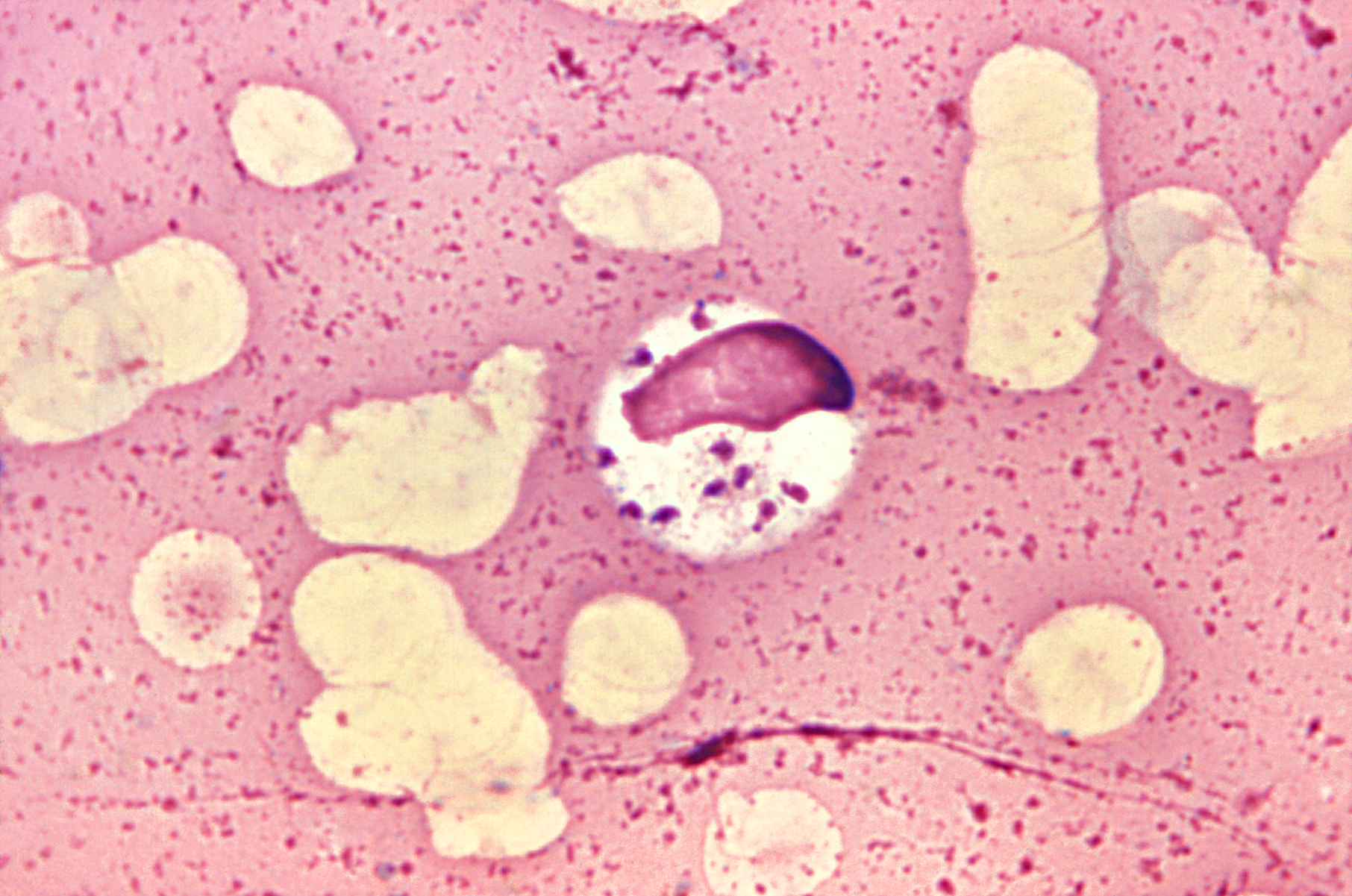
Leishmania (/liːʃˈmeɪniə, -ˈmæn-/) is a genus of parasitic protozoans, single-celled eukaryotic organisms of the trypanosomatid group that are responsible for the disease leishmaniasis. The parasites are transmitted by sandflies of the genus Phlebotomus in the Old World, and of the genus Lutzomyia in the New World. There are 53 species and about 20 of them are responsible for human infections. They are transmitted by around 100 species of sandflies. The primary hosts are vertebrates. They commonly infect hyraxes, canids, rodents, and humans.
Members of an ancient genus of Leishmania-like parasites, Paleoleishmania, have been detected in fossilized sand flies dating back to the early Cretaceous period. The first written reference to the conspicuous symptoms of cutaneous leishmaniasis surfaced in the Paleotropics within oriental texts dating back to the 7th century BC (allegedly transcribed from sources several hundred years older, between 1500 and 2000 BC). Due to its broad and persistent prevalence throughout antiquity as a mysterious disease of diverse symptomatic outcomes, leishmaniasis has been dubbed with various names ranging from "white leprosy" to "black fever". Some of these names suggest links to negative cultural beliefs or mythology, which still feed into the social stigmatization of leishmaniasis today.
In India, both cutaneous and visceral leishmaniasis are caused by Leishmania donovani. The first records of cutaneous leishmaniasis in India were from British medical officers in the early 19th century. The disease was by then known as "oriental sore" or "Delhi boil"; while the visceral form was variously called "Burdwan [after the city Burdwan] fever", "kala azar" (black fever), or "Dumdum [a city in West Bengal] fever".
The causative parasite for the disease was identified in 1901 as a concurrent finding by William Boog Leishman and Charles Donovan. They independently visualised microscopic single-celled parasites (later called Leishman-Donovan bodies) living within the cells of infected human organs. The parasitic genus would later be classed as trypanosomatid protozoans under the phylogenetic designation, Leishmania donovani. Several species have since been classified and grouped under two major subgenera i.e. Leishmania Viannia (generally located in the Neotropics) or Leishmania Leishmania (generally located in the Paleotropics, with the major exception of the L. mexicana subgroup).
Leishmania currently affects 6 million people in 98 countries. About 0.9–1.6 million new cases occur each year, and 21 species are known to cause disease in humans: it is considered a zoonosis.
Leishmania species are unicellular eukaryotes having a well-defined nucleus and other cell organelles including kinetoplasts and flagella. Depending on the stage of their life cycle, they exist in two structural variants, as:
The details of the evolution of this genus are debated, but Leishmania apparently evolved from an ancestral trypanosome lineage. The oldest lineage is that of the Bodonidae, followed by Trypanosoma brucei, the latter being confined to the African continent. Trypanosoma cruzi groups with trypanosomes from bats, South American mammals, and kangaroos suggest an origin in the Southern Hemisphere. These clades are only distantly related.
The remaining clades in this tree are Blastocrithidia, Herpetomonas, and Phytomonas. The four genera Leptomonas, Crithidia, Leishmania, and Endotrypanum form the terminal branches, suggesting a relatively recent origin. Several of these genera may be polyphyletic and may need further division.
Hub AI
Leishmania AI simulator
(@Leishmania_simulator)
Leishmania
Leishmania (/liːʃˈmeɪniə, -ˈmæn-/) is a genus of parasitic protozoans, single-celled eukaryotic organisms of the trypanosomatid group that are responsible for the disease leishmaniasis. The parasites are transmitted by sandflies of the genus Phlebotomus in the Old World, and of the genus Lutzomyia in the New World. There are 53 species and about 20 of them are responsible for human infections. They are transmitted by around 100 species of sandflies. The primary hosts are vertebrates. They commonly infect hyraxes, canids, rodents, and humans.
Members of an ancient genus of Leishmania-like parasites, Paleoleishmania, have been detected in fossilized sand flies dating back to the early Cretaceous period. The first written reference to the conspicuous symptoms of cutaneous leishmaniasis surfaced in the Paleotropics within oriental texts dating back to the 7th century BC (allegedly transcribed from sources several hundred years older, between 1500 and 2000 BC). Due to its broad and persistent prevalence throughout antiquity as a mysterious disease of diverse symptomatic outcomes, leishmaniasis has been dubbed with various names ranging from "white leprosy" to "black fever". Some of these names suggest links to negative cultural beliefs or mythology, which still feed into the social stigmatization of leishmaniasis today.
In India, both cutaneous and visceral leishmaniasis are caused by Leishmania donovani. The first records of cutaneous leishmaniasis in India were from British medical officers in the early 19th century. The disease was by then known as "oriental sore" or "Delhi boil"; while the visceral form was variously called "Burdwan [after the city Burdwan] fever", "kala azar" (black fever), or "Dumdum [a city in West Bengal] fever".
The causative parasite for the disease was identified in 1901 as a concurrent finding by William Boog Leishman and Charles Donovan. They independently visualised microscopic single-celled parasites (later called Leishman-Donovan bodies) living within the cells of infected human organs. The parasitic genus would later be classed as trypanosomatid protozoans under the phylogenetic designation, Leishmania donovani. Several species have since been classified and grouped under two major subgenera i.e. Leishmania Viannia (generally located in the Neotropics) or Leishmania Leishmania (generally located in the Paleotropics, with the major exception of the L. mexicana subgroup).
Leishmania currently affects 6 million people in 98 countries. About 0.9–1.6 million new cases occur each year, and 21 species are known to cause disease in humans: it is considered a zoonosis.
Leishmania species are unicellular eukaryotes having a well-defined nucleus and other cell organelles including kinetoplasts and flagella. Depending on the stage of their life cycle, they exist in two structural variants, as:
The details of the evolution of this genus are debated, but Leishmania apparently evolved from an ancestral trypanosome lineage. The oldest lineage is that of the Bodonidae, followed by Trypanosoma brucei, the latter being confined to the African continent. Trypanosoma cruzi groups with trypanosomes from bats, South American mammals, and kangaroos suggest an origin in the Southern Hemisphere. These clades are only distantly related.
The remaining clades in this tree are Blastocrithidia, Herpetomonas, and Phytomonas. The four genera Leptomonas, Crithidia, Leishmania, and Endotrypanum form the terminal branches, suggesting a relatively recent origin. Several of these genera may be polyphyletic and may need further division.
Recent media