Respect all members: no insults, harassment, or hate speech.
Be tolerant of different viewpoints, cultures, and beliefs. If you do not agree with others, just create separate note, article or collection.
Clearly distinguish between personal opinion and fact.
Verify facts before posting, especially when writing about history, science, or statistics.
Promotional content must be published on the “Related Services and Products” page—no more than one paragraph per service. You can also create subpages under the “Related Services and Products” page and publish longer promotional text there.
Do not post materials that infringe on copyright without permission.
Always credit sources when sharing information, quotes, or media.
Be respectful of the work of others when making changes.
Discuss major edits instead of removing others' contributions without reason.
If you notice rule-breaking, notify community about it in talks.
Do not share personal data of others without their consent.
GM 6-cylinder inline 302 cu in (4.95 L) gasoline engine 145 hp (108 kW)
Operational range
185 km (115 mi)
Maximum speed
48 km/h (30 mph)
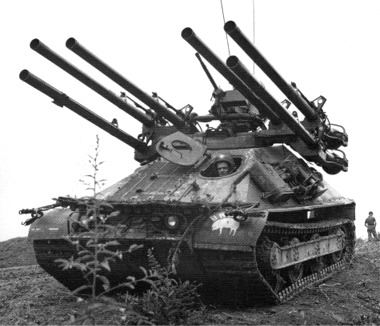
It mounted six 106 mm manually loaded M40 recoilless rifles as its main armament, which could be fired in rapid succession against single targets to increase the probability of a kill. Although the actual caliber of the main guns was 105 mm, it was designated 106 mm to prevent confusion with the ammunition for the 105 mm M27 recoilless rifle, which the M40 replaced.
It was produced in limited numbers for the United States Marine Corps after the United States Army cancelled the project. The Marines consistently reported excellent results when they used the Ontos for direct fire support against infantry in numerous battles and operations during the Vietnam War. The American stock of Ontos was largely expended towards the end of the conflict and the Ontos was removed from service in 1969.
The Ontos (Greek for "thing"[1]) project was created to be an air transportable tank destroyer capable of being lifted by the cargo aircraft of the 1950s. This limited the vehicle to a weight between 10 and 20 metric tons. The Ontos also had to use the six-cylinder engine then widely used in the Army's GMC trucks. After a number of design and engineering meetings from March through October 1951, manufacturer Allis-Chalmers was awarded an initial contract to produce 14 pilot vehicles, encompassing 6 variants.
Allis-Chalmers' first vehicle, completed in 1952, was based on the running gear of the M56 Scorpion light anti-tank vehicle. The vehicle mounted a cast steel turret with two arms holding three rifles each. This early model could traverse the turret only about 15 degrees. A second prototype used a new suspension system, new tracks, and a newer turret with about 40 degrees traverse. The vehicle could carry only eighteen rounds for the main guns inside the vehicle due to limited space. Its most prominent armament was its six M40 recoilless rifles. Four of the recoilless rifles also had .50 BAT (12.7x77mm) M8C spotting rifles attached,[2] each of which fired a tracer round with the same trajectory as the 105 mm round, and which gave off a flash and puff of white smoke on impact. The spotting rifles were used to line up the 105 mm recoilless rifles with the target. The Ontos also carried a single .30 caliber (7.62 mm) M1919A4 machine gun for anti-infantry use.[2]
The vehicle was taken to the Aberdeen Proving Ground where single rifles had been tested earlier. When all six weapons were fired at once, the back blast from the firing knocked bricks out of a nearby building and knocked the rear windows out of several cars. The prototype and testing stage was completed by 1955, at which point the Army canceled its order.
As an anti-tank vehicle the Ontos had several problems, including a small ammunition load, a very high profile for such a small vehicle, and the need for the crew to exit the vehicle in order to reload the guns, exposing them to enemy fire.[3] Although the Army had canceled its order, the Marine Corps was desperate for any anti-tank vehicles it could get, and ordered 297.[3] Production ran from 1955 through 1957. The Marine Corps accepted its first vehicle on 31 October 1956.
T165 − Prototype armed with six rifles. In January 1955, an improved version was officially designated as the T165E2, which would be further refined into the Ontos[5]
M50 "Ontos" − First production variant powered by a General Motors Model 302 145 hp (108 kW) engine. 297 were built in total[6]
M50A1 − Improved variant powered by Chrysler Model 75-M2 180 hp (130 kW) engine later designated as the HT-361. Other modifications included the addition of vent grills on the lower hull front. 294 vehicles were converted in total[7]
During development, the feasibility of troop carriers using the Ontos chassis was examined.[8] A mockup was built of an Ontos chassis with a Maxson M45 quadmount .50 BMG antiaircraft mount.[9] There were also some projects to modernize the M50 with anti-tank missiles.[10]
While the M50 was designed as a tank destroyer, during the Vietnam War most M50s did not engage enemy armor as the North Vietnamese Army deployed few tanks. The Ontos was therefore more widely used by the US Marines for direct fire support for the infantry in combat, a role that was never emphasized in training or doctrine.[2] Its light armor was effective against small arms but vulnerable to mines and rocket-propelled grenades. Consequently, many Ontos were deployed in static defense positions.
The relatively light weight of the M50 made it exceptionally mobile for the amount of firepower it carried. In one operation, the Ontos was the only tracked vehicle light enough to cross a pontoon bridge. In the Battle of Huế, Colonel Stanley S. Hughes felt the Ontos was the most effective of all Marine supporting arms. At ranges of 300 to 500 yards (270 to 460 m), its recoilless rifles could knock holes in or completely knock down walls. The appearance of an Ontos was sometimes enough to make the enemy break and run, and anecdotal accounts describe the enemy fleeing occupied buildings when an Ontos's spotting round entered a window. In Operation Desoto, the introduction of the large CH-53 Sea Stallion helicopter made possible moving a platoon 25 miles (40 km) south of Quảng Ngãi City carrying Ontos in slings underneath the aircraft.[11]
The Ontos was taken out of frontline service in 1969, and by 1970 were removed entirely from service.[3] Some of the vehicles were handed over to an Army light infantry brigade. They used them until they ran out of spare parts, and then removed the turrets and used them as fixed fortifications.[citation needed] Both these and the rest of the vehicles returned from Vietnam in 1970 and were cut up for scrap, with some of the chassis being sold off to be converted into construction vehicles. Some of the Ontos that were sold to construction companies were later acquired by collectors for restoration.
The Ontos did see use as an anti-tank weapon during the American involvement in the Dominican Civil War: on 29 April 1965 an M50 Ontos and an M48 Patton of the 6th MEU engaged and destroyed two rebel L/60L light tanks, each destroying one. In another instance, an Ontos destroyed an AMX-13.[12][unreliable source?]
Of the 297 built, only 14 remain, many of which are the M50A1 model.[3]
There are Ontos on display at the following US locations:
The Patton Museum of Cavalry & Armor in Fort Knox, Kentucky[13] (no longer on display, may have moved with the Armor school to Fort Benning).[citation needed]
Kutta, Timothy J., "ONTOS: The USMC's Most Famous Anti-Tank Weapon", Modern War magazine, no. #14 November/December 2014, Bakersfield, California: Strategy & Tactics Press (Decision Games), pp. 72–75
McNab, Chris (2003). Military Vehicles. Hoo, Kent, UK: Grange Books. p. 56. ISBN1-84013-539-5.
The M50 Ontos (Rifle, Multiple 106 mm, Self-propelled, M50), meaning "the thing" in Greek, was a lightweight self-propelled tank destroyer developed by the United States in the early 1950s as an air-transportable anti-armor vehicle for rapid deployment.[1] Featuring a compact, open-topped hull mounting six 106 mm M40 recoilless rifles—capable of firing high-explosive anti-tank rounds—and supported by four .50-caliber spotting rifles and a .30-caliber machine gun, it weighed approximately 19,000 pounds and was crewed by three personnel.[2] Designed primarily for the U.S. Army but ultimately adopted exclusively by the U.S. Marine Corps, the Ontos entered service in 1956 and saw extensive combat use during the Vietnam War, where its agility and firepower proved effective against infantry and light fortifications rather than heavy tanks.[3]Development of the M50 began in the post-Korean War era as an evolution of the earlier M56 Scorpion, with Allis-Chalmers producing 297 units between 1955 and 1957 to meet requirements for a vehicle under 20 tons that could be airlifted by early helicopters and transport aircraft.[4] The U.S. Army initially ordered the vehicles but canceled its program due to reliability issues and doctrinal shifts away from dedicated tank destroyers, transferring all units to the Marine Corps in 1956.[1] An upgraded M50A1 variant, featuring a more powerful Chrysler V8 engine producing 180 horsepower, was introduced in the 1960s, replacing the original General Motors V6.[2]In terms of specifications, the Ontos measured about 12 feet 7 inches in length, 8 feet 6 inches in width, and 7 feet in height, with thin sloped steel armor providing protection only against small-arms fire.[3] Powered by its V6 or V8 engine, it achieved a maximum road speed of 30 miles per hour and an operational range of around 115 miles, emphasizing mobility over endurance.[4] The recoilless rifles, arranged in three pairs on a pintle mount, could be fired individually or in salvos, with each rifle holding one round ready to fire and a total ammunition load of 18 rounds stored externally for quick reloading by the crew; the upper rifles were even designed to be detachable for independent infantry use.[2]During its service, the Ontos was deployed by Marine units in Vietnam starting in 1965, participating in key engagements such as the Battle of Hue City in 1968 and the defense of Khe Sanh, where its direct-fire capability demolished bunkers and supported infantry advances.[3][5] Despite its intended anti-tank role, the lack of armored threats in Vietnam led to its repurposing as an anti-personnel platform, earning praise for its speed and low silhouette in jungle terrain but criticism for the backblast hazards of its recoilless rifles.[2] The vehicle was phased out of frontline service by 1969 amid evolving warfare tactics, with the last units retired from reserve duties at Guantanamo Bay in 1980; most were scrapped, though several survive in museums today.[4]
Development
Origins and Requirements
In the aftermath of World War II, the U.S. Army identified a need for lightweight, air-transportable tank destroyers to counter the growing Soviet armored threat in Europe during the early Cold War. This requirement stemmed from a 1948 conference at Fort Monroe, Virginia, where military leaders discussed the development of small, tracked anti-tank vehicles akin to the American M29 Weasel or British Bren carrier, emphasizing mobility for airborne operations and direct fire support to infantry units.[5] The envisioned vehicles needed to weigh under 20 tons—ideally around 9-10 tons—to be compatible with cargo aircraft such as the C-119 Flying Boxcar or C-130 Hercules, enabling rapid deployment to potential European battlefields.[6][1]The conceptualization of the M50 Ontos drew heavily from the earlier M56 Scorpion program, a late-1940s lightweight anti-tank vehicle that highlighted the challenges of mounting conventional guns on minimal chassis without compromising stability. To address this, designers prioritized recoilless rifles, which could deliver high-velocity anti-tank rounds without the excessive recoil that would destabilize a light platform. In November 1950, the U.S. Army awarded a contract to Allis-Chalmers' farm machinery division to develop the vehicle under the T55/T165 program, aiming for a joint Army-Marine Corps initiative focused on airmobile anti-tank capability.[7][8] The T55 series provided the foundational hull design, derived from experimental tracked personnel carriers, while the T165 variant incorporated refinements like modified suspension for enhanced cross-country performance.[5]Performance objectives under the program included a combat range sufficient for tactical maneuvers, and a three-man crew configuration to minimize logistical demands, though the design inherently exposed the loader during ammunition handling to reduce overall vehicle complexity and weight. The primary armament was envisioned as six 106 mm M40 recoilless rifles to provide burst firepower against armored targets.[6] Despite initial enthusiasm, the U.S. Army lost interest by 1955, canceling its portion of the project due to mechanical reliability concerns and a doctrinal shift toward heavier main battle tanks like the emerging M60, leaving the Marine Corps to pursue limited production.[5][7]
Prototypes and Production
The development of the M50 Ontos began with the T164 prototype, completed by Allis-Chalmers in 1952 and armed with four 106 mm recoilless rifles mounted on the running gear of the M56 Scorpion light tank destroyer.[9] This initial design emphasized air-transportability and lightweight construction to meet early anti-tank requirements. Evolving from the T164, the T165 prototype introduced six recoilless rifles with a 40-degree traverse and a new suspension system and tracks for improved stability, while the T165E2 further refined these elements, including modifications to the hull and mounting for better recoil absorption.[9][7]Prototypes underwent rigorous testing at the Aberdeen Proving Ground, where engineers addressed recoil management and vehicle stability; a notable incident involved firing all six rifles simultaneously, generating backblast powerful enough to damage nearby structures and highlighting the need for enhanced mounting systems.[6] Weekend endurance tests, including 50-hour runs, were also conducted at Allis-Chalmers' LaPorte, Indiana facility to validate mobility and durability.[7]Following the U.S. Army's cancellation of its order in 1955 due to concerns over crew exposure during reloading, limited ammunition storage, and overall design flaws, the U.S. Marine Corps adopted the vehicle in 1955, placing an initial order for 297 units to bolster its anti-tank capabilities.[6][10]Allis-Chalmers began full production of the standardized M50 in 1955 at its LaPorte plant, completing assembly by November 1957 despite challenges such as armor plate warping during welding and integration issues with the recoilless rifle array.[7] The Marines accepted the first vehicle on October 31, 1956, with early field trials that year demonstrating its anti-tank effectiveness, including successful engagements simulating threats comparable to T-34 tanks.[9][6]Production totaled 297 units delivered to the Marine Corps, each estimated to cost between $25,000 and $30,000 at the time.[11] The vehicle's unconventional design earned it the nickname "Ontos," derived from the Greek word for "thing," a term originating in Marine slang to describe its odd, pyramid-shaped appearance and multi-rifle configuration.[10] Of these, 176 were later upgraded to the M50A1 standard between 1963 and 1965, incorporating a more powerful engine, though the core M50 designation remained from its 1955 standardization.[7]
Design and Specifications
Chassis and Mobility
The M50 Ontos utilized a lightweight tracked chassis developed by Allis-Chalmers, derived from the earlier T55 series of experimental armored personnel carriers to meet requirements for rapid deployment in airborne operations.[5] This design emphasized minimal weight and compact dimensions, with an empty mass of approximately 8,600 kg (18,950 lb), a length of 3.83 m, width of 2.59 m, and height of 2.13 m, allowing it to fit within the constraints of 1950s-era cargo aircraft.[1] The chassis featured steel armor plating over the frame, contributing to its low ground pressure of 0.36 kg/cm², which enhanced performance across varied terrains including soft soil and rice paddies.[12][13] Its torsion bar suspension system provided reliable mobility while absorbing the recoil forces from its armament, though early production models experienced alignment issues due to welding distortions in the armor plates.[7]Propulsion was provided by a six-cylinder gasoline engine, initially the General Motors Model 302 developing 145 hp in the standard M50 variant, which was later upgraded to a more powerful 180 hp engine in the M50A1 configuration for improved performance.[12] This powerplant enabled a top road speed of 48 km/h (30 mph) and an operational range of 185 km (115 miles) on a full tank, balancing agility with endurance for airmobile units.[1] Off-road capabilities reached approximately 24 km/h, supported by the vehicle's low profile and torsion bar setup, which allowed it to navigate swamps, urban environments, and uneven ground effectively.[6] The fuel capacity stood at 178 liters (47 US gallons), sufficient for extended patrols without frequent resupply, while the fording depth of 0.61 m without preparation further underscored its versatility in wet conditions.[12][3][14]Optimized for airmobile roles, the Ontos could be transported via fixed-wing aircraft or slung beneath heavy-lift helicopters such as the CH-47 Chinook, facilitating quick insertion into combat zones.[1] With a track width of 381 mm, the design distributed weight evenly to minimize bogging in mud or sand, making it particularly suitable for Marine Corps operations requiring high maneuverability.[12] A crew of three—consisting of a commander/gunner, driver, and loader—operated the vehicle, enabling efficient handling despite its compact interior.[6]
Armament and Protection
The primary armament of the M50 Ontos consisted of six 106 mm M40A1C recoilless rifles arranged in two clusters of three, mounted on a small open-top turret for anti-tank operations.[5] These rifles fired high-explosive anti-tank (HEAT) rounds with a muzzle velocity of 503 m/s and an effective range of approximately 1,350 m, enabling penetration of armored targets while minimizing vehicle weight through the recoilless design.[15] The turret provided a limited traverse of 40° across the frontal arc and an elevation range of -10° to +20°, allowing the crew to engage targets in a forward sector without full rotation.[2]Each cluster of recoilless rifles was supported by .50 caliber (12.7 mm) M8C spotting rifles—four in total—to aid in precise aiming before main gun fire, as the recoilless nature required visual confirmation of impact.[3] The Ontos carried 18 rounds of 106 mm ammunition overall, with three rounds per rifle (one loaded and two in reserve), permitting rapid salvos in either simultaneous mode—firing all six rifles electrically from inside the vehicle—or independent fire for controlled engagements; blast deflectors on the mount helped mitigate backblast effects on the vehicle and crew.[5][3] A secondary armament of one .30 caliber (7.62 mm) M1919A4 machine gun was mounted flexibly for anti-infantry defense, with an ammunition load supporting sustained suppressive fire.[5]Protection on the Ontos was minimal, prioritizing mobility over heavy armor, with the hull and turret featuring 13 mm (0.5-inch) sloped steel plating on the sides to resist small-arms fire and shrapnel, while the top and floor offered only 6 mm (3/16-inch) thickness, leaving it vulnerable to artillery fragments, mines, and overhead attacks.[5] The open-top configuration of the armament mount exposed the three-man crew (commander, driver, and gunner/loader) during firing and especially reloading, as the rifles required manual loading from outside the vehicle after expending ready rounds, increasing risks in combat.[3][5] This design emphasized the Ontos's role as a lightweight, direct-fire support platform rather than a heavily defended tank, with crew procedures relying on quick dismounts and vehicle repositioning to mitigate vulnerabilities.[2]
Variants and Upgrades
Production Models
The M50 Ontos entered production as the standard model, featuring a General Motors Model 302 inline-six gasoline engine producing 145 horsepower in its basic configuration with no major structural alterations from the developmental prototypes. Allis-Chalmers Manufacturing Company handled the entire production run at its facilities, constructing 297 units between 1955 and 1957 under a contract awarded in August 1955. The U.S. Marine Corps accepted the first vehicle on October 31, 1956, with initial deliveries reaching Marine tank battalions the following year, marking the vehicle's entry into operational service exclusively with U.S. forces and without any export variants. This production adhered to the official designation "Rifle, Multiple 106 mm, Self-propelled, M50," formalized as the standardized anti-tank platform for light armored operations.In the early 1960s, as part of a Marine Corps modernization effort from 1963 to 1965, the fleet underwent conversion to the M50A1 variant to address performance limitations in the original powerplant. This upgrade replaced the 145-horsepower General Motors engine with a Chrysler HT-361-318 V8 gasoline engine delivering 180 horsepower, enhancing torque, overall reliability, and cooling efficiency while preserving the original armament arrangement of six 106 mm recoilless rifles. Approximately 176 of the existing M50s were modified to this standard, ensuring improved mobility without altering the vehicle's core design or protective features. No additional production models beyond these were manufactured, solidifying the M50 and M50A1 as the sole fielded configurations.
Experimental and Proposed Variants
The development of the M50 Ontos involved several experimental prototypes that were tested but ultimately not selected for production due to various technical and operational limitations. The T165 prototype, armed with six 106 mm recoilless rifles, was selected for development into the production M50. The T164, completed in 1952 by Allis-Chalmers, featured four 106 mm recoilless rifles mounted on a lighter chassis with running gear shared with the M56 Scorpion light anti-tank vehicle and a limited turret traverse of 15 degrees. This prototype was tested but rejected due to small ammunition load, high profile, and need for crew to exit the vehicle for reloading, exposing them to enemy fire.[9]The T166 was a prototype armed with a single 106 mm recoilless rifle, optimized for airborne deployment. The T167 was a proposed variant armed with eight 106 mm recoilless rifles.
Operational History
Vietnam War Deployment
The M50 Ontos first deployed to Vietnam on March 8, 1965, arriving at Da Nang with the 9th Marine Expeditionary Brigade as part of the U.S. Marine Corps' initial ground troop commitments.[5] Although designed for anti-tank roles, the vehicle's primary utility shifted to infantry support due to the scarcity of North Vietnamese Army (NVA) armor, with Ontos platoons attached to tank battalions such as the 1st and 3rd Tank Battalions for combined arms operations.[8] Early combat exposure came during Operation Starlite in August 1965, the first major U.S. offensive, where Ontos provided direct fire against Viet Cong positions, followed by engagements in Operation Hastings in July 1966 near the demilitarized zone.[16] By mid-1966 and into 1967, units participated in operations like Iowa, Mobile, Franklin, and Desoto, often escorting convoys or securing bases in Quang Ngai and Quang Tin provinces.[9]In numerous recorded engagements through 1969, the Ontos excelled in close-range direct fire support, using its six 106mm recoilless rifles to suppress bunkers, fortifications, and infantry concentrations with high-explosive squash head (HESH) or canister rounds, as the NVA rarely fielded tanks.[17] Marines integrated Ontos with M48 Patton tanks for mutual protection, leveraging the Ontos's mobility to flank enemy positions while the heavier tanks absorbed incoming fire; this pairing proved vital in operations like Hickory in May 1967 north of Con Thien.[5] The vehicle's .50-caliber spotter rifles aided precise targeting under 500 meters, enabling rapid volleys—up to six rounds in seconds—that devastated NVA assaults and boosted Marine morale.[17] Numerous Ontos were committed across Marine units, with platoons from the 1st and 3rd Anti-Tank Battalions reorganized under tank commands for flexibility.[8]The Ontos saw intense urban combat during the Tet Offensive's Battle of Hue in January-February 1968, where A Company, 3rd Anti-Tank Battalion's 1st and 2nd Ontos Platoons cleared NVA-held buildings and walls alongside infantry, firing into fortified structures and causing enemy retreats.[5] In the Siege of Khe Sanh from January to July 1968, 10 Ontos were airlifted in via CH-53 Sea Stallion helicopters to bolster defenses against anticipated NVA armor, providing perimeter security and repelling probes, including a convoy action on August 21, 1967, that killed six NVA and probably 10 more.[9] These actions highlighted the vehicle's adaptability, though its thin armor (0.5 inches) and exposed crew during reloading limited sustained operations.[17]Despite its firepower, the Ontos faced significant limitations, including a low ammunition capacity of 18 main gun rounds, frequent mechanical breakdowns from worn tracks in Vietnam's terrain, and vulnerability to mines, RPGs, and recoilless rifles, contributing to a high attrition rate from combat damage and maintenance issues by 1969.[9] Ammo shortages often forced reliance on auxiliary weapons, and crew exposure during reloads increased casualties; in Hue alone, three Ontos were lost to enemy fire.[5] Several were destroyed by mines or RPGs across deployments, underscoring the trade-off between mobility and protection in infantry support roles.[17] As Marine withdrawals accelerated in 1969, surviving Ontos were transferred to ARVN forces or repurposed, ending their combat tenure.[9]
Other Military Uses
The M50 Ontos was first deployed operationally during the 1958 Lebanon Crisis as part of Operation Blue Bat, where U.S. Marine Corps units, including elements equipped with the vehicle, landed on the beaches near Beirut to support the Lebanese government amid civil unrest and regional tensions. This intervention served primarily as a show of force to deter further escalation, with no combat engagements involving the Ontos; however, the deployment highlighted its utility in rapid amphibious sealift and mobility for expeditionary operations.[6][5][18]In 1965, the Ontos participated in Operation Power Pack, the U.S. intervention in the Dominican Civil War, where Marine units provided security and fire support in Santo Domingo to prevent communist influence and stabilize the conflict. The vehicle engaged rebel positions in limited actions, destroying at least one enemy tank and suppressing fortifications, though its role remained secondary to broader peacekeeping efforts without sustained combat.[6][5][9]Beyond these interventions, the Ontos was employed extensively in U.S. Marine Corps training and exercises from 1957 to 1970, including at Camp Lejeune for anti-tank tactics, live-fire drills, and integration with infantry units to simulate rapid-response scenarios. It also featured in early Cold War joint exercises, such as those with allied forces in Europe during the late 1950s, adapting its design for NATO-compatible operations focused on lightweight armor support. These uses reinforced its evolving role as an ad hoc infantry support platform, emphasizing close-range firepower over dedicated tank destruction.[6][5][8]The M50 Ontos remained exclusively in U.S. Marine Corps service, with no foreign operators or successful exports recorded, despite its specialized design attracting brief interest from allies during the Cold War.[19][6]
Retirement and Preservation
Decommissioning and Post-Service Roles
The U.S. Marine Corps began phasing out the M50 Ontos in the late 1960s, with antitank units deactivated in 1969 amid escalating maintenance challenges and doctrinal shifts during the Vietnam War. By December 1967, Ontos platoons had been reassigned from specialized antitank roles to tank battalions for general fire support, but spare parts shortages and worn tracks rendered many vehicles inoperable. The final Marine Ontos units were disbanded in 1971, with surviving examples transferred to the U.S. Army's light infantry brigades, which operated them until parts depletion around 1970; one vehicle reportedly remained in service at Guantanamo Bay until 1980.[6][5]Key reasons for the Ontos's withdrawal included its obsolescence against evolving threats, such as modern main battle tanks and the rise of helicopter gunships, coupled with inherent design limitations like thin armor vulnerable to mines and rockets, limited ammunition storage, and frequent accidental discharges that endangered crews. The vehicle's recoilless rifles proved inadequate for sustained engagements, prompting a doctrinal pivot toward guided missile systems like the BGM-71 TOW, which offered greater range and precision without exposing crews; TOW-equipped platforms, including the M151 MUTT, began replacing recoilless rifle-based anti-armor assets by the mid-1970s. Of the 297 Ontos produced for the Marines between 1955 and 1957, most were written off with little salvage value due to these factors, though some parts were cannibalized to sustain operational units until deactivation.[6][5][7]Following retirement, many Ontos were repurposed for non-combat roles, including conversion into static range targets and bunkers at military installations such as the China Lake Naval Weapons Center, where over 60 were discarded for live-fire practice. Others were stripped of armament and transferred to civilian agencies, such as forestry services, for utility tasks like hauling equipment, while a smaller number served as construction platforms or improvised movers for towed artillery pieces into the early 1980s before final scrapping. This utilitarian reuse reflected the vehicle's robust chassis but underscored its limited adaptability beyond its original niche.[6][13][20]The Ontos's service influenced Marine Corps light armor doctrine, particularly in emphasizing mobile fire support for infantry in urban and restrictive terrain, as highlighted in after-action reports from battles like Hue, where it was deemed the "most effective" supporting arm for direct suppression. These experiences informed subsequent developments in rapid-response anti-personnel platforms, though the vehicle's low production numbers and lack of institutional focus limited broader tactical evolution.[6][5]
Surviving Vehicles
Several intact M50 Ontos vehicles survive today, primarily in U.S. military museums and private collections, underscoring the vehicle's rarity given the original production run of 297 units between 1955 and 1957. As of 2021, records indicate approximately 23 preserved examples, excluding numerous derelict hulks used as targets at sites like Naval Air Weapons Station China Lake, California.[21]Key preservation sites include the U.S. Army Armor & Cavalry Collection at Fort Moore, Georgia, which holds a restored M50 (serial number 304) that underwent a two-year project completed in 2006, though its recoilless rifles were later dismounted for safety. The National Museum of the Marine Corps at Quantico, Virginia, displays a cosmetically refurbished M50A1 integrated into a Tet Offensive diorama. Additional examples are maintained at the Rock Island Arsenal Museum in Rock Island, Illinois, on static display as part of its ordnance collection, and at Camp Pendleton, California, where at least three vehicles (including serial numbers 465, 528, and 226934) are held in varying conditions.[21][10]Restoration efforts have focused on both military and private initiatives to return vehicles to operational or display-ready states, such as a privately owned example in Hockley, Texas (USMC number 226893), restored to replicate a Vietnam-era configuration and capable of movement. The National Museum of Military Vehicles in Dubois, Wyoming, features one in its Vietnam War exhibit, highlighting the vehicle's combat role. Internationally, a single M50 is preserved at the Royal Tank Museum in Amman, Jordan. Most survivors remain in static configurations for public viewing, with limited access to interiors or mechanical components, and no verified operational examples abroad beyond occasional private demonstrations.[21][22]