



Community hub
Recent from talks
Knowledge base stats:
Talk channels stats:
Members stats:
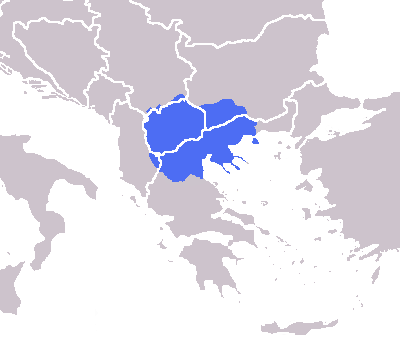
Demographic history of Macedonia
The region of Macedonia is known to have been inhabited since Paleolithic times.
The earliest historical inhabitants of the region were the Pelasgians, the Bryges and the Thracians. The Pelasgians occupied Emathia and the Bryges occupied northern Epirus, as well as Macedonia, mainly west of the Axios River and parts of Mygdonia. Thracians, in early times occupied mainly the eastern parts of Macedonia, (Mygdonia, Crestonia, Bisaltia). The Ancient Macedonians are missing from early historical accounts because they had been living in the southern extremities of the region – the Orestian highlands – since before the Dark Ages. The Macedonian tribes subsequently moved down from Orestis in the upper Haliacmon due to pressure from the Orestae.
The name of the region of Macedonia (Greek: Μακεδονία, Makedonia) derives from the tribal name of the ancient Macedonians (Greek: Μακεδόνες, Makedónes, Makedones). According to the Greek historian Herodotus, Makednon (Greek: Mακεδνόν) was an alternative name for the Doric ethnos and specifically for the Dorian tribe that stayed behind during the great southward migration of the Dorian Greeks.[page needed] The word "Makednos" is cognate with the Doric Greek word "Μάκος" Μakos (Attic form Μήκος – "mékos"), which is Greek for "length". The ancient Macedonians took this name either because they were physically tall, or because they settled in the mountains. The latter definition would translate "Macedonian" as "Highlander".
The Macedonians (Greek: Μακεδόνες, Makedónes) were an ancient tribe that lived on the alluvial plain around the rivers Haliacmon and lower Axios in the northeastern part of mainland Greece. Essentially an ancient Greek people, they gradually expanded from their homeland along the Haliacmon valley on the northern edge of the Greek world, absorbing or driving out neighbouring non-Greek tribes, primarily Thracian and Illyrian. They spoke Ancient Macedonian, which was either a sibling language to Ancient Greek or a Northwest Doric Greek dialect, although the prestige language of the region was at first Attic and then Koine Greek. Their religious beliefs mirrored those of other Greeks, following the main deities of the Greek pantheon, although the Macedonians continued Archaic burial practices that had ceased in other parts of Greece after the 6th century BC. Aside from the monarchy, the core of Macedonian society was its nobility. Similar to the aristocracy of neighboring Thessaly, their wealth was largely built on herding horses and cattle.
After the defeat of Andriscus in 148 BC, Macedonia officially became a province of the Roman Republic in 146 BC. Hellenization of the non-Greek population was not yet complete in 146 BC, and many of the Thracian and Illyrian tribes had preserved their languages. It is also possible that the ancient Macedonian tongue was still spoken, alongside Koine, the common Greek language of the Hellenistic era. From an early period, the Roman province of Macedonia included Epirus, Thessaly, parts of Thrace and Illyria, thus making the region of Macedonia permanently lose any connection with its ancient borders, and now be the home of a greater variety of inhabitants.
Taking advantage of the desolation left by the nomadic tribes, Slavs settled in the Balkan Peninsula from the 6th century AD. (see also: South Slavs). Aided by the Avars and by Turkic Bulgars, Slavic tribes in the 6th century started a gradual invasion into the lands of Byzantium. They infiltrated into Macedonia and reached as far south as Thessaly and the Peloponnese, settling in isolated regions that the Byzantines called Sclavinias, until they were gradually pacified. Many Slavs came to serve as soldiers in Byzantine armies and settled in other parts of the Byzantine Empire. Slavic settlers assimilated many[quantify] among the Romanised and Hellenised Paeonian, Illyrian and Thracian population of Macedonia, but pockets of tribes that fled to the mountains remained independent.[page needed] A number of scholars today consider that present-day Aromanians (Vlachs), Sarakatsani and Albanians originate from these mountainous populations. The interaction between Romanised and non-Romanised indigenous peoples and the Slavs resulted in linguistic similarities which are reflected in modern Bulgarian, Albanian, Romanian and Macedonian, all of them members of the Balkan language area. The Slavs also occupied the hinterland of Thessaloniki, launching consecutive attacks on the city in 584, 586, 609, 620, and 622 AD, but never taking it. Detachments of Avars often joined the Slavs in their onslaughts, but the Avars did not form any lasting settlements in the region. A branch of the Bulgars led by khan Kuber, however, settled in western Macedonia and eastern Albania around 680 AD and also engaged in attacks on Byzantium together with the Slavs. By this time, several different ethnicities inhabited the whole Macedonia region, with South Slavs forming the overall majority in the northern fringes of Macedonia while Greeks dominated the highlands of western Macedonia, the central plains, and the coastline.
The initial period of Ottoman rule led a depopulation of the plains and river valleys of Macedonia. The Christian population there fled to the mountains. Ottomans were largely brought from Asia Minor and settled parts of the region. Towns destroyed in Vardar Macedonia during the conquest were renewed, this time populated exclusively by Muslims. The Ottoman element in Macedonia was especially strong in the 17th and the 18th century with travellers defining the majority of the population, especially the urban one, as Muslim. The Ottoman population, however, sharply declined at the end of the 18th and the beginning of the 19th century on account of the incessant wars led by the Ottoman Empire, the low birth rate and the higher death toll of the frequent plague epidemics among Muslims than among Christians.[citation needed]
The Ottoman–Habsburg War (1683–1699), the subsequent flight of a substantial part of the Serbian population in Kosovo to Austria and the reprisals and looting during the Ottoman counteroffensive led to an influx of Albanian Muslims into Kosovo, northern and northwestern Macedonia. Being in the position of power, the Albanian Muslims managed to push out their Christian neighbours and conquered additional territories in the 18th and the 19th centuries. Pressures from central government following the first Russo-Turkish war that ended in 1774 and in which Ottoman Greeks were implicated as a "fifth column" led to the superficial Islamization of several thousand Greek-speakers in western Macedonia. These Greek Muslims retained their Greek language and identity, remained Crypto-Christians, and were subsequently called Vallahades by local Greek Orthodox Christians because apparently the only Turkish-Arabic they ever bothered to learn was how to say "wa-llahi" or "by Allah". The destruction and abandoning of the Christian Aromanian city of Moscopole and other important Aromanian settlements in the southern Albania (Epirus-Macedonia) region in the second half of the 18th century caused a large-scale migration of thousands of Aromanians to the cities and villages of Western Macedonia, most notably to Bitola, Krushevo and surrounding regions. Thessaloniki also became the home of a large Jewish population following Spain's expulsions of Jews after 1492. The Jews later formed small colonies in other Macedonian cities, most notably Bitola and Serres.[citation needed]
Hub AI
Demographic history of Macedonia AI simulator
(@Demographic history of Macedonia_simulator)
Demographic history of Macedonia
The region of Macedonia is known to have been inhabited since Paleolithic times.
The earliest historical inhabitants of the region were the Pelasgians, the Bryges and the Thracians. The Pelasgians occupied Emathia and the Bryges occupied northern Epirus, as well as Macedonia, mainly west of the Axios River and parts of Mygdonia. Thracians, in early times occupied mainly the eastern parts of Macedonia, (Mygdonia, Crestonia, Bisaltia). The Ancient Macedonians are missing from early historical accounts because they had been living in the southern extremities of the region – the Orestian highlands – since before the Dark Ages. The Macedonian tribes subsequently moved down from Orestis in the upper Haliacmon due to pressure from the Orestae.
The name of the region of Macedonia (Greek: Μακεδονία, Makedonia) derives from the tribal name of the ancient Macedonians (Greek: Μακεδόνες, Makedónes, Makedones). According to the Greek historian Herodotus, Makednon (Greek: Mακεδνόν) was an alternative name for the Doric ethnos and specifically for the Dorian tribe that stayed behind during the great southward migration of the Dorian Greeks.[page needed] The word "Makednos" is cognate with the Doric Greek word "Μάκος" Μakos (Attic form Μήκος – "mékos"), which is Greek for "length". The ancient Macedonians took this name either because they were physically tall, or because they settled in the mountains. The latter definition would translate "Macedonian" as "Highlander".
The Macedonians (Greek: Μακεδόνες, Makedónes) were an ancient tribe that lived on the alluvial plain around the rivers Haliacmon and lower Axios in the northeastern part of mainland Greece. Essentially an ancient Greek people, they gradually expanded from their homeland along the Haliacmon valley on the northern edge of the Greek world, absorbing or driving out neighbouring non-Greek tribes, primarily Thracian and Illyrian. They spoke Ancient Macedonian, which was either a sibling language to Ancient Greek or a Northwest Doric Greek dialect, although the prestige language of the region was at first Attic and then Koine Greek. Their religious beliefs mirrored those of other Greeks, following the main deities of the Greek pantheon, although the Macedonians continued Archaic burial practices that had ceased in other parts of Greece after the 6th century BC. Aside from the monarchy, the core of Macedonian society was its nobility. Similar to the aristocracy of neighboring Thessaly, their wealth was largely built on herding horses and cattle.
After the defeat of Andriscus in 148 BC, Macedonia officially became a province of the Roman Republic in 146 BC. Hellenization of the non-Greek population was not yet complete in 146 BC, and many of the Thracian and Illyrian tribes had preserved their languages. It is also possible that the ancient Macedonian tongue was still spoken, alongside Koine, the common Greek language of the Hellenistic era. From an early period, the Roman province of Macedonia included Epirus, Thessaly, parts of Thrace and Illyria, thus making the region of Macedonia permanently lose any connection with its ancient borders, and now be the home of a greater variety of inhabitants.
Taking advantage of the desolation left by the nomadic tribes, Slavs settled in the Balkan Peninsula from the 6th century AD. (see also: South Slavs). Aided by the Avars and by Turkic Bulgars, Slavic tribes in the 6th century started a gradual invasion into the lands of Byzantium. They infiltrated into Macedonia and reached as far south as Thessaly and the Peloponnese, settling in isolated regions that the Byzantines called Sclavinias, until they were gradually pacified. Many Slavs came to serve as soldiers in Byzantine armies and settled in other parts of the Byzantine Empire. Slavic settlers assimilated many[quantify] among the Romanised and Hellenised Paeonian, Illyrian and Thracian population of Macedonia, but pockets of tribes that fled to the mountains remained independent.[page needed] A number of scholars today consider that present-day Aromanians (Vlachs), Sarakatsani and Albanians originate from these mountainous populations. The interaction between Romanised and non-Romanised indigenous peoples and the Slavs resulted in linguistic similarities which are reflected in modern Bulgarian, Albanian, Romanian and Macedonian, all of them members of the Balkan language area. The Slavs also occupied the hinterland of Thessaloniki, launching consecutive attacks on the city in 584, 586, 609, 620, and 622 AD, but never taking it. Detachments of Avars often joined the Slavs in their onslaughts, but the Avars did not form any lasting settlements in the region. A branch of the Bulgars led by khan Kuber, however, settled in western Macedonia and eastern Albania around 680 AD and also engaged in attacks on Byzantium together with the Slavs. By this time, several different ethnicities inhabited the whole Macedonia region, with South Slavs forming the overall majority in the northern fringes of Macedonia while Greeks dominated the highlands of western Macedonia, the central plains, and the coastline.
The initial period of Ottoman rule led a depopulation of the plains and river valleys of Macedonia. The Christian population there fled to the mountains. Ottomans were largely brought from Asia Minor and settled parts of the region. Towns destroyed in Vardar Macedonia during the conquest were renewed, this time populated exclusively by Muslims. The Ottoman element in Macedonia was especially strong in the 17th and the 18th century with travellers defining the majority of the population, especially the urban one, as Muslim. The Ottoman population, however, sharply declined at the end of the 18th and the beginning of the 19th century on account of the incessant wars led by the Ottoman Empire, the low birth rate and the higher death toll of the frequent plague epidemics among Muslims than among Christians.[citation needed]
The Ottoman–Habsburg War (1683–1699), the subsequent flight of a substantial part of the Serbian population in Kosovo to Austria and the reprisals and looting during the Ottoman counteroffensive led to an influx of Albanian Muslims into Kosovo, northern and northwestern Macedonia. Being in the position of power, the Albanian Muslims managed to push out their Christian neighbours and conquered additional territories in the 18th and the 19th centuries. Pressures from central government following the first Russo-Turkish war that ended in 1774 and in which Ottoman Greeks were implicated as a "fifth column" led to the superficial Islamization of several thousand Greek-speakers in western Macedonia. These Greek Muslims retained their Greek language and identity, remained Crypto-Christians, and were subsequently called Vallahades by local Greek Orthodox Christians because apparently the only Turkish-Arabic they ever bothered to learn was how to say "wa-llahi" or "by Allah". The destruction and abandoning of the Christian Aromanian city of Moscopole and other important Aromanian settlements in the southern Albania (Epirus-Macedonia) region in the second half of the 18th century caused a large-scale migration of thousands of Aromanians to the cities and villages of Western Macedonia, most notably to Bitola, Krushevo and surrounding regions. Thessaloniki also became the home of a large Jewish population following Spain's expulsions of Jews after 1492. The Jews later formed small colonies in other Macedonian cities, most notably Bitola and Serres.[citation needed]