Hubbry Logo
Maritime UnionMaritime UnionMain
Open search
Maritime Union
Community hub
Maritime Union
logo
8 pages, 0 posts
0 subscribers
Be the first to start a discussion here.
Maritime Union
Maritime Union
from Wikipedia
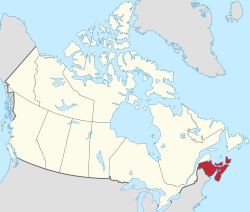
The three Maritime provinces.

Maritime Union (French: Union des Maritimes) is a proposed political union of the three Maritime provinces of CanadaNew Brunswick, Nova Scotia, and Prince Edward Island – to form a single new province.[1]

The idea has been proposed at various times throughout Canadian history, most recently in November 2012 by Stephen Greene, John D. Wallace and Mike Duffy, three Conservative Senators from the region.[1] As of 2024, a union of the three Maritime provinces would have a population of approximately 2.1 million, becoming the fifth largest by population, out of eight remaining Canadian provinces.

The Maritime provinces already cooperate to jointly provide some government services, especially in the areas of purchase and procurement.[1]

History

[edit]

Prince Edward Island and New Brunswick were administered as parts of Nova Scotia, until 1769 and 1784, respectively. The region, at the time of French colonization, was referred to in its entirety as Acadia. After Acadia fell to the British, following the Seven Years' War (what is today known as the Nova Scotia peninsula had been in British possession post-1713), the entire region was amalgamated into a single colony named Nova Scotia.

The British split St. John's Island (the present-day Prince Edward Island) into a separate colony in 1769. By the 1780s, with the influx of Loyalist refugees from the American Revolutionary War, the disparate geographic regions that composed Nova Scotia were again split into separate colonies. New Brunswick (in 1784) and Cape Breton Island received autonomy with their respective colonial administrations and capitals.

By the 1820s, Cape Breton Island was re-merged into Nova Scotia to free up that island's lucrative coal resource royalties. However, Prince Edward Island (renamed as such from St. John's Island in the 1790s) and New Brunswick maintained their colonial autonomy. During the late 1840s, Nova Scotia became the first colony in British North America to have responsible government and by the mid-1850s New Brunswick and Prince Edward Island had undergone similar political reforms.

The reorganisation of New Brunswick, Prince Edward Island, and Nova Scotia into a single British colony was considered in 1863 and 1864 by Arthur Hamilton Gordon, the Lieutenant Governor of New Brunswick. The concept of a political union was formally discussed at the Charlottetown Conference in 1864, but that meeting resulted in Confederation of New Brunswick, Nova Scotia, and the Province of Canada, not just of the Maritime colonies or Newfoundland.

In addition to historical precedent, there were more pressing reasons to reorganise the colonies. The United States, though embroiled in its Civil War, posed a military threat, and many prominent colonial politicians felt that the colonies would be able to mount a more effective defence if they united. In Britain, the Colonial Office also favoured a reorganisation of British North America. The British hoped that union would make the colonies less reliant on Britain, and therefore less costly to maintain. Gordon's own ambition may also have been a factor—he envisioned himself as the governor of the united Maritime colonies. Several of Lieutenant-Governor Gordon's predecessors, including J. H. T. Manners-Sutton, had also favoured reuniting the three colonies.

The idea has been raised from time to time during the 20th century, particularly during the late 1990s, in the face of declining regional transfer and equalization payments from the federal government. The discussion was quietly encouraged by politicians in other provinces with the hopes of using such a union to alter the balance of representation in the federal House of Commons and the Senate, based on the belief that the Maritimes are over-represented for their relatively small populations.

In 1990, Nova Scotia Premier John Buchanan stated that if Quebec were to secede from Canada, separating English-speaking Canada into two parts, the Atlantic provinces would be "absurd" to try to form their own country and that there would be "no choice" but to seek to join the United States. Although he retracted his statement after criticism,[2] in 2001 an American author similarly stated that as the Maritime provinces require substantial transfer payments from Ottawa they would not be a viable independent country. He speculated they might combine, with or without Newfoundland, to make themselves more attractive for admission into the United States as a single state.[3]

Regional cooperation

[edit]

Support for a union of the three provinces has historically ebbed and flowed, in conjunction with various socio-economic and political events throughout the 19th and 20th centuries. In the immediate years following Confederation, the anti-Confederate movement in the region advocated Maritime Union and separation from the new federation, fearing that the wealth of the provinces would be sapped to support development and growth of central and western Canada.

The concept gained credibility in the 1960s at a time when Maritime governments, in partnership with the federal government, were progressively tackling economic underperformance with various regional development programs. The growth of civil service and social program expenditures in the three provinces, coupled with out-migration and declining national political clout, led the provincial governments to examine ways to pool resources and better lobby for the region in Ottawa.

While an actual union was debated in all three provinces, the discussion evolved largely around regional cooperation. Several meetings between all members of the legislative assemblies and the cabinets of the three provinces were conducted during the 1960s, with the result being several important regional cooperation agreements in the areas of health care, post-secondary and secondary education, and in regional intergovernmental coordination, particularly when dealing with Ottawa.

Several institutions were formed by the early 1970s to facilitate intra-regional cooperation, including the Council of Maritime Premiers, and various organisations such as the Maritime Provinces Higher Education Commission and the Land Registry Information Service. During this time, the secondary school curriculum in each province was standardised and provincial funding to post-secondary education was coordinated to eliminate duplication, particularly among professional programs (e.g., education, law, engineering, medicine, pharmacology, dentistry, social work, criminology, veterinary medicine).

Equally important to the establishment of these formal organisations was the coordination by the mid-1970s among provincial governments for legislation to harmonise policies and programs, as well as to arrive at common positions on federal-provincial negotiations. The CAP has led all three provincial governments to extend cooperation in the adoption of common consumption taxes, insurance legislation harmonisation, the Atlantic Lottery Corporation, venture capital funding, a harness racing commission, and the coordination of provincial government procurements, among other items.

Acadia and "New Acadia"

[edit]

There are several convergent—unique, historically related, and ultimately intertwined—movements for a limited form of sovereignty and independence, stemming from the New Brunswick region of Canada but ultimately encompassing the whole of the Atlantic provinces and even the northeastern corner of the United States.

"Acadians" traditionally refers to a community mainly in New Brunswick that is linguistically French, but is a distinct culture from Quebec. There have been proposals for Acadia to separate from New Brunswick and become a separate province. This was promoted by the Parti Acadien and is similarly represented by the historic "Republic of Madawaska". There is limited support for this idea, and drawing the borders of a separate Acadian province would be difficult, as Acadians are dispersed throughout the province as well as in smaller numbers in Prince Edward Island, Nova Scotia, Quebec's Magdalen Islands, and the U.S. state of Maine.

To help solve this dilemma, in 2007, Second Vermont Republic essayist Thomas H. Naylor proposed a "New Acadia" which would encompass "Vermont... Maine, New Hampshire, and the four Atlantic provinces of Canada" [4]

The Atlantica Party was created in 2006 to fulfill a similar purpose of uniting Atlantic Canadians under a common banner and government.[5] However, the party failed to gain any ground or make any significant impact on the political scene in Atlantic Canada.

A trade zone uniting the region along these lines has also been formally proposed by the Atlantic Institute for Market Studies and the Atlantic Growth Network (organisations based in Halifax, Nova Scotia) with the support of the Atlantic Canada Opportunities Agency, a government agency. Together, they hosted regular regional conferences promoting the Atlantica trade zone, beginning in 2002 through the last major conference, June 11-June 16, 2007, in Halifax.

However, the proposal was also criticised by political activists, most notably Maude Barlow of the Council of Canadians, as little more than a regional prototype for a future North American Union.[6]

Gauging support

[edit]

Within the Maritimes, support for the concept of a formal political union of the three provinces has historically been extremely difficult to quantify by pollsters and politicians. Many Maritimers express support for reducing government expenditures through greater regional cooperation, as in such existing cases as the Maritime Film Classification Board and the Atlantic Lottery Corporation. However, when it comes to actually consolidating the bureaucracies of the three provinces (or four if one counts Newfoundland and Labrador in a larger Atlantic Union), the support dwindles as residents of individual provinces do not wish to see the public sector benefit one particular province over the other.

There is allegedly some support in urban regions as these regions would stand to gain both politically and economically, however mistrust of a formal political union runs deep in Prince Edward Island, Cape Breton, and many parts of New Brunswick and rural Nova Scotia.

Prince Edward Islanders do not wish to give up the freedom of having jurisdictional sovereignty and provincial powers in local control.

Many Cape Bretoners harbour exceptionally deep-seated resentment toward mainland Nova Scotia which has benefited from a relatively strong economy in the Halifax area for many years, something which Cape Bretoners and rural Nova Scotians claim has occurred at their expense. A union with PEI and NB might dilute what remaining influence Cape Breton has on provincial affairs which could have a negative impact on the island.

New Brunswickers express the same fears as Prince Edward Islanders, fearing the loss of jurisdiction, and as Cape Bretoners, fearing the dilution of influence over provincial affairs. Of particular concern is the possible linguistic and cultural dilution that the Acadian community of New Brunswick would face – comprising over 30 percent of the New Brunswick population, cultural protections guaranteed to Acadians in officially bilingual New Brunswick could be compromised. Although both Prince Edward Island and Nova Scotia have Acadian communities as well, both are much smaller and less proportionally significant.

Additionally, many rural mainland Nova Scotians distrust the growing economic domination of Halifax and wish to maintain their remaining influence in provincial affairs.

Opinion polls

[edit]

In May 1970, a Gallup poll among all Canadians asked if the Maritimes should become one province. The results were: 43.8% of respondents agreed, 37.9% disagreed, 18.1% were undecided and 0.3% had a qualified response.[7]

Issues

[edit]

A Maritime Union (or an Atlantic Union) would face significant political challenges in gaining broad acceptance across the region, particularly where the existing provinces trace their history since European settlement for several centuries. Entire regional identities, cultures, and economies have developed around the separate French and later British colonies, which constitute the Maritime provinces (or the Atlantic provinces, if Newfoundland and Labrador were to be included).

The history of these political jurisdictions cannot be discounted lightly as Nova Scotia's legislature is the oldest seat of responsible government in the Commonwealth of Nations and Prince Edward Island has the second oldest legislative seat in Canada (Province House) and was the site of the Charlottetown Conference. New Brunswick's legislature is the only officially bilingual assembly of the Maritimes.

According to environmental historian Mark McLaughlin, the idea of a Maritime Union as suggested by Conservative political leaders is a neoliberal project with intent to facilitate natural resource extraction and deregulation.[8]

Several issues which would dominate any discussion of a theoretical Maritime Union include:

  • Capital city: Charlottetown, Fredericton and Halifax all have existing legislature buildings, political traditions and histories for their respective provinces, while the largest cities in the Maritimes are Halifax, Saint John and Moncton.[9] Moncton, Sackville, and Amherst have been suggested as capitals due to their central locations.[10] This issue would be most contentious, although the possibility of a rotating capital has been suggested, whereby the legislative buildings in each city could be used on a tri-annual basis. Inter-provincial rivalry would likely prove to be extremely contentious in any decision.
  • Provincial name: Was identified as a topic of division in the 1970 Maritime Union Study, but Acadia is a commonly discussed potential name[11][12]
  • Official language: The Acadian and Brayon linguistic communities in New Brunswick, and less-so in Nova Scotia and Prince Edward Island, would demand official bilingualism which is currently in effect in New Brunswick. The Maliseet and Mi'kmaq Nations would also likely contest any linguistic debate. And, the Gaels might seek support for their language,[13] as well as Deaf Maritimers who speak either ASL, LSQ, or/and Maritime Sign Language.
  • Federal representation: Each of the three Maritime provinces has been guaranteed a minimum number of seats in the House of Commons of Canada and the Senate since it joined the Canadian Confederation (Nova Scotia and New Brunswick in 1867, Prince Edward Island in 1873), even though their relatively small populations (most notably Prince Edward Island's) have never strictly warranted them. It has been suggested that the existing representation guarantees might not be passed on to a united Maritimes. Additionally, a Maritime Union would presumably be represented at the nation's First Ministers' meetings of the Prime Minister and provincial Premiers by only one voice instead of three or four.

References

[edit]
[edit]
Revisions and contributorsEdit on WikipediaRead on Wikipedia
from Grokipedia
Maritime Union refers to the proposed amalgamation of Canada's three Maritime provinces—, , and —into a single province to promote economic cooperation, efficient governance, and mutual defense. The idea emerged in the mid-19th century amid discussions on regional integration, culminating in the 1864 , which was initially dedicated to Maritime Union but shifted focus upon the arrival of delegates from the , leading instead to the broader in 1867. Revived periodically, including a 1960s study under Premier Louis J. Robichaud and modern advocacy for consolidating administrative structures to reduce costs and enhance competitiveness, the proposal highlights shared cultural ties and economic challenges like youth outmigration and reliance on federal transfers. Proponents argue it would create a unified voice for approximately two million people, cut duplicative expenses—which are notably higher per capita than in provinces like —and redirect regional energies toward external competition, though obstacles such as entrenched political interests, Acadian cultural concerns, and insufficient public backing have consistently stalled progress.

Overview

Definition and Objectives

The Maritime Union refers to recurrent proposals to merge the three Canadian Maritime provinces—, , and —into a single provincial entity within the Canadian federation. This concept seeks to establish a consolidated capable of addressing shared regional challenges more effectively than the existing fragmented structure. Historically rooted in pre-Confederation discussions, such as those at the 1864 , the union envisions a unified administration while preserving distinct municipal and cultural identities. The core objectives of Maritime Union center on enhancing and fiscal sustainability. Proponents argue that amalgamation would eliminate duplicative government services, such as parallel bureaucracies for health, education, and , potentially yielding significant cost savings estimated in the hundreds of millions annually through . By streamlining administration, the union aims to reduce per-capita provincial spending, which has historically been higher in due to small population sizes—Nova Scotia (approx. 1 million), (800,000), and (170,000) as of recent censuses—compared to larger provinces. Additional goals include dismantling interprovincial barriers to trade, labor mobility, and , fostering a more integrated regional akin to a common market. This would purportedly boost competitiveness in global , attract investment, and combat chronic issues like high (often exceeding national averages by 2-3 percentage points) and deficits by presenting a larger, unified market of roughly 2 million people. Advocates, including policy analysts in parliamentary reviews, emphasize that such reforms could modernize Atlantic Canada's amid evolving and international pressures, without necessarily altering federal-provincial fiscal transfers.

Provinces Involved and Geographic Scope

The Maritime Union refers to proposals for the political and administrative consolidation of New Brunswick, Nova Scotia, and Prince Edward Island, the three provinces that constitute Canada's Maritime region. These provinces have been the focus of union discussions since pre-Confederation times, with occasional consideration of including Newfoundland and Labrador in broader Atlantic arrangements, though the core scope remains limited to the trio due to shared historical, economic, and geographic ties. Geographically, the region spans Canada's Atlantic seaboard, featuring a mix of peninsular mainland, islands, and extensive coastlines along the to the north and the Atlantic Ocean to the south and east. New Brunswick borders Quebec and the to the west, while Nova Scotia extends southeastward as a linked by the Chignecto , and lies offshore in the gulf, connected by the since 1997. The combined land area totals 133,852 square kilometres, comprising 72,908 km² in , 55,284 km² in , and 5,660 km² in . As of late 2024 estimates from , the provinces have populations of approximately 830,000 in , 1,093,000 in , and 182,000 in , for a regional total exceeding 2.1 million residents—or about 5% of 's . This is concentrated in coastal urban centers like Halifax, Saint John, and , with rural and Acadian communities dispersed across forested interiors and fishing-dependent shorelines. The area's maritime climate, characterized by mild winters relative to inland but prone to coastal storms, underscores its geographic orientation toward oceanic trade and resource extraction.

Historical Development

Pre-Confederation Origins (1864 Charlottetown Conference)

The idea of uniting the Maritime colonies—Nova Scotia, New Brunswick, and Prince Edward Island—originated in the late following the division of into separate entities in , with intermittent proposals aimed at restoring administrative unity and economic coordination. By the early 1860s, renewed momentum built amid post-American Civil War anxieties over regional defense, faltering local economies reliant on shipbuilding and fisheries, and British imperial encouragement for colonial consolidation to reduce administrative burdens. In , Arthur Hamilton Gordon championed Maritime union from 1863, motivated by desires for enhanced trade infrastructure, political stability against U.S. expansionism, and cost efficiencies from merged governance structures; provincial leader Samuel Leonard Tilley supported these aims. Nova Scotia's deliberations, led by figures including , paralleled this focus on bolstering regional defenses and economic integration in response to external pressures. joined the push reluctantly, with its House of Assembly debating union in April 1864 under J.H. Gray, primarily to address issues and fiscal weaknesses through with Britain. The of September 1–9, 1864, marked the culmination of these pre- efforts, assembling 15 delegates from the three provinces in to deliberate a tripartite union emphasizing interprovincial barrier removal, unified policies, and shared administrative functions. Rationales centered on empirical gains: amalgamating populations totaling approximately 800,000 to achieve in railways and harbors, while preserving local assemblies under a central Maritime legislature. Yet, the unanticipated arrival of 10 delegates from the on September 1 redirected proceedings, postponing Maritime-specific resolutions in favor of exploring legislative union across , thereby originating broader while deferring the narrower Maritime scheme.

20th-Century Proposals (1920s–1970s)

In the 1920s, amid the Maritime Rights Movement protesting economic disadvantages post-World War I, such as higher freight rates and reduced federal influence, formal proposals for provincial union were limited. The Duncan Commission, appointed by Mackenzie King in 1926, investigated Maritime claims and recommended federal subsidies, port improvements, and freight rate adjustments to address regional disparities, but did not advocate for unifying , , and into a single province. These measures aimed to bolster Maritime economies without altering provincial boundaries, reflecting a preference for federal intervention over interprovincial consolidation. Proposals for Maritime Union gained renewed traction in the 1960s, driven by ongoing economic underdevelopment and fears of Quebec separatism potentially isolating the region. In 1964, New Brunswick Premier Louis J. Robichaud raised the idea at an Atlantic Premiers Conference, suggesting a union of the three provinces to enhance administrative efficiency and bargaining power with the federal government. Nova Scotia Premier Robert Stanfield and Prince Edward Island Premier Alex Campbell endorsed the concept, leading to the establishment of the Maritime Union Study in 1968. This joint commission, funded by the three provinces, examined political, economic, and administrative integration, projecting potential annual savings of $20–30 million through reduced duplication in services like education and health. The Maritime Union Study's final report, released in November 1970, concluded that offered the most effective path to regional viability, recommending a unified with a of approximately 1.8 million and enhanced fiscal capacity. It emphasized eliminating interprovincial barriers, streamlining bureaucracy, and increasing representation in federal negotiations, while acknowledging challenges like preserving Acadian linguistic rights in . However, the report's momentum stalled amid the in Quebec, which shifted national focus, and subsequent changes in provincial leadership that prioritized autonomy. Instead, the Council of Maritime Premiers was formed in 1971 as a mechanism, allowing joint policy coordination without dissolving provincial governments. By the mid-1970s, union efforts had dissipated, with public and political support proving insufficient to overcome entrenched regional identities and fears of diluted local representation.

Modern Revival (1990s–2010s)

In the 1990s, discussions of Maritime union gained renewed attention amid , federal decentralization, and the need for regional competitiveness in a post-NAFTA environment. Ron MacDonald, then-Member of for Dartmouth, argued in a 1995 analysis that uniting , , and would streamline administration in areas like and , eliminate regulatory duplication, and provide a collective population of approximately 2 million to amplify influence in debates, particularly amid Quebec's constitutional challenges. A 1994 survey by the Canadian Federation of Independent Business indicated 60-70% support for union among its Atlantic members, citing potential tax reductions and barrier removal as key benefits. The most prominent revival occurred in late 2012, when three Conservative senators—Stephen Greene of , John D. Wallace of , and of —publicly advocated for full political union to form a single Maritime province. Greene emphasized reducing the three provinces' combined 134 members of legislative assemblies—compared to Ontario's 106 for a population seven times larger—and addressing shared issues like youth outmigration, aging demographics, fiscal deficits, and inefficient governance structures that hindered economic self-sufficiency. The proposal framed union as a means to redirect internal competition toward external opportunities, leveraging the region's shared and culture, with historical precedents like the 1875 suggestion by New Brunswick official Edward Willis to minimize expenses and prejudices. Despite these arguments, the initiative faced immediate rejection from provincial leaders. Premiers of , , and dismissed the idea, citing a lack of political will and potential disruption to established identities and administrations. No formal studies or referenda advanced, and the proposal faded without legislative traction, reflecting persistent provincial loyalties over consolidation despite underlying economic rationales.

Economic and Administrative Rationale

Cost Savings from Consolidation

Proponents of Maritime Union argue that consolidating the governments of , , and into a single provincial administration would yield substantial savings by eliminating duplicative bureaucracies, streamlining public services, and reducing the overall size of government relative to population. The 1970 Deutsch Commission highlighted that the Maritime provinces employed approximately twice as many civil servants as the rest of , attributing this disparity to fragmented governance structures that foster redundant administrative roles across provincial boundaries. Such consolidation could theoretically halve this excess by merging departments, procurement processes, and regulatory oversight, though transition costs—including relocation of operations and severance—would initially offset gains, as estimated at up to $2 billion federally supported over a in one 1970 analysis. Historical fiscal analyses have projected specific savings from reduced legislative and executive overhead. A academic assessment of union effects, drawing on 1963 public expenditures totaling $220 million across the three provinces, estimated annual savings of around $10 million from eliminating redundant positions, such as approximately 65 members and 30 department heads, equating to $560,000 yearly in salary reductions alone. Earlier, the Rowell-Sirois Commission (1940) identified a maximum one-time economy of $741,000 based on 1936 data, while the same study extrapolated cumulative savings of $89.8 million by 1963 had union occurred decades prior, underscoring potential long-term efficiencies in . These figures, adjusted for era-specific contexts, reflect arguments for a leaner executive branch with fewer ministers and unified budgeting. In service delivery sectors like and , union advocates emphasize and shared to capture millions in annual efficiencies, building on existing partial collaborations such as the Maritime Provinces' extended program. For instance, pooling pharmaceutical and supply acquisitions could mirror municipal amalgamation models, though evidence from those—such as New Brunswick's consolidations—shows mixed results with no guaranteed net reductions after accounting for service integration challenges. Critics, including analyses of pre-1970 proposals like the Duncan Commission, contend that fiscal benefits remain unproven absent empirical implementation, as interprovincial competition sometimes drives efficiencies that political merger might not exceed. Overall, while logical first-principles reasoning supports overhead cuts in a with high per-capita , quantifiable modern projections are sparse, relying on scaled historical models rather than recent peer-reviewed simulations.

Elimination of Interprovincial Barriers

Proponents of Maritime Union argue that dissolving separate provincial governments would eliminate regulatory divergences, licensing requirements, and trade restrictions among , , and , fostering a unified internal market akin to a . Such barriers currently impose costs on businesses through inconsistent standards for goods, professional qualifications, and processes, which fragment the regional despite geographic proximity and shared . For instance, differing regulations and gaps hinder seamless , as identified in 1991 by the Council of Maritime Premiers, which proposed remedies including mutual recognition of standards and simplified transportation rules. Historical proposals explicitly targeted these frictions; New Brunswick Premier Frank McKenna in 1990 advocated a common market to end interprovincial barriers, incorporating joint purchasing, tourism promotion, and portability of professional credentials to reduce administrative duplication. The 1970 Deutsch Commission similarly recommended political union to curb counterproductive economic competition, noting that the Maritimes employed twice as many civil servants per capita as the rest of due to overlapping bureaucracies. Union advocates, such as economist Charles McMillan in 1989, emphasized removing internal barriers to enable a common promotion strategy, potentially increasing exports by pooling resources and creating in a market serving 2.5 million people with a combined GDP of $34–39 billion as of the early 1990s. Empirical assessments of internal barriers in underscore the potential gains: interprovincial restrictions disproportionately burden the region, draining productivity more severely than in other parts of the country due to smaller markets and reliance on cross-border supply chains. Modeling suggests that a mere one percent reduction in trade costs—achievable through barrier removal—could yield and increases of 0.1 to 0.4 percent across Atlantic provinces via lower input prices and cascading efficiency gains in sectors like and services. While partial measures like the Atlantic Agreement have mitigated some procurement disparities, full union would extend to taxation, labor mobility, and regulatory approval, avoiding ongoing costs and enabling firms to operate regionally without compliance silos. Critics, including analyses from left-leaning policy groups, contend that the economic drag of such barriers may be overstated nationally, with risks of regulatory dilution in environmental or labor standards if favors lower-common denominators. However, region-specific data affirm that ' barriers exacerbate dependency on federal transfers—comprising up to 40 percent of regional GDP—and stifle investment, as evidenced by business surveys showing 60–70 percent support for integration to streamline operations. Overall, elimination under union would prioritize causal efficiencies from scale, contrasting with incremental bilateral pacts that preserve provincial vetoes.

Comparative Efficiency Analysis

The Maritime provinces demonstrate structural inefficiencies in public administration, characterized by higher per capita civil service employment—approximately twice that of the rest of Canada as of 1970—due to the indivisibilities of small-scale governance and resultant duplication across policy domains like education, health care, and transportation. Provincial government spending absorbs a disproportionately large share of regional GDP, reaching 60.2% in Nova Scotia, 58.5% in New Brunswick, and 62.1% in Prince Edward Island in 2019, compared to Canada's average of 38.5%, which proponents attribute to overlapping bureaucracies and fragmented regulatory frameworks rather than inherent economic weakness. Advocates for union contend that merging the provinces would harness , eliminating redundant administrative layers and enabling unified systems for procurement, taxation, and , thereby reducing per capita overhead and enhancing fiscal efficiency. For instance, pooling pharmaceutical purchases across the region could yield millions in annual savings, while a single might cut legislative and departmental redundancies, with mid-20th-century projections estimating up to $10 million in yearly savings by the (equivalent to broader modern efficiencies when scaled). Such consolidation could also lower borrowing costs through enhanced creditworthiness and foster a cohesive economic , potentially elevating the combined GDP (estimated at $34–39 billion in early 2000s terms) via reduced interprovincial barriers. Empirical precedents from Canadian municipal amalgamations, however, temper these expectations: Toronto's 1998 merger, projected to save $300 million annually, instead saw expenditures rise from wage harmonization and uneliminated redundancies, with broader studies across and municipalities confirming minimal or negative cost impacts post-consolidation. Comparative per capita consolidated spending in ($17,008 in 2022) already ranks among Canada's lowest, akin to 's $17,101, suggesting that raw scale does not inherently drive efficiency without targeted reforms to address entrenched growth. Thus, while Maritime Union holds theoretical promise for streamlining—particularly given the provinces' geographic and cultural proximity—realized efficiencies would hinge on overcoming harmonization costs and political inertia, as evidenced by limited gains in analogous cases.

Regional and Cultural Considerations

Existing Cooperation Mechanisms

The Council of Maritime Premiers, established by an interprovincial agreement signed on May 25, 1971, serves as the foundational mechanism for cooperation among , , and . This body, comprising the premiers of the three provinces, facilitates joint discussion and action on regional priorities such as , resource management, and policy harmonization, with decisions implemented through subsequent bilateral or multilateral agreements. The council's framework was formalized in provincial , including New Brunswick's Council of Maritime Premiers Act (C-29), Nova Scotia's equivalent act, and Prince Edward Island's Council of Maritime Premiers Act (RSPEI 1988, c C-27), enabling ongoing collaboration without supranational authority. One key initiative under the council's auspices is the Maritime Provinces Higher Education Commission (MPHEC), an agency dedicated to improving post-secondary education quality and accessibility across the three provinces. Established to support governments and institutions, the MPHEC pursues nine core objectives, including institutional quality assessment, research on higher education trends, and promotion of student mobility and program equivalence. It conducts periodic reviews of degree-granting institutions and provides data-driven advice to ministers, fostering efficiencies like shared standards that reduce duplication in academic offerings. In economic and regulatory domains, the provinces leverage the council for targeted alignments, such as the 2009 New Brunswick–Nova Scotia Agreement on Regulatory Reconciliation and Enforcement, which addresses overlaps in trade, labor mobility, and environmental standards to minimize interprovincial barriers. This bilateral pact exemplifies broader efforts to streamline business operations, including harmonized procurement processes and mutual recognition of professional qualifications, though implementation remains province-specific. Additional cooperation occurs through ad hoc working groups on issues like workforce development and internal trade, often building on the council's platform to align with national initiatives without formal merger. These mechanisms demonstrate functional integration in select areas while preserving provincial sovereignty, with annual meetings typically yielding non-binding resolutions or referrals for legislative action.

Acadian Identity and Autonomy Concerns

, comprising approximately 30% of 's population and concentrated in areas such as the Acadian Peninsula and Madawaska, have historically prioritized the preservation of their and cultural institutions following the Great Expulsion of 1755–1764, which displaced over 11,000 individuals. In the context of Maritime Union proposals, concerns arise from the potential dilution of this demographic influence within a unified province of roughly 2 million residents, where Acadians would represent only about 12% compared to their current provincial majority in key regions of . New Brunswick's status as Canada's only officially bilingual province, enshrined in the Official Languages Act of 1969, guarantees French-language services in government, education, and courts, fostering Acadian autonomy in sectors like francophone school boards and universities such as , founded in 1963. Proponents of union argue for administrative efficiencies, but Acadian critics contend that integration with predominantly Anglophone and could erode these protections, as a centralized government might prioritize English-majority preferences, leading to reduced funding for French immersion programs or cultural initiatives. Historical precedents, including the 1970 Maritime Union Study, highlighted divisions over provincial naming—such as ""—reflecting fears that Acadian identity might be subordinated to a broader "Maritime" framework lacking explicit linguistic safeguards. The Parti Acadien, established in 1972 to advocate for Acadian , explicitly rejected Maritime Union from its inception, viewing it as a threat to territorial recognition and French-language parallelism achieved through decades of activism. This opposition paralleled Quebec's reservations toward , where minority francophones anticipated loss of leverage; similarly, in have leveraged provincial boundaries to secure veto-like influence on , a dynamic potentially weakened in a union without constitutional entrenchment. Until the early , Acadian resistance to integration remained firm, driven by apprehensions of amid numerical minority status. Contemporary discourse echoes these autonomy worries, with Acadian communities emphasizing that existing interprovincial cooperation—such as the Council of Maritime Premiers—allows retention of localized governance without risking identity erosion. While some union advocates propose bilingual constitutional clauses, skeptics, including francophone organizations, argue that enforcement would depend on a unified legislature's goodwill, historically unreliable given past centralization trends in . These concerns underscore a broader tension between economic rationales for union and the causal imperative of safeguarding through decentralized structures, as evidenced by sustained Acadian advocacy for provincial in linguistic matters.

Public Opinion and Political Landscape

Historical and Recent Polls

In the 1970s, surveys in the Maritime provinces indicated nearly two-thirds support for some form of union, though this backing was characterized as soft, with approximately one-quarter of respondents firmly opposed, particularly in . A survey roughly 40 years prior to 2012 similarly showed about 60% national support for the concept among Canadians. Business-oriented polling in the revealed stronger endorsement. A 1994 survey of Atlantic members by the Canadian Federation of Independent Business found consistent support levels of 60-70% for greater economic integration as a pathway to union. Later that decade, a late 1995 poll conducted by the Atlantic Provinces Chamber of Commerce reported 76% public support for political union across the region. Support appeared to wane in subsequent years. A 2013 poll by the Innovative Research Group among Nova Scotians showed only about one-third favoring a of the Maritime provinces. No comprehensive polls on Maritime Union have been conducted or publicly reported in the Maritime provinces since 2013, limiting insight into contemporary attitudes amid ongoing discussions of regional economic challenges.

Support from Business and Political Figures

In 1964, coinciding with the centennial of the , Premier Louis J. Robichaud proposed revisiting Maritime Union at a First Ministers' , leading to a of a by the premiers of , , and . Premier and Premier Alex Campbell endorsed the initiative, agreeing to collaborate on the study to assess potential administrative and economic benefits of provincial merger. Support resurfaced in November 2012 when three Conservative senators—Stephen Greene of , John D. Wallace of , and of —publicly advocated for Maritime Union as a means to address chronic regional economic underperformance, including high debt levels and duplicative government structures. Senator Greene emphasized in a Policy Options article that consolidation could enable "thinking big" to compete nationally, projecting savings from streamlined services and enhanced bargaining power with the federal government. Senator Duffy similarly highlighted the union's potential to alleviate financial strains in the provinces, framing it as a pragmatic response to fiscal realities. Business leaders in have periodically endorsed elements of union, such as reduced interprovincial barriers, with historical advocacy from groups like the Maritime Board of Trade promoting regional integration for trade efficiency from the late 19th to early . However, explicit modern endorsements from prominent executives remain sparse in public records, often manifesting indirectly through calls for economic cooperation rather than full political merger.

Organized Opposition and Critiques

Political leaders in the Maritime provinces have voiced strong opposition to proposals for Maritime Union, emphasizing the adequacy of existing interprovincial cooperation mechanisms. In December 2012, Premier Rob Ghiz labeled the merger idea "preposterous," highlighting PEI's historical resistance to larger unions dating back to its initial reluctance to join in 1864. Similarly, Premier Darrell Dexter denounced the proposal, arguing that the provinces already collaborate effectively without needing structural consolidation. Premier David Alward's administration did not endorse the idea, reflecting a broader lack of provincial executive support that has consistently stalled merger discussions. Acadian advocacy groups and representatives have organized against Maritime Union, citing risks to linguistic and cultural autonomy in , where constitute a significant minority with official bilingual status. The Parti Acadien, an Acadian nationalist party active in the and 1980s, explicitly rejected Maritime Union as a threat to Acadian representation and influence within provincial politics. Commentators in Acadian media have warned that integration would dilute Acadian numbers and erode distinct French-language institutions, potentially leading to in a larger, Anglophone-dominated entity. Until the early 1990s, Acadian communities in adamantly opposed such mergers, fearing numerical marginalization despite later shifts toward selective regional integration. Critiques from regional analysts and historians further underscore and identity risks, portraying union as a neoliberal distraction from addressing fiscal mismanagement and local priorities. New Brunswick-based commentators have argued that merger discussions divert attention from provincial failures, such as tax cuts exacerbating and without improving outcomes, while small, independent jurisdictions like those in demonstrate viability without consolidation. Environmental historians contend that centralization would replicate past errors from the 1960s-1970s, empowering distant bureaucracies and corporations at the expense of rural communities, leading to regulatory erosion, youth outmigration, and diminished local . These views attribute opposition not merely to but to evidence that fragmented structures better preserve tailored policies amid diverse regional needs.

Challenges and Controversies

Governance and Representation Issues

A proposed Maritime Union of , , and would consolidate three provincial governments into one, potentially reducing administrative layers and the number of legislators from 134 members of legislative assemblies to fewer, aiming for greater efficiency in areas like , and vehicle registration. However, this raises concerns over internal power imbalances, as Nova Scotia's larger population—approximately 1 million compared to New Brunswick's 800,000 and Prince Edward Island's 170,000—could lead to dominance by Halifax-based decision-making, marginalizing smaller regions and echoing historical fears of centralization seen in Cape Breton's diminished after municipal amalgamation. Proponents suggest innovative models, such as a federated with a "Maritime Legislative League" preserving some regional , but critics argue that without robust safeguards like weighted regional voting or bicameral representation, cultural and economic priorities of peripheral areas, including Acadian communities demanding extended , would erode. Federally, a union would diminish the Maritimes' collective voice, replacing three premiers at First Ministers' conferences with one, potentially weakening advocacy on regional issues like equalization payments and resource transfers, where divided provincial interests have historically allowed federal "divide and conquer" tactics. Each current province benefits from constitutional protections, such as Prince Edward Island's guaranteed minimum of four seats despite its small electorate, contributing to the Maritimes' over-representation with 25 seats for under 2 million residents; amalgamation into a single province of roughly 1.97 million could trigger redistribution under the electoral quotient formula, risking fewer total seats without the senatorial clause's small-province buffers, thus diluting bargaining power in . Senate representation, fixed at 24 seats across the three provinces (10 for , 10 for , 4 for ), might similarly consolidate, further eroding the equal-per-province model that amplifies smaller jurisdictions' influence. Political resistance stems from entrenched leadership interests, with historical proposals like the 1970 Deutsch Commission failing due to premiers' reluctance to cede power and public apprehension over identity loss, particularly in , where sovereignty has enabled tailored resource management and cultural preservation akin to micro-states like . Acadian groups in have conditioned support on formal guarantees, viewing union without them as a threat to bilingual services and , while 2012 calls by Conservative senators for merger highlighted efficiency but overlooked these representational fractures, leading to widespread dismissal in smaller provinces. Overall, without mechanisms to mitigate dominance by populous areas and federal dilution, governance reforms risk exacerbating rather than resolving disparities, as evidenced by stalled economic cooperation under the Council of Maritime Premiers since 1971.

Potential Risks to Regional Identities

Opponents of Maritime Union have highlighted the risk of diluting distinct provincial identities through centralized governance that prioritizes larger population centers, potentially marginalizing smaller regions' unique historical, cultural, and economic traits. , with its insular geography, agricultural focus, and population of approximately 170,000, has long resisted merger proposals due to fears of losing tailored policies and symbolic autonomy, viewing union as a net loss outweighing any efficiencies. For instance, Islanders have cited the annexation of to as a cautionary example of eroded local identity following absorption into a larger entity. Such concerns extend to the psychological and institutional costs of dismantling province-specific traditions and leverage with federal authorities, which PEI leaders argue sustains its distinct way of life developed since achieving in 1851. A 1991 study by the Council of Maritime Premiers explicitly warned that could threaten citizens' unique cultures and identities, reinforcing provincial loyalty over regional consolidation. In historical debates from 1960 to 1980, territorial identities and fears of dominance by —home to over half the Maritimes' population and urban hub Halifax—further entrenched resistance, as leaders prioritized preserving local characteristics amid external economic pressures. These risks manifest causally through reduced representation for underrepresented areas, where policies might favor aggregated interests over province-specific needs, such as PEI's history or New Brunswick's rural demographics outside bilingual cores. Academic analyses frame this opposition not merely as but as a rational defense of , evidenced by repeated deferrals of union despite studies like the 1968 Maritime Union Study recommending it.

Federal Constitutional Hurdles

The formation of a Maritime Union by merging , , and would require amending the , which establishes the provinces and their boundaries in sections 5 and 6. Such changes cannot be effected unilaterally by the provinces, as provincial legislatures lack authority under section 45 of the , to alter core federal constitutional provisions defining provincial status. The primary mechanism is section 43 of the , which governs amendments to provisions applying to one or more but not all provinces, including boundaries and executive or legislative powers specific to those jurisdictions. This entails identical resolutions passed by the and , as well as the legislative assemblies of the three provinces, culminating in a by the . Legal analyses, including examinations of Maritime Union proposals, affirm that this bilateral federal-provincial consent framework applies, distinguishing it from the general 7/50 formula under section 38 (requiring seven provinces with 50% of the population) or unanimous consent under section 41. However, the absence of precedent for dissolving and reconstituting existing provinces post-Confederation introduces interpretive risks, such as potential challenges over whether the merger fundamentally alters Canada's federal structure or invokes section 42 provisions on creating new provinces. Further complications stem from ancillary adjustments, including representation under section 22 of the 1867 Act, which allocates fixed senators per province (10 for and , 4 for ), and House of Commons seats under section 51, which are population-based but protected by recent amendments ensuring no province falls below its 43rd Parliament allocation. Amending these could necessitate coordinated resolutions, with federal parliamentary approval serving as a point if the perceives risks to national representation balances or fiscal equalization entitlements tied to provincial identities. Prince Edward Island's 1873 Terms of Union, incorporated into the , may also demand specific safeguards, akin to amendments for other joined provinces like Newfoundland, adding procedural layers without triggering unanimity. These requirements underscore the federal gatekeeping role, as Ottawa's assent is indispensable despite no formal for unaffected provinces.

Potential Implementation Pathways

The legal process for merging the Maritime provinces—New Brunswick, Nova Scotia, and Prince Edward Island—into a single province would require an amendment to the under section 43 of the . This section applies to provisions affecting one or more but not all provinces, explicitly including "any alteration to boundaries between provinces." Such a merger would constitute a boundary alteration by consolidating the territories of the three provinces into one, necessitating the dissolution of their existing constitutional statuses as defined in the . The amendment procedure demands resolutions authorizing the change from the and , as well as from the of each affected province. These resolutions would outline the specific terms of the merger, such as the new province's boundaries, name, and transitional governance. Once adopted, the would issue a proclamation under the to enact the amendment, without requiring consent from other provincial legislatures or the general amending formula under section 38. No referendums are constitutionally required, though provincial governments could hold them to assess public support, as seen in other structural reforms like the creation of . Prior to resolutions, interprovincial negotiations would establish details on asset and debt division, fiscal equalization shares, and administrative integration, potentially via a terms-of-union agreement ratified by each assembly. The process carries implications for federal institutions: the new province's Senate representation would adjust from the current combined total (10 seats for Nova Scotia, 10 for New Brunswick, and 4 for Prince Edward Island) to a single allocation, likely 24 seats to align with other provinces, requiring complementary federal legislation. House of Commons seats, apportioned by population under section 51 of the Constitution Act, 1867, would be reapportioned post-merger based on the unified electorate. No post-Confederation precedent exists for provincial mergers, distinguishing it from municipal amalgamations governed by provincial statutes or the elevation of territories to provinces via federal acts. The federal government lacks unilateral authority to impose a merger, emphasizing the consensual nature of the section 43 mechanism.

Models from Other Jurisdictions

The merger of the states of , , and into in 1952 provides a for consolidating subnational entities within a federal system to enhance administrative efficiency and economic cohesion. This reorganization occurred amid post-World War II reconstruction, aligning with Allied occupation zones and aiming to streamline governance in southwestern ; the new state encompassed approximately 35,751 square kilometers and a population of about 7.6 million by the mid-1950s. Proponents argued it reduced bureaucratic duplication and fostered integrated infrastructure development, contributing to Baden-Württemberg's emergence as an industrial powerhouse, with GDP per capita exceeding the national average by over 20% by the 1970s through sectors like automotive manufacturing (e.g., and ). However, critics noted initial resistance over cultural distinctions, such as dialect and historical identities, which required compensatory measures like decentralized administration to mitigate alienation. India's States Reorganisation Act of 1956 exemplifies large-scale provincial redrawing, including mergers, to address linguistic and administrative rationales in a diverse . The legislation merged Telugu-speaking areas from into , combined Travancore-Cochin with Malabar districts to form , and integrated southern Marathi regions of into , reducing the number of states from 27 to 14 while creating six union territories. Enacted on November 1, 1956, following the States Reorganisation Commission's recommendations, it responded to demands for culturally coherent units, averting ethnic conflicts but sparking further bifurcation requests (e.g., Telangana's later separation in 2014). Economically, it facilitated targeted development, such as Kerala's focus on and remittances, yielding rates above 90% by 2001, though implementation faced logistical hurdles like asset division and disputes. Denmark's 2007 structural reform offers a contemporary model of merging regional and municipal units to achieve fiscal and service improvements in a with federal-like . The reform consolidated 271 municipalities into 98 and 14 counties into five regions, effective January 1, 2007, with goals of cutting administrative costs by 1.5 billion Danish kroner annually and enhancing local through larger entities capable of in welfare delivery. Evaluations indicated modest savings in overhead (e.g., 10-15% reduction in administrative staff) and better coordination for , but also short-term disruptions like tax base reallocations and public discontent over diminished local representation, as evidenced by referenda in some areas rejecting mergers. This approach prioritized data-driven criteria, including thresholds (minimum 20,000-30,000 residents per municipality), providing a blueprint for balancing efficiency against identity concerns. These cases highlight common drivers—administrative streamlining and resource pooling—but underscore challenges like preserving regional identities, often addressed via transitional funding or retained local powers. In federal contexts, such as Germany's, constitutional amendments facilitated mergers, contrasting with India's parliamentary override of princely states' legacies, while Denmark's top-down process relied on legislative consensus without full precedents. Empirical outcomes vary: Baden-Württemberg's success in export-led growth contrasts with India's ongoing demands for further splits, suggesting mergers succeed when aligned with economic imperatives over purely political ones, though no universal formula guarantees against backlash.

References

Add your contribution
Related Hubs
User Avatar
No comments yet.