Hubbry Logo
Mars WilliamsMars WilliamsMain
Open search
Mars Williams
Community hub
Mars Williams
logo
8 pages, 0 posts
0 subscribers
Be the first to start a discussion here.
Mars Williams
Mars Williams
from Wikipedia

Key Information

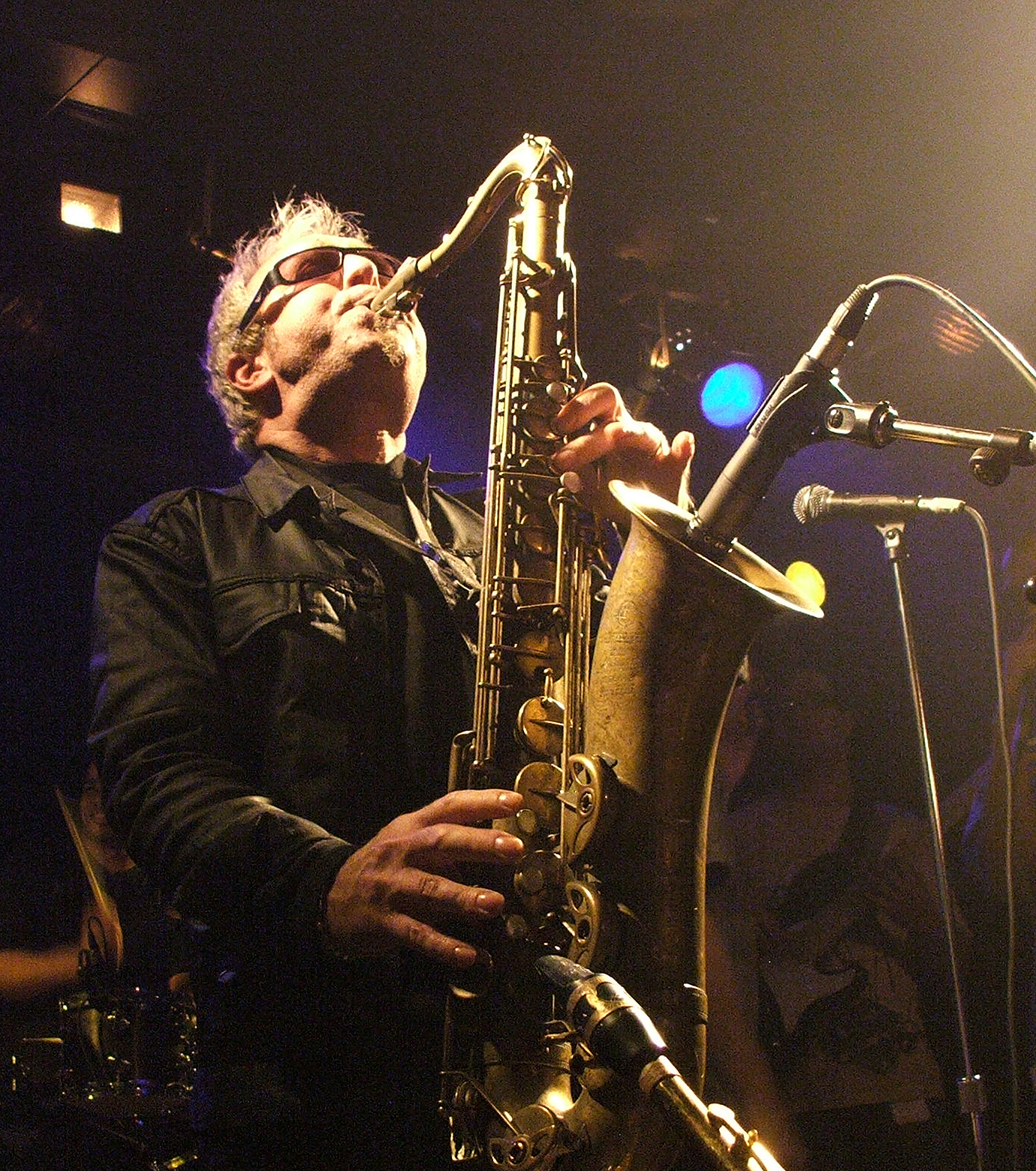
Mars Williams in Aarhus, Denmark in 2022

Marc Charles "Mars" Williams (May 29, 1955 – November 20, 2023) was an American jazz and rock saxophonist. He was a member of the American new wave band The Waitresses from 1980 to 1983, and a member of the British post-punk band The Psychedelic Furs from 1983 to 1989 and again from 2005 until his death in 2023. Williams also was a founding member of the acid jazz group Liquid Soul, and a member of the free jazz-oriented NRG Ensemble.

Career

[edit]

Exposed to swing music and Dixieland jazz by his trumpeter father, Williams played classical clarinet for ten years before migrating to saxophone in his last year of high school, citing the influence of Eric Dolphy, John Coltrane and Charlie Parker.[2][3] After attending DePaul University for a period of time, he took courses from the Association for the Advancement of Creative Musicians, where he studied under founders Anthony Braxton and Roscoe Mitchell. In 2004, he was selected by the Moers Festival as their featured artist.[4]

As a musician, orchestrator and arranger, Williams was best known for his 1980-1983 tenure with The Waitresses and his ensuing career with The Psychedelic Furs. He was only to tour with The Furs in Australia for a month in 1983 as a temporary replacement for touring saxophonist Gary Windo, who was unable to make the trip. Following a successful tour with The Furs and the concomitant breakup of The Waitresses, he stayed on as a permanent member of the former group until 1989, ultimately rejoining in 2005. He also performed with Billy Idol, the Power Station, Billy Squier, Massacre, Ministry, Die Warzau, and the Ike Reilly Assassination. According to longtime Grateful Dead manager Rock Scully, Williams occasionally performed in ad-hoc ensembles at the Blues Bar (a private TriBeCa afterhours club operated by Saturday Night Live cast members Dan Aykroyd and John Belushi, throughout their tenure on the show in the late 1970s) with such 1960s rock luminaries as Rick Danko and Bill Kreutzmann.[5][6]

Williams toured and recorded with the Peter Brötzmann Tentet, the Vandermark 5, Cinghiale, Our Daughter's Wedding, and Mark Freeland's Electroman, and was the bandleader of several spin-off jazz groups: Grammy Award nominated, acid jazz pioneer Liquid Soul, Hal Russell's NRG Ensemble, Witches & Devils, Slam, and XmarsX. He was active in the Chicago improvisational jazz underground scene both individually and as a member of the quartet Extraordinary Popular Delusions.

Death

[edit]

Williams died in Chicago from periampullary cancer on November 20, 2023, at the age of 68.[1][7] He had been diagnosed with cancer in 2022.[8] Williams had played his final concerts with the Psychedelic Furs in October 2023.[9]

Discography

[edit]

As leader/co-leader

[edit]

With Boneshaker (Mars Williams, Paal Nilssen-Love, Kent Kessler)

  • Boneshaker (Trost, 2012)
  • Unusual Words (Soul What, 2014)
  • Thinking Out Loud (Trost, 2017)
  • Fake Music (Soul What, 2019)

With the NRG Ensemble

With Liquid Soul

With Switchback (Mars Williams / Wacław Zimpel / Hilliard Greene / Klaus Kugel)

  • Switchback (Multikulti, 2015)
  • Live in Ukraine (Multikulti, 2016)

As sideman

[edit]

With Harrison Bankhead

With Peter Brötzmann

With Hal Russell / NRG Ensemble

With Ken Vandermark

With The Swollen Monkeys

  • Afterbirth of the Cool (Cachalot, 1981) produced by Hal Willner

With The Luck of Eden Hall

(Alligators Eat Gumdrops, ltd edition 200, 2012)

With Custard Flux

References

[edit]
[edit]
Revisions and contributorsEdit on WikipediaRead on Wikipedia
from Grokipedia
Marc Charles "Mars" Williams (May 29, 1955 – November 20, 2023) was an American saxophonist and composer celebrated for his versatile contributions to , rock, and , blending with energetic pop sensibilities. Born in , near , Williams rose to prominence in the 1980s as a key member of new wave bands such as and , while simultaneously leading influential ensembles like and the NRG Ensemble. His career spanned collaborations with artists including , , , and , and he earned a Grammy nomination for Best Contemporary Album for Liquid Soul's Here's the Deal (2000). Williams died in from ampullary cancer at age 68, leaving a legacy as an educator and advocate for sobriety in the music community. In 2025, the Mars Williams Archive was launched, featuring unreleased recordings and concerts celebrating his 70th birthday. Williams began his musical journey studying at and the Creative Music Studio, where he worked under mentors like and Roscoe Mitchell, and served as Braxton's music copyist for three years. Influenced by avant-garde jazz pioneers such as and , he developed a distinctive style marked by explosive solos and genre-crossing experimentation, performing across , , hip-hop, and rock. In the rock scene, he joined in 1981, contributing saxophone to their hit "I Know What Boys Like" from the album Wasn't Tomorrow Wonderful?, and later became a fixture in , appearing on their 1984 album and rejoining the band in 2005 for tours and recordings. Beyond band work, Williams led innovative projects like the group , which fused hip-hop beats with improvisation and garnered critical acclaim, and the experimental Witches & Devils octet. He also spearheaded the annual An Ayler Xmas series for over a decade, reinterpreting Albert Ayler's compositions in festive arrangements performed across the U.S. and . As an educator, Williams taught woodwinds and history at institutions including , the , the , and , and received grants such as a award and a 2021 Jazz Road residency for his Devil's Whistle project. Despite a history of drug addiction, he achieved sobriety two decades before his death and counseled fellow musicians, continuing to perform rigorously—even touring with until October 2023—until his illness progressed.

Early life and education

Childhood and family background

Mars Williams was born Marc Charles Williams on May 29, 1955, in , a of . He grew up in nearby Franklin Park as the fifth of six children in a musical , with three older sisters, an older brother, and a younger brother, Paul. His father, an amateur jazz trumpeter fond of and Dixieland ensembles, regularly played records and performed at home, fostering an early environment rich in and traditional jazz sounds. This familial immersion in music sparked Williams' initial curiosity, with his father actively encouraging him to take up an instrument from a young age. Williams received his nickname "Mars" during childhood when his baby brother Paul mispronounced "Marc," a moniker that stuck throughout his life. Influenced by his father's passion, he began classical training on the in his youth, practicing amid the vibrant, if suburban, cultural backdrop of the area, where local radio broadcasts and family gatherings often featured performances. These early experiences in Elmhurst and Franklin Park, surrounded by siblings and parental musical enthusiasm, provided the foundational spark for his lifelong dedication to and wind instruments, before he transitioned to in his .

Musical training and early influences

Williams began his musical journey in the Chicago suburbs, attending local grade schools in Elmhurst and Franklin Park where he started playing the at age nine as part of classes. Born in Elmhurst in 1955 to a family with musical leanings—his father was a trumpeter who played in big bands and Dixieland groups—Williams received early encouragement to pursue an instrument, fostering his initial discipline through rigorous practice. By age ten, he had transferred to more structured environments, including brief stints at Bishop Quarter Military Academy in Oak Park and St. Joseph's Military Academy in La Grange, where the demanding schedule honed his technical skills on . In high school at Holy Cross High School in River Grove, Williams continued his classical clarinet training for nearly a decade, becoming a standout player while also participating in choir and exploring saxophone toward the end of his studies. He then pursued higher education at DePaul University in Chicago, enrolling for one semester in their music program where his advanced placement landed him in third-year theory classes, though he grew disillusioned with the rigid classical focus and limited jazz offerings. Seeking broader horizons, he transferred to Triton College and immersed himself in the local jazz scene, supplementing his studies through the Association for the Advancement of Creative Musicians (AACM), where he received mentorship from pioneers like Anthony Braxton and Roscoe Mitchell under NEA-funded programs. Williams' early influences blended classical foundations with the revolutionary sounds of , drawing heavily from icons such as , , , , and the , whose experimental approaches reshaped his view of improvisation. Exposure to these artists came through AACM affiliations and workshops, including Karl Berger's Creative Music Studio in , where interactions with Braxton and expanded his palette beyond traditional techniques. Additionally, rock elements from his siblings' record collections—featuring bands like , , , Led Zeppelin, and Santana—infused his style with rhythmic energy, while figures like of the later highlighted the rock 's raw power in his evolving sound. During his college years in the mid-1970s, Williams began experimenting with genre fusion, forming the nine-piece band Paragon in the summer of 1973 alongside collaborators like Rahmlee Michael Davis and Dean Gant, which allowed him to blend with rock and grooves. These formative sessions, coupled with intensive practice routines like long-tone exercises while working odd jobs, solidified his versatile approach, emphasizing spontaneous interplay over conventional structures and setting the stage for his signature blend of freedom and rock intensity.

Career

Early professional work and Chicago scene

Williams began his professional music career in Chicago shortly after high school, forming the nine-piece funk band Paragon in the summer of 1973 to perform covers of , , and in local clubs and venues. By the mid-1970s, he was gigging regularly in suburban Top 40 cover bands and disco clubs, often playing four to five sets per night, five nights a week, which provided steady income while allowing him to explore jazz influences emerging from his studies at . These early performances marked his entry into the city's vibrant music , blending commercial funk with the experimental sounds he encountered at Hyde Park concerts. In the late 1970s, Williams immersed himself in Chicago's community, attending weekly performances by the Association for the Advancement of Creative Musicians (AACM) featuring artists such as , Roscoe Mitchell, Henry Threadgill, and George Lewis, which profoundly shaped his improvisational approach. He took courses at the AACM's school and studied privately with Mitchell, practicing up to eight to ten hours daily to refine his technique after rebuilding his following a car accident. This period of intensive engagement with the AACM's emphasis on collective improvisation and creative exploration positioned Williams within a network of innovative musicians, fostering his transition from work to experimentation. Williams' collaborations with Hal Russell exemplified his deepening ties to Chicago's scene in the early ; he met Russell at a Vespers concert in the late 1970s and joined his NRG Ensemble, formed in , contributing tenor, alto, and bass saxophones alongside Russell's multi-instrumental playing. Their partnership culminated in the duo album Eftsoons, recorded in and released on Nessa Records in (reissued 1984), where Williams' energetic lines intertwined with Russell's unconventional textures in extended improvisations. Through these works, Williams developed his signature style—characterized by overblowing, rapid phrasing, and a soulful yet explosive tone—influenced by , , and AACM aesthetics, establishing him as a dynamic force in the city's circles.

Contributions to rock and new wave bands

Williams joined the new wave band in 1981, providing and reeds on their recordings and live performances during the group's early years. His contributions added a distinctive, energetic edge to the band's quirky, sound, particularly on their debut album Wasn't Tomorrow Wonderful?, released in 1982 on . On tracks like "," Williams' lines helped define the album's playful yet sharp aesthetic, contributing to the band's cult following in the early 1980s new wave scene. In 1983, Williams joined the British post-punk band as a touring and recording saxophonist, initially replacing Gary Windo and soon becoming a permanent member. He appeared on key albums including (1984), (1987), and Book of Days (1989), where his soaring saxophone parts enhanced the band's atmospheric, guitar-driven sound during their transition toward more polished, mainstream rock. Williams toured extensively with the Furs throughout the , bringing improvisational flair from his Chicago jazz roots to their live sets, which helped bridge underground punk energy with broader commercial appeal. Williams also had a brief but notable stint with in the mid-1980s, performing on the 1983 album —including the solo on ""—and joining the subsequent tour. This collaboration exposed him to high-energy environments, further showcasing his versatility in adapting jazz-inflected phrasing to pop-rock contexts. His live performances with the Furs, such as the extended, energetic solo in "," became highlights of their concerts, energizing audiences and underscoring his role in elevating the band's stage presence through dynamic improvisation.

Jazz improvisation and ensemble leadership

Williams emerged as a key figure in Chicago's avant-garde jazz scene during the 1980s, joining multi-instrumentalist Hal Russell's NRG Ensemble in 1980, where he played and saxophones alongside Russell's eclectic mix of , , and guitar. The group, known for its high-energy fusion of improvisation with elements, performed regularly in clubs and toured internationally, releasing influential recordings such as The Finnish Hall Concert (1985) on Nessa Records, which showcased Williams' agile, piercing solos amid the ensemble's chaotic textures. Following Russell's death in 1992, Williams assumed leadership of the NRG Ensemble, directing it through the 1990s with a core lineup including reedist Ken Vandermark, bassist Kent Kessler, and drummer Steve Hunt, expanding its sound to incorporate post-free jazz structures while retaining raw improvisational intensity. Under Williams' guidance, the band recorded Hold That Thought (1996) for the Dutch label BVHaast, capturing a live performance in that highlighted his command of extended techniques, such as overblowing and rapid passages on sax, which propelled the group's collective explorations. This tenure solidified Williams' reputation as a creative force in ensemble-driven , blending disciplined interplay with spontaneous eruption. In the , Williams extended his leadership into international projects like Powerhouse Sound, a large improvisational octet co-led with Vandermark, featuring Norwegian and musicians on reeds, strings, and percussion; the group debuted with Oslo/Chicago Breaks (2006) on Atavistic Records, emphasizing Williams' innovative sax lines that wove through layered, textural soundscapes derived from and noise traditions. He also participated in fluid collectives such as Peter Brötzmann's Tentet (formed in 1999), contributing and improvisations to albums like Short Visit to Nowhere (2000) on Okka Disc, where his techniques—marked by guttural timbral shifts and intervallic leaps—added visceral urgency to the group's marathon sessions. These endeavors underscored Williams' role in sustaining 's improvisational legacy through cross-cultural, boundary-pushing ensembles. Williams' live performances consistently demonstrated his mastery of improvisation, employing unorthodox methods like slap-tonguing and on tenor sax to evoke both lyrical and explosive dissonance, as evident in NRG and Tentet concerts that prioritized unscripted dialogue over composition. His work, often featuring ethereal overtones and microtonal bends, brought a distinctive edge to ensemble dynamics, influencing younger improvisers in the community.

Formation and role in Liquid Soul

Mars Williams co-founded the acid jazz ensemble in in 1993 alongside guitarist Tommy Klein, DJ Jesse De La Peña, and other collaborators, evolving from informal jazz-hip-hop jam sessions at local venues like the . Drawing on his prior experience in , Williams quickly emerged as the band's leader and musical director, steering its development into a pioneering force in the acid jazz movement. The group's early performances fostered a collective spirit, incorporating live over hip-hop beats and rhythms to create an energetic, dance-oriented sound. As Liquid Soul's primary saxophonist and composer, Williams contributed distinctive, soaring lines that infused the band's music with improvisational flair and emotional depth, distinguishing it within the fusion . His prominent solos and arrangements were essential to their self-titled debut album Liquid Soul (1995), recorded partly live to preserve the raw energy of their club shows, and the follow-up Make Some Noise (1998), which expanded their sonic palette with tighter production and guest collaborations. These releases showcased Williams' ability to bridge techniques with accessible grooves, earning critical praise for revitalizing jazz's dance roots. Under Williams' guidance, rose prominently in the scene, securing a Grammy nomination for Best Contemporary Album in 2001 for Here's the Deal and performing at major festivals including the and international events in and . The band toured extensively across 42 U.S. states, , , , and , building a dedicated following through high-energy live sets that emphasized communal and genre-blending. Williams' influence was in defining the group's fusion of , hip-hop sampling, and basslines, helping to popularize as a vibrant, style in the United States.

Later years and legacy

Health challenges and final projects

In December 2022, Mars Williams was diagnosed with ampullary cancer, a rare form affecting the area where the and meet, which significantly impacted his ability to perform due to required and treatments. Despite the illness, Williams adjusted his career by limiting extensive touring while continuing selective live engagements and recordings to manage his health. Throughout 2023, Williams persisted with musical projects, including a final concert on August 29 with the free jazz ensemble Extraordinary Popular Delusions at Elastic Arts in , captured on the live album The Last Quintet released posthumously by Corbett vs. Dempsey. He also completed a six-week tour with , culminating in his last performance on October 14 at the Pearl Concert Theater in . A planned reunion show with on November 25 at in , intended as a benefit for his treatment, proceeded as a after his condition worsened. Williams died on November 20, 2023, at age 68 in a hospice from complications of ampullary cancer, just days before the event.

Impact on jazz and rock fusion

Mars Williams pioneered the fusion of free jazz improvisation with rock energy through his innovative saxophone work, blending the avant-garde intensity of influences like Albert Ayler and Ornette Coleman with the rhythmic drive of new wave and post-punk ensembles. His contributions to bands like infused rock tracks with explosive, jazz-derived horn lines, as heard in their 1984 album , helping to bridge underground experimental scenes with mainstream accessibility. This genre-blending approach extended to his co-founding of in 1993, a Grammy-nominated acid jazz outfit that merged , funk, and hip-hop elements, influencing the development of as a hybrid style in the 1990s scene. In Chicago's vibrant music ecosystem, Williams earned recognition as a key figure for connecting free jazz's experimental fringes—through groups like the NRG Ensemble—with rock's broader appeal, performing in venues from intimate clubs to large arenas like Central Park for 300,000 attendees. His ability to navigate these worlds positioned him as a "living bridge" between jazz traditions and contemporary hybrids, inspiring the post-rock movement's emphasis on improvisation and texture in Chicago-based acts. Critics, including John Zorn, lauded his "sheer act of blowing the horn" for its joyful versatility, evident in recordings like the 1984 free jazz album Eftsoons. Williams also played a mentorship role for younger saxophonists exploring hybrid genres, teaching techniques from masters like Roscoe Mitchell and while guiding artists such as through personal and professional challenges, including sobriety support. He mentored guitarist and composer Steve Marquette, influencing compositions like "Threadin’ the Needle" by demonstrating how to elevate themes with improvisational flair without losing focus. This guidance extended his impact beyond performance, fostering a new generation's approach to genre fluidity. His critical acclaim stemmed from this remarkable versatility, spanning , , new wave, and rock across an extensive that included over 150 album credits as a leader, , or collaborator. Peers like Dave Rempis noted that Williams' seamless movement "between all the worlds... isn’t just rare. It’s unheard of," highlighting his role in expanding jazz-rock fusion's boundaries.

Tributes and posthumous recognition

Following his death on November 20, 2023, from ampullary cancer, Mars Williams received widespread recognition through obituaries in major outlets that underscored his versatile career bridging rock, new wave, and jazz improvisation. published a detailed on December 19, 2023, featuring tributes from peers such as saxophonist Dave Rempis, who described Williams as relentlessly dedicated to performing even amid his illness, and composer , who praised him as a "true saxophonist" full of passion in for their collaborative work Eftsoons. Similarly, noted his influence across genres, highlighting his role in bands like and . An immediate memorial event, the "Music for Mars" concert at Chicago's Metro on November 25, 2023, transformed from a planned fundraiser for his treatment into a tribute performance following his passing. The event featured reuniting to celebrate his legacy, with special guests including of and members of , drawing hundreds to honor his Chicago roots and improvisational energy. also appeared live on WGN News that week, dedicating their performance to Williams and emphasizing his foundational role in the Grammy-nominated ensemble. In 2024, Corbett vs. Dempsey issued three previously unreleased archival recordings from Williams' personal vaults as the inaugural Mars Archive series, documenting key phases of his creative output. These included Hold That Thought by the NRG Ensemble, a 1996 live set from featuring Williams on reeds alongside Ken Vandermark and others, released on March 1; I Know You Are But What Am I?, a rare 1996 duet with drummer , released in March; and Elastic, a 2012 free improvisation with bassist Darin Gray and drummer Chris Corsano, captured at Chicago's Elastic Arts and released on March 8. Williams had personally selected these tapes before his death to preserve his exploratory work in and ensemble settings. Ongoing honors continued into 2025 with "Music From Mars," a two-day series of memorial concerts in organized to celebrate his life and launch the expanded Mars Williams Archive of live and studio documents. The events featured performances at Constellation on May 24 and Chapel on May 25, involving collaborators from his and fusion circles to spotlight his enduring impact on the local scene.

Discography

As leader or co-leader

Williams co-led the NRG Ensemble with Hal Russell starting in the late 1970s, contributing saxophone and compositional elements to the group's energetic free jazz explorations that fused improvisation with rock influences. Key early releases under this co-leadership include NRG Ensemble (1981, Nessa Records), featuring extended improvisations like "Uncontrollable Rages," which highlighted Williams' dynamic tenor and soprano sax lines alongside Russell's multi-instrumentalism; Generation (1982, Nessa Records), a collaboration incorporating guest Charles Tyler on alto saxophone; and Conserving NRG (1984, Principally Jazz), emphasizing the band's raw, collective energy in tracks that showcased Williams' role in shaping the ensemble's avant-garde sound. Following Russell's death in 1992, Williams assumed leadership of the NRG Ensemble, directing subsequent albums such as The Hal Russell Story (1993, Nessa Records) and This Is My House (1995, Delmark Records), where he composed and arranged pieces that preserved the group's experimental spirit while incorporating tributes to Russell. Williams led the experimental octet Witches & Devils, an tribute project. Key releases include At the Empty Bottle (2000, Knitting Factory Works), a live capturing the band's fiery improvisations on Ayler compositions, and Moments Form (2013, Idyllic Noise), featuring structured explorations of Ayler's themes with a rotating lineup. As co-leader and musical director of the collective , formed in 1994, Williams shaped the band's fusion of grooves, hip-hop beats, and through his arrangements and original compositions. The group's debut Liquid Soul (1996, Ark 21 Records) featured Williams' arrangements on tracks like "Worlds on a Leash" and "," blending live club energy with studio polish to establish their signature urban sound. Subsequent co-led releases included Make Some Noise (1998, ), with Williams' riff-driven sax anchoring funky anthems; Here's the Deal (2000, Liquid Soul Records), exploring smoother grooves; Evolution (2002, Heads Up International), incorporating electronic elements under his direction; and One-Two Punch (2006, Telarc Records), a Grammy-nominated effort highlighting his in live-to-studio transitions. In 2021, amid his health struggles, the band released Lost Soul, Vol. 1 (Liquid Soul Records), a compiled live set reflecting Williams' enduring arrangements from their performances. Williams co-led Critical Mass (2023, Not Two Records) with percussionist Vasco Trilla, a five-movement suite exploring enigmatic timbres and intense duos in free improvisation, recorded before his death and released in October 2023. Williams presented the innovative "An Ayler Xmas" series as leader, reinterpreting Albert Ayler's spiritual jazz themes through mash-ups with holiday standards, emphasizing free improvisation and seasonal joy in varying ensembles from the late 2010s onward. The inaugural Mars Williams Presents: An Ayler Xmas (2017, ESP-Disk'/Soul What Records) fused Ayler-inspired motifs with carols in live recordings, such as medleys of "Truth Is Marching In" and "Jingle Bells," showcasing Williams' visionary blending of reverence and exuberance. Volume 2 (2018, ESP-Disk'/Soul What Records) expanded with tracks like "Love Cry/Christmas Wrapping," incorporating global influences and guest vocalists under his curation. Later volumes—Volume 3 (2019, Not Two Records), Volume 4: Chicago vs. NYC (2020, Soul What Records), a double-disc pitting ensembles from both cities in dueling interpretations, and Volume 5 (2021, Soul What Records)—highlighted Williams' compositional leadership in creating thematic contrasts, such as "The Divine Peacemaker Plays Dreidel in Frightful Weather," which merged Hanukkah tunes with Ayler's modal intensity.

As sideman

Williams served as a prominent in the new wave and rock scenes during the 1980s, bringing his versatile playing to several influential albums. With , he contributed reeds to their debut album Wasn't Tomorrow Wonderful? (1982, Polydor), infusing the quirky tracks with energetic horn arrangements that complemented the band's ironic lyrics and driving rhythms. This period overlapped with his transition to , whom he joined in 1983; there, he provided on (1984, Columbia), enhancing songs like "" with atmospheric swells and melodic fills that bridged the band's edge with jazz-inflected improvisation. He continued with the Furs on (1987, Columbia), where his solos on tracks such as "Heartbreak Beat" added a layer of emotional depth to their polished production. In rock collaborations beyond these bands, Williams appeared on Billy Idol's (1983, Chrysalis), delivering the saxophone solo on "Catch My Fall" and contributing to the album's raw, anthemic energy during Idol's breakthrough era. His work extended to remix projects like (1985, Chrysalis), where his horn parts from earlier sessions were repurposed to heighten the remixes of Idol's hits. These contributions highlighted Williams' ability to adapt his improvisational style to mainstream rock contexts, often providing textural contrast to guitar-driven arrangements. Turning to jazz and fusion, Williams' collaborations with in the Chicago Tentet further exemplified his commitment to , joining the group in the late 1990s for high-energy improvisations. On The Chicago Octet/Tentet (1998, Okka Disk), he handled , , and saxophones, engaging in the Tentet's turbulent collective dialogues that fused European free improv traditions with 's underground vitality. He featured prominently on Short Visit to Nowhere (2002, Okka Disk), adding fiery solos amid the expanded lineup including William Parker and , emphasizing textural density and rapid exchanges. Later, on Ultraman vs. Alien Metron (2022, Corbett vs. ), Williams' extended techniques and melodic phrasing anchored the Tentet's raw, confrontational aesthetic.

References

Add your contribution
Related Hubs
User Avatar
No comments yet.