Hubbry Logo
Fra DiavoloFra DiavoloMain
Open search
Fra Diavolo
Community hub
Fra Diavolo
logo
8 pages, 0 posts
0 subscribers
Be the first to start a discussion here.
Fra Diavolo
Fra Diavolo
from Wikipedia

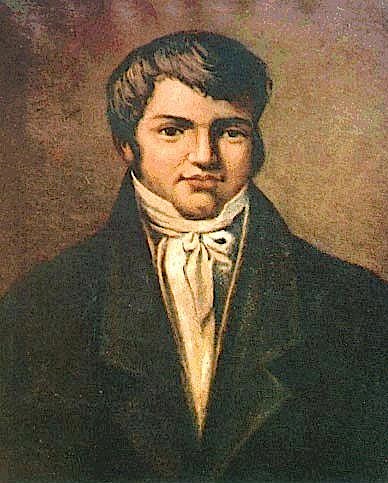
Fra Diavolo (lit. Brother Devil; 7 April 1771–11 November 1806), is the popular name given to Michele Pezza, a guerrilla leader who resisted the French occupation of Naples, proving an "inspirational practitioner of popular insurrection".[1] Pezza figures prominently in folk lore and fiction. He appears in several works of Alexandre Dumas, including The Last Cavalier: Being the Adventures of Count Sainte-hermine in the Age of Napoleon, not published until 2007[2] and in Washington Irving's short story "The Inn at Terracina".[3]

Key Information

Biography

[edit]

The nickname "Fra Diavolo" came about due to an old Itrano custom: Until early in the twentieth century Itrani boys and girls who had recently recovered from serious illnesses were dressed as monks on the second Sunday after Easter, for a procession in honor of St. Francis of Paola, the patron of sick children. On one of these solemn occasions little Michele, who was apparently a handful to begin with, proved so naughty that someone called him "Fra Diavolo" (Brother Devil) which stuck.[4]

Early life

[edit]

The notion that Pezza "was born of low parentage" has received wide circulation but is hardly accurate; it forms part of a hostile tradition derived from French propaganda.[5] The Pezzas had some land in olives and were also engaged in the wool trade. The family home has some interesting architectural details, which also suggests some wealth, and they were related to several of the most prominent families in Itri, such as the Ialongo and the Pennachia.[6]

Although little is known with certainty of his early life, Pezza learned to read and write, hardly a common accomplishment at the time, and further indication of some wealth in the family. As a young man he secured employment as a courier for the Neapolitan Royal Mail, making the 240 km (149 mi) round trip between Terracina and Naples twice a week for 50 ducats a year, a considerable sum, while becoming intimately familiar with the local terrain, which had a reputation for brigandage, knowledge that would later serve him in good stead.[7] In 1797, while so employed, he vied for the affections of a young woman with another young man. One night his rival and another man ambushed Pezza, intending to do him some harm. Pezza, who reportedly had a "fiery temper", managed to kill both of his attackers. He took to the hills, but was soon caught. Tried, he was convicted of manslaughter, since the slaying had been committed in self-defense, and on 25 October 1797 he was sentenced to a tour in the army in lieu of prison.[8]

On 20 January 1798 Pezza was enrolled in the Reggimento di Messapi, stationed at Fondi, about a dozen miles north of Itri and perhaps a dozen south of the frontier with the Papal States. Pezza rose quickly, becoming a sergeant, probably because he was literate and, as a member of the middle class and a former Royal courier, already familiar with firearms.[9] In November of late 1798 Pezza took part in the disastrous attempt of the Neapolitan Army to oust the French from the Papal States.[10]

The French responded quickly to the Neapolitan incursion, forcing them to retreat, and then undertook an invasion of the Kingdom of Naples. Plagued by cold and heavy rains, the Neapolitans fell back along the Appian Way. Thousands of troops deserted and many more were captured. Pezza, who was with the rear guard, was almost captured by the French, but escaped by donning peasant dress, and took to the hills above Itri.[11] During the retreat, the Neapolitan Reggimento di Lucania fortified an old Roman sanctuary, the Fortino di San Andrea, located about a few miles northwest of Itri, where a pass carries the Appian Way over the Aurunci Mountains. On 26 December, reinforced by some irregulars hastily recruited by Pezza, the regiment ambushed elements of the French "Polish Legion", touching off a three-day skirmish. Unable to get through the easily defended defile, some French troops passed down the coast road, along the ancient Via Flacca, from Terracina to capture Sperlonga. The weather was foul, very cold with incessant rains that turned to ice. From Sperlonga, the French began working their way overland across the mountains, to outflank the Neapolitans at the old villa, and by dawn on the 29th were in position to attack. But the French movement had been detected by Pezza's irregulars, who were patrolling the hills, and they guided the Neapolitan troops safely out of the encirclement, so that they could fall back on the great fortress of Gaeta, about 15 miles down the coast.[12] The French pressed on, and over the next few weeks, despite unusually cold and icy weather, overran the rest of Naples, capturing the city itself on 22 January 1799 and proclaiming the Parthenopaean Republic. For Pezza, the most critical event of this period occurred on 30 December, when French and Polish troops captured Itri. A band of peasants from the vicinity attempted to resist, but were rapidly overcome. The invaders then shot their prisoners, plundered the town a bit, proclaimed a new age of freedom, erected a "Liberty Tree", and held a ball.[13]

Resistance to French rule 1798–1799

[edit]
Fra Diavolo & Bands of the Holy Faith.

Though many reform-minded nobles and some intellectuals backed it, the French puppet regime in Naples, the Parthenopaean Republic, had little popular support. In addition, French and Polish troops acted abominably; looting and rape were common. French atrocities were so blatant that their commander in Naples, General Jean Étienne Championnet, was sacked by Guillaume-Charles Faipoult, one of the government representatives on mission, and subsequently imprisoned.[14]

Irregular resistance had begun almost as soon as the invaders entered the country, and French atrocities only served to send more young men into the hills to join the insurgency. Attacks on French soldiers became common. The French retaliated swiftly and brutally, which only made matters worse. The experience of Itri was typical. On 15 January two French soldiers were killed while patrolling the Appian Way near the town. The next day a mixed force of French and Polish troops inflicted severe reprisals on the town, looting, raping, and murdering, leaving 60 men, women, and children lying dead in the streets; Michele Pezza's 67-year-old father was among the dead.[15]

Meanwhile, although in exile in Sicily, the Neapolitan government, effectively controlled by Queen Maria Carolina, wife of King Ferdinand IV of Naples, appointed Fabrizio Ruffo, a progressive government minister and one of the last laymen to hold the dignity of cardinal in the Roman Catholic Church, to organize a resistance movement. On 8 February 1799, British and Neapolitan ships landed 5,000 troops and volunteers under Ruffo's command in Calabria. This force soon expanded into an unruly army of laymen and clerics, nobles and peasants, rich and poor, men, women, and children. Dubbed la Armata cristiana della Santa Fede ("the Christian Army of the Holy Faith"), this horde made up for its lack of training and equipment with enthusiasm, ferocity, and suicidal courage.[16]

Pezza had already organized a small band of irregulars in the northern part of the Terra di Lavoro, and soon became one of Ruffo's principal subordinate commanders. His massa ("band") quickly grew to some 4,000 men, including his three brothers and the scions of a number of the leading families of Itri, such as Pasquale-Maria Nofi, who served as his adjutant with the rank of lieutenant.[17] With these men, he raided French outposts far and wide. On one occasion he slipped into heavily occupied Fondi in the guise of a priest — thus becoming once again "Fra Diavolo" — to cut down the "Liberty Tree" which the French had planted there, replacing it with a cross that still stands. He even harassed French forces holding Gaeta, the great fortress dominating the northwestern route into the Kingdom of Naples, ambushing supply trains (once making off with 1,400 sheep) and couriers. Pezza made the Fortino di San Andrea his base of operations, and spread terror against French supporters over a wide area. He soon had a substantial price on his head.[18]

The city of Naples was liberated from the French in June, Gaeta was recaptured at the end of July by royal troops and Pezza's men, aided by the British fleet. By late September the French had largely been driven out of the kingdom, and a Neapolitan army had gone on to liberate Rome. The Neapolitan insurrection had probably cost the lives of 50,000 or 60,000 people in the kingdom.

A hard, tough leader, Pezza gave no quarter. His men committed "most monstrous misdeeds", torturing and murdering hundreds of prisoners of war, including a French general. He was so ferocious that for a time Cardinal Ruffo placed him under arrest for his many atrocities.[19] Nevertheless, for his services, Pezza was made a colonel in the army, ennobled as the Duke of Cassero, granted an annual pension of 2,500 ducats — making him one of the richest men in the district — and even given a lock of the queen's hair. He settled down near Itri with his wife, Fortunata Rachele Di Franco, a local beauty whom he had married in July 1799, when she was just 18, and he was en route to the liberation of Rome. For the next few years they lived quietly, while producing two sons.[20]

Resistance to French rule 1806

[edit]

In 1806 Napoleon, Emperor of the French, decided to place his brother Joseph Bonaparte on the Neapolitan throne.[21] Some 32,000 French troops invaded Naples in January, in three columns under General Laurent de Gouvion-Saint-Cyr, later a Marshal of France; about 12,000 men marched down the Adriatic coast, 15,000 more attacked down the Apennines, which form the spine of Italy, and General Jean Louis Reynier led about 10,000 troops down the Appian Way. The Neapolitan Army, with barely 13,000 men available for mobile operations, fell back on Calabria as the French quickly occupied frontier areas and pressed on. By February Reynier's column had captured Fondi and continued on towards Itri. Some Neapolitan troops were garrisoned at Pezza's old base, the Fortino di San Andrea,, but they fled south to Itri when the French turned up. The French pursued. There was a short skirmish at Itri, which hardly impeded the French advance. Reynier sent a regiment ahead to seize Gaeta by a coup de main, but the fortress, commanded by Louis, Landgrave of Hesse-Philippsthal, resisted stoutly. The Siege of Gaeta lasted until 18 July.[22] The French found the rest of Naples easier prey. The capital fell on 14 February as the king and queen once more fled to Sicily, and the French soon overran most of the rest of the kingdom.

When the French invaded, Pezza was recalled to active duty, and ordered to organize a guerrilla column to resist the attackers. But the French moved so fast he was barely able to escape, and fled with his brothers to Sicily. He soon returned, however, and, on 23 March 1806, clashed with the French near Itri.[23] Shortly afterwards, Pezza was recalled to Sicily to gather more forces, and in April joined an expedition to reinforce Gaeta that was led by the British admiral Sir Sidney Smith, one of Napoleon's most inveterate foes.

Hesse-Philippsthal gave Pezza command of a band of irregulars who were landed along the coast near the mouth of the Garigliano River, about 20 miles southeast of Gaeta, with instructions to stir up guerrilla resistance in the French rear. Pezza conducted several raids against French outposts, but then undertook an ill-advised attack against a substantial French force. Defeated, he fled back to Gaeta, assuming a disguise so as to trick a French officer into giving him a pass through the siege lines. To Hesse-Philippsthal this smacked of treachery, and he decided that Pezza was secretly in league with the French. Pezza was arrested and sent in chains to Palermo in May 1806. Sir Sidney quickly cleared Pezza's name, however, and for a few weeks he conducted seaborne raids against French outposts along the coast from Ponza and the other islands in the Gulf of Gaeta.[24]

On 4 July, a small British and Sicilian force inflicted a stunning defeat on the French in the Battle of Maida, in Calabria. Hoping to follow up this victory, Pezza and a band of followers landed at Amante, in Calabria, on the 26th. Pezza proved to be the most effective of the many guerrilla leaders who had sprung up in the aftermath of the invasion, and soon attracted considerable local support. The French were soon closely invested at Cosenza. Given time the guerrillas might have taken the city. But Gaeta had fallen to the French on 18 July, after twelve days of heavy bombardment, during which Hesse-Phillipsthal had been gravely wounded. This released some 10,000 French troops, most of whom were promptly sent into Calabria. The various guerrilla leaders unwisely attempted to make a stand at Lauria. There, on 8 August, Marshal André Masséna defeated them, virtually annihilating their forces in a no quarter fight. Although on 14 August, with the support of Sir Sydney's ships, Pezza managed to capture Fort Licosa from the enemy, that very same day the French relieved Cosenza. As by this time enormously superior French forces were on the march, the British decided to withdraw their expedition; this withdrawal arguably prevented the Neapolitan insurgency from developing into an "ulcer" such as the Peninsular War in Spain beginning in 1808.[25]

Despite the withdrawal of the British, for a time the guerrilla fighting in Calabria intensified. It was a horribly bloody affair, with the French often slaughtering whole villages, and the people massacring French prisoners. Surprisingly, Pezza proved far less ferocious than he had been in 1799. He even turned French prisoners over to the British in return for money and supplies, and once proved enormously courteous to the some French officers' wives whom he had captured. Nevertheless, the French posted a 50,000 ducat reward for anyone who killed or captured him, a sum equivalent to millions of dollars today.[26]

Capture and death

[edit]

Late in August 1806, Sir Sidney transferred Pezza and about 300 of his guerrillas by sea to the coast near Sperlonga, north of Gaeta. For a couple of weeks Pezza caused considerable trouble for the French, raiding local garrisons and ambushing convoys. On 5 September he ambushed and massacred a considerable French force near Itri. As a result, the French organized a "flying column", which pinned him down near Itri on the 28th. A hot battle resulted, but the French were able to storm his position from three different directions, resulting in the defeat of Pezza's band, which lost more than one hundred killed and about 60 taken prisoner, all of whom were immediately shot by the French. Pezza himself was reported dead, but survived.[27]

With the remnants of his band, Pezza fled eastwards over the mountains. He was soon operating near Sora in the Abruzzi, with two thousand men and two cannon, having joined forces with other guerrilla leaders. A much stronger French force converged on his base. Pezza failed to retreat in time, and the French closed in on 24 October, storming his base camp. Most of his men were killed or captured, and Pezza was again initially thought to be dead, but he had escaped, though wounded; it was, however, to no avail. On 1 November, while at Baronissi, near Avellino, he was betrayed and captured in a pharmacy by French Corsican troops under the command of Major Joseph Léopold Sigisbert Hugo, father of the novelist Victor Hugo.[28]

The French offered Pezza an enormous bribe if he would join them. When he refused, they tried him on charges of banditry, and sentenced him to death. The French spurned an offer by Queen Maria Carolina to exchange 200 French prisoners for him, and on 9 November they hanged him in the Piazza del Mercato at Naples, ostensibly for banditry.

Pezza's last words reportedly were "It pains me that I am condemned as a bandit and not a soldier".[29]

Pezza's death did not end the insurrection against the French, as it was not until 1811 that widespread resistance came to an end, and there were still sporadic outbreaks as late as 1815. Over 33,000 suspected guerrillas were arrested during the fighting, and thousands – men, women, and children alike – were killed.[30]

Legacy

[edit]

In addition to the works by Alexandre Dumas and Washington Irving, noted above, Pezza figures in a number of other artistic endeavors.

Daniel Auber's opera Fra Diavolo is founded on traditions associated with the legend, but has very little historical accuracy. Laurel and Hardy starred as "Stanlio" and "Ollio" in the 1933 feature film The Devil's Brother (sometimes titled as Fra Diavolo) based on Auber's opera.

There are several other films about Fra Diavolo, a complete listing of which may be found in the Italian Wikipedia site. The most important of these is Fra Diavolo, made in 1942 by Luigi Zampa and based on a play of the same name by Luigi Bonelli, later a prolific screenwriter. In the film, Pezza is a Robin Hood-like figure fighting the French.

The only Italian film about Pezza to be available in English is the 1964 Giovanni production, The Legend of Fra Diavolo, with an Italian cast, but starring Tony Russel, which was released in the US by Globe Films International. The film is rather more realistic than the Bonelli effort.

Paul Féval, père used the character of Fra Diavolo in his Les Habits Noirs book series. In it, Michele Bozzo (sic) is the nearly immortal Colonel Bozzo-Corana, feared leader of an international criminal brotherhood.

Fra diavolo sauce is believed to be named after Pezza.

See also

[edit]

References

[edit]

Further reading

[edit]
[edit]
Revisions and contributorsEdit on WikipediaRead on Wikipedia
from Grokipedia
Michele Pezza (c. 1771 – November 1806), known as Fra Diavolo ("Brother Devil"), was an Italian brigand of humble origins who became a guerrilla leader, commanding irregular forces against French Republican and imperial occupiers in the Kingdom of during the . Born in Itri near , Pezza earned his nickname through early criminal exploits and evasion of capture, transitioning from outlawry to sanctioned military service via royal in 1799. Pezza's forces, often numbering in the thousands and comprising former bandits attracted by promises of plunder and pardon, conducted hit-and-run raids that disrupted French supply lines and terrorized enemy troops across and the roads linking to . Commissioned as a colonel by King Ferdinand IV and later reactivated in 1806 under Queen Maria Carolina's direction with British naval support from Admiral Sidney Smith, he participated in operations to relieve besieged and capture , though accusations of treachery marred his later campaigns. His methods involved ferocious guerrilla tactics, including atrocities against captives, which cemented his reputation as a Bourbon loyalist hero among monarchists while branding him a mere bandit to French authorities. Defeated in clashes near Itri and retreating through Sora and , Pezza was captured in October 1806 and subjected to a French court-martial, where he protested being condemned as a brigand rather than a soldier; he was hanged in , his death prompting royal obsequies in as a martyr for the Bourbon cause.

Early Life and Formative Years

Birth and Family Background

Michele Pezza, later known by the alias Fra Diavolo, was born on April 7, 1771, in Itri, a modest town situated near Formia in the . He was christened Arcangelo Pezza, reflecting standard Catholic naming practices in the region. Pezza originated from a family of low social standing, typical of the rural laboring class in under Bourbon monarchy, where many households depended on seasonal agricultural work or amid limited economic opportunities. His early was rudimentary, with skills acquired despite prevailing illiteracy among peasants, though formal schooling remained scarce. The prefix "Fra" in his alias stemmed from a youthful inclination toward clerical life, possibly a brief attempt to join , which he relinquished owing to his restless disposition.

Youthful Mischief and Entry into Irregular Activities

Michele Pezza, born on April 7, 1771, in Itri to parents of lowly status, exhibited disruptive tendencies from a young age that merited his early Fra Diavolo, bestowed for persistent naughty and combative behavior. By his early twenties, Pezza's involvement in local skirmishes and petty infractions had cultivated a reputation for volatility in the Terra di Lavoro region, though records of specific thefts or brawls prior to the mid-1790s remain anecdotal and unenumerated. In 1796, Pezza's actions intensified when he became implicated in two homicides arising from brawls: the first during a heated altercation, and the second against the brother of the initial victim, executed with premeditated intent. These killings prompted judicial proceedings, resulting in a sentence that Pezza sought to commute in 1798 by petitioning for military service, highlighting his evasion tactics amid mounting notoriety as a . Fleeing authorities thereafter, Pezza retreated to the hilly borderlands between and , sustaining himself through ad hoc robberies and transient alliances with loose bands of outlaws in areas plagued by inadequate policing under the Kingdom of Naples. His operations lacked the of organized syndicates, instead comprising survivalist improvisations—such as sporadic thefts and ambushes—exploiting the kingdom's decentralized rural governance and sparse constabulary presence, which numbered fewer than 5,000 men for the entire realm by the late 1790s. This phase solidified his bandit persona without ideological undertones, rooted purely in personal circumvention of law.

Historical Context of Resistance

The French Revolutionary Threat to the Kingdom of Naples

The French Revolutionary armies, advancing through Italy in the late 1790s, sought to export the egalitarian principles of the Revolution, including the abolition of feudal privileges and the curtailment of clerical authority, which directly challenged the hierarchical structures of traditional monarchies like the Kingdom of Naples. These policies, modeled on decrees such as the August 4, 1789, abolition of feudalism in France, were imposed in occupied territories through sister republics, eliminating seigneurial rights, tithes, and noble exemptions while promoting secular governance over Catholic institutions. In southern Italy, this manifested as an ideological assault on Bourbon absolutism and ecclesiastical power, fostering resentment among nobility, clergy, and peasantry who viewed the measures as atheistic disruptions to established social and religious orders. The Kingdom of Naples faced acute vulnerability due to King Ferdinand IV's alignment with Britain against France, culminating in his declaration of war on November 29, 1798, and an invasion of the French-held . This move, emboldened by Horatio Nelson's decisive victory at the on August 1–3, 1798, which annihilated the French Mediterranean fleet and isolated potential reinforcements, initially bolstered Neapolitan defenses by securing British naval support along the coast. However, the Directory in responded by declaring war on Naples on December 4, 1798, dispatching General Jean Étienne Championnet with approximately 30,000 troops to complete the conquest of . Neapolitan forces suffered defeats, such as at Civita Castellana in mid-December, forcing to flee to by January 1799, leaving the mainland exposed. Upon occupying on January 23, 1799, French authorities established the on January 31, enforcing revolutionary reforms that abolished remaining feudal dues and suppressed Catholic privileges, including restrictions on clergy and church properties, which alienated the devout populace and underclass. These incursions, accompanied by military requisitions for supplies and manpower to sustain the occupation, exacerbated local grievances, as troops levied resources amid ongoing campaigns, contributing to widespread perceptions of desecration and exploitation that fueled fervor. The fragile republic's anti-clerical edicts and egalitarian restructuring thus acted as proximate causes for peasant and royalist backlash against the erosion of traditional hierarchies.

Establishment of the Parthenopean Republic

The Parthenopean Republic was proclaimed on January 23, 1799, after French General Jean Étienne Championnet's forces occupied Naples, defeating the Neapolitan army and prompting King Ferdinand IV of the Two Sicilies to flee to Sicily with British naval support. The regime, established by local Jacobins under French protection, sought to impose a centralized, secular government modeled on revolutionary France, abolishing feudal privileges and introducing measures to redistribute land while curtailing aristocratic and ecclesiastical power. These reforms included anti-clerical policies targeting religious institutions, such as restrictions on monastic orders and efforts to undermine traditional Catholic influence in society, which alienated the devout rural populace and urban lazzaroni reliant on church networks for social cohesion. The republic's unpopularity stemmed from its coercive imposition and disconnect from local realities, exacerbating grievances over disrupted customs, economic instability, and French requisitions that strained food supplies in an already agrarian economy. Peasant revolts proliferated immediately, with uprisings in regions like , , and —tens of thousands strong—driven by fears of lost religious freedoms and property rights, even as some reforms nominally addressed feudal burdens. French garrisons, numbering around 10,000-15,000 troops thinly spread across provinces, faced chronic shortages and desertions, undermined by logistical failures and the broader weakening of French armies in following Napoleon's Egyptian campaign. Cardinal Fabrizio Ruffo capitalized on this unrest, landing in on February 7, 1799, with a small group and rapidly assembling the Sanfedisti—a decentralized of peasants, , and royalists that expanded to tens of thousands through appeals to faith and . Ruffo's forces advanced from the south starting in April, capturing towns and supply lines through guerrilla tactics and popular support, isolating republican holdouts. The regime collapsed on June 13, 1799, lasting only five months, as French commanders evacuated amid the sanfedisti encirclement and internal lazzaroni uprisings. In the ensuing chaos, sanfedisti executed numerous republican officials and sympathizers in provincial reprisals, reflecting the regime's failure to secure legitimacy and the causal potency of grassroots counter-revolutionary mobilization rooted in cultural and economic preservation.

First Phase of Guerrilla Warfare (1798–1799)

Alignment with Royalist Forces

Michele Pezza, a notorious brigand from Itri in the Terra di Lavoro region, transitioned from independent to serving as a auxiliary in late 1798 amid the French occupation of the . Leveraging his familiarity with the rugged terrain and networks of local irregulars, Pezza integrated his band into the broader anti-French coalition, receiving informal sanction from Bourbon authorities to conduct operations against republican forces. By early 1799, Pezza's group formally aligned with Cardinal Fabrizio Ruffo's Sanfedist crusade, which landed at La Cortona on February 8 and rapidly mobilized peasant levies under the banner of the Holy Faith. Operating primarily in the provinces of and , Pezza's small bands—typically numbering in the dozens—specialized in reconnaissance, ambushes, and targeting French garrisons, couriers, and supply convoys along key routes such as those linking to the Volturno River and the Adriatic ports. These disruptions impeded French reinforcements and logistics, contributing to the instability that facilitated Ruffo's advance toward the capital. Pezza's reputation for audacious maneuvers, including night raids and the evasion of larger pursuers through intimate knowledge of mountain passes, earned him the epithet "Fra Diavolo" among both allies and adversaries, evoking his seemingly infernal agility and ferocity in combat. Though opportunistic in origin, this alignment proved effective; Pezza's actions harassed isolated detachments and sowed fear, aiding the royalist recapture of by June 13, 1799, and the collapse of the .

Specific Raids and Disruptions Against French Positions

During the French occupation of the Kingdom of Naples following the establishment of the in January , Michele Pezza, operating under the nom de guerre Fra Diavolo, organized irregular bands to target French outposts and supply movements in the rural areas near Itri and . These raids focused on isolated garrisons and foraging parties, leveraging the hilly terrain of the Terra di Lavoro for ambushes and rapid withdrawals, thereby inflicting sporadic casualties and seizing provisions. Such tactics aimed to erode French control over peripheral zones without engaging larger formations directly. Pezza coordinated with fellow brigand leaders, including Gaetano Mammone, to extend the scope of disruptions across the countryside north of . Their combined operations harassed retreating French columns amid the , particularly as Republican forces evacuated under pressure from advancing Austrian and Russian armies. French military dispatches noted the persistent as a complicating factor in maintaining discipline and logistics during the withdrawal, with isolated detachments frequently cut off and vulnerable to attack. These guerrilla efforts yielded localized successes, enabling royalist sympathizers to reassert influence in villages and disrupt French foraging, which contributed to a gradual erosion of enemy morale in the affected regions. By spring , the cumulative impact of such harassment supported the broader counteroffensive led by Cardinal Ruffo, though Pezza's bands operated semi-independently prior to formal integration. No comprehensive casualty figures for these specific actions exist in surviving records, but the qualitative reports underscore their role in amplifying logistical strains on the occupiers.

Interlude Under Bourbon Restoration (1800–1805)

Royal Pardon and Integration into State Service

Following the Bourbon restoration in June 1799, Ferdinand IV extended amnesty to royalist fighters who had supported Cardinal Ruffo's of the Holy Faith, formally pardoning Pezza for prior offenses such as banditry and murders committed before his alignment with the crown. This blanket absolution, promised in exchange for guerrilla service against the , integrated former outlaws into the regime's stability apparatus, reflecting pragmatic royal policy toward proven irregular combatants. Pezza traveled to , where he was received by Ferdinand IV and Queen Maria Carolina, and commissioned as a in the Bourbon army; he was subsequently promoted to and knighted as Duke of Cassero. In this semi-official capacity, he led patrols along the kingdom's borders and campaigns to suppress lingering Jacobin sympathizers in rural areas, maintaining an armed band of followers to enforce order amid residual revolutionary threats. During this interlude, Pezza married Fortunata Rachele Di Franco and established a temporary household near Itri, fathering two sons while drawing an annual royal pension of 2,500 ducats as a ennobled landowner. Despite this domestic phase, he retained his private retinue of men, underscoring the continuity of his role under state sanction and the Bourbons' reliance on such figures for territorial control.

Elevation to Knighthood and Preparations for Renewal

Following the Bourbon restoration in June 1800, Michele Pezza was pardoned for prior offenses and elevated to the rank of colonel in the royal army by King Ferdinand IV, formalizing his transition from irregular guerrilla leader to state-sanctioned officer and rewarding his demonstrated loyalty during the 1799 counter-revolution. This appointment provided official validation against bandit stereotypes, integrating him into the kingdom's military structure while granting a measure of legitimacy to his tactics. Traditional narratives further claim Pezza was knighted and ennobled as of Cassero (or Cassano in variant accounts), accompanied by lands and a , though contemporary historical analysis disputes the dukedom's authenticity, attributing it to romanticized rather than documented royal decree. Amid the fragile peace of the early 1800s, Pezza utilized his position to discreetly maintain and expand networks among loyalists in the rugged mountainous regions of , positioning himself for potential resurgence of without inciting French reprisals during the Bourbon regime's vulnerability. The decisive French victory at Austerlitz on December 2, 1805, which dismantled the Third Coalition and freed Napoleonic forces for southern campaigns, heightened these preparations; Pezza closely tracked enemy dispositions, anticipating invasion as Ferdinand IV's coalition involvement invited retaliation, yet refrained from overt action to preserve royalist strength. This strategic restraint reflected a pragmatic assessment of causal dynamics, prioritizing sustained mountain-based mobility over premature engagement.

Second Phase of Resistance (1806)

Response to Joseph Bonaparte's Invasion

In early 1806, French forces under Marshal launched a renewed of the Kingdom of Naples, crossing the border on February 8 and decisively defeating the Neapolitan army at the on March 9. This victory facilitated the installation of as king of on March 30, marking the second phase of French imperial expansion into southern Italy following the brief Bourbon restoration. Michele Pezza, known as Fra Diavolo, responded by reactivating his guerrilla networks from bases in the adjacent , where he had retreated after earlier campaigns. His forces scaled up significantly from the smaller bands of , swelling to approximately 4,000 fighters drawn from local royalist sympathizers amid widespread resistance to the French occupation. Pezza coordinated with British naval elements, which provided logistical support including supplies and during operations around , enhancing the insurgents' capacity to harass French supply lines and garrisons. These initial disruptions compelled French commanders to allocate troops for , diverting resources from consolidation efforts in and underscoring the intensified threat posed by Pezza's enlarged operations compared to prior efforts.

Command of Large-Scale Brigand Operations and Tactics

In 1806, Michele Pezza commanded brigand forces primarily in the Abruzzi and adjacent regions during the French occupation following Bonaparte's invasion of the in February. His operations emphasized , exploiting the mobility afforded by the to evade superior French regular troops and launch surprise attacks. Pezza's bands, drawing on local recruits familiar with the , gathered intelligence from sympathetic rural populations hostile to French reforms and taxation, enabling targeted disruptions against isolated outposts and moving columns. Key tactics included ambushing couriers to sever French communications and intimidating tax collectors to undermine fiscal administration, thereby hindering the occupiers' ability to consolidate control over the countryside. These actions contributed to widespread that elevated military expenses and impeded effective collection in . Pezza's forces also employed terror against suspected collaborators, executing or mutilating individuals deemed supportive of the Parthenopean regime's remnants, a practice that blurred distinctions between legitimate resistance and but served to deter local cooperation with French authorities amid ongoing . The empirical impact of these operations delayed French pacification efforts, as evidenced by persistent unrest in extending into 1807, where Pezza's legend amplified recruitment among superstitious locals and tied down significant French resources otherwise allocatable to northern fronts. French commanders, facing repeated raids from bases near Sora and other highland strongholds, resorted to collective reprisals on villages, underscoring the causal effectiveness of Pezza's decentralized, terrain-dependent strategy in prolonging .

Capture, Trial, and Execution

Betrayal and Arrest

In November 1806, following defeats that scattered his forces during the French reoccupation of , Michele Pezza—operating as Fra Diavolo—was betrayed for the substantial bounty offered by French authorities. An , likely motivated by the reward amid widespread of locals, revealed his , leading to his capture on at a in Baronissi, near , where he had sought refuge in while hungry and ill. French troops, acting on the tip, arrested the exhausted guerrilla leader alone, without his band, in a swift operation that underscored the effectiveness of intelligence-driven pursuits against elusive insurgents. Pezza was then conveyed under heavy escort to , a measure reflecting French commanders' priority to dismantle symbolic resistance figures who had repeatedly disrupted supply lines and morale. This transport minimized escape risks, as prior evasion tactics had prolonged his operations despite numerical disadvantages. Contemporary accounts emphasize the betrayal's role in ending a campaign that had tied down thousands of French soldiers through .

French Tribunal and Final Statements

Following his capture on November 1, 1806, near Baronissi, Michele Pezza was transported to under heavy French guard and subjected to a swift conducted by French authorities. The proceedings, held in early November, charged him with and against the French occupation, framing his actions as criminal rather than . Pezza rejected any plea for mercy, defiantly asserting his identity as a loyal to the Bourbon monarchy; his reported final statement emphasized this distinction, declaring, "It pains me that I am condemned as a and not a ." On November 11, 1806, Pezza was executed by hanging in ' Piazza Mercato, a public site chosen to deter further resistance. He approached the scaffold wearing a Bourbon uniform, maintaining composure until the end, after which his body remained on display as a warning to insurgents. French accounts portrayed and execution as a decisive blow against mere , yet guerrilla operations under other leaders continued unabated in , underscoring the limitations of such propaganda in quelling the broader uprising.

Ideological Foundations

Defense of Monarchy and Traditional Order

Michele Pezza, operating under the nom de guerre Fra Diavolo, exhibited staunch loyalty to the of Ferdinand IV by rejecting French offers of military rank and financial inducements during the 1806 invasion led by , declaring, “Because when one has sworn, one has sworn!” This refusal underscored his commitment to prior oaths of , formalized through royal commissions that elevated him to in the Neapolitan army and of Cassano, positions granted after his pardon and service in the 1799 Sanfedist revolt. Pezza's resistance targeted the Bourbon absolutist order as a counter to the disruptive egalitarianism of French revolutionary governance, which had briefly imposed the in from January to June 1799, abolishing feudal privileges and aristocratic titles while enforcing centralized administrative reforms that eroded local autonomies and ecclesiastical influence. The republic's swift collapse amid internal factionalism and popular uprisings empirically validated Pezza's implicit view of as a stabilizing , capable of maintaining social cohesion through hereditary rather than abstract that devolved into factional and economic upheaval. In his final statements before execution on , , Pezza protested his classification as a mere bandit, insisting on recognition as a in service to , thereby framing his brigandage as legitimate defense of traditional feudal structures against the homogenizing of French-imposed . This stance aligned with broader efforts, such as the Army of the Holy Faith organized by Cardinal Ruffo in , where Pezza's forces operated under explicit royal sanction to restore kingly dominion over decentralized provincial loyalties threatened by Jacobin centralization.

Catholic Resistance to Secular Revolution

The guerrilla campaigns of Michele Pezza, known as Fra Diavolo, embodied a staunch Catholic defense against the secularizing impulses of French revolutionary ideology imposed on the Kingdom of . Pezza's alias "Fra Diavolo"—translating to "Brother Devil"—stemmed from his brief entry into a in youth, where his disruptive conduct led to expulsion, yet the "Fra" prefix evoked nominal ties to religious orders and framed his warfare as a quasi-spiritual . This self-presentation aligned with the sanfedisti tradition of framing resistance as a holy crusade, as seen in Cardinal Fabrizio Ruffo's 1799 organization of the "Army of Holy Faith" (Armata della Santa Fede), which Pezza supported through brigand actions harassing French and republican forces. The (January–June ), established under French auspices after the Bourbon flight, extended metropolitan revolutionary to by demanding civic oaths from , restricting monastic vows, and prioritizing secular over authority, measures that alienated the devout peasantry whose social cohesion derived from Catholic ritual and hierarchy. Pezza's early insurrections in , alongside sanfedisti bands, countered this by invoking religious loyalty to rally irregular fighters—numbering up to thousands in coordinated ambushes—against Jacobin officials who symbolized the assault on traditional piety. In the 1806 resurgence following Bonaparte's invasion, Pezza's operations echoed this pattern, with his forces disrupting French supply lines in the name of restoring Bourbon rule intertwined with papal and monarchical legitimacy, as evidenced by the exiled court's knighting of him as colonel for such efforts. This religious dimension provided causal leverage for mobilization: empirical accounts note how sanfedisti and Pezza-aligned brigands drew sustenance from peasant devotion, contrasting the French de-Christianization campaign's failure to resonate in a populace where 90% of daily life revolved around Catholic feasts, tithes, and clerical , thereby sustaining prolonged low-intensity warfare despite conventional defeats. Pezza's final statements before execution on November 11, 1806, rejected the bandit label in favor of soldierly honor tied to and implicitly faith-based legitimacy, underscoring the ideological fusion of Catholicism with anti-revolutionary combat.

Assessments and Legacy

Military Impact and Empirical Effectiveness

Michele Pezza's brigand bands, peaking at around 4,000 fighters, mounted persistent ambushes on French supply convoys and isolated outposts in the regions surrounding and from onward. These operations disrupted logistical lines during the French retreat following the 1799 Neapolitan campaign, compelling occupying forces to divert troops for escort duties and punitive expeditions rather than offensive maneuvers. French commanders reported ongoing harassment that eroded morale and stretched thin garrisons across rugged terrain ill-suited to conventional army movements. In the 1806 phase, Pezza's tactics contributed to the Calabrian insurrection, where brigand activity intensified French requirements for internal security amid Masséna's invasion, delaying full administrative control in southern provinces. Empirical metrics from the period indicate that such guerrilla actions tied down disproportionate enemy resources—often 10-20% of regional French strength—to suppress dispersed threats, amplifying occupation costs without necessitating large-scale engagements. This resource drain persisted, fostering endemic instability in the Kingdom of Naples until Bourbon restoration in 1815, though attributable in part to broader Sanfedist networks beyond Pezza's direct command. Critiques from contemporary Bourbon-aligned accounts highlight tactical limitations: Pezza's reliance on terror tactics, including executions of collaborators, yielded short-term but alienated neutral populations and failed to forge unified resistance, per records emphasizing uncoordinated over disciplined warfare. Strategically, no major French advances were halted; fell in January 1799 despite disruptions, and Pezza's capture in November 1806 underscored the absence of sustainable territorial gains or decisive victories against superior and . French tribunals and dispatches framed his effectiveness as ephemeral, rooted in mobility rather than conquest, with overall brigand efforts containing rather than expelling occupiers until external pressures intervened.

Cultural Representations and Folk Hero Status

The opéra comique Fra Diavolo composed by Daniel-François-Esprit Auber with libretto by Eugène Scribe premiered on 28 January 1830 at the Salle Ventadour in Paris, depicting its protagonist as a dashing, opportunistic bandit chief engaged in comedic intrigues and romantic escapades. Loosely drawn from the historical exploits of Michele Pezza, the opera emphasized his audacious personality and guerrilla cunning over ideological motivations, fostering a enduring popular perception of "Fra Diavolo" as an entertaining anti-hero rather than a committed royalist insurgent. This portrayal significantly influenced 19th-century European theater and literature, where Pezza's alias became synonymous with roguish rebellion against authority. In literature, Pezza featured prominently in Alexandre Dumas's adventure novels, such as The Last Cavalier, which romanticized his campaigns as swashbuckling tales of partisan warfare against Napoleonic forces, reinforcing his status as a symbol of defiant individualism. Cinematic adaptations extended this narrative, including the 1933 American film The Devil's Brother starring Laurel and Hardy, which adapted Auber's opera to highlight comedic banditry, and the 1942 Italian production The Adventures of Fra Diavolo, portraying Pezza as a dual-role leader balancing brigandage with covert loyalty to Naples. These works amplified monarchist resistance themes by framing his actions as proto-partisan heroism against foreign secular imposition, though often sanitized for broader appeal. Pezza's status endures in southern Italian oral traditions, particularly in and adjacent regions, where ballads and anecdotes preserve him as a protector of traditional Catholic order and local sovereignty against revolutionary upheaval. During the Risorgimento era of Italian unification (circa 1860–1870), official narratives marginalized such figures as obstacles to national progress, associating with Bourbon reactionism, yet grassroots in the Mezzogiorno revived his legend as emblematic of regional resilience. Modern retellings in books and media continue to evoke him as an of , with verifiable persistence in Calabrian and Neapolitan storytelling that underscores empirical guerrilla successes over bandit stereotypes.

Debates on Banditry Versus Legitimate Warfare

Michele Pezza, known as Fra Diavolo, operated under formal commissions from the Bourbon monarchy, which appointed him a colonel in the Neapolitan army and tasked him with leading irregular forces against the French Republican invaders following the 1799 fall of Naples. These royal sanctions transformed his pre-existing bandit networks into sanctioned guerrilla units, enabling operations that disrupted French supply lines and isolated detachments through ambushes and hit-and-run tactics, contributing to the Bourbon restoration in June 1799. Bourbon authorities ennobled him as the Duke of Cassano and awarded honors, including a diamond ring from Queen Maria Carolina, affirming his status as a military asset rather than mere criminal. Critics, particularly French military records and later liberal historians sympathetic to ideals, portrayed Pezza as a common brigand, emphasizing his pre-1798 criminal activities—such as and in the —that predated any royal mandate and involved depredations against civilians. Accounts from the French occupation highlight excesses by his bands, including the execution of Republican sympathizers and plunder that blurred lines between combatants and non-combatants, fueling narratives of unchecked banditry over disciplined warfare. In the context of early 19th-century irregular warfare, where formal armies often yielded to partisan tactics against numerically superior invaders—as seen in contemporaneous Spanish and Tyrolean resistances—Pezza's methods aligned with prevailing norms of sanctioned insurgency rather than anachronistic standards of conventional combat. His self-identification as a soldier, expressed in final statements lamenting condemnation "as a bandit and not a soldier," combined with Bourbon validation, outweighs biased French condemnations rooted in ideological opposition to monarchist resistance. Empirical success in delaying French consolidation and restoring Bourbon rule underscores the legitimacy of his role, distinguishing state-authorized guerrilla leadership from apolitical predation.

References

Add your contribution
Related Hubs
User Avatar
No comments yet.