Recent from talks
Nothing was collected or created yet.
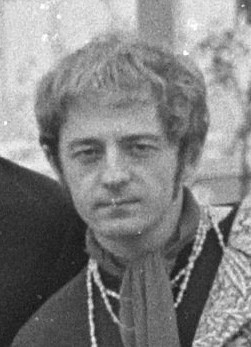
Mike Hugg
View on Wikipedia
Key Information
Michael John Hugg (born 11 August 1940) is a British musician who was a founding member of the 1960s group Manfred Mann, and co-founder of the psychedelic jazz-fusion group, Manfred Mann Chapter Three. He is known for his creativity in his music, and made jingles for advertisements.[1]
Career
[edit]Manfred Mann
[edit]Hugg first thought about wanting a career in music when he was sixteen years old.[2] Pursuing a career in jazz, he met the pianist Manfred Mann while working as a musician at Butlin's Clacton, and they formed a seven-piece group. The Mann–Hugg Blues Brothers recruited Paul Jones and later Tom McGuinness.[3] Upon their signing with His Master's Voice, their producer, John Burgess, changed their name to Manfred Mann.
Prominent in the Swinging London scene of the 1960s, the group regularly appeared in the UK Singles Chart.[4][5] Three of their most successful singles, "Do Wah Diddy Diddy", "Pretty Flamingo", and "Mighty Quinn", topped the UK charts.[5] The band's 1964 hit "5-4-3-2-1" was the theme tune for the ITV pop music show Ready Steady Go!.[6] They were also the first southern-England-based group to top the US Billboard Hot 100 during the British Invasion.[5]

Hugg is a competent pianist and an able vibraphone player, but his main role in Manfred Mann was as drummer. However, he recorded several vibraphone solos with the band (e.g. "I'm your Kingpin") and used the instrument to augment hits such as "Oh No Not My Baby". He was credited as co-writer of the group's early hits and contributed solo compositions throughout its life, including jazzy instrumentals ("Bare Hugg") and wistful acid-pop ("Funniest Gig", "Harry the One Man Band"). His abilities as a songwriter grew throughout the group's career.[7]
Solo career
[edit]He and his brother composed "Mister, You're a Better Man Than I" which was recorded by the Yardbirds in 1965. Hugg also composed the majority of the songs for the 1968 Paramount film Up the Junction,[8] as well as co-writing the theme from the BBC sitcom Whatever Happened to the Likely Lads with La Frenais, which was recorded by Hugg's session featuring Tony Rivers on lead vocals.
In 1972, he released his debut solo album, "Somewhere". The next year, "Stress & Strain" was made. In 1975, Hugg was a member of the group "Hug" who released one studio album titled "Neon Dreams".[9] By the early 1980s, he was working with a Fairlight, one of the first computer musical instruments.[2] In 2015, he released a solo album with help from Simon Currie (who is currently in the Manfreds).[2] Hugg formed the acoustic jazz trio PBD.
The Manfreds
[edit]In 1991, Hugg formed The Manfreds with some of the original members of Manfred Mann, without Manfred Mann himself (which was why they were "The Manfreds" instead of being a reformed Manfred Mann) to celebrate the 50th birthday of Tom McGuinness and the release of a new Manfred Mann compilation album. For most of the bands run, it has included Jones, d'Abo, McGuinness, and Hugg. Hugg retired from touring in 2022, but is still turning up with them for private bookings and small gigs. According to Paul Jones, Hugg was the oldest member of Manfred Mann the Manfreds, and his decision to retire from touring was because he had been off from many concerts with "ear problems".[10]
Discography
[edit]- Solo
- 1972 Somewhere
- 1973 Stress & Strain
- Manfred Mann Chapter Three
- 1969 Manfred Mann Chapter Three
- 1970 Manfred Mann Chapter Three Volume Two
- 1971 Manfred Mann Chapter Three Volume Three (unreleased)
- Hug
- 1975 Neon Dream
See also
[edit]References
[edit]- ^ Rawlings, Terry (2002). Then, Now and Rare: British Beat 1960–1969. Omnibus Press. p. 122. ISBN 978-0-7119-9094-4.
- ^ a b c "THE OFFICIAL MANFREDS WEBSITE - Mike Hugg". www.themanfreds.com. Retrieved 8 January 2024.
- ^ Interview Archived 27 September 2011 at the Wayback Machine. Retrosellers.com. Retrieved 27 August 2011.
- ^ "The story of pop: Episode 12: England Swings". BBC. Retrieved 3 October 2022.
- ^ a b c Roberts, David (2006). British Hit Singles & Albums (19th ed.). London: Guinness World Records Ltd. pp. 345–346. ISBN 1-904994-10-5.
- ^ Roberts, David (1998). Guinness Rockopedia (first ed.). London: Guinness Publishing Ltd. p. 258. ISBN 0-85112-072-5.
- ^ Manfred Mann. Starling.rinet.ru. Retrieved 27 August 2011.
- ^ Eder, Bruce. (11 August 1942) Mike Hugg. AllMusic. Retrieved 27 August 2011.
- ^ Hug - Neon Dream Album Reviews, Songs & More | AllMusic, retrieved 8 January 2024
- ^ "60s icons The Manfreds back with celebratory tour". Cambridge Independent. 27 October 2023. Retrieved 8 January 2024.
External links
[edit]- Mike Hugg on the Manfreds' official website
- Mike Hugg discography at Discogs
- Mike Hugg at IMDb
- cigar advert on YouTube
Mike Hugg
View on GrokipediaEarly life
Childhood and family
Michael John Hugg was born on 11 August 1942 in Andover, Hampshire, England.[2] He grew up during the post-war period in England, developing an early interest in jazz music.[5] As a young musician, Hugg began his career playing drums in a jazz band.[5] Little is publicly documented about Hugg's immediate family background, though he has a brother, Brian Hugg, who is also a musician and songwriter; the two collaborated on the track "You're a Better Man Than I," which was notably covered by the Yardbirds.[6] Hugg's early exposure to music led him to pursue percussion and keyboards, setting the foundation for his professional path in the 1960s British music scene.[7]Musical influences and beginnings
Hugg's musical beginnings centered on jazz performance, where he honed his abilities as a drummer and vibraphonist. In the early 1960s, he fronted jazz combos, showcasing his versatility on percussion instruments including the vibraphone, which became a signature element of his style. His early influences included modern jazz figures such as Charles Mingus, whose innovative compositions inspired the sophisticated, improvisational sound Hugg sought to emulate in his initial ensembles.[3][8][9] A pivotal moment came in 1962 when, at age 20, Hugg hired pianist Manfred Mann to join his jazz combo for a summer season at Butlin's holiday camp in Clacton-on-Sea. This collaboration marked the start of their longstanding partnership, leading to the formation of the Mann-Hugg Quartet—a jazz outfit with Hugg on vibraphone and Mann on piano—that soon evolved into the blues-oriented Mann-Hugg Blues Brothers. This transition reflected Hugg's adaptability, blending his jazz roots with emerging R&B and blues elements that would define his later career.[3][5][9]Musical career
Manfred Mann
Mike Hugg co-founded the British rhythm and blues band Manfred Mann in 1962, initially as the Mann-Hugg Blues Brothers, after hiring keyboardist Manfred Mann to join his jazz combo during a summer season at Butlin's Holiday Camp in Clacton.[3] Upon returning to London, the duo expanded the group into a quartet with Hugg on vibraphone and Mann on piano, incorporating blues elements and later adding brass and vocalist Paul Jones, at which point Hugg transitioned to drums to accommodate the evolving lineup.[3] By early 1963, the band had grown to a five-piece ensemble and signed with EMI Records, who rebranded them as Manfred Mann to capitalize on Mann's name recognition.[6] As a core member, Hugg served as the band's drummer, vibraphonist, and multi-instrumentalist, contributing to their distinctive jazz-inflected R&B sound that blended British beat music with American influences during the early British Invasion era.[8] His rhythmic foundation underpinned the group's breakthrough hits, including the 1964 UK number-one single "Do Wah Diddy Diddy," written by Jeff Barry and Ellie Greenwich but elevated by the band's energetic performances, as well as "Sha La La" and the US chart-topping version of "Do Wah Diddy Diddy."[6] Hugg's versatility extended to keyboards and occasional vocals, allowing the band to experiment with instrumental tracks amid their pop success. Hugg played a significant role as a composer and arranger, co-writing the band's debut single "5-4-3-2-1" in 1963, which reached number five on the UK charts and became the theme for the ITV music show Ready Steady Go!.[3] He also collaborated closely with Mann on numerous television jingles and advertising themes, earning industry awards for their work, and contributed to the soundtrack for the 1968 film Up the Junction.[3] Additional compositions by Hugg, such as jazzy instrumentals, appeared throughout the band's discography, showcasing his jazz roots amid their commercial output.[10] The band's original lineup shifted in 1966 with the departures of vocalist Paul Jones and saxophonist Mike Vickers, but Hugg remained a constant alongside Mann, helping navigate lineup changes including the arrival of Mike d'Abo as lead singer.[6] Under this configuration, Manfred Mann achieved further success with hits like "Pretty Flamingo" (UK number one in 1966) and "The Mighty Quinn (Quinn the Eskimo)" in 1968, where Hugg's drumming provided the driving pulse for Bob Dylan's adapted folk-rock tune.[6] The group disbanded in 1969 after seven years of touring and recording, having sold millions of records worldwide and established themselves as one of Britain's most successful 1960s acts.[3] Hugg's tenure with Manfred Mann solidified his reputation as a pivotal figure in the band's creative and performative evolution.[8]Manfred Mann Chapter Three
Following the disbandment of the original Manfred Mann pop group in June 1969, Mike Hugg and Manfred Mann formed Manfred Mann Chapter Three as an experimental jazz-rock outfit.[3] Hugg transitioned from his role as drummer to lead vocalist and pianist, while also serving as the band's primary songwriter.[3] Manfred Mann contributed on organ and handled musical arrangements.[11] The group featured a core lineup augmented by a five-piece brass section and guest jazz soloists, emphasizing improvisation and fusion elements over pop structures.[11] Hugg's compositions dominated the repertoire, blending rhythmic piano lines with Mann's organ work to create a sombre, atmospheric sound.[12] Notable tracks penned by Hugg included "Snakeskin Garter," "Devil Woman," and "It's Good to Be Alive" on their debut album.[11] Their self-titled debut album, Manfred Mann Chapter Three, was released in October 1969 on the Vertigo label, marking one of the imprint's earliest releases.[13] Recorded at Maximum Sound Studios between June and October 1969, it showcased 11 original tracks, with Hugg providing vocals that ranged from whispers to groans, complemented by cluttered yet innovative production.[13] The follow-up, Volume Two, arrived in 1970, continuing the jazz-rock exploration with Hugg's songs like "Lady Ace" and "I Ain't Laughing," further incorporating electric piano and brass arrangements.[14] Despite critical interest in their progressive style, the band disbanded in 1971 after just two years, partly due to commercial underperformance compared to their prior pop success.[15] This allowed Hugg to pursue solo projects, while Mann formed Manfred Mann's Earth Band.[3] Chapter Three's brief output highlighted Hugg's evolution as a composer and performer in the emerging jazz-fusion scene.[3]Solo work and Hug
Following the disbandment of Manfred Mann Chapter Three in 1971, Mike Hugg pursued a solo career, transitioning from drums to keyboards and taking on lead vocal duties. His debut solo album, Somewhere, released in 1972 on Polydor Records, featured a blend of singer-songwriter introspection and baroque pop elements, with Hugg composing and performing most tracks.[16][17] The album included songs like "Blue Suede Shoes Again," a reimagined cover, and originals such as "Love Is Waiting" and "Sad Song," showcasing his melodic style and orchestral arrangements.[18] In 1973, Hugg followed with his second solo effort, Stress and Strain, also on Polydor, which expanded on his keyboard-focused sound while incorporating jazz influences and personal lyrical themes.[5] Tracks like "Bill" and "Glimpses" highlighted his compositional range, though the album received limited commercial attention. These releases marked Hugg's exploration of more introspective material, distinct from his earlier band work, but they did not achieve significant chart success. By 1975, Hugg formed the short-lived quartet Hug, aiming to fuse funk, progressive rock, and soul elements. The group's sole album, Neon Dream, released on Polydor, was entirely composed by Hugg, who handled keyboards and lead vocals.[19] Band members included Marcus James on bass and vocals, Ron Telemak on drums and vocals, and John Knightsbridge on guitar and vocals, with production overseen by Hugg.[20] Key tracks such as "Neon Dream" and "Keep Pushing On" emphasized energetic grooves and layered instrumentation, reflecting a dynamic shift toward ensemble funk-rock.[21] Despite critical interest in its genre-blending approach, Hug disbanded after this one release, with no further recordings.[22]The Manfreds
In 1991, The Manfreds were established as a touring ensemble by original Manfred Mann members Paul Jones (harmonica and vocals), Mike Hugg (keyboards), and Tom McGuinness (guitar), sparked by a one-off reunion concert celebrating McGuinness's 50th birthday. The band aimed to revive the spirit of the 1960s Manfred Mann era, focusing on rhythm and blues-infused performances of their classic hits like "Do Wah Diddy Diddy" and "5-4-3-2-1," while incorporating fresh arrangements and occasional new compositions. Hugg, who had transitioned from drums and vibraphone in the original group to keyboards, brought his compositional expertise to the lineup, contributing to the band's dynamic stage presence and harmonic depth.[23] The Manfreds quickly built a dedicated following through rigorous touring schedules across the UK and Europe, emphasizing live energy over studio output in their early years. Hugg's role extended beyond performance; his longstanding collaboration with Jones on vocal harmonies and improvisational elements helped maintain the group's authentic blues roots. The band expanded its roster with drummer Rob Townsend (formerly of Family), bassist Marcus Cliffe, and saxophonist/flautist Simon Currie, allowing Hugg to focus on keyboard solos and ensemble cohesion during extended sets. Notable tours, such as the "Maximum Rhythm ‘n’ Blues" series, showcased their versatility, blending high-energy renditions of Manfred Mann staples with jazz-tinged explorations, often drawing sell-out crowds at theaters and festivals.[23] Over the decades, The Manfreds released a series of albums that captured their live prowess and evolving sound. Key recordings include Maximum Manfreds (2000), a compilation of reinterpreted hits; Uncovered (2003), featuring acoustic takes on their catalog; Let 'em Roll (2014), which introduced original tracks alongside covers; and Makin' Tracks (2016), highlighting their blues-jazz fusion. Hugg's keyboard work is prominent on these efforts, providing rhythmic drive and melodic flourishes that echoed his contributions to the original band's successes. The group also incorporated guest appearances, such as from former Manfred Mann vocalist Mike d'Abo, enhancing their nostalgic appeal.[24][23] Hugg remained a core member until 2022, when he retired from regular touring due to health concerns, including issues affecting his hearing. Despite stepping back from the road, he has continued to join the band for occasional private bookings and smaller gigs as of 2025, preserving his integral connection to The Manfreds' legacy.[23] The ensemble persists with a refreshed lineup, upholding the traditions Hugg helped sustain for over three decades.[23]Compositions
Film scores
Mike Hugg's contributions to film scores emerged prominently in the late 1960s, often in collaboration with his longtime musical partner Manfred Mann, blending jazz-influenced arrangements with pop sensibilities to underscore British social dramas and cult thrillers. His work emphasized original compositions that captured the era's cultural tensions, particularly in depictions of working-class life and urban alienation.[25] Hugg composed the majority of the soundtrack for the 1968 film Up the Junction, directed by Peter Collinson, which adapts Nell Dunn's novel about class divides in London's Battersea. Working under the Manfred Mann banner, he crafted instrumental tracks like "Up the Junction (Main Title)" and "Love Theme," alongside vocal pieces such as "Sing Songs of Love," performed by the group; these elements provided a gritty, rhythmic backdrop that mirrored the film's raw portrayal of abortion, poverty, and fleeting romance. The full soundtrack album, released by Fontana Records, featured Hugg's conducting and arrangements, earning praise for its evocative integration of brass and percussion to heighten emotional intensity.[26][27] In 1969, Hugg served as a composer for Jesús Franco's erotic thriller Venus in Furs, adapting Leopold von Sacher-Masoch's novella into a psychedelic narrative of obsession and revenge. Alongside Manfred Mann and Stu Phillips, he contributed haunting, jazz-fusion scores including the "Main Titles" track, which incorporated vibraphone and electric piano to evoke a dreamlike, noir atmosphere amid the film's Italian coastal settings. This collaboration marked Hugg's venture into international cinema, with his segments emphasizing moody improvisation over orchestral bombast.[28][29] By the mid-1970s, Hugg's scoring extended to comedy, as seen in his full musical composition for the 1976 film The Likely Lads, a big-screen adaptation of the BBC sitcom about two Geordie friends navigating post-war Britain. He wrote all incidental music, including the theme "Remember When," with lyrics by Ian La Frenais, blending light orchestral swells and folk-tinged melodies to underscore the film's humorous yet poignant exploration of friendship and change; the score's simplicity amplified the characters' everyday struggles without overpowering the dialogue-driven narrative.[30][31] Hugg also contributed to the soundtrack of the 1979 film Quadrophenia, directed by Franc Roddam, by co-writing the track "5-4-3-2-1" with Manfred Mann, performed by the original Manfred Mann band, which was featured in the mod culture drama.[32] Hugg's film scores, though not prolific, demonstrated his versatility in transitioning from band-oriented pop to tailored cinematic sound design, influencing subsequent British soundtrack work by prioritizing narrative synergy over commercial singles.[4]Television themes
Mike Hugg contributed to several iconic British television themes, blending his jazz and pop influences to create memorable soundtracks that enhanced the cultural impact of the shows. His work in this area often emerged from his broader compositional output, including jingles and incidental music, but focused themes highlighted his versatility in capturing narrative essence through melody.[3] One of Hugg's earliest television contributions was co-writing the upbeat instrumental "5-4-3-2-1" with Paul Jones for Manfred Mann, which became the signature theme for the ITV pop music program Ready Steady Go! airing from 1963 to 1966. The track's energetic countdown structure and driving rhythm perfectly suited the show's fast-paced format, featuring live performances by emerging artists like The Beatles and The Rolling Stones, and it helped propel Manfred Mann to early fame while defining the Swinging Sixties youth culture on screen.[3] In the 1970s, Hugg co-composed the poignant theme "Whatever Happened to You?" with screenwriter Ian La Frenais for the BBC sitcom Whatever Happened to the Likely Lads?, which ran from 1973 to 1974. Sung by Tony Rivers with an orchestral arrangement evoking melancholy and camaraderie, the song's lyrics reflected the series' exploration of working-class life, social change, and nostalgia amid Britain's industrial shifts; it was released as a single by Highly Likely, reaching No. 33 on the UK charts and remaining a beloved emblem of 1970s British television.[3][33]Later years
Health and retirement
In the later stages of his career, Mike Hugg stepped back from live performances with The Manfreds due to ongoing health challenges, particularly ear problems that had affected his participation in concerts since around 2021.[34] These issues, compounded by broader health concerns, led to his retirement from touring by 2022, after which he was replaced on keyboards by Mike Gorman.[23] Despite his absence from the road, Hugg remains connected to the band's legacy, with The Manfreds continuing to perform his compositional contributions during their shows.[34] As of 2023, reports indicated that Hugg was no longer able to perform at all owing to these health afflictions, marking a shift from his active role since the band's formation in 1991.[35] Now in his early 80s, he has largely withdrawn from public musical activities, focusing instead on a quieter retirement.[36] As of 2025, this status remains unchanged.[23]Legacy
Mike Hugg's legacy in British music is rooted in his foundational role in the 1960s beat group Manfred Mann, where he co-founded the band in 1962 as the Mann-Hugg Blues Brothers and contributed to its evolution from jazz-inflected blues to pop hits that defined the British Invasion. As vibraphonist and later drummer, Hugg helped shape the group's sound, blending sophisticated jazz elements with R&B, evident in instrumental tracks and early EPs that showcased horn solos and cool overdubs. His co-writing of the band's debut hit "5-4-3-2-1" in 1964 not only propelled Manfred Mann to the UK Top 5 but also served as the theme for the influential ITV music show Ready Steady Go!, amplifying the band's cultural reach during the era's youth explosion.[9][3] Beyond the band, Hugg's compositional work extended his influence into television and film, producing enduring themes that became synonymous with British cultural touchstones. He composed the soundtrack for the 1968 film Up the Junction and co-wrote the theme for the BBC sitcom Whatever Happened to the Likely Lads? (1973), a melancholic melody capturing themes of dejection, camaraderie, and 1970s working-class nostalgia that has endured as an iconic piece of British television music. This theme, performed by Hugg's session band, underscored the show's reflection on class mobility and change, cementing its status as a bittersweet emblem of the period.[3][33] In later years, Hugg's versatility as a multi-instrumentalist and composer sustained his impact, from leading the jazz-fusion outfit Manfred Mann Chapter Three (1969–1971) to releasing solo albums like Somewhere (1972)[37] and collaborating on modern productions using digital tools. In 2024, a compilation of his solo work, The Solo Recordings, was released, reaffirming his contributions.[38] Over six decades, his career—from jingles and commercials to performances with The Manfreds until his retirement in 2022—demonstrates a bridge between 1960s pop innovation and contemporary jazz, proving the longevity of his rhythmic and melodic contributions to the UK's musical landscape.[3][9]Discography
Solo releases
Mike Hugg's solo career began after his departure from Manfred Mann Chapter Three in 1972, during which he transitioned from drumming to leading vocals and playing keyboards on his recordings. His output as a solo artist includes albums showcasing a blend of pop rock, jazz influences, and introspective songwriting. These works marked Hugg's exploration of more personal themes, away from the group dynamics of his earlier projects.[37][39]| Album Title | Release Year | Label | Format | Key Tracks |
|---|---|---|---|---|
| Somewhere | 1972 | Polydor | LP | Blue Suede Shoes Again, Love Is Waiting, Sad Song, Everything Comes and Goes, Fool No More, Bonnie Charlie, Goodbye, Round and Round, The Last One, Sanctuary[37] |
| Stress & Strain | 1973 | Polydor | LP | Stress and Strain, Picture of You, Woman, Peace in Your Smile, So Sorry Please, Solitaire, Tonight, If You're Missing Me, Walking Through Tomorrow, The Last Farewell[39][40] |
| Album Title | Release Year | Label | Format | Key Tracks |
|---|---|---|---|---|
| Sanctuary (with Simon Currie) | 2015 | Independent | CD | Echoes of Light, Traviata, Shadows and Stones[43] |
| Walking Through Tomorrow (with Simon Currie) | 2017 | Independent | CD | Walking Through Tomorrow, Requiem, Neo Reel[44] |
Group contributions
Mike Hugg's group contributions span several bands, where he served primarily as a performer on drums, vibraphone, keyboards, and vocals, as well as a composer and arranger. His most prominent work was with the 1960s pop-rock band Manfred Mann, which he co-founded in 1962 with Manfred Mann as the Mann-Hugg Blues Brothers before renaming it. Hugg played drums and vibraphone on their studio albums from 1964 to 1968, contributing to hits like "Do Wah Diddy Diddy" and composing tracks such as "5-4-3-2-1." He also co-wrote several songs across their releases.[45] Following the original Manfred Mann's dissolution in 1969, Hugg co-formed the experimental jazz-rock outfit Manfred Mann Chapter Three with Manfred Mann, shifting to keyboards and lead vocals while continuing to compose. The band released two studio albums during its brief existence from 1969 to 1971.[12] In the 1970s, Hugg joined the short-lived quartet Hug, a jazz-fusion group featuring saxophonist Mike Vickers, where he contributed keyboards and compositions to their sole album. Later, from 1991 onward, Hugg became a core keyboardist and percussionist in The Manfreds, a revival band featuring surviving members of the original Manfred Mann lineup, contributing to multiple live and studio recordings that revisited and expanded on their classic repertoire.[46][24]Manfred Mann (1962–1969)
Hugg's foundational role in Manfred Mann helped define their beat and R&B sound, with his drumming and vibraphone adding rhythmic drive and melodic texture. He is credited on all major studio albums during his tenure.| Album Title | Year | Hugg's Role/Contributions |
|---|---|---|
| The Manfred Mann Album | 1964 | Drums, vibraphone; composer (e.g., "5-4-3-2-1") |
| Five Faces of Manfred Mann | 1964 | Drums, vibraphone; arranger |
| Mann Made | 1965 | Drums, vibraphone; co-writer (e.g., "Hubble Bubble (Toil and Trouble)") |
| As Is | 1966 | Drums, vibraphone; composer |
| Mighty Garvey | 1968 | Drums, vibraphone; composer (e.g., "It's So Easy Falling") |
| Up the Junction (Soundtrack | 1968 | Composer (multiple tracks) |
Manfred Mann Chapter Three (1969–1971)
This jazz-oriented project showcased Hugg's transition to more improvisational styles, with his keyboard work and vocals emphasizing fusion elements. Both albums feature extended compositions co-authored by Hugg and Mann.| Album Title | Year | Hugg's Role/Contributions |
|---|---|---|
| Manfred Mann Chapter Three | 1969 | Keyboards, vocals; composer (e.g., "Travelling Lady") |
| Volume Two | 1970 | Keyboards, vocals; composer (e.g., "Knom") |
Hug (1975)
Formed as a collaborative jazz group, Hug's output was limited to one album, where Hugg's keyboards blended with horns for a progressive sound. He co-led the band and contributed original material.| Album Title | Year | Hugg's Role/Contributions |
|---|---|---|
| Neon Dream | 1975 | Keyboards, composer (multiple tracks including title song) |
The Manfreds (1991–present)
As a longtime member, Hugg has supported live performances and recordings that honor Manfred Mann's legacy while incorporating new arrangements. His keyboard and percussion work appears on several releases, often in live settings.| Album Title | Year | Hugg's Role/Contributions |
|---|---|---|
| L.I.V.E | 1999 | Keyboards, percussion |
| Maximum Manfreds | 2000 | Keyboards, backing vocals |
| Uncovered | 2003 | Keyboards |
| Let 'Em Roll | 2014 | Keyboards, percussion |
| Makin' Tracks | 2016 | Keyboards |
