Hubbry Logo
Miss AnnMiss AnnMain
Open search
Miss Ann
Community hub
Miss Ann
logo
7 pages, 0 posts
0 subscribers
Be the first to start a discussion here.
Miss Ann
Miss Ann
from Wikipedia

Miss Ann is an expression used inside the African-American community to refer to a white woman (or sometimes a black woman) who is arrogant and condescending in her attitude.

The characteristics associated with someone called a "Miss Ann" include being considered "uppity", or in the case of a black woman, "acting white".[1]

Like the male counterpart term Mister Charlie, the term Miss Ann was once common among many African Americans. It was a pejorative way of commenting on imperious actions and attitudes from white women, particularly when such behavior came with racist undertones. It is seldom used by young African Americans today; instead, the similar term Karen has become popular among Americans of all races.[2]

[edit]

Miss Anne: “A White Woman”
Zora Neale Hurston, Glossary of Harlem Slang

Ann; Miss Ann: Coded term for any white female. [i.e.] “His mama washes clothes on Wednesday for Miss Ann.”
Clarence Major, From Juba to Jive: A Dictionary of African-American Slang

Ann: (1) A derisive term for a white woman ... Also “Miss Ann.”
Geneva Smitherman, Black Talk

Miss Ann and Mister Eddie: Emancipated bluebloods.
Emmanuel Taylor Gordon, Born to Be

"I’d remind them please, look at those knees, you got at Miss Ann’s scrubbing."
Maya Angelou, Sepia Fashion Show[3]

"Oh, oh, oh, Miss Ann, you're doing something no one can…"
–"Miss Ann" song by Little Richard. Here the singer may be referring to the white woman, Ann Johnson, who mothered him as a young teenager, twisting the standard connotation in ambiguous ways.[4]

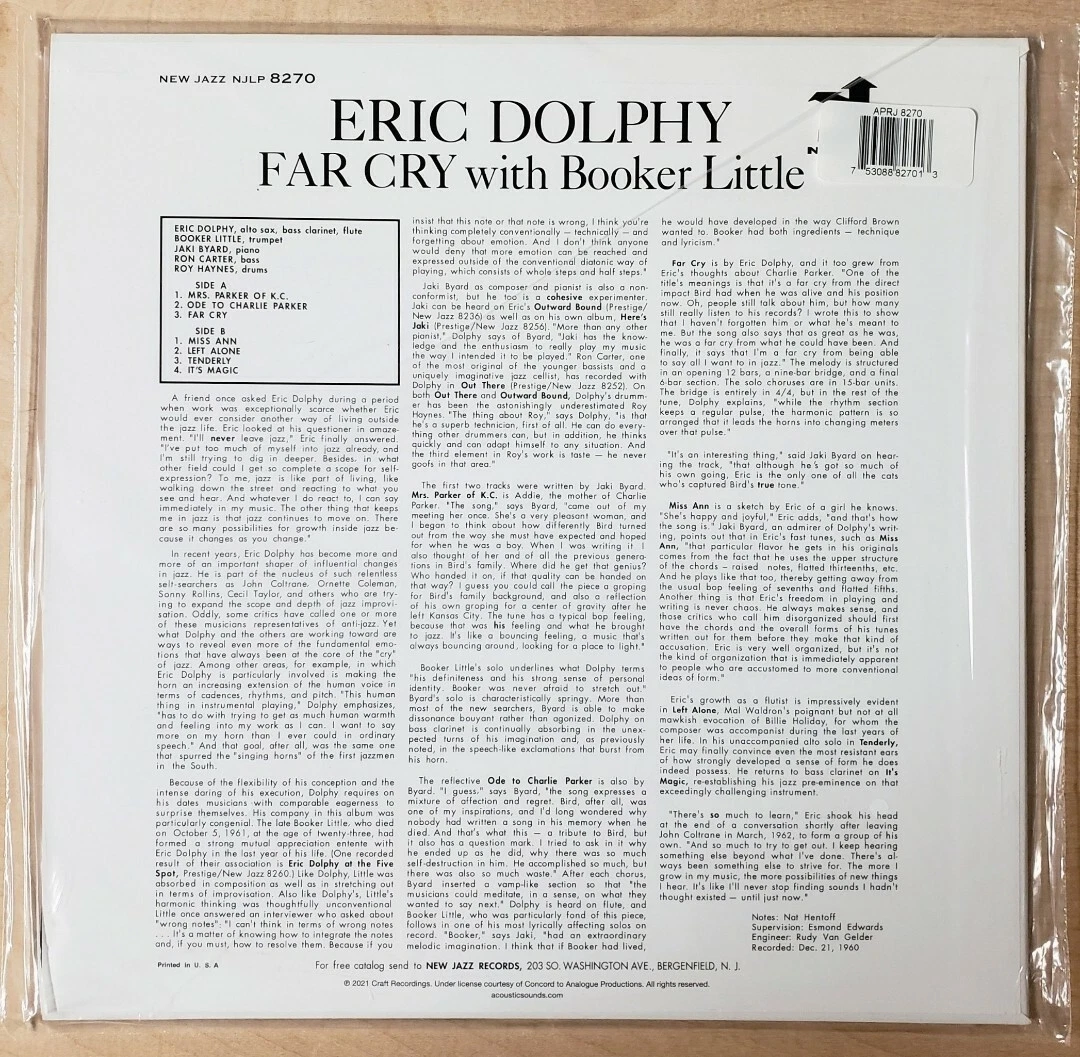
"Miss Ann", a jazz composition written by Eric Dolphy and recorded several times by him; originally released on his LP record Far Cry (1962). The composition is semantically unrelated to the subject of this article, rather it is "a sketch of a girl he [Dolphy] knows."[5] However, this is not obvious to someone who hears the music and its title without that context.

See also

[edit]

References

[edit]
Revisions and contributorsEdit on WikipediaRead on Wikipedia
from Grokipedia
Miss Ann is a derogatory slang term originating in African American vernacular English during the late 19th century, used to refer to a white woman perceived as arrogant, condescending, or wielding unearned authority over , often evoking the racial hierarchies of , , and Jim Crow segregation. The expression derives from the formal address "Miss [First Name]"—such as "Miss Ann" or "Miss Annie"—that Black domestic workers and laborers were compelled to use toward white female employers or superiors under enforced etiquette norms, masking underlying resentment toward the power imbalance. During the of the 1920s, the variant "Miss Anne" specifically denoted white women who immersed themselves in Black artistic and social scenes, sometimes as patrons or enthusiasts but frequently viewed by Black intellectuals as exploitative, culturally appropriative, or insufficiently committed to combating . The term encapsulates a of white female privilege and performative allyship, persisting in cultural discourse as a precursor to contemporary labels for similar behaviors.

Etymology and Historical Origins

Roots in Slavery and Antebellum South

The term "Miss Ann" originated during the antebellum period (approximately 1815–1861) in the American South, amid the system of chattel slavery, as a coded phrase in African-American vernacular English employed by enslaved people to designate white women, especially mistresses or female slaveholders. This indirect nomenclature arose from the perilous social dynamics of plantation life, where direct reference to or criticism of whites could provoke violent reprisals, including whippings or sale "down river." Enslaved individuals used "Miss Ann"—drawing on the prevalence of Ann as a common Anglo name among Southern white women—to signify any such figure generically, thereby masking potentially subversive commentary in conversations, work songs, or oral traditions. Historical linguists trace this usage to the need for verbal under racial subjugation, where enslaved Africans and their descendants adapted English forms to encode warnings or derision toward female authority figures who wielded household power over domestic laborers. For instance, Clarence Major's compilation of African-American documents "Miss Ann" as a derisive for women, exemplified in phrases like "His mama washes clothes on Wednesday for Miss Ann," reflecting everyday interactions laced with veiled critique. Slave narratives from the (WPA) collections, recorded in the 1930s from survivors born as early as the 1840s, occasionally employ similar generic titles for mistresses, underscoring the term's embeddedness in antebellum as a tool of against enforced deference. White women's roles in slavery's machinery provided the causal foundation for the term's connotations of entitlement and control. Contrary to later sentimentalized portrayals, many white women actively owned and managed enslaved people; by , women held title to about 40% of slaves advertised for sale in certain Southern markets, often inheriting or purchasing them independently to sustain family wealth through labor extraction in homes, fields, and textile production. Stephanie E. Jones-Rogers' analysis of probate records, court documents, and merchant ledgers from the 18th and 19th centuries reveals that these women enforced discipline, negotiated slave prices, and defended property rights in bondage, fostering the of the capricious overseer captured in "Miss Ann." This participation in racial domination—rooted in economic incentives and patriarchal norms that extended authority to wives and widows—elicited coded expressions of resentment from the enslaved, who navigated survival by feigning while preserving cultural through language.

Development During Jim Crow Era

During the Jim Crow era (approximately 1877–1965), "Miss Ann" evolved from its antebellum roots into a prevalent term in African American vernacular English, serving as a coded pejorative for white women perceived as embodying the entitled enforcers of racial hierarchy. African Americans, particularly domestic workers in white households, used it to denote employers who wielded indirect power through condescension, unreasonable demands, or appeals to white male authority, often resulting in punitive measures against blacks under segregation laws. This usage reflected the daily realities of black servitude, where titles like "Miss Ann" for white girls and women contrasted sharply with the denial of honorifics to blacks, reinforcing inferiority as documented in historical accounts of Southern racial etiquette. The term facilitated covert critique and communication within black communities, allowing discussions of white women's behaviors—such as false accusations leading to lynchings or harassment—without risking detection or reprisal in an era when overt dissent invited violence. For instance, in Carter G. Woodson's 1933 critique , a poem satirizes the expectation that educated black women prioritize domestic service to "Miss Ann" over intellectual pursuits: "And when Miss Ann looks for a cook, / Why stick your nose inside a book?" Paired with its male counterpart "Mister Charlie," "Miss Ann" symbolized the white duo upholding Jim Crow norms, often through signifyin'—indirect verbal jabs rooted in African American rhetorical traditions. This development underscored causal dynamics of racial control, where women's mediated authority amplified segregation's terror without direct legal enforcement, as servants navigated households rife with and subservience. Oral histories and cultural artifacts from the period, including references, perpetuated the term as a marker of toward women's in perpetuating subjugation, distinct from neutral but laden with irony and .

Linguistic and Cultural Usage

In African-American Vernacular English

In (AAVE), "Miss Ann" denotes a woman viewed as arrogant, condescending, or abusively authoritative toward , often evoking the image of a meddlesome employer or overseer enforcing racial norms. The term emerged in Black speech by at least , serving as coded critique amid enforced deference to women, where direct rebuke risked severe . Linguists identify it as part of AAVE's signifying practices, where nominal pairings like "Miss Ann" (for women) and "Mr. Charlie" (for men) subtly encode power holders without overt hostility, preserving communal resilience through indirect verbal resistance. Syntactically, "Miss Ann" operates as a proper-noun-like , usable in singular ("that Miss Ann think she own the world") or ("Miss Anns always callin' the "), with "Ann" alone as a variant. Usage often appears in cautionary or satirical contexts, such as "Miss Ann gon' tell you how to live," highlighting perceived entitlement rooted in historical domestic servitude where Black workers navigated white mistresses' whims daily. Occasionally extended to Black women accused of mimicking white mannerisms—termed "acting too "—it reinforces intragroup boundaries on authenticity. Culturally, the term embeds AAVE's call-and-response dynamics and nominal innovation, transforming English titles of respect () into ironic barbs against systemic dominance, as analyzed in sociolinguistic studies of Black discourse. Geneva Smitherman, a key scholar of Black English, traces its derogatory force to 18th-century origins, underscoring its role in reappropriating language for survival and subversion under enslavement and segregation. This persists in oral traditions, where it signals interpersonal threats, akin to a verbal alarm in segregated social spaces.

Application in Black Nationalist Contexts

In Black Nationalist ideologies, particularly those espoused by the Nation of Islam (NOI), "Miss Ann" functions as a symbol of white female complicity in systemic racial , invoked to reinforce narratives of historical exploitation and the need for racial . NOI teachings frequently reference the term to illustrate the degrading labor performed by for white mistresses during and its aftermath, portraying "Miss Ann" as the beneficiary of black suffering. For example, in a 2001 address, Minister described how "Our mothers wore clothes made from burlap, yet, they could take the silks and fashion a garment for Miss Ann to wear," using the archetype to highlight economic and social disparities that demand black over integration. Similar rhetoric appears in NOI educational materials, which contrast black women's burlap attire with the finery crafted for "Miss Ann," framing such servitude as evidence of inherent racial hierarchies engineered by . The term also warns against interracial relationships, positioning "Miss Ann" as a seductive agent of division within black communities. NOI , rooted in Muhammad's teachings on racial purity, views liaisons with white women as a mechanism to erode black family units and nationalist cohesion, with "Miss Ann" embodying temptation tied to the "white devil" system. This application promotes intra-racial , urging black men to resist what nationalists see as manipulative alliances that perpetuate dependency. In broader Black Nationalist feminism, such as that of the in the , "Miss Ann" critiques white women's purported solidarity, asserting that their privilege remains intact regardless of feminist . Collective members expressed toward white liberation efforts, stating, "Miss ann was still Miss ann to us whether she burned her bras or not," prioritizing black women's autonomy and rejecting cross-racial coalitions that overlook persistent power imbalances. This usage underscores a causal continuity from historical to modern dynamics, aligning with nationalist emphases on racial realism over performative equality.

Evolution and Modern Interpretations

Shift from Coded Term to Public Discourse

The term "Miss Ann," originally employed as intra-community slang in African-American vernacular during the Jim Crow era to discreetly signify white women embodying racial entitlement or oppression—often without their awareness—began entering broader public rhetoric amid the Civil Rights Movement of the 1950s and 1960s. This shift was facilitated by increased legal protections post-Brown v. Board of Education (1954) and the Civil Rights Act (1964), enabling bolder expressions in published memoirs and activist literature that critiqued white authority structures. For example, in Anne Moody's 1968 autobiography Coming of Age in Mississippi, "Miss Ann" denotes white female overseers and enforcers of segregation, rendering the term's derogatory connotations accessible beyond black audiences and transforming it from veiled oral code to documented critique. In the Black Power era of the late and , "Miss Ann" appeared in public manifestos and feminist writings, symbolizing white women's complicity in patriarchal and racial hierarchies. The Collective's 1977 statement, a foundational black feminist document, references "Miss ann" to dismiss superficial alliances with white feminists, stating she remained an oppressor "whether she burned her bras or not," thus embedding the term in overt ideological discourse aimed at interracial audiences. Scholarly glossaries from the period, such as those compiling African-American slang, further publicized definitions, noting "Miss Ann" as a derisive label for white women or blacks emulating them, shifting it from private signifying to analyzed . By the early , particularly following the viralization of "Karen" memes documenting white women invoking authority against minorities, "Miss Ann" resurfaced in as its historical precursor, explicitly linking antebellum and Jim Crow-era coded usage to contemporary patterns of racial policing. analyses highlight this evolution, observing that "Miss Ann" enabled black critique "without their knowledge," whereas modern equivalents like "Karen" operate in full public view via , amplifying awareness of the archetype's persistence. This integration into encyclopedic and journalistic retrospectives—often by experts like Meredith Clark—has demystified the term for general audiences, though its invocation remains contentious, frequently tied to debates over behavioral descriptors versus ethnic stereotyping.

Parallels with Contemporary Slang like "Karen"

The term "Miss Ann," originating in African American communities during the Jim Crow era, parallels contemporary slang like "Karen" in its depiction of white women perceived as wielding unearned or entitlement, often in interactions with racial minorities. Both archetypes critique behaviors where white women invoke social or institutional power to enforce norms or assert dominance, such as through complaints to authorities or displays of . For instance, "Miss Ann" encoded private discussions among individuals about white women who benefited from and upheld racial hierarchies without direct confrontation, reflecting a historical necessity for coded language under segregation. In modern usage, "Karen" emerged prominently around 2018–2020 via , viral videos capturing incidents like the May 2020 Central Park confrontation where a woman called police on a birdwatcher, or anti-mask demands during the starting March 2020, framing these as emblematic of racial privilege assertion. This mirrors "Miss Ann's" historical role in signifying women's complicity in systemic , such as enforcing rules that demeaned servants by insisting on deferential address like "Miss Ann" while denying reciprocity. Scholars note that both terms arise from marginalized groups' observations of patterns in , though "Karen" amplifies this through public memes rather than covert . A core similarity lies in the causal link to racial dynamics: "Miss Ann" critiqued women who "knew their place in society was at the top," leveraging Jim Crow norms for personal gain, while "Karen" targets perceived weaponization of whiteness in everyday conflicts, as seen in over 100 documented "Karen" videos on platforms like by mid-2020. However, "Miss Ann" remained intra-community to evade reprisal, whereas "Karen" democratizes critique via digital dissemination, potentially broadening awareness but risking overgeneralization. These parallels underscore enduring perceptions of entitlement tied to demographic privilege, evolving from oral traditions to algorithmic virality.

Criticisms and Debates

Validity as a Descriptor of Behavior

The term "Miss Ann" is employed to denote behaviors characterized by entitlement, toward individuals, and the strategic of racial privilege to enforce , often through appeals to figures like police or mobs. Historically, this descriptor aligned with documented patterns during the antebellum and Jim Crow eras, where women in the American South wielded informal power over enslaved or segregated populations, such as by demanding or reporting perceived infractions that could lead to . For example, norms required servants to address women as "" followed by a first name, reinforcing hierarchical dynamics that the term codified as a warning within communities. Empirical instances, including women's false accusations precipitating lynchings—like the 1955 case, where Bryant's claims triggered his murder—lend credence to its application as capturing real, power-mediated actions rather than mere fabrication. In contemporary contexts, proponents maintain the term's validity through parallels to incidents where white women escalate routine interactions involving minorities, such as the 2020 Central Park confrontation involving Amy Cooper, who called police on a Black man filming her unleashed dog, echoing historical tactics of summoning external enforcement. Scholarly analyses frame these as manifestations of "hegemonic femininities," where white women's intersects with to perpetuate domination, supported by qualitative reviews of such events as patterned rather than isolated. However, the descriptor's precision is contested for lacking quantitative data isolating these behaviors to white women specifically; no large-scale studies demonstrate disproportionate prevalence by race, suggesting potential conflation with universal traits like or situational aggression amplified by America's racial power imbalances. Critics argue that "Miss Ann" risks essentializing to racial identity, overlooking class, , or cultural factors that produce similar entitlement across demographics, and thereby functions more as a cultural than a causally precise category. This perspective highlights how the term, while rooted in verifiable historical abuses, may impede nuanced analysis by prioritizing racial framing over individual accountability or comparative of analogous actions by non-white actors in positions of relative privilege. Absent rigorous empirical metrics—such as surveys or incident databases stratifying by race, , and context—its status as a behavioral descriptor remains interpretive, validated by anecdotal clusters but vulnerable to charges of .

Accusations of Anti-White Sentiment

Critics have argued that the term "Miss Ann," originating in 19th-century Southern as a reference to women—often those embodying racial or condescension—embodies anti-white sentiment by essentializing females as inherently privileged oppressors. Used during and Jim Crow to denote mistresses or enforcers of segregation, the label generalized disdain toward an entire racial group, imputing malice or entitlement based on skin color rather than individual actions. This racial framing, according to some analysts, parallels ethnic slurs by reducing complex to demographic , fostering without reciprocal scrutiny of analogous behaviors across races. In modern discourse, the term's legacy draws accusations of promoting asymmetric racial bias, particularly as it evolved into slang like "Karen," which targets white women for perceived entitlement. A June 28, 2025, employment tribunal ruled that calling a a "Karen" constitutes "borderline , sexist, and ageist" conduct, noting its pejorative application to middle-aged white women regardless of context, thereby discriminating on protected characteristics. Judge George Alliott emphasized the term's role in stereotyping, echoing concerns that historical precursors like "Miss Ann" normalize anti-white animus by framing white female behavior through a lens of inherited guilt tied to historical . Such criticisms highlight a perceived , where "Miss Ann" and derivatives critique white women for invoking authority—evident in antebellum usage for mistresses—but lack equivalents for non-white women exhibiting similar traits, potentially exacerbating racial tensions. Commentators from perspectives skeptical of mainstream narratives on race note that media amplification of these terms, often without balancing evidence of intra-racial parallels, risks entrenching divisive over behavioral . Despite defenses portraying the term as a valid cultural descriptor of power misuse, the tribunal's findings substantiate claims of inherent bias in racially coded labels.

Effects on Racial Realism and Dialogue

The invocation of "Miss Ann" in racial discourse often frames white women's actions through a lens of inherent racial antagonism, which critics contend distorts empirical evaluation of individual behaviors and perpetuates mistrust between groups. Carla Kaplan's examination reveals that during the , the term encoded disapproval of white women crossing racial lines, leading to their and reducing opportunities for collaborative interracial efforts that could have grounded discussions in shared observations rather than suspicion. This stereotyping effect persists, as evidenced by parallels to contemporary labels like "Karen," where preemptively racializing complaints—such as in viral incidents of perceived entitlement—shifts focus from verifiable facts (e.g., specific policy violations or safety concerns) to historical archetypes, thereby constraining dialogue to accusations rather than evidence-based resolution. Proponents within black nationalist traditions viewed "Miss Ann" as a realist acknowledgment of power imbalances rooted in and Jim Crow, where white women wielded indirect authority over black lives, as in domestic servitude dynamics documented in mid-20th-century accounts. Yet, this framing has been argued to foster , attributing behaviors to whiteness itself rather than intersecting factors like class or personality, which undermines causal realism by discouraging disaggregated data on complaint patterns across demographics. For example, empirical studies on public confrontations show that such incidents involve diverse actors, but the term's application selectively highlights racial narratives, potentially inflating perceived group differences without proportional evidence. Overall, the term's rhetorical deployment correlates with heightened polarization, as Kaplan's analysis of persistent attitudes underscores how it sustains barriers to candid exchange, prioritizing grievance over mutual scrutiny of social realities. In an era of data-driven racial , reliance on "Miss Ann" risks sidelining quantitative insights—such as or behavioral surveys—that reveal overlaps in human tendencies, thus impeding progress toward unvarnished realism in racial . Mainstream academic treatments often underplay this divisive potential due to institutional incentives favoring harmony narratives, but primary historical usages indicate a net effect of entrenching separation over synthesis.

Representations in Culture and Media

In Literature and Harlem Renaissance

The term "Miss Ann" (or "Miss Anne") emerged in the coded vernacular of during the (circa 1918–1937), functioning as a for white women to evade direct racial reference under Jim Crow constraints. , a central figure in the movement, cataloged it in her Glossary of Harlem Slang as denoting "any white female," typically invoked in scenarios of subservience like domestic labor: "His mama washes clothes on Wednesday for Miss Ann." This usage underscored the power imbalances of the era, where Black domestics served white employers, and the term carried undertones of ironic deference masking resentment toward racial hierarchy. Langston Hughes employed the archetype in his 1933 short story "Slave on the Block," from the collection , satirizing bohemian white women who romanticized Black life for personal edification. The protagonist , a artist, commissions a Black model named Luther as a quasi-servant and artistic prop, exploiting his image for her pursuits while ignoring his agency—mirroring the "Miss Ann" trope of patronizing fascination with Harlem's cultural output. Hughes critiqued such interracial dynamics, highlighting how these women, often slumming in Black enclaves, perpetuated under the guise of . The term also surfaced in poetry to frame debates on self-improvement versus , as in verses contrasting manual labor for "Miss Ann" with intellectual pursuit: "To hoe the cotton on his land, / And when Miss Ann looks for a cook, / Why stick your nose inside a ?" Attributed in period anthologies to dialogues between figures like and , these lines reflected skepticism toward education as futile amid white demands for servitude, encapsulating the era's tension between cultural flourishing and systemic subjugation. Such representations in preserved "Miss Ann" as a symbol of unearned white entitlement, informing Black-authored works that dissected racial patronage without overt confrontation.

In Music, Film, and Contemporary Media

The archetype associated with "Miss Ann"—depicting entitled or domineering white women in interactions with Black characters—appears recurrently in mid-20th-century American films portraying racial hierarchies, often through narratives of servitude or dependency. In Song of the South (1946), white female characters embody supervisory roles over Black laborers, reinforcing plantation-era dynamics akin to the term's historical connotations. Similarly, Imitation of Life (1959) features a white actress reliant on her Black maid, highlighting exploitative maternalism that mirrors critiques of "Miss Ann" as a figure of unearned authority. These portrayals, while not explicitly invoking the term, illustrate the behavioral patterns it denoted, such as wielding social privilege to control Black lives. Later films extend this trope into genres like comedy and horror, perpetuating the dynamic without direct terminology. Silver Streak (1976) contrasts a bumbling white male lead with Black counterparts, implicitly requiring a "Miss Ann"-like foil for resolution, though focused on male equivalents. In The Shining (1980), the white female character's isolation amplifies racial undertones via Black supporting roles, evoking historical power imbalances. Such representations persist into the 1990s, as in The Green Mile (1999), where white authority figures depend on Black benevolence, underscoring the archetype's endurance in Hollywood's racial storytelling. In music, explicit references to "Miss Ann" remain sparse in mainstream genres, with occasional nods in hip-hop contextualizing local or interpersonal dynamics rather than overt racial critique. Goodie Mob's 1998 track "Dirty South" includes the line "Gipp hollered at Miss Ann," interpreted within Atlanta's cultural vernacular as slang for a white woman, though not explicitly tied to nationalist origins. Broader hip-hop discourse occasionally revives the term metaphorically, as in critiques of "New Age Miss Ann's" in analyses of cultural appropriation, linking it to contemporary interracial tensions in rap narratives. Contemporary media has repurposed "Miss Ann" in journalistic and opinion pieces to analyze modern incidents of perceived entitlement, drawing parallels to viral "Karen" phenomena. A 2020 NPR segment traces its evolution, noting how the covert term enabled Black commentary on women's privilege, now amplified publicly via . In 2022, applied it to tennis figure Margaret Court's comments on , framing her as a "Miss Ann" asserting superiority over athletes. Such usages in outlets like (2015) critique figures like , portraying "Miss Ann" as infallible in denying racial realities. These invocations highlight the term's shift from insular to broader cultural critique, often in podcasts and articles dissecting entitlement without empirical validation of behavioral universality.

References

Add your contribution
Related Hubs
User Avatar
No comments yet.