Hubbry Logo
MuktanandaMuktanandaMain
Open search
Muktananda
Community hub
Muktananda
logo
8 pages, 0 posts
0 subscribers
Be the first to start a discussion here.
Muktananda
Muktananda
from Wikipedia

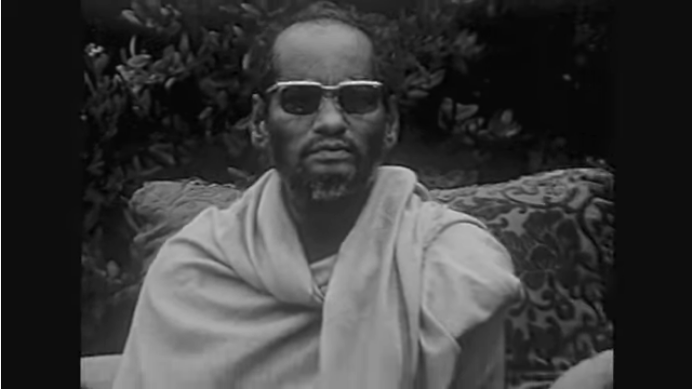
Muktananda (16 May 1908 – 2 October 1982), born Krishna Rai, was a yoga guru and the founder of Siddha Yoga.[1] He was a disciple of Bhagavan Nityananda.[2][3] He wrote books on the subjects of Kundalini Shakti, Vedanta, and Kashmir Shaivism, including a spiritual autobiography entitled The Play of Consciousness. In honorific style, he is often referred to as Swami Muktananda, or Baba Muktananda, or in a familiar way just Baba.

Key Information

Biography

[edit]

Swami Muktananda was born in 1908 near Mangalore in Madras Presidency, British India, to a wealthy family.[4] His birth name was Krishna Rai.[5]

At 15, he encountered Bhagawan Nityananda, a wandering Avadhuta who profoundly changed his life.[5] After this encounter, Krishna left home and began his search for the experience of God.[6] He studied under Siddharudha Swami in Hubli, where he learned Sanskrit, Vedanta, and all branches of yoga. He received sannyasa initiation in the Sarasvati order of the Dashanami Sampradaya,[7] taking the name of Swami Muktananda. After Siddharudha's death, Muktananda left to study with a disciple of Siddharudha called Muppinarya Swami at his Sri Airani Holematt in Ranebennur Haveri District. Then Swami Muktananda began wandering India on foot, studying with many different saints and gurus.

In 1947, Muktananda went to Ganeshpuri to receive the darshan of Bhagavan Nityananda, who had originally inspired Muktananda's search for God. He received shaktipat initiation from him on August 15 of that year. Muktananda often said that his spiritual journey did not truly begin until he received shaktipat from Nityananda. He described it as a profound and sublime experience.[8] For the next nine years, Muktananda lived and meditated in a small hut in Yeola. He wrote about his sadhana and kundalini-related meditation experiences in his autobiography.

In 1956, Bhagawan Nityananda acknowledged the culmination of Muktananda's spiritual journey. He appointed Muktananda as the leader of an ashram in Ganeshpuri, near Bombay.[3] The same year he started teaching his Siddha Yoga path. Between 1970 and 1981, Muktananda went on three world tours. During these tours, he established Siddha Yoga ashrams and meditation centers in many countries. In 1975, he founded the Siddha Yoga Ashram in Oakland in the San Francisco Bay area. In 1979, he established Shree Nityananda Ashram (now Shree Muktananda Ashram) in the Catskills, northwest of New York City.[9] Muktananda established Gurudev Siddha Peeth as a public trust in India to administer his work there. He founded the SYDA Foundation in the United States to administer the global work of Siddha Yoga meditation.[10] He wrote many books, sixteen of which are still in print with the SYDA Foundation.

In May 1982, Muktananda appointed two successors, Swami Chidvilasananda and her younger brother, Swami Nityananda, as joint leaders of Siddha Yoga. Nityananda later resigned and formed his own group.

Muktananda died in October 1982 in Gurudev Siddha Peeth in Ganeshpuri, India.[11] He is buried in his samādhi shrine there.

Teaching and practice

[edit]

His central teachings were to "See God in each other",[12] and "Honor your Self. Worship your Self. Meditate on your Self. God dwells within you as you."[12] Muktananda often gave a shorter version of this teaching: "God dwells within you as you."[13]

According to Lola Williamson, Muktananda was known as a "shaktipat guru because kundalini awakening occurred so readily in his presence".[14] Through Shaktipat Intensives participants were said to receive shaktipat initiation, the awakening of Kundalini Shakti that is said to reside within a person, and to deepen their practice of Siddha Yoga meditation.[15] Historically, Shaktipat initiation had been reserved for the few who had done many years of spiritual service and practices; Muktananda offered this initiation to newcomers and yogis alike.[16] There are several published accounts that describe the reception of shaktipat from Muktananda. Paul Zweig wrote one such account of receiving shaktipat from Muktananda.[17] In Gurus of Modern Yoga, Andrea Jain, in her chapter on Muktananda, quotes an anonymous source, who describes his moment of shaktipat, when he was 19 years old, conferred by Muktananda with a wand of peacock feathers in 1975:

I almost jumped when the peacock feathers, firmly but with a soft weightiness, hit me repeatedly on my head, and then gently brushed my face as [Muktananda] [...] powerfully pressed one of his fingers into my forehead at a spot located just between my eyebrows [...] I'm honestly somewhat reluctant to write about what happened next because I know that whatever I say will inevitably diminish it, will make it sound as if it were just another "powerful experience." This was not an experience. This was THE event of my spiritual life. This was full awakening. This wasn't "knowing" anything, because you only know something that is separate from you. This was being: the Ultimate - a fountain of Light, a dancing, ever-new source. Utter freedom, utter joy [...] Completely fulfilled, completely whole, no limits to my power and love and light."[18]

Alleged sexual assaults

[edit]

Sarah Caldwell, in an essay in the academic journal Nova Religio (2001), argued that Muktananda was both an enlightened spiritual teacher and a practitioner of Shakta Tantrism, but also "engaged in actions that were not ethical, legal or liberatory with many disciples."[19] According to Lola Williamson, "Muktananda stressed the value of celibacy for making progress on the spiritual path, but he almost certainly violated his own rules."[20] Author Andrea Jain asserts "Muktananda engaged in secret sexual rituals with several of his young female disciples—some of whom were teenagers—that were meant to transmit sakti to the tantric hero."[19][21]

In 1981, Stan Trout, a swami for Siddha Yoga, wrote an open letter in which he referred to a number of stories of Muktananda engaging in sexual activities with young women, and threats and harassment in order to force people to "stop talking about your escapades with young girls in your bedroom."[20][22] In 1983 William Rodarmor printed several allegations in CoEvolution Quarterly from anonymous female devotees that Muktananda regularly had sex with them and raped them.[23][20][24] In the article, based on twenty five interviews,[25] former devotees charged that Muktananda had molested under-age girls, and engaged in sexual interactions with young devotees,[23] which "drew naive young women into esoteric Tantric rituals."[26] Lis Harris repeated and extended Rodarmor's allegations in an article in The New Yorker (1994).[25][24]

Bibliography

[edit]

References

[edit]

Sources

[edit]
[edit]
Revisions and contributorsEdit on WikipediaRead on Wikipedia
from Grokipedia
Swami Muktananda (16 May 1908 – 2 October 1982), born Krishna Rai in Mangalore, , was a yogi and spiritual teacher who founded the tradition, which centers on shaktipat—the direct transmission of spiritual energy from to disciple—and practices aimed at realizing one's inner divinity through meditation and devotion. A disciple of the , whom he met in 1947 and from whom he received initiation, Muktananda documented his spiritual journey in his autobiography Play of (originally Chitshakti Vilas), published in 1971, detailing years of ascetic wandering and intense sadhana beginning in his youth. He established Gurudev Siddha Peeth in Ganeshpuri, , and the SYDA Foundation in the United States, expanding globally through world tours starting in the 1970s that drew thousands of Western seekers to his teachings on awakening and the principle. Muktananda's influence peaked with over 600 meditation centers worldwide by his death, positioning as a bridge between Eastern tantric traditions and modern Western , though his emphasis on absolute surrender to the raised questions about authority and autonomy in . His legacy, however, is inextricably linked to persistent allegations of , including claims of coerced encounters with female disciples rationalized as "spiritual tests" or tantric practices, documented in firsthand accounts from ex-followers and substantiated in a 2023 lawsuit accusing him of rape and enabling cultic abuses within the organization. These revelations, emerging prominently after his passing, challenge hagiographic narratives from affiliated sources and underscore patterns of exploitation reported across multiple testimonies, prompting scrutiny of power dynamics in guru-led movements.

Early Life

Birth and Upbringing

Swami Muktananda, born Krishna Rai, entered the world on 16 May 1908 near Mangalore in the of British (present-day ). He was raised in a wealthy family, with his father working as a prosperous landowner who provided a stable, affluent environment amid traditional Hindu customs. His mother, a cultured devotee of the , contributed to a household steeped in religious observance, where Krishna was exposed from infancy to rituals and scriptural recitations by his father. These early familial influences fostered an atmosphere of piety, with the young Krishna absorbing stories from during family gatherings. Autobiographical accounts describe this period as one of innate devotional fervor, marked by his listening attentively to sacred narratives. From childhood, Krishna exhibited signs of spiritual sensitivity, harboring a profound longing to experience , as recounted in his own reflections on early devotional practices. This inner pull, distinct from formal instruction, manifested in personal piety amid the cultural milieu of early 20th-century , setting the stage for his later quests without yet involving structured learning or travels.

Initial Education and Spiritual Inclinations

Born Krishna Rai in 1908 to a devout family in , Muktananda received rudimentary formal schooling before immersing himself in self-directed studies of Vedic scriptures, , and during his formative years. These pursuits reflected his burgeoning intellectual curiosity and exposure to traditional Indian knowledge systems, often pursued alongside physical disciplines like wrestling and bodybuilding to cultivate discipline and vitality. In his spiritual autobiography Play of Consciousness, Muktananda recounts early experiments with techniques drawn from yogic texts, including attempts at and concentration practices, which yielded initial glimpses of inner experiences but fell short of profound realization. He also describes encounters with wandering ascetics and local saints in his region, whose discourses on devotion and self-inquiry ignited a deepening restlessness with material existence and prompted solitary retreats for contemplation. These preliminary spiritual inclinations, unguided by a formal at this stage, underscored a shift from conventional youthful ambitions—such as athletic prowess or familial duties—toward an inner quest for truth. By age 15, this internal pull culminated in ; Muktananda left his comfortable home to pursue spiritual fulfillment as a wandering seeker, abandoning prospects of worldly security for the uncertainties of ascetic life. This decisive break, consistently dated across biographical accounts, marked the end of his initial phase of exploratory inclinations and the onset of sustained , though full yogic intensification lay ahead.

Spiritual Formation

Wanderings and Studies

Following his departure from home around 1923 at age fifteen, Muktananda adopted the life of a wandering , traversing on foot for over two decades into the , visiting ashrams and soliciting teachings from diverse yogis and ascetics. This nomadic phase, characterized by mendicancy and of worldly ties, involved rigorous self-discipline amid physical privations such as for sustenance and enduring exposure to the elements. An initial destination was the ashram of in , , where Muktananda immersed himself in studies of , philosophy, and the full spectrum of yogic disciplines, including preparatory practices for inner awakening. Under this , he received initiation into the Sarasvati order, adopting the monastic name Muktananda, which marked his formal commitment to ascetic scholarship. Upon Siddharudha Swami's death in 1931, Muktananda persisted in his itinerant quest, studying under successors like Muppinarya Swami and other regional teachers, thereby accumulating proficiency in techniques for physical purification, tantric methodologies for energy cultivation, and exegetical analysis of Vedic and Shaivite texts. He also gained practical knowledge in Ayurvedic healing principles and indigenous martial forms, often through direct observation and apprenticeship in remote hermitages. Throughout these years, Muktananda documented encounters with approximately sixty gurus across southern and , forging a comprehensive and experiential base in scriptural interpretation and yogic praxis without yet attaining extraordinary states. These peregrinations, sustained by and minimal possessions, honed his resilience and analytical grasp of spiritual traditions, as recounted in his later autobiographical reflections.

Encounter with Nityananda and Shaktipat Initiation

In 1947, Swami Muktananda, then known as Krishna Menon, traveled to the Ganeshpuri ashram to seek darshan from Bhagavan , a revered known for his silent, action-oriented transmission of spiritual energy. On August 15, 1947, during this encounter, Nityananda imparted shaktipat —direct transmission of —through physical contact, reportedly a slap or gaze that activated profound inner processes in Muktananda. This event marked the pivotal causal mechanism for Muktananda's claimed spiritual awakening, as he later described experiencing immediate physiological kriyas, including involuntary bodily movements, heat surges, and visionary states indicative of arousal. Nityananda, who rarely spoke and taught primarily through presence and nonverbal cues, functioned as a silent whose shaktipat was empirical in its reported effects on recipients, bypassing discursive instruction for direct energetic transfer. Muktananda's primary account in his autobiography, Play of Consciousness, details these initial responses as empirical markers of activation: inner lights, divine sounds (), and a sense of expanded , framing the transmission as a verifiable physiological-spiritual event rather than mere belief. Lineage reports from the tradition, drawing on Muktananda's texts, corroborate this as the foundational discipleship moment, though independent eyewitness documentation of the private transmission remains limited to anecdotal disciple recollections. By 1956, affirmed Muktananda's advancement by summoning him back to Ganeshpuri, granting a parcel of land in nearby Gavdevi village, and directing him to establish a hut there—actions interpreted within the tradition as designating Muktananda as a primary successor and steward of the guru's lineage. This settlement positioned Muktananda in proximity to until the latter's passing in 1961, solidifying the discipleship bond through sustained proximity and implicit endorsement, without formal verbal proclamation.

Development of Siddha Yoga

Austerities and Realization

Following his shaktipat initiation by Bhagavan Nityananda in 1956, Muktananda engaged in intensive austerities, including extended periods of solitary and physical disciplines away from Ganeshpuri, as part of a rigorous sadhana aimed at awakening and . These practices, spanning several years under Nityananda's guidance, involved daily sessions lasting six to seven hours and in remote settings to confront inner obstacles. Muktananda later detailed these efforts in his spiritual autobiography Play of Consciousness (), portraying them as essential for purifying the ego and facilitating the ascent of inner , though such accounts remain self-reported without independent empirical verification. During this phase, Muktananda claimed profound inner experiences, including visions of lights, divine sounds akin to music, and progressive dissolution of the ego, culminating in a state of realized around 1960-1961. He described these phenomena—such as the "" vision and auditory revelations—as markers of kundalini's activation, leading to an identification with universal , events he attributed to the guru's transmitted power rather than personal effort alone. These transformative processes, documented primarily in Play of Consciousness, bridged his prior wanderings to his emergence as a teacher, though skeptics note the subjective nature of such mystical reports, lacking third-party corroboration beyond follower narratives. By 1961-1962, following Nityananda's passing on August 8, 1961, Muktananda returned to Ganeshpuri, where early devotees began recognizing him as a realized master, reporting manifestations of siddhis including healing powers through touch or gaze. These abilities, such as alleviating physical ailments, were attested in testimonies from initial followers who gathered around him, viewing them as extensions of the shaktipat lineage. While devotee accounts affirm these events as evidence of his attainment, they derive from within the emerging circle, raising questions of absent clinical or external validation.

Founding of Key Institutions

In 1962, Muktananda established Gurudev Siddha Peeth in Ganeshpuri, India, as the central ashram for Siddha Yoga practices, registering it as a public trust to oversee local operations and property management. This site, located near the samadhi shrine of his guru Nityananda, served as the organizational hub in India, facilitating the ashram's expansion from modest facilities to a complex accommodating devotees and administrative functions. To support growing Western engagement following his world tours, Muktananda founded the SYDA Foundation in 1974 as a not-for-profit entity in the United States, tasked with preserving teachings, acquiring properties, and coordinating international dissemination. The foundation enabled key acquisitions, such as the Shree Muktananda Ashram in , which became a primary residential and retreat center with tax-exempt status under U.S. law, streamlining donations and operational logistics. By 1982, these institutions underpinned the network's growth to over 600 centers and several ashrams globally, reflecting methodical property development and legal structuring for sustainability.

Core Teachings

Shaktipat and Kundalini Awakening

In , shaktipat refers to the direct transmission of spiritual from the to the disciple, intended to awaken the dormant at the base of the spine and initiate its ascent through the subtle channels. This process, drawn from the tantric traditions of , posits that the 's awakened acts as a catalyst, bypassing preparatory disciplines by infusing that stimulates the seeker's inner latent power. The transmission occurs through physical touch on the third eye or spine, a , or even a spoken word, with the 's presence alone sometimes triggering the awakening in receptive individuals. Proponents describe this as a causal mechanism where the 's interacts with the disciple's pranic field, leading to spontaneous purification of blockages rather than reliance on mechanical techniques. Recipients of shaktipat often report immediate physiological and perceptual effects known as kriyas, including involuntary bodily movements such as shaking, jerking, or twisting; spontaneous breathing patterns resembling ; and sensations of heat, pressure, or pulsations along the spine. These kriyas are interpreted as the uncoiling and clearing nadis, accompanied by visions of inner lights, sounds, or divine forms, as well as waves of bliss or emotional releases during group intensives where hundreds participate simultaneously. For instance, accounts from such events detail participants experiencing surges of joy, heightened awareness, or temporary paralysis from energy flow, with effects persisting in daily as the continues to unfold. While these reports form the empirical basis within , they remain subjective and unverified by independent physiological studies, though parallels exist in descriptions of spontaneous yogic phenomena across tantric literature. Shaktipat distinguishes itself from traditional self-effort yogas like hatha or , which emphasize disciplined asanas, , or repetition to gradually raise through personal exertion. In contrast, privileges guru-initiated grace as the primary agent, viewing self-reliant methods as insufficient for full awakening without the catalytic intervention of a realized master, akin to igniting a fire externally rather than kindling it laboriously from within. This emphasis aligns with Shaivite texts such as the Sutras, which underscore as self-revealing through divine impulsion (e.g., aphorism 1.1: "Chaitanyam ātma"), implying that true realization transcends effortful striving and requires an inner spark from the absolute. Muktananda's commentaries on these sutras reinforce that shaktipat embodies this grace, enabling even unprepared seekers to access higher states, though sustained practice remains essential post-initiation to stabilize the energy. Critics within yoga scholarship note potential risks of unbalanced awakenings without guidance, but tradition holds that the guru's transmission ensures safer progression compared to uninitiated attempts.

Meditation Practices and Philosophical Foundations

Muktananda's philosophical foundations rest on the non-dual tradition of , which asserts that the individual self (atman) is identical to , the supreme consciousness, and that the manifest universe arises as Shiva's dynamic vibration (spanda). This view, drawn from texts such as the Spanda Karikas and Pratyabhijnahridayam, emphasizes pratyabhijna, or self-recognition, wherein one discerns the innate divinity obscured by bodily identification. Unlike dualistic systems, it posits no fundamental separation between the divine and the world, framing reality as an exuberant play (lila) of consciousness accessible through direct experiential insight rather than dogmatic belief. Validation of these principles occurs empirically via inner meditative discernment, as outlined in the Vijnana Bhairava 's 112 dharanas—centering techniques that reveal unity with the divine through focused awareness on breath, sensation, or daily phenomena. Muktananda critiqued purely intellectual pursuits, arguing that scriptural knowledge alone fails to transform without embodiment in consciousness; as he synthesized from Shaivite sources, affective realization (anubhava) operationalizes understanding, integrating jnana (knowledge), (devotion), and karma (action) into a holistic path where head-centered study yields to lived awakening. Central daily practices include , repetitive chanting of the mantra , which aligns the practitioner with 's vibration, purifying subtle energies and cultivating inner stillness over extended sessions. (dhyana) involves sustained reflection on the guru's form or core teachings, fostering devotion and self-inquiry to dissolve egoic veils, often paired with study of scriptures like the Shiva Sutras. Seva, or selfless service, extends this into action, performed without attachment to results to embody ethical discipline and communal harmony, reinforcing the philosophy's insistence on practical integration over abstract theorizing. These methods, when conjoined, prioritize causal efficacy in consciousness evolution, grounded in Shaivite texts Muktananda expounded through his commentaries.

Global Dissemination

World Tours and Ashram Establishments

In 1970, Muktananda embarked on his first world tour at the direction of his guru , traveling to the , , and to disseminate practices including shaktipat transmission and darshans. In the U.S., he held programs in cities such as , , and New York, where seekers gathered for and chanting sessions that marked the initial importation of his teachings to Western audiences. These visits laid groundwork for local meditation groups, with early centers forming in response to attendee interest. The tour extended through 1974, during which Muktananda adapted presentations for Western participants by emphasizing experiential practices over esoteric Indian rituals, contributing to growing attendance at public events. By this period, had developed two ashrams following his 1970 visit, including sites in and that served as bases for local practice. From 1974 to 1976, Muktananda conducted his second world tour, revisiting the U.S., , and while introducing structured weekend intensives combining chanting, meditation, and talks to accelerate participant engagement. In April 1975, he formally established the Siddha Yoga Ashram in , on April 28, which became a central hub for American operations and the formation of the Foundation of America. Additional centers emerged in and , supporting expanded retreats and residency programs. A third tour from approximately 1979 to 1981 further solidified , with ashrams and centers established across continents to accommodate increasing numbers of Western devotees seeking sustained practice environments. These efforts prioritized English-language resources and accessible retreat formats, driving organizational growth without reliance on traditional monastic vows.

Growth of the Siddha Yoga Movement

By 1982, the movement under Muktananda had achieved substantial scale, with the organization claiming a global following of approximately 500,000 disciples and operating around 300 centers across 52 nations. Contemporary accounts reported over 250,000 foreign adherents spread across 72 countries, reflecting rapid internationalization from its Indian origins. This expansion was underpinned by the SYDA Foundation, established in 1974 as a nonprofit to manage operations, which maintained a multi-million-dollar financial structure reliant on cash reserves and avoiding debt to fund ashrams, centers, and activities. Demographically, the movement shifted from predominantly Indian participants to a majority of Western devotees, particularly highly educated and affluent professionals in the United States and , who formed the core of its international base. This transition accelerated post-1970, as shaktipat initiations and practices appealed to seekers in urban Western settings, leading to the proliferation of local groups that evolved into formal centers. The scale was sustained through structured programs like retreats and intensives, which drew consistent participation and supported ongoing dissemination of publications such as Muktananda's writings on and guru-disciple dynamics, distributed via SYDA channels to reinforce engagement among initiates. Muktananda's personal charisma, evidenced by large public gatherings during his tours, acted as a primary driver, converting initial exposure into committed membership via direct experiential transmission. The SYDA's centralized administration enabled efficient resource allocation, allowing the network to maintain operational stability amid geographic dispersion.

Controversies and Criticisms

Sexual Misconduct Allegations

In the 1970s and 1980s, multiple female devotees alleged that Swami Muktananda engaged in coerced sexual acts, exploiting the authority inherent in the guru-disciple relationship to target vulnerable followers, including minors. These claims describe a pattern of grooming through praise, gifts, and privileged access, followed by non-consensual penetration and intercourse, often in settings where dissent was discouraged by devotees' spiritual deference. A 2023 civil filed under New York's by Jane Doe, Joan Bridges, and Katherine Stern against the SYDA Foundation detailed specific incidents of rape and assault by Muktananda at U.S. ashrams, including . Jane Doe claimed abuse beginning at age 14 in 1978, involving repeated hugging, kissing, digital penetration, and weekly rapes until she turned 18. Katherine Stern alleged forcible vaginal penetration at age 19 in 1980 on a table-like structure, after which Muktananda gave her a gold ring. Joan Bridges (also known as Joan Bridges) reported , forced kissing, and rape, followed by silencing when she objected. The plaintiffs asserted that such acts affected dozens of women and girls, facilitated by Muktananda's position of absolute spiritual control. The case concluded in March 2025 via stipulation of discontinuance. Corroborating ex-devotee testimonies describe similar exploitation at the Ganeshpuri ashram in India, where arrangements allegedly accommodated Muktananda's sexual encounters with female residents under the guise of spiritual instruction. These accounts highlight how the hierarchical dynamics of the movement—emphasizing unquestioning obedience to the guru—systematically enabled non-consensual advances, with victims often internalizing silence due to perceived karmic or divine justification.

Institutional Responses and Defenses

The Dham Associates (SYDA) Foundation, as the primary institution overseeing the lineage, has denied allegations of by Muktananda, asserting in legal filings that it lacked any information indicating improper purposes behind interactions such as those separated by curtains in ashrams. SYDA maintains that Muktananda's role as a spiritual leader did not involve coercive or abusive conduct, framing devotee relationships within the context of voluntary spiritual guidance and initiation practices. Scholars and practitioners aligned with have offered interpretations rooted in Shakta Tantric traditions, positing that certain intimate interactions could constitute consensual tantric initiations or karmic purifications, drawing on precedents where gurus transmit through physical means to awaken . Sarah J. Caldwell, in her analysis of 's tantric heritage, argues that Muktananda's enlightenment enabled such methods as expressions of "crazy "—an unconventional teaching style where apparent transgressions serve higher spiritual ends, akin to tactics in Tibetan and Kashmiri Shaiva lineages to shatter ego attachments. Devotees like Ed Muzika have testified that Muktananda's tantric engagements with select women were openly acknowledged within inner circles as non-problematic spiritual practices, emphasizing voluntary participation and perceived benefits like deepened experiences. Legally, Muktananda faced no criminal convictions for during his lifetime, which ended on October 2, 1982; allegations emerged publicly in subsequent years, but statutes of limitations and lack of contemporaneous prosecutions precluded charges. Civil suits, including those filed under New York's in 2023 against SYDA, have resulted in settlements without admissions of liability, consistent with institutional denials of systemic abuse.

Broader Critiques of Guru-Devotee Dynamics

Critics of guru-devotee dynamics, including those observed in under Swami Muktananda, argue that the expectation of unquestioning devotion creates inherent power imbalances that undermine individual and self-trust. In The Guru Papers: Masks of Authoritarian Power (1993), Joel Kramer and Diana Alstad contend that such relationships mask authoritarian structures by framing surrender to the as a path to liberation, which psychologically conditions devotees to suppress and accept the 's authority as infallible, potentially enabling exploitation across various domains. This dynamic, they assert, exploits the devotee's desire for transcendence by positioning the as an unquestionable intermediary to , a pattern echoed in analyses of charismatic spiritual movements where empirical reports from ex-participants highlight diminished personal agency. Empirical harms associated with these dynamics in Siddha Yoga include documented cases of psychological dependency, where devotees develop intense emotional reliance on the guru, leading to isolation from external support networks and difficulty in disengaging even amid doubts. Psychoanalytic examinations of Siddha Yoga practices describe how narcissistic elements in the leadership foster such dependency, with devotees internalizing the guru's projected perfection and viewing dissent as personal spiritual failure, as reported in accounts from former insiders spanning the 1970s to 1990s. Financial exploitation claims further illustrate systemic issues, with allegations of devotees donating substantial assets—sometimes entire estates or lifelong savings—to ashrams under pressure framed as karmic duty, contributing to reported economic hardship for participants and their families during Muktananda's era (e.g., 1970s-1982). Family disruptions, including strained relationships and severed ties, arise from the prioritization of ashram life over familial obligations, as evidenced in ex-devotee testimonies and investigations into the movement's communal structures. While critiques emphasize risks, proponents of hierarchical spiritual guidance counter that structured guru-devotee bonds can provide causal benefits in fostering and experiential , particularly for those predisposed to introspective practices. Scholarly accounts of note that sustained practitioners often report enduring psychological and spiritual gains from shaktipat initiation and meditation, with affiliation driven by verifiable inner experiences rather than alone, though dropout rates remain high (estimated 70-90% in similar movements based on longitudinal surveys of Western spiritual groups). Empirical data on long-term adherents is limited, but comparative studies of meditative traditions suggest that guided hierarchies correlate with higher retention and reported well-being among a subset of participants who maintain critical discernment, contrasting with the vulnerabilities highlighted in dependency models. This perspective underscores a realist view: while power asymmetries invite abuse, they can also accelerate growth for individuals capable of balanced engagement, as opposed to solitary paths prone to .

Death and Posthumous Legacy

Mahasamadhi and Succession

Swami Muktananda died on October 2, 1982, at the Gurudev Peeth ashram in Ganeshpuri, , at the age of 74 from natural causes associated with advanced age. Followers of the tradition describe the event as his mahasamadhi, referring to the intentional and enlightened exit from the body by a realized , in line with classical Indian spiritual terminology. In May 1982, approximately five months before his death, Muktananda designated two successors in a formal lineage transmission: his longtime disciple Malti Shetty, known as (later ), and her younger brother Subhash Shetty, known as . This appointment, outlined in his will, established an initial co-leadership structure to preserve the path's transmission of shaktipat and meditation practices. The immediate aftermath at the Ganeshpuri ashram involved traditional observances, including communal chanting, meditation intensives, and a period of collective mourning among devotees, while the successors took charge to ensure uninterrupted daily operations and spiritual programs. Muktananda's body was enshrined at the site, forming the basis of a samadhi shrine that became a focal point for ongoing pilgrimages. This structured handover facilitated a seamless administrative and devotional continuity across the ashrams and centers under Siddha Yoga auspices.

Enduring Influence and Ongoing Practices

The Siddha Yoga path continues under the leadership of , with the SYDA Foundation maintaining active operations as of 2025, including the release of Gurumayi's annual Message for the year and ongoing teachings disseminated through digital platforms and physical sites. Annual observances of Muktananda's mahasamadhi, which occurred on October 2, 1982, remain central to practices, featuring events such as the Shaktipat Intensive held in October 2025 across participating and centers worldwide to honor his legacy through , chanting, and guru-puja rituals. These gatherings emphasize the transmission of via shaktipat, with participants reporting inner awakenings and transformative experiences aligned with 's core practices. The movement sustains a global network of hundreds of authorized centers and groups, facilitating weekly practices like chanting and in locations spanning , , , and beyond. Muktananda's teachings have contributed to the broader popularization of in the West since the 1970s, influencing wellness trends by framing it as an accessible path to inner energy awakening, though empirical validation of claimed transformations relies largely on anecdotal self-reports from practitioners rather than controlled studies. Adaptations of these elements appear in contemporary curricula, yet Siddha Yoga's guru-centric model distinguishes it from secularized variants. Persistent controversies temper assessments of its legacy, including a 2023 filed against SYDA Foundation alleging and exploitation by Muktananda, with claims of institutional extending into the Gurumayi era; these echo earlier critiques of abusive guru-devotee dynamics, drawing from victim testimonies rather than organizational defenses. While SYDA maintains continuity in practices amid such legal challenges, independent analyses note membership declines since the , attributing them partly to scandals and shifts in public scrutiny of charismatic spiritual groups.

Written Works

Major Publications

Swami Muktananda produced over twenty books, many originally composed in Marathi or during his early teaching years in , with English translations and editions subsequently issued by the SYDA Foundation to expand accessibility to Western audiences starting in the 1970s. These works encompass both autobiographical accounts of his spiritual experiences and instructional texts on practices, emphasizing direct transmission from to disciple. His first prominent English-language publication, (also titled Chitshaktivilas: The Play of Consciousness), appeared in 1971 via , presenting foundational insights into the guru-disciple dynamic drawn from his own realizations. This was followed in 1972 by Light on the Path, an early instructional volume on and inner awakening published through outlets. A revised and expanded edition of his core autobiographical text, Play of Consciousness: A Spiritual Autobiography, was released in 1978 by the SYDA Foundation, chronicling Muktananda's progression from seeker to realized master under Bhagawan Nityananda's guidance, including vivid descriptions of kundalini awakening experiences. In 1980, Secret of the Siddhas emerged from Chitshakti Publications, serving as a key instructional manual on shaktipat initiation and the inner mechanisms of spiritual energy transmission, building directly on themes from his personal narrative. Later works, such as Meditate (second edition, 1992, but with roots in earlier drafts) and The Perfect Relationship: The Guru and the Disciple (1999 edition via SYDA), further elaborated on practical disciplines and relational aspects of the path, often drawing from transcribed talks and writings adapted for global readership.

Key Themes in Writings

Muktananda's writings consistently prioritize direct inner experience as the core of spiritual realization, portraying Shakti as an empirically verifiable evolutionary force within the practitioner rather than an abstract . In Play of Consciousness, his spiritual autobiography, he details personal encounters with inner lights, sounds, and energies during , arguing that such phenomena arise from the uncoiling of dormant at the base of the spine, leading to expanded awareness of as the underlying . This approach critiques over-reliance on intellectual analysis, insisting that true knowledge emerges from sustained practice and grace-induced awakening, which he claims bypasses the limitations of rational inquiry alone. Central to his teachings is the guru's indispensable role in catalyzing this process through shaktipat, a transmission of spiritual that Muktananda describes as the guru's primary function in awakening the disciple's latent potential. In works like The Perfect Relationship, he draws from scriptural traditions and his own discipleship under to explain the guru-disciple bond as a dynamic interplay where the guru's grace dissolves egoic barriers, fostering dependency on this external impetus for inner autonomy. He posits that requires surrender to the guru as the embodied conduit of divine , countering notions of isolated self-effort by emphasizing causal chains where uninitiated attempts yield incomplete results. Muktananda integrates ethical conduct as a practical adjunct to energetic awakening, advocating non-violence () and selfless service (seva) as disciplines that purify the mind and body, enabling Kundalini's unobstructed rise. His texts frame these not as moral imperatives detached from but as causal supports for inner transformation, acknowledging human flaws like or attachment as obstacles that service and restraint realistically mitigate through disciplined living. This realism underscores that ethical lapses hinder experiential progress, urging practitioners to align outer actions with the inner play of for holistic realization.

References

Add your contribution
Related Hubs
User Avatar
No comments yet.