
Recent from talks
Nanshin-ron
Knowledge base stats:
Talk channels stats:
Members stats:
Nanshin-ron
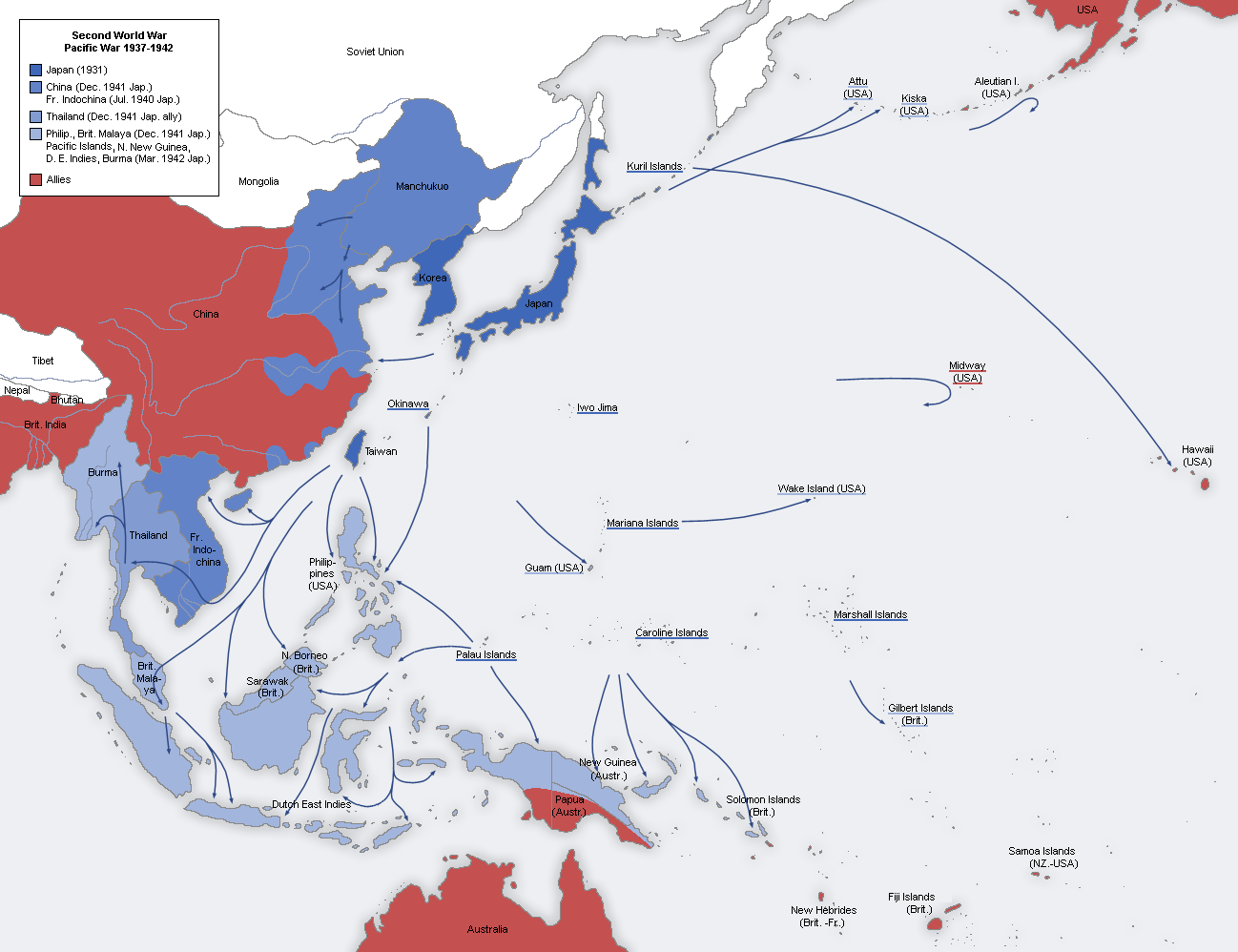
Nanshin-ron (Japanese: 南進論; "Southern Expansion Doctrine" or "Southern Road") was a political doctrine in the Empire of Japan that stated that Southeast Asia and the Pacific Islands were Japan's sphere of interest and that their potential value to the Empire for economic and territorial expansion was greater than elsewhere.
The opposing political doctrine was Hokushin-ron (北進論; "Northern Expansion Doctrine"), largely supported by the Imperial Japanese Army, which stated the same but for Manchuria and Siberia. After military setbacks at Nomonhan, Mongolia; the start of the Second Sino-Japanese War tying down millions of Japanese troops in China; and negative Western attitudes towards Japanese expansionist tendencies, the Southern Expansion Doctrine became predominant. Its focus was to procure resources from European Southeast Asian colonies, eliminate supply routes to China, and neutralize the Allied military presence in the Pacific. The Army favored a "counterclockwise strike", while the Navy favored a "clockwise strike".
In Japanese historiography, the term nanshin-ron is used to describe Japanese writings on the importance to Japan of the South Seas region in the Pacific Ocean. Japanese interest in Southeast Asia can be observed in writings of the Edo period (17th–19th centuries).
During the final years of the Edo period, the leaders of the Meiji Restoration determined that Japan needed to pursue a course of imperialism in emulation of the European nations to attain equality in status with the West, as European powers were laying claim to territories ever closer to Japan.
After the Meiji Restoration of 1868, the nanshin-ron policy came to be advanced with the southern regions as a focus for trade and emigration. During the early Meiji period, Japan derived economic benefits from Japanese emigrants to Southeast Asia, among which there were prostitutes (Karayuki-san) who worked in brothels in British Malaya, Singapore, the Philippines, the Dutch East Indies and French Indochina. Nanshin-ron was advocated as a national policy by a group of Japanese ideologues during the 1880s and the 1890s. Writings of the time often presented areas of Micronesia and Southeast Asia as uninhabited or uncivilised and suitable for Japanese colonisation and cultivation. In its initial stages Nanshin-ron focused primarily on Southeast Asia, and until the late 1920s, it concentrated on gradual and peaceful Japanese advances into the region to address what the Japanese saw as the twin problems of underdevelopment and Western colonialism. During the first decade of the 20th century, private Japanese companies became active in trade in Southeast Asia. Communities of emigrant Japanese merchants arose in many areas and sold sundry goods to local customers, and Japanese imports of rubber and hemp increased. Large-scale Japanese investment occurred especially in rubber, copra, and hemp plantations in Malaya and in Mindanao in the southern Philippines. The Japanese Foreign Ministry established consulates in Manila (1888), Singapore (1889), and Batavia (1909).
With increasing Japanese industrialization came the realization that Japan was dependent on the supply of many raw materials from overseas locations outside its direct control and was hence vulnerable to that supply's disruption. The Japanese need for the promotion of trade, developing and protecting sea routes, and official encouragement of emigration to ease overpopulation arose simultaneously with the strengthening of the Imperial Japanese Navy, which gave Japan the military strength to protect its overseas interests if diplomacy failed.
The Japanese government began pursuing a policy of overseas migration in the late 19th century as a result of Japan's limited resources and increasing population. In 1875, Japan declared its control over the Bonin Islands. The formal annexation and incorporation of the Bonin Islands and Taiwan into the Empire of Japan can be viewed as first steps in implementation of the "Southern Expansion Doctrine" in concrete terms.
However, World War I had a profound impact on the "Southern Expansion Doctrine" since Japan occupied vast areas in the Pacific that had been controlled by the German Empire: the Caroline Islands, Mariana Islands, Marshall Islands, and Palau. In 1919, the island groups officially became a League of Nations mandate of Japan and came under the administration of the Imperial Japanese Navy. The focus of the "Southern Expansion Doctrine" expanded to include the island groups (the South Seas Mandate), whose economic and military development came to be viewed as essential to Japan's security.
Hub AI
Nanshin-ron AI simulator
(@Nanshin-ron_simulator)
Nanshin-ron
Nanshin-ron (Japanese: 南進論; "Southern Expansion Doctrine" or "Southern Road") was a political doctrine in the Empire of Japan that stated that Southeast Asia and the Pacific Islands were Japan's sphere of interest and that their potential value to the Empire for economic and territorial expansion was greater than elsewhere.
The opposing political doctrine was Hokushin-ron (北進論; "Northern Expansion Doctrine"), largely supported by the Imperial Japanese Army, which stated the same but for Manchuria and Siberia. After military setbacks at Nomonhan, Mongolia; the start of the Second Sino-Japanese War tying down millions of Japanese troops in China; and negative Western attitudes towards Japanese expansionist tendencies, the Southern Expansion Doctrine became predominant. Its focus was to procure resources from European Southeast Asian colonies, eliminate supply routes to China, and neutralize the Allied military presence in the Pacific. The Army favored a "counterclockwise strike", while the Navy favored a "clockwise strike".
In Japanese historiography, the term nanshin-ron is used to describe Japanese writings on the importance to Japan of the South Seas region in the Pacific Ocean. Japanese interest in Southeast Asia can be observed in writings of the Edo period (17th–19th centuries).
During the final years of the Edo period, the leaders of the Meiji Restoration determined that Japan needed to pursue a course of imperialism in emulation of the European nations to attain equality in status with the West, as European powers were laying claim to territories ever closer to Japan.
After the Meiji Restoration of 1868, the nanshin-ron policy came to be advanced with the southern regions as a focus for trade and emigration. During the early Meiji period, Japan derived economic benefits from Japanese emigrants to Southeast Asia, among which there were prostitutes (Karayuki-san) who worked in brothels in British Malaya, Singapore, the Philippines, the Dutch East Indies and French Indochina. Nanshin-ron was advocated as a national policy by a group of Japanese ideologues during the 1880s and the 1890s. Writings of the time often presented areas of Micronesia and Southeast Asia as uninhabited or uncivilised and suitable for Japanese colonisation and cultivation. In its initial stages Nanshin-ron focused primarily on Southeast Asia, and until the late 1920s, it concentrated on gradual and peaceful Japanese advances into the region to address what the Japanese saw as the twin problems of underdevelopment and Western colonialism. During the first decade of the 20th century, private Japanese companies became active in trade in Southeast Asia. Communities of emigrant Japanese merchants arose in many areas and sold sundry goods to local customers, and Japanese imports of rubber and hemp increased. Large-scale Japanese investment occurred especially in rubber, copra, and hemp plantations in Malaya and in Mindanao in the southern Philippines. The Japanese Foreign Ministry established consulates in Manila (1888), Singapore (1889), and Batavia (1909).
With increasing Japanese industrialization came the realization that Japan was dependent on the supply of many raw materials from overseas locations outside its direct control and was hence vulnerable to that supply's disruption. The Japanese need for the promotion of trade, developing and protecting sea routes, and official encouragement of emigration to ease overpopulation arose simultaneously with the strengthening of the Imperial Japanese Navy, which gave Japan the military strength to protect its overseas interests if diplomacy failed.
The Japanese government began pursuing a policy of overseas migration in the late 19th century as a result of Japan's limited resources and increasing population. In 1875, Japan declared its control over the Bonin Islands. The formal annexation and incorporation of the Bonin Islands and Taiwan into the Empire of Japan can be viewed as first steps in implementation of the "Southern Expansion Doctrine" in concrete terms.
However, World War I had a profound impact on the "Southern Expansion Doctrine" since Japan occupied vast areas in the Pacific that had been controlled by the German Empire: the Caroline Islands, Mariana Islands, Marshall Islands, and Palau. In 1919, the island groups officially became a League of Nations mandate of Japan and came under the administration of the Imperial Japanese Navy. The focus of the "Southern Expansion Doctrine" expanded to include the island groups (the South Seas Mandate), whose economic and military development came to be viewed as essential to Japan's security.
Recent media