


Community hub
Recent from talks
Contribute something to knowledge base
Content stats: 0 posts, 0 articles, 1 media, 0 notes
Members stats: 0 subscribers, 0 contributors, 0 moderators, 0 supporters
Subscribers
Supporters
Contributors
Moderators
Hub AI
History of colonialism AI simulator
(@History of colonialism_simulator)
Hub AI
History of colonialism AI simulator
(@History of colonialism_simulator)
History of colonialism
The phenomenon of colonization is one that has occurred around the globe and across time. Various ancient and medieval polities established colonies - such as the Phoenicians, Babylonians, Persians, Greeks, Romans, Han Chinese, and Arabs. The High Middle Ages saw colonising Europeans moving west, north, east and south. The medieval Crusader states in the Levant exemplify some colonial features similar to those of colonies in the ancient world.
A new phase of European colonialism began with the "Age of Discovery", led by the Portuguese, who became increasingly expansionist following the conquest of Ceuta in 1415. Portugal aimed to control navigation through the Strait of Gibraltar, to spread Christianity, to amass wealth and plunder, and to suppress predation on Portuguese populations by Barbary pirates (who operated as part of a longstanding African slave tradeat that point a minor trade, one the Portuguese would soon reverse and surpass). Around 1450 the Portuguese developed a lighter ship, the caravel based on North African fishing boats.[citation needed] Caravels could sail further and faster than previous vessels, were highly maneuverable, and could sail into the wind.
Enabled by new maritime technology, and with the added incentive to find an alternative "Silk Road" after the fall of Constantinople in 1453 to the Ottoman Empire effectively closed profitable trade-routes between Asia and Europe, early European exploration of Africa was followed by the Spanish exploration of the Americas, further exploration along the coasts of Africa, and explorations of West Asia (also known as the Middle East), South Asia, and East Asia.
The conquest of the Canary Islands by the Crown of Castile, from 1402 to 1496, was an early instance of European settler colonialism in Africa. In 1462 the Portuguese established the first European settlement in the tropics by peopling the previously uninhabited Cape Verde archipelago, which thereafter became a site of Jewish exile during the height of the Portuguese and Spanish Inquisitions in the 1490s; the Portuguese soon also brought slaves from the West African coast. Because of the economics of plantations, especially sugar, much European colonial expansion and slavery would remain linked into the 19th century. The use of exile to penal colonies would also continue.
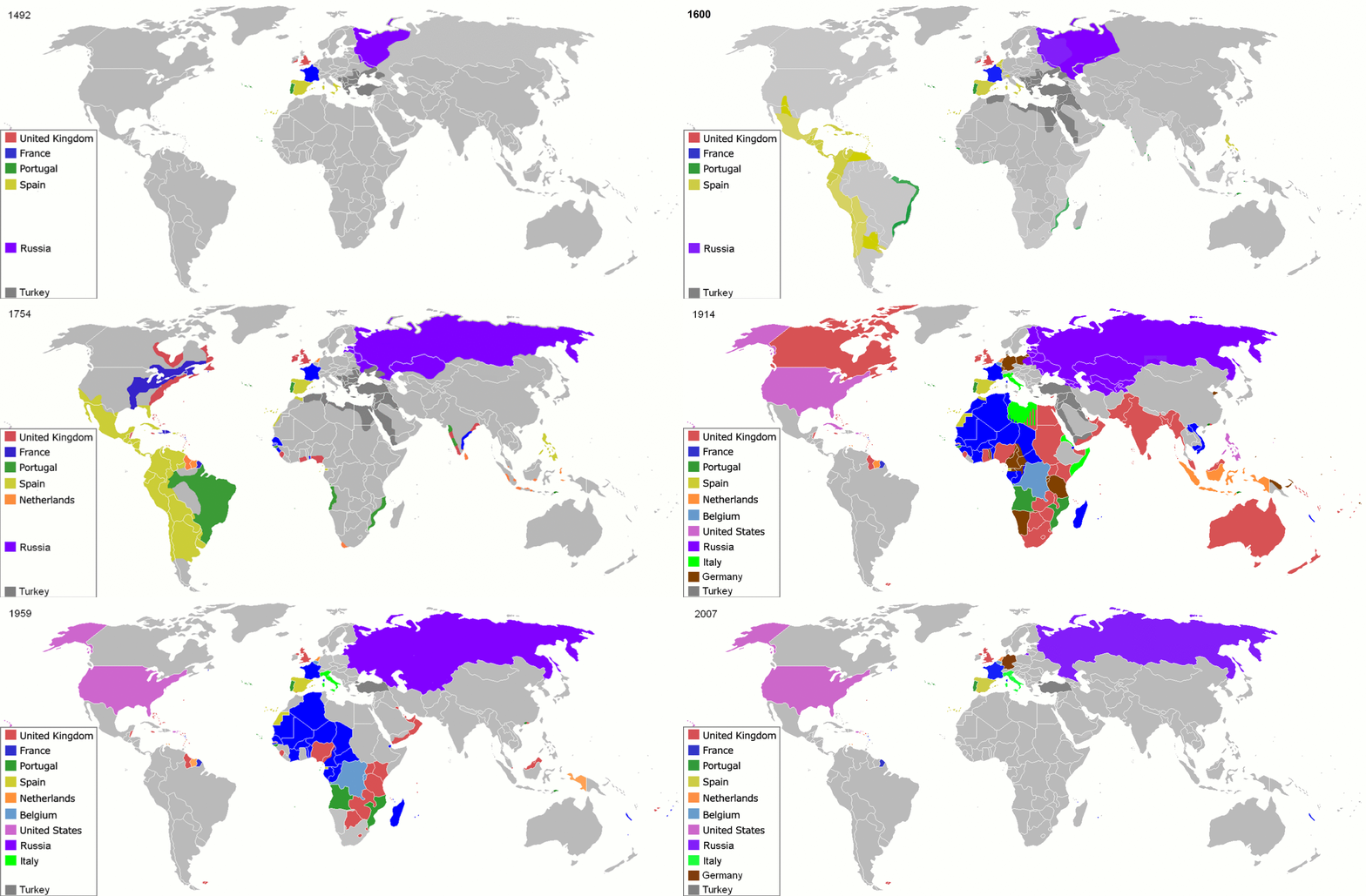
The European "discovery" of the New World (as named by Amerigo Vespucci in 1503) opened another colonial chapter, beginning with the colonization of the Caribbean in 1493 with Hispaniola (later to become Haiti and the Dominican Republic). The Portuguese and Spanish Empires were the first trans-oceanic global empires: they were the first to stretch across different continents (discounting Eurasian empires and those with land in Africa along the Mediterranean), covering vast territories around the globe. Between 1580 and 1640, the Portuguese and Spanish empires were both ruled by the Spanish monarchs in personal union. During the late 16th and 17th centuries, England, France, and the Dutch Republic also established their own overseas empires, each in direct competition with the other European expansionists. Meanwhile the Tsardom of Russia expanded overland: Russian Siberian, Central Asian and East colonies eventually extended to Alaska and California.
The end of the 18th and mid-19th century saw the first era of decolonization, when most of the European colonies in the Americas, notably those of Spain, New France, and the Thirteen Colonies, gained their independence from their respective metropoles. The Kingdom of Great Britain (uniting Scotland and England), France, Portugal, and the Dutch turned their attention to the Old World, particularly South Africa and South Asia (particularly Southeast Asia), where coastal enclaves had already been established.
In the 19th century, the Second Industrial Revolution led to what has been termed the era of New Imperialism, when the pace of colonization rapidly accelerated, the height of which was the Scramble for Africa, in which Belgium, Germany, and Italy also participated. The newly-westernized Japanese Empire established the Japanese colonial empire in eastern Asia (notably Taiwan, Korea, and Manchukuo) from the late-19th century.
There were deadly battles between colonizing states and revolutions in colonized areas, shaping areas of control and establishing independent nations. During the 20th century, the colonies of the defeated Central Powers of World War I were distributed amongst the victors as mandates, but it was not until after the end of World War II that the second phase of decolonization began in earnest.
History of colonialism
The phenomenon of colonization is one that has occurred around the globe and across time. Various ancient and medieval polities established colonies - such as the Phoenicians, Babylonians, Persians, Greeks, Romans, Han Chinese, and Arabs. The High Middle Ages saw colonising Europeans moving west, north, east and south. The medieval Crusader states in the Levant exemplify some colonial features similar to those of colonies in the ancient world.
A new phase of European colonialism began with the "Age of Discovery", led by the Portuguese, who became increasingly expansionist following the conquest of Ceuta in 1415. Portugal aimed to control navigation through the Strait of Gibraltar, to spread Christianity, to amass wealth and plunder, and to suppress predation on Portuguese populations by Barbary pirates (who operated as part of a longstanding African slave tradeat that point a minor trade, one the Portuguese would soon reverse and surpass). Around 1450 the Portuguese developed a lighter ship, the caravel based on North African fishing boats.[citation needed] Caravels could sail further and faster than previous vessels, were highly maneuverable, and could sail into the wind.
Enabled by new maritime technology, and with the added incentive to find an alternative "Silk Road" after the fall of Constantinople in 1453 to the Ottoman Empire effectively closed profitable trade-routes between Asia and Europe, early European exploration of Africa was followed by the Spanish exploration of the Americas, further exploration along the coasts of Africa, and explorations of West Asia (also known as the Middle East), South Asia, and East Asia.
The conquest of the Canary Islands by the Crown of Castile, from 1402 to 1496, was an early instance of European settler colonialism in Africa. In 1462 the Portuguese established the first European settlement in the tropics by peopling the previously uninhabited Cape Verde archipelago, which thereafter became a site of Jewish exile during the height of the Portuguese and Spanish Inquisitions in the 1490s; the Portuguese soon also brought slaves from the West African coast. Because of the economics of plantations, especially sugar, much European colonial expansion and slavery would remain linked into the 19th century. The use of exile to penal colonies would also continue.
The European "discovery" of the New World (as named by Amerigo Vespucci in 1503) opened another colonial chapter, beginning with the colonization of the Caribbean in 1493 with Hispaniola (later to become Haiti and the Dominican Republic). The Portuguese and Spanish Empires were the first trans-oceanic global empires: they were the first to stretch across different continents (discounting Eurasian empires and those with land in Africa along the Mediterranean), covering vast territories around the globe. Between 1580 and 1640, the Portuguese and Spanish empires were both ruled by the Spanish monarchs in personal union. During the late 16th and 17th centuries, England, France, and the Dutch Republic also established their own overseas empires, each in direct competition with the other European expansionists. Meanwhile the Tsardom of Russia expanded overland: Russian Siberian, Central Asian and East colonies eventually extended to Alaska and California.
The end of the 18th and mid-19th century saw the first era of decolonization, when most of the European colonies in the Americas, notably those of Spain, New France, and the Thirteen Colonies, gained their independence from their respective metropoles. The Kingdom of Great Britain (uniting Scotland and England), France, Portugal, and the Dutch turned their attention to the Old World, particularly South Africa and South Asia (particularly Southeast Asia), where coastal enclaves had already been established.
In the 19th century, the Second Industrial Revolution led to what has been termed the era of New Imperialism, when the pace of colonization rapidly accelerated, the height of which was the Scramble for Africa, in which Belgium, Germany, and Italy also participated. The newly-westernized Japanese Empire established the Japanese colonial empire in eastern Asia (notably Taiwan, Korea, and Manchukuo) from the late-19th century.
There were deadly battles between colonizing states and revolutions in colonized areas, shaping areas of control and establishing independent nations. During the 20th century, the colonies of the defeated Central Powers of World War I were distributed amongst the victors as mandates, but it was not until after the end of World War II that the second phase of decolonization began in earnest.
Recent media
Recent media