


Community hub
Netanya
View on Wikipedia
Netanya[2] (Hebrew: נתניה, IPA: [netanˈja]) or Natanya (IPA: [naˈtanja]),[3][2] is a city in the Central District of Israel, and is the capital of the surrounding Sharon plain. It is 30 km (18.6 mi) north of Tel Aviv, and 56 km (34.8 mi) south of Haifa, between the Poleg stream and the Wingate Institute in the south and the Avihayil stream in the north.
Key Information


.jpg)


Netanya was named in honor of Nathan Straus, a prominent Jewish American merchant and philanthropist in the early 20th century who was the co-owner of Macy's department store. The 14 km (8.7 mi) of beaches have made the city a popular tourist resort.
In 2023, Netanya had a population of 233,485,[1] ranking it as the 7th largest city in Israel by population. An additional 150,000 people live in the local and regional councils within 10 km (6 mi) of Netanya, which serves as a regional center for them. The city mayor is Miriam Feirberg.
History
[edit]Before the 20th century, parts of Netanya belonged to the Forest of Sharon, a hallmark of the region's historical landscape. It was an open woodland dominated by Mount Tabor Oak (Quercus ithaburensis), which extended from Kfar Yona in the north to Ra'anana in the south. Arabs who lived in the area used it for pasture, firewood and intermittent cultivation. The intensification of settlement and agriculture in the coastal plain during the 19th century led to deforestation and subsequent environmental degradation known from Hebrew sources.[4]

Netanya was established near the ancient site of Poleg by the Bnei Binyamin association in Zikhron Ya'akov.[5] It was named in honor of Nathan (Hebrew: Natan) Straus (1848–1931),[6][7] co-owner of Macy's department store,[8] New York City Parks Commissioner, and president of the New York City Board of Health,[9] who gifted two-thirds of his personal fortune to projects benefiting Jews and Arabs in Mandatory Palestine.[7][9][10] "Netanya...was named for Straus in the hope he would donate money to them. When he told them he had no more money to give they were disappointed, but decided to keep the city's name anyway."[11][12]

The funds for the project of building Netanya were raised by Itamar Ben-Avi and Oved Ben-Ami, who embarked on a fundraising trip to the United States to raise the money. In 1928 members of Bnei Binyamin and Hanotea, an organisation set up after Straus was informed of the establishment of the settlement, purchased 350 acres (1.4 km2) of Umm Khaled lands.[5] On December 14, 1928, a team led by Moshe Shaked began digging for water at the site. After water was discovered in February 1929, the first five settlers moved onto the land. In the weeks that followed, more settlers began arriving. Development was set back due to the 1929 Palestine riots and massacre of Jews. By September, however, development was back on track with the cornerstones for the first 10 houses being laid on Sukkot.[5]
The first kindergarten opened in 1930 and the first school in 1931. In the 1931 census of Palestine, Netanya was recorded as having 253 residents. In 1933, the British architect Clifford Holliday drew up a plan for Netanya as a tourist resort. Holliday also designed urban projects in Jaffa, Tiberias, Lydda and Ramla.[13] The first urban plan divided the city into three sections with a tourism district along the coastline, housing, farms and commerce in the center, and agriculture and industry to the east. That year also saw the completion of the Tel Aviv Hotel, the first hotel in Netanya, as well as the establishment of two new neighborhoods, Ben Zion and Geva.[5]
In 1934, the first Aliyah Bet ship arrived at the shores of Netanya, carrying 350 immigrants. By 1939, over seventeen more ships had followed. An industrial zone was established, and the first synagogue and school was built.[5]
In 1937 the cornerstone was laid for a new commercial center and the connection of Netanya to the Tel Aviv-Haifa road. In 1939, the Ophir diamond polishing plant, the first diamond polishing plant in Palestine, was opened by Asher Daskall and Zvi Rosenberg.[14][15] In 1940, the British Mandate government defined Netanya as a local council of which Oved Ben-Ami was elected head.[5] In 1944, Netanya had a population of 4,900. The first high school in Netanya opened in 1945.

During the Jewish insurgency in Palestine, the Jewish underground group Irgun launched several attacks against British military and police forces in the Netanya area. The town itself was a bastion of support for the Irgun. The most infamous incident happened in July 1947, in what became known as the Sergeants affair. After three Irgun fighters had been sentenced to death by the British, the Irgun abducted two British sergeants on a Netanya street, and hid them in an abandoned factory. The British responded by declaring martial law and placing Netanya and the surrounding area under curfew. The British Army searched the town and interrogated residents, but did not find the sergeants. After the three Irgun fighters were hanged, the Irgun hanged the two sergeants in the factory and re-hanged and booby-trapped their bodies in an orange grove.[16]
In November 1947, an Egged bus driving from Netanya to Jerusalem was attacked in Petah Tikva. In 1948, following the withdrawal of British forces from Netanya and the 1948 Arab-Israeli War, a large military base was established in the city.
On December 3, 1948, Netanya was declared a city in the newly established State of Israel.[5] Ramat Tiomkin, Ein Hatchlelet, Pardes Hagdud, and Ramat Ephraim were annexed to Netanya. At this time, Netanya had a population of 11,600.[17]
The Kiryat Eliezer Kaplan Industrial Zone was inaugurated in 1949 and Neve Itamar, founded in 1944, was annexed to Netanya.[18][19] The Netanya railway station opened in 1953.
With Israel experiencing a wave of Jewish immigration from Europe, elsewhere in the Middle East, and North Africa, Netanya's population expanded. In the years following independence, approximately 14,000 Libyan Jewish immigrants settled in Netanya.[20] The population reached 31,000 in 1955. To accommodate the influx of newcomers, the Israeli Housing Ministry built housing units of 50 square meters.[17] The cornerstone of Kiryat Sanz, a religious neighborhood was laid in 1956. The first stock exchange built in Israel was built in Netanya.[5] By 1961, the city's population had grown to 41,300.
During the Six-Day War in 1967, Netanya was hit by Jordanian artillery, and Jordanian planes made sorties near Netanya, but failed to cause major damage. A lone Iraqi bomber attacked Netanya, dropping several bombs which damaged a factory and caused some casualties, shortly before being shot down. In 1972, Netanya had a population of 71,100.

In the 1990s, large numbers of immigrants from the former Soviet Union settled in Netanya, greatly expanding the city's population and resulting in large-scale housing construction.[17]
Netanya suffered from several Palestinian bombings during the Second Intifada, including the Netanya Market bombing and, in the same month, the Passover massacre which caused the death of 29 people.[21] Such attacks were cited as justification for the construction of the Israeli West Bank barrier which has proved effective in stemming suicide attacks.[22]
In the 2000s and 2010s, Netanya became one of the primary destinations of French Jewish aliyah. Thousands of French immigrants settled in Netanya, influencing the local culture.[23]
Geography
[edit]
Netanya is located on the Israeli Mediterranean Coastal Plain, the historic land bridge between Europe, Africa, and Asia. The city is the capital of the Sharon plain, a geographic region stretching from the Mediterranean in the west to the Samarian hills in the east, and the modern-day Gush Dan metropolitan area in the south northwards to Mount Carmel. Although the capital of a densely populated region, Netanya itself is relatively separate from settlements to the north, south, and east, although, over time, growth has incorporated some into what makes up modern-day Netanya.
Apart from some small moshavim and kibbutzim, south of Netanya is relatively clear of settlement until Herzliya and the start of the Gush Dan metropolitan area. Likewise, to the north is clear of large settlement until Hadera, and to the east until Tulkarm in the West Bank. The area to the east of Netanya does, however, have a large concentration of kibbutzim and moshavim in the Hefer Valley Regional Council and local councils of Kfar Yona, Kadima-Tzoran and Even Yehuda.
Netanya itself is divided into a large number of neighborhoods (see Neighborhoods of Netanya), recently growing southwards out of the city to create several high-end coastal neighborhoods with industrial areas inland. Netanya is home to the Poleg nature reserve and the Irises Dora Rainpool nature park containing the world's largest population of iris atropurpurea.[24][25] At the center of the park is a rainpool which fills up with water in the winter months, and dries up over the summer months. Signs along the rain pool include information on the types of flora and fauna that populate the ecosystem.
Demographics
[edit]| Year | Pop. | ±% p.a. |
|---|---|---|
| 1929 | 5 | — |
| 1931 | 100 | +347.21% |
| 1948 | 11,600 | +32.26% |
| 1955 | 31,000 | +15.08% |
| 1961 | 41,300 | +4.90% |
| 1972 | 71,100 | +5.06% |
| 1983 | 102,300 | +3.36% |
| 1995 | 146,100 | +3.01% |
| 2008 | 179,000 | +1.57% |
| 2012 | 192,200 | +1.79% |
| 2015 | 207,946 | +2.66% |
| [5][26] | ||
In 2023, Netanya was home to 233,485 people. The population density of the city is 7,115 per square kilometer.[26] The population is expected to be around 320,000 in 2035.[27] According to a 2001 survey by the CBS, 99.9% of the population are Jewish and other non-Arabs. In 2001 alone, the city became home to 1,546 immigrants. According to CBS, in 2001 there were 78,800 males and 84,900 females with the population of the city being spread out, with 31.1% 19 years of age or younger, 15.3% between 20 and 29, 17.2% between 30 and 44, 17.4% from 45 to 59, 4.2% from 60 to 64, and 14.9% 65 years of age or older.
In terms of the origin of Netanya's residents, 63,800 originate from Europe and America, 30,200 from North Africa, 18,100 from Asia, 10,500 from Ethiopia and 38,100 from Israel in 2008. That same year, 90,200 of the residents of Netanya were born in Israel, while 71,300 were born abroad.[28] A significant number of Ethiopian Jews in Israel have settled in Netanya with over 10,500 Ethiopian Jewish residents in the city.[29] Netanya is also the center of the Persian Jewish community of Israel.
As of 2000, the city had 58,897 salaried workers and 4,671 self-employed with the mean monthly wage in 2000 for a salaried worker in the city being NIS 4,905, a real change of 8.6% over the course of 2000. Salaried males have a mean monthly wage of NIS 6,217 (a real change of 9.0%) versus NIS 3,603 for females (a real change of 6.8%). The mean income for the self-employed is 6,379. There are 3,293 people who receive unemployment benefits and 14,963 people who receive an income guarantee.
In terms of religion, Netanya is made up approximately of 50% secular Jews. It is also the home of the Sanzer dynasty and has a large Chabad Lubavitch presence.
Neighborhoods
[edit]
Kiryat Sanz
[edit]In 1956, a beachfront in northern Netanya was selected as a home base for the Sanzer Hasidim by its leader, Rabbi Yekusiel Yehudah Halberstam. Halberstam established kindergartens, boys' and girls' schools, yeshivas, seminaries, synagogues, a children's home for orphaned and needy girls,[30] an old-age home, and a hospital. In addition to religious services, Kiryat Sanz had a diamond polishing factory built by a New York diamond merchant.[31] Halberstam established his court here in 1960.[32] Following his death in 1994, his eldest son, Rabbi Zvi Elimelech Halberstam, known as the Sanzer Rebbe, became the spiritual leader of the Sanz community in Israel.[33] In 2010, Kiryat Sanz had a population of approximately 1000 families.[34] Most of the older generation are Holocaust survivors.[35] Besides its educational facilities for boys and girls from elementary to post-graduate,[36] there are five synagogues, a mikveh, a printing house,[37] a religious hotel, a religious nursing school, and the Laniado Hospital,[34] which encompasses two medical centers, a children's hospital, a geriatric center and a nursing school, serving a regional population of over 450,000.[38]
Other neighbourhoods
[edit]- Neot Herzl
Located in the center of Netanya, near the Netanya interchange. It is a unification of four neighborhoods: Shikkun Sela, Gan Beracha, Amidar and Ramat Herzl.[39] The neighborhood, like the main street of the city that runs nearby, was named after Theodor Herzl. The old settlement of Umm Khalid is also located in this neighborhood.
- Tobruk
Lies west of the Ramat Hen neighborhood. The neighborhood was established during the Second World War and is named after the port city of Tobruk in Libya. It used to be a center of Diamond cutting. In 1947, two British Army Sergeants were hanged in the inactive "Feldman" diamond polishing plant in this neighborhood.
- Nof Hatayelet
A comparably new neighborhood, established in 2000, along the cliff promenade, south of the "Carmel" hotel.[40] A paragliding site is located near the neighborhood.
- Ein Hatkhelet
A neighborhood of about 2,500 residents located in the north of Netanya, on the shores of the Mediterranean Sea near Avihayil. Ein Hatkhelet was established as a working-class neighborhood in Emek Hefer in 1936. In 1948 it became part of the city of Netanya.[41]
- Ramat Ephraim
Named after Ephraim Aaronsohn. Part of it is the Moshav Ramat Tiomkin which was established in 1932 and over time was incorporated into Netanya. The moshav was founded by the people of Betar, and a Kvutza named Menorah. It was named after Ze'ev Vladimir Tiomkin.[42]
- Ramat Chen
One of the southern neighborhoods of the city, near Gesher HaAchdut. Previously called Pagi neighborhood, since it was founded by Poalei Agudat Yisrael (Pagi is the Hebrew acronym of it).[43]
- Neot Ganim
Previously called "Shikkun Vatikim", this neighborhood is one of the first neighborhoods in the city and it was established in the location of the city's immigrant camp used to be.[44] At its southern end is the cemetery of the city of Netanya.
- Neve Itamar
The neighborhood was established in 1944 as an independent settlement and was annexed to Netanya in 1949. It is named after Itamar Ben-Avi, who has been an important figure in the story of the establishment of Netanya.[45]
- Ramat Poleg
Ramat Poleg is an old neighborhood in Netanya, Israel, built in the late 1970s.[46] It is the most southern neighborhood in Netanya. Ramat Poleg is an economically stable neighborhood with a rich culture and many sports activities.
Established in 2006.[47] This neighborhood is located along the shoreline at the southern part of Netanya. The neighborhood borders Ramat Poleg (to its south) and the Irus nature reserve (to its north).
- Agamim
Established in 2013, and still in construction.[48] It is located next to the Vernal pool of Netanya. The neighborhood is divided into three sections, A B & C. Section C is currently in construction (as of October 2023).
Economy
[edit]
Industry in Netanya is largely divided between two industrial parks.[citation needed] In the south of the city, the newest of these, Pinchas Sapir (KA Poleg), houses the first branch of IKEA in Israel as well as technology companies such as Ceedo.[citation needed] Tourism also plays a major part in Netanya's economy with some 19 hotels in the city having 1,452 rooms.[citation needed]
Transportation
[edit]
The public transportation in Netanya is based on buses, railways and service taxis.
Train
[edit]The Netanya railway station is located near the city center, on the east side of Highway 2. Netanya Sapir railway station is located in the Poleg Industrial Area. Beit Yehoshua railway station, located in the moshav of Beit Yehoshua, immediately south of Netanya, is convenient for getting to southern Netanya and to the Poleg Industrial Area. These stations are connected to the city by Egged bus service, although Shay Li service taxis are highly predominant at the Beit Yehoshua station.[49] There are direct trains from Netanya and Beit Yehoshua to Tel Aviv, Binyamina, Hadera, Herzliya, Lod, Rehovot, Ashdod, Ashkelon and other towns. All Israel Railways stations, including Ben Gurion Airport, can be accessed from Netanya by means of transfer stations such as Binyamina and Tel Aviv.[50]
Bus
[edit]Egged buses run from the Netanya central bus station to Jerusalem, Haifa, Eilat and other destinations. Many neighborhoods have a direct connection to Tel Aviv without the need to pass through the central bus station. In addition, many Egged lines connecting Tel Aviv with the north of the country stop at the Netanya Interchange on Highway 2, giving Netanya a direct connection with Nazareth, Tiberias, Kiryat Shmona and many other northern destinations. Metropoline operates bus services to Tel Aviv, Bnei Brak and the surrounding communities, including the city of Hadera. Some regional lines are still operated by Egged. The intracity transportation is based on Egged Ta'avura bus lines and Shay Li service taxis.[49]
Culture
[edit]
The Well House is a museum documenting the early history of Netanya. It is located in a historic building dating from 1928. Other museums are the Tribes of Israel Pearl Museum of Yemenite Jewish Heritage, the Shlomo Dror Art Institute, and the Diamimon Diamond Museum. The Cliff Gallery, Gosher Gallery, Abecassis Gallery and Fourth Gallery are all located in the city.[51]
War memorials include the Holocaust Train Car,[52] Beit Yad Lebanim, a memorial to fallen IDF soldiers from Netanya, the National Memorial for Fallen Ordnance Corps, the Alexandroni Brigade Memorial, the National Victory Monument, dedicated to the Soviet Red Army victory over Nazi Germany, and the Memorial to Victims of Acts of Terror.[53]
In June 2016, a street in Netanya was named for Japanese diplomat Chiune Sugihara, who was responsible for saving Lithuanian Jews from Nazi persecution early in World War II by providing visas allowing travel eastwards, beyond the reach of the Third Reich's genocidal grasp.[54]
Education
[edit]According to the Netanya Municipality, the city has 36,544 students including 5,351 pupils in 186 kindergartens, 16,748 in 46 elementary schools, and 14,445 in 16 high schools. Education in the city is controlled by the municipality's Education Administration.[55] 52.7% of 12th grade students were entitled to a matriculation certificate (Bagrut) in 2001.
Netanya Academic College offers Bachelor's and master's degrees, and a unique program for high-school students. Other institutions of higher education in the city are Ort Hermelin College of Engineering, Zinman College of Physical Education and Sport Sciences, Lesley College, and Tesler School for Nursing.[56] The Wingate Institute, Israel's National Centre for Physical Education and Sport, is located just south of the city.
Sports
[edit]
The main stadiums in Netanya are the 13,610-seat Netanya Stadium. Netanya has three football teams, the main being Maccabi Netanya, whose main local rival is Beitar Nes Tubruk. The third is Maccabi HaSharon Netanya, though the team has been limited to fourth-tier football in the Liga Bet. Elitzur Netanya represents the city in the first tier of Israeli basketball. In handball, the city is represented by Hapoel Netanya in the 2nd tier of the Israeli handball. In baseball, the city was represented by the Netanya Tigers of the Israel Baseball League. As part of the "Netanya – city of sport" program the beach soccer stadium was established and it currently hosts Israeli championship and international "Diamond tournament" games.
Aside from the professional sports teams, Maccabi Netanya also has a boxing and fencing club while Hapoel Netanya has judo and gymnastic clubs, and Elitzur Netanya has a lacrosse club.
The founder of Krav Maga, Imi Lichtenfeld opened a sports academy in Netanya for the continuation of his way and his martial art.[57]
Netanya is also the home of paragliding in Israel. The moderate cliffs plus a stiff offshore breeze provide an ideal environment for safe and fun comfortable paragliding. Gliders are often seen cruising high above the beach, just along the cliff line.
Netanya was scheduled to host the 2015 European Short Course Swimming Championships in December. The venue of the event was to be the brand-new swimming complex of the Wingate Institute. The new complex at the Wingate Institute features an Olympic-size pool with 10 lanes and 3m depth, backed by the latest built-in filtration systems, an 8-lane 50m pool and a 6-lane 25m pool.[58][59]
Netanya hosted the World Lacrosse Championship tournament on July 12–21, 2018, thus making Israel the first country to host such where English is not the primary spoken language. Forty-six nations from around the world sent teams.[60]
The city hosted the 2021 FINA Junior Water Polo World Championships.[61]
Urban development
[edit]
Several of the tallest buildings in Israel are located in Netanya. The construction of eight new skyscrapers, six of them over 30 stories, was approved in 2011. Dozens of 40–42-story skyscrapers have been planned, many of them along the shore.[62][63]
Netanya is developing according to master plans for 2035 which seek to massively increase residential units and office space in the city, as well as a new marina and piers. As part of the plan, the intention of the municipality is for the city's population to reach 320,000 by 2035.[64]
The city seeks to become a major tourist hub for local and overseas tourism, with an "Israeli Riviera" on the shore.[65] Among the projects planned in 2013 was the construction of 2,062 housing units and 1,100 hotel rooms while leaving much of the land as open space. The city has set itself a goal to expand open space from 56 to 70 percent. The plan is expected to attract more residents, boost hotel development, and increase the number of gardens and green spaces.[66] It has been suggested that as the city's population expands, a light rail system may be built there in the future.[67][68]
Twin towns – sister cities
[edit]Netanya is twinned with:[69][70]
 Batumi, Georgia
 Bournemouth, United Kingdom
 Como, Italy
 Dortmund, Germany
 Gelendzhik, Russia
- Giessen, Germany
 Gold Coast, Australia
 Nice, France
 Nowy Sącz, Poland
 Poděbrady, Czech Republic
- Sarcelles, France
 Siófok, Hungary
 Stavanger, Norway
 Sunny Isles Beach, United States
 Xiamen, China


Notable people
[edit]


- Linor Abargil (born 1980), attorney, actress and model, winner of the Miss World 1998
- Eduard Akuvaev (1945–2015), Russian-Israeli artist and teacher
- Tova Ascher, Israeli film editor, director, and screenwriter
- Yityish Titi Aynaw (born 1991), model and television personality, winner of the Miss Israel 2013
- Orit Bar-On (born 1975), Olympic judoka
- Yehuda Barkan (1945–2020), actor and filmmaker
- Edith Hahn Beer (1914–2009), Austrian Jewish woman who survived the Holocaust by hiding her Jewish identity and marrying a Nazi officer
- Cheryl Bentov (born 1960), American real estate agent and former Israeli Mossad agent
- Maya Bouskilla (born 1977), singer and songwriter
- Noah Brosch (born 1948), astronomer, astrophysicist and space researcher
- Yonatan "Yoni" Chetboun (born 1979), member of the Knesset
- Eli Dasa (born 1992), footballer for Dynamo Moscow and the Israel national team
- Artem Dolgopyat (born 1997), Olympic champion and world champion gymnast
- Jacko Eisenberg (born 1980), singer
- Eva Fabian (born 1993), American-Israeli world champion swimmer
- Ilay Feingold (born 2004), footballer for the Major League Soccer club New England Revolution
- Eli Finish (born 1975), actor and comedian
- Yarden Gerbi (born 1989), world champion and Olympic bronze medalist judoka
- Haim Gidon (born 1944), martial artist
- Moshe Glam (born 1968), football player
- Ageze Guadie (born 1989), Olympic marathon runner
- Nadav Guedj (born 1998), singer and actor, Israeli Eurovision Song Contest 2015 entrant
- Yekusiel Yehudah Halberstam (1905–1994), Klausenburger Rebbe
- Zvi Elimelech Halberstam (born 1952), Sanzer Rebbe
- Yitzhak "Haki" Harel (born 1957), civil servant and army general
- Mariano Idelman (born 1974), actor and comedian
- Silvi Jan (born 1973), female professional and Israeli team footballer
- Deniz Khazaniuk (born 1994), tennis player
- Baruch Kimmerling (1939–2007), scholar and professor of sociology
- Moti Kirschenbaum (1939–2015), television presenter and filmmaker
- Elad Koren (born 1968), former professional footballer
- Aliza Lavie (born 1964), academic and politician
- David Levin (born 1999), ice hockey player
- Ronny Levy (born 1966), football player and now a manager
- Imi Lichtenfeld (1910–1998), martial artist, founded Krav Maga
- Nili Lotan, Israeli-American fashion designer
- Oded Machnes (born 1956), football player
- Yossi Malka (born 1974), football player
- Baruch Mizrachi (1926–1948) Arab-Jewish militant (1926–1948)
- Tesama Moogas (born 1988), Olympic marathon runner
- Sagi Muki (born 1992), Olympian and world champion judoka
- Andrea Murez (born 1992), Israeli–American Olympic swimmer for Israel
- Amos Neheysi (born 1979), former football player
- Gabi Packer (born 1969), former football player
- Romi Paritzki (born 2004), world champion rhythmic gymnast
- Or Sasson (born 1990), Olympic bronze medalist judoka
- Stav Shaffir (born 1985), activist, journalist, and politician
- Arik Shivek (born 1956), professional basketball coach
- Mordechai Spiegler (born 1944), football player
- Shiraz Tal (born 1974), model
- Shalom Tikva (born 1965), football player
- Margalit Tzan'ani (born 1948), singer and television personality
- Meir Wieseltier (born 1941), poet, translator and journalist
- Ehud Yatom (born 1948), Shin Bet agent and Knesset member
- Ron Yosef (born 1974), openly gay Orthodox Jewish rabbi
- Avi Alfasi (born 1980), former Israeli football player
Gallery
[edit]-
 Zion Square, Netanya, 1939
 -
 Gan Hamelech, 1940
 -
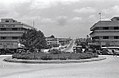 Netanya 1947
 -
 Natanya 1939 1:20,000
 -
 Natanya 1945 1:250,000


See also
[edit]References
[edit]- ^ a b c "Regional Statistics". Israel Central Bureau of Statistics. Retrieved August 11, 2025.
- ^ a b "Netanya | Mediterranean Coast, Beaches, Tourism". Britannica. Retrieved February 4, 2025.
- ^ "Historical Documents". Office of the Historian of the US State Department. Retrieved February 4, 2025.
- ^ Marom, Roy (December 1, 2022). "יער השרון (אל-ע'אבה) בתקופה העות'מאנית: בתקופה מהמחקר חדשות תובנות הגיאוגרפי-היסטורי The Oak Forest of the Sharon (al-Ghaba) in the Ottoman Period: New Insights from Historical- Geographical Studies". Muse. 5: 90–107.
- ^ a b c d e f g h i "History". Archived from the original on July 14, 2019. Retrieved April 6, 2008.
- ^ Benton, William (1974). The New Encyclopædia Britannica. Vol. 7. Encyclopædia Britannica (UK) Ltd. p. 270. ISBN 978-0-85229-290-7. Archived from the original on March 27, 2022. Retrieved August 22, 2017.
- ^ a b Teller, Hanoch (1996). A Midrash and a Maaseh. NYC Publishing Co. p. 349. ISBN 978-1-881939-09-2. Archived from the original on March 27, 2022. Retrieved October 25, 2020.
- ^ "Nathan Straus". Encyclopaedia Britannica Online. 2012. Archived from the original on March 9, 2012. Retrieved February 7, 2012.
- ^ a b "Nathan Straus (1848–1931)". Jewish Virtual Library. 2012. Archived from the original on March 12, 2012. Retrieved February 7, 2012.
- ^ Wigoder, Geoffrey (1975). Everyman's Judaica: An encyclopedic dictionary. W.H. Allen / Virgin Books. p. 574. ISBN 978-0-491-01604-9.
- ^ [1] [dead link]
- ^ Benzaquen, John. "Neighborhood Watch: Looking east", The Jerusalem Post, May 31, 2012. Retrieved August 5, 2023. "Netanya was named for Straus in the hope that he would donate money to the Bnei Binyamin association. Unfortunately for the association, by the time it asked him for financial help, it was too late, as he and his wife had already donated most of their fortune to charities in Palestine and the US."
- ^ Yacobi Haim (2009). The Jewish-Arab city: spatio-politics in a mixed community. Taylor & Francis. ISBN 978-0-203-87969-6. Archived from the original on March 27, 2022. Retrieved October 25, 2020.
- ^ "Oved Ben Ami – was awarded the title of Diamond Industry Dignitary". Israeli Diamond. Archived from the original on December 5, 2020. Retrieved August 19, 2020.
- ^ "The 30s At The Israeli Diamond Industry". Israeli Diamond. Archived from the original on August 8, 2020. Retrieved August 19, 2020.
- ^ Bell, Bowyer J.: Terror out of Zion (1976)
- ^ a b c OECD: Spatial Planning and Policy in Israel The Cases of Netanya and Umm al-Fahm
- ^ "קריית אליעזר – אזור תעשיה". Archived from the original on August 26, 2017. Retrieved August 26, 2017.
- ^ "נווה איתמר". Archived from the original on August 26, 2017. Retrieved August 26, 2017.
- ^ Trevisan Semi, Emanuela, Miccoli, Dario, and Parfitt, Tudor: Memory and Ethnicity: Ethnic Museums in Israel and the Diaspora, p. 93.
- ^ Jodi Rudoren. "Remaking a Life, After Years in an Israeli Prison". The New York Times. March 29, 2014. Archived January 5, 2016, at the Wayback Machine.
- ^ Isabel Kershner, "Israeli Tactics Thwart Attacks, With Trade-Off". The New York Times. May 3, 2008. Archived June 30, 2020, at the Wayback Machine.
- ^ "Netanya: Israel's French capital". Ynetnews. January 8, 2015. Archived from the original on January 6, 2019. Retrieved January 5, 2019.
- ^ Yoder, Christi (June 10, 2015). "Saving Israel's Coastal Iris". blog.enketo.org. Archived from the original on May 10, 2016. Retrieved April 26, 2016.
- ^ "The Irises Dora Rainpool nature park". flowersinisrael.com. Archived from the original on April 13, 2016. Retrieved May 1, 2016.
- ^ a b "Population Density". Archived from the original on November 24, 2007. Retrieved April 6, 2008.
- ^ "Netanya 2035 Metropolitan Core Outline Plan". www.netanya.muni.il. Archived from the original on January 6, 2019. Retrieved January 5, 2019.
- ^ "Origins". Archived from the original on November 24, 2007. Retrieved April 6, 2008.
- ^ "Press Release – The Ethiopian Community in Israel" (PDF) (in Hebrew). Israel Central Bureau of Statistics. November 15, 2009. Archived from the original (PDF) on November 13, 2010. Retrieved December 18, 2010.
- ^ "About Us". Lev Lalev. Archived from the original on October 10, 2010. Retrieved December 30, 2010.
- ^ "A Historical Perspective of Laniado Hospital". American Friends of Laniado Hospital. Archived from the original on July 27, 2011. Retrieved February 19, 2011.
- ^ Lifschitz, Judah (2007). The Klausenberger Rebbe: Rebuilding. Targum Press. p. 175. ISBN 978-1-56871-451-6.
- ^ Tannenbaum, Rabbi Gershon (December 12, 2007). "Sanz-Klausenberger Rebbe's Anticipated Visit". The Jewish Press. Archived from the original on July 13, 2011. Retrieved December 25, 2010.
- ^ a b "Netanya Real Estate". Luxury Israel Real Estate. Archived from the original on November 10, 2010. Retrieved December 30, 2010.
- ^ Leibowitz Schmidt, Shira (May 4, 2006). "Rebuilding is Remembrance". The Jerusalem Post. Retrieved December 30, 2010.
- ^ Tessler, Rudolph (1999). Letter to My Children: From Romania to America via Auschwitz. University of Missouri Press. p. 204. ISBN 978-0-8262-1244-3. Archived from the original on March 27, 2022. Retrieved October 25, 2020.
- ^ "Kiryat Sanz". Kiryat Sanz & Institutions. Archived from the original on July 21, 2011. Retrieved December 30, 2010.
- ^ "About the Hospital". British Friends of Laniado Hospital. Archived from the original on November 12, 2010. Retrieved December 28, 2010.
- ^ "שכונת נאות הרצל" [Neot Herzl neighbourhood]. netanya.muni.il (in Hebrew).
- ^ "שכונת נוף הטיילת" [Nof Hatayelet neighbourhood]. netanya.muni.il (in Hebrew).
- ^ "שכונת עין התכלת" [Ein Hatkhelet neighbourhood]. netanya.muni.il (in Hebrew).
- ^ "שכונת רמת אפרים" [Ramat Ephraim neighbourhood]. netanya.muni.il (in Hebrew).
- ^ "שכונת רמת חן" [Ramat Chen neighbourhood]. netanya.muni.il (in Hebrew).
- ^ "שכונת נאות גנים" [Neot Ganim neighbourhood]. netanya.muni.il (in Hebrew).
- ^ "שכונת נווה איתמר" [Neve Itamar neighbourhood]. netanya.muni.il (in Hebrew).
- ^ "שכונת רמת פולג" [Ramat Poleg neighbourhood]. netanya.muni.il (in Hebrew).
- ^ "שכונת עיר ימים" [Ir Yamim neighbourhood] (in Hebrew).
- ^ "שכונת אגמים" [Agamim neighbourhood] (in Hebrew).
- ^ a b "The official website of Shay Li service taxis with routes and timetables". Archived from the original on December 18, 2008. Retrieved November 21, 2008.
- ^ "Israel Railways' schedule". Israel Railways. Archived from the original on August 22, 2008. Retrieved November 19, 2008.
- ^ "Museums and Galleries". Archived from the original on December 20, 2007. Retrieved April 7, 2008.
- ^ "Netanya the last stop for Holocaust train car". January 26, 2014. Archived from the original on April 30, 2014. Retrieved April 29, 2014.
- ^ "The site of the Memorial p. 10" (PDF). Archived (PDF) from the original on October 23, 2013. Retrieved April 29, 2014.
- ^ "Israel names street after diplomat Sugihara, who issued 'visas for life' to Jews during WWII". japantimes.co.jp. The Japan Times. June 8, 2016. Archived from the original on June 8, 2016. Retrieved June 8, 2016.
A ceremony on a planned street named after the late Japanese diplomat Chiune Sugihara was held in Netanya, Israel, on Tuesday. Sugihara issued transit visas to thousands of Jewish people during World War II, which later came to be known as "visas for life," as they saved many from Nazi persecution. Netanya is known as a place where many Jewish people arrived after fleeing from oppression thanks to visas issued by Sugihara. The plan to build the street marks 30 years since Sugihara's death. "It's such an honor. I wish my father was here," said Sugihara's fourth son, Nobuki, 67.
- ^ "Education". Archived from the original on December 20, 2007. Retrieved April 6, 2008.
- ^ "Higher Education". Archived from the original on December 20, 2007. Retrieved April 7, 2008.
- ^ "Imi Lichtenfeld". Archived from the original on October 28, 2014. Retrieved October 28, 2014.
- ^ "LEN – LEN PR10-14 EC Short Course 2015". Archived from the original on April 2, 2015. Retrieved March 18, 2015.
- ^ "LEN moves 2015 Short Course Europeans to December". August 4, 2014. Archived from the original on July 4, 2015. Retrieved March 18, 2015.
- ^ "Israel to Host 2018 FIL Men's Lacrosse World Championship" (Press release). Federation of International Lacrosse. May 23, 2017. Archived from the original on July 21, 2018. Retrieved June 1, 2018.
- ^ "Russia after fourth title at FINA World Women's Junior Water Polo Championship". Owen Lloyd (Inside the Games), 9 October 2021. Retrieved 7 November 2021. Archived November 7, 2021, at the Wayback Machine.
- ^ "mynet נתניה – קפיצה לגובה: שמונה גורדי שחקים יוקמו בנתניה". Mynet.co.il. Archived from the original on March 3, 2016. Retrieved March 26, 2013.
- ^ "של מי יותר גבוה". Archived from the original on March 19, 2013. Retrieved October 28, 2014.
- ^ "Netanya 2035 Metropolitan Core Outline Plan". Archived from the original on January 6, 2019. Retrieved January 5, 2019.
- ^ Sasson-Ezer, Shirly (June 20, 1995). "Netanya mayor dreams of Israeli Riviera – Israel Business, Ynetnews". Ynetnews. Ynetnews.com. Archived from the original on October 18, 2015. Retrieved March 12, 2013.
- ^ Udasin, Sharon (January 3, 2013). "Netanya landfill to be developed into housing units | JPost | Israel News". JPost. Archived from the original on March 17, 2013. Retrieved March 26, 2013.
- ^ "דרישה בנתניה: קו רכבת קלה עד לתחנות בית יהושע וספיר". mynetnetanya. July 15, 2019. Archived from the original on December 3, 2020. Retrieved September 27, 2020.
- ^ נט, נתניה. "האם תוקם רכבת קלה בנתניה?". netanyanet.co.il. Archived from the original on November 26, 2020. Retrieved September 27, 2020.
- ^ "ערים תאומות". netanya.muni.il (in Hebrew). Netanya. Archived from the original on December 17, 2019. Retrieved February 24, 2020.
- ^ ჩვენი ქალაქი – დამეგობრებული ქალაქები [Our city – sister cities]. batumi.ge (in Georgian). Batumi. Archived from the original on October 31, 2019. Retrieved February 24, 2020.
External links
[edit]

- Official website (in English)
- Official website (in Hebrew)
- Things to do in Netanya Archived October 24, 2018, at the Wayback Machine
- Places To Visit in Netanya
- Go Netanya Netanya Association for Tourism
- Other information, in French
- Tourism site
- Surfing in Netanya
- Tandem Paragliding Netanya
- Historic scanned maps of Netanya, 1937–1966, from the Eran Laor Cartographic Collection, The National Library of Israel
.svg)
| International | |
|---|---|
| National | |
| Geographic | |
| Other | |

Netanya
View on GrokipediaHistory
Founding and Pre-State Period
Netanya's origins trace to 1928, when the Bnei Binyamin association, a group of religious Zionist citrus farmers, purchased 350 acres of land from Sheik Tzalah Hamdan of the nearby Arab village of Umm Khalid for 5,600 Turkish lira.[8] This acquisition laid the groundwork for a new Jewish agricultural settlement on the Sharon plain, amid the British Mandate for Palestine. Water was discovered on the site on February 12, 1929, enabling viable farming prospects in an otherwise arid coastal area.[8] The settlement was officially established on February 18, 1929—coinciding with Tu B'Shvat—when the first five families from Kfar Tavor arrived to begin citrus cultivation, marking Netanya's founding as a moshavah focused on orchards and mixed farming.[8][1] It was named "Netanya" after American-Jewish philanthropist Nathan Straus (1848–1931), co-owner of Macy's, who had agreed to fund development projects in Palestine; the name derives from "Nathan-Ya," signifying "God has given."[8][1] Leadership fell to figures like Oved Ben-Ami, a pioneer who later became the first mayor. Early growth emphasized self-sufficient agriculture, with settlers importing saplings and building basic infrastructure despite Mandate-era restrictions on Jewish land development.[8] During the 1930s and 1940s, Netanya expanded as a hub for Jewish economic activity under British rule, incorporating diamond-cutting industries brought by Belgian Jewish refugees fleeing Nazi persecution.[1] The British Mandate authorities recognized it as a local council in 1940, with Ben-Ami elected head.[8] By 1944, the population reached approximately 4,900, reflecting influxes from European Jewish immigration waves amid rising Arab-Jewish tensions and the 1936–1939 Arab Revolt.[8] The settlement played a logistical role in Aliyah Bet, the clandestine Jewish immigration effort evading British quotas, serving as an organizing point for ma'apilim (illegal immigrants) landing on nearby shores.[9] These activities underscored Netanya's strategic coastal position, though they drew British scrutiny and occasional enforcement actions.[10]Establishment and Early Growth
Netanya was founded in 1929 as a non-collective agricultural settlement (moshav) dedicated primarily to citrus cultivation on the Sharon plain.[1] The initiative was spearheaded by members of the Bnei Binyamin association, a group of Jewish immigrants mainly from Eastern Europe, who acquired approximately 350 acres of land from local Arab landowner Sheikh Tzalah Hamdan using funds donated by American philanthropist Nathan Straus, after whom the settlement was named.[11] Initial settlers arrived around Tu B'Shvat in early 1929, establishing the core infrastructure for farming and residential development amid the British Mandate period.[8] The economy centered on expanding citrus groves, which benefited from the region's fertile soil and Mediterranean climate, positioning Netanya as an early hub for orange and grapefruit production that supported export growth.[1] Immigration waves in the 1930s, driven by Zionist efforts and European persecution, fueled population increases and land cultivation; by 1944, the community had grown to about 4,900 residents, with basic institutions like schools and markets emerging to accommodate the influx.[12] This period saw Netanya transition from a modest moshava to a regional center, with infrastructure developments including water discovery in 1929 that enabled sustained agriculture and settlement viability.[13] Tensions with neighboring Arab villages occasionally disrupted growth, but citrus revenues and Mandate-era policies facilitated steady expansion until the 1948 War of Independence.[11]Post-Independence Expansion
Following Israel's declaration of independence on May 14, 1948, Netanya transitioned from a local council to official city status, marking the onset of accelerated urban and economic expansion amid mass Jewish immigration to the nascent state. The city absorbed significant influxes of newcomers, including approximately 14,000 Libyan Jews in the early 1950s, contributing to a population surge from around 10,000 residents in 1948 to 31,000 by 1955. This growth was fueled by Israel's broader policy of aliyah, with Netanya serving as a key absorption center due to its coastal location and agricultural base, necessitating rapid housing construction and infrastructure upgrades to accommodate the arrivals.[14][15] Industrial development intensified in the 1950s, with a new industrial zone established between 1950 and 1952 that included textile mills, rubber and plastic factories, machinery production, and electrical appliance manufacturing. Netanya solidified its role as a diamond-cutting hub, building on pre-state factories like the 1939 Ofir plant; post-independence, the sector expanded as skilled Belgian Jewish immigrants transferred expertise, positioning the city as Israel's "diamond capital" and driving export-oriented growth. By the 1960s, these industries employed thousands, supporting national economic diversification away from agriculture and leveraging the city's proximity to Tel Aviv for labor and markets.[14][16] Urban expansion continued through the 1960s and 1970s, with population tripling to over 100,000 by the decade's end, prompting residential neighborhood development southward along the coast and eastward into the Sharon plain. Immigration waves from Europe, North Africa, and later Latin America enriched the labor force, while government investments in roads, water systems, and public services facilitated the shift from a moshava (rural settlement) to a modern urban center. This period's causal drivers—demographic pressure from aliyah and industrial incentives—underpinned sustainable growth, though challenges like housing shortages highlighted the strains of rapid absorption in a resource-limited environment.[17][3]Immigration and Modern Developments
Following Israel's independence in 1948, Netanya absorbed waves of Jewish immigrants from Europe, the Middle East, and North Africa, fueling its transition from a rural settlement to an urban center with rapid population expansion through the 1960s and 1970s.[3] This influx diversified the city's demographic profile and spurred infrastructural growth, including residential and commercial developments along its Mediterranean coastline.[15] The 1990s marked a pivotal era with the arrival of nearly one million Jews from the former Soviet Union to Israel, many settling in Netanya due to its coastal location and existing absorption networks, establishing a prominent Russian-speaking community that now constitutes a significant portion of the population.[18] This wave contributed to cultural landmarks such as the Red Army monument commemorating Soviet contributions in World War II, reflecting the immigrants' historical ties.[19] By integrating into the local economy, particularly in industry and services, these immigrants helped elevate Netanya's status as a regional hub. From the 2000s onward, Netanya emerged as a primary destination for French Jewish aliyah, driven by rising antisemitism in France, with 16,602 French immigrants settling there since 2002 and approximately 2,000 arriving in 2014 alone.[20][21] This trend has fostered a vibrant Francophone enclave, influencing local commerce, education, and real estate demand, while the city's overall immigrant population exceeds 30 percent.[7] In recent years, immigration has accelerated, with Netanya receiving over 4,700 new olim in 2024—the highest among Israeli cities—and 1,688 in the first part of 2025, predominantly from the former Soviet Union (1,042) and France (436).[22][23] This sustained inflow has propelled modern urban developments, including the approval of the Golf Complex neighborhood in October 2024, featuring 1,656 housing units, commercial spaces, and a metropolitan park to accommodate growth.[24] Real estate transactions rose 14.9 percent in Q1 2025 compared to the prior year, alongside proposals for tech campuses to attract high-skilled workers and further economic diversification.[25][26]Geography
Location and Topography
Netanya is situated in the Central District of Israel along the Mediterranean Sea coast, at geographic coordinates 32°19′17″ N, 34°51′12″ E.[27] The city lies approximately 28 kilometers north of Tel Aviv and 53 kilometers south of Haifa, serving as a key midpoint on the coastal highway connecting these major urban centers.[28][29] It extends from the shoreline westward to the eastern edges of the Sharon plain, encompassing both urban and suburban zones within its municipal boundaries of roughly 28.5 square kilometers.[30] The topography of Netanya is dominated by the flat, alluvial terrain of the Sharon plain, a narrow coastal strip averaging 15 kilometers in width between the sea and the rising Samarian Hills.[31] Elevations range from sea level at the beaches to about 60 meters inland, with an average city elevation of around 20-38 meters, facilitating extensive development and agriculture on the fertile soils.[32][33][34] This level landscape, characterized by sandy shores transitioning to kurkar ridges and loess plains, supports Netanya's role as a residential and resort hub while limiting natural elevation variations.[35]Climate and Natural Features
Netanya features a Mediterranean climate (Köppen classification Csa) with hot, arid summers and mild, rainy winters, influenced by its coastal position on the Sharon plain. Average annual temperatures reach 20.7 °C, with daytime highs peaking at 32 °C in August during the dry season from May to October, when precipitation is minimal. Winters, from December to February, see milder highs around 17–18 °C and lows near 10 °C, accompanied by higher humidity and occasional storms.[36][37][38] Precipitation totals approximately 406–433 mm annually, concentrated in the wet season (October–March), with January recording the highest rainfall and about 8.7 days of measurable precipitation (at least 1 mm). The city experiences around 280–300 sunny days per year, though coastal fog and sea breezes moderate summer heat. Climate data from local stations indicate low variability year-to-year, though regional trends show slight warming and reduced rainfall since the 1990s, consistent with broader Levantine patterns.[39][36][37] Geographically, Netanya occupies coastal kurkar ridges and sandstone cliffs rising 20–40 meters above the Mediterranean Sea, forming dramatic overlooks and supporting endemic coastal ecosystems with species like sand dunes, maquis shrubland, and halophyte plants adapted to saline conditions. The shoreline spans roughly 11 km of sandy beaches backed by these cliffs, which host unique habitats for birds, reptiles, and flora such as Pancratium maritimum. Inland, the flat Sharon plain—historically covered in open oak woodlands and wetlands—transitions to fertile alluvial soils used for citrus and avocado cultivation, though urban expansion has fragmented natural areas into reserves like the Poleg Nature Reserve. Average elevation is about 20 meters, with minimal topographic relief except for the coastal escarpment.[40][35]Demographics
Population Trends
Netanya's population expanded from a modest agricultural settlement established in 1928 to a major urban center, driven primarily by successive waves of Jewish immigration to Palestine and later Israel. Initial growth in the pre-state period stemmed from European Jewish settlers seeking refuge amid rising antisemitism, reaching approximately 4,900 residents by 1944.[12] Post-1948 independence accelerated this trajectory, as the city absorbed immigrants from Arab countries displaced during the war and subsequent expulsions, alongside natural increase and internal migration from rural areas. Significant surges occurred during the 1950s–1960s mass immigration (Aliyah Bet and onward) and the 1990s influx from the dissolving Soviet Union, which disproportionately settled in coastal cities like Netanya due to economic opportunities and established Jewish networks. By the late 20th century, the population surpassed 180,000, reflecting Israel's overall demographic expansion from state-building policies favoring Jewish settlement.[41] Recent trends show continued but moderated growth, with annual increases averaging 1.5–2% through the 2010s–2020s, fueled by internal migration to the Sharon plain's affordable housing relative to Tel Aviv, plus smaller inflows from Western countries (e.g., France) and conflict zones (e.g., Ukraine post-2022). Projections indicate 247,710 residents by 2025, outpacing national averages due to Netanya's 18 percentage point excess growth over Israel's rate in recent urban functional areas analysis, though challenged by aging demographics and housing constraints.[4][45]Ethnic and Religious Composition
Netanya's population is overwhelmingly Jewish, with Jews constituting approximately 90.2% (202,171 individuals) of the city's roughly 224,000 residents as of the latest available locality data, reflecting the classification used by Israel's Central Bureau of Statistics (CBS) for those registered as Jewish by religion or eligibility under the Law of Return.[44] The remaining residents include a small Arab minority, primarily Muslims, numbering about 0.3% (571 individuals), alongside a category of "others" at around 9.5% (21,324 individuals), which predominantly encompasses non-Jewish family members of Jewish immigrants, often from the former Soviet Union, who are not classified as Jewish by halakhic standards but are integrated into the Jewish-majority societal framework.[44] Ethnically, the Jewish population exhibits diversity reflective of Israel's broader immigration history, with significant subgroups tracing origins to Europe/America (including Ashkenazi Jews and post-1990s arrivals from the former Soviet Union), North Africa (Mizrahi Jews), and Asia (such as Iraqi or Yemenite Jews), alongside a growing share of Israel-born Jews of mixed heritage.[7] Netanya hosts one of Israel's larger concentrations of Russian-speaking Jews, stemming from the mass aliyah of over one million from the former Soviet Union in the 1990s, which substantially boosted the city's growth and introduced a distinct cultural subset often characterized by higher secularism and technical professions.[7] This group, while fully Israeli citizens, maintains some linguistic and communal ties, influencing local politics and services, though integration has progressed with subsequent generations adopting Hebrew as primary.[46] Religiously, the Jewish majority spans secular, traditional, religious, and ultra-Orthodox spectrums, with Netanya's profile leaning more secular-traditional due to its immigrant demographics and coastal urban appeal, contrasting with more insular haredi communities elsewhere in Israel.[7] Non-Jewish religious minorities are negligible beyond the Arab Muslims, with no significant Christian or Druze presence reported in locality statistics.[44]Socioeconomic Profile
Netanya holds a socioeconomic cluster rating of 6 out of 10 according to the Israel Central Bureau of Statistics' composite index for localities, based on 2019 data covering a population of 220,614 residents.[47] This places the city at rank 139 among Israeli localities, reflecting a medium-level profile that balances moderate income levels, employment participation, and educational attainment against demographic pressures from immigration and urban density.[47] The index aggregates 14 variables, including dependency ratios, school dropout rates, academic degrees per capita, unemployment, and per capita income, standardized against national medians.[48] Cluster 6 localities like Netanya typically exhibit above-average access to vocational and higher education institutions, supporting employment in sectors such as manufacturing, services, and emerging tech, though they face challenges from income inequality and housing costs in central Israel.[48] The city's index value of 0.119 indicates performance slightly below the national median in some income-related metrics but stronger in labor force participation, aligning with its role as a regional hub.[47] Recent national trends, including low overall unemployment around 3% in 2025, likely mirror Netanya's patterns given its integration into the Tel Aviv metropolitan area.[49] Socioeconomic diversity within Netanya arises from its history of absorbing immigrant waves, contributing to varied neighborhood profiles ranging from clusters 4 to 7, with implications for public service demands and urban planning priorities.[50] This positioning supports steady growth but underscores needs for targeted interventions in affordability and skill development to elevate toward higher clusters.[48]Government and Politics
Municipal Structure
Netanya's local government follows Israel's standard municipal framework, characterized by a directly elected mayor serving as the executive head and a city council acting as the legislative body, with both elected every five years. The mayor holds significant authority, including appointing the director-general to manage day-to-day administration and proposing budgets and policies for council approval. The council, comprising 27 members elected through proportional representation based on the city's population exceeding 150,000, debates and votes on municipal legislation, zoning, and fiscal matters.[51][52] Miriam Feirberg-Ikar served as mayor from 1998 until her death on November 21, 2025, becoming Israel's first female city mayor and securing re-election in the February 27, 2024, municipal elections with sufficient votes to avoid a runoff against challenger Avi Slama.[53][54][55][56] Following her death, Avi Slama was elected as the new mayor in snap elections held on January 20, 2026, securing a first-round victory.[57] The current director-general, Yoram Cohen, oversees administrative departments handling services such as education, welfare, property taxes, and urban planning.[53][54][55] Key administrative units include the Engineering Administration, divided into departments for city planning, construction licensing and supervision, roads and infrastructure, and environmental quality, ensuring compliance with national building standards and local development needs. The municipality coordinates with central government bodies for funding and oversight, reflecting Israel's centralized-decentralized local governance balance where local authorities manage services but adhere to national policies on taxation and planning.[58][59]Political Dynamics and Elections
Netanya's municipal elections occur every five years, as amended by legislation in 2018, with separate votes for mayor and city council. The city council comprises 31 members, elected via proportional representation from party lists, while the mayoral race requires a candidate to secure over 40% of the vote to win outright or proceed to a runoff. Political dynamics in Netanya reflect its diverse demographics, including significant immigrant communities from the former Soviet Union and France, fostering a blend of secular, centrist, and right-leaning influences focused on urban development, security, and economic growth. Incumbent advantages and low voter turnout, particularly amid national security crises, have historically shaped outcomes.[60] Miriam Feirberg-Ikar, Netanya's mayor since her election in 1998 as the city's first female head of municipality, has maintained dominance through successive terms. In the October 2018 elections, she secured 48% of the mayoral vote despite ongoing police investigations into alleged fraud and breach of trust, with the corruption case ultimately closed in June 2019 due to insufficient evidence.[61][62] Her tenure, spanning over 25 years by 2023, emphasizes infrastructure projects and immigrant integration, sustaining voter support amid challenges from local lists aligned with national parties like Likud and Shas.[63] The February 27, 2024, municipal elections, held during the Gaza war, saw Feirberg-Ikar narrowly avoid a runoff by fending off a tight challenge from Avi Slama, with near-final tallies confirming her victory and her list retaining council influence. National turnout dipped to 49.5%, reflecting war-related apathy, though Netanya's results underscored Feirberg-Ikar's resilience against emerging opposition emphasizing fiscal accountability and security enhancements.[53][64] Council seats post-2024 distributed among centrist, right-wing, and religious factions, with Feirberg-Ikar's coalition prioritizing continuity in policy amid demographic shifts toward younger, immigrant voters. Key electoral tensions include balancing development with environmental concerns and addressing inequality in peripheral neighborhoods.[65]Economy
Key Industries and Sectors
Netanya's economy features a mix of traditional manufacturing, emerging high-technology activities, and service-oriented sectors, supported by four main industrial parks that host diverse operations.[66] The city municipality actively promotes industrial development and entrepreneurship to foster employment and growth.[67] The diamond cutting and polishing industry remains a cornerstone, earning Netanya the nickname "Diamond City of the Sharon" due to its historical prominence. The first diamond polishing factory, named "Ofir," opened there in 1939, marking the start of significant local production that expanded to multiple facilities.[16] By the mid-20th century, Netanya had become Israel's primary diamond center, with two large factories specializing in cutting and polishing, contributing to the nation's global leadership in the sector where over 30% of world diamonds are processed.[68] This industry employs skilled labor in precision work, though it faces competition from lower-cost regions. High-technology sectors have grown rapidly, positioning Netanya within Israel's broader "Silicon Wadi" ecosystem along the coastal plain. As of October 2025, the city hosts over 55 notable startups, including firms in software, agritech like CropX, and blockchain via StarkWare Industries, alongside IT companies focused on development and services.[69] [70] Recent proposals, such as a potential tech campus for NVIDIA incorporating server farms and academic ties, underscore ambitions to attract major players through infrastructure and talent access.[26] These developments provide high-skill jobs, with local initiatives like itworks addressing employment barriers to diversify the workforce.[71] Tourism drives substantial economic activity, leveraging Netanya's 14-kilometer Mediterranean coastline and mild climate to attract visitors for beach resorts, hotels, and related services. Beach-oriented tourism supports hotels, restaurants, and entertainment, forming a key revenue stream amid the city's year-round appeal as a resort destination.[72] Light manufacturing in textiles, plastics, and electronics complements these pillars within industrial zones, though high-tech and tourism increasingly dominate employment opportunities.[66]Employment, Growth, and Challenges
Netanya's employment is concentrated in manufacturing, high-technology, logistics, and tourism sectors, with four major industrial parks serving as hubs for factories, workshops, and tech firms that employ a substantial portion of the local workforce. Hospitality and retail jobs are prominent due to the city's coastal location and approximately 19 hotels, supporting seasonal and year-round positions in services. The unemployment rate in Netanya stood at 5.9% in late 2020, lower than in comparable cities like Bet Shemesh (7.4%), and has since trended below the national average of around 2.9% as of August 2025, reflecting resilient local demand amid Israel's low overall joblessness.[73][74][49] Economic growth has accelerated through population expansion and infrastructure initiatives, with the city adding over 26,000 residents annually as of recent estimates, driving demand for housing and commercial space. Municipal outline plans project a doubling of employment zones to support up to 8 square kilometers of new development, alongside 50,000 additional housing units to accommodate workforce influx. Real estate indicators underscore this momentum, including a 14.9% rise in transaction volumes in Q1 2025 versus the prior year and average property prices climbing 50% from 2020 to 2025, signaling investor confidence and sectoral vitality in construction and services.[4][75][25][76] Persistent challenges stem from national-level disruptions, including the October 2023 war's ripple effects on labor availability and investment, with Netanya's tourism-dependent economy facing reduced visitor numbers and heightened caution in hospitality hiring. Labor shortages have intensified due to restrictions on foreign workers from neighboring areas, straining industrial and construction sectors that rely on such inflows, while broader fiscal pressures from conflict costs—estimated to approach 10% of Israel's GDP—limit municipal expansion funding and expose local growth to macroeconomic volatility.[77][78][79]Infrastructure and Transportation
Road and Rail Systems
Netanya's road infrastructure centers on Israel National Route 2, known as the HaHof Highway, which runs parallel to the Mediterranean coast and links the city southward to Tel Aviv and northward toward Haifa.[80] This major arterial route facilitates heavy commuter and commercial traffic, with key interchanges such as the Netanya Interchange handling significant volumes but prone to congestion.[81] Inland connectivity is provided through routes like the planned eastern bypass, a NIS 100 million municipal project initiated in 2024 to alleviate traffic bottlenecks in the city's expanding eastern neighborhoods by diverting through-traffic from urban centers.[82] The rail network integrates Netanya into Israel Railways' coastal line, part of the broader north-south corridor connecting Tel Aviv to Haifa and beyond.[83] The city features two primary stations: the central Netanya station serving the northern industrial zone and urban core, and the Netanya–Sapir station in southern Kiryat Sapir, which opened on November 5, 2016, to enhance access for residential and employment areas along the Haifa–Tel Aviv line.[84] These stations support frequent suburban services, with trains operating to Tel Aviv (approximately 30-40 minutes travel time) and intermediate stops like Herzliya, accommodating daily commuters amid growing demand in the central district.[83] Ongoing enhancements include dynamic lane adjustments on Route 2 for reversible traffic flow, enabling southbound prioritization in mornings and northbound in evenings to optimize peak-hour capacity between Netanya and southern destinations.[85] Future integration with metropolitan mass transit systems, such as the NTA's Matan lines, aims to link Netanya to Herzliya and Kfar Saba, potentially expanding rail-adjacent bus rapid transit corridors.[86] Despite these developments, the systems face challenges from rapid urbanization, with eastern road expansions addressing chronic jams but requiring sustained investment to match population growth.[82]Public Transit and Connectivity
Netanya's public transit system integrates bus and rail services to facilitate movement within the city and connections to broader Israel. Israel Railways operates multiple stations in Netanya, including Netanya Merkaz and Netanya–Sapir, serving the Sharon Line that links the city to Tel Aviv and Haifa. Suburban trains run frequently, with services to Tel Aviv departing every 30 minutes and taking about 30-40 minutes, while fares start at 17 NIS.[87] Intercity options extend northward and southward along the coastal route.[83] Bus operations are dominated by Egged and Dan cooperatives, supplemented by regional providers like Nateev Express for northern routes. The city features 19 urban bus lines covering residential, commercial, and industrial areas, with headways of 10 to 30 minutes during operational hours. The central bus station acts as a primary hub for both local and interurban services, enabling travel to destinations such as Jerusalem via transfers in Tel Aviv.[88] [89] Recent municipal updates as of May 2025 introduced new bus stops to improve accessibility and efficiency.[90] Ticketing relies on the Rav-Kav smart card, which supports contactless payments for seamless transfers between buses and trains within 90 minutes for urban trips. Public transit connectivity benefits from Netanya's position on major transport corridors, though services halt on Shabbat and holidays, aligning with national norms. Plans for the NTA Metropolitan Mass Transit System (Matan) aim to enhance links to Herzliya and Kfar Saba, but current reliance remains on existing bus and rail infrastructure.[86]Security and Counterterrorism
Major Terrorist Incidents
On March 27, 2002, during the Second Intifada, a Hamas operative carried out a suicide bombing at the Park Hotel in Netanya, targeting a Passover seder attended by over 250 people, primarily elderly Holocaust survivors and families. The attacker, Abdel-Basset Odeh, detonated an explosive belt containing nails and metal fragments, killing 30 Israeli civilians and injuring 140 others, with 20 suffering severe wounds. This incident, known as the Passover Massacre, marked one of the deadliest single attacks in Israel's history and prompted Operation Defensive Shield, a large-scale Israeli military response in the West Bank to dismantle terrorist infrastructure. Hamas claimed responsibility, framing the attack as retaliation for Israeli operations, though the bombing occurred amid ongoing Palestinian suicide campaigns that had already claimed hundreds of lives.[91][92] On December 5, 2005, Palestinian Islamic Jihad (PIJ) executed a suicide bombing at the HaSharon Mall in Netanya, where a bomber disguised as an Orthodox Jew detonated a device packed with explosives and shrapnel in a crowded shopping area during peak hours. The attack killed five Israeli civilians, including a 17-year-old girl and a 57-year-old woman, and wounded at least 50 others, several critically. The perpetrator, Ibrahim Mussalam from the West Bank village of Atil, had crossed into Israel undetected, highlighting ongoing security challenges despite Israeli barrier construction efforts. PIJ publicly took credit, citing it as vengeance for Israeli arrests of militants, amid a wave of attacks that year despite a declared ceasefire by some Palestinian factions. Israeli officials condemned the Palestinian Authority's failure to curb such operations, noting the bomber's ties to PIJ cells operating from PA-controlled areas.[93][94][92] Netanya experienced additional attacks during the Intifada, including a July 12, 2005, PIJ suicide bombing at the same HaSharon Mall, which injured five but caused no fatalities due to a premature detonation outside the entrance; the bomber wore a vest with approximately 10 kg of explosives. These incidents, concentrated in public spaces like hotels and malls, reflected a pattern of targeting civilian gatherings to maximize casualties, with perpetrators often dispatched by Hamas or PIJ from nearby territories. Post-2005, Netanya saw sporadic stabbing and vehicular assaults amid the 2015-ongoing wave of terrorism, though none matched the scale of the earlier bombings; for instance, a 2016 stabbing at a Netanya bus stop killed one and injured another, attributed to lone actors inspired by Islamist incitement. Overall, these events contributed to over 50 deaths from terrorism in Netanya since 2000, underscoring the city's proximity to the Green Line and its role as a soft target for cross-border infiltration.[92][95]Security Measures and Societal Impact
Netanya's security measures against terrorism include robust local policing and rapid response protocols, exemplified by the 2005 Ir Yamim mall attack where security guards and police neutralized the threat within minutes, preventing greater casualties.[96] The Israel Police maintain specialized counter-terrorism units focused on urban threats from adjacent areas, conducting intelligence-driven operations and patrols in high-risk zones like shopping centers and public squares.[97] Nationally, the West Bank security barrier, constructed post-2002 Netanya Passover massacre, has encircled much of the city's eastern approaches, correlating with a 90% reduction in suicide bombings and infiltrations into central Israel since its completion in the mid-2000s.[98] [99] This fence, comprising concrete walls, razor wire, sensors, and checkpoints, has empirically deterred cross-border attacks, with data showing terrorist incidents in protected areas dropping from over 50 annually during the Second Intifada to fewer than five per year thereafter.[100] The city's Civil Guard (Mishmar Ezrachi), a volunteer auxiliary force, supplements these efforts, with residents patrolling events and borders; post-2002 incidents, volunteers from nearby communities reinforced Netanya's public security during holidays.[101] Ongoing national strategies, including IDF coordination and advanced surveillance, further mitigate risks from groups like Hamas and Palestinian Islamic Jihad.[102] These measures have fostered societal resilience amid repeated exposures, with Israeli studies indicating that chronic terrorism during 2000-2005 did not precipitate societal collapse but prompted adaptive behaviors like heightened vigilance and community solidarity.[103] In Netanya, a frequent target with over a dozen attacks claiming 50+ lives in that period, residents report sustained daily functioning, though youth proximity to events correlates with elevated post-traumatic symptoms and depressive tendencies.[104] Economic repercussions include temporary commerce dips—e.g., mall footfall halved post-2005 bombing—but long-term recovery via fortified infrastructure.[105] Overall, empirical evidence underscores psychological endurance, with no data supporting widespread dysfunction despite persistent threats.[106]Culture and Society
Cultural Institutions and Events
Netanya's cultural landscape includes museums preserving the city's historical narrative and development. The Netanya City Museum, located at 3 MacDonald Street, hosts rotating exhibitions on the establishment of Netanya as an orchard-based moshava and its subsequent growth into a modern urban center.[107] The Beit Habe'er (Well House) Museum documents the city's history from 1928 to 1948, a formative era when Netanya operated as a modest moshava with limited infrastructure.[108] Additional venues such as the AP Bronze Sculpture Art Gallery and Canopy Gallery showcase contemporary art and sculptures, contributing to a modest but active local art scene.[109] The Cultural Center at 4 Raziel Street serves as a primary hub for performing arts, accommodating theater productions, concerts, lectures, exhibitions, and subscription-based cultural programs.[110] This facility supports diverse events, including music performances like "50 Shades of Greek Music" and dance workshops such as Bachatania sessions focused on bachata.[111] Annual festivals highlight Netanya's event calendar, with the Netanya International Clown Festival drawing performers and audiences for circus arts and comedy, held yearly since its inception.[112] The Netanya International Wine Festival features tastings of kosher wines from Israeli producers, emphasizing the region's vinicultural ties.[113] Seasonal public gatherings, such as Sukkot celebrations at Independence Square, integrate cultural and communal activities with live performances.[114] These events, often organized by the municipality, reflect Netanya's emphasis on accessible, family-oriented cultural programming amid its coastal tourism focus.[111]Social Integration and Challenges
Netanya features a diverse population shaped by waves of immigration, with over 30% of its approximately 233,000 residents comprising immigrants from regions including the former Soviet Union, France, Ethiopia, and English-speaking countries.[7][115] This multiculturalism enriches the city's social fabric through cultural centers, businesses, and events tailored to specific groups, such as Russian-language establishments and French bakeries, yet it also presents integration hurdles like language barriers and cultural adaptation.[116][117] The Russian-speaking community, a sizable segment stemming from post-1990s Soviet aliyah and recent Ukrainian-Russian influxes, has achieved notable socioeconomic integration over decades, with many fully participating in Israeli life while maintaining subcultural ties through dedicated media, education, and social networks.[118][119] However, newer arrivals often grapple with Hebrew proficiency, employment mismatches, and navigating cultural norms, prompting community-led support and government absorption programs to foster adaptation.[120][121] French Jewish immigrants, exceeding 16,600 arrivals since 2002, are drawn to Netanya's coastal appeal—earning it the moniker "Israeli Riviera"—but encounter challenges including professional requalification, familial disruptions, and linguistic isolation, which can result in insular enclaves characterized by higher religiosity and right-leaning political views.[20][122][123] As of 2025, Netanya has surpassed Tel Aviv as a prime destination for such olim, with over 11,000 recent purchases signaling robust demand amid ongoing absorption strains like housing competition and social bridging.[23] Smaller groups, such as Ethiopian immigrants, have pursued self-reliance initiatives since the early 2000s, including food aid and vocational training to overcome initial economic barriers and promote community cohesion.[124] Broader societal challenges include balancing approximately 88% Jewish demographics with 12% non-Jewish residents—predominantly Arabs—amid occasional ethnic tensions exacerbated by national security contexts, though municipal efforts emphasize inclusive services to mitigate segregation.[115] Government-backed programs like "Beneficial Integration" provide targeted guidance for vulnerable newcomers, addressing persistent issues of unemployment and cultural friction through counseling and skill-building.[121]Education
Primary and Secondary Education
Netanya's elementary education system includes 53 schools across state, state-religious (Hemed), state-Haredi, independent, and unofficial recognized streams, supplemented by specialty schools focused on areas such as arts, sciences, and technology, as well as a parental choice program enabling enrollment in preferred institutions regardless of residential zoning.[125] These schools serve students from grades 1 through 6, with the municipality emphasizing integration of immigrant families, particularly from Russian-speaking backgrounds, through dedicated support programs.[125] Enrollment registration for first grade occurs annually in January and February via the municipal online portal, prioritizing proximity to residence while accommodating special needs and preferences.[126] In the most recent reported academic year, Netanya operated 59 elementary schools as part of a broader system encompassing 424 preschools and 36 post-elementary institutions, collectively educating 52,958 students from early childhood through secondary levels.[127] The curriculum aligns with Israel's national standards, compulsory from age 5 through 18, with primary instruction averaging 941 hours annually per OECD data for Israel, though local adaptations address the city's demographic diversity, including secular Jewish, religious, and minority populations.[128] Secondary education, spanning grades 7–12, is delivered through 36 post-elementary schools under municipal oversight, including middle schools (grades 7–9) and high schools offering academic tracks toward bagrut (matriculation) certification as well as vocational programs in fields like engineering and biotechnology.[127] Institutions such as ORT Netanya provide residential options with enhanced educational support for at-risk youth, integrating academic coursework with practical skills training to foster self-reliance and higher completion rates.[129] Religious secondary schools maintain separate curricula incorporating Torah studies alongside core subjects, reflecting Netanya's mix of observance levels among its Jewish majority.[130] Special education services extend across both primary and secondary levels, with dedicated frameworks for students with disabilities integrated into mainstream settings where feasible.[130]Higher Education and Research
Netanya Academic College, established in 1994, serves as the primary higher education institution in the city, offering undergraduate and graduate degrees in fields including business administration, law, computer science, mathematics, behavioral sciences, communications, and insurance.[131] The college enrolls thousands of students annually and has produced over 25,000 alumni, many holding senior positions in industry and public sectors.[131] It emphasizes practical curricula integrated with computing and multimedia, supported by facilities such as trading rooms, radio and television studios, and a comprehensive library.[131] The institution maintains multiple research centers affiliated with its schools, focusing on areas like business administration, health systems management, real estate, information systems, and banking and capital markets.[132] Additional specialized centers include the International Institute for Secret Jews (Anusim Studies) and a Jewish heritage center, which conduct studies on historical and cultural topics relevant to Israel's resilience and identity.[133][134] These centers engage faculty and advanced students in national and international projects, though the college's research output remains modest compared to Israel's major universities.[131] Israel College of the Bible, founded in 1990, provides theological and practical training through Hebrew-language programs aimed at pastors, leaders, and laypeople, with over 1,000 graduates to date.[135] As an independent Messianic institution, it focuses on biblical studies and critical thinking, serving a niche evangelical community but lacking the broad academic scope of secular colleges. No full universities are based in Netanya, with residents often commuting to nearby institutions like those in Tel Aviv for advanced research opportunities.[136]Sports
Professional Teams and Achievements
Maccabi Netanya F.C. is the primary professional sports club in Netanya, competing in Israel's top-tier Ligat ha'Al football league. Established in 1934, the club plays its home matches at Netanya Stadium, which has a capacity of approximately 13,300 spectators.[137][138] The team has secured five Israeli Premier League titles, in the seasons 1970–71, 1977–78, 1979–80, 1982–83, and one additional championship during its golden era in the 1970s and 1980s.[139][140] It also won the Israel State Cup once in 1977–78, achieving a domestic double that year, along with five Israel Super Cup victories and four Intertoto Cup triumphs between 1978 and 1985.[139][141] After a period of decline, Maccabi Netanya returned to the Premier League in 2017 following promotion and has maintained competitive presence, finishing in mid-table positions in recent seasons, such as eighth place in 2023–24.[141][137] In basketball, Elitzur Ironi Netanya fields a professional team in the Israeli National League, the second division. Founded in 1985, the club won the National League championship in 2009 and reached the finals in 2021 and 2024.[142] Other sports like handball and volleyball have local clubs, but none achieve the prominence or professional status of Maccabi Netanya in football.[143]Facilities and Community Sports
Netanya hosts the Wingate Institute, Israel's national center for sports excellence, which provides state-of-the-art training facilities, including specialized equipment for elite athletes in various disciplines.[144] The institute, located in Netanya, supports achieved athletes with comprehensive services such as recovery centers and performance optimization resources.[145] The city's primary multi-use venue is Netanya Stadium, with a capacity exceeding 30,000 spectators, primarily used for football matches and other large events.[146] In August 2024, the Netanya Municipality unanimously approved renaming it after Mayor Miriam Feierberg-Ikar.[147] Additional facilities include municipal swimming pools, gymnastic halls, fitness gymnasiums, tennis courts, squash courts, and beach volleyball fields, catering to diverse recreational needs.[148][149] The Netanya Sport and Physical Education Department, under the municipality, organizes sporting activities across the education system, including afterschool clubs and community sport centers for residents of all ages.[150] It plans and executes programs such as free afternoon basketball sessions for children aged 7-14 at local schools.[151] Community initiatives like Netanya Hoops for Kids pair professional basketball players from Barak Netanya with at-risk youth, offering clinics, school supplies, and life skills training to promote engagement and deter negative behaviors.[152] These efforts integrate sports into social welfare, targeting underprivileged children through partnerships with local organizations.[153]Urban Development
Historical Planning
Netanya's urban origins trace to 1928, when the Bnei Binyamin Association and the Hanotea company acquired approximately 350 acres of land in the area previously known as Umm Khaled, an Arab village depopulated during earlier conflicts.[12] The settlement was officially established on February 18, 1929, and named in honor of Nathan Straus, a Jewish-American philanthropist and co-owner of Macy's department store who supported educational and social initiatives in Palestine.[14] [12] Funding for the initial development came from figures including Itamar Ben-Avi and Oved Ben-Ami, with the first five families arriving shortly after the discovery of a viable water source, enabling citrus farming as the primary economic base.[12] Early construction focused on basic residential structures, but progress halted amid the 1929 Palestine riots, resuming by September of that year with the inauguration of ten houses during the Sukkot holiday.[12] A pivotal advancement in planning occurred in 1933, when British architect Clifford Holliday drafted a master plan envisioning Netanya as a seaside resort town, incorporating promenades, tourist-oriented infrastructure, and orderly residential expansion along the Mediterranean coast.[12] Holliday's scheme emphasized accessibility to beaches and integration of agricultural hinterlands with urban amenities, influencing subsequent layouts despite wartime interruptions.[154] This plan laid the groundwork for Netanya's transition from an agricultural outpost to a burgeoning coastal hub, with initial public facilities like a kindergarten in 1930 and a school in 1931 supporting population growth to around 4,900 by 1944.[12] The settlement gained local council status in 1940, with Oved Ben-Ami as its first head, formalizing administrative oversight of land use and zoning.[12] By 1948, following the War of Independence, Netanya was designated Israel's first municipal city on December 3, with a population of 9,000, prompting post-establishment infrastructure upgrades while adhering to Holliday's resort-oriented framework.[3] Early planning prioritized sustainable expansion, balancing citrus groves with residential plots and avoiding dense overcrowding, though actual implementation often lagged due to regional instability and resource constraints.[1] This foundational approach established Netanya's grid-like street patterns and coastal focus, which persisted into later decades despite deviations for security needs.[12]Recent and Future Projects
In recent years, Netanya has advanced urban renewal efforts, notably in the Sela neighborhood, where plans approved in early 2024 call for demolishing eight buildings containing 116 housing units along Freiburg, Glickson, Zeitlin, and Frishman streets to construct three residential towers on the beach road and two ten-story buildings inland.[155] Each affected owner will receive a replacement unit equipped with an elevator, storage, balcony, parking, and upgraded infrastructure, alongside over 100 dunams of new open spaces including parks, walking trails, and bike paths, supported by a 10-year municipal maintenance fund.[155] Construction permits were expected to be issued in 2024, marking one of the city's pioneering large-scale "pinui-binui" (evacuate-and-build) initiatives to densify aging areas while improving livability.[155] Infrastructure enhancements include a NIS 100 million eastern bypass road project, launched in 2024, connecting Road 57 in the north to Road 561 in the south near Amalia, Neot Gan, and Kiryat Hasharon neighborhoods.[82] The initiative, part of a broader NIS 350 million effort, aims to reduce severe traffic jams, incorporate dedicated public transport lanes, bike paths, and sidewalks, divert the Nordia Stream to prevent flooding in Neot Gan and Neve Itamar, and bury overhead power lines, with full completion projected in about 30 months to facilitate development in the adjacent Tzameret neighborhood.[82] Netanya's smart city program encompasses ongoing and planned digital-urban integrations, such as experimenting with SKYTran for elevated personal rapid transit, deploying Car2Go car-sharing services, optimizing traffic light controls for better flow, developing a 3D city model for spatial planning, and modeling waste management with dynamic recycling routes to support sustainable growth amid a population exceeding 214,000.[156] Looking ahead, residential expansions like the Yamim Hatzira project in northern Netanya plan for 872 units across 18 buildings in an urban-industrial style integrated with green spaces, positioning the area as a lower-density alternative to southern districts.[157] Additionally, the municipality is pursuing tech-oriented developments, including a proposed campus with server farms targeting firms like NVIDIA, leveraging proximity to transport hubs and academia to attract high-value employment and housing.[26] These align with national trends toward releasing lands for over 100,000 housing units by 2025, emphasizing high-demand coastal cities like Netanya for balanced spatial expansion.[158]International Relations
Sister City Partnerships
Netanya has established formal sister city partnerships with multiple cities worldwide since 1966, primarily to promote tourism, trade, education, and cultural exchanges. These agreements often involve reciprocal visits, joint events, and support during crises, such as messages of solidarity following the October 7, 2023, attacks in Israel. The earliest documented partnership is with Nice, France, formalized on August 18, 1966, emphasizing shared Mediterranean coastal identities and tourism development.[159] Another longstanding agreement exists with Gold Coast, Australia, signed in July 1987 to strengthen ties between Jewish communities and boost economic collaboration in hospitality sectors.[160] Subsequent partnerships include Sunny Isles Beach, United States, established in 2005 to enhance people-to-people connections between coastal communities with significant Jewish populations.[161] Gelendzhik, Russia, joined on January 31, 2013, focusing on Black Sea tourism synergies.[162] Xiamen, China, formalized relations on January 5, 2015, aiming at trade and innovation exchanges, though some records note a reaffirmation in 2022.[30][163] More recent agreements encompass Richmond Hill, Canada, signed November 22, 2016, for economic growth and immigrant integration initiatives; Batumi, Georgia, on May 22, 2018, to advance Black Sea regional cooperation; and Chernivtsi, Ukraine, on April 30, 2025, highlighting cultural heritage links amid ongoing regional challenges.[164][165][166] Additional partnerships reported by Netanya's municipality include Dortmund and Giessen in Germany, Como in Italy, Iași in Romania, and Bournemouth in the United Kingdom, though specific establishment dates for these vary and some face domestic political scrutiny, such as calls in Bournemouth to terminate the link citing geopolitical concerns.[167]| City | Country | Establishment Year |
|---|---|---|
| Nice | France | 1966[159] |
| Gold Coast | Australia | 1987[160] |
| Sunny Isles Beach | United States | 2005[161] |
| Gelendzhik | Russia | 2013[162] |
| Xiamen | China | 2015[30] |
| Richmond Hill | Canada | 2016[164] |
| Batumi | Georgia | 2018[165] |
| Chernivtsi | Ukraine | 2025[166] |