Recent from talks
Nothing was collected or created yet.
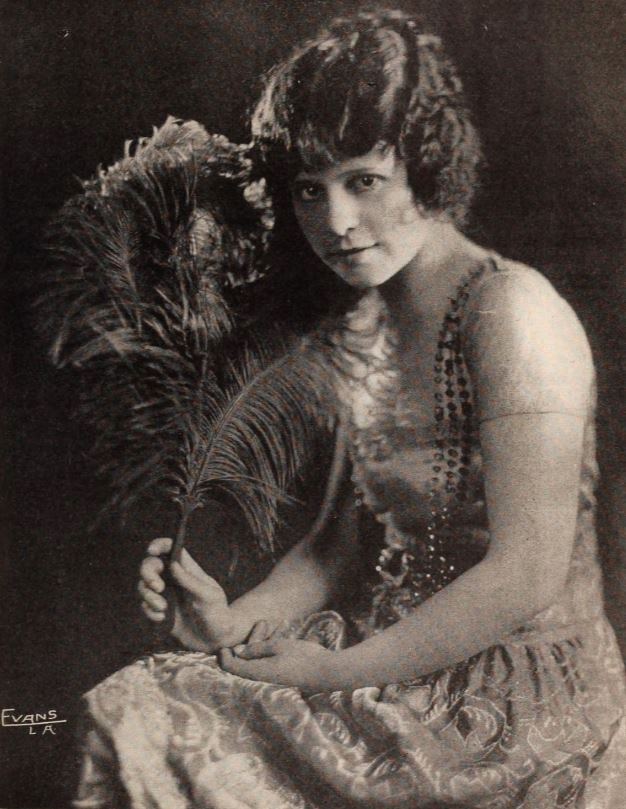
Neva Gerber
View on Wikipedia
Genevieve Dolores Gerber (April 3, 1894 – January 2, 1974) was an American silent film actress who appeared in more than 120 films between 1912 and 1930.
Key Information
Early life and career
[edit]She was born in Argenta, Illinois, to S. Nelson Gerber (1870–1902) and Juanetta Jean Pullman.[1] Her parents separated when she was young and her mother moved her to Los Angeles, California. She was raised by nuns from the College of the Immaculate Heart. After the death of her father, Gerber's impoverished mother gave guardianship of her daughter to an attorney.[2]

After her graduation from high school, Gerber became an actress and appeared in several one-reelers. Her film debut came in The Flower Girl's Romance (1912).[3] Beginning in 1917, she starred in multiple serial films, and she is considered one of the top ten "serial queens" of the silent film period. She teamed with director and actor Ben F. Wilson in many of these productions,[4] and starred in the first crude sound era serial, The Voice from the Sky, also directed by Wilson. However, her career stalled in 1930 after Wilson died from heart disease. Gerber retired from acting shortly thereafter.[1]
Personal life and death
[edit]Gerber's first marriage was to actor Arthur Nelson Millett on July 22, 1913. They separated the following year. In 1915, she became engaged to director William Desmond Taylor. Gerber and Taylor did not marry, because she was not yet divorced from Millett, and she and Taylor broke it off in 1919. (Taylor was subsequently murdered in 1922, a famous unsolved case). Gerber's divorce from Millett was eventually finalized in 1920. In 1923, Gerber married contractor Edward Dana Nolan, who died in 1926 of alcoholism. She went on to marry David Booth in 1934. After Booth's death, she married a fourth and final time, to contractor William Munchoff; he died in 1960.[1][5]
On January 2, 1974, Gerber died of a cerebral thrombosis in Palm Springs, California. She was buried in a pauper's grave in Desert Memorial Park in Cathedral City, California.[1]
Selected filmography
[edit]| Year | Title | Role | Notes |
|---|---|---|---|
| 1912 | The Flower Girl's Romance | Bessie Berkow | Short film |
| 1912 | The Water Rights War | Mabel | Short film |
| 1913 | The Redemption | Ogle - the Nursemaid | Short film |
| 1914 | Mrs. Peyton's Pearls | Eleanor Barton - the Daughter | Short film |
| 1914 | The Judge's Wife | Mrs. Livingston | |
| 1915 | The Madonna | Gertie | Short film |
| 1915 | Little Chrysanthemum | Little Chrysanthemum | Short film |
| 1916 | The Impersonation | Rhoda Lyons | |
| 1916 | The Mansard Mystery | Brina | Short film |
| 1917 | The Voice on the Wire | Polly Marion | Film serial |
| 1917 | The Mystery Ship | Betty Lee | Film series Lost film |
| 1918 | Hell Bent | Bess Thurston | Alternative title: The Three Bad Men |
| 1918 | Three Mounted Men | Lola Masters | Lost film Alternative title: Three Wounded Men |
| 1919 | Roped | Aileen | Lost film |
| 1919 | A Fight for Love | Kate McDougal | Lost film |
| 1919 | The Trail of the Octopus | Ruth Stanhope | Film serial |
| 1920 | The Screaming Shadow | Mary Landers | Film serial Lost film |
| 1920 | Bill's Wife | Short film Writer | |
| 1921 | A Yankee Go Getter | Lucia Robilant/Vera Robilant | |
| 1921 | Dangerous Paths | Ruth Hammond | |
| 1921 | The Mysterious Pearl | Ariel/The Pearl | Film serial |
| 1922 | The Price of Youth | Adela Monmouth | |
| 1922 | Impulse | Julia Merrifield | |
| 1923 | In the West | Florence Jackson | |
| 1923 | The Santa Fe Trail | Film serial Lost film | |
| 1924 | Sagebrush Gospel | Lucy Sanderson | |
| 1924 | Days of '49 | Sierra Sutter | Film serial |
| 1925 | The Power God | Aileen Sturgess | Film serial |
| 1925 | Vic Dyson Pays | Neva | |
| 1925 | Tonio, Son of the Sierras | Evelyn Brower | |
| 1925 | A Daughter of the Sioux | Nanette | |
| 1926 | Officer 444 | Gloria Grey | Film serial |
| 1926 | Fort Frayne | Helen Farrar | |
| 1926 | West of the Law | Alice Armstrong | |
| 1927 | The Range Riders | Betty Grannan | |
| 1927 | Hell Hounds of the Plains | Esther Lawson | |
| 1928 | The Old Code | Lola | |
| 1928 | The Lone Patrol | Credited as Jean Dolores | |
| 1929 | The Saddle King | Felice Landreau | |
| 1929 | Thundering Thompson | Maria Valerian | |
| 1930 | The Voice From the Sky | Jean Lowell | Credited as Jean Dolores |
| 1930 | A Woman's Justice | Credited as Jean Dolores |
References
[edit]- ^ a b c d Doyle, Billy (February 1999). "Whatever Became of Neva Gerber ?". classicimages.com. Archived from the original on April 29, 2009. Retrieved February 17, 2013.
- ^ Lowe, Denise (2004). An Encyclopedic Dictionary of Women in Early American Films, 1895–1930. Haworth Press. pp. 234-236. ISBN 0-7890-1843-8.
- ^ Mayer, Geoff (2017). Encyclopedia of American Film Serials. McFarland. pp. 134–135. ISBN 9781476627199. Retrieved November 9, 2018.
- ^ Strickland, A.W.; Ackerman, Forrest J. (1981). A reference guide to American science fiction films. T.I.S. Publications Division. p. 188. ISBN 0-89917-268-7.
- ^ Higham, Charles (November 15, 2004). Murder in Hollywood: Solving a Silent Screen Mystery. Terrace Books. ISBN 9780299203634 – via Google Books.
External links
[edit]- Neva Gerber at IMDb
- "Neva Gerber, the screen-actress, and her dog". The Green Book Magazine. 16. The Story-press Association: 295. 1916. Retrieved June 21, 2009.
Neva Gerber
View on GrokipediaEarly Life
Family Background
Genevieve Dolores Gerber, known professionally as Neva Gerber, was born on April 3, 1894, in Argenta, Macon County, Illinois. She was the daughter of Samuel Nelson Gerber, born September 21, 1866, in Argenta, and Minnie Juanita Pullum, born around 1874.[4] Her parents separated during her early childhood, leaving her in the care of her mother.[5] No siblings are recorded for Gerber in genealogical records from the period. Her father, a local resident of Argenta, died on December 29, 1905, at the age of 39, which contributed to significant family changes shortly thereafter.Childhood and Relocation
Following her father's death on December 29, 1905, in Argenta, Illinois, from acute congestion of the brain as determined by coroner's inquest, Neva Gerber's family faced significant changes.[6] Due to the family's poverty, Gerber's mother placed her under the guardianship of nuns. Gerber and her mother, Minnie Juanita Pullum Gerber, relocated from Illinois to California during the mid-1900s, settling in the Los Angeles area.[4] In Los Angeles, Gerber was raised under the care of nuns and received her early education at the College of the Immaculate Heart, a Catholic institution that provided a disciplined religious environment during her adolescence. This period of religious oversight and structured schooling shaped her pre-professional years, culminating in her presence in Riverside, California, by 1913.[4]Film Career
Debut and Initial Roles
Neva Gerber entered the film industry in 1912, debuting in the one-reel short The Flower Girl's Romance, a romantic drama produced by the Kalem Company and directed by George Melford.[7] In this early production, she shared the screen with Carlyle Blackwell, marking her initial foray into acting amid the rapid expansion of silent shorts in Southern California.[7] The Kalem Company, known for its efficient output of brief films, provided Gerber with her first professional opportunities, where she typically took on minor or supporting parts that honed her skills in the nascent medium.[8] From 1912 to 1916, Gerber appeared in numerous one-reelers for Kalem, often in Westerns and dramas that emphasized action and moral tales suited to the era's audience preferences.[1] These shorts, typically running 10 to 15 minutes, featured her in roles that supported lead performers while showcasing her versatility in ensemble casts.[8] For instance, in the 1912 Western The Water Rights War, directed by Melford, she portrayed Mabel, the rancher's daughter caught in a conflict over water rights, highlighting themes of frontier justice common to Kalem's output.[9] Another representative early role came in 1913's The Redemption, a dramatic short also helmed by Melford for Kalem, where Gerber played Ogle, the nursemaid in a story exploring social reform and personal transformation.[10] Such performances in Kalem's productions, including titles like The Tragedy of Big Eagle Mine, established her as a reliable presence in supporting capacities, contributing to the studio's reputation for affordable, genre-driven entertainment before her involvement in longer formats.[8] This period laid the groundwork for her progression within the silent film landscape, focusing on concise narratives that demanded precise emotional delivery.Serial Film Success
Neva Gerber achieved her breakthrough in serial films in 1917 with the Universal production The Voice on the Wire, a 15-chapter adventure serial directed by Stuart Paton, in which she starred alongside Joseph W. Girard and Ben F. Wilson.[11] This role marked her transition to prominence in the genre, showcasing her as a capable lead in fast-paced narratives involving mystery and peril. That same year, she appeared in The Mystery Ship, another Universal serial directed by Harry Harvey and Henry McRae, further solidifying her reputation in cliffhanger storytelling.[11] Gerber's career peaked through her long-term partnership with actor-director Ben F. Wilson, with whom she collaborated in over 50 films, including numerous serials that highlighted her versatility in adventure formats.[12] Key productions from this collaboration include the 1919 Hallmark Pictures serial The Trail of the Octopus, directed by Duke Worne, where Gerber played the frequently kidnapped heroine Ruth Stanhope opposite Wilson's master criminologist Carter Holmes. In 1925, she starred as Aileen Sturgess in the 15-chapter The Power God, co-directed by Francis Ford and Wilson for Goodwill Pictures, a story blending science fiction and anti-oligarchic themes with Gerber's character entangled in a plot involving a mad inventor's energy weapon.[11] Their teamwork extended to the 1926 Goodwill serial Officer 444, also co-directed by Ford and Wilson, in which Gerber portrayed Gloria Grey, an emergency nurse aiding the titular hero against a criminal syndicate known as "The Frog."[11] Throughout the late 1910s and 1920s, Gerber specialized in serials, appearing in at least nine such productions amid a total film output exceeding 120 titles between 1912 and 1930.[1] She typically embodied heroic leads or resourceful damsels in these adventure serials, often facing kidnappings, pursuits, and exotic threats that underscored the genre's emphasis on female resilience amid high-stakes action.[11] This focus on serials defined her fame, positioning her as a "serial queen" in the independent film circuit, where her performances contributed to the era's popularization of multi-chapter mysteries and detective tales.[11]Later Roles and Retirement
As the silent film era waned in the late 1920s, Neva Gerber's roles became increasingly sparse, shifting toward supporting parts in low-budget Westerns produced by Ben F. Wilson Productions. In 1929, she appeared as Felice Landreau in The Saddle King, a silent Western directed by Ben F. Wilson, where she portrayed a rancher's daughter entangled in a land dispute. That same year, Gerber took on the role of Maria Valerian in Thundering Thompson, another Wilson-directed silent Western, depicting a sheep herder's daughter caught in a conflict over grazing rights. These films exemplified her continued association with Wilson, whose partnership had defined much of her serial success earlier in the decade.[13][14] The advent of sound films presented significant technical and artistic challenges for many silent-era performers, including Gerber, as studios grappled with rudimentary recording technology and shifting audience expectations. Gerber's final project, the 1930 serial The Voice from the Sky, marked her transition to talkies and stands as one of the earliest all-sound chapterplays. Directed by Ben F. Wilson and co-starring Hal Taliaferro as Secret Service agent Jack Deering, the ten-chapter serial featured Gerber as Jean Lowell, a scientist's daughter aiding in the investigation of a mysterious voice broadcasting disarmament threats from the sky. Production was hampered by technical difficulties with the innovative but unreliable soundtrack system, limiting the film's release and commercial viability.[15][16] Gerber's career effectively ended with The Voice from the Sky, her last credited role, as she retired from acting shortly after the death of Ben F. Wilson on August 25, 1930, from heart disease. Wilson's passing at age 54 dissolved their long-standing professional collaboration, which had sustained her work in serials and Westerns, leaving Gerber without her primary director and co-star. By 1930, having appeared in over 120 films since her 1912 debut, she chose to step away from the industry at age 36.[17][18]Personal Life
Relationships and Marriages
Neva Gerber's first significant romantic relationship was her engagement to director William Desmond Taylor, which began around 1914 while they were both working at the Balboa Amusement Producing Company. The couple dated for a year before becoming engaged, but the relationship ended in 1919, primarily because Gerber was not yet divorced from her first husband. Taylor's unsolved murder in 1922 drew media attention to his past associates, including Gerber, though she had no direct involvement in the scandal and was not considered a suspect.[19][20] Gerber's first marriage was to actor Arthur Nelson Millett on July 21, 1913, in Riverside, California. The union was short-lived; the couple separated after about six months, though the divorce was not finalized until 1920. Following the end of her engagement to Taylor, Gerber married contractor Edward Dana Nolan in 1923. Nolan died in 1926, ending the marriage after three years.[4][21][1][22] In 1934, Gerber married David Booth, a union that lasted until his death sometime before 1958; specific details on the duration and Booth's passing remain unclear in available records. Her fourth and final marriage was to contractor William Carl Munchoff in 1958, which continued until his death in 1960. Gerber had no children from any of her marriages.[23][1]Post-Retirement Years
After retiring from acting in 1930 following the death of her frequent collaborator Ben F. Wilson, Neva Gerber maintained a low public profile with no documented involvement in the entertainment industry thereafter.[24] In her later years, Gerber resided in Palm Springs, California, where she spent her time away from the film world. Details of her daily life as a retired actress from the 1930s through the early 1970s are scarce, indicating a private existence unmarked by notable public engagements or professional returns.Death
Final Days
In her later years, Neva Gerber continued to reside in Palm Springs, California, where she had made her home following retirement from the film industry. On January 2, 1974, she died in Palm Springs at the age of 79 from cerebral thrombosis, a condition involving a blood clot in the brain.[1]Burial and Aftermath
Neva Gerber was interred in an unmarked pauper's grave at Desert Memorial Park in Cathedral City, California, following her death on January 2, 1974.[3][23] Her burial reflected the financial hardships of her final years.[3] Gerber's legacy endures primarily through her contributions to early serial films, though most of her work remains lost, limiting widespread recognition or revivals.[25] Serial genres have been highlighted in preservation efforts, as seen in the rediscovery of related works by her frequent collaborator Ben F. Wilson, including potential for titles like The Voice on the Wire (1917).[26]Filmography
Feature Films
Neva Gerber's feature film roles, spanning from 1918 to 1929, often placed her in supporting parts within westerns and dramas, showcasing her versatility beyond her serial work. These appearances, typically in low-budget productions, highlighted her as a reliable leading lady opposite actors like Harry Carey and Ben F. Wilson. While many of her features survive only in incomplete prints or not at all, they reflect the transitional era of silent cinema where runtime and narrative scope blurred lines between shorts and full-length stories.[1] Key examples include her early role in Hell Bent (1918), directed by John Ford, where she portrayed Bess Thurston, a captive woman rescued by a reformed gunman played by Harry Carey; the film, running approximately 50 minutes, is preserved in the Museum of Modern Art collection and marks one of Ford's initial directorial efforts.[27][28] In A Fight for Love (1919), Gerber played Kate McDougal, a determined woman entangled in a romantic rivalry on the frontier, a Universal production that emphasized dramatic tension over action. Her performance in The Price of Youth (1922) as Adela Monmouth involved a sophisticated social drama about inheritance and morality, though the film is considered lost. (Note: General lost film databases confirm many 1920s independents like this are unpreserved.) Gerber took on the lead in The Seventh Sheriff (1923) as Mary Tweedy, a rancher's daughter aiding a lawman in a tale of justice and betrayal; no complete prints survive. In the feature adaptation California in '49 (1924), derived from the serial Days of '49, she embodied Sierra Sutter, a resilient figure amid Gold Rush chaos, with the 70-minute version emphasizing historical adventure; a 16mm print exists but is incomplete.[29][30] Warrior Gap (1925) saw her as Elinor Folsom, supporting a cavalry officer in a frontier conflict, a Ben Wilson-directed western that is presumed lost. She continued with Fort Frayne (1926) as Helen Farrar, a nurse in a military outpost drama, and West of the Law (1926) as Alice Armstrong, entangled in a mystery of hidden gold; both are lost films from independent studios. (Preservation note from Silent Era database.) Later entries featured Gerber in Hellhounds of the Plains (1927) as Esther Lawson, a heroine facing rustlers and revenge, opposite Yakima Canutt; the film survives in public domain prints.[31] In The Range Riders (1927), she played Betty Grannan, aiding a posse against outlaws, a quick-paced B-western now lost. Riders of the West (1927) cast her in an unspecified role in a tale of frontier vigilantism, also unpreserved. A Yellow Streak (1927) involved her in a drama of cowardice and redemption on the range, presumed lost like many Wilson productions. Among her final features, The Old Code (1928) had Gerber as Lola, a saloon singer in a story of honor and gunplay, directed by Ben F. Wilson; the film is lost. Thundering Thompson (1929) featured her as Maria Valerian, the romantic lead in a high-stakes rodeo and robbery plot with Ken Maynard, with surviving 16mm elements available. Her last, The Saddle King (1929), saw her as Felice Landreau in a western romance of mistaken identities, also lost following the era's nitrate decay.[13] These roles underscored Gerber's niche in economical genre films, many of which contributed to the preservation challenges of early Hollywood output.Serials and Shorts
Neva Gerber began her film career in short subjects, appearing in one-reel comedies and dramas produced by Kalem Company as early as 1912. These early shorts often featured her in supporting roles, showcasing her versatility in light romantic and dramatic scenarios typical of the era's single-reel format. By the mid-1910s, she transitioned to Universal Studios, where she starred in more adventurous shorts, including Westerns directed by prominent figures like John Ford and Harry Carey. Her work in shorts emphasized quick-paced narratives suited to the short film medium, frequently involving themes of romance, conflict, and frontier life.[1] Gerber's prominence grew in the serial genre, where she became a staple leading lady in multi-chapter adventure and Western serials, often co-starring with Ben F. Wilson in productions that spanned 10 to 15 episodes. These serials, popular for their cliffhanger structure, highlighted her as resourceful heroines facing perils like espionage, outlaws, and scientific threats, contributing to her reputation as one of the era's prolific serial actresses. She appeared in at least nine serials, many directed or produced by Wilson, blending action with romantic subplots in the adventure and Western styles dominant in silent cinema.[1] The following table catalogs selected serials and shorts from Gerber's filmography, focusing on her key appearances in adventure and Western genres between 1912 and 1930. Entries include year, title, role, format (serial or short), chapter count where applicable, co-stars, studio, and genre notes.| Year | Title | Role | Format | Chapters | Co-Stars | Studio | Genre Notes |
|---|---|---|---|---|---|---|---|
| 1912 | The Flower Girl's Romance | Bessie Berkow | Short | N/A | Unspecified | Kalem | Romantic comedy; early one-reeler debut.[1] |
| 1912 | The Water Rights War | Mabel | Short | N/A | Unspecified | Kalem | Western drama; frontier conflict theme. |
| 1913 | The Redemption | Ogle the Nursemaid | Short | N/A | Unspecified | Kalem | Drama; supporting role in moral tale. |
| 1914 | Mrs. Peyton's Pearls | Eleanor Barton | Short | N/A | Unspecified | Kalem | Mystery; theft and family intrigue. |
| 1915 | Cupid Beats Father | Neva | Short | N/A | Frank Borzage | Unspecified | Comedy; romantic matchmaking plot. |
| 1915 | Alias James, Chauffeur | Neva Stewart | Short | N/A | Frank Borzage, Jimsy Maye | Unspecified | Comedy; mistaken identity farce.[32] |
| 1916 | The Mansard Mystery | Brina | Short | N/A | Unspecified | Universal | Mystery; haunted house adventure. |
| 1917 | The Lost Express | Unspecified | Serial | 15 | Ben F. Wilson | Universal | Western adventure; train peril and pursuit. |
| 1917 | The Voice on the Wire | Polly Marion | Serial | 15 | Ben F. Wilson, Francis McDonald | Universal | Adventure; espionage and wiretapping thriller.[33] |
| 1917 | The Mystery Ship | Betty Lee | Serial | 18 | Ben F. Wilson | Universal | Adventure; nautical peril and lost film. |
| 1917 | The Great Secret | Unspecified | Serial | 18 | Francis X. Bushman | Unspecified | Spy thriller; international intrigue.[34] |
| 1918 | Three Mounted Men | Lola Masters | Short | N/A | Harry Carey, Duke Lee | Universal | Western; outlaw pursuit action.[28] |
| 1919 | Roped | Aileen | Short | N/A | Harry Carey, Mollie McConnell | Universal | Western; ranch romance and comedy.[35] |
| 1919 | The Trail of the Octopus | Ruth Stanhope | Serial | 15 | Ben F. Wilson | Universal | Adventure; detective vs. criminal mastermind.[36] |
| 1920 | The Screaming Shadow | Mary Landers | Serial | 15 | Ben F. Wilson | Pathé | Mystery; supernatural horror elements. |
| 1922 | Officer 444 | Gloria Grey | Serial | 10 | Ben F. Wilson, Ruth Royce | Goodwill | Adventure; police vs. crime syndicate.[37] |
| 1923 | The Santa Fe Trail | Unspecified | Serial | 10 | Ben F. Wilson | Unspecified | Western; pioneer trail dangers. |
| 1924 | Days of '49 | Unspecified | Serial | 10 | Edmund Cobb | Universal | Western; Gold Rush adventure. |
| 1925 | The Power God | Aileen Sturgess | Serial | 10 | Ben F. Wilson | Unspecified | Sci-fi adventure; mad scientist theme.[38] |
| 1929 | The Voice from the Sky | Jean Lowell (as Jean Dolores) | Serial | 10 | Hal Taliaferro | Universal | Adventure; early sound elements, aviation plot.[16][39] |
