Hubbry Logo
Nils BejerotNils BejerotMain
Open search
Nils Bejerot
Community hub
Nils Bejerot
logo
8 pages, 0 posts
0 subscribers
Be the first to start a discussion here.
Nils Bejerot
Nils Bejerot
from Wikipedia

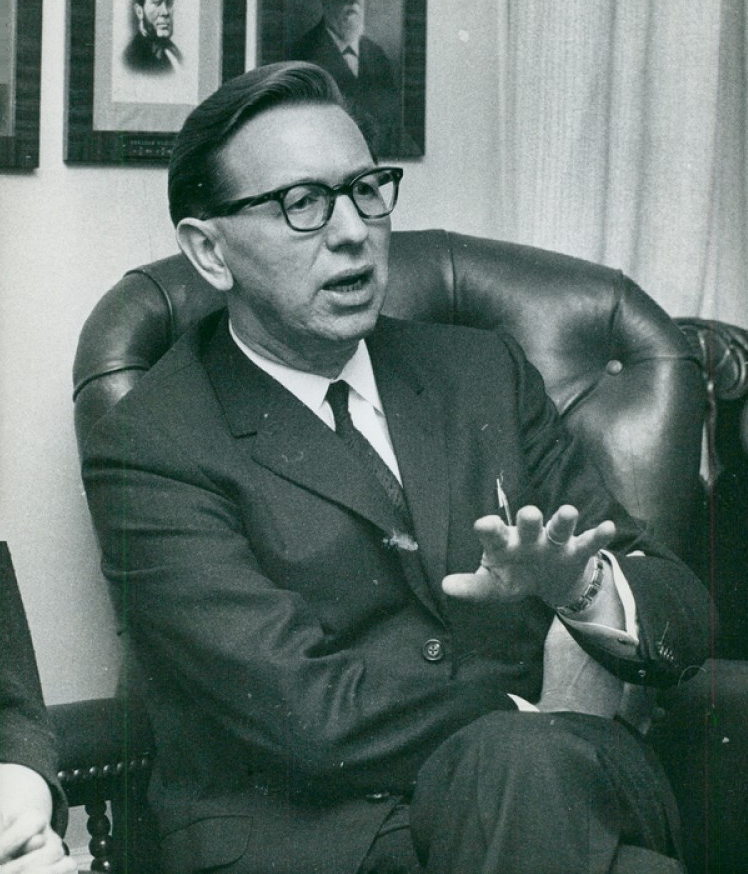
Nils Johan Artur Bejerot (21 September 1921 – 29 November 1988) was a Swedish psychiatrist and criminologist best known for his work on drug abuse and for coining the phrase Stockholm syndrome.[1] Bejerot was one of the top drug abuse researchers in Sweden. His view that drug abuse was a criminal matter and that drug use should have severe penalties was highly influential in Sweden and in other countries. He believed that the cure for drug addiction was to make drugs unavailable and socially unacceptable. He also advocated the idea that drug abuse could transition from being a symptom to a disease in itself.

Key Information

Early life

[edit]

Nils Bejerot was born 1921 in Norrtälje, Stockholm County. His father worked as a bank teller at the local Upland Bank office. Not an avid student, he was more interested in scouting. In 1936 the family moved to Östhammar after his father was assigned to another bank office. At the age of 15, Bejerot was found to have bleeding in the lungs due to tuberculosis and was admitted to a sanatorium for a total of three years. However, Bejerot described this time as a happy period in his life. The mood among the patients was good, despite the fact that approximately one third of them died.[2]

On his first vacation he met English nurse Carol Maurice in the 320 km railway between Samac and Sarajevo in then-Yugoslavia, and they later married.[2]

Psychiatry

[edit]

In 1952–54, Bejerot served as assistant at the Karolinska Institute hygienic institution after finishing basic medical education at Karolinska Institute. In the same period he wrote his book against the violence in comic books.

In 1954, while serving as deputy social medical officer at the Child and Youth Welfare Board of the City of Stockholm, Bejerot became, by coincidence, the first to diagnose and report a case of juvenile intravenous drug abuse by any public authority in Europe.

In 1957, Bejerot received a medical degree from the Karolinska Institute in Stockholm. From 1957 to 1962, Bejerot was trained in psychiatry at the Södersjukhuset and the Saint Göran Hospital in Stockholm.

From 1958 onwards, Bejerot worked as consulting psychiatrist to the Stockholm Police Department, and from 1965 as consulting physician to the Stockholm Remand Prison. His patients were people in police custody, many of them local alcoholics or drug addicts. Later he became Research Fellow in drug dependence at the Swedish National Medical Research Council, and then a reader in Social Medicine at the Karolinska Institute.

In 1963, Bejerot studied epidemiology and medical statistics at the London School of Hygiene & Tropical Medicine, on a grant from the World Health Organization.[3]

In 1973, he served as a psychiatric advisor during the Norrmalmstorg robbery, and coined the term Stockholm syndrome to refer to the way in which the hostages apparently become grateful to the hostage-takers and critical against the police's handling of the situation.[1][4] The term has since become heavily used.

In 1975, Bejerot became an associate professor on a doctoral thesis about drug abuse and drug policy at the Karolinska Institute.[5] In 1979 Bejerot received an honorary title of professor, an honor that the Swedish government usually awards to only a few people a year.[6]

His research covered such wide areas as the epidemiology of drug abuse, the dynamics of drug dependence and the anomalies of public welfare policy. Bejerot gave an extensive number of lectures in many parts of Sweden. For 30 years he lobbied intensively for zero tolerance,[Note 1] including possession and use of cannabis. He published about 600 papers and debate articles in different media, and published more than 10 books about the subject. In total he had about 100,000 participants of his 2-day courses.[7] For many years he held lectures at ‘’Polishögskolan’’ (The Swedish Police College) about drug abuse, mental problems and negotiation skills. He was teacher for almost every Swedish police officer, which gave him the epithet "polisdoktorn" (The police doctor).[2][8]

Politics

[edit]

During his time in sanatoriums while suffering tuberculosis, he met people of different ages with different experiences, and the discussions they had he later claimed encouraged him to study and become involved in political activity, becoming a member of the Communist Party and other Socialist-affiliated organizations. When he started to study medicine in 1947 his social and political commitments made him a slow student.[2] However, Nikita Khrushchev's secret speech in 1956 at the 20th Party Congress led Bejerot to question the whole communist system; the illusion of the glorious future of communism was definitely shattered when the Soviet Union invaded Hungary, causing Bejerot to quit all activities in politics and focus on the study of medicine.[2]

Bejerot also advocated against violence in comic books. While working at the Karolinska Institute between 1952 and 1954, he wrote his 1954 book Barn, serie, samhälle (Children, Comics, Society), itself largely an adaptation of Fredric Wertham's book Seduction of the Innocent, also published in 1954. He did not come back to this topic in his later books.

Bejerot also strongly advocated for strict anti-drug laws. In 1965, Bejerot started to engage in the Swedish debate on drug abuse, encouraging tough action against the new and rapidly growing problem. He followed closely a rather clumsy experiment with legal prescription of heroin, amphetamine, etc. to drug addicts, studies that formed the basis for his thesis on the epidemic drug spread. Bejerot claimed that the program would increase the number of drug addicts and showed through counting of injection marks that the number of drug addicts in Stockholm continued to grow fast during the experiment. The program was stopped in 1968.[9][10] From 1968 and onward, the difference between the epidemic type, the therapeutic type and the endemic type of drug abuse was a repeated issue in Bejerot's writing and lectures.[9][11][12]

In 1969, Bejerot became one of the founders of the Association for a Drug-Free Society (RNS), which played – and still plays – an important role in shaping Swedish drug policies.[13][14] Bejerot warned of the consequences of an ‘epidemic addiction’, prompted by young, psychologically and socially unstable persons who, usually after direct personal initiation from another drug abuser, begin to use socially nonaccepted, intoxicating drugs to gain euphoria.[15][16] In 1972, Bejerots' reports were used as one of the reasons for increasing the maximum penalty for grave drug offences in Sweden to 10 years in prison. In 1974 he was called to testify as one of 21 scientific experts on marijuana for a subcommittee of the United States Senate on the marijuana-hashish epidemic and its impact on United States security.[3][17]

He advocated zero tolerance[Note 1] for illegal use and possession of drugs, including all drugs not covered by prescription, something that today is law in Sweden. In the early 1980s, he became one of the "Top 10 opinion molders" in Sweden for this. Bejerot is by UNODC and many others recognized as founder of the Swedish strategy against recreational use of drugs. His demand for zero tolerance[Note 1] as a drug policy was for a long time seen as extreme, but during the late 1970s opinion changed. He is without doubt the person most responsible for changing the Swedish drug policy in a restrictive direction[8][18] something that made him a controversial person, both before and after his death.[19] Many people considered Bejerot as a good humanist advocating a viable policy against narcotics and Robert DuPont considers him "the hero of the Swedish drug abuse story."[20] Others view this as a reactionary hindering of new treatment practices against drug abuse.[21]

Bejerot's theories about spread of drug abuse and proposals for an anti-drug policy have still a significant influence on the drug policy of Sweden. When R. Gil Kerlikowske the Director of National Drug Control Policy in May 2012, announced an updated version of U.S. President Barack Obama's administration's drug policy he referred to what happened in the experiment with legal prescription of drugs in 1965 that was studied by Bejerot in his doctoral thesis.[22]

Research

[edit]

Before Bejerot began to participate in the debate on drugs in 1965, it was the dominant view in Sweden that drug abuse was a private health problem and that law enforcement measures should be aimed at drug dealers. Before 1968, the maximum offence for a grave drug crime was one year in prison. Bejerot objected to this and stressed the importance of measures against the demand for drugs, against users, and their importance in the spread of addiction to new addicts.

Bejerot did not accept unemployment and poor private economy as explanations for increased use of illegal drugs. He pointed out that alcohol abuse in the 1930s was comparatively limited in Sweden, despite high unemployment and economic depression.

Nils Bejerot stressed five main factors that cause increased risk of an individual of becoming a drug abuser:

  • availability of the addictive substance
  • money to acquire the substance
  • time to use the substance
  • example of use of the substance in the immediate environment
  • a permissive ideology in relation to the use of the substance[23]

Bejerot advanced the hypothesis that when addiction supervenes it is no longer a symptom but a morbid condition of its own. In the abuse stage one can willfully control their consumption and intoxicating themselves at will, but eventually – depending on the product's addictive qualities, the dosage, the intensity of the abuse, individual factors etc. – the drug abuse can turn into drug dependency, receiving the strength of an instinct. Therefore, its development will not be affected by removal of the initiating factors, and the drug dependency has developed the strength and character of a natural drive, even though it was artificially-induced.[24]

He compared addiction with a very deep love, writing that addiction is "an emotional fixation (sentiment) acquired through learning, which intermittently or continually expresses itself in purposeful, stereotyped behavior with the character and force of a natural drive, aiming at a specific pleasure or the avoidance of a specific discomfort."[25]

This would however not mean that drug addiction was impossible to treat. The abuse was learned, hence it is also possible to relearn, how to live without drugs, and treatment of drug addicts should have a drug-free goal, differing with others who aimed at reduction of adverse effects, also known as harm reduction.[Note 1] Bejerot thus criticized programs of long methadone treatment of opiate users in programs that were not aimed at drug freedom.

See also

[edit]

Notes

[edit]

References

[edit]
[edit]
Revisions and contributorsEdit on WikipediaRead on Wikipedia
from Grokipedia
Nils Johan Artur Bejerot (1921–1988) was a Swedish and criminologist renowned for his empirical research on drug as a preventable behavioral driven by rather than inevitable . Graduating with an MD from the in 1957 and earning a in 1974, he served as consulting to the Police Department from 1958 to 1988, where he analyzed patterns of abuse among criminals and developed epidemiological models emphasizing demand reduction through strict societal controls. Bejerot's advocacy for coercive, drug-free treatment and the of all use profoundly shaped Sweden's zero-tolerance policy, founded via his establishment of the Association for a Drug-Free Society (RNS), countering liberal harm-reduction approaches prevalent in academia and . His injection-mark studies at prisons documented rising abuse rates, underscoring the need for proactive intervention over permissive prescriptions, a stance that drew controversy amid Sweden's debates but aligned with causal mechanisms of as learned, reversible behavior. Additionally, Bejerot coined "" during his advisory role in the 1973 Norrmalmstorg bank robbery, describing hostages' paradoxical attachment to captors as a survival adaptation, a concept originating from his observations of psychological dynamics in criminological contexts. Later honored as an honorary in 1979 and director of the Swedish Carnegie Institute until his death from on 29 November 1988, Bejerot's work prioritized empirical prevention and societal responsibility, yielding Sweden's notably low rates compared to peer nations.

Early Life and Education

Childhood and Family Background

Nils Bejerot was born out of wedlock on September 21, 1921, in a relationship between an orphaned maid and a farmer's son from Vädö who later retrained for other work. He grew up in Norrtälje, a town in , under stable and orderly family circumstances, with his father employed as a bank clerk. During his teenage years, Bejerot's family moved to , where he spent the latter part of his youth. Little is documented about specific childhood experiences or early influences, though the structured home environment provided a conventional upbringing in early 20th-century .

Medical and Psychiatric Training

Bejerot earned his medical degree (MD) from Karolinska Institutet in in 1957. After graduation, he specialized in and . In 1958, he commenced his role as consulting to the Stockholm Police Department, conducting approximately 10,000 diagnostic examinations over three decades in this capacity. In 1963, Bejerot studied and at the London School of Hygiene and Tropical Medicine. Even prior to completing his , he served as a medical consultant to the Child Welfare Board of in 1954, diagnosing the first recorded case of intravenous abuse in .

Professional Career

Psychiatry Practice

Nils Bejerot specialized in and treatment, with his clinical practice centered on institutional roles rather than private consultations. After graduating with an MD from in 1957, he began serving as consulting psychiatrist to the Stockholm Police Department in 1958, a position he held until 1988. In this role, he conducted approximately 10,000 diagnostic examinations of arrested individuals, including criminals, alcoholics, chronic drug addicts, and those with mental illnesses. Early clinical exposure came in 1954, when, as a medical student and consultant to the Child Welfare Board, Bejerot diagnosed Sweden's first documented case of intravenous abuse. His work extended to settings, particularly the Remand Prison, where he interviewed thousands of young intravenous addicts, observing patterns of person-to-person transmission of substance use disorders. These encounters informed his view of as a contagious condition akin to infectious diseases, leading him to prioritize epidemiological containment over traditional psychotherapeutic models. Bejerot's treatment philosophy emphasized coercive interventions enforced through mechanisms to achieve , rejecting voluntary hospitalization and permissive prescribing as ineffective due to addicts' hijacked reward circuits impairing rational choice. He criticized hospital-based care for addicts as functioning like a "hotel receptionist," allowing easy egress and failing to interrupt spread, and instead advocated compulsory measures modeled on historical treatments for . For over 30 years, he collaborated with on -related cases, integrating clinical diagnostics with strategies to address addiction's criminal dimensions.

Criminological Involvement

Bejerot served as consulting psychiatrist to the Police Department from 1958 until 1988, performing roughly 10,000 diagnostic examinations of arrestees, encompassing criminals, addicts, and individuals with mental illnesses. In this forensic role, he provided psychological assessments and tactical advice during high-profile incidents, including the 1973 Norrmalmstorg siege, where his analysis of hostage dynamics led him to identify and name "" to describe victims' paradoxical attachment to captors. This involvement extended his influence into practical , linking psychiatric evaluation to police operations aimed at resolving criminal standoffs. A cornerstone of Bejerot's criminological contributions was his initiation of the Injection Mark Study at Stockholm Remand Prison, which systematically examined detainees' arms for intravenous injection scars to track drug abuse prevalence among offenders. The method revealed injecting drug use rising from 20% of arrestees in to 33% by 1967, tied to lax prescribing policies, before declining following intensified enforcement. Bejerot's data established a tight causal nexus between and , showing that virtually all emergent intravenous users were recidivist criminals engaging in property offenses like to fund habits, with legal addicts exhibiting persistently elevated criminality rates. Through decades of police collaboration, Bejerot framed drug-driven criminality as an requiring interruption via criminal sanctions on use itself, rather than mere possession or supply, influencing Sweden's shift toward punitive measures that prioritized societal protection over individual leniency. He quantified the economic toll, estimating one intravenous addict's lifetime burden at approximately 2,000,000 SEK (equivalent to about 400,000 USD in ) in crime-related costs, health expenditures, and lost productivity. These insights, derived from longitudinal offender monitoring, underscored addiction's role in perpetuating cycles of and informed advocacy for compulsory isolation and treatment to curb criminogenic spread.

Research Contributions

Studies on Drug Abuse Epidemiology

Bejerot approached the epidemiology of drug abuse by analogizing it to infectious disease dynamics, emphasizing person-to-person transmission through social contagion rather than solely individual pathology. After training in epidemiology and public health at the London School of Hygiene and Tropical Medicine in 1963, he applied these principles to track the spread of intravenous drug use in Sweden, particularly amphetamines, which he identified as initiating a national epidemic from the mid-1940s. His framework highlighted incidence rates driven by recruitment of new users from existing addicts, with prevalence measured via systematic surveillance of high-risk populations. In 1965, Bejerot launched a at Remand Prison, examining urine samples and interviews from the arrest population to monitor intravenous drug abuse trends. This initiative revealed a sharp escalation: by 1967, over 20% of detainees tested positive for narcotics, predominantly amphetamines injected intravenously, contrasting with negligible rates in the early . He extended this to annual surveys from 1965 to 1987, documenting the epidemic's progression across , including shifts from amphetamines to opiates and polydrug patterns, with cumulative incidence estimates exceeding 10,000 active intravenous users by the 1970s. Bejerot's methodological contributions included refined techniques for estimating prevalence and incidence, such as capture-recapture analysis adapted from wildlife ecology and of data with police records and admissions. In his 1975 book Drug Abuse and Drug Policy, he detailed a 1965–1970 analysis of Stockholm's cohort, finding that 15–25% exhibited intravenous markers, with transmission chains linking 70% of cases to peer networks. These studies underscored causal factors like lax prescribing practices and cultural liberalization in the , rejecting genetic or socioeconomic in favor of models supported by temporal correlations in outbreak data.

Prison-Based Monitoring of Addiction

In 1965, Nils Bejerot initiated a at Remand Prison, where he served as consulting physician to detainees, many of whom were identified as alcoholics or intravenous drug users. The primary objective was to monitor the epidemiological spread of intravenous drug abuse in by systematically documenting indicators of use among this high-risk population, which Bejerot viewed as a sentinel group for broader societal trends due to the overrepresentation of addicts in settings. The core method involved physical examinations of incoming arrestees and prisoners for injection marks—scars from repeated venous punctures—conducted by Bejerot or trained staff, extending to concealed sites such as armpits to minimize underreporting. Complementary data collection included interviews on drug and criminal histories, enabling Bejerot to construct profiles of trajectories and correlate them with changes, such as the prior liberalization of prescriptions in during the 1950s and early . This approach yielded quantitative estimates of ; for instance, early findings confirmed a rapid escalation in intravenous use, with Bejerot documenting thousands of cases by the late that aligned with his rejection of medical distribution as a containment strategy. By 1975, aggregated from the monitoring indicated that approximately 30% of examined arrests in (9,047 out of 28,833 cases) displayed injection marks, underscoring the scale of the emerging epidemic among criminal populations. Bejerot's records further revealed temporal spikes correlating with social and policy factors, such as shifts, with new inmate positivity rates for marks increasing markedly post-1965. These observations informed his broader epidemiological model, positing drug addiction as a socially transmissible condition akin to infectious diseases, where served as early warning signals for community-level contagion. The study's persistence through the provided empirical ammunition for Bejerot's advocacy of zero-tolerance policies, demonstrating that permissive measures had fueled abuse rates rather than curbed them, as evidenced by the cohort's disproportionate burden of . While subsequent analyses have debated the representativeness of injection mark surveys for general populations—citing potential biases in arrestee sampling—Bejerot's offered a verifiable, low-cost proxy for tracking hard-to-quantify illicit behaviors in real time. This -based framework influenced Swedish drug control evaluations, emphasizing coercive isolation and treatment over to interrupt transmission chains.

Development of Addiction Epidemic Theory

Bejerot developed his theory of as an process during the mid-1960s, drawing from clinical observations of rising intravenous use among Swedish juveniles and young adults. He conceptualized not merely as an individual but as a contagious behavioral phenomenon that propagates socially from experienced users to susceptible non-users, akin to an infectious . This framework emphasized the role of direct interpersonal transmission, where initial adopters within subcultures—often defined by geographic, ethnic, or socioeconomic boundaries—serve as vectors, recruiting novices through , demonstration, or shared rituals, leading to exponential spread unless interrupted by societal controls. Central to the theory's formulation was Bejerot's empirical monitoring of drug abuse patterns, initiated in 1965 through systematic interviews with inmates at Remand Prison, which revealed sharp increases in and dependency correlating with peer exposure rather than isolated predispositions. He identified key epidemiological markers, including rapid incidence rates among confined populations mirroring community trends, and posited that functions as an "artificially induced drive," where pharmacological reinforcement overrides natural inhibitions, compelling users to proselytize the habit to sustain their own supply and euphoria. By 1972, Bejerot formalized these insights in his Addiction: An Artificially Induced Drive, arguing that unchecked epidemics, as observed in Sweden's post-1945 surge and 1960s wave, could engulf broader populations without coercive interventions like isolation or . Bejerot's model diverged from prevailing psychological or socioeconomic explanations by prioritizing causal contagion over voluntary choice or , asserting that five interacting factors—availability of drugs, presence of addicts, lack of social norms against use, vulnerability of hosts, and ineffective countermeasures—predict trajectories. He advocated quarantine-like measures, such as mandatory treatment and restricted contact, to break transmission chains, a stance informed by Sweden's documented decline in youth rates following intensified restrictions in the and . This theory underpinned his critique of policies, highlighting how permissive environments accelerate spread, as evidenced by cross-national comparisons where lax controls correlated with higher prevalence.

Drug Policy Advocacy

Founding of the Association for a Drug-Free Society

In response to the escalating in during the late 1960s, characterized by widespread use among youth and the emerging threat of intravenous injection, Nils Bejerot established the Swedish National Association for a Drug-Free Society (Riksförbundet Narkotikafritt Samhälle, or RNS) in 1969. Bejerot, who had been monitoring drug trends through his work at correctional institutions and since the mid-1960s, viewed as a contagious akin to an , necessitating societal-level intervention rather than individual treatment alone. The organization's founding emphasized zero-tolerance policies, supply restriction, and cultural stigmatization of all non-medical drug use to prevent normalization and escalation. Bejerot initiated RNS with a small cadre of supporters, including medical professionals and concerned citizens, amid initial resistance from liberal-leaning institutions that favored experimental approaches like prescription-based maintenance programs. Early activities focused on public education, lectures drawing thousands across , and lobbying for legislative reforms, positioning RNS as a counterweight to permissive trends in . Despite slow growth in its formative years—membership remained modest until the —the association rapidly influenced policy discourse by providing empirical data from Bejerot's epidemiological studies, which documented rapid increases in rates and associated crime. RNS's establishment marked a pivotal shift toward for prohibitive drug laws, with Bejerot serving as its intellectual driving force until his death in 1988. The group advocated for viewing drug dependency not merely as a issue but as a societal pathology requiring collective , a stance that contrasted with models emerging elsewhere and contributed to Sweden's enduring restrictive framework. Over time, RNS expanded to include local chapters and collaborations with , solidifying its role in sustaining public opposition to .

Opposition to Harm Reduction and Methadone Programs

Bejerot criticized approaches, including needle exchange programs and supervised injection sites, as measures that normalize and perpetuate drug use rather than eliminate it, arguing they fail to address the contagious nature of epidemics. He contended that such policies increase overall drug availability and exposure, drawing from observations of Sweden's 1965–1967 experiment with prescriptions to addicts, which he documented as doubling intravenous drug abuse rates within 12 months while failing to reduce associated . Regarding methadone maintenance therapy, Bejerot expressed strong skepticism, viewing it as a substitution strategy that sustains dependency without promoting , the only viable path to recovery in his framework. He observed that prescribed opioids, including , were frequently diverted to illicit markets by addicts, thereby fueling the spread of use to non-users and exacerbating epidemics rather than containing them. In his analysis of prescribing practices influenced by British models, Bejerot noted that such programs did not diminish drug consumption but instead prolonged , with recipients often selling doses on the street. He advocated instead for coercive interventions, likening voluntary treatment to a "voluntary penal system" ineffective against the impaired decision-making of addicts. Bejerot's foundational theory treated drug addiction as a socially transmitted disorder akin to an infectious disease, rendering harm reduction counterproductive by reducing societal stigma and barriers to initiation. While he showed limited tolerance for methadone in the mid-1980s amid rising HIV risks from intravenous use, this was pragmatic rather than ideological, with abstinence remaining his ultimate goal through zero-tolerance policies enforced via criminalization and compulsory care. These positions, articulated through his writings and the Association for a Drug-Free Society he founded in 1969, directly influenced Sweden's rejection of expansive substitution programs in favor of restrictive controls.

Influence on Restrictive Swedish Drug Legislation

Bejerot's critique of mid-1960s liberal experiments, including prescriptions of amphetamines and opiates that correlated with a sharp rise in intravenous drug users from around 500 registered cases in 1965 to thousands by 1968, galvanized opposition to permissive approaches and informed a swift policy pivot toward . His prison-based observations of injection marks and patterns underscored the epidemic-like spread of use, leading to the termination of prescription programs in 1969 and stricter enforcement under the existing Narcotic Drugs (Punishment) Act of 1968. The RNS, established by Bejerot in 1969, lobbied intensively for demand-side interventions, framing drug use as a societal contagion requiring zero-tolerance to halt transmission from users to non-users, which shaped the government directive establishing a "drug-free " as national policy. This framework prioritized prevention, abstinence-based treatment, and supply restriction over , influencing parliamentary commissions and resulting in enhanced penalties for possession and trafficking throughout the 1970s. Bejerot's insistence on viewing addicts as vectors of an infectious disorder rather than patients needing substitution therapy directly informed subsequent laws, including the 1982 Act on Care of Abusers of Certain Substances (LVM), which authorized compulsory institutional treatment for severe cases, and the 1988 amendments to the Narcotic Drugs Punishment Act criminalizing all non-medical consumption. These measures, rooted in his epidemiological model, contributed to Sweden's divergence from European trends toward , sustaining lower reported drug prevalence rates compared to neighboring countries.

Political and Social Engagement

Critiques of Liberal Social Policies

Bejerot contended that liberal social policies fostering permissiveness eroded traditional norms and authority structures, thereby facilitating the spread of deviant behaviors such as drug abuse and . He attributed the surge in drug epidemics during the late and to a broader societal shift toward tolerance of experimentation, which he viewed as a form of where lax attitudes among adults and peers normalized risky conduct among youth. In critiquing these policies, Bejerot highlighted how the cultural upheavals—encompassing challenges to hierarchical institutions and promotion of individual liberation—resulted in a "lack of norms" that manifested decadence, with drug use serving as its primary indicator. He argued that permissive ideologies, by downplaying consequences and emphasizing over , undermined the welfare state's sustainability, as unchecked strained social resources and . Bejerot extended his analysis beyond narcotics to decry liberal approaches in areas like sexual and education, warning that unchecked permissiveness exacerbated impulse control issues and social instability. For instance, he criticized initiatives perceived as overly tolerant of premarital sexual activity, linking them to rises in venereal diseases and adolescent pregnancies, which he saw as symptoms of weakened self-regulation in a norm-deficient environment. He advocated restoring strict societal boundaries to counteract these trends, positing that only resolute enforcement of zero-tolerance norms could prevent the contagion of deviance from infiltrating future generations.

Involvement in Broader Public Debates

Bejerot engaged in public discourse linking the drug epidemic to broader societal shifts toward permissiveness following the cultural upheavals, viewing drug use as a primary indicator of decadence stemming from eroded norms after the youth revolt. He contended that liberal reforms, including experimental medical prescriptions of narcotics from 1965 to 1967, accelerated intravenous drug abuse by doubling its prevalence within a year while failing to curb associated crime, thereby exemplifying how relaxed attitudes fostered . In these debates, Bejerot emphasized the existential threat posed by such permissiveness to the welfare state, estimating that each intravenous drug user imposed lifetime societal costs of approximately 2 million Swedish kronor (equivalent to about 15 million kronor in contemporary terms) through lost productivity, healthcare burdens, and family disintegration. He argued in 1988 that the struggle against drug epidemics would determine the survival of modern legal and welfare systems, positioning restrictive policies as essential defenses against cultural decay and institutional collapse.

Stockholm Syndrome

Role in the 1973 Norrmalmstorg Robbery

Nils Bejerot, a Swedish and criminologist, served as a psychiatric adviser to the police during the , a six-day hostage crisis that began on August 23, 1973, at the Kreditbanken branch in central . The event involved armed robber taking four bank employees hostage, later joined by associate , after a failed attempt to free Olofsson from prison. Bejerot monitored the situation remotely, analyzing interactions between the captors and hostages via police communications without conducting direct interviews. Bejerot advised authorities on the psychological dynamics, asserting that extended captor-hostage contact could foster bonds leading to the robbers' eventual capitulation, based on principles of interpersonal psychology. He observed hostages exhibiting sympathy toward their captors, including public defenses against police actions, which he attributed to a survival-driven identification with aggressors rather than genuine affinity. Notably, Bejerot diagnosed hostage Kristin Enmark with what he termed "Norrmalmstorg syndrome," claiming an emotional—and possibly sexual—bond with Olsson, despite never speaking to her. Following the crisis's resolution on August 28, 1973, when the hostages were released after police pumped into the vault, Bejerot publicly outlined the phenomenon to the press, describing it as hostages forming powerful emotional ties to captors under duress. This conceptualization, initially called "Norrmalmstorg syndrome," laid the groundwork for the broader term "," which Bejerot later formalized in his writings on victim-perpetrator dynamics. His involvement highlighted early insights into trauma responses but drew criticism for speculative diagnoses absent empirical patient contact.

Conceptualization and Terminology

Nils Bejerot conceptualized the phenomenon now known as as a form of psychological submission and , observed among the hostages during the six-day Norrmalmstorg that began on August 23, 1973. He described it as a survival strategy wherein captives, facing extreme threat and isolation, develop paradoxical positive attachments to their captors, often rationalizing their behavior and expressing hostility toward authorities attempting rescue. This framing drew from Bejerot's broader work dynamics, positing the syndrome as a maladaptive response rooted in dependency and perceived benevolence from the perpetrator, rather than mere trauma bonding. Bejerot introduced the specific terminology "" in late 1973 to encapsulate these hostage reactions, distinguishing it from general captivity effects by emphasizing the active defense of captors post-release, as seen when two female hostages visited the robber in and petitioned for his release. Initially termed "Norrmalmstorg syndrome" after the robbery's , the label was broadened to "" to generalize the pattern beyond the incident, highlighting symptoms like gratitude for minimal mercies (e.g., not being killed) and rejection of external intervention. The conceptualization underscored causal elements such as prolonged proximity, captor-provided "protection" from police actions, and the hostages' pre-existing vulnerabilities, with Bejerot arguing it exemplified a cycle of aggression met by appeasement rather than resistance. This terminology has since entered psychological discourse, though Bejerot's original intent focused on its implications for tactics, warning against strategies that inadvertently foster victim-captor alignment.

Controversies and Criticisms

Debates Over Drug Treatment Approaches

Bejerot maintained that drug treatment should prioritize total abstinence from all narcotic substances, viewing addiction as a contagious epidemic best countered through enforced drug-free states rather than palliative measures. He rejected methadone maintenance and other substitution therapies, arguing they sustain physiological and psychological dependence without fostering recovery, often leading to diversion of prescribed drugs to non-users and broader societal spread. This stance drew from his analysis of Sweden's 1965–1967 experimental prescription program, where approximately 130 addicts received over 3.4 million doses of stimulants and 600,000 doses of opiates; intravenous abuse doubled within 12 months, criminal activity persisted unabated, and recipients sold portions of their allotments, exacerbating the drug epidemic. In debates with proponents of , such as American sociologist Alfred Lindesmith, Bejerot emphasized empirical failures of liberal approaches, critiquing Lindesmith's reliance on limited clinical cases (around 50, mostly iatrogenic addicts) that overlooked dynamics and initiation patterns. He advocated compulsory isolation from environments—potentially via coercion—over voluntary programs, likening the latter's ineffectiveness to a "voluntary penal system." Bejerot's position influenced Sweden's treatment framework, where access remained tightly restricted to cases after failed drug-free attempts, requiring and regular verification, contrasting with more permissive models elsewhere that prioritize retention over cessation. Proponents of substitution therapy countered that such programs reduce overdose deaths, crime, and transmission by stabilizing users, citing methadone's 90% retention rates and lowered mortality in Sweden's early trials (1966–1989). Bejerot rebutted these claims by highlighting long-term data: under restrictive, abstinence-focused policies post-1969, lifetime drug prevalence among Swedish youth dropped from 15% in 1971 to 3% by 1989, with problem use rates (0.44% of ages 15–64 in 2003) below European averages, attributing gains to demand suppression rather than harm mitigation. Critics, often from academic and medical circles favoring , accused Bejerot's model of moralism over evidence, yet he pointed to the 1969 police crackdown's success in halving injection marks among detainees as causal proof of supply-demand disruption's superiority. These tensions underscored broader policy rifts, with Bejerot warning that tolerating use via substitution normalizes , inflating lifetime societal costs per intravenous user to approximately 2 million SEK (equivalent to about 15 million SEK or 2.1 million USD today).

Responses to Accusations of Repressiveness

Bejerot responded to claims of repressiveness by framing drug addiction as a contagious social akin to infectious diseases like or , necessitating preventive isolation and compulsory intervention to halt its spread rather than punitive measures alone. He argued that unchecked enabled peer transmission of addiction, drawing on his 1965-1967 Injection Mark Study at Remand Prison, which tracked over 10,000 individuals and demonstrated that legal medical prescriptions of narcotics doubled intravenous drug rates within 12 months, fueling a broader . This , he contended, justified restrictive controls as protective strategies, not authoritarian suppression, with criminal sanctions serving primarily to enforce and direct users toward treatment. Critics labeling his proposals as "semifascistic" or overly harsh overlooked, according to Bejerot, the humanitarian imperative to liberate addicts from what he termed the "" of dependency, estimating lifetime societal costs per intravenous abuser at approximately 2 million Swedish kronor (equivalent to about 400,000 USD in contemporary terms) in , , and lost . He rejected draconian punishments in favor of integrated enforcement linked to rehabilitation, as seen in his for Sweden's 1988 criminalization of all non-medical use, which prioritized societal consensus against drugs to foster recovery over incarceration. Defenders of Bejerot's legacy, including analyses of Swedish outcomes, further rebut repressiveness charges by citing sustained low prevalence—such as lifetime use rates among adults at 5-7% in the , compared to 30-40% in more permissive Western nations—and distinguishing the approach as restrictive yet compassionate, with populations for offenses remaining proportionate relative to Europe's higher-sentencing peers. This evidence-based defense posits that liberal alternatives, by tolerating availability, inflict greater long-term harm on vulnerable populations, undermining the Bejerot sought to preserve through unified anti- norms.

Legacy and Impact

Enduring Influence on Swedish and Global Drug Policy

Bejerot's advocacy for a zero-tolerance approach to profoundly shaped Sweden's national policy framework, emphasizing prevention through strict enforcement, supply restriction, and societal stigmatization of use rather than or liberalization. In 1969, he founded the Association for a Drug-Free Society (RNS), which mobilized public opposition to the liberal prescription experiments of the mid- and pressured policymakers to adopt restrictive measures, including of personal possession and use by 1988. This shift, rooted in Bejerot's observations of rapid contagion in drug epidemics during his work as a physician in the and , prioritized demand reduction by treating drug use as a contagious amenable to control via legal and cultural norms. Sweden's policy, formalized in the 1970s and reinforced through subsequent governments, has endured, maintaining low prevalence rates: for instance, lifetime use among adults stood at approximately 9% in , compared to the European average of 25%. Empirical outcomes underscore the policy's longevity, with Sweden consistently reporting among the lowest rates of illicit drug use in , as evidenced by surveys from the European Monitoring Centre for Drugs and Drug Addiction (EMCDDA). Bejerot's framework contributed to a cultural consensus against normalization, evidenced by public support for exceeding 90% in polls through the , which has resisted pressures for seen elsewhere. Critics, including some advocates, attribute higher drug-related mortality rates (around 4-5 per 100,000 in the ) to abstinence-focused treatment over substitution therapies, yet aggregate data indicate fewer overall users and lower societal costs, with Bejerot's emphasis on early intervention credited for curbing epidemics that escalated in neighboring countries post-1960s . Globally, Bejerot's ideas have exerted indirect influence through Sweden's vocal advocacy in international forums, such as drug conventions, where the country has championed restrictive stances against trends in bodies like the EMCDDA. His writings, including analyses of epidemics as socially transmitted diseases, prefigured debates on demand-side policies in the U.S. and elsewhere during the 1970s "" era, though direct adoption varies; for example, elements of contagion theory informed supply-focused strategies in international reports. Sweden's model, often cited as a benchmark for low-prevalence outcomes, continues to inform policy discussions in conservative-leaning nations, with Bejerot's RNS framework referenced in evaluations of global efficacy up to the 2010s. Despite challenges from movements, his legacy persists in sustaining zero-tolerance paradigms amid of prevalence differentials.

Recognition of Achievements and Ongoing Debates

Bejerot's epidemiological approach to abuse, emphasizing prevention through societal restrictions and demand reduction, earned him recognition as a pioneer in the field, particularly for his analysis of addiction epidemics in during the 1960s. His founding of the Association for a Drug-Free Society (RNS) in 1969 mobilized public and policy opposition to liberal experiments, contributing to Sweden's shift toward stringent controls that correlated with sustained low lifetime prevalence rates of illicit use among adults (around 10-15% as of the 2010s, compared to higher European averages). This influence is honored through the Nils Bejerot Award for Global Drug Prevention, established posthumously and awarded by organizations like the World Federation Against Drugs for advocacy of evidence-based abstinence-oriented policies. His conceptualization of following the 1973 has been acknowledged for highlighting paradoxical victim-perpetrator bonds in hostage scenarios, informing and texts on trauma responses. However, ongoing debates question its empirical validity, with some Swedish psychiatrists in 2023 labeling it a "constructed concept" devised to deflect scrutiny from police negotiation failures rather than a diagnosable psychiatric condition, citing lack of standardized criteria in DSM or ICD classifications. In , Bejerot's zero-tolerance stance—prioritizing of use to deter epidemics—remains contested, praised by proponents for Sweden's relatively low drug experimentation rates (e.g., 4-5% youth use in recent surveys) but criticized for exacerbating marginalization of users without addressing underlying vulnerabilities, as evidenced by higher overdose mortality among injectors compared to harm-reduction models elsewhere. Defenders, including policy analysts, attribute enduring gains to his user-centered demand focus, arguing risks normalizing use amid rising global crises. These tensions persist in Swedish discourse, where RNS continues advocating Bejerot's framework against proposals, underscoring divides between abstinence absolutism and pragmatic interventions.

References

Add your contribution
Related Hubs
User Avatar
No comments yet.