Hubbry Logo
United Nations Office on Drugs and CrimeUnited Nations Office on Drugs and CrimeMain
Open search
United Nations Office on Drugs and Crime
Community hub
United Nations Office on Drugs and Crime
logo
8 pages, 0 posts
0 subscribers
Be the first to start a discussion here.
United Nations Office on Drugs and Crime
from Wikipedia
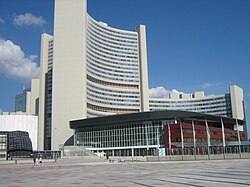
UNODC headquarters in Vienna

Key Information

The United Nations Office on Drugs and Crime (UNODC; French: Office des Nations unies contre la drogue et le crime) is a United Nations office that was established in 1997 as the Office for Drug Control and Crime Prevention by combining the United Nations International Drug Control Program (UNDCP) and the Crime Prevention and Criminal Justice Division in the United Nations Office at Vienna, adopting the current name in 2002.

The agency's focus is the trafficking and abuse of illicit drugs, crime prevention and criminal justice, international terrorism, and political corruption. It is a member of the United Nations Development Group. In 2022–23, it had an estimated biannual budget of US$822 million.

History

[edit]

The United Nations International Drug Control Program (UNDCP) and the Crime Prevention and Criminal Justice Division in the United Nations Office at Vienna were merged to form the Office for Drug Control and Crime Prevention. This was renamed United Nations Office on Drugs and Crime (UNODC) in 2002.[1][2]

Organisational structure

[edit]
Yury Fedotov, former Director General of the United Nations Office in Vienna and former Executive Director of UNODC, delivers his welcome address at the first day of the 57th IAEA General Conference. M-Building, IAEA Headquarters, Vienna, Austria. 16 September 2013.

Locations

[edit]

UNODC, which as of 2020 employs around 3400 people worldwide, has its headquarters in Vienna, Austria, with 115 field offices and two liaison offices in Brussels and in New York City.[3] The United Nations Secretary-General appoints the agency's Executive Director. Yuri Fedotov, the former Russian Ambassador to the United Kingdom, held this position from 2010 until 2019, when the United Nations Secretary-General announced that Ms. Ghada Fathi Waly of Egypt would replace him as both executive director of UNODC and Director General of the United Nations Office at Vienna.[4]

Main operating locations:

  • Africa and Middle East
  • Europe and West/Central Asia
  • Latin America and the Caribbean
  • Southeast Asia and the Pacific
  • South Asia
Liaison Office(s) · Brussels[5] · New York[6]

Sub agencies

[edit]

The United Nations Crime Prevention and Criminal Justice Programme Network (PNI) [wikidata][7] is a network consisting of UNODC as well as many crime-related institutes and other centres around the world. Its aim is to strengthen international co-operation in the areas of crime prevention and criminal justice. The network facilitates the "exchange of information, research, training and public education".[8]

UNODC incorporates the secretariat of the International Narcotics Control Board (INCB).[9]

UNODC's Terrorism Prevention Branch was headed by International terrorism studies expert Alex P. Schmid from 1999 to 2005.[10][11]

The agency is a member of the United Nations Sustainable Development Group.[12]

Budget

[edit]

In 2022–2023 it had an estimated biannual budget of US$822 million.[13]

Aims and functions

[edit]

UNODC was established to assist the UN in better addressing a coordinated, comprehensive response to the interrelated issues of illicit trafficking in and abuse of drugs, crime prevention and criminal justice, international terrorism, and political corruption. These goals are pursued through three primary functions: research, guidance and support to governments in the adoption and implementation of various crime-, drug-, terrorism-, and corruption-related conventions, treaties and protocols, as well as technical/financial assistance to said governments to face their respective situations and challenges in these fields.

The office aims long-term to better equip governments to handle drug-, crime-, terrorism-, and corruption-related issues, to maximise knowledge on these issues among governmental institutions and agencies, and also to maximise awareness of said matters in public opinion, globally, nationally and at community level. Approximately 90% of the Office's funding comes from voluntary contributions, mainly from governments.

These are the main themes that UNODC deals with: alternative development, anti-corruption, criminal justice, prison reform and crime prevention, drug prevention, treatment and care, HIV and AIDS, human trafficking and migrant smuggling, money laundering, organized crime, piracy, terrorism prevention.

The World Drug Report

[edit]

The World Drug Report is a yearly publication that presents a comprehensive assessment of the international drug problem, with detailed information on the illicit drug situation. It provides estimates and information on trends in the production, trafficking and use of opium/heroin, coca/cocaine, cannabis and amphetamine-type stimulants. The Report, based on data and estimates collected or prepared by Governments, UNODC and other international institutions, attempts to identify trends in the evolution of global illicit drug markets.[14]

Through the World Drug Report, UNODC aims to enhance member states' understanding of global illicit drug trends and increase their awareness of the need for the more systematic collection and reporting of data relating to illicit drugs.

Treaties

[edit]

United Nations Conventions and their related Protocols underpin all the operational work of UNODC.

[edit]

United Nations Convention against Transnational Organized Crime

[edit]

The convention is a legally binding instrument that entered into force on 29 September 2003, through which States parties commit to taking a series of measures against transnational organized crime. States that ratify the convention has the duty of creation of domestic offences to combat the problem, the adoption of new, sweeping frameworks for mutual legal assistance, extradition, law enforcement cooperation, technical assistance and training. The convention signifies an important stage in dealing with transnational crime by recognizing the seriousness of the problem that the crime poses, and gaining understanding from the member states of the importance of a cooperative measure. The convention is complemented by three different protocols:

The Protocol to Prevent, Suppress and Punish Trafficking in Persons, especially Women and Children aims to provide a convergence in the states' domestic offences in the investigation and the persecution process. Another objective of the protocol is to protect the victims of trafficking in persons with full respect.

The Protocol against the Smuggling of Migrants by Land, Sea and Air is concerned with the aggravating problem of organized crime groups for smuggling persons. The protocol aims to combat and prevent transnational smuggling as well as to promote cooperative measures for enhancing protective measures for victims.

The Protocol against the Illicit Manufacturing of and Trafficking in Firearms, their Parts and Components and Ammunition was adopted to prevent and provide a cooperative measure for illicit manufacturing of and trafficking in firearms, their parts and components and ammunition. By adopting the protocol, the member states commit to adopt domestic criminal offences for illegal manufacturing, providing governmental licensing ammunition, and keeping track of the ammunition.[15]

United Nations Convention against Corruption

[edit]

In its resolution 55/61, the General Assembly recognized that an effective international legal instrument against corruption, independent of the United Nations Convention against Transnational Organized Crime was desirable. The text of the convention was negotiated during seven sessions held between 21 January 2002 and 1 October 2003. The convention was adopted by the General Assembly on 31 October 2003. In 2003, the United Nations adopted the UN Convention against Corruption (UNCAC). The Convention came into force in December 2005. As of 9 November 2012, 140 countries had signed and 164 countries (States Parties) had ratified the UNCAC. UNODC serves as the Secretariat for the Conference of the States Parties (CoSP) to the UNCAC.

UNCAC is a legally binding instrument (perhaps the only anti-corruption legally binding global instrument). A highlight of UNCAC is the inclusion of a specific chapter on asset recovery which aimed at returning assets to their rightful owners including countries from which they had been taken illicitly.

UNODC, as the custodian of UNCAC, is also one of the main initiators of the establishment of the International Anti-Corruption Academy (IACA), whose main function is to, among other things, facilitate more effective implementation of the UNCAC.

[edit]
Timeline of the three drug-related treaties

There are three drug related treaties that guide UNODC's drug related programs. These are: The Single Convention on Narcotic Drugs of 1961 as amended by the 1972 Protocol; the Convention on Psychotropic Substances of 1971 and the United Nations Convention Against Illicit Traffic in Narcotic Drugs and Psychotropic Substances of 1988.

These three major international drug control treaties are mutually supportive and complementary. An important purpose of the first two treaties is to codify internationally applicable control measures in order to ensure the availability of narcotic drugs and psychotropic substances for medical and scientific purposes, and to prevent their diversion into illicit channels. They also include general provisions on trafficking and drug abuse.[16][17][18]

Campaigns

[edit]

UNODC launches campaigns to raise awareness of drugs and crime problems. On 26 June every year, UNODC marks the International Day against Drug Abuse and Illicit Trafficking. On 9 December every year, UNODC commemorates the International Anti-Corruption Day.

"Do Drugs Control Your Life?" – World Drug Campaign

[edit]

The United Nations Office on Drugs and Crime (UNODC) started this international campaign to raise awareness about the major challenge that illicit drugs represent to society as a whole, and especially to the young. The goal of the campaign is to mobilize support and to inspire people to act against drug abuse and trafficking. The campaign encourages young people to put their health first and not to take drugs.[19]

"Your No Counts" – International Anti-Corruption Campaign

[edit]

The United Nations Office on Drugs and Crime (UNODC) has teamed up with the United Nations Development Program (UNDP) to run this campaign as a focus on how corruption hinders efforts to achieve the internationally agreed upon MDGs, undermines democracy and the rule of law, leads to human rights violations, distorts markets, erodes quality of life and allows organized crime, terrorism and other threats to human security to flourish.[20]

"Think AIDS" – World AIDS Campaign

[edit]

Young people aged 15 to 24 account for an estimated 40 per cent of new adult (15+) HIV infections worldwide. In some parts of the world, and in some marginalized sub-groups, the most frequent modes of HIV transmission for these young people are unsafe injecting drug use and unsafe sexual activities.

Because young people are also often more likely to use drugs, The United Nations Office on Drugs and Crime (UNODC) targets this population with a campaign to raise awareness about drug use and its connection to the spread of HIV and AIDS. The slogan: "Think Before You Start ... Before You Shoot ... Before You Share" is used to provoke young people to consider the implications of using drugs, and particularly injecting drugs.[21]

Blue Heart Campaign Against Human Trafficking

[edit]

The Blue Heart Campaign seeks to encourage involvement and action to help stop trafficking in persons. The campaign also allows people to show solidarity with the victims of human trafficking by wearing the Blue Heart. The use of the blue UN colour demonstrates the commitment of the United Nations to combat this crime.[22]

Criticism

[edit]

In 2007, the five largest donors to UNODC's budget in descending order were: European Union, Canada, United States, the UN itself, and Finland.[23] According to the Transnational Institute this explains why, until recently, UNODC did not promote harm reduction policies like needle exchange and heroin-assisted treatment. (This despite the actions of United Nations bodies (i.e. WHO and UNAIDS), who support these policies.)[24] UNODC promotes other methods for drug use prevention, treatment and care that UNODC sees as "based on scientific evidence and on ethical standards".[25] The UNODC has been criticized by human rights organizations such as Amnesty International for not promoting the inclusion of adherence to international human rights standards within its project in Iran, where there are "serious concerns regarding unfair trials and executions of those suspected of drug offences."[26]

UNODC has signed a partnership with the controversial Rule of Law and Anti-Corruption Center, which was founded by Ali bin Fetais Al-Marri, the General-Prosecutor of Qatar.[27][28][29]

See also

[edit]

References

[edit]
[edit]
Revisions and contributorsEdit on WikipediaRead on Wikipedia
from Grokipedia
The Office on Drugs and Crime (UNODC) is a specialized agency of the established in 1997 through the merger of the United Nations Drug Control Programme and the Centre for International Crime Prevention, with headquarters in , . Its primary mandate encompasses assisting UN member states in addressing illicit drug trafficking, , , , and related threats to global security, human rights, and development, through technical assistance, research, and normative work grounded in international conventions such as the 1988 United Nations Convention against Illicit Traffic in Narcotic Drugs and Psychotropic Substances. UNODC's operations span policy advocacy, capacity-building programs, and data collection, including the annual World Drug Report, which tracks global trends in drug production, use, and markets, revealing persistent expansions in both despite decades of international efforts. Key initiatives involve supporting the implementation of the (UNTOC) and its protocols on , migrant smuggling, and firearms trafficking, alongside programs for , education, and alternatives to incarceration for drug-related offenses. The agency also contributes to by integrating drug control and justice reform into broader development frameworks, though evaluations highlight challenges in measuring long-term impact amid rising criminal sophistication and resource constraints. Notable achievements include facilitating global adherence to drug control treaties and delivering technical support that has aided national strategies for reducing drug cultivation and improving criminal justice systems in regions like Latin America and Central Asia, yet criticisms persist regarding the efficacy of prohibition-focused approaches, as evidenced by UNODC's own data showing mounting harms from expanding synthetic drug markets and unmet treatment needs. Funding shortfalls have compounded operational limitations, prompting calls for diversified support to sustain fieldwork amid geopolitical shifts.

History

Formation in 1997

The United Nations Office for Drug Control and Crime Prevention (UNODCCP), the immediate predecessor to the current (UNODC), was established in 1997 through the administrative merger of the United Nations Drug Control Programme (UNDCP) and the Centre for International Crime Prevention (CICP). The UNDCP, created by resolution 45/179 on December 21, 1990, had centralized UN efforts on drug control following the 1988 Convention Against Illicit Traffic in Narcotic Drugs and Psychotropic Substances, absorbing functions from prior entities like the Division of Narcotic Drugs. The CICP, operating under the , focused on and , evolving from the Crime Prevention and Criminal Justice Branch established in the 1990s to implement the 1990 Milan Plan of Action. This consolidation addressed overlapping mandates and inefficiencies in addressing interconnected issues of drug trafficking and , as identified in UN Secretariat reviews. The merger aligned with Secretary-General Annan's UN renewal program, launched in 1997, which sought to streamline operations amid fiscal constraints and post-Cold War shifts in global threats like linked to economies. Operational from early 1997 with headquarters in , , the UNODCCP inherited UNDCP's annual budget of approximately $100 million (primarily voluntary contributions) and expanded its scope to include technical assistance for member states on , , and alternative development programs. Pino Arlacchi, former UNDCP Executive Director, led the entity, emphasizing integrated strategies over siloed approaches, though early challenges included resource allocation disputes between and crime pillars. The structure formalized reporting to the Economic and Social Council via the Commission on Narcotic Drugs and the Commission on Crime Prevention and Criminal Justice, ensuring alignment with treaties like the 1961 . This formation marked a causal pivot toward holistic responses to illicit flows, recognizing empirical links between drug production in source countries and crime in transit and demand regions, as evidenced by rising heroin and cocaine seizures reported in UN data from the mid-1990s. While enhancing UN coherence, the merger did not resolve underlying dependencies on donor funding, which comprised over 90% of operations and influenced priority-setting toward Western concerns.

Expansion and Reorganizations

In 2002, the Office for Drug Control and Crime Prevention (ODCCP) underwent a significant reorganization, being renamed the (UNODC) to reflect a more streamlined structure combining drug control and efforts under a unified banner. This change, approved by the , integrated the United Nations International Drug Control Programme (UNDCP) and the Centre for International Crime Prevention (CICP) more cohesively, enhancing operational coordination while maintaining headquarters in . The renaming coincided with efforts to restore donor confidence amid prior management challenges, positioning UNODC for expanded technical assistance delivery. Following the reorganization, UNODC expanded its global footprint through a growing network of field offices to support on-the-ground implementation of programs. What began as a limited set of offices in the late evolved into over 20 field offices by the mid-2000s, enabling direct engagement with member states on issues like border management and . By 2010, this presence had further increased to facilitate technical assistance across diverse regions, with offices adapting to varying operational environments from stable countries to conflict zones. This expansion reflected a shift toward decentralized delivery, with field operations handling a wider range of activities including and alternative development projects. In the early 2000s, UNODC reorganized internally to address emerging threats, notably establishing the Terrorism Prevention Branch (TPB) around 2003 to provide technical assistance on counter-terrorism legal frameworks. This addition built on post-9/11 priorities, integrating prevention into UNODC's core mandate alongside drugs and crime, with the branch focusing on legislative assistance and capacity. Concurrently, UNODC assumed the secretariat role for the (UNCAC) adopted in 2003, prompting further structural adjustments to handle anti-corruption programming. These changes expanded UNODC's divisions without altering its fundamental , allowing for multifaceted responses to transnational threats.

Key Milestones Post-2000

In December 2000, the adopted the United Nations Convention against Transnational Organized Crime (UNTOC), also known as the Palermo Convention, along with its supplementary protocols addressing trafficking in persons, smuggling of migrants by land, sea, and air, and illicit manufacturing of and trafficking in firearms. The UNODC was designated as the guardian and secretariat of UNTOC, facilitating its implementation through technical assistance, capacity-building, and monitoring state party compliance, with over 190 states parties by 2025. The convention entered into force on 29 September 2003, marking a pivotal expansion of UNODC's mandate to coordinate global responses to networks, which empirical data from UNODC reports indicate have facilitated billions in illicit revenues annually from activities like drug trafficking and human smuggling. In 2002, Antonio Maria Costa of assumed the role of , serving until 2010 and shifting UNODC's focus toward integrating anti-drug efforts with counter-terrorism and initiatives, including the launch of the Global Programme against in 2003. The 2009 high-level segment of the Commission on Narcotic Drugs, convened as a review of the 1998 UN General Assembly Special Session (UNGASS), produced the Political Declaration and Plan of Action on International Cooperation towards an Integrated and Balanced Strategy to Counter the World Drug Problem, which set measurable targets for reducing illicit drug production and demand by 2019, though subsequent UNODC World Drug Reports documented persistent challenges in achieving these amid rising markets. Yury Fedotov of the Russian Federation succeeded Costa as in 2010, overseeing UNODC's expanded involvement in on peaceful societies, including custodianship of indicators on illicit financial flows and trafficking victims. The 2016 UNGASS on the world drug problem resulted in an outcome document emphasizing health-oriented approaches alongside supply reduction, while critiquing punitive measures' limited efficacy based on evidence from overdose mortality trends and treatment access data compiled by UNODC and WHO. In 2019, the to UNTOC held its first high-level ministerial conference in , adopting resolutions to enhance cross-border cooperation against emerging threats like and environmental trafficking, with UNODC reporting over 1,000 technical assistance requests processed annually thereafter. Ghada Fathi Waly of was appointed Executive Director in February 2020, leading responses to disruptions in drug supply chains and justice systems, including virtual training programs reaching over 10,000 officials in 2020-2021.

Organizational Structure

Headquarters and Global Presence

The headquarters of the United Nations Office on Drugs and Crime (UNODC) is located at the , Wagramer Strasse 5, A-1400 , . This facility serves as the primary administrative hub for coordinating global drug control, , and programs. UNODC maintains an extensive of field offices to implement its mandate on the ground, with operations spanning all world regions through normative expertise, research, and technical assistance. As of 2020, the organization had a presence in 81 countries across 115 office locations, supported by 2,424 personnel, including 678 international staff and 1,746 local staff. The field office network, which has expanded over more than 25 years, includes country offices, regional hubs, and specialized platforms, such as those for , , and South-East Asia. Additional liaison offices operate in and New York to facilitate coordination with other international bodies. This decentralized structure enables direct engagement with national governments, , and institutions in developing countries and small island states, focusing on capacity-building and program delivery. Regional offices, for instance, cover clusters of countries, such as West and (encompassing 20 nations including , , and ) and and the Pacific (including , , and others). Overall, UNODC employs approximately 2,500 staff worldwide to support these operations from .

Leadership and Governance Bodies

The leadership of the United Nations Office on Drugs and Crime (UNODC) is headed by the , who concurrently serves as Director-General of the (UNOV) and reports directly to the Secretary-General. The is appointed by the Secretary-General for a five-year term, renewable once, and oversees the implementation of UNODC's mandate, strategic direction, and administrative operations. As of October 2025, Ghada Waly holds this position, having been appointed on 13 February 2020 following her prior role as Egypt's Minister of Social Solidarity. Under her leadership, UNODC has emphasized integrated responses to transnational threats, including through the UNODC Strategy 2021-2025, which prioritizes data-driven interventions and partnerships. Supporting the Executive Director is a senior leadership team, including a Deputy Executive Director responsible for management and operations, as well as division directors for areas such as treaty affairs, policy support, and field operations. This structure ensures coordination across UNODC's global network, with the Deputy Executive Director handling day-to-day administration and resource allocation. UNODC's governance is embedded within the United Nations Secretariat framework, subject to oversight by the Economic and Social Council (ECOSOC) through its functional commissions, which provide policy guidance and normative standards. The primary governing bodies serviced by UNODC are the Commission on Narcotic Drugs (CND) and the Commission on Crime Prevention and Criminal Justice (CCPCJ), both subsidiary organs of ECOSOC. UNODC acts as the substantive secretariat for these commissions, facilitating their sessions, preparing reports, and implementing resolutions. The CND, established by ECOSOC resolution 9(I) on 16 February 1946, comprises 53 member states elected for four-year terms by ECOSOC; it reviews global drug trends, supervises the three UN drug control conventions (1961, 1971, and 1988), and decides on the scheduling of controlled substances through voting or consensus. The CCPCJ, established in 1992 as a successor to the Committee on Crime Prevention and Control, consists of 40 member states and focuses on developing UN standards and norms in criminal justice, including anti-corruption and organized crime prevention; it convenes annually to adopt resolutions guiding UNODC's technical assistance programs. These commissions hold intersessional working groups and subsidiary bodies to address specific issues, such as synthetic drugs for the CND or cybercrime for the CCPCJ, ensuring member states' input shapes UNODC's priorities. Additionally, the Conference of the States Parties to the United Nations Convention against Corruption (UNCAC), established in 2003, functions as a governing mechanism for corruption-related activities, with UNODC providing secretariat support and implementing its decisions through capacity-building initiatives. Overall, this multi-layered governance promotes accountability via annual reporting to ECOSOC and alignment with UN-wide reforms, though operational autonomy rests with the Executive Director under Secretariat rules.

Internal Divisions and Partnerships

The Office on Drugs and Crime (UNODC) operates under the Office of the , which coordinates four primary divisions responsible for its core functions. The for Operations implements field-based programs addressing control, , and reform across regions, including specialized branches for , prevention, and initiatives. The Division for Policy Analysis and Public Affairs conducts research, produces analytical reports such as the World Drug Report, and manages advocacy, communications, and public affairs to support evidence-based policymaking. The Division for Affairs serves as the secretariat for international control and crime conventions, facilitating compliance, negotiations, and technical assistance under treaties like the 1988 Convention against Illicit Traffic in Drugs and Psychotropic Substances. The Division for Management provides administrative support, including financial resources, , and services, ensuring operational efficiency across UNODC's global presence. These divisions are supplemented by specialized sections, such as the and Scientific Section for forensic and the and Surveys Section for on drugs and trends, which operate under the Division for Operations or as cross-cutting units. Additionally, the Independent Evaluation Section conducts internal evaluations to assess program effectiveness and promote accountability, emphasizing participatory and human rights-responsive methodologies. This structure, as outlined in UNODC's updated in recent years, reflects a balance between programmatic delivery, policy support, and administrative oversight, with approximately 3,000 staff across headquarters in and field offices worldwide as of 2024. UNODC maintains extensive partnerships to leverage resources and expertise, primarily through voluntary contributions from member states, multilateral organizations, and the private sector, which accounted for the majority of its funding in 2023. Key collaborations include joint programs with other United Nations agencies, such as the International Organization for Migration (IOM) on human trafficking and migrant smuggling since 2024, and the United Nations Industrial Development Organization (UNIDO) on environmental crime prevention and anti-corruption as formalized in a November 2024 memorandum of understanding. Partnerships with entities like Interpol enhance responses to transnational threats including organized crime and violent extremism, while engagements with non-governmental organizations and private donors support targeted campaigns, such as the Blue Heart Campaign against trafficking backed by cultural partners like The Smurfs since 2020. Internally, the Co-Financing and Partnership Section within the Division for Management coordinates donor relations, strategies, and partnership mapping to align external support with UNODC priorities, as recommended in a 2020 internal audit for improved and transparency. These partnerships extend to regional and national entities, including collaborations with on gender-sensitive approaches to since 2017, emphasizing practical implementation over ideological frameworks. Overall, such alliances enable UNODC to address resource constraints, with donor contributions totaling over €200 million annually in recent budgets, though evaluations highlight the need for diversified funding to mitigate dependency on a few major contributors.

Funding and Budget

Sources of Funding

The United Nations Office on Drugs and Crime (UNODC) derives the majority of its funding from voluntary contributions provided by member states, multilateral organizations, the , and other entities, which support its extrabudgetary resources including general-purpose (unearmarked) and special-purpose (earmarked) funds. In 2023, these voluntary contributions totaled USD 389.5 million, comprising 85.5 percent of UNODC's overall revenue of USD 455.2 million, with general-purpose funds at USD 3.6 million and special-purpose funds at USD 385.9 million. Member states accounted for approximately 90 percent of pledged voluntary contributions that year. UNODC also receives allocations from the regular budget, funded through assessed contributions from member states proportional to their capacity to pay, which provided USD 23.5 million or 5.2 percent of total revenue in 2023. Programme support costs, recovered from voluntary contributions to cover administrative overhead, added USD 42.2 million. This structure reflects UNODC's reliance on extrabudgetary funding for programmatic flexibility, though the predominance of earmarked special-purpose contributions can constrain resource allocation across mandates. Funding trends continued upward in 2024, with voluntary contributions reaching USD 440.5 million or 85.6 percent of of USD 514.7 million, including USD 3.9 million in general-purpose funds. Of pledged voluntary contributions, member states supplied USD 396.2 million (76 percent), while non-governmental sources and international organizations contributed USD 123 million (20 percent, including 3 percent from multi-partner trust funds). Assessed contributions from the regular budget amounted to USD 25.4 million or 4.9 percent. These sources enable UNODC's operations but highlight dependence on donor priorities, as evidenced by the low share of unearmarked funds. The United Nations Office on Drugs and Crime (UNODC) operates on a consolidated biennial budget that integrates resources from the regular budget and voluntary contributions, with the latter comprising approximately 85-90 percent of total funding. Voluntary contributions, primarily from member states and multilateral organizations, are largely earmarked for specific projects, with unearmarked general-purpose funding constituting less than 1 percent of voluntary inflows in recent years. This structure has resulted in funding trends showing growth in total voluntary pledges—from $293.6 million in the 2020–2021 biennium to $344.2 million in the 2022–2023 biennium—but persistent shortfalls in core areas such as drug prevention and programs due to declining donor support in those domains. For the 2024–2025 biennium, the consolidated projects $676.9 million in special-purpose voluntary funds alongside $47.6 million from the regular , reflecting continued expansion in project-specific allocations amid efforts to diversify donors and secure more flexible funding. Annual revenue in 2024 reached $514.7 million, with voluntary contributions at $440.5 million (85.6 percent), underscoring the office's vulnerability to fluctuations in donor pledges, which totaled $519.2 million that year, predominantly from member states (76 percent). Earmarking has constrained operational flexibility, prompting UNODC to prioritize donor-aligned initiatives over comprehensive mandate fulfillment, as evidenced by programme delivery of $465.3 million in 2024, heavily weighted toward field offices ($324.9 million). Financial oversight is conducted through multiple layers, including annual audits by the United Nations Board of Auditors, which review financial statements, internal controls, and compliance. The Office of Internal Oversight Services (OIOS) performs targeted audits of governance, funding mechanisms, and field operations, identifying issues such as resource management inefficiencies. Internally, UNODC maintains evaluation units that assess programme impacts, while the Standing Open-Ended Intergovernmental Working Group on Improving the Governance and Financial Situation of UNODC scrutinizes budgets, resource allocation, and human resources, reporting to the Commission on Narcotic Drugs (CND) and Commission on Crime Prevention and Criminal Justice (CCPCJ). These mechanisms ensure accountability, though reliance on voluntary funding has highlighted gaps in predictable financing, with executive director reports to the Economic and Social Council (ECOSOC) noting adjustments to address deficits, such as a potential $1.5 million shortfall in the 2020–2021 biennium.

Mandate and Core Activities

Drug Control and Demand Reduction

The United Nations Office on Drugs and Crime (UNODC) implements drug control measures under the framework of three international conventions: the 1961 , the 1971 , and the 1988 United Nations Convention against Illicit Traffic in Narcotic Drugs and Psychotropic Substances. These treaties mandate a balanced approach addressing both illicit supply reduction through and elimination efforts, and reduction via prevention, treatment, and rehabilitation. UNODC provides technical assistance to member states for capacity building, border management, and precursor chemical control to disrupt production and trafficking networks. Supply reduction strategies emphasize alternative development (AD) programs, which promote sustainable livelihoods to replace illicit crop cultivation with legal economic activities. In 2023, UNODC allocated approximately $40 million to AD initiatives primarily in , , , , and , focusing on , market access for alternative products, and environmental sustainability. For instance, in , UNODC expanded AD efforts to nine provinces, supporting community transitions from opium farming through infrastructure improvements and vocational training. These programs integrate economic incentives with to reduce illicit supply, though long-term success depends on complementary national policies and international cooperation. Demand reduction efforts prioritize evidence-based prevention targeting vulnerable populations, particularly and families. UNODC's International Standards on Drug Use Prevention, updated on September 29, 2020, recommend interventions such as family skills training, school-based programs, and to delay use onset and build resilience. initiative specifically addresses children from birth to adolescence by enhancing protective factors against use through partnerships with schools and communities. In treatment and rehabilitation, UNODC collaborates with the via the Joint Programme on Drug Dependence Treatment and Care, supporting over 80 countries since 2013 in scaling up access to opioid substitution therapy, counseling, and recovery services. Global projects under the Prevention, Treatment, and Rehabilitation Section have trained thousands of workers and established monitoring systems for dependence treatment efficacy. UNODC advocates for integrated demand reduction encompassing primary prevention, early intervention, and harm mitigation, aligned with the 2016 UN outcome document. Examples include capacity-building in post-COVID-19, where UNODC supplied protective equipment to treatment services and promoted community-based rehabilitation to address rising synthetic drug use. Evaluations emphasize measurable outcomes like reduced rates through evidence-driven protocols, though implementation varies by national context and resource availability.

Organized Crime and Justice Reform

The United Nations Office on Drugs and Crime (UNODC) addresses primarily through support for the United Nations Convention against (UNTOC), adopted by the General Assembly on November 15, 2000, which serves as the primary international legal framework for combating such activities and has 194 parties as of August 12, 2025. UNTOC includes three supplementary protocols targeting trafficking in persons, especially women and children; of migrants by land, sea, and air; and the illicit manufacturing of and trafficking in firearms, with UNODC providing technical assistance to states for ratification, legislative adoption, and implementation, including frameworks for mutual legal assistance and . The agency estimates that generates approximately $870 billion annually, equivalent to more than six times global , funding activities like illicit trafficking that undermine governance, political processes, and the . UNODC's Global Programme on Implementing the Convention: from Theory to Practice aids member states in developing normative frameworks, policy tools, and operational capacities to counter , including through threat assessments and support for disrupting networks involved in , firearms smuggling, and . In 2022, UNODC launched the Global Programme to Counter Deadly Criminal Networks (GPCD), focusing on strategic cooperation to dismantle illicit networks beyond mere seizures, targeting links between , , and via arms, persons, drugs, and artifacts trafficking. Recent outputs include the October 15, 2024, Issue Paper on , presented at the to UNTOC (COP12), which analyzes as an emerging modality and recommends enhanced detection and prosecution measures. In justice reform, UNODC emphasizes strengthening systems to prevent and respond to , promoting human rights-compliant, rule-of-law-based strategies that include , , and . The agency provides technical assistance in areas such as legislative reform for programs, for juvenile justice indicators, and treatment protocols for child victims and witnesses, with the second edition of the Handbook on Programmes offering guidance for policymakers and justice professionals to integrate victim-offender and community-based resolutions. UNODC collaborates with over 50 member states on to address , health risks, and reintegration challenges that exacerbate recruitment, while the Global Programme on Strengthening supports holistic approaches to urban safety and . These efforts aim to enhance prosecution of groups by improving handling, , and inter-agency coordination, though implementation varies by state capacity and faces challenges from enabling undetected criminal operations.

Anti-Corruption and Terrorism Prevention

UNODC serves as the custodian and secretariat for the (UNCAC), the only legally binding universal treaty, which was adopted by the on 31 October 2003 and entered into force on 14 December 2005. Through this role, UNODC supports states parties in implementing UNCAC's core pillars: preventive measures, criminalization of offenses, , international cooperation, and asset recovery. The Conference of the States Parties (CoSP) to UNCAC, for which UNODC provides secretariat services, functions as the treaty's primary decision-making body, convening periodically to review implementation and adopt resolutions. The agency's Corruption and Economic Crime Branch delivers technical assistance to governments, anti-corruption practitioners, private sector entities, , youth, and academia, focusing on detecting, investigating, and prosecuting . Key initiatives include hubs and platforms that enable rapid, field-based responses to technical assistance needs, as well as programs emphasizing transparency to combat , , and illicit financial flows. UNODC also promotes 's involvement under UNCAC Article 13, facilitating partnerships to enhance awareness, monitoring, and advocacy against . These efforts draw from lessons in the UNODC Toolkit, derived from global technical cooperation experiences. In terrorism prevention, UNODC's Terrorism Prevention Branch (TPB), established as the UN Secretariat's primary technical assistance provider since 2003, aids member states in countering and through strengthening. The branch's Global Programme on Preventing and Countering targets three outcomes: enhanced legislative frameworks against , improved capacities for prosecution and prevention, and disruption of , often intersecting with UNODC's mandates on drugs, , and . Activities include developing national policies, strategies, and legal instruments to address threats, with a focus on regions like and where links to . UNODC integrates gender considerations in these projects, aligning with UN strategies for equality and accountability in counter-terrorism efforts.

Research and Publications

World Drug Report Series

The World Drug Report (WDR) series, produced annually by the (UNODC), compiles global data on illicit drug production, trafficking, consumption patterns, health impacts, and policy responses to inform international drug control efforts. Launched in 2000 as a successor to earlier UN bulletins on narcotics, the series has evolved into a comprehensive analytical tool, with recent editions (from 2023 onward) adopting a modular format including key findings booklets, thematic analyses on drug markets, special points of interest, and statistical annexes. Data for the reports are primarily drawn from the UNODC Annual Reports Questionnaire (ARQ) submitted by member states, supplemented by household surveys, seizure records, treatment admissions, and expert consultations; where primary data are unavailable—often in regions with weak monitoring—UNODC applies statistical modeling and to generate estimates, acknowledging inherent uncertainties such as underreporting by governments reluctant to disclose full extents of issues. This aims for scientific but has faced scrutiny for potential biases in source data, as national reports may reflect political incentives to minimize prevalence figures, leading to debates over the accuracy of global injecting use estimates compared to independent studies. Key sections across editions typically include overviews of drug market trends (e.g., rising synthetic opioids like and shifting production to synthetic forms), estimates (such as 292 million global users in 2022, up 20% from 2010), and analyses of supply dynamics, with 2025 highlighting how conflicts exacerbate trafficking vulnerabilities. Thematic chapters address contemporary issues like environmental crimes linked to production or the limited impact of demand-reduction policies amid expanding markets, empirically demonstrating stalled progress in reducing overall drug availability despite intensified enforcement. The series influences UN bodies like the Commission on Narcotic Drugs and national strategies by providing baseline metrics for treaty compliance under the , , and drug conventions, though empirical trends—such as the tripling of opioid use disorders since 2000—underscore challenges in achieving prohibitionist goals, prompting calls for evidence-based alternatives over punitive approaches. UNODC maintains the reports' credibility through and transparency in methodological annexes, but reliance on aggregated state data limits granularity, particularly for emerging substances or markets tracked via secondary sources like sales data analysis.

Other Analytical Outputs

In addition to the World Drug Report, the UNODC produces the biennial Global Report on Trafficking in Persons, which aggregates official data from over 150 countries to assess patterns, victim demographics, and anti-trafficking responses. The 2024 edition analyzed cases from 2019 to 2023 across 156 countries, documenting a 25% increase in detected victims since 2019, with women and girls comprising the majority and child victims rising notably, alongside shifts toward forced labor over sexual exploitation. UNODC also generates research on , employing tools like Threat Assessments (TOCTAs) to map illicit trade networks, vulnerabilities, and socioeconomic impacts through regional studies. These analyses inform policy by quantifying threats such as wildlife crime and environmental trafficking. The agency's DataUNODC portal disseminates statistical datasets on topics including drug use and treatment, intentional , violent and sexual crimes, , and economic crime, drawn from member state reports and standardized surveys. This platform enables cross-national comparisons, such as trends in homicide rates or prevalence. Other outputs include forensic and methodological guidelines, such as the 2022 Guidelines for the Production of Statistical Data by the Police, which standardize to enhance comparability, and manuals like Recommended Methods for the Identification and of Synthetic Cannabinoid Receptor Agonists. The Monitoring Illicit Arms Flows initiative further yields global, regional, and national analytical reports alongside datasets on seized and trafficked firearms. These products emphasize from seizures and official records to track proliferation risks.

Drug Control Conventions

The United Nations drug control regime is anchored in three principal treaties, for which the provides secretariat services and supports implementation through the Commission on Narcotic Drugs (CND). These conventions establish binding obligations on 186 to 197 parties (as of 2023) to restrict drugs and psychotropic substances to medical and scientific uses, criminalize non-medical production and trafficking, and promote international cooperation. The , adopted on March 30, 1961, in New York and amended by the 1972 Protocol, consolidates prior treaties to limit the availability of , , , and their derivatives exclusively for legitimate purposes, imposing controls on cultivation, production, manufacture, , and possession. It classifies substances into four schedules based on abuse potential and therapeutic value, requiring parties to license production, maintain estimates of needs, and report statistics to the . The , signed on February 21, 1971, in , extends controls to synthetic substances like hallucinogens (e.g., ), depressants (e.g., barbiturates), and stimulants (e.g., amphetamines), addressing the rise of laboratory-produced drugs not covered by the 1961 . It features four schedules calibrated by risk of abuse versus medical utility, mandating licensing, record-keeping, and import/export authorizations, while allowing flexibility for therapeutic practices under medical supervision. Ratified by 184 parties, it emphasizes prevention of diversion from legitimate channels. Complementing these, the United Nations Convention against Illicit Traffic in Narcotic Drugs and Psychotropic Substances, adopted on December 20, 1988, in , targets supply-side disruptions by criminalizing production, sale, transport, and financing of illicit drugs, with novel provisions on precursor chemical controls, , money laundering suppression, and mutual legal assistance. With 191 parties, it facilitates and controlled delivery operations, requiring states to establish serious penalties (e.g., at least 10 years for major trafficking offenses) and cooperate in dismantling cartels. UNODC, as custodian, aids treaty execution by servicing the CND—the central policy organ under the Economic and Social Council—which reviews global implementation, proposes scheduling amendments (e.g., adding analogues in 2017), and adopts resolutions on emerging threats like synthetic opioids. Through technical assistance, capacity-building programs, and , UNODC helps states align national laws, monitor compliance via annual reports, and address gaps in precursor regulation, though enforcement relies on national authorities and the INCB for quota oversight.

Conventions on Crime and Corruption

The (UNTOC), adopted by the on 15 November 2000 and entering into force on 29 September 2003, provides the primary legal framework for international cooperation against groups involved in activities crossing national borders. It has 194 parties as of August 2025, making it one of the most widely ratified UN instruments on crime. UNTOC requires states parties to criminalize participation in organized criminal groups, , , and obstruction of justice, while mandating measures for , mutual legal assistance, joint investigations, and asset . It is supplemented by three protocols: the Protocol to Prevent, Suppress and Punish Trafficking in Persons, Especially Women and Children (entered into force 25 December 2003); the Protocol against the Smuggling of Migrants by Land, Sea and Air (entered into force 28 January 2004); and the Protocol against the Illicit Manufacturing of and Trafficking in Firearms, Their Parts and Components and (entered into force 3 July 2005). The UNODC acts as secretariat, facilitating the to UNTOC, which oversees implementation, reviews progress, and promotes technical assistance and capacity-building for states parties. The (UNCAC), adopted on 31 October 2003 and entering into force on 14 December 2005, is the sole legally binding global , with 192 states parties as of September 2025 following the latest . It addresses comprehensively through chapters on preventive measures (such as integrity and private sector codes), criminalization of acts like , , and trading in influence, law enforcement tools including specialized bodies, international cooperation via and mutual legal assistance, and asset recovery mechanisms to return stolen proceeds. UNCAC emphasizes technical assistance and to aid implementation, particularly in developing countries. The UNODC serves as secretariat, supporting the of the States Parties to UNCAC, which meets biennially to assess compliance, share best practices, and address challenges like illicit financial flows. Through these conventions, UNODC coordinates global efforts, provides legislative guides, programs, and monitoring tools to harmonize national laws and enhance cross-border responses, though effectiveness depends on domestic and varies by region due to resource disparities.

Campaigns and Initiatives

Anti-Drug and Public Health Campaigns

The Office on Drugs and Crime (UNODC) coordinates global anti-drug efforts emphasizing demand reduction through awareness-raising, prevention programming, and treatment promotion as a priority rather than solely punitive measures. These campaigns target individuals, communities, and policymakers to foster evidence-based responses to drug use, including skills , school interventions, and , with a focus on delaying drug initiation among . UNODC's approach draws on international guidelines, such as the 2013 International Standards on Drug Use Prevention, which outline universal, selective, and indicated strategies proven to reduce risk factors like poor parental supervision and peer influence. A flagship awareness initiative is the annual International Day Against Drug Abuse and Illicit Trafficking, proclaimed by UN General Assembly resolution 42/112 on December 7, 1987, and observed every to galvanize international cooperation against drug problems. Coordinated by UNODC, the event features global events, leader statements, and thematic focuses—such as promoting voluntary treatment and reducing stigma in recent years—to highlight the health, social, and security costs of illicit drugs. It often coincides with the launch of UNODC's World Drug Report, providing empirical data on cultivation, trafficking, and use patterns, with the 2024 edition documenting 292 million global drug users amid rising prevalence. Complementing this, UNODC's World Campaign disseminates multimedia resources, including videos, posters, and social media toolkits under slogans like "Listen First," to educate on drug risks and encourage healthy alternatives, adaptable for local contexts by governments and NGOs. The campaign underscores personal agency in avoiding drug control over one's life, aligning with broader prevention efforts that prioritize early intervention over reaction. On the public health front, UNODC partners with the via the Joint Programme on Drug Dependence Treatment and Care, initiated to frame drug use disorders as treatable conditions warranting integration into primary care systems, particularly in low- and middle-income countries. The collaboration has produced guidelines like the 2017 International Standards for the Treatment of Drug Use Disorders, advocating voluntary, non-discriminatory services to curb overdose deaths—estimated at 69,000 annually from opioids alone—and transmission linked to injecting. Activities include training for health workers, advocacy for alternatives to incarceration for minor offenses, and support for community-based rehabilitation, emphasizing cost-effective harm mitigation alongside abstinence-oriented outcomes.

Anti-Trafficking and Corruption Awareness Efforts

The United Nations Office on Drugs and Crime (UNODC) leads the Blue Heart Campaign, launched in 2009 in partnership with the United Nations Global Initiative to Fight (UN.GIFT), to raise public awareness of and garner support for victims. The campaign uses the blue heart symbol to highlight the exploitation involved in trafficking, which includes , transportation, and harboring of persons for forced labor, sexual exploitation, or other abuses, with nearly one-third of detected victims being children. It promotes tools such as engagement, educational materials, and community events to educate on prevention and victim identification. UNODC observes the World Day Against Trafficking in Persons annually on 30 July, established by UN General Assembly resolution 68/192 in 2013, to spotlight trafficking as organized crime and advocate for stronger law enforcement responses. The 2025 campaign theme, "Human Trafficking is Organized Crime – End the Exploitation," emphasized dismantling criminal networks through criminal justice interventions, including training for prosecutors and police in 141 affected countries. Additional targeted initiatives, such as the 2025 "Agents of Change: Knowledge and Resistance Against Human Trafficking" in Mexico, feature indigenous and Afro-Mexican women sharing strategies to combat trafficking in vulnerable communities. On corruption, UNODC coordinates International Anti-Corruption Day on 9 December, proclaimed by UN General Assembly resolution 58/4 in 2003, to underscore corruption's links to insecurity and underdevelopment. The 2023-2025 campaigns focused on youth as integrity advocates, promoting public education on corruption's societal costs, such as damaged and unequal access to services, through multimedia and policy dialogues. Under the UN Convention against Corruption (UNCAC), Article 13, UNODC compiles state measures for awareness-raising, including public campaigns on corruption's causes and consequences, often integrated with and media outreach. The Global Programme against Corruption for Education (GRACE), initiated by UNODC, targets youth and educators with anti-corruption modules, essay competitions, and academic networks to foster from early ages. Regional efforts, like the sub-programme, include workshops and media drives to detect and prevent in public sectors. In 2024, UNODC released youth-oriented guides, such as "10 Steps to Take Action Against ," detailing practical steps like reporting and advocating for transparent . These initiatives emphasize empirical evidence from UNCAC implementation reviews, prioritizing preventive over punitive measures alone.

Achievements and Measured Impacts

Successful Interventions and Data Contributions

The United Nations Office on Drugs and Crime (UNODC), in collaboration with the , has implemented the Container Control Programme since 2006 to strengthen risk assessment and inspection capabilities at ports, airports, and land borders, resulting in measurable interdictions of illicit goods. By 2019, the programme had contributed to the global seizure of 300 metric tons of through enhanced profiling and joint operations. In 2020, amid disruptions from the , participating units exceeded 100 metric tons of cocaine seizures, demonstrating operational resilience and disruption of trafficking networks. UNODC's Stop-Overdose Safely (S-O-S) initiative, jointly developed with the , equips first responders and community members with training on distribution and overdose management. Evaluations of implemented trainings indicate a 90% success rate in administration during witnessed overdoses, contributing to in opioid crisis contexts. Additionally, alternative development projects have enabled farmers in drug crop regions to adopt licit alternatives, with case studies documenting improved household incomes, access to education, and community infrastructure in areas like and . UNODC's contributions include the maintenance of the dataUNODC portal, which aggregates statistics on use, trafficking, intentional homicides, and corruption from member states, facilitating cross-national comparisons and . The annual World Report synthesizes global on production, trafficking routes, and consumption patterns, providing empirical baselines that have informed national policies, such as adjustments in precursor chemical controls and reduction strategies. These outputs support evidence-based decision-making by highlighting shifts, for instance, in markets, though their causal impact on long-term reductions remains subject to broader enforcement and socioeconomic factors. The Global Report on Trafficking in Persons further compiles victim identification and prosecution , aiding in the evaluation of anti-trafficking protocols across regions.

Quantitative Outcomes in Treaty Implementation

The three principal United Nations drug control conventions—the 1961 (as amended), the 1971 , and the 1988 United Nations Convention against Illicit Traffic in Narcotic Drugs and Psychotropic Substances—have garnered near-universal adherence, with 186, 184, and 191 States parties respectively as of 2024, facilitating UNODC's role in monitoring compliance, scheduling substances, and supporting national controls. Despite these frameworks, quantitative indicators of supply reduction show limited success, as global illicit drug production has expanded. For instance, cocaine production reached a record 2,757 metric tons in 2022, up from prior peaks, driven by expanded cultivation in , , and , while opium poppy cultivation in rebounded to 10,800 hectares in 2023 after a temporary decline. Demand-side outcomes similarly reflect persistence rather than diminution, with the global number of users estimated at 296 million in 2021, an increase of 23% over the previous decade, encompassing rises in , , and use across regions. Seizures, often cited as an implementation metric, have risen—global seizures exceeded 1,100 tons in 2022—but correlate with market growth rather than contraction, as traffickers adapt via new routes and synthetic alternatives. Over five decades since the conventions' core establishment, these treaties have not curbed the of non-medical use, with production and consumption metrics indicating systemic by illicit networks amid efforts. For the United Nations Convention against (UNTOC) and its protocols, administered by UNODC since 2003, 191 States parties have ratified by 2024, with the review mechanism assessing in over 100 countries through peer reviews yielding observations on legislative gaps and capacity needs. Quantitative outcomes remain elusive, as indices show no uniform decline; for example, the 2023 Organized Crime Index reveals persistent high criminality scores in regions with strong UNTOC adoption, attributed to siloed disconnected from complementary frameworks like UNCAC, limiting measurable reductions in trafficking volumes or network disruptions. UNODC-supported interventions, such as border management trainings, have boosted seizure capacities, but transnational flows—e.g., in and wildlife crime—continue unabated, with victim detections rising to 50,000+ annually without proportional perpetrator accountability gains. The (UNCAC), with 190 States parties as of 2024, emphasizes UNODC's facilitation of its Implementation Review Mechanism (IRM), which has completed executive summaries for most countries in its second cycle by 2023, identifying implementation rates averaging 60-70% for preventive measures but lower for asset recovery (around 40%). metrics, however, show no clear causal decline post-ratification; UNODC's statistics indicate prevalence stable at 20-30% in affected sectors across surveyed countries, while cross-national indices like the exhibit stagnation or worsening in many signatories since 2005, underscoring challenges in translating treaty obligations into reduced illicit financial flows estimated at $1-2 trillion annually. Overall, while treaties have standardized reporting and legal tools, empirical trends in drugs, crime, and volumes suggest implementation has not yielded proportional reductions, with adaptive criminal economies offsetting compliance gains.

Criticisms and Controversies

Ineffectiveness of Prohibitionist Policies

Despite the implementation of the UN drug control conventions since , administered by the UNODC, global illicit drug use has expanded significantly, with an estimated 296 million users in 2023 compared to 275 million in 2019, according to UNODC's own . This rise persists amid intensified efforts, including record seizures, suggesting that prohibitionist strategies have failed to suppress or supply effectively. Empirical analyses indicate that such policies exert minimal impact on consumption volumes, as evidenced by longitudinal studies showing stable or increasing rates across controlled substances. Drug production has similarly defied containment, with global cocaine output reaching an all-time high of over 2,000 metric tons in 2023, accompanied by surges in cultivation areas in , , and . Synthetic drugs, including and fentanyl analogs, have proliferated exponentially, with trafficking from regions like the Golden Triangle expanding despite treaty obligations to curb precursor chemicals. UNODC reports highlight how groups exploit instability to adapt production methods, underscoring the resilience of illicit markets under . Over five decades, these conventions have not prevented the globalization of non-medical drug production, as potency and availability have risen in tandem with enforcement expenditures exceeding hundreds of billions annually worldwide. Market dynamics further reveal policy shortcomings: illicit drug prices have generally declined while purity and potency have increased globally since the , indicating abundant supply unhindered by international controls. This pattern aligns with economic models of , where incentivizes in production and distribution, sustaining black markets rather than eradicating them. has empowered violent cartels, contributing to over 400,000 homicides in alone since 2006, as traffickers compete in unregulated territories. Health and social costs compound the evidence of ineffectiveness, with adulterated street drugs causing surges in overdoses—fentanyl-related deaths in the alone exceeding 70,000 in 2023—exacerbated by the absence of quality controls under . Critics, including analyses from the Global Commission on Drug Policy, argue that punitive approaches prioritize over evidence-based , failing to address root drivers like and socioeconomic factors. Even UN-affiliated voices have acknowledged that and have not reduced use or related , labeling them as non-functional after decades of application. These outcomes reflect a systemic mismatch between goals and causal realities, where supply-side interventions yield amid adaptive illicit networks.

Operational Failures and Scandals

In 2022, the Dispute Tribunal (UNDT) upheld a disciplinary sanction against a UNODC staff member for and , finding the misconduct proven based on evidence including witness statements and the staff member's admissions. The Appeals Tribunal (UNAT) subsequently affirmed the UNDT's determination, confirming the allegations under UN standards on and abuse of authority (ST/SGB/2008/5). A 2006 mid-term of UNODC's counter-narcotics project in (AD/KYR/G64) identified significant operational shortcomings, including a 24.2% failure rate in annual tests for 95 officers between June 2005 and March 2006, with no subsequent investigations or disciplinary actions despite referrals to internal affairs, eroding credibility. The also documented fuel coupon mismanagement, where a December 2005 inspection revealed 2,300 liters misreported via falsified logbooks by a Drug Control Agency (DCA) officer, resulting in only one disciplinary measure. Budget reallocations diverted funds ($645,000 overspend on renovations), delaying specialized covert operations , while failures—such as unreliable vehicles, radios, and absent mobile interception tools—impaired field effectiveness. UNODC's Office of Internal Oversight Services (OIOS) audits have repeatedly flagged and implementation gaps in field operations. A 2020 internal of nine UNODC field projects (2015–2019) highlighted persistent weaknesses in recommendation follow-up, though specific unresolved issues were not detailed publicly. More recently, a June 2025 OIOS (2025/011) criticized inadequate operationalization of and structures, requiring enhanced internal controls to mitigate risks in handling and program delivery. In 2003, OIOS investigated anonymous allegations of within UNODC's predecessor entity (CICP/UNODC), including claims of irregularities and favoritism, but found no substantiation after reviewing documents and interviewing staff, clearing the organization. Despite clearance, the probe underscored vulnerabilities in internal reporting mechanisms at the time.

Bureaucratic Inefficiencies and Sovereignty Issues

The United Nations Office on Drugs and Crime (UNODC) has faced internal evaluations highlighting inefficiencies in program delivery, including limited integration across initiatives that hampers on-the-ground results. A 2020 evaluation by the UN Office of Internal Oversight Services found that UNODC's programming suffered from inadequate coordination between projects, leading to suboptimal resource allocation and delayed outcomes in areas such as counter-narcotics and anti-corruption efforts. Similarly, a 2010 Joint Inspection Unit review identified fragmentation in UNODC's governance and financial structures, which reduced overall effectiveness and efficiency by creating silos that duplicated administrative functions rather than streamlining operations. Administrative overhead and budgetary practices exacerbate these issues, with UNODC's reliance on earmarked voluntary contributions—comprising the majority of its —fostering project-specific silos that prioritize donor-driven priorities over cohesive strategies. For the 2024-2025 biennium, UNODC's consolidated adjustments reflected ongoing challenges in aligning expenditures with measurable impacts, as fragmented streams limit the ability to scale successful interventions while sustaining high operational costs. Critics, including analyses of UN bureaucratic pathologies, argue that such structures contribute to a lack of and persistent inefficiencies, as evidenced by overlapping mandates with other UN entities and national agencies that waste resources without proportional reductions in global drug trafficking or corruption levels. UNODC's advocacy for adherence to international drug control conventions, such as the 1961 Single Convention on Narcotic Drugs, has raised sovereignty concerns among member states pursuing divergent national policies. These treaties impose a uniform prohibitionist framework that restricts domestic flexibility, compelling countries to maintain criminalization regimes even when domestic evidence favors alternatives like regulated cannabis markets, as seen in Uruguay's 2013 legalization and Canada's 2018 framework, both enacted despite convention obligations. The International Narcotics Control Board (INCB), closely aligned with UNODC, has issued criticisms of such reforms that some states view as infringing on sovereign discretion, effectively pressuring compliance through reputational mechanisms rather than allowing treaty flexibilities for public health approaches. In 2025, Colombia's push at the Commission on Narcotic Drugs for an independent review of the global system underscored tensions, with proponents arguing that rigid interpretations undermine national sovereignty in favor of outdated paradigms unresponsive to local contexts. While UNODC maintains that conventions respect implementation sovereignty within their bounds, empirical persistence of illicit markets—despite decades of enforcement—suggests that imposed global standards often conflict with evidence-based national adaptations.

Ideological Critiques and Alternative Perspectives

Critics contend that the UNODC's ideological foundation, anchored in the , , and UN drug control conventions, enforces a rigid prohibitionist paradigm that prioritizes over empirical outcomes, fostering black markets and associated violence rather than diminishing drug availability. Despite over six decades of international enforcement, global illicit drug production has expanded, with output reaching a record 2,757 tons in 2023, accompanied by surges in users and trafficking. This persistence underscores a causal disconnect: distorts markets, incentivizing to innovate in production and distribution, as evidenced by heightened conflicts in regions like and , where drug-related homicides exceeded 30,000 annually in recent years. Libertarian analysts, such as those at the , argue this approach not only fails to curb supply but erodes individual sovereignty by imposing supranational moral imperatives that override national policy experimentation. Alternative perspectives emphasize and , positing that treating drug use as a issue yields superior results to punitive measures. Portugal's 2001 of personal possession, which shifted responses toward dissuasion commissions and treatment referrals, reduced heroin-dependent users from approximately 100,000 to 25,000 by , lowered drug-induced deaths to the lowest rate in (3 per million versus a European average of 23), and cut HIV infections among injectors by over 90%. Incarcerations for drug offenses plummeted from 3,863 in 1999 to under 1,000 post-reform, without corresponding rises in overall use prevalence. Proponents, drawing from such data, advocate regulatory models that legalize and tax substances like , as implemented in (2013) and several U.S. states, which have generated billions in revenue while diminishing illegal trade shares from 100% to under 50% in legalized markets. From a first-principles standpoint, these alternatives align with causal realism by addressing demand through voluntary treatment and supply via licit channels, circumventing the unintended consequences of bans—such as adulterated products fueling overdoses, which claimed 1.1 million lives globally in 2022. UN experts have echoed this, declaring 's to deter use or after decades of accumulation. While UNODC has incrementally incorporated elements like alternative development programs, critics from think tanks note its reluctance to challenge treaty-bound orthodoxy, potentially due to institutional and pressure from prohibitionist member states. Libertarian critiques further highlight erosion, as UNODC monitoring mechanisms compel nations to align with Vienna consensus, stifling innovations like regulated opium markets historically effective in under the 1930 Geneva Convention. Empirical validation of alternatives, however, remains contested by prohibition advocates citing correlation-versus-causation debates, though longitudinal studies favor decriminalization's net reductions in societal harms.

Recent Developments

Post-2020 Policy Shifts

In response to emerging global challenges, including the pandemic's disruptions to drug markets and criminal networks, the United Nations Office on Drugs and Crime (UNODC) adopted its Strategy for 2021–2025 in early 2021, outlining priorities to enhance multilateral cooperation, , , and under the 2030 Agenda. This framework emphasizes innovative use of data analytics, , and flexible partnerships to identify trends rapidly, while maintaining core commitments to the UN drug control treaties, the (UNCAC), and counter-terrorism conventions. Key focus areas include bolstering prevention and treatment for drug use disorders alongside anti-trafficking efforts, strengthening legal frameworks against such as cyber-enabled offenses, and advancing prison reforms and violence prevention. A targeted component of this strategy addresses the surge in synthetic drugs, with the UNODC Synthetic Drug Strategy 2021–2025 launched in November 2021, framing responses around four spheres: multilateral diplomacy, international cooperation, capacity-building for and health systems, and evidence-based monitoring of markets like and precursors. This reflects adaptation to post-2020 shifts in production and trafficking, where synthetic substances overtook traditional plant-based drugs in many regions due to their and lower detectability. In December 2024, the UN adopted the Convention against , the first global treaty of its kind in over two decades, with UNODC leading the five-year negotiation process to facilitate cross-border investigations, evidence sharing, and capacity-building against cyber-dependent crimes linked to drug trafficking and . The convention opened for signature on October 25, 2025, in , , extending UNODC's mandate into digital threats that have proliferated since 2020. Despite these operational updates, the 2021–2025 Strategy has drawn criticism from drug policy reform organizations, such as the International Drug Policy Consortium, for omitting references to the UN system's 2019 Common Position on drugs, which prioritizes responses, , and alternatives to punitive measures for non-violent offenses. Critics contend this perpetuates a prohibition-oriented approach inconsistent with of rising drug use and overdose deaths post-pandemic, as documented in UNODC's World Drug Reports, without substantive shifts toward or scaled-up interventions. UNODC maintains that its balanced strategy integrates and justice elements within treaty frameworks, prioritizing empirical trend analysis over ideological reforms.

2025 World Drug Report Insights

The 2025 World Drug Report, released by the Office on Drugs and Crime in June 2025, documents a sustained expansion of global illicit drug markets amid geopolitical instability, estimating that 316 million people aged 15-64 (6% ) used drugs in 2023, a 28% rise from 246 million in 2013. remained the most prevalent substance, with 244 million users (4.6%), followed by opioids at 61 million (1.2%), amphetamines at 31 million (0.6%), at 25 million (0.5%), and ecstasy at 21 million (0.4%). The report attributes part of this growth to proliferation and trafficking networks exploiting crises like conflicts and economic disruptions. Drug production and trafficking trends revealed sharp disparities: cocaine output reached 3,708 tons in 2023, up 34% from 2022, with seizures totaling 2,235 tons—accounting for 98% of global intercepts—primarily from . Opium production in Afghanistan plummeted 93% below pre-2022 ban levels to 433 tons, correlating with halved heroin seizures since 2021, though synthetic alternatives like saw record seizures of 482 tons. Amphetamine-type stimulants (ATS) comprised nearly 50% of seizures, signaling a shift toward lab-based manufacturing in regions like and . groups, per the analysis, increasingly target vulnerable populations and adapt to enforcement through diversified routes and novel substances like nitazenes, contributing to hundreds of billions in annual illicit revenues. Health impacts underscored widening gaps in access to care, with 64 million suffering drug use disorders in 2023—a 13% increase—yet only one in 12 receiving treatment (8.1% coverage). Among 14 million who inject drugs (0.27% global prevalence), 1.7 million (12%) lived with and 6.8 million with C, while opioid-related disability-adjusted life years (DALYs) accounted for 40% of 27.7 million total drug-attributable DALYs in 2021. Overdose fatalities linked to synthetics surged, including 48,422 fentanyl-related deaths in the United States in 2024 and 458 nitazene cases in the from June 2023 to January 2025; use disorders affected 22.6 million (0.44%), with noted risks for adolescents. Regional variations were stark, with reporting 3.5 million injectors and East/South-East Asia 2.9 million. Policy responses highlighted persistent challenges, including low treatment uptake (3% in versus 27% in ) and barriers for women (one in 18 treated globally), alongside limited distribution for overdoses. The report advocates science-based interventions like , which halves hepatitis C transmission risk, and market disruption strategies, while noting legalization in 28 U.S. jurisdictions, , and by late 2024 as influencing consumption patterns without resolving broader supply dynamics. Overall, it frames global instability as amplifying vulnerabilities, enabling traffickers to sustain high drug availability despite enforcement gains.

References

Add your contribution
Related Hubs
User Avatar
No comments yet.