Hubbry Logo
search
logo

Nuclear Overhauser effect

logo
Community Hub0 Subscribers
Read side by side
from Wikipedia

The nuclear Overhauser effect (NOE) is the transfer of nuclear spin polarization from one population of spin-active nuclei (e.g. 1H, 13C, 15N etc.) to another via cross-relaxation. A phenomenological definition of the NOE in nuclear magnetic resonance spectroscopy (NMR) is the change in the integrated intensity (positive or negative) of one NMR resonance that occurs when another is saturated by irradiation with an RF field. The change in resonance intensity of a nucleus is a consequence of the nucleus being close in space to those directly affected by the RF perturbation.

The NOE is particularly important in the assignment of NMR resonances, and the elucidation and confirmation of the structures or configurations of organic and biological molecules. The 1H two-dimensional NOE spectroscopy (NOESY) experiment and its extensions are important tools to identify stereochemistry of proteins and other biomolecules in solution, whereas in solid form crystal x-ray diffraction typically used to identify stereochemistry.[1][2][3] The heteronuclear NOE is particularly important in 13C NMR spectroscopy to identify carbons bonded to protons, to provide polarization enhancements to such carbons to increase signal-to-noise, and to ascertain the extent the relaxation of these carbons is controlled by the dipole-dipole relaxation mechanism.[4]

History

[edit]

The NOE developed from the theoretical work of American physicist Albert Overhauser who in 1953 proposed that nuclear spin polarization could be enhanced by the microwave irradiation of the conduction electrons in certain metals.[5] The electron-nuclear enhancement predicted by Overhauser was experimentally demonstrated in 7Li metal by T. R. Carver and C. P. Slichter also in 1953.[6] A general theoretical basis and experimental observation of an Overhauser effect involving only nuclear spins in the HF molecule was published by Ionel Solomon in 1955.[7] Another early experimental observation of the NOE was used by Kaiser in 1963 to show how the NOE may be used to determine the relative signs of scalar coupling constants, and to assign spectral lines in NMR spectra to transitions between energy levels. In this study, the resonance of one population of protons (1H) in an organic molecule was enhanced when a second distinct population of protons in the same organic molecule was saturated by RF irradiation.[8] The application of the NOE was used by Anet and Bourn in 1965 to confirm the assignments of the NMR resonances for β,β-dimethylacrylic acid and dimethyl formamide, thereby showing that conformation and configuration information about organic molecules in solution can be obtained.[9] Bell and Saunders reported direct correlation between NOE enhancements and internuclear distances in 1970[10] while quantitative measurements of internuclear distances in molecules with three or more spins was reported by Schirmer et al.[11]

Richard R. Ernst was awarded the 1991 Nobel Prize in Chemistry for developing Fourier transform and two-dimensional NMR spectroscopy, which was soon adapted to the measurement of the NOE, particularly in large biological molecules.[12] In 2002, Kurt Wuthrich won the Nobel Prize in Chemistry for the development of nuclear magnetic resonance spectroscopy for determining the three-dimensional structure of biological macromolecules in solution, demonstrating how the 2D NOE method (NOESY) can be used to constrain the three-dimensional structures of large biological macromolecules.[13] Professor Anil Kumar was the first to apply the two-dimensional Nuclear Overhauser Effect (2D-NOE now known as NOESY) experiment to a biomolecule, which opened the field for the determination of three-dimensional structures of biomolecules in solution by NMR spectroscopy.[14]

Relaxation

[edit]
Nuclear spin energy level diagram for two spin 12 nuclei.[3]
Steady-state pulse sequence for 1H NOE experiments

The NOE and nuclear spin-lattice relaxation are closely related phenomena. For a single spin-12 nucleus in a magnetic field there are two energy levels that are often labeled α and β, which correspond to the two possible spin quantum states, +12 and -12, respectively. At thermal equilibrium, the population of the two energy levels is determined by the Boltzmann distribution with spin populations given by Pα and Pβ. If the spin populations are perturbed by an appropriate RF field at the transition energy frequency, the spin populations return to thermal equilibrium by a process called spin-lattice relaxation. The rate of transitions from α to β is proportional to the population of state α, Pα, and is a first order process with rate constant W. The condition where the spin populations are equalized by continuous RF irradiation (Pα = Pβ) is called saturation and the resonance disappears since transition probabilities depend on the population difference between the energy levels.

In the simplest case where the NOE is relevant, the resonances of two spin-12 nuclei, I and S, are chemically shifted but not J-coupled. The energy diagram for such a system has four energy levels that depend on the spin-states of I and S corresponding to αα, αβ, βα, and ββ, respectively. The W's are the probabilities per unit time that a transition will occur between the four energy levels, or in other terms the rate at which the corresponding spin flips occur. There are two single quantum transitions, W1I, corresponding to αα ➞ βα and αβ ➞ ββ; W1S, corresponding to αα ➞ αβ and βα ➞ ββ; a zero quantum transition, W0, corresponding to βα ➞ αβ, and a double quantum transition corresponding to αα ➞ ββ.

While rf irradiation can only induce single-quantum transitions (due to so-called quantum mechanical selection rules) giving rise to observable spectral lines, dipolar relaxation may take place through any of the pathways. The dipolar mechanism is the only common relaxation mechanism that can cause transitions in which more than one spin flips. Specifically, the dipolar relaxation mechanism gives rise to transitions between the αα and ββ states (W2) and between the αβ and the βα states (W0).

Expressed in terms of their bulk NMR magnetizations, the experimentally observed steady-state NOE for nucleus I when the resonance of nucleus S is saturated () is defined by the expression:

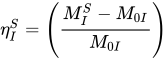
where is the magnetization (resonance intensity) of nucleus at thermal equilibrium. An analytical expression for the NOE can be obtained by considering all the relaxation pathways and applying the Solomon equations to obtain

where

and .

is the total longitudinal dipolar relaxation rate () of spin I due to the presence of spin s, is referred to as the cross-relaxation rate, and and are the magnetogyric ratios characteristic of the and nuclei, respectively.

Saturation of the degenerate W1S transitions disturbs the equilibrium populations so that Pαα = Pαβ and Pβα = Pββ. The system's relaxation pathways, however, remain active and act to re-establish an equilibrium, except that the W1S transitions are irrelevant because the population differences across these transitions are fixed by the RF irradiation while the population difference between the WI transitions does not change from their equilibrium values. This means that if only the single quantum transitions were active as relaxation pathways, saturating the resonance would not affect the intensity of the resonance. Therefore to observe an NOE on the resonance intensity of I, the contribution of and must be important. These pathways, known as cross-relaxation pathways, only make a significant contribution to the spin-lattice relaxation when the relaxation is dominated by dipole-dipole or scalar coupling interactions, but the scalar interaction is rarely important and is assumed to be negligible. In the homonuclear case where , if is the dominant relaxation pathway, then saturating increases the intensity of the resonance and the NOE is positive, whereas if is the dominant relaxation pathway, saturating decreases the intensity of the resonance and the NOE is negative.

Molecular motion

[edit]

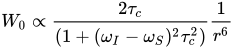
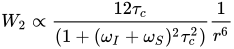
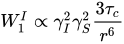
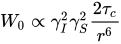
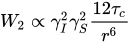
Whether the NOE is positive or negative depends sensitively on the degree of rotational molecular motion.[3] The three dipolar relaxation pathways contribute to differing extents to the spin-lattice relaxation depending a number of factors. A key one is that the balance between ω2, ω1 and ω0 depends crucially on molecular rotational correlation time, , the time it takes a molecule to rotate one radian. NMR theory shows that the transition probabilities are related to and the Larmor precession frequencies, , by the relations:

where is the distance separating two spin-12 nuclei. For relaxation to occur, the frequency of molecular tumbling must match the Larmor frequency of the nucleus. In mobile solvents, molecular tumbling motion is much faster than . The so-called extreme-narrowing limit where ). Under these conditions the double-quantum relaxation W2 is more effective than W1 or W0, because τc and 2ω0 match better than τc and ω1. When ω2 is the dominant relaxation process, a positive NOE results.

This expression shows that for the homonuclear case where I = S, most notably for 1H NMR, the maximum NOE that can be observed is 1\2 irrespective of the proximity of the nuclei. In the heteronuclear case where IS, the maximum NOE is given by 1\2 (γS/γI), which, when observing heteronuclei under conditions of broadband proton decoupling, can produce major sensitivity improvements. The most important example in organic chemistry is observation of 13C while decoupling 1H, which also saturates the 1J resonances. The value of γS/γI is close to 4, which gives a maximum NOE enhancement of 200% yielding resonances 3 times as strong as they would be without NOE.[15] In many cases, carbon atoms have an attached proton, which causes the relaxation to be dominated by dipolar relaxation and the NOE to be near maximum. For non-protonated carbon atoms the NOE enhancement is small while for carbons that relax by relaxation mechanisms by other than dipole-dipole interactions the NOE enhancement can be significantly reduced. This is one motivation for using deuteriated solvents (e.g. CDCl3) in 13C NMR. Since deuterium relaxes by the quadrupolar mechanism, there are no cross-relaxation pathways and NOE is non-existent. Another important case is 15N, an example where the value of its magnetogyric ratio is negative. Often 15N resonances are reduced or the NOE may actually null out the resonance when 1H nuclei are decoupled. It is usually advantageous to take such spectra with pulse techniques that involve polarization transfer from protons to the 15N to minimize the negative NOE.

Structure elucidation

[edit]
First NOE's reported by Anet and Bourne[9]

While the relationship of the steady-state NOE to internuclear distance is complex, depending on relaxation rates and molecular motion, in many instances for small rapidly tumbling molecules in the extreme-narrowing limit, the semiquantitative nature of positive NOE's is useful for many structural applications often in combination with the measurement of J-coupling constants. For example, NOE enhancements can be used to confirm NMR resonance assignments, distinguish between structural isomers, identify aromatic ring substitution patterns and aliphatic substituent configurations, and determine conformational preferences.[3]

The inter-atomic distances derived from the observed NOE can often help to confirm the three-dimensional structure of a molecule.[3][15] In this application, the NOE differs from the application of J-coupling in that the NOE occurs through space, not through chemical bonds. Thus, atoms that are in close spatial proximity to each other can give an NOE regardless of how many chemical bonds separate them, whereas spin coupling is observed only when the atoms are connected by 1–3 chemical bonds. However, the relation ηIS(max)=12 obscures how the NOE is related to internuclear distances because it applies only for the idealized case where the relaxation is 100% dominated by dipole-dipole interactions between two nuclei I and S. In practice, the value of ρI contains contributions from other competing mechanisms, which serve only to reduce the influence of W0 and W2 by increasing W1. Sometimes, for example, relaxation due to electron-nuclear interactions with dissolved oxygen or paramagnetic metal ion impurities in the solvent can prohibit the observation of weak NOE enhancements. The observed NOE in the presence of other relaxation mechanisms is given by
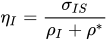
where ρ is the additional contribution to the total relaxation rate from relaxation mechanisms not involving cross relaxation. Using the same idealized two-spin model for dipolar relaxation in the extreme narrowing limit:

It is easy to show[15] that
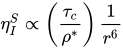
Thus, the two-spin steady-state NOE depends on internuclear distance only when there is a contribution from external relaxation. Bell and Saunders showed that following strict assumptions ρc is nearly constant for similar molecules in the extreme narrowing limit.[10] Therefore, taking ratios of steady-state NOE values can give relative values for the internuclear distance r. While the steady-state experiment is useful in many cases, it can only provide information on relative internuclear distances. On the other hand, the initial rate at which the NOE grows is proportional to rIS−6, which provides other more sophisticated alternatives for obtaining structural information via transient experiments such as 2D-NOESY.

Two-dimensional NMR

[edit]
Pulse sequence for the standard two-dimensional NOESY experiment
2D NOESY spectrum of codeine

The motivations for using two-dimensional NMR for measuring NOE's are similar as for other 2-D methods. The maximum resolution is improved by spreading the affected resonances over two dimensions, therefore more peaks are resolved, larger molecules can be observed and more NOE's can be observed in a single measurement. More importantly, when the molecular motion is in the intermediate or slow motional regimes when the NOE is either zero or negative, the steady-state NOE experiment fails to give results that can be related to internuclear distances.[3]

Codeine molecule

Nuclear Overhauser Effect Spectroscopy (NOESY) is a 2D NMR spectroscopic method used to identify nuclear spins undergoing cross-relaxation and to measure their cross-relaxation rates. Since 1H dipole-dipole couplings provide the primary means of cross-relaxation for organic molecules in solution, spins undergoing cross-relaxation are those close to one another in space. Therefore, the cross peaks of a NOESY spectrum indicate which protons are close to each other in space. In this respect, the NOESY experiment differs from the COSY experiment that relies on J-coupling to provide spin-spin correlation, and whose cross peaks indicate which 1H's are close to which other 1H's through the chemical bonds of the molecule.

The basic NOESY sequence consists of three 90° pulses. The first pulse creates transverse spin magnetization. The spins precess during the evolution time t1, which is incremented during the course of the 2D experiment. The second pulse produces longitudinal magnetization equal to the transverse magnetization component orthogonal to the pulse direction. Thus, the idea is to produce an initial condition for the mixing period τm. During the NOE mixing time, magnetization transfer via cross-relaxation can take place. For the basic NOESY experiment, τm is kept constant throughout the 2D experiment, but chosen for the optimum cross-relaxation rate and build-up of the NOE. The third pulse creates transverse magnetization from the remaining longitudinal magnetization. Data acquisition begins immediately following the third pulse and the transverse magnetization is observed as a function of the pulse delay time t2. The NOESY spectrum is generated by a 2D Fourier transform with respect to t1 and t2. A series of experiments are carried out with increasing mixing times, and the increase in NOE enhancement is followed. The closest protons show the most rapid build-up rates of the NOE.

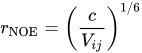
Inter-proton distances can be determined from unambiguously assigned, well-resolved, high signal-to-noise NOESY spectra by analysis of cross peak intensities. These may be obtained by volume integration and can be converted into estimates of interproton distances. The distance between two atoms and can be calculated from the cross-peak volumes and a scaling constant

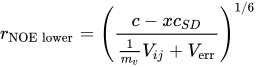
where can be determined based on measurements of known fixed distances. The range of distances can be reported based on known distances and volumes in the spectrum, which gives a mean and a standard deviation , a measurement of multiple regions in the NOESY spectrum showing no peaks, i.e. noise , and a measurement error . The parameter is set so that all known distances are within the error bounds. This shows that the lower range of the NOESY volume is

and that the upper bound is
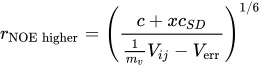
Such fixed distances depend on the system studied. For example, locked nucleic acids have many atoms whose distance varies very little in the sugar, which allows estimation of the glycosidic torsion angles, which allowed NMR to benchmark LNA molecular dynamics predictions.[16] RNAs, however, have sugars that are much more conformationally flexible, and require wider estimations of low and high bounds.[17]

In protein structural characterization, NOEs are used to create constraints on intramolecular distances. In this method, each proton pair is considered in isolation and NOESY cross peak intensities are compared with a reference cross peak from a proton pair of fixed distance, such as a geminal methylene proton pair or aromatic ring protons. This simple approach is reasonably insensitive to the effects of spin diffusion or non-uniform correlation times and can usually lead to definition of the global fold of the protein, provided a sufficiently large number of NOEs have been identified. NOESY cross peaks can be classified as strong, medium or weak and can be translated into upper distance restraints of around 2.5, 3.5 and 5.0 Å, respectively. Such constraints can then be used in molecular mechanics optimizations to provide a picture of the solution state conformation of the protein.[18] Full structure determination relies on a variety of NMR experiments and optimization methods utilizing both chemical shift and NOESY constraints.

Heteronuclear NOE

[edit]


Some experimental methods

[edit]

Some examples of one and two-dimensional NMR experimental techniques exploiting the NOE include:

  • NOESY, Nuclear Overhauser effect Spectroscopy
  • HOESY, Heteronuclear Overhauser effect spectroscopy
  • ROESY, Rotational frame nuclear Overhauser effect spectroscopy
  • TRNOE, Transferred nuclear Overhauser effect
  • DPFGSE-NOE, Double pulsed field gradient spin echo NOE experiment

NOESY is the determination of the relative orientations of atoms in a molecule, for example a protein or other large biological molecule, producing a three-dimensional structure. HOESY is NOESY cross-correlation between atoms of different elements. ROESY involves spin-locking the magnetization to prevent it from going to zero, applied for molecules for which regular NOESY is not applicable. TRNOE measures the NOE between two different molecules interacting in the same solution, as in a ligand binding to a protein.[19] In a DPFGSE-NOE experiment, a transient experiment that allows for suppression of strong signals and thus detection of very small NOEs.

Examples of nuclear Overhauser effect

[edit]
Nuclear Overhauser effect[20]

The figure (top) displays how Nuclear Overhauser Effect Spectroscopy can elucidate the structure of a switchable compound. In this example,[20] the proton designated as {H} shows two different sets of NOEs depending on the isomerization state (cis or trans) of the switchable azo groups. In the trans state proton {H} is far from the phenyl group showing blue coloured NOEs; while the cis state holds proton {H} in the vicinity of the phenyl group resulting in the emergence of new NOEs (show in red).

Another example (bottom) where application where the NOE is useful to assign resonances and determine configuration is polysaccharides. For instance, complex glucans possess a multitude of overlapping signals, especially in a proton spectrum. Therefore, it is advantageous to utilize 2D NMR experiments including NOESY for the assignment of signals. See, for example, NOE of carbohydrates.

Homonuclear NMR techniques in carbohydrate studies.

See also

[edit]

Structure elucidation using NOESY

[edit]

Over the last few decades, 2D-NOESY has developed into a valuable tool for the structural elucidation of molecules. 2D-NOESY is not only suitable for small molecules, but is also applicable to larger molecules.[21] However, NOESY is not alone, but always combined with generation of theoretical molecular ensembles, which must be deconvoluted, e.g. with the help of NAMFIS.[22]

References

[edit]
[edit]
Revisions and contributorsEdit on WikipediaRead on Wikipedia
from Grokipedia
The nuclear Overhauser effect (NOE) is a fundamental phenomenon in nuclear magnetic resonance (NMR) spectroscopy, characterized by the transfer of nuclear spin polarization between two or more spin-active nuclei through cross-relaxation mechanisms, which manifests as a change in the intensity of an NMR signal when one nucleus is selectively saturated or inverted by radiofrequency irradiation.[1] This through-space interaction, distinct from through-bond J-coupling, primarily occurs between nuclei separated by distances of less than 5 Å and depends on the molecular tumbling rate, enabling the probing of spatial proximities in molecules.[1] The NOE was theoretically proposed by Albert W. Overhauser in 1953 in the context of dynamic nuclear polarization involving electron-nuclear interactions,[2] but the analogous nuclear-nuclear effect was first experimentally observed and quantitatively described by Ionel Solomon in 1955, who reported an approximately 30% enhancement in the ¹⁹F NMR signal of anhydrous hydrofluoric acid upon saturation of the ¹H resonance.[3] Solomon's seminal work derived the governing Solomon equations, which model the relaxation processes (including zero-quantum W₀, single-quantum W₁, and double-quantum W₂ transitions) that underpin the effect, highlighting its origin in dipole-dipole couplings modulated by molecular motion.[3][4] In practice, the NOE is exploited in both one-dimensional (1D) and two-dimensional (2D) NMR experiments to elucidate molecular structures, particularly for determining stereochemistry, conformations, and three-dimensional arrangements in organic compounds, peptides, and biomacromolecules like proteins and nucleic acids.[1] For instance, 2D NOE spectroscopy (NOESY) and rotating-frame variants (ROESY) map internuclear distances by correlating cross-peak intensities, which scale inversely with the sixth power of the distance (r⁻⁶) for dipole-dipole relaxation, making the technique indispensable for solving complex biomolecular structures where long-range constraints are critical.[1] The effect's magnitude can vary from positive enhancements (up to 50% for ¹H-¹H in small molecules) to zero or negative values in larger systems due to dominant chemical shift anisotropy or spin rotation contributions, influencing experimental design in high-field NMR.[5]

Fundamentals

Definition and Principle

The Nuclear Overhauser Effect (NOE) is defined as the change in intensity of an NMR signal from one nucleus that occurs upon saturation or perturbation of the signal from another nucleus in close spatial proximity, typically within 5 Å. This through-space interaction provides a sensitive probe for internuclear distances, independent of chemical bonding, and is distinct from scalar (J-)coupling effects observed in through-bond correlations.[5] The principle underlying the NOE stems from dipole-dipole interactions between nuclear magnetic moments, which facilitate cross-relaxation between the spins. When the resonance of one nucleus (the saturated spin) is irradiated, its spin populations equalize, perturbing the local magnetic field experienced by a nearby unsaturated nucleus. This leads to cross-relaxation via mutual spin flips: specifically, zero-quantum transitions (where both spins flip in opposite directions, conserving total spin) and double-quantum transitions (where both spins flip in the same direction, increasing total spin by two units). The balance between these transitions determines whether the NOE enhances or diminishes the observed signal intensity, with the effect's magnitude scaling inversely with the sixth power of the internuclear distance.[5] In essence, molecular tumbling modulates these dipolar interactions, allowing energy transfer without direct population exchange between single-quantum states. The NOE was first predicted in 1953 by Albert W. Overhauser, who described it as a dynamic polarization mechanism for nuclear spins in metals, arising from coupling with conduction electrons. Its first observation in organic molecules in solution, enabling practical NMR applications for structural elucidation, was achieved in 1965 by Frank A. L. Anet and A. J. R. Bourn through irradiation of proton signals in organic molecules such as adamantane derivatives.[6] In a basic schematic of a two-spin system (e.g., spins I and S separated by <5 Å), saturation of spin I equalizes its α and β populations, reducing the local dipolar field fluctuations. This drives cross-relaxation to spin S: a zero-quantum flip-flop (I α to β, S β to α) or double-quantum flip-flip (both α to β or β to α), altering S's longitudinal magnetization and thus its signal intensity upon detection.[5] For like spins (e.g., both ¹H), the NOE is typically positive in small molecules, enhancing the signal by up to 50%.

Historical Development

The Nuclear Overhauser effect (NOE) was first theoretically predicted in 1953 by Albert W. Overhauser, who described a mechanism for enhancing nuclear spin polarization through saturation of electron spins in metals, known as dynamic nuclear polarization. This electron-nuclear interaction laid the foundational concept for polarization transfer via dipolar coupling. In 1955, Ionel Solomon experimentally demonstrated the nuclear-nuclear analog of this effect in liquid hydrogen fluoride, observing cross-relaxation between ¹H and ¹⁹F nuclei, which extended the principle to purely nuclear systems. During the 1960s, the NOE was adapted for nuclear-nuclear interactions in organic solutions, overcoming initial challenges posed by rapid molecular motion in liquids that reduced the magnitude of observable enhancements. Frank A. L. Anet and A. J. R. Bourn reported the first quantitative measurements of intramolecular NOE in solution, using it to determine proton-proton distances in rigid organic molecules like adamantane derivatives. These experiments highlighted the potential of NOE for conformational analysis, though sensitivity limitations in continuous-wave NMR restricted widespread adoption. Advancements in pulsed Fourier transform NMR, pioneered by researchers including Ray Freeman in the late 1960s, provided the necessary improvements in signal-to-noise ratio and experimental control to make NOE practical for routine use. In the 1970s, steady-state NOE experiments became a standard tool in NMR spectroscopy, as detailed in the seminal monograph by James H. Noggle and Raymond E. Schirmer, which formalized the theory and applications for small molecules. Early applications included the 1965 work by Anet and Bourn, who used NOE to determine conformations in rigid organic molecules like adamantane derivatives. By the 1970s, NOE became a standard tool for confirming stereochemistry in various systems, such as bicyclic compounds, through selective irradiation experiments. Contributors like R. Kaiser further refined early NOE protocols by demonstrating intermolecular effects in liquid mixtures, enhancing its utility for dynamic studies.[7] The 1980s marked the rise of NOE with the integration into two-dimensional NMR techniques, transforming it into a cornerstone for biomolecular structure determination. Kurt Wüthrich and colleagues, including Anil Kumar and Richard R. Ernst, developed the NOESY experiment in 1980, enabling comprehensive mapping of proton proximities in proteins like BPTI.[8] This innovation, building on steady-state foundations, addressed limitations in spectral overlap and propelled NOE's adoption in structural biology, earning Wüthrich the 2002 Nobel Prize in Chemistry for NMR developments.

Theoretical Basis

Relaxation Processes

The relaxation processes central to the Nuclear Overhauser Effect (NOE) encompass longitudinal (spin-lattice, T1) and transverse (spin-spin, T2) relaxation mechanisms that govern the return of nuclear spin magnetization to equilibrium. Longitudinal relaxation involves energy exchange between the spin system and its surroundings (the lattice), primarily facilitating cross-relaxation that underlies NOE. Transverse relaxation, in contrast, arises from dephasing due to local magnetic field fluctuations but plays a lesser direct role in NOE buildup. For protons in organic molecules, the dipole-dipole interaction between nearby spins dominates these processes, as it provides the fluctuating fields necessary for efficient energy transfer through space.[3] Cross-relaxation, the mutual relaxation between two spins I and S, is quantified by the rate constant σIS, which drives polarization transfer in NOE. This rate stems from the dipole-dipole coupling modulated by molecular motions and is expressed as
σIS=γI2γS2210rIS6[6J(ωI+ωS)J(ωIωS)], \sigma_{IS} = \frac{\gamma_I^2 \gamma_S^2 \hbar^2}{10 r_{IS}^6} \left[ 6J(\omega_I + \omega_S) - J(\omega_I - \omega_S) \right],
where γI and γS are the gyromagnetic ratios of the spins, ħ is the reduced Planck's constant, rIS is the internuclear distance, ωI and ωS are the Larmor frequencies, and J(ω) is the spectral density function encoding the correlation of dipolar fluctuations at frequency ω. For homonuclear ¹H–¹H interactions (ωI = ωS = ω), this simplifies to
σIS=γ4210rIS6[6J(2ω)J(0)]. \sigma_{IS} = \frac{\gamma^4 \hbar^2}{10 r_{IS}^6} \left[ 6J(2\omega) - J(0) \right].
This formulation emerges from the analysis of two-spin systems under Redfield perturbation theory, highlighting how cross-relaxation depends inversely on the sixth power of the distance, making NOE sensitive to spatial proximity.[3] The NOE enhancement factor η for the observed spin S, upon saturation of spin I, is given by η = (γIS) (σIS / ρS), where ρS = 1/T1S is the auto-relaxation rate of S due to all mechanisms affecting it. In the steady-state approximation, assuming no other cross-relaxation pathways and complete saturation of I, the maximum enhancement for homonuclear ¹H–¹H NOE is ηmax = 0.5. This limit is derived by considering the relative contributions of spectral density terms in the fast-motion regime (ωτc ≪ 1, where τc is the correlation time), where cross-relaxation equals half the auto-relaxation via dipole-dipole, maximizing transfer efficiency.[3] The NOE arises specifically from through-space dipole-dipole interactions, contrasting with through-bond mechanisms like scalar coupling (J-coupling), which do not contribute to cross-relaxation. In typical organic molecules studied by ¹H NMR, alternative relaxation pathways such as chemical shift anisotropy (CSA) and spin-rotation are minor contributors to NOE compared to dipole-dipole, particularly at standard field strengths (e.g., 300–900 MHz), where CSA scales with the square of the field and spin-rotation is negligible for larger systems.[9] The spectral densities J(ω) in these expressions are influenced by molecular tumbling rates, as detailed in related discussions on molecular dynamics.

Influence of Molecular Motion

The correlation time, denoted as τc\tau_c, represents the average time scale over which a molecule undergoes reorientation due to rotational diffusion in solution. It quantifies the rate of molecular tumbling and is defined as the time required for the molecule to rotate through an angle of approximately one radian. Mathematically, τc1/(6D)\tau_c \approx 1 / (6D), where DD is the rotational diffusion constant, which depends on the molecule's size, shape, and the solvent viscosity.[10][11] Molecular motion modulates the Nuclear Overhauser Effect (NOE) through its impact on the spectral density functions J(ω)J(\omega), which describe the distribution of fluctuating local magnetic fields at Larmor frequencies ω\omega. For isotropic dipolar interactions, the spectral density is given by
J(ω)=2τc1+ω2τc2, J(\omega) = \frac{2 \tau_c}{1 + \omega^2 \tau_c^2},
where the dipolar prefactors (involving γI, γS, ħ, and r) are applied separately in the relaxation rate expressions. These functions enter the cross-relaxation rate σIS\sigma_{IS} via the Solomon equations, where σIS6J(2ω)J(0)\sigma_{IS} \propto 6J(2\omega) - J(0) for homonuclear cases. At low magnetic fields or for fast tumbling (small τc\tau_c), J(0)J(0) and J(2ω)J(2\omega) are similar, leading to moderate σIS\sigma_{IS}; at high fields or slow tumbling (large τc\tau_c), J(2ω)J(2\omega) diminishes relative to J(0)J(0), altering the NOE buildup.[3][12] The sign of the NOE is determined by the regime of ωτc\omega \tau_c, where ω\omega is the Larmor frequency. For fast molecular motion (ωτc1\omega \tau_c \ll 1), the NOE is positive because the zero-quantum transition probability W0W_0 (proportional to J(0)J(0)) is less than the double-quantum W2W_2 (proportional to J(2ω)J(2\omega)), resulting in σIS>0\sigma_{IS} > 0 and signal enhancement up to 50% for protons. Conversely, for slow motion (ωτc1\omega \tau_c \gg 1), the NOE becomes negative as W0>W2W_0 > W_2, yielding σIS<0\sigma_{IS} < 0 and signal reduction up to 100%. The NOE vanishes at the crossover point ωτc1.12\omega \tau_c \approx 1.12, where 6J(2ω)=J(0)6J(2\omega) = J(0).[3][13][14] In biomolecules such as proteins, τc\tau_c typically ranges from 5 to 50 ns, corresponding to negative NOEs at standard NMR fields (e.g., 500–900 MHz), which facilitates reliable distance calibration since the intensity scales as r6r^{-6} under these conditions. This regime arises from the larger size and slower tumbling of macromolecules compared to small organic molecules (τc<1\tau_c < 1 ns).[13][15] Theoretical models of molecular motion distinguish between isotropic and anisotropic tumbling. The isotropic model assumes a spherical rotor with uniform DD in all directions, simplifying calculations under the rigid rotor approximation where internal flexibility is neglected. Anisotropic motion, more realistic for elongated biomolecules, involves axis-dependent diffusion constants, leading to orientation-dependent variations in J(ω)J(\omega) and thus NOE intensities, though the isotropic case provides a baseline for interpreting experimental data.[12][16]

Applications in NMR Spectroscopy

Steady-State NOE

The steady-state nuclear Overhauser effect (NOE) experiment involves the continuous wave saturation of a selected proton resonance in an NMR spectrum, which perturbs the spin populations and leads to observable changes in the intensities of nearby resonances through cross-relaxation. This is typically implemented by acquiring two spectra: one with the irradiation applied to saturate the target proton (equalizing its spin populations), and an off-resonance control spectrum without saturation. The difference spectrum, obtained by subtracting the control from the saturated spectrum, isolates the NOE peaks, highlighting enhancements or reductions in signal intensities for protons within approximately 5 Å of the irradiated site.[17] The intensity of the steady-state NOE depends on the duration of saturation, following a buildup curve described by the equation:
NOE(t)=NOE[1exp(tT1I)] \text{NOE}(t) = \text{NOE}_\infty \left[1 - \exp\left(-\frac{t}{T_{1I}}\right)\right]
where NOE\text{NOE}_\infty is the steady-state enhancement, tt is the irradiation time, and T1IT_{1I} is the longitudinal relaxation time of the observed spin. Steady-state conditions are generally reached after an irradiation time of about 5 T1IT_{1I}, ensuring maximal NOE development without significant spin diffusion in small molecules. For homonuclear proton-proton interactions (like-spins), the maximum theoretical enhancement is 50%, corresponding to a 1.5-fold intensity increase in a simple two-spin system, though it is often reduced to 0-25% in multi-spin environments due to additional relaxation pathways. In contrast, for unlike-spin systems such as 1H^1\text{H}-13C^13\text{C}, the maximum enhancement is lower, approximately 13% (using γ13C/(2γ1H)0.13\gamma_{^{13}\text{C}} / (2 \gamma_{^1\text{H}}) \approx 0.13), limited by the gyromagnetic ratio difference (γS/2γI\gamma_S / 2\gamma_I).[17][18][19] This technique serves primarily as a qualitative indicator of proton-proton proximity, with strong NOEs typically corresponding to distances less than 2.5 Å and weak NOEs to 2.5-4 Å, owing to the r6r^{-6} dependence of dipolar cross-relaxation on internuclear distance. It is particularly useful for distinguishing stereochemical configurations, such as cis versus trans isomers in small organic molecules, by revealing through-space correlations not evident from coupling patterns. However, limitations arise from signal overlap, which can obscure weak NOEs, and from indirect effects in multi-spin systems where relayed NOEs may mimic direct interactions.[17] Selective irradiation targets a single resonance to isolate specific NOEs, minimizing interference, whereas non-selective irradiation across a broader frequency range can enhance overall sensitivity but risks unwanted cross-relaxation pathways. Artifacts such as Hartmann-Hahn cross-polarization can occur under high-power irradiation conditions, leading to coherent transfer rather than the desired through-space NOE, particularly if the irradiation matches the difference in Larmor frequencies between spins. Cross-relaxation, arising from dipole-dipole interactions modulated by molecular motion, underpins the steady-state NOE, as detailed in foundational relaxation theory.[17][18]

Structure Determination Basics

The nuclear Overhauser effect (NOE) provides crucial distance constraints for determining molecular geometries and conformations in nuclear magnetic resonance (NMR) spectroscopy, particularly through distance geometry methods where NOE intensities serve as inputs for structural modeling. The cross-relaxation rate underlying the NOE depends on the inverse sixth power of the internuclear distance (r^{-6}), making it highly sensitive to spatial proximity between protons typically within 5 Å. In practice, this r^{-6} averaging is applied to account for dynamic averaging over molecular motions, yielding effective distances that constrain possible structures during calculations. Calibration of these distances often uses known reference values, such as the geminal proton-proton distance of 1.8 Å in methylene groups (CH_2), which provides a reliable benchmark for scaling observed NOE intensities to absolute distances.[20]40809-5/pdf) A typical workflow for basic structure determination begins with the assignment of NOE cross-peaks to specific proton pairs, often guided by one-dimensional steady-state NOE experiments where irradiation of one proton leads to enhancement of nearby signals. The volumes of these NOE peaks are integrated to obtain relative intensities, which are then converted to upper and lower distance bounds (e.g., 1.8–2.5 Å for strong NOEs, 1.8–3.5 Å for medium, and 1.8–5.0 Å for weak) using the calibrated r^{-6} relationship. These bounds are incorporated into distance geometry algorithms to generate ensembles of conformers that satisfy the constraints, with iterative refinement to minimize violations. A key assumption in this process is the isolated spin pair approximation (ISPA), valid for weak NOEs under short mixing times, which posits that observed enhancements arise solely from direct cross-relaxation between the irradiated and observed spins, neglecting multi-spin interactions. However, errors can arise from spin diffusion, where magnetization relays through intermediate protons, artificially strengthening apparent long-range NOEs and leading to underestimated distances if not mitigated by time-dependent analysis or short irradiation periods.[21][22][23] NOE data is particularly valuable for resolving stereochemistry and local folding patterns in organic molecules. For instance, in alkenes, the presence of an NOE between substituents on adjacent carbons confirms a cis configuration, while its absence indicates trans, as the through-space proximity differs significantly (typically <3 Å vs. >5 Å). In peptides, sequential or medium-range NOEs between amide and alpha protons signal folded structures like beta-turns or helices by indicating backbone proximities not evident from covalent connectivity. A representative example is the conformational analysis of simple disaccharides, such as maltose, where strong intra-residue NOEs (e.g., between H1 and H2 within a glucose unit) validate chair conformations, while weaker inter-residue NOEs (e.g., between H1 of one residue and H4' of the adjacent) delineate the glycosidic linkage torsion angles, distinguishing alpha-1,4 from other linkages.[24][25]

Advanced Techniques

Two-Dimensional Methods (NOESY)

The Nuclear Overhauser Effect Spectroscopy (NOESY) experiment is a two-dimensional homonuclear NMR technique designed to map through-space correlations between protons via the NOE. The basic pulse sequence for NOESY consists of three 90° radiofrequency pulses separated by the evolution time t_1 and the mixing time τ_m, followed by signal acquisition during t_2: the first 90° pulse generates transverse magnetization that evolves during t_1, the second 90° pulse stores the magnetization along the z-axis, during τ_m the NOE buildup occurs through cross-relaxation, and the third 90° pulse converts the longitudinal magnetization differences to transverse magnetization for detection.[8] This sequence allows the detection of NOE effects as cross peaks at the chemical shift coordinates of the interacting protons, providing a comprehensive map of spatial proximities in molecules with crowded spectra.[8] The intensity of NOESY cross peaks, represented by the volume V_{IS}(τ_m) for spins I and S, follows a buildup curve approximated by V_{IS}(τ_m) = k [1 - \exp(-\lambda τ_m)], where k is a scaling factor and λ incorporates the cross-relaxation rate σ_{IS} and auto-relaxation rates ρ_I and ρ_S, reflecting the transient nature of NOE accumulation during τ_m.[8] Typical mixing times τ_m range from 200 to 800 ms to balance NOE buildup against spin-lattice relaxation and spin diffusion, ensuring observable cross peaks without excessive signal decay. In practice, shorter τ_m emphasizes direct NOEs, while longer times reveal indirect pathways but require corrections for multi-spin effects. A key advancement is the phase-sensitive NOESY variant, which employs quadrature detection in both dimensions to produce absorption-mode spectra, enabling distinction between true NOE cross peaks (negative for small molecules) and artifacts like zero-quantum coherence peaks (positive phase). This phase sensitivity improves resolution and quantification in complex spectra compared to absolute-value modes. For mid-sized molecules (molecular weight ~600–1500 Da), where laboratory-frame NOEs approach zero due to tumbling rates near the Larmor frequency, the rotating-frame Overhauser effect spectroscopy (ROESY) variant addresses this limitation by applying a spin-lock field during τ_m, yielding positive cross peaks independent of correlation time. NOESY offers significant advantages over one-dimensional NOE methods, including suppression of diagonal peaks through phase cycling or processing to highlight off-diagonal correlations, and generation of a full through-space connectivity map that resolves overlaps in proton spectra. Additionally, spin diffusion—indirect magnetization transfer via intermediate protons that distorts distance estimates in large molecules—can be mitigated using three-dimensional NOESY variants, which disperse correlations into a third dimension for better isolation of direct NOEs. These features make NOESY indispensable for elucidating molecular conformations in solution.

Heteronuclear NOE Effects

The heteronuclear nuclear Overhauser effect (NOE) arises from cross-relaxation between spins of unlike nuclear species, such as ¹H and ¹³C or ¹H and ¹⁵N, through through-space dipolar interactions. Unlike homonuclear NOE, the magnitude of this enhancement is moderated by the ratio of gyromagnetic ratios (γ) of the interacting spins, typically resulting in smaller signal boosts for low-γ nuclei like ¹³C (γ_C/γ_H ≈ 0.25) or ¹⁵N (γ_N/γ_H ≈ 0.1). This effect is particularly valuable in NMR for overcoming the low natural abundance and sensitivity of heteronuclei in organic and biomolecular samples.[26] The steady-state enhancement factor η for the observed spin I (e.g., ¹³C) upon saturation of the coupled spin S (e.g., ¹H) is described by the equation
η=γSγIσISρI, \eta = \frac{\gamma_S}{\gamma_I} \frac{\sigma_{IS}}{\rho_I},
where σ_IS represents the cross-relaxation rate between the spins and ρ_I is the longitudinal relaxation rate of spin I. In practice, for ¹³C NMR with broadband ¹H decoupling, this yields an enhancement of approximately 200% (total signal intensity tripling the unenhanced value) under extreme narrowing conditions (ωτ_c << 1), where ω is the Larmor frequency and τ_c is the molecular correlation time; however, the dynamic range varies with τ_c, diminishing as molecular tumbling slows.[26][27] Heteronuclear NOE finds key applications in spectral editing and assignment techniques, such as DEPT-NOE variants that combine polarization transfer with NOE for distinguishing CH_n multiplicities while enhancing sensitivity, and HSQC-NOE experiments that leverage the effect for correlating ¹H-¹³C or ¹H-¹⁵N resonances in protein NMR assignments. A distinctive application is the inverse heteronuclear NOE, where saturation of a low-γ spin like ¹³C modulates the observed ¹H signal, providing insights into protein backbone dynamics by quantifying order parameters and internal motions on picosecond-to-nanosecond timescales.[28][29] Despite these benefits, heteronuclear NOE is limited in large molecules (e.g., proteins >30 kDa), where increased τ_c shifts the spectral density function, reducing or inverting the enhancement (η approaching -1 in the spin-diffusion regime). Additionally, paramagnetic additives, such as metal ions or dissolved oxygen, quench the NOE by accelerating relaxation rates through unpaired electron interactions, thereby suppressing the cross-relaxation contribution.[26][30]

Experimental Approaches

Measurement Techniques

High-field superconducting magnets operating at proton resonance frequencies exceeding 500 MHz are standard for NOE measurements, as they offer improved spectral dispersion to resolve overlapping signals and amplify the relatively small NOE intensity changes, typically on the order of 5-50%. Cryogenically cooled probes, or cryoprobes, enhance detection sensitivity by reducing thermal noise, enabling NOE experiments on samples with limited availability or at lower concentrations while minimizing experiment times. Pulse sequence techniques for acquiring NOE data primarily involve selective perturbation of spin populations followed by observation of relaxation effects. In difference spectroscopy, a reference spectrum acquired with off-resonance irradiation is subtracted from one with on-resonance saturation of the target proton, isolating the NOE difference while suppressing direct saturation artifacts. Transient NOE methods apply short saturation pulse trains (often 1-5 seconds) to monitor the dynamic buildup of cross-relaxation, providing insights into internuclear distances through intensity modulation. Gradient-selected Overhauser effect spectroscopy (GOESY) incorporates pulsed field gradients for coherence pathway selection, reducing phase cycling requirements and artifacts in multidimensional NOE acquisitions. Sample preparation protocols emphasize conditions that promote isotropic tumbling and minimize line broadening. Deuterated solvents like D₂O are used to exchange labile protons and reduce solvent signal overlap, with analyte concentrations typically maintained at 1-10 mM to balance solubility and signal-to-noise without inducing aggregation. Precise temperature regulation, often between 25-40°C, stabilizes the molecular correlation time τ_c, ensuring consistent NOE signs and magnitudes across repeated scans. Artifact suppression relies on robust experimental design, including phase cycling schemes that alternate transmitter and receiver phases to eliminate unwanted coherences like axial peaks in difference spectra. For selective excitation, E-BURP (electronic calibration of the excitation bandwidth using a response function pulse) shapes calibrate the irradiation bandwidth and power, ensuring uniform volume selectivity over the target resonance without spillover to adjacent peaks.

Practical Considerations

One major challenge in NOE experiments arises from artifacts such as spin diffusion, which involves multi-step magnetization transfer through intermediate protons, leading to overestimation of long-range distances. This effect becomes prominent at longer mixing times (τ_m) in NOESY spectra, complicating accurate distance restraints. To mitigate spin diffusion, experiments are often conducted with short mixing times, typically 50-100 ms, which favor direct cross-relaxation over relayed pathways. Additionally, advanced algorithms like MARDIGRAS (Matrix Analysis of Relaxation for DIscerning the GeometRy of an Aqueous Structure) iteratively refine distance constraints by accounting for spin diffusion through relaxation matrix analysis, improving structural accuracy in biomolecular NMR.[31] Quantification of NOE intensities is hindered by the nonlinear r^{-6} dependence on interproton distance, where small errors in intensity measurement amplify distance uncertainties, particularly beyond 5 Å. This nonlinearity arises from the dipolar coupling strength, making calibration essential for converting NOE volumes to distances. Internal standards, such as well-resolved methyl groups (e.g., -CH_3 protons with known geminal distances of ~1.8 Å), are commonly used to normalize NOE build-up curves, providing a reliable reference without assuming uniform correlation times across the molecule. Optimization strategies in NOE experiments include selecting appropriate magnetic field strengths, as higher B_0 (e.g., 600-900 MHz) enhances overall sensitivity and resolution, reducing the practical impact of the negative NOE observed in macromolecules by enabling detection of weaker signals despite the reduced enhancement magnitude. Solvent choice is critical to minimize chemical exchange contributions, which can mimic or obscure direct NOEs; for instance, using D_2O instead of H_2O exchanges labile protons (e.g., amide NH), suppressing exchange-relayed NOEs while preserving structural information. Temperature control is also vital, as lower temperatures increase the rotational correlation time (τ_c) by raising solution viscosity, potentially flipping the NOE sign from positive to negative in smaller systems or exacerbating negative effects in proteins; thus, biomolecular NOE studies are typically performed at 25-40°C to maintain protein stability and optimal τ_c for negative NOE build-up. To extend the effective range of NOE-derived distances beyond the conventional 5 Å limit, paramagnetic relaxation enhancement (PRE) is employed by introducing a paramagnetic center (e.g., via spin labels like MTSL on cysteines), which induces distance-dependent broadening observable up to 20-40 Å, complementing short-range NOEs for capturing transient or long-range interactions in dynamic systems.

Case Studies

Biomolecular Examples

The Nuclear Overhauser Effect (NOE) has played a pivotal role in determining the solution structures of biomolecules since the 1980s, with the first complete three-dimensional protein structure achieved for bovine pancreatic trypsin inhibitor (BPTI), a 58-residue protein. Using early 2D NOE spectroscopy techniques, researchers identified key distance constraints between protons, enabling the assignment of secondary structures and overall fold in aqueous solution, marking a breakthrough in NMR-based structural biology.[32] A prominent example in protein structure determination is the 76-residue ubiquitin, where ¹H-NOESY spectra provided approximately 2000 NOE distance constraints that resolved the compact fold, including a central mixed α-helix spanning residues 23-34 and a five-stranded β-sheet formed by residues 1-16, 40-45, 49-51, 59-66, and 70-76. These constraints, combined with torsion angle restraints, allowed for the calculation of an ensemble of conformers with low root-mean-square deviation, confirming the protein's globular architecture essential for its role in protein degradation.[33] In nucleic acids, NOE has elucidated drug-DNA interactions, such as in a cisplatin-modified DNA duplex containing a 1,2-intrastrand cross-link at d(GpG) sites. NMR studies using NOE constraints revealed a ~30–40° bend toward the major groove, disrupting base stacking and helix geometry, which contributes to cisplatin's anticancer mechanism by inhibiting DNA replication.[34] For RNA, NOE cross-peaks between imino protons in the 10-12 ppm chemical shift range identify Watson-Crick base pairing, as sequential imino-imino connectivities in NOESY spectra trace helical segments where hydrogen-bonded protons (<5 Å apart) exhibit strong through-space correlations, facilitating secondary structure mapping without relying solely on chemical shifts.[35] NOE data are often integrated with dihedral angle restraints derived from J-coupling constants in hybrid modeling workflows for biomolecular structures, where NOE-derived distances provide global fold information while Karplus equation-based dihedrals from ³J_HNHA couplings constrain backbone φ/ψ angles, enabling robust ensemble refinement for proteins up to ~100 residues using restrained molecular dynamics simulations.[36]

Small Molecule Applications

The nuclear Overhauser effect (NOE) is particularly advantageous for small molecules, where rotational correlation times (τ_c) are typically less than 0.5 ns, resulting in positive NOE enhancements that facilitate straightforward 1D experiments for structural elucidation.[37] This contrasts with larger systems and enables reliable detection of through-space proximities under steady-state conditions, as detailed in prior sections on steady-state NOE. In organic synthesis, NOE routinely aids in assigning stereochemistry, such as in alkenes, where cis isomers exhibit strong NOE between vinylic protons and allylic substituents due to their spatial proximity (typically <3 Å), while trans isomers show negligible enhancement. For instance, irradiation of an allylic methyl group in a cis-disubstituted alkene often yields a clear positive NOE to the adjacent vinylic proton, confirming the configuration without requiring 2D methods. Conformational analysis in small molecules also benefits from NOE, particularly in cyclic systems like cyclohexane derivatives, where the chair conformation is distinguished from boat forms by distinct axial-equatorial proton distances. In the preferred chair, equatorial protons experience weaker NOE from adjacent axial protons compared to the more crowded boat, where flagpole interactions bring hydrogens within 1.8 Å, producing intense enhancements. For atropisomerism in biaryls, NOE experiments resolve axial chirality by probing restricted rotation; for example, selective irradiation of aromatic protons in 1,1′-binaphthyl-2,2′-bisphosphonic acid derivatives reveals differential NOE patterns between syn and anti atropisomers, confirming relative configurations at the biaryl axis through 1D and 2D ROE measurements. A classic small-molecule application is the assignment of anomeric configuration in sucrose, where 1D NOE irradiation of the α-anomeric proton shows enhancement to nearby protons consistent with the α-(1→2) linkage to the β-fructofuranosyl moiety. In natural products, NOE has elucidated key structural features, such as the side-chain folding in taxol (paclitaxel), an anticancer diterpenoid. NMR studies in non-aqueous solvents reveal that the C-13 side chain adopts a hydrophobic collapse conformation, with NOE cross-peaks between the 2'-phenyl (δ 7.2-7.5) and 3'-phenyl (δ 7.3) rings indicating their proximity (<4 Å), stabilizing the bioactive T-shaped fold essential for tubulin binding.[38] Recent advances post-2020 integrate NOE with computational screening to accelerate drug-like molecule design; for instance, NOE-derived hydration water maps around protein targets guide molecular dynamics simulations and docking, enabling virtual refinement of ligand poses to displace key waters and enhance binding affinity in fragment-based screening.[39] This hybrid approach has validated hits against oncogenic targets, prioritizing candidates with validated NOE-confirmed interactions.[39]

References

User Avatar
No comments yet.