



Community hub
Recent from talks
Contribute something to knowledge base
Content stats: 0 posts, 0 articles, 1 media, 0 notes
Members stats: 0 subscribers, 0 contributors, 0 moderators, 0 supporters
Subscribers
Supporters
Contributors
Moderators
Hub AI
Oak (wine) AI simulator
(@Oak (wine)_simulator)
Hub AI
Oak (wine) AI simulator
(@Oak (wine)_simulator)
Oak (wine)
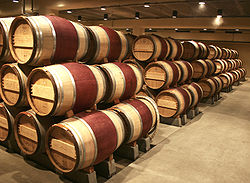
Oak is used in winemaking to vary the color, flavor, tannin profile and texture of wine. It can be introduced in the form of a barrel during the fermentation or aging periods, or as free-floating chips or staves added to wine fermented in a vessel like stainless steel. Oak barrels can impart other qualities to wine through evaporation and low level exposure to oxygen.
In early wine history, the amphora was the vessel of choice for the storage and transportation of wine. Due to the perishable nature of wood material it is difficult to trace the usage of barrels in history. The Greek historian Herodotus noted that ancient Mesopotamians used barrels made of palm wood to transport wine along the Euphrates. Palm is a difficult material to bend and fashion into barrels, however, and wine merchants in different regions experimented with different wood styles to find a better wood source. The use of oak has been prevalent in winemaking for at least two millennia, first coming into widespread use during the time of the Roman Empire. In time, winemakers discovered that beyond just storage convenience, wine kept in oak barrels took on properties that improved it by making it softer and, in some cases, better-tasting.
The porous nature of an oak barrel allows evaporation and oxygenation to occur in wine but typically not at levels that would cause oxidation or spoilage. The typical 59-gallon (225-liter) barrel can lose anywhere from 51⁄2 to 61⁄2 gallons (21 to 25 liters) (of mostly alcohol and water) in a year through evaporation. This allows the wine to concentrate its flavor and aroma compounds. Small amounts of oxygen are allowed to pass through the barrel and act as a softening agent upon the wine's tannins.
The chemical properties of oak can have a profound effect on wine. Phenols within the wood interact to produce vanilla type flavors and can give the impression of tea notes or sweetness. The degree of "toast" on the barrel can also impart different properties affecting the tannin levels as well as the aggressive wood flavors. The hydrolyzable tannins present in wood, known as ellagitannins, are derived from lignin structures in the wood. They help protect the wine from oxidation and reduction.
Characteristics of white wines fermented in oak include a pale color and extra silky texture. White wines fermented in steel and matured in oak will have a darker coloring due to heavy phenolic compounds still present. Flavor notes commonly used to describe wines exposed to oak include caramel, cream, smoke, spice and vanilla. Chardonnay is a varietal with very distinct flavor profiles when fermented in oak, which include coconut, cinnamon and cloves notes. The "toastiness" of the barrel can bring out varying degrees of mocha and toffee notes in red wine. It is a common misconception that oak imparts butter flavors to wine. The butter flavors come from lactic acid, naturally present in the wine, converted during malolactic fermentation to diacetyl. This process reverses itself, although the addition of sulfur dioxide prevents this, and the diacetyl remains.
Wines can be barrel fermented in oak or placed in oak after fermentation for a period of aging or maturation. Wine matured in oak receives more oak flavors and properties than wine fermented in oak because yeast cells present in fermentation interact with and "latch on" to oak components. When dead yeast cells are removed as lees some oak properties go with them.
The length of time a wine spends in the barrel is dependent on the varietal and finished style the winemaker desires. The majority of oak flavoring is imparted in the first few months the wine is in contact with oak, while longer term exposure adds light barrel aeration, which helps precipitate phenolic compounds and quickens the aging process. New World Pinot noir may spend less than a year in oak. Premium Cabernet Sauvignon may spend two years. The very tannic Nebbiolo grape may spend four or more years in oak. High end Rioja producers will sometimes age their wines up to ten years in American oak to get a desired earthy cedar and herbal character.
The species of oak typically used for American oak production is the Quercus alba which is a white oak species that is characterized by its relatively fast growth, wider grains and lower wood tannins. It is found in most of the Eastern United States as well as Missouri, Minnesota and Wisconsin where many wine barrels are from. In Oregon the Quercus garryana white oak has started to gain usage due to its closer similarities to European oak.
Oak (wine)
Oak is used in winemaking to vary the color, flavor, tannin profile and texture of wine. It can be introduced in the form of a barrel during the fermentation or aging periods, or as free-floating chips or staves added to wine fermented in a vessel like stainless steel. Oak barrels can impart other qualities to wine through evaporation and low level exposure to oxygen.
In early wine history, the amphora was the vessel of choice for the storage and transportation of wine. Due to the perishable nature of wood material it is difficult to trace the usage of barrels in history. The Greek historian Herodotus noted that ancient Mesopotamians used barrels made of palm wood to transport wine along the Euphrates. Palm is a difficult material to bend and fashion into barrels, however, and wine merchants in different regions experimented with different wood styles to find a better wood source. The use of oak has been prevalent in winemaking for at least two millennia, first coming into widespread use during the time of the Roman Empire. In time, winemakers discovered that beyond just storage convenience, wine kept in oak barrels took on properties that improved it by making it softer and, in some cases, better-tasting.
The porous nature of an oak barrel allows evaporation and oxygenation to occur in wine but typically not at levels that would cause oxidation or spoilage. The typical 59-gallon (225-liter) barrel can lose anywhere from 51⁄2 to 61⁄2 gallons (21 to 25 liters) (of mostly alcohol and water) in a year through evaporation. This allows the wine to concentrate its flavor and aroma compounds. Small amounts of oxygen are allowed to pass through the barrel and act as a softening agent upon the wine's tannins.
The chemical properties of oak can have a profound effect on wine. Phenols within the wood interact to produce vanilla type flavors and can give the impression of tea notes or sweetness. The degree of "toast" on the barrel can also impart different properties affecting the tannin levels as well as the aggressive wood flavors. The hydrolyzable tannins present in wood, known as ellagitannins, are derived from lignin structures in the wood. They help protect the wine from oxidation and reduction.
Characteristics of white wines fermented in oak include a pale color and extra silky texture. White wines fermented in steel and matured in oak will have a darker coloring due to heavy phenolic compounds still present. Flavor notes commonly used to describe wines exposed to oak include caramel, cream, smoke, spice and vanilla. Chardonnay is a varietal with very distinct flavor profiles when fermented in oak, which include coconut, cinnamon and cloves notes. The "toastiness" of the barrel can bring out varying degrees of mocha and toffee notes in red wine. It is a common misconception that oak imparts butter flavors to wine. The butter flavors come from lactic acid, naturally present in the wine, converted during malolactic fermentation to diacetyl. This process reverses itself, although the addition of sulfur dioxide prevents this, and the diacetyl remains.
Wines can be barrel fermented in oak or placed in oak after fermentation for a period of aging or maturation. Wine matured in oak receives more oak flavors and properties than wine fermented in oak because yeast cells present in fermentation interact with and "latch on" to oak components. When dead yeast cells are removed as lees some oak properties go with them.
The length of time a wine spends in the barrel is dependent on the varietal and finished style the winemaker desires. The majority of oak flavoring is imparted in the first few months the wine is in contact with oak, while longer term exposure adds light barrel aeration, which helps precipitate phenolic compounds and quickens the aging process. New World Pinot noir may spend less than a year in oak. Premium Cabernet Sauvignon may spend two years. The very tannic Nebbiolo grape may spend four or more years in oak. High end Rioja producers will sometimes age their wines up to ten years in American oak to get a desired earthy cedar and herbal character.
The species of oak typically used for American oak production is the Quercus alba which is a white oak species that is characterized by its relatively fast growth, wider grains and lower wood tannins. It is found in most of the Eastern United States as well as Missouri, Minnesota and Wisconsin where many wine barrels are from. In Oregon the Quercus garryana white oak has started to gain usage due to its closer similarities to European oak.
Recent media
Recent media