


Community hub
Recent from talks
Contribute something
Nothing was collected or created yet.
Oichi
View on Wikipedia |
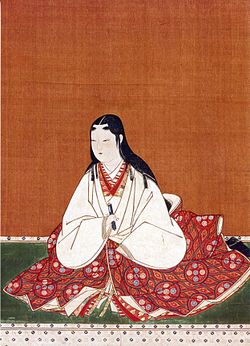
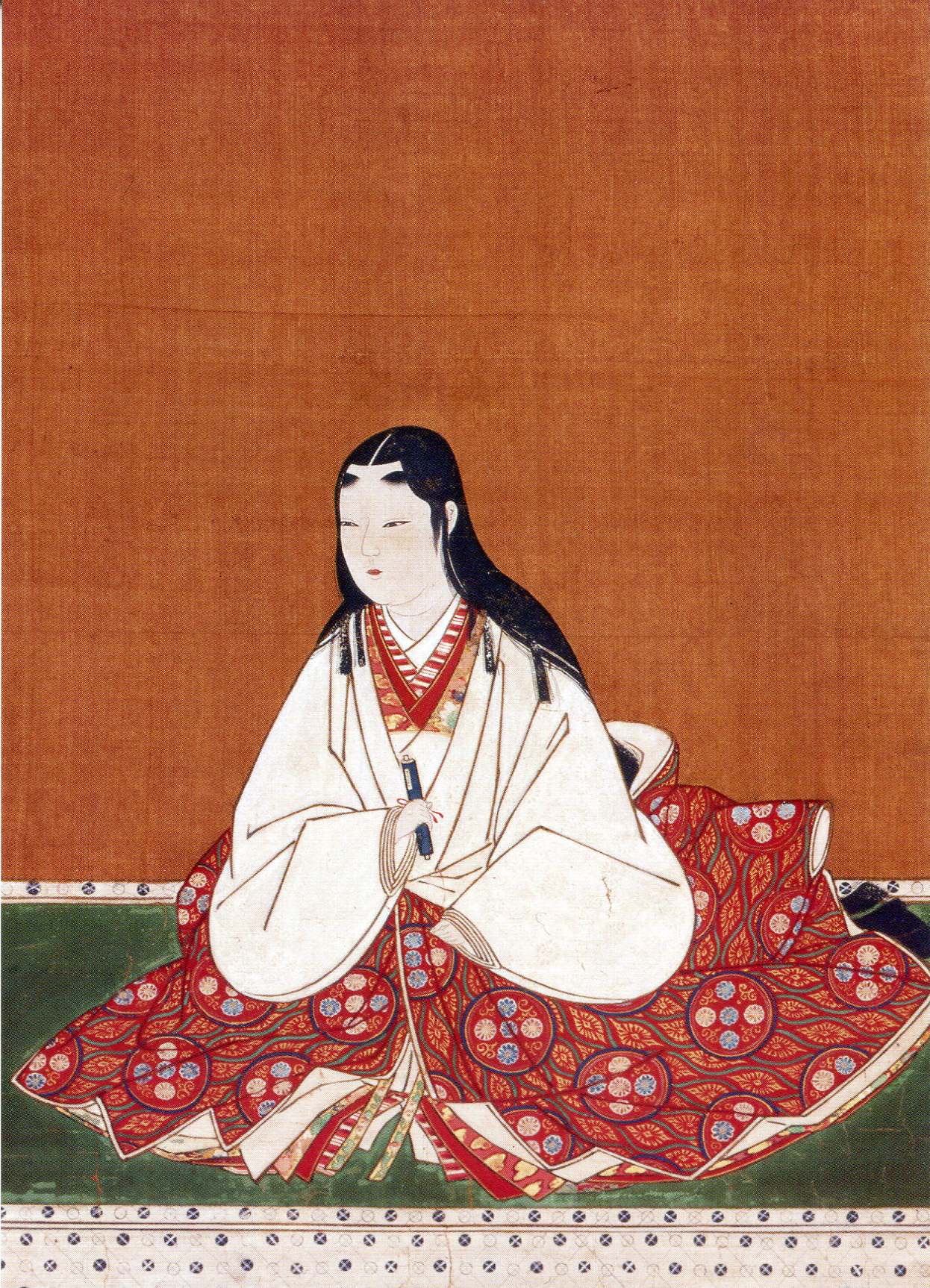
Oichi (お市; 1547 – June 14, 1583) was a female historical figure in the late Sengoku period.[1] She is known primarily as the mother of three daughters who became prominent figures in their own right – Yodo-dono,[2] Ohatsu[3] and Oeyo.[4] Oichi was the younger sister of Oda Nobunaga; and she was the sister-in-law of Nōhime, the daughter of Saitō Dōsan. She was descended from the Taira and Fujiwara clans.
Key Information


She was an influential figure in Japanese history in the Sengoku period. Although remembered mainly for her tragic life as sister of Oda Nobunaga, Japan's first unifier since Ōnin War, Oichi is also famous for her honorable conduct, her beauty and determination. She was present at two historically significant battles, the siege of Odani and the siege of Kitanosho, sieges that led to the extermination of the powerful Azai and Shibata clan, respectively.
Biography
[edit]Oichi was born in 1547 in Nagoya Castle, Owari Province,[5] the fifth daughter of Oda Nobuhide.[6] She was the younger sister of Nobunaga and Oinu.[7] Her mother was an unnamed concubine who said to have also given birth to several of her siblings. Her other names include Ichihime (市姫), Odani no Kata (小谷の方), and Hideko (秀子). She was prized as a beauty of her time and was cherished by her older brother. She was intelligent and speculated to be slightly taller than most women of the age. Nobunaga once stated, "If Oichi was a man, she would make a fine warrior."
Following Nobunaga's conquest of Mino in 1567, Nobunaga arranged for Oichi,[8] then twenty years old, to marry the rival warlord Azai Nagamasa, in an effort to cement an alliance. Nobunaga was very grateful for the marriage and paid for the ceremony entirely (traditionally, the expenses are meant to be shared). Oichi bore Nagamasa one son (Manjumaru) and three daughters – Yodo-dono, Ohatsu and Oeyo. The two clans prospered and worked well together until three years later. Seeing Nobunaga abuse the shogun's power, their relations grew sour and Nagamasa betrayed Nobunaga.

In the summer of 1570, Nagamasa betrayed his alliance with Nobunaga and went to war with him on behalf of the Asakura family in the Battle of Anegawa. A story relates that Oichi sent her brother a sack of beans tied at both ends, ostensibly as a good-luck charm but in reality a warning that he was about to be attacked from both front and rear by the Asakura and Azai clans. According to the story, Nobunaga understood the message and retreated from his brother-in-law's assault in time.
The fighting continued for three years until the Asakura and other anti-Oda forces were destroyed or weakened. Oichi remained with her husband at Odani Castle throughout the conflict, even after Toyotomi Hideyoshi, a trusted vassal and general of Nobunaga at the time, began laying siege to the castle. In the Siege of Odani Castle, Nobunaga requested that his sister be returned to him before the final attack. Nagamasa agreed, sending out Oichi and her three daughters.[9] Nagamasa had no hope of winning, and chose to commit seppuku.
Oichi and her daughters remained in the Oda family's care for the next decade. After Nobunaga was assassinated in 1582, his sons and vassals broke into two major factions, led by two of Nobunaga's favored generals, Shibata Katsuie and Hideyoshi. Nobunaga's third son, Nobutaka, belonged to the former group, and arranged for his aunt Oichi to marry Katsuie in order to ensure his loyalty to the Oda clan. But in 1583, Katsuie was defeated by Hideyoshi in the Battle of Shizugatake, forcing him to retreat to his home at Kitanosho Castle.
As Hideyoshi's army lay siege to the castle, Katsuie implored Oichi to flee with her daughters and seek Hideyoshi's protection. Oichi refused, insisting on dying with her husband after their daughters were sent away. Her daughters were placed in the care of Hideyoshi; the oldest daughter, Yodo-dono (also known as Chacha), eventually became one of Hideyoshi's concubines and the mother of his heir apparent Hideyori.[8]: 286, 313
Oichi's daughters
[edit]-
 Yodo-dono
 -
 Ohatsu
 -
 Oeyo
Oeyo


Oichi's three daughters each went on to become important historical figures in their own right. The eldest and the most famous, Chacha became a concubine to Hideyoshi, whose army had killed not only both her birth parents but also her stepfather. She became known as Yodo-dono or Yodogimi (from Yodo Castle, given to her by Hideyoshi), and was the mother of his only two sons, including his heir Hideyori. Yodo-dono and Hideyori later died in the siege of Osaka, in 1615, the final battle of the warring-states era.
The second, Ohatsu, married Kyōgoku Takatsugu, a man from a noble family once served by the Azai clan. The Kyogoku clan sided with Ieyasu after Hideyoshi's death, giving her the means to serve as an intermediary between Ieyasu and Yodo-dono. She worked in vain to end their hostilities, and after Yodo-dono and Hideyori's death, managed to save Hideyori's daughter by putting her in a convent.
The youngest, Oeyo (also called Ogō), married Tokugawa Hidetada, Ieyasu's heir and the second Tokugawa Shōgun. They had many children, including the third Shōgun Iemitsu, and Kazuko, consort to Emperor Go-Mizunoo. Kazuko's daughter Okiko became Empress Meishō, thus posthumously making Oichi both a grandmother to a Shōgun and a great-grandmother to an Empress.
Personal information
[edit]Oichi was said to have been well loved by her family and their retainers, with Shibata Katsuie and Maeda Toshiie having been among her admirers. Likewise, it is believed that Nagamasa highly valued her as his precious wife. Based on what is known of her, people generally accept that she was faithful and loving to both her husbands.
She is said to have never liked Toyotomi Hideyoshi, which is possibly one of the reasons why she declined to be sent away while with Katsuie. Ironically, it is assumed Hideyoshi cared for her since he tried to save her and her children's lives.
Family
[edit]- Father: Oda Nobuhide (1510–1551)
- Mother: Tsuchida Gozen (died 1594)
- Brothers
- Oda Nobuhiro (died 1574)
- Oda Nobunaga (1534–1582)
- Oda Nobuyuki (1536–1557)
- Oda Nobukane (1548–1614)
- Oda Nagamasu (1548–1622)
- Oda Nobuharu (1549–1570)
- Oda Nobutoki (died 1556)
- Oda Nobuoki
- Oda Hidetaka (died 1555)
- Oda Hidenari
- Oda Nobuteru
- Oda Nagatoshi
- Oda Nobumitsu
- Sister:
- Husbands:
- Azai Nagamasa (1564–1573)
- Shibata Katsuie (1582–1583)
- Children (By Nagamasa)
- Adopted sons (of Katsuie)
- Shibata Katsutoyo
- Shibata Katsumasa
In popular culture
[edit]Oichi appears in Pokémon Conquest (Pokémon + Nobunaga's Ambition in Japan), with her partner Pokémon being Jigglypuff and Wigglytuff.[10]
Oichi appears in Assassin's Creed Shadows as a potential romance option for Yasuke, one of the playable main characters.[11]
Notes
[edit]- ^ Ochinokata, Gifu prefecture website.
- ^ Wilson, Richard L. (1985). Ogata Kenzan (1663-1743), p. 40.
- ^ "The silk coloured portrait of wife of Takatsugu Kyogoku," Archived May 6, 2011, at the Wayback Machine Digital Cultural Properties of Wakasa Obama.
- ^ "Atsuhime"-Autorin für NHKs 2011er Taiga-Drama gewählt (citing Tokyograph), Archived 2011-05-06 at the Wayback Machine J-Dorama.
- ^ Kuwata, Tadachika (1972). 桃山時代の女性. 吉川弘文館. p. 274. ISBN 464206530X.
- ^ Owada, Tetsuo (2008). Azai nagamasa no subete. Shin Jinbutsu Ōraisha. p. 97. ISBN 978-4-404-03506-6. OCLC 247841372.
- ^ Nishigaya, Yasuhiro; 西ケ谷恭弘 (2000). Kōshō Oda Nobunaga jiten (Shohan ed.). Tōkyōdō Shuppan. p. 250. ISBN 4-490-10550-9. OCLC 45600876.
- ^ a b Sansom, George (1961). A History of Japan, 1334–1615. Stanford University Press. p. 278. ISBN 0804705259.
{{cite book}}: ISBN / Date incompatibility (help) - ^ Yoshikawa, Eiji. (2000). Taiko, p. 421.
- ^ "Oichi + Jigglypuff - Pokémon Conquest characters". Pokémon. Retrieved 2012-06-17.
- ^ "All Assassin's Creed Shadows romance options". PCGamesN. 2025-03-20. Retrieved 2025-03-20.
References
[edit]- Wilson, Richard L. (1985). Ogata Kenzan (1663-1743). Lawrence, Kansas: University of Kansas (PhD. dissertation manuscript). OCLC 19111312
- Yoshikawa, Eiji. (2000). Taiko: an epic novel of war and glory in feudal Japan (William Scott Wilson, translator). Tokyo, London: Kodansha International. ISBN 978-4-7700-2609-5; OCLC 248372298
External links
[edit]- Biography of Lady Oichi Archived 2012-03-29 at the Wayback Machine
Oichi
View on GrokipediaEarly Life
Birth and Parentage
Oichi no Kata, a prominent figure in the Sengoku period, was born in 1547 in Owari Province, near Nagoya Castle, to Oda Nobuhide, the daimyo who controlled the region and built the foundations of Oda clan power through military campaigns against rivals like the Imagawa and Saito clans.[1][3] Her father, born in 1510, died in 1551, leaving a legacy of territorial expansion that positioned the Oda for greater influence under his successors.[1] Her mother was Tsuchida Gozen (1511–1594), the principal wife of Nobuhide and mother to several of his children, including key heirs who shaped Japanese history.[4][5] Tsuchida Gozen, originally from the Tsuchida clan, bore Nobuhide at least six children and later remarried after his death, demonstrating her enduring role in family alliances.[4] As the youngest daughter among Nobuhide's offspring, Oichi was sibling to Oda Nobunaga (1534–1582), the eldest legitimate son who would unify much of central Japan, as well as Oda Nobuhiro and other brothers like Nobuyuki and Nobukane, reflecting the polygamous structure of daimyo households where multiple consorts contributed to lineage expansion.[3][1] Her birth into this martial family occurred amid escalating regional conflicts, setting the stage for her later involvement in political marriages.[1]Upbringing Amid Sengoku Conflicts
Oichi was born in 1547 as the fifth daughter of Oda Nobuhide, the daimyo of Owari Province and lord of Nagoya Castle, and his wife Tsuchida Gozen.[1][6] As the younger sister of Oda Nobunaga, who would later emerge as a central figure in Japan's unification efforts, she grew up in an aristocratic household amid the Owari region's strategic heartland near Kyoto, where the Oda clan navigated constant threats from neighboring powers.[1] Her early childhood unfolded in Nagoya Castle, a fortified stronghold reflecting the clan's defensive posture during the intensifying Sengoku wars, characterized by feudal fragmentation and rival daimyo expansions. Nobuhide's death from illness on April 8, 1551, at Suemori Castle, left the clan vulnerable when Oichi was approximately four years old, thrusting Nobunaga into leadership amid internal dissent and external pressures.[6][1] The Oda faced northern incursions from Saitō Dōsan of Mino Province and southern advances by Imagawa Yoshimoto, whose forces repeatedly probed Owari's borders in the 1540s and 1550s, culminating in skirmishes that strained resources and heightened castle life tensions. In 1555, at around age eight, Oichi relocated with the family to Kiyosu Castle following Nobunaga's consolidation of power there, a move underscoring the clan's adaptive strategies amid ongoing territorial disputes.[1] By 1557, family dynamics turned violent as Nobunaga executed their brother Oda Nobuyuki at Kiyosu Castle to quash a succession challenge, an event emblematic of the ruthless internal purges common in Sengoku-era power transitions and likely imprinting the precariousness of noble upbringing on Oichi.[1] These conflicts, including Nobunaga's clearance of disloyal retainers and preparations for larger confrontations like the 1560 Battle of Okehazama against Imagawa forces, enveloped her adolescence in a climate of militarization, where women of her status were groomed for political utility amid perpetual warfare.[6] Historical records on her personal education or daily life remain sparse, reflecting the era's focus on male military exploits over female domestic experiences.[1]Marriages and Political Alliances
Marriage to Azai Nagamasa
Oda Nobunaga arranged the marriage of his younger sister Oichi to Azai Nagamasa, daimyō of Ōmi Province, in 1564 to secure a strategic alliance between the Oda and Azai clans.[7] This union aimed to stabilize Oda's northern borders against mutual rivals, including the Asakura clan, leveraging Azai's control over key territories adjacent to Owari Province.[2] At the time, Oichi was approximately 17 years old, having been born in 1547, while Nagamasa, born in 1545, was 19.[8] Nagamasa had divorced a prior wife in 1559, whom he considered socially inferior, clearing the way for this high-profile match.[1] The alliance initially held, with the couple producing one son, Azai Hisamasa (also known as Manjumaru), and three daughters who would later influence major daimyō lineages.[9]Conflict with the Azai Clan
The marital alliance between Oichi and Azai Nagamasa, intended to secure Oda interests in northern Ōmi Province, unraveled in spring 1570 when Oda Nobunaga advanced on the Asakura clan's stronghold at Kanegasaki Castle in Echizen Province. Nagamasa, bound by longstanding Azai-Asakura ties dating to the 15th century, mobilized approximately 5,000 troops to intercept Nobunaga's supply lines and rear guard, constituting a direct betrayal of the 1564 Oda-Azai pact. Nobunaga, with around 30,000 men but facing divided loyalties and intelligence of the Azai approach, executed a tactical retreat on May 25, 1570, evading encirclement through rearguard actions led by figures including future warlord Toyotomi Hideyoshi.[10] In response, Nobunaga forged a military pact with Tokugawa Ieyasu, assembling a combined force of over 25,000 to confront the Azai-Asakura coalition numbering about 18,000–20,000. The ensuing Battle of Anegawa occurred on July 30, 1570, along the Anegawa River in northern Ōmi, where Oda-Tokugawa ashigaru infantry and cavalry exploited terrain and numerical superiority to shatter the allied lines, inflicting heavy casualties estimated at 1,000–3,000 on the Azai-Asakura side. Despite the rout, Nagamasa regrouped at Odani Castle, his mountain fortress, preventing immediate Oda conquest; Oichi, residing there with their young daughters, endured the initial sieges and scorched-earth tactics that razed surrounding villages and farmlands from late 1570 onward.[11] Sustained Oda pressure eroded Azai defenses over three years, compounded by the 1573 annihilation of the Asakura at the Siege of Ichijōdani Castle. Nobunaga then invested Odani with 40,000 troops in August 1573, blockading supply routes and deploying sappers to undermine fortifications. On September 17, 1573, as breaches appeared inevitable, Nagamasa performed seppuku alongside key retainers, effectively extinguishing Azai leadership; Oichi dispatched her daughters Chacha, Ohatsu, and Oeyo to Nobunaga under a plea for mercy, reportedly begging her brother to spare her husband, though he demanded unconditional Azai surrender and refused. Oichi escaped the falling castle and rejoined Oda forces, marking the conflict's end and her transition from Azai consort to Oda asset.[12][13]Marriage to Shibata Katsuie
Following the defeat and death of her first husband, Azai Nagamasa, at Odani Castle in 1573, Oichi returned to the Oda clan with her three young daughters, residing under Oda protection without immediate remarriage.[14] Prior to that union, Oichi had been betrothed—or possibly briefly married—to Shibata Katsuie, a senior Oda general born around 1528, but Nobunaga dissolved the arrangement in 1567 to instead wed her to Nagamasa, sealing the Oda-Azai alliance after the conquest of Mino Province.[14] This early connection underscores the political nature of Oichi's betrothals, as Nobunaga leveraged familial ties to bind retainers and allies. The formal remarriage to Shibata occurred in late 1582, shortly after Nobunaga's assassination at Honnō-ji Temple on June 21, 1582, amid the resulting power vacuum and factional rivalries among Oda retainers.[14][15] Oda Nobutaka, Nobunaga's third son and a key figure opposing the rising Toyotomi Hideyoshi, orchestrated the match to secure Shibata's loyalty to the Oda successor faction, countering Hideyoshi's influence; Shibata, commanding northern territories like Echizen Province, represented a counterweight with his veteran forces and independent holdings.[15][2] The union thus served as a strategic consolidation of Oda loyalists, with Oichi—then aged about 35—linking her status as Nobunaga's sister to Shibata's military prowess, despite their roughly 20-year age gap.[16] Oichi relocated to Shibata's base at Kitanoshō Castle in Echizen, bringing her daughters (later known as Yodo-dono, Oeyo, and Ohatsu) but producing no children of her own with Shibata, likely due to the brevity of their cohabitation or her prior childbearing years.[2] This marriage, Oichi's second, reinforced Shibata's position as Katsuie's first recorded union in some accounts, though it primarily functioned as a bulwark against Hideyoshi's consolidation rather than a personal or dynastic foundation.[16] The alliance proved short-lived, as escalating conflicts with Hideyoshi culminated in Shibata's defeat at the Battle of Shizugatake in 1583, but the wedding itself highlighted Oichi's recurring role in Oda diplomacy through marital bonds.[2]Death and Family Outcomes
The Siege of Kitanoshō Castle
Following the death of Oda Nobunaga at the Honnō-ji Incident in June 1582, Shibata Katsuie positioned himself as a contender for influence over the Oda remnants, supporting the young Oda Hidenobu while clashing with Toyotomi Hideyoshi's ambitions.[17] In early 1583, Katsuie launched offensives against Hideyoshi's positions, including assaults on the strategic forts at Shizugatake in Ōmi Province during May.[18] These efforts faltered due to coordination failures among Katsuie's subordinates, such as Sakuma Morimasa's delayed advance, allowing Hideyoshi to mobilize reinforcements rapidly and rout the attackers.[18] Katsuie withdrew to his fortress at Kitanoshō Castle in Echizen Province, a massive structure he had constructed in 1575 featuring a nine-story main keep, the tallest of its era.[19] Hideyoshi, capitalizing on his victory at Shizugatake, pursued aggressively with a superior force estimated at over 100,000 men against Katsuie's depleted army of around 30,000.[17] The ensuing siege, commencing shortly after the Shizugatake engagement, overwhelmed the defenders through numerical superiority and relentless assaults, culminating in the castle's fall within approximately three days.[19] As Hideyoshi's troops breached the defenses, Katsuie retreated to the main keep with Oichi, his wife and Nobunaga's sister, urging her to escape with their stepdaughters to seek Hideyoshi's mercy.[20] Oichi refused, opting to remain by his side. On June 14, 1583, Katsuie performed seppuku, and the keep was set ablaze, destroying the castle.[17] [19] Historical accounts differ on Oichi's precise end: some describe her committing seppuku alongside Katsuie, while others indicate she perished in the ensuing fire.[17] [19] This event marked the effective end of Katsuie's resistance and solidified Hideyoshi's dominance in central Japan.[17]Fate of Oichi's Daughters
Oichi bore three daughters to Azai Nagamasa: Chacha (later Yodo-dono), Ohatsu (Jōkō-in), and Oeyo (Sūgen-in), born circa 1569, 1570, and 1573, respectively. Prior to her death at the Siege of Kitanoshō Castle in 1583, Oichi entrusted the daughters to Toyotomi Hideyoshi, ensuring their survival amid the clan's downfall and facilitating their later political marriages.[3] These women navigated the turbulent transition from Sengoku to Edo periods, leveraging familial ties to Oda, Toyotomi, and Tokugawa lineages for influence.[3]| Daughter | Birth–Death | Primary Marriage | Key Children and Roles | Fate |
|---|---|---|---|---|
| Chacha (Yodo-dono) | 1569–1615 | Toyotomi Hideyoshi (ca. 1588) | Tsurumatsu (1589–1592); Hideyori (1593–1615); acted as regent post-Hideyoshi's 1598 death | Committed seppuku with Hideyori during the summer Siege of Osaka as the castle burned, June 1615, after failed peace negotiations.[3] |
| Ohatsu (Jōkō-in) | 1570–1633 | Kyōgoku Takatsugu (1587; widowed 1609) | No biological children; adopted Hatsu-hime (d. 1630); mediated between Toyotomi and Tokugawa during 1614–1615 sieges | Died September 30, 1633, at the Kyōgoku residence in Edo; became a nun post-widowhood and founded Jōkōji temple.[3] |
| Oeyo (Sūgen-in) | 1573–1626 | Tokugawa Hidetada (1594) | Iemitsu (1604–1651, third shogun); Sen-hime (1597–1666); Tōfukumon-in (1607–1678); influential in Ōoku women's quarters | Died 1626; oversaw Tokugawa mausolea construction and temple patronage, solidifying shogunal dynasty.[3] |