
Recent from talks
Okapi Wildlife Reserve
Knowledge base stats:
Talk channels stats:
Members stats:
Okapi Wildlife Reserve
The Okapi Wildlife Reserve (French: Réserve de faune à okapis) is a wildlife reserve in the Ituri Forest in the north-east of the Democratic Republic of the Congo, near the borders with South Sudan and Uganda. At approximately 14,000 km2, it covers approximately one-fifth of the area of the forest. In 1996, the Okapi Wildlife Reserve was designated a UNESCO World Heritage Site, due to its large population of endangered okapis and its high overall biodiversity. As of March 2026, the reserve is occupied and seriously threatened by the presence of Islamist terrorists from the Allied Democratic Forces who in 2025 killed more than 1700 civilians in the wider region of northeast Congo.
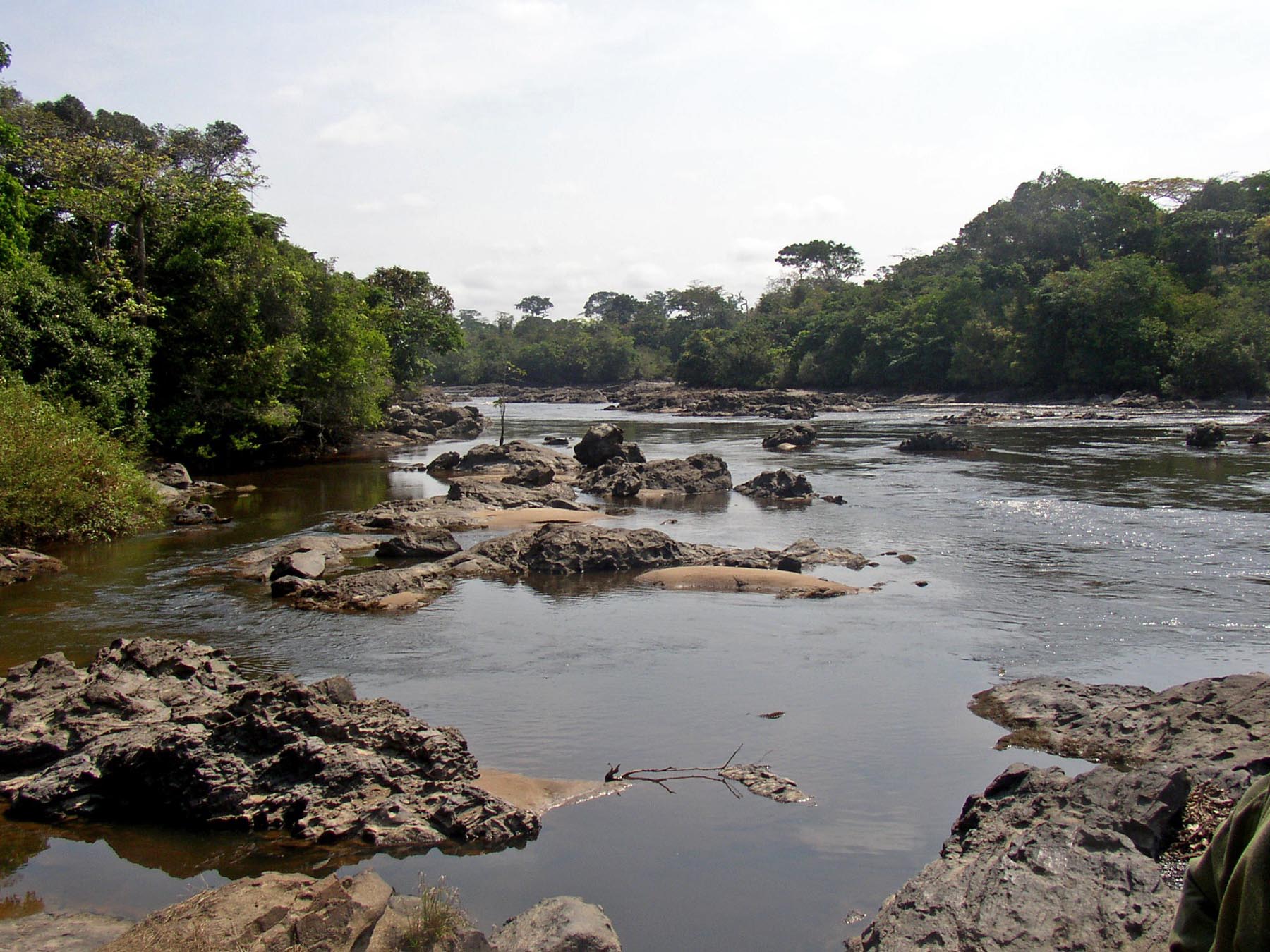
The wildlife reserve makes up roughly one-fifth of the total area of the Ituri Forest. As a Pleistocene refugium, the forest contains dense evergreen and semi-evergreen forests, dominated by Mbau trees (Gilbertiodendron dewevrei). The Nepoko, Ituri, and Epulu rivers flow through the reserve, surrounded by swamp forests. Granite outcrops in the north of the reserve protect critical habitat for Encephalartos ituriensis, a threatened species of cycad.
Because of its relatively stable climate during the repeated ice ages, the wildlife reserve, and the Ituri Forest as a whole, protects a unique biological community. As its name implies, the Okapi Wildlife Reserve is home to many okapis. As of 1996, the number was estimated at 3900–6350, out of a global population of around 10,000–20,000. In 1996, there were roughly 7,500 elephants and 7,500 chimpanzees within the reserve, although those numbers have likely declined significantly in recent years due to poaching and political instability.
Other mammals identified within the reserve include the leopard, forest buffalo, water chevrotain, bongo, Bates's pygmy antelope, and giant forest hog. The Ituri Forest is home to 17 primate species, the most of any African forest.
The reserve has over 370 species of bird, and is one of the most important sites for bird conservation in mainland Africa. Many of the bird species found in the reserve are endemic to the Congo Basin, including the endangered Congo peafowl.
The imposing Mbiya Mountain overlooks the Epulu village, and nomadic Mbuti pygmies and Bantu farmers also live within the reserve.
The Okapi Wildlife Reserve was created with the help of the Okapi Conservation Project in 1992. The project continues to support the reserve by training and equipping wildlife guards and by providing assistance to improve the lives of neighboring communities. The Okapi Wildlife Reserve was added to the list of World Heritage Sites in danger in 1997. Threats include the deforestation caused by slash and burn agriculture, and commercial hunting for the sale of bushmeat. Gold mining has also been problematic. As of 2005, the fighting in the eastern part of the country entered the reserve, causing its staff to flee or be evacuated. Lack of funding due to the poor political and economic conditions of the Democratic Republic of the Congo has also been problematic. It is hoped that eco-tourism to the area can be developed, leading to both increased funding and improved public awareness.
The wildlife reserve is home to the Epulu Conservation and Research Center on the Epulu River. This facility dates back to 1928 when the camp was founded by American anthropologist Patrick Putnam as a capture station, where wild okapis were captured before being sent to American and European zoos. Until 2012 it remained a capture station, though it no longer exports okapis. In 2012 a rebel attack killed the facility's captive okapis. Consequently, it chose to prioritize focus exclusively on preserving the wild okapis in the reserve, pending the cessation of hostilities. The center conducts much important research and conservation work.
Hub AI
Okapi Wildlife Reserve AI simulator
(@Okapi Wildlife Reserve_simulator)
Okapi Wildlife Reserve
The Okapi Wildlife Reserve (French: Réserve de faune à okapis) is a wildlife reserve in the Ituri Forest in the north-east of the Democratic Republic of the Congo, near the borders with South Sudan and Uganda. At approximately 14,000 km2, it covers approximately one-fifth of the area of the forest. In 1996, the Okapi Wildlife Reserve was designated a UNESCO World Heritage Site, due to its large population of endangered okapis and its high overall biodiversity. As of March 2026, the reserve is occupied and seriously threatened by the presence of Islamist terrorists from the Allied Democratic Forces who in 2025 killed more than 1700 civilians in the wider region of northeast Congo.
The wildlife reserve makes up roughly one-fifth of the total area of the Ituri Forest. As a Pleistocene refugium, the forest contains dense evergreen and semi-evergreen forests, dominated by Mbau trees (Gilbertiodendron dewevrei). The Nepoko, Ituri, and Epulu rivers flow through the reserve, surrounded by swamp forests. Granite outcrops in the north of the reserve protect critical habitat for Encephalartos ituriensis, a threatened species of cycad.
Because of its relatively stable climate during the repeated ice ages, the wildlife reserve, and the Ituri Forest as a whole, protects a unique biological community. As its name implies, the Okapi Wildlife Reserve is home to many okapis. As of 1996, the number was estimated at 3900–6350, out of a global population of around 10,000–20,000. In 1996, there were roughly 7,500 elephants and 7,500 chimpanzees within the reserve, although those numbers have likely declined significantly in recent years due to poaching and political instability.
Other mammals identified within the reserve include the leopard, forest buffalo, water chevrotain, bongo, Bates's pygmy antelope, and giant forest hog. The Ituri Forest is home to 17 primate species, the most of any African forest.
The reserve has over 370 species of bird, and is one of the most important sites for bird conservation in mainland Africa. Many of the bird species found in the reserve are endemic to the Congo Basin, including the endangered Congo peafowl.
The imposing Mbiya Mountain overlooks the Epulu village, and nomadic Mbuti pygmies and Bantu farmers also live within the reserve.
The Okapi Wildlife Reserve was created with the help of the Okapi Conservation Project in 1992. The project continues to support the reserve by training and equipping wildlife guards and by providing assistance to improve the lives of neighboring communities. The Okapi Wildlife Reserve was added to the list of World Heritage Sites in danger in 1997. Threats include the deforestation caused by slash and burn agriculture, and commercial hunting for the sale of bushmeat. Gold mining has also been problematic. As of 2005, the fighting in the eastern part of the country entered the reserve, causing its staff to flee or be evacuated. Lack of funding due to the poor political and economic conditions of the Democratic Republic of the Congo has also been problematic. It is hoped that eco-tourism to the area can be developed, leading to both increased funding and improved public awareness.
The wildlife reserve is home to the Epulu Conservation and Research Center on the Epulu River. This facility dates back to 1928 when the camp was founded by American anthropologist Patrick Putnam as a capture station, where wild okapis were captured before being sent to American and European zoos. Until 2012 it remained a capture station, though it no longer exports okapis. In 2012 a rebel attack killed the facility's captive okapis. Consequently, it chose to prioritize focus exclusively on preserving the wild okapis in the reserve, pending the cessation of hostilities. The center conducts much important research and conservation work.
Recent media