
.svg/250px-I-15_(CA).svg.png)


.svg/2000px-I-15_(CA).svg.png)
Community hub
Recent from talks
Contribute something
Nothing was collected or created yet.
Interstate 15 in California
View on Wikipedia
.svg)  Interstate 15 and State Route 15 | ||||
|---|---|---|---|---|
 I-15 highlighted in red, SR 15 in purple | ||||
| Route information | ||||
| Maintained by Caltrans | ||||
| Length | 295.37 mi[1][a] (475.35 km) | |||
| Existed | 1957–present | |||
| Component highways | ||||
| Major junctions | ||||
| South end |  I-5 in San Diego I-5 in San Diego | |||
| North end |  I-15 at Nevada state line in Primm, NV I-15 at Nevada state line in Primm, NV | |||
| Location | ||||
| Country | United States | |||
| State | California | |||
| Counties | San Diego, Riverside, San Bernardino | |||
| Highway system | ||||
| ||||


Route 15, consisting of the contiguous segments of State Route 15 (SR 15) and Interstate 15 (I-15), is a major north–south state highway and Interstate Highway in the U.S. state of California, connecting San Diego, Riverside, and San Bernardino counties. The route consists of the southernmost 289.24 miles (465.49 km)[2] of I-15, which extends north through Nevada, Arizona, Utah, Idaho, and Montana to the Canada–US border. It is a major thoroughfare for traffic between San Diego and the Inland Empire, as well as between Southern California; Las Vegas, Nevada; and the Intermountain West.
South of its junction at I-8 in San Diego, the highway becomes SR 15, extending 6.13 miles (9.87 km)[1] to I-5, about 12 miles (19 km) from the Mexico–United States border. This segment was initially signed as a state route instead of an Interstate, but it is being upgraded to Interstate standards so it would become part of I-15 in the future. Including this segment, the entire length of Route 15 is 295.37 miles (475.35 km)[1] in California.
I-15 has portions designated as the Escondido Freeway, Avocado Highway, Temecula Valley Freeway, Corona Freeway, Ontario Freeway, Barstow Freeway, CHP Officer Larry L. Wetterling and San Bernardino County Sheriff's Lieutenant Alfred E. Stewart Memorial Highway, or Mojave Freeway.
Route description
[edit] | This section needs additional citations for verification. (June 2023) |


Route 15 is defined as follows in section 315 of the California Streets and Highways Code:[3]
Route 15 is from:
(a) Route 5 in San Diego to Route 8.
(b) Route 8 to the Nevada state line near Stateline, Nevada via the vicinity of Temecula, Corona, Ontario, Victorville, and Barstow.
The section of Route 15 defined in subdivision (a) is not considered an Interstate Highway according to the Federal Highway Administration (FHWA)'s route logs.[2]
I-15 and SR 15 are part of the California Freeway and Expressway System,[4] and are part of the National Highway System,[5] a network of highways that are considered essential to the country's economy, defense, and mobility by the Federal Highway Administration.[6] I-15 from SR 76 to SR 91 and SR 58 to SR 127 is eligible to be included in the State Scenic Highway System,[7] but it is not officially designated as a scenic highway by the California Department of Transportation.[8]
San Diego County
[edit]SR 15 begins south of I-5 at 32nd Street near Harbor Drive. After this, SR 15 has an interchange with SR 94,[9] which has been cited as not being up to Interstate standards.[10] The route then meets I-805; however, one can only continue in the same direction that they were going at this interchange, since the overall shape of this interchange is an elongated "X". Between the Polk Avenue and Orange Avenue overpasses, the freeway goes under a city park that was built on top of the freeway during construction in 2001. Pedestrian bridges were also built at Monroe Avenue and Landis Street to reduce the effects of the freeway geographically dividing the community.[11] Between I-805 and I-8, SR 15 follows the former alignment of 40th Street, which was its former routing as a city street.[9] It continues seamlessly into the southern terminus of I-15 at I-8; on the northbound conversion to I-15 at I-8, there is no "End SR 15" sign.[citation needed]
There are various local names for the highway, such as the Escondido Freeway between San Diego and Escondido. I-15 between SR 163 and Pomerado Road / Miramar Road is known as the Semper Fi Highway in recognition of the nearby Marine Corps Air Station Miramar.[10] I-15 between Scripps Poway Parkway and Camino Del Norte is known as the Tony Gwynn Memorial Freeway in recognition of Tony Gwynn, who played baseball for the San Diego Padres and San Diego State. North of the Escondido city limits, it is known as the Avocado Highway, whose designation ends upon entering Temecula. There are other local names as noted below.
Heading northward, I-15 currently begins at I-8, at the same place that its continuation, SR 15, begins its southward journey. I-15 goes through Mission Valley and Kearny Mesa, intersecting with SR 52 just before merging with SR 163. After traversing the Marine Corps Air Station Miramar, I-15 comes into Rancho Peñasquitos, where it meets the eastern end of SR 56. Northward, the route crosses Lake Hodges inside the upper San Diego city limits. I-15 continues north into Escondido, where it intersects with SR 78.
North of Escondido, I-15 goes through hilly terrain and farmland, passes under the Lilac Road Bridge and approaches the community of Fallbrook near the SR 76 interchange. It passes the community of Rainbow, crosses the Riverside county line and descends into the Inland Empire.
Inland Empire
[edit]In Temecula, I-15 runs concurrently with SR 79 for 3.2 miles (5 km) before the latter branches off toward Hemet. In Murrieta, I-15 splits from its only auxiliary route in California, I-215, which retains the Escondido Freeway designation and runs through the two largest cities in the Inland Empire, Riverside and San Bernardino. I-15 continues northwest as the Temecula Valley Freeway.[12]
I-15 runs along the eastern edge of the Santa Ana Mountains, passing through the cities of Wildomar and Lake Elsinore. In Lake Elsinore, I-15 intersects SR 74, a major highway connecting the city with San Juan Capistrano as well as points east such as Perris, Hemet, Idyllwild, and the Coachella Valley. It continues northwest through the unincorporated area of Temescal Valley as the Corona Freeway and passes through the city of Corona. During this stretch, I-15 has an interchange with SR 91, a major east–west highway; this interchange serves as a vital link between southwestern Riverside County and Orange County. North of SR 91, I-15 continues through the city of Norco, crosses the Santa Ana River, and heads due north along the boundary between the cities of Eastvale and Jurupa Valley. I-15 enters San Bernardino County just past an interchange with SR 60, another major east–west highway, which connects I-15 with the Chino Valley and the southern San Gabriel Valley. I-15 passes through the city of Ontario on its way to I-10, the main east–west artery though Southern California. North of I-10, I-15 passes through the cities of Rancho Cucamonga and Fontana as it intersects SR 210, an east–west highway skirting the San Gabriel and San Bernardino mountain ranges. SR 210 connects I-15 to major foothill communities such as Pasadena, Rialto, and San Bernardino. I-15 also crosses old US 66 during this stretch of highway, which is signed as SR 66, Foothill Boulevard. At this junction, I-15 takes a strongly northeastern alignment as it moves to rejoin with its spur route, I-215, in Devore, in northern San Bernardino. The highway then heads northward and upward through the Cajon Pass, an important mountain pass that is the primary route between Southern California and points further north and east.
The portion of I-15 that is located between its northern and southern junctions with I-215 is also used by many local residents as the major north–south route for the western portions of the San Bernardino–Riverside–Ontario metropolitan area. (I-215 serves a similar function in the eastern portion of the metropolitan area. These two highways are also the only continuous north–south freeways in the area.)
North of Limonite Avenue (south of SR 60), I-15 is known as the Ontario Freeway (formerly known as the Devore Freeway prior to 1989). After its northern merge with I-215 in Devore, I-15 is called the Barstow Freeway or the Mojave Freeway. A short section between SR 138 and Oak Hill Road is also designated as the CHP Officer Larry L. Wetterling and San Bernardino County Sheriff's Lieutenant Alfred E. Stewart Memorial Highway, named after two officers killed in the line of duty.[13] On this stretch of highway, I-15 northbound splits from I-15 southbound, where the road ascends up a steep grade until it reaches Cajon Summit (elevation 4,260 feet (1,300 m)) just south of the High Desert communities of Hesperia and Oak Hills. Tractor-trailer trucks headed southbound are required to travel at the posted speed limit of 45 mph (72 km/h) or less due to the steep downward grade. The southbound lanes provide a runaway truck ramp as a safety feature. The two halves of the highway rejoin shortly before reaching Cajon Summit.
North of the Cajon Pass, I-15 traverses the High Desert cities of Hesperia, where it meets the southern end of US 395, and Victorville. I-15 passes through desert for 25 miles (40 km) before reaching Barstow, where it meets the eastern terminus of SR 58 and the western terminus of I-40. It then passes Zzyzx Road more than 50 miles (80 km) later, before reaching the town of Baker. The sign for Zzyzx Road—alphabetically the last place name in the world—is a landmark of sorts on the drive between Los Angeles and Las Vegas. Northeast of Baker, I-15 passes through the Halloran Summit near Halloran Springs at an elevation of over 4,000 feet (1,200 m), then descends into the Shadow Valley before ascending again through the Mountain Pass at an elevation of 4,730 feet (1,440 m). A runaway truck ramp is provided for northbound I-15 traffic near the dry Ivanpah Lake at the end of Mountain Pass.[citation needed] I-15 then crosses the Nevada state line at the casino town of Primm, Nevada, 40 miles (64 km) southwest of Las Vegas.
The Mojave Freeway is fairly busy on weekdays, since it connects the rapidly growing exurbs of the Victor Valley with the Los Angeles area. On weekends and holidays, however, it can sometimes be jammed with Californians driving to Las Vegas for short vacations.
Express lanes
[edit]
There are two sections of high-occupancy toll (HOT) lanes along I-15. The first section is in San Diego County between SR 163 in San Diego and SR 78 in Escondido. The lanes were originally constructed as reversible carpool lanes in 1988 before they were converted into express lanes a decade later. Between 2004 and 2008, construction extended the lanes north from SR 56 to Del Lago Boulevard in Escondido. Then, between 2009 and 2012, work was done to widen the southern reversible segment from two lanes to four, and then extend the corridor north to SR 78. The lanes, dubbed a "highway within a highway", include a movable "zipper" barrier for 16 miles (26 km), which can be changed to create an extra lane as demand allows. In addition, five direct access ramps allow for easier local access, as well as access to bus service from MTS Rapid. These express lanes carry the hidden state highway designation of Route 15S (for "supplemental").[14]
The second segment of HOT lanes is in Riverside County, featuring one to two tolled express lanes in each direction from Cajalco Road in Corona to Cantu-Galleano Ranch Road near SR 60 at the Eastvale–Jurupa Valley line. These lanes began construction in 2018 and opened in 2021.[15]
As of January 2025[update], some toll polices differ between the counties. The HOT lanes in San Diego County are simply branded as the "I-15 Express Lanes" and are administered by the San Diego Association of Governments (SANDAG).[16] The ones in Riverside County are branded as "Riverside Express" and are administered by the Riverside County Transportation Commission (RCTC).[17] In both segments, solo drivers are tolled using a congestion pricing system based on the real-time levels of traffic. All tolls are collected using an open road tolling system, and therefore there are no toll booths to receive cash.[16][17]
For the segment in Riverside County, carpools with three or more people and motorcycles are not charged. Each vehicle is required to carry a FasTrak Flex transponder with its switch set to indicate the number of the vehicle's occupants (1, 2, or 3+). Solo drivers and carpools with two people may also use the FasTrak standard tag without the switch. Those with clean air vehicles need to apply to get a 15 percent discount. Drivers without any FasTrak tag will be assessed a toll violation regardless of whether they qualified for free.[17]
For the segment in San Diego County, each solo driver is required to carry a FasTrak transponder, while carpools, motorcycles, and clean air vehicles are not charged. SANDAG does not use or offer the switchable FasTrak Flex tags directly, and instead instructs those drivers who do qualify for free to just remove their FasTrak tag off their windshield or cover it in the provided mylar bag to avoid being charged.[16][18]
There are long-range plans to extend the Riverside County segment at least as far south as SR 74 (Central Avenue) in Lake Elsinore.[19][20] A separate project would extend the express lanes from Cantu-Galleano Ranch Road into San Bernardino County as far north as Duncan Canyon Road in Fontana.[21] Phase 1 of the San Bernardino County extension started construction in March 2025 up to just north of Foothill Boulevard.[22]
History
[edit]

I-15 replaced US 395 between San Diego and Temecula, US 66 between San Bernardino and Barstow, and US 91 north of Barstow.
I-15 was initially planned to run from I-10 near San Bernardino along the current I-215 alignment then up through the Cajon Pass and on to Las Vegas, with a distance of 186.24 miles (299.72 km) within the state. California successfully argued in favor of the addition south to San Diego, suggesting that the freeway would connect the major military bases, the former March AFB (now March ARB) and the former NAS Miramar (now MCAS Miramar). US 395 was then signed TEMP-15 and the "old" I-15 between Devore and San Bernardino became part of modern-day I-215.
On January 24, 1957, the State Highway Commission defined the Escondido Freeway as what are now Routes 15 and 215 from Route 805 to Route 91. This entire segment was previously US 395 when it was named. Since then, the definition was extended on Route 15 south to Route 8 by Assembly Concurrent Resolution 34, Chapter 67 in 1979.[23] Meanwhile, the segment of Route 15 from the San Diego County Line to the I-15/I-215 interchange was named the Temecula Valley Freeway in 1990.[24]
The original definition for the Corona Freeway, as named by the State Highway Commission on July 23, 1958, stated that it was "Routes 71, 91, and 15 from Route 10 West of Pomona to Route 215".[25]
This legal definition has been amended twice: First, in 1990, the California Assembly passed Concurrent Resolution 125, Chapter 78, renaming I-15 between the San Diego County Line (which is further south from I-215) and Bundy Canyon Road near Lake Elsinore as the Temecula Valley Freeway.[24]
Then, in 1993, the California Assembly passed legislation officially designating SR 71 as a part of the Chino Valley Freeway.[26] However, the "Corona Freeway" name is sometimes still applied to this portion of SR 71; thus, despite the official change, guide signs on I-10 eastbound and SR 57 southbound at the Kellogg Interchange in Pomona continued to refer to SR 71 as the "Corona Freeway" until the signs were replaced some time later.
Present SR 15 was signed after the creation of I-15 in 1968. Since I-15's southern terminus was at I-8, SR 15 was signed mostly along 40th Street and Wabash Boulevard in San Diego to its merge with I-5. The portion between Adams Avenue and I-805 in City Heights remained a city street for a long time, forcing drivers to take detours or drive through city streets to get downtown. This portion was not fully completed until January 2000, becoming one of the last freeways built in San Diego . For this reason, the freeway is sometimes referred to as the 40th Street Freeway.[10]
Before the completion of the freeway, from 1968 through 1992, the San Diego neighborhood was known for prostitution, drugs, driveby shootings, and gangs. This was indirectly caused by Caltrans' plans to build a freeway in this area on land where houses were located. Because families did not want to live in these houses since they would be soon torn down, they rented them to individuals who were only going to be in the area on a temporary basis, many of whom were involved in illegal activities. Even though the freeway was officially added to the Caltrans proposals as early as 1968, it was not until March 1992 that construction began after they succeeded to evict residents to make way for it. Many in the city opposed the building of this freeway, although some petitioned for the freeway to be built because of the poor conditions in the neighborhood.[27][28][29]
Most of I-15 has undergone major improvements from Devore to the Nevada State Line, beginning in 2002 and costing $349 million. These improvements were designed to improve traffic flow on the heavily traveled highway for those going to and from Las Vegas. Most of the construction was completed by winter 2009.[30] Projects include adding 39 miles (63 km) of truck lanes on hills at various locations, repaving 76 miles (122 km) of I-15 at various locations, adding exit numbers, renovating and rehabilitating the rest area between Baker and the Nevada State Line (Valley Wells Rest Area), reconstructing bridges in Baker, and moving the agriculture inspection station from Yermo to the Nevada State Line and including a truck weigh station. The new agricultural inspection station opened in August 2018.[31][32]
State Route 31
[edit] State Route 31 | |
|---|---|
| Location | Corona - Ontario |
| Existed | 1934–1974 |
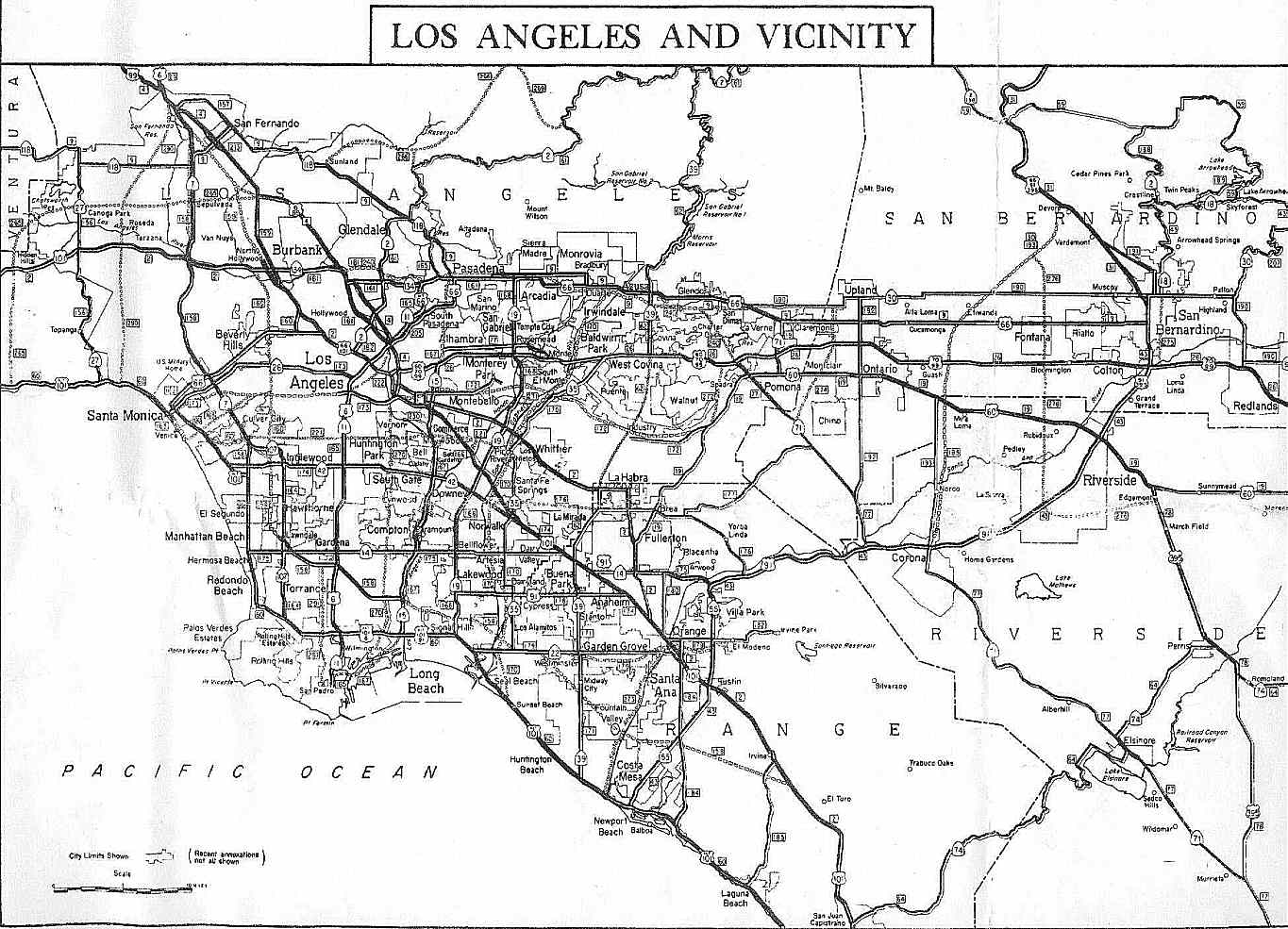
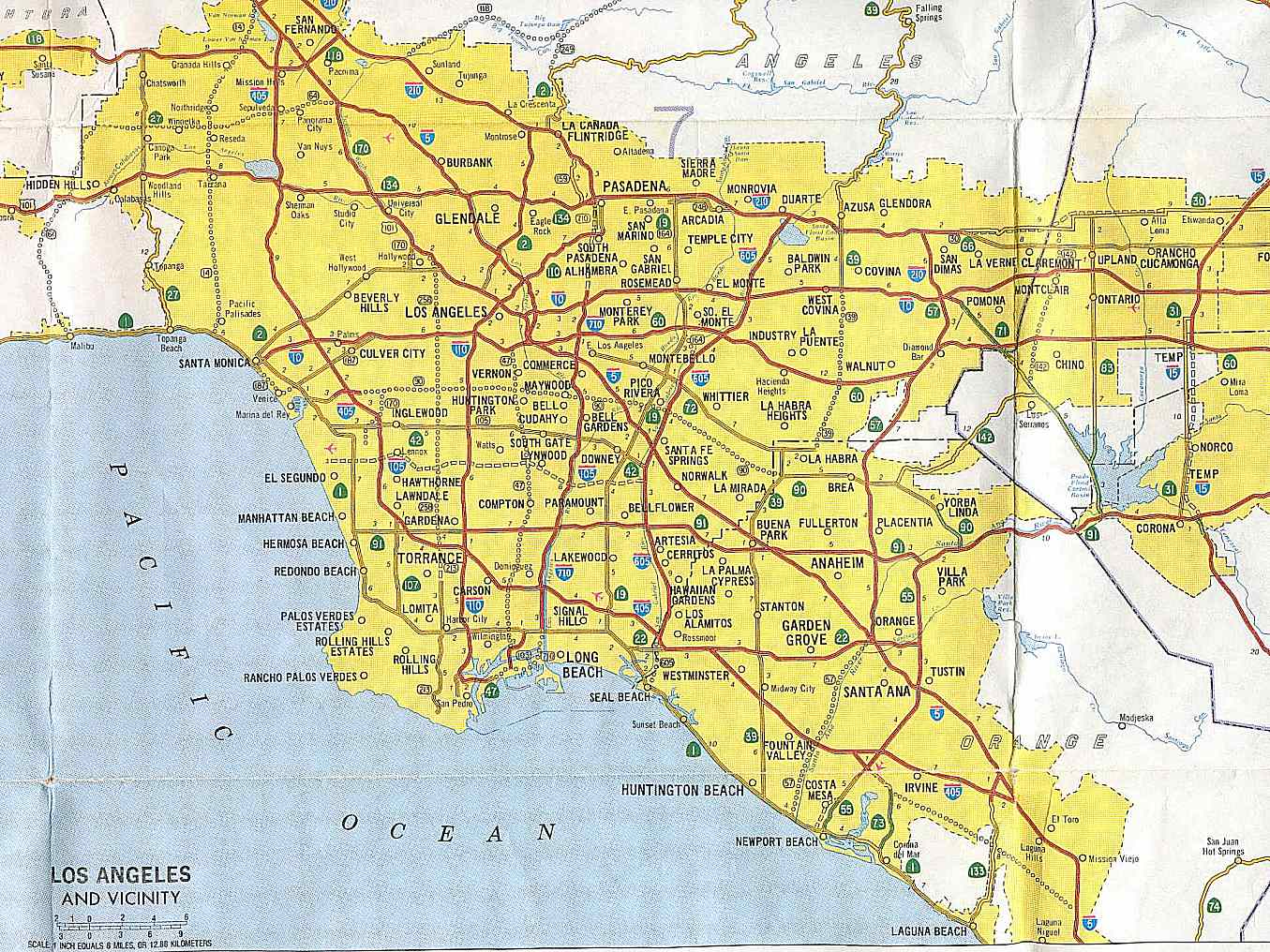
In 1933, I-15 was defined as Legislative Route 193, running from pre-1964 Legislative Route 43 (present SR 91) in Corona to pre-1964 Legislative Route 9 (now SR 66), and was extended north to pre-1964 Legislative Route 31 (present I-15 and I-215) in 1935.[33] The piece south of US 60 (Mission Boulevard), running along North Main Street, Hamner Avenue, and Milliken Avenue, was state-maintained by 1955, but was not assigned a signed number.[34] This was still the only existing piece in 1963, and had a planned freeway replacement to the east.[35]
In the 1964 renumbering, the route was assigned as SR 31. It was added to the Interstate Highway System in February 1972 as a realignment of I-15 (the former alignment became I-15E). However, as soon as the reroute was made, the cities of San Bernardino and Riverside voiced concerns that this new routing, which completely bypassed their city centers, would have a negative effect on their development plans. Together, these cities devised a plan in which the new western route via Corona and Ontario would become Interstate 15W, while US 395 would be renumbered Interstate 15E, regardless of the actual non-Interstate status of the latter route.[36] Legislative changes were made in 1974, eliminating SR 31 (along with SR 71 south of Corona) in favor of I-15W.[37] However, SR 31 continued to be signed—as temporary I-15W—until present I-15 was finished. (A 1986 map shows state maintenance continuing north past SR 60 to Jurupa Street, where it turned east to I-15.[38])
Future
[edit]The segment signed as California SR 15 from I-5 to I-8 in San Diego is planned to be redesignated as part of I-15 once this segment is completely upgraded to Interstate standards, namely where the freeway's interchange with SR 94 is concerned. The interchange currently has left-exits and blind merges, and is due to be updated with a long-awaited widening of both SR 15 and SR 94. At that time, SR 15 is planned to be signed as part of I-15. The remaining portion of SR 15 conforms with Interstate standards.[10]
In December 2018, the San Bernardino County Transportation Authority (SBCTA) approved the final environmental document for an 8-mile section of the San Bernardino County I-15 Express Lanes Project, spanning from Cantu-Galleano Ranch Road in Riverside County to Foothill Boulevard near Rancho Cucamonga. Construction on this section of express lanes is expected to be complete by 2028.[39]
In 2020, Brightline signed a 50-year lease for use of the I-15 right-of-way between the Victor Valley and Nevada border for use in their Brightline West high-speed rail service.[40][41]
Exit list
[edit]| County | Location | mi[42] | km | Exit[42] | Destinations | Notes |
|---|---|---|---|---|---|---|
| San Diego | San Diego | 0.00 | 0.00 | 32nd Street to Harbor Drive | At-grade intersection; southern end of SR 15 | |
| 0.41 | 0.66 | 1A | Main Street | Southbound exit and northbound entrance; southern end of state maintenance | ||
| 0.55 | 0.89 | 1B |  I-5 north – Los Angeles I-5 north – Los Angeles | Southbound exit and northbound entrance; I-5 exit 13A | ||
| 1C |  I-5 south – National City, Chula Vista I-5 south – National City, Chula Vista | |||||
| 0.77 | 1.24 | 1D | Ocean View Boulevard | Signed as exit 1 northbound | ||
| 1.07 | 1.72 | Imperial Avenue | Exit removed in the late 1990s to conform SR 15 with federal highway minimum spacing requirements between adjacent interchanges[43] | |||
| 1.85 | 2.98 | 2A | Market Street | |||
| 2.23 | 3.59 | 2B-C |  SR 94 (M. L. King Jr. Freeway) / Home Avenue SR 94 (M. L. King Jr. Freeway) / Home Avenue | Signed as exits 2B (east) and 2C (west) northbound; southbound exit to SR 94 east is via exit 3; SR 94 exits 2A-C | ||
| 3.37 | 5.42 | 3 |  I-805 north – Los Angeles I-805 north – Los Angeles | Northbound exit and southbound entrance; I-805 south exit 14 | ||
  I-805 south to SR 94 east I-805 south to SR 94 east | Southbound exit and northbound entrance; I-805 north exit 14 | |||||
| 4.67 | 7.52 | 5A | University Avenue – City Heights Transit Plaza | |||
| 5.05 | 8.13 | 5B | El Cajon Boulevard (Historic US 80) – Boulevard Transit Plaza | Former US 80 | ||
| 5.61 | 9.03 | 6A | Adams Avenue | |||
| 6.13 | 9.87 | 6B |  I-8 / Camino del Rio South – Beaches, El Centro I-8 / Camino del Rio South – Beaches, El Centro | Northern end of SR 15; southern end of I-15; I-8 exits 7A-B | ||
| 6.82 | 10.98 | 7 | Friars Road – Snapdragon Stadium | Interchange reconfiguration project scheduled to be completed in November 2025[44] | ||
| 8.37 | 13.47 | 8 | Aero Drive | |||
| 9.25 | 14.89 | 9 | Balboa Avenue / Tierrasanta Boulevard | Former eastern end of SR 274 | ||
| 10.00 | 16.09 | 10 | Clairemont Mesa Boulevard | Southbound exit is part of exit 11 | ||
| 10.58 | 17.03 | 11 |  SR 52 SR 52 | Exit 7 on SR 52 | ||
| — | I-15 Express Lanes (San Diego County) | Southern end of Express Lanes (unsigned SR 15S)[14] | ||||
| — |   SR 163 south SR 163 south | Express Lanes access only; southbound exit and northbound entrance | ||||
| 12.13 | 19.52 | 12 | SR 163 south (Cabrillo Freeway) – Downtown | Southbound exit and northbound entrance; former US 395 south | ||
| 13.34 | 21.47 | 13 | Miramar Way | Serves Marine Corps Air Station Miramar | ||
| 14.29 | 23.00 | 14 | Miramar Road / Pomerado Road | Former US 395 north | ||
| 15.01 | 24.16 | 15 | Carroll Canyon Road | |||
| — | Hillery Drive – Mira Mesa | Express Lanes access only | ||||
| 15.93 | 25.64 | 16 | Mira Mesa Boulevard | |||
| 17.32 | 27.87 | 17 | Mercy Road / Scripps Poway Parkway | |||
| 17.82 | 28.68 | Los Peñasquitos Creek Bridge | ||||
| 18.18 | 29.26 | 18 | Poway Road (CR S4) / Rancho Peñasquitos Boulevard | |||
| — |   SR 56 west / Ted Williams Parkway SR 56 west / Ted Williams Parkway | Express Lanes access only; northbound exit and southbound entrance | ||||
| — | Sabre Springs-Peñasquitos Transit Station | Express Lanes access only | ||||
| 19.48 | 31.35 | 19 | SR 56 west (Ted Williams Freeway) / Ted Williams Parkway | SR 56 exit 9 | ||
| 20.58 | 33.12 | 21 | Carmel Mountain Road | |||
| 21.92 | 35.28 | 22 | Camino del Norte | |||
| 22.94 | 36.92 | 23 | Bernardo Center Drive | |||
| — | George Cooke Express Drive – Rancho Bernardo | Express Lanes access only | ||||
| 23.69 | 38.13 | 24 | Rancho Bernardo Road | |||
| 26.03 | 41.89 | 26 | Pomerado Road (CR S5) / West Bernardo Drive | Former US 395 south | ||
| 26.20 | 42.16 | Lake Hodges Bridge | ||||
| Escondido | 26.98 | 43.42 | 27 | Via Rancho Parkway | ||
| — | Del Lago Boulevard / Beethoven Drive | Express Lanes access only | ||||
| 27.66 | 44.51 | 28 | Centre City Parkway (I-15 Bus. north) | Northbound exit and southbound entrance; former US 395 north | ||
| 28.77 | 46.30 | 29 | Felicita Road / Citracado Parkway | |||
| 30.10 | 48.44 | 30 | 9th Avenue / Auto Park Way | |||
| 30.63 | 49.29 | 31 | Valley Parkway (CR S6) – Downtown Escondido | |||
| — | Hale Avenue | Express Lanes access only; northbound exit and southbound entrance | ||||
| — | I-15 Express Lanes (San Diego County) | Northern end of Express Lanes (unsigned SR 15S)[14] | ||||
| 31.52 | 50.73 | 32 |  SR 78 – Oceanside, Ramona SR 78 – Oceanside, Ramona | SR 78 east exit 17A-B; west exit 17 | ||
| 32.87 | 52.90 | 33 | El Norte Parkway | |||
| 33.92 | 54.59 | 34 | Centre City Parkway (I-15 Bus. south) / Country Club Lane | Southbound exit and northbound entrance; former US 395 south | ||
| | 36.64 | 58.97 | 37 | Deer Springs Road (CR S12) / Mountain Meadow Road | ||
| Bonsall | 40.85 | 65.74 | 41 | Gopher Canyon Road / Old Castle Road | ||
| 43.29 | 69.67 | 43 | Old Highway 395 | Former US 395 | ||
| | 46.49 | 74.82 | 46 |  SR 76 – Pala, Oceanside SR 76 – Pala, Oceanside | ||
| Fallbrook | 50.59 | 81.42 | 51 | Mission Road (CR S13) – Fallbrook | ||
| San Diego–Riverside county line | Rainbow | 54.08 | 87.03 | 54 | Rainbow Valley Boulevard | |
| Riverside | Temecula | 57.70 | 92.86 | 58 |  Temecula Parkway to SR 79 south – Warner Springs, Indio Temecula Parkway to SR 79 south – Warner Springs, Indio | Former SR 71 south; former SR 79 south |
| 59.25 | 95.35 | 59 | Rancho California Road / Old Town Front Street | |||
| 60.88 | 97.98 | 61 |  Winchester Road to SR 79 north Winchester Road to SR 79 north | Former SR 79 north | ||
| Temecula–Murrieta line | 61.68 | 99.26 | 62 | French Valley Parkway | Southbound exit only | |
| Murrieta | 63.00 | 101.39 | 63 |  I-215 north (Escondido Freeway north) – Riverside, San Bernardino I-215 north (Escondido Freeway north) – Riverside, San Bernardino | Northbound exit and southbound entrance; southbound access is via exit 64; former I-15E north / US 395 north | |
| 63.73 | 102.56 | 64 |  Murrieta Hot Springs Road to I-215 north – Riverside Murrieta Hot Springs Road to I-215 north – Riverside | “To I-215” not signed northbound | ||
| 64.86 | 104.38 | 65 | California Oaks Road / Kalmia Street | |||
| Wildomar | 67.90 | 109.27 | 68 | Clinton Keith Road | ||
| 69.34 | 111.59 | 69 | Wildomar Trail | Formerly Baxter Road[45] | ||
| 70.56 | 113.56 | 71 | Bundy Canyon Road | |||
| Lake Elsinore | 73.43 | 118.17 | 73 | Diamond Drive / Railroad Canyon Road | ||
| 75.21 | 121.04 | 75 | Main Street (I-15 Bus. north) | |||
| 76.54 | 123.18 | 77 |  SR 74 (Central Avenue) – San Juan Capistrano, Perris SR 74 (Central Avenue) – San Juan Capistrano, Perris | |||
| 78.12 | 125.72 | 78 | Nichols Road | |||
| 80.95 | 130.28 | 81 | Lake Street (I-15 Bus. south) | |||
| Temescal Valley | 84.67 | 136.26 | 85 | Indian Truck Trail | ||
| 87.54 | 140.88 | 88 | Temescal Canyon Road | Former SR 71 | ||
| Corona | 89.91 | 144.70 | 90 | Weirick Road / Dos Lagos Drive | ||
| 91.08 | 146.58 | 91 | Cajalco Road | |||
| — | I-15 Riverside Express Lanes | Southern end of Express Lanes | ||||
| 92.08 | 148.19 | 92 | El Cerrito Road | |||
| 92.96 | 149.60 | 93 | Ontario Avenue | Former SR 71 | ||
| 94.62 | 152.28 | 95 | Magnolia Avenue | |||
| — |   91 Express Lanes west 91 Express Lanes west | Express Lanes access only | ||||
| 95.77 | 154.13 | 96A | SR 91 west (Riverside Freeway) – Beach Cities | Signed as exit 96 northbound; former US 91; SR 91 exit 51 | ||
| 95.77 | 154.13 | 96B | SR 91 east (Riverside Freeway) – Riverside | |||
| Corona–Norco line | 97.14 | 156.33 | 97 | Hidden Valley Parkway | Formerly Yuma Drive[46] | |
| Norco | 97.90 | 157.55 | 98 | Second Street (I-15 Bus. north) | ||
| 99.87 | 160.73 | 100 | Sixth Street (I-15 Bus. south) | |||
| Eastvale–Jurupa Valley line | 102.53 | 165.01 | 103 | Limonite Avenue | ||
| 104.62 | 168.37 | 105 | Cantu-Galleano Ranch Road | |||
| — | I-15 Riverside Express Lanes | Northern end of Express Lanes | ||||
| — | I-15 San Bernardino Express Lanes (Phase 1) | Southern end of express lanes-under construction; planned to open in 2028[22] | ||||
| 105.74 | 170.17 | 106A |  SR 60 east (Pomona Freeway) – Riverside SR 60 east (Pomona Freeway) – Riverside | SR 60 east exit 41, west exit 41B | ||
| 105.74 | 170.17 | 106B | SR 60 west (Pomona Freeway) – Los Angeles | |||
| San Bernardino | Ontario | 107.56 | 173.10 | 108 | Jurupa Street / Auto Center Drive | Former SR 31 south |
| 108.94 | 175.32 | 109A |   I-10 west (San Bernardino Freeway) – Los Angeles I-10 west (San Bernardino Freeway) – Los Angeles | former US 99; I-10 east exits 58A-B; west exit 58 | ||
| 108.94 | 175.32 | 109B |  I-10 east (San Bernardino Freeway) – San Bernardino I-10 east (San Bernardino Freeway) – San Bernardino | |||
| Rancho Cucamonga | 109.60 | 176.38 | 110 | 4th Street | ||
| 111.85 | 180.01 | 112 |  SR 66 (Foothill Boulevard) SR 66 (Foothill Boulevard) | Former US 66 | ||
| — | I-15 San Bernardino Express Lanes (Phase 1) | Northern end of express lanes-under construction; planned to open in 2028[22] | ||||
| Rancho Cucamonga–Fontana line | 113.26 | 182.27 | 113 | Base Line Road | ||
| 114.64 | 184.50 | 115A |  SR 210 east (Foothill Freeway) – San Bernardino SR 210 east (Foothill Freeway) – San Bernardino | Signed as the reverse southbound; SR 210 exit 64A; future I-210 | ||
| 114.64 | 184.50 | 115B | SR 210 west (Foothill Freeway) – Pasadena | |||
| Fontana | 116.20 | 187.01 | 116 | Summit Avenue | ||
| 117.58 | 189.23 | 118 | Duncan Canyon Road | |||
| Fontana–Rialto line | 119.39 | 192.14 | 119 | Sierra Avenue | ||
| | 122.20 | 196.66 | 122 | Glen Helen Parkway | ||
| San Bernardino | 122.92 | 197.82 | 123 | I-215 south (Barstow Freeway south) / Devore Road | Northbound signage; former I-15E / US 91 / US 395 south / US 66 west; I-215 north exit 54B | |
| — |   I-15 Truck north / Kenwood Avenue I-15 Truck north / Kenwood Avenue | South end of truck bypass | ||||
| 123 | I-215 south (Barstow Freeway south) – San Bernardino, Riverside | Southbound signage; former I-15E / US 91 / US 395 south / US 66 west | ||||
| — | I-15 Truck south | North end of truck bypass | ||||
| 124.10 | 199.72 | 124 | Kenwood Avenue | Southbound signage | ||
| | 129.15 | 207.85 | 129 | Cleghorn Road | ||
| | 130.51 | 210.04 | 131 |  SR 138 – Palmdale, Silverwood Lake SR 138 – Palmdale, Silverwood Lake | ||
| | 135.33 | 217.79 | Cajon Summit, elevation 4,260 feet (1,300 m)[47] | |||
| Hesperia | 137.76 | 221.70 | 138 | Oak Hill Road | ||
| 139.53 | 224.55 | 140 | Ranchero Road | |||
| 141.47 | 227.67 | 141 |   US 395 north – Bishop, Adelanto US 395 north – Bishop, Adelanto | Northbound exit and southbound entrance; southern end of US 395 | ||
 Joshua Street to US 395 north Joshua Street to US 395 north | Southbound exit and northbound entrance | |||||
| 143.14 | 230.36 | 143 | Main Street – Hesperia, Phelan | |||
| Hesperia–Victorville line | 146.73 | 236.14 | 147 | Bear Valley Road – Lucerne Valley | ||
| Victorville | 147.96 | 238.12 | 148 | La Mesa Road / Nisqualli Road | ||
| 149.65 | 240.84 | 150 |  SR 18 west (Palmdale Road / I-15 BL north / Historic US 66 east) SR 18 west (Palmdale Road / I-15 BL north / Historic US 66 east) | Southern end of SR 18 overlap; former US 66 east / US 91 north | ||
| 150.57 | 242.32 | 151A | Roy Rogers Drive | |||
| 151.17 | 243.28 | 151B | Mojave Drive | |||
| 152.63 | 245.63 | 153A | SR 18 east (D Street / I-15 BL south / Historic US 66) – Apple Valley | Northern end of SR 18 overlap; former US 66 / US 91 | ||
| 152.71 | 245.76 | 153B | E Street | Northbound exit and entrance | ||
| 153.54 | 247.10 | 154 | Stoddard Wells Road | |||
| Apple Valley | 156.65 | 252.10 | 157 | Stoddard Wells Road – Bell Mountain | ||
| 161.25 | 259.51 | 161 | Dale Evans Parkway – Apple Valley | |||
| | 165.10 | 265.70 | 165 | Wild Wash Road | ||
| | 169.30 | 272.46 | 169 | Hodge Road | ||
| Barstow | 174.98 | 281.60 | 175 | Outlet Center Drive | ||
| 177.91 | 286.32 | 178 | Lenwood Road | |||
| 179.25 | 288.47 | 179 |  SR 58 west – Bakersfield SR 58 west – Bakersfield | SR 58 east exit 234 to I-15 south, no exit number to I-15 north | ||
| 180.76 | 290.91 | 181 | L Street (I-15 BL east) / West Main Street (CR 66) | |||
| 182.69 | 294.01 | 183 |  SR 247 south (Barstow Road) SR 247 south (Barstow Road) | |||
| 183.56 | 295.41 | 184A |  I-40 east – Needles I-40 east – Needles | Northbound exit and southbound entrance; southbound access is via exit 184; western terminus of I-40 | ||
| 184.09 | 296.26 | 184B | East Main Street (I-15 Bus. / CR 66) to I-40 – Needles | Signed as exit 184 southbound; “to I-40” not signed northbound; former US 66 | ||
| 186.03 | 299.39 | 186 | Old Highway 58 west | Former US 91 south/US 466/SR 58 west | ||
| | 188.74 | 303.75 | 189 | Fort Irwin Road | Serves Fort Irwin | |
| | 190.98 | 307.35 | 191 | Ghost Town Road | Serves the ghost town of Calico | |
| Yermo | 193.78 | 311.86 | 194 | Calico Road – Yermo | ||
| 195.52 | 314.66 | 196 | Yermo Road – Yermo | |||
| | 196.00– 196.50 | 315.43– 316.24 | Agricultural Inspection Station (closed; was southbound only) | |||
| | 197.63 | 318.05 | 198 | Minneola Road | ||
| | 205.55 | 330.80 | 206 | Harvard Road | ||
| | 212.78 | 342.44 | 213 | Field Road | ||
| | 216.76 | 348.84 | Clyde V. Kane Rest Area (Exit 217) | |||
| | 220.73 | 355.23 | 221 | Afton Road | ||
| | 229.57 | 369.46 | 230 | Basin Road | ||
| | 233.38 | 375.59 | 233 | Rasor Road | ||
| | 239.32 | 385.15 | 239 | Zzyzx Road – Zzyzx | ||
| Baker | 244.95 | 394.21 | 245 | Baker Boulevard (I-15 Bus. north) – Baker | Northbound exit and southbound entrance; former US 91 north / US 466 east | |
| 245.72 | 395.45 | 246 |  SR 127 north / Kelbaker Road – Death Valley SR 127 north / Kelbaker Road – Death Valley | |||
| 247.60 | 398.47 | 248 | Baker Boulevard (I-15 Bus. south) – Baker | Southbound exit and northbound entrance; former US 91 south / US 466 west | ||
| | 258.75 | 416.42 | 259 | Halloran Springs Road | ||
| | 264.71 | 426.01 | 265 | Halloran Summit Road | ||
| | 270.29 | 434.99 | Valley Wells Rest Area (Exit 270) | |||
| | 271.88 | 437.55 | 272 | Cima Road | ||
| | 280.61 | 451.60 | 281 | Bailey Road | ||
| | 285.60 | 459.63 | 286 | Nipton Road | ||
| | Agricultural Inspection Station (southbound only); opened in 2018[31][32] | |||||
| | 290.54 | 467.58 | 291 | Yates Well Road | ||
| | 295.37 | 475.35 |  I-15 north – Las Vegas I-15 north – Las Vegas | Continuation into Nevada | ||
1.000 mi = 1.609 km; 1.000 km = 0.621 mi
| ||||||
Related routes
[edit]I-215 is the only auxiliary Interstate Highway associated with I-15 in California. It is a bypass of I-15, running between Murrieta and San Bernardino. I-215 connects the city centers of both Riverside and San Bernardino, while I-15 runs to the west through Corona and Ontario.
Business routes of Interstate 15 exist in Escondido, Lake Elsinore, Norco, Victorville, Barstow, and Baker.
See also
[edit]
Notes
[edit]- ^ Mileage is the entire route, including both SR 15 and I-15
References
[edit]- ^ a b c California Department of Transportation (July 2007). "Log of Bridges on State Highways". Sacramento: California Department of Transportation.
- ^ a b Federal Highway Administration (October 31, 2002). "Table 1: Main Routes of the Dwight D. Eisenhower National System Of Interstate and Defense Highways as of October 31, 2002". Route Long and Finder List. Federal Highway Administration. Retrieved November 29, 2011.
- ^ "Section 315". California Streets and Highways Code. Sacramento: California Office of Legislative Counsel. Retrieved August 17, 2025.
- ^ "Article 2 of Chapter 2 of Division 1". California Streets and Highways Code. Sacramento: California Office of Legislative Counsel. Retrieved February 6, 2019.
- ^ Federal Highway Administration (March 25, 2015). National Highway System: San Diego, CA (PDF) (Map). Scale not given. Washington, DC: Federal Highway Administration. Retrieved October 19, 2017.
Federal Highway Administration (March 25, 2015). National Highway System: California (North) (PDF) (Map). Scale not given. Washington, DC: Federal Highway Administration. Retrieved October 19, 2017. - ^ Natzke, Stefan; Neathery, Mike & Adderly, Kevin (June 20, 2012). "What is the National Highway System?". National Highway System. Washington, DC: Federal Highway Administration. Retrieved July 1, 2012.
- ^ "Article 2.5 of Chapter 2 of Division 1". California Streets & Highways Code. Sacramento: California Office of Legislative Counsel. Retrieved February 6, 2019.
- ^ California Department of Transportation (August 2019). "Officially Designated State Scenic Highways and Historic Parkways" (XLSX). Sacramento: California Department of Transportation. Retrieved October 19, 2017.
- ^ a b Thomas Brothers (2000). California Road Atlas and Driver's Guide (Map). Thomas Brothers. pp. 214, 216.
- ^ a b c d Faigin, Daniel P. "Routes 9 through 16". California Highways. Retrieved May 1, 2008.[self-published source]
- ^ District 11. "Fact Sheet for SR 15 Project". California Department of Transportation. Archived from the original on June 9, 2008.
{{cite web}}: CS1 maint: numeric names: authors list (link) - ^ Thomas Brothers (2000). California Road Atlas and Driver's Guide (Map). Thomas Brothers. pp. V, 99, 106.
- ^ "ACR-127 CHP Officer Larry L. Wetterling and San Bernardino County Sheriff's Lieutenant Alfred E. Stewart Memorial Highway". California Legislative Information. Retrieved May 22, 2013.
- ^ a b c "Route 15S: Postmile SD 11.89 to SD 30.856". Postmile Services Postmile Query Tool. Caltrans. Retrieved March 26, 2025.
- ^ "Completed I-15 Toll Lanes Open Saturday Between Corona, Eastvale". CalNews Inc. April 10, 2021. Retrieved April 10, 2021.
- ^ a b c "Accessing the I-15 Express Lanes". San Diego Association of Governments. Retrieved January 12, 2025.
- ^ a b c "Information". Riverside Express. Retrieved January 12, 2025.
- ^ Team 10 investigates confusion over Fastrak toll road billing. KGTV. July 7, 2022 – via YouTube.
- ^ "After voters keep gas tax, plans for 15 Freeway toll lanes from Corona to Lake Elsinore move ahead". Press Enterprise. November 9, 2018. Retrieved February 23, 2019.
- ^ "Funding Received for Extension of I-15 Express Lanes, Cajalco Road to State Route 74". Riverside County Transportation Commission. March 23, 2018. Retrieved February 24, 2019.
- ^ "Toll lanes could be coming to 15 Freeway through part of San Bernardino County". March 2018.
- ^ a b c "I-15 Corridor Freight and Express Lanes Project". Retrieved April 26, 2025.
- ^ California Department of Transportation (January 2009). 2008 Named Freeways, Highways, Structures and Other Appurtenances in California (PDF). California Department of Transportation. p. 60. Archived from the original (PDF) on October 14, 2012. Retrieved November 29, 2011.
- ^ a b California Department of Transportation 2009, p. 63
- ^ California Department of Transportation 2009, p. 69
- ^ California Department of Transportation 2009, p. 67
- ^ Brooks, Jeanne F. (January 9, 2000). "A Neighborhood's Rough Road: Mid City's I-15 Stretch to Open After Tortuous 40-Year Saga". The San Diego Union-Tribune. Copley News Service. ProQuest 271675995.[dead link]
- ^ "Watch as 9+ blocks of housing in San Diego become a freeway". KPBS Public Media. May 23, 2023. Retrieved January 25, 2025.
- ^ "23 years after opening of SR-15 freeway, City Heights is still trying to heal". KPBS Public Media. July 17, 2023. Retrieved January 25, 2025.
- ^ Interstate 15 Major Improvements from Barstow to Nevada stateline (PDF) (Map). California Department of Transportation. June 2004. Archived from the original (PDF) on September 11, 2008.
- ^ a b "CDFA opens new Border Inspection Station near Nevada border". California Department of Food and Agriculture. August 24, 2018. Retrieved November 23, 2018.
- ^ a b "Caltrans opens new Agricultural Inspection Station I-15, dismantling old station in Yermo". Daily Press. September 7, 2018. Retrieved October 9, 2018.
- ^ Faigin, Daniel P. (July 18, 2012). "Routes 193 through 200". California Highways. Self-published. Retrieved July 18, 2012. [self-published source]
- ^ H.M. Gousha. 1955 Gousha Los Angeles district map (Map). H.M. Gousha. Archived from the original on July 26, 2011. Retrieved November 29, 2011.
- ^ 1963 Caltrans Los Angeles and vicinity map (Map). Retrieved November 29, 2011.
- ^ Faigin, Daniel P. (July 18, 2012). "Interstate Highway Types and the History of California's Interstates". California Highways. Retrieved July 18, 2012. [self-published source]
- ^ Faigin, Daniel P. (July 18, 2012). "Routes 25 through 32". California Highways. Retrieved July 18, 2012.[self-published source]
- ^ 1986 Caltrans Los Angeles and vicinity map (Map). Retrieved November 29, 2011.
- ^ "I-15 Corridor Freight and Express Lanes Project" (PDF). March 2, 2024.
- ^ Lilly, Caitlin (June 30, 2020). "XpressWest receives permission to use I-15 right-of-way in California". Retrieved July 2, 2020.
- ^ Sharp, Steven (July 7, 2020). "High-Speed Train to Las Vegas Takes Another Step Forward". Urbanize LA. Retrieved July 7, 2020.
- ^ a b Saif, Faizah (August 23, 2018). "Interstate 15 Freeway Interchanges" (PDF). California Numbered Exit Uniform System. California Department of Transportation. Retrieved October 25, 2020.
- ^ "SR-15/IMPERIAL AVENUE RAMPS REMOVAL". California Environmental Quality Act (via www.ca.gov). Retrieved April 30, 2023.
- ^ "Caltrans is adding bike lanes to a busy stretch of Friars Road". KFMB-TV. October 4, 2024. Retrieved May 26, 2025.
- ^ "Say Goodbye to Baxter Road in Wildomar: I-15 Exit Getting Renamed". Lake Elsinore-Wildomar Patch. Patch Media. March 4, 2020. Retrieved March 8, 2020.
- ^ "Corona Avenue and Valley View Avenue Street". California Environmental Quality Act via CEQAnet Web Portal. Retrieved May 14, 2022.
- ^ "Elevation and Location of Summits and Passes in California". California Department of Transportation. Archived from the original on March 1, 2017.
External links
[edit]
- Caltrans: I-15 highway conditions
- Caltrans Traffic Conditions Map
- California Highway Patrol Traffic Incidents
- SANDAG FasTrak – includes toll information on the San Diego County Express Lanes and the other San Diego Area toll facilities
- Riverside County Express Lanes
- Interstate 15 @ Interstate-Guide.com


Interstate 15 in California
View on GrokipediaRoute Description
Southern Segment: San Diego County
Interstate 15 begins in San Diego County at its interchange with Interstate 8, situated just north of the San Ysidro Port of Entry along the United States-Mexico border.[5] From there, the route proceeds northward as a primary inland north-south corridor, initially cosigned with State Route 15 through urban areas of San Diego due to differing funding sources for construction segments—federal for I-15 portions and state-regional for SR 15 sections.[6] Known locally as the Escondido Freeway from its urban start to Escondido, the highway traverses densely developed coastal plains, passing key junctions such as State Route 163 in Mission Valley, State Route 52 near Tierrasanta, and State Route 56 in Carmel Valley.[3] Further north, I-15 shifts toward inland valleys, intersecting State Route 78 in Escondido, a major east-west route connecting to coastal areas.[7] The segment from SR 78 in Escondido to State Route 76 near Bonsall is officially designated the Avocado Highway, reflecting the surrounding agricultural landscapes dominated by avocado orchards spanning nearly 30,000 acres.[8] Daily traffic volumes along the corridor reach 170,000 to 290,000 vehicles on general-purpose lanes, underscoring its role as the dominant artery for commuters, freight, and regional travel in inland San Diego County.[5] Congestion hotspots include merge points near the I-15/SR 78 interchange in San Marcos, consistently ranked among the region's top bottlenecks due to weaving traffic and high demand.[9] The route's integration into urban fabric supports access to residential, commercial, and employment centers, facilitating movement from border-adjacent industrial zones in Otay Mesa northward to suburban valleys without direct coastal exposure.[2]Central Segment: Riverside and San Bernardino Counties (Inland Empire)
Interstate 15 enters Riverside County from San Diego County south of Temecula, traversing the Temecula Valley as an eight-lane freeway that facilitates suburban development and commuter access to coastal employment centers.[10] The route passes through Temecula, where it intersects State Route 79 (Winchester Road) at a diamond interchange completed on March 23, 1973, providing connectivity to eastern Riverside County communities.[10] North of Temecula, near Murrieta, I-15 interchanges with the southern terminus of Interstate 215, which branches eastward through Menifee and Perris toward San Bernardino, allowing I-15 to continue northwest through French Valley toward Lake Elsinore.[11] Congestion through Temecula is driven by rapid population and economic growth that has doubled projected traffic volumes; weekend tourism to the local wine region; weaving and merging movements at the State Route 79 and Interstate 215 interchanges; infrastructure designs predating current demands; and elevated accident rates from recurrent stop-and-go conditions.[2][12] Continuing north, I-15 reaches Lake Elsinore and then proceeds to Corona, designated the Corona Freeway in this stretch, where it meets the western end of State Route 91 at a major interchange opened on April 21, 1987.[10] This junction serves heavy commuter and freight traffic, linking the Inland Empire to Orange County and beyond.[10] Through Norco, the freeway narrows to six lanes before expanding again upon entering San Bernardino County north of the county line, becoming the Ontario Freeway as it passes industrial zones, Ontario International Airport, and warehousing districts in Ontario and Fontana.[13] These areas host extensive logistics facilities, contributing to freight-heavy sections with significant truck traffic supporting regional distribution hubs.[14] In San Bernardino County, I-15 maintains eight lanes through suburban and industrial corridors, intersecting Interstate 10 near Ontario in a cloverleaf interchange opened on February 2, 1978, which channels additional flows from Los Angeles to the east.[10] Daily traffic volumes average approximately 223,000 vehicles in this segment, driven by peak-hour commuter patterns from Inland Empire residents traveling south to San Diego or west via I-10 to Los Angeles, compounded by logistics operations in Fontana's warehousing clusters.[14] Congestion peaks during morning and evening rush hours, exacerbated by suburban sprawl that I-15 has enabled since its expansion in the late 20th century.[10]Northern Segment: San Bernardino County to Nevada Border
Interstate 15 transitions northward from the denser Inland Empire into the Victor Valley area of San Bernardino County, traversing communities including Hesperia and Victorville amid high desert terrain with scattered residential and commercial development.[15] In Victorville, the route features interchanges with State Route 18, providing access eastward to Apple Valley and westward toward Palmdale Road.[16] Further north, at exit 141, I-15 intersects U.S. Route 395, connecting to Bishop and serving regional traffic to the eastern Sierra Nevada.[16] The highway continues through rural expanses with reduced urban density, reaching Barstow where it interchanges with Interstate 40 (exit 184, toward Needles) and State Route 58 (exits 179 and 186, toward Bakersfield and Old Highway 58).[16] These junctions facilitate cross-country travel and local access in Barstow, a key rail and logistics hub, though traffic volumes here are lower than in southern segments, emphasizing long-haul trucking over commuter flows.[17] North of Barstow, designated the Mojave Freeway, I-15 enters sparsely developed desert landscapes, crossing the Mojave River and advancing northeast through arid basins and mountain passes with minimal services and straight alignments suited for high-speed travel.[3] Notable features include climbs to Halloran Summit (elevation approximately 4,000 feet) and Mountain Pass (4,730 feet), equipped with truck climbing lanes and emergency brake check areas to manage heavy freight loads.[15] The route passes near Fort Irwin military base (exit 189, Fort Irwin Road) and Mojave National Preserve, with bridges over dry lakes such as Soda Lake, underscoring its role in connecting remote areas while prioritizing freight corridors to Nevada over local passenger volume.[15][17] In the final stretch, I-15 reaches Baker (exits 245 for Baker Boulevard and 246 for SR 127 north to Death Valley), the last major services before the Nevada state line near Primm (Stateline), where the four-lane freeway accommodates a high proportion of truck traffic bound for Las Vegas and intermountain routes, despite overall lower daily volumes compared to urban sections southward.[16][15][17]Managed Lanes and Express Facilities
The I-15 Express Lanes consist of toll-based managed facilities integrated into the corridor from San Diego northward through Riverside County toward Ontario in San Bernardino County, employing dynamic congestion pricing to prioritize reliable travel speeds over general-purpose lanes. These lanes allow high-occupancy vehicles (HOVs) with three or more occupants to travel toll-free, while solo drivers and lower-occupancy vehicles pay variable electronic tolls via FasTrak transponders, with rates adjusting in real-time based on demand to maintain free-flow conditions typically above 45 mph.[18][19] The system spans approximately 20 miles in San Diego County from SR 52 to SR 78, where it originated as a high-occupancy toll (HOT) lane demonstration project opened in 2012, and extends 10 miles in Riverside County from SR 91 to Cajalco Road, operational since 2017.[20][21] Extensions and additions enhance connectivity and capacity, including the I-15 Express Lanes Southern Extension in Riverside County, which proposes adding two tolled lanes in each direction over 15.8 miles from El Cerrito Road in Corona southward to SR 74 in Temescal Valley, with environmental review completed and construction potentially starting in 2027 at an estimated cost of $550-650 million.[22] Further north, the I-15 Corridor Freight and Express Lanes Project in San Bernardino County plans one to two tolled express lanes per direction from the Riverside County line through Jurupa Valley to Rancho Cucamonga, targeting freight efficiency and congestion relief on a corridor handling 223,000 daily vehicles.[14] Tolls fund operations, enforcement, and corridor improvements, generating $44 million in fiscal year 2023-24 from tolls, penalties, and fees in the Riverside segment alone, up from $39 million the prior year, with revenues pledged to repay federal loans and support maintenance.[23][24] Operational mechanics emphasize value pricing, where tolls rise during peak demand to deter overuse and generate funds for transit enhancements like bus-on-shoulder service, while HOV exemptions preserve access for carpools without incentivizing evasion through vehicle exemptions alone.[25] Usage data indicate sustained performance, with the lanes maintaining level-of-service C or better during peaks and improving overall corridor speeds by shifting demand from general lanes.[26] Equity considerations arise from tolls' regressive nature, potentially burdening lower-income solo drivers who opt for express access, though alternatives remain in untolled lanes and programs like discounted FasTrak for qualifying vehicles mitigate barriers; surveys of I-15 users reveal broad approval, with most perceiving the system as fair and effective at reducing congestion without disproportionately excluding low-income travelers.[27][28]Historical Development
Pre-Interstate Routes and Planning
Prior to the establishment of the Interstate Highway System, the corridor now occupied by Interstate 15 in California primarily followed segments of U.S. Route 395 and State Route 31, which had been designated for upgrades to multi-lane expressways to accommodate growing vehicular demand. U.S. Route 395, established in 1926, traversed the Cajon Pass and Mojave Desert sections, serving as the principal north-south artery from San Diego northward through the Inland Empire to Hesperia, where it intersected other transcontinental routes like U.S. Routes 66 and 91.[29][30] In the Inland Empire, State Route 31—originally defined in 1933 as Legislative Route Number 193—connected Corona to Devore near the Cajon Pass, providing a linkage between Riverside County and San Bernardino County's northern reaches.[31] These routes were initially two-lane highways but saw early designations for widening to four lanes in response to post-World War II population booms and commercial traffic surges.[32] The California Division of Highways initiated comprehensive planning for enhanced north-south connectivity in the late 1940s, driven by rapid urbanization and vehicular proliferation following the war. The 1947 Collier-Burns Highway Act marked a pivotal funding mechanism, allocating $76 million annually for highway construction and reorganization of the Division to handle escalated project volumes, enabling freeway-oriented designs over conventional roads.[33][34] This legislation facilitated state-level blueprints for a statewide freeway and expressway network, prioritizing corridors like the future I-15 to link San Diego's coastal hub with the burgeoning Inland Empire while circumventing congested urban cores such as downtown San Bernardino and Riverside.[35] By the early 1950s, alignments were refined to favor peripheral routings, as evidenced by the 1949 realignment of U.S. Route 395 along what approximated the modern I-15 path through areas like Poway and Temecula Valley, minimizing interference with city centers.[36] Empirical traffic data underscored the urgency of these upgrades, with pre-1956 volumes on precursor routes revealing substantial loads that strained existing infrastructure. In Cajon Pass along U.S. Route 395, average daily traffic incorporated flows from intersecting U.S. Routes 66 and 91, contributing to documented increases that necessitated expressway conversions to sustain throughput amid industrial and residential expansion.[37] State engineers projected further escalation, grounding decisions in observed counts rather than speculative forecasts, which justified four-lane expansions and grade-separated interchanges in planning documents from the Division of Highways.[38] These efforts laid the foundational alignments later adopted for I-15, emphasizing direct, high-capacity paths over legacy town grids for causal efficiency in regional mobility.Construction During the Interstate Era
Interstate 15 in California was designated under the Federal-Aid Highway Act of 1956, which established the national Interstate Highway System and allocated federal funding for its development, including routes connecting major population centers like San Diego to inland and desert regions.[39] Construction on precursor freeway segments began prior to full Interstate funding but accelerated in the Interstate era, with early emphasis on the northern Mojave Desert portions due to their alignment with existing U.S. Highways 91 and 66. A 9.3-mile freeway through Cajon Pass, addressing unstable sandstone terrain, was completed in 1953 at a cost exceeding $2.1 million.[3] By 1959, a 24-mile segment north of Victorville opened, followed by the 25-mile Barstow Bypass and Baker Grade freeway in 1961, which involved grading steep desert inclines to improve safety and capacity over prior alignments.[3] A further 45-mile stretch from Yermo to Cronese Valley and the Nevada state line opened in 1963, completing much of the remote northern corridor by the mid-1960s.[3] Southern construction lagged due to urban encroachment and topographic challenges in San Diego County, where the route necessitated bridging multiple canyons and valleys to maintain alignment. The 1968 Federal-Aid Highway Act earmarked $201.2 million for a 102.5-mile segment from San Diego to Colton, enabling phased builds through the 1960s and early 1970s.[3] Engineering efforts included constructing high overcrossings, such as the Lilac Road Bridge, which required excavating 11 million cubic yards of rock to span asymmetrical terrain.[3] Inland Empire segments, including from Temecula to Corona, advanced concurrently, with grading and bridging operations overcoming varied elevations and soil conditions that contributed to elevated material and labor expenses beyond initial estimates.[3] By 1974, the Temecula-to-Corona link marked a key milestone, rendering the full 287-mile California portion of I-15 operational and supplanting slower, winding predecessor routes with a divided, controlled-access freeway designed for interstate standards.[3] [40] These developments, while incurring overruns from terrain-specific adaptations like canyon spans and desert regrading, facilitated verifiable reductions in transit durations; for instance, the Cajon Pass upgrade halved previous traversal times on the old two-lane road.[3] The era's feats emphasized durable concrete pavements and standardized interchanges, prioritizing long-haul efficiency over local access.[40]Post-Opening Expansions and Modifications
In response to surging traffic volumes accompanying the Inland Empire's population growth—from 1.56 million residents in Riverside and San Bernardino counties in 1980 to 3.25 million by 2000—California Department of Transportation (Caltrans) initiated high-occupancy vehicle (HOV) lane additions on segments of Interstate 15 (I-15) during the 1980s and 1990s.[41][42] These lanes, initially implemented in the San Diego County portion south of the Riverside County line, aimed to encourage carpooling and reduce congestion on the corridor linking urban centers to inland suburbs, with HOV facilities operational by the mid-1990s and handling over 9,000 daily vehicles prior to subsequent modifications.[43] Concurrently, legislative designations formalized names such as the Escondido Freeway for the stretch from Interstate 805 to State Route 91, reflecting local geographic identifiers and aiding public recognition amid expanding usage.[3] Entering the 2000s, Caltrans undertook extensive pavement rehabilitations to address deterioration from heavy freight and commuter loads, including the Devore II Rapid Rehabilitation Project near the I-15/I-215 junction in Cajon Pass, which replaced distressed concrete slabs to restore structural integrity and extend service life.[44] In Ontario, a $52 million precast concrete pavement system demonstration project, started in April 2009 and completed in 2011, rehabilitated a high-traffic section carrying 200,000 average daily vehicles, incorporating innovative slab replacement techniques to minimize lane closures and enhance durability under desert conditions.[45][46] These efforts, part of broader Long Life Pavement Rehabilitation Strategies, correlated with capacity improvements that mitigated bottlenecks, as evidenced by targeted upgrades in areas like the Escondido-to-Temecula segment, where a $1 billion widening initiative progressed through the mid-2000s to add lanes and upgrade interchanges.[47][3]Infrastructure and Technical Features
Design Standards, Length, and Capacity
Interstate 15 (I-15) in California extends approximately 287 miles from its junction with Interstate 8 in San Diego to the Nevada state line.[48] The route complies with [Interstate Highway System](/page/Interstate Highway System) design standards promulgated by the American Association of State Highway and Transportation Officials (AASHTO), which mandate full access control, divided roadways, 12-foot minimum lane widths, 10-foot right shoulders and 4-foot left shoulders on tangents, maximum grades of 3.5% in level terrain (up to 6% in mountainous areas with climbing lanes), and horizontal and vertical alignments facilitating safe operation at design speeds.[49][50] These criteria ensure geometric consistency and safety, with California adaptations via the Caltrans Highway Design Manual incorporating seismic resilience and environmental mitigation where applicable.[50] Posted speed limits reach 70 mph on most non-urban segments of I-15, aligning with California's statutory maximum for freeways and reflecting engineering assessments of sight distances, curvature, and traffic volumes.[51] In steeper sections like Cajon Pass, the limit remains 70 mph for automobiles despite grades exceeding 4%, with truck restrictions enforcing lower speeds to prevent brake failures.[52] Cross-section configurations adapt to terrain and demand: rural northern stretches feature four lanes (two per direction) with 12-foot lanes and shoulders; urban and Inland Empire portions expand to six or eight general-purpose lanes, supplemented by two managed/express lanes per direction in corridors like San Diego to Riverside County for dynamic capacity management.[14][21] I-15 incorporates over 200 bridges, predominantly reinforced concrete girders and prestressed concrete, designed to AASHTO load factors with provisions for seismic events common in California.[53] Theoretical design capacity under Interstate standards averages 1,800–2,200 vehicles per lane per hour under free-flow conditions, but observed annual average daily traffic (AADT) volumes surpass 200,000 vehicles per day in Inland Empire segments—peaking near 250,000 in high-demand areas—and approach 300,000 in southern urban zones, indicating congestion beyond mid-20th-century planning assumptions of 50,000–100,000 AADT.[2] These exceedances stem from population growth and freight reliance, prompting auxiliary lanes and reversibility features without altering core geometric standards.[2]Interchanges, Bridges, and Safety Features
Interstate 15 in California features several high-capacity interchanges designed to accommodate heavy freight and commuter volumes, including the complex system interchange with Interstate 10 near Ontario, which connects the primary north-south corridor to the east-west artery spanning Southern California.[54] The I-15/I-215 interchange in the Inland Empire serves as a critical junction but has been identified as a safety bottleneck due to lane drops and weaving movements, with reconfiguration proposals incorporating truck bypass lanes to mitigate these issues.[55] Other significant interchanges, such as those with State Route 91 near Corona and State Route 60 in Mira Loma, experience elevated congestion and collision risks, prompting targeted operational enhancements.[2] Notable bridges along the route include the West Lilac Road Overpass (Bridge No. 57-0870) in northern San Diego County, a 1978 reinforced concrete structure featuring an arched design that spans the freeway north of Escondido.[56] Following the 1994 Northridge earthquake, numerous I-15 bridges received seismic retrofits, including strengthened columns, footings, and connections to resist shear failures and excessive displacements observed in prior seismic events.[57] These upgrades, part of Caltrans' statewide program initiated post-1994, have been applied to structures like those at the I-15/Nichols Road interchange and overcrossings such as Auto Center Drive, enhancing overall structural resilience.[58] As of recent assessments, the corridor includes one structurally deficient bridge and nine functionally obsolete ones, addressed through ongoing rehabilitation.[2] Safety integrations emphasize median protection and collision mitigation, with concrete and cable median barriers deployed across segments to prevent cross-median incursions; for example, cable barriers were installed north of Escondido in 2014 to redirect errant vehicles away from opposing lanes and steep embankments.[59] Standard features include guardrails, rumble strips, and breakaway signage supports, as outlined in Caltrans guidelines.[60] Empirical data indicate that median barriers reduce crossover crash risks, with segments like Cajon Pass showing rates 58% above comparable freeways, where proposed truck separation and barrier enhancements are projected to lower rear-end and sideswipe collisions by addressing speed differentials and weaving.[61][55] Corridor-wide fatality rates, tracked via NHTSA data, exceed targets in high-volume areas, with improvements yielding measurable severity reductions through these interventions.[2]Intelligent Transportation Systems and Maintenance
Caltrans deploys Intelligent Transportation Systems (ITS) along Interstate 15 to enhance traffic monitoring, incident detection, and operational efficiency, including closed-circuit television (CCTV) cameras, changeable message signs (CMS), variable message signs (VMS), and detectors for real-time data collection.[62] These systems integrate with the California Department of Transportation's statewide network to provide dynamic traffic management, particularly in high-congestion segments through the Inland Empire and San Diego County.[63] Ramp metering, a core ITS component, operates at multiple on-ramps along I-15 to regulate vehicle entry and smooth mainline flow, with systems like coordinated adaptive ramp metering (CARM) adjusting cycle times based on upstream conditions.[64] In 2025, the I-15 Smart Freeway Pilot Project between Murrieta and Temecula implemented sensors and adaptive ramp meters on an eight-mile northbound segment to monitor and respond to real-time traffic, aiming to optimize metering without tolls.[65] [66] Variable speed advisories, paired with ramp metering, have been tested on I-15 corridors to harmonize speeds and reduce rear-end collisions during peak periods.[67] Caltrans District 8 oversees routine maintenance on I-15, conducting pavement preservation, pothole patching, and shoulder repairs on cycles aligned with the Maintenance Manual's guidelines for flexible pavements.[68] [69] In desert stretches, such as the Mojave section, crews prioritize debris removal from wind-blown sand and vegetation control to prevent lane obstructions, supported by regional maintenance stations equipped for arid conditions.[70] ITS data feeds into maintenance scheduling by identifying high-wear areas through traffic volume analytics, though quantifiable incident reductions from congestion prediction models remain project-specific and not uniformly documented across the route.[62]Economic and Strategic Significance
Role in Freight Logistics and Commerce
Interstate 15 in California serves as a primary north-south artery for freight movement, connecting Inland Empire warehousing and distribution hubs to rail intermodal facilities in Barstow and east-west corridors like Interstate 10, which link to the Ports of Los Angeles and Long Beach. The I-10/I-15 interchange in San Bernardino handles approximately 50% of interstate truck traffic entering and exiting Southern California, underscoring its central role in regional supply chains dominated by trucking.[71] The broader I-15 corridor, including the California segment, facilitates over 7.1 million tons of freight annually, encompassing high-value commodities such as pharmaceuticals and electronics, with truck transport comprising the majority of shipments.[72] This infrastructure supports efficient goods distribution from post-2000 Inland Empire logistics expansion, where proximity to ports via interconnecting highways enabled rapid warehousing growth and just-in-time delivery models, reducing inventory holding costs and enhancing supply chain velocity. In San Bernardino County alone, I-15-related trade generates $3.3 billion in annual economic output, representing 2.4% of local GDP and bolstering trucking-dependent industries through reliable access to northern markets.[73] Empirical data indicate that improved corridor capacity correlates with lower logistics expenses, as delays directly inflate fuel and labor expenditures for carriers serving interregional routes. Chronic congestion along the route, particularly near urban interchanges and Cajon Pass, imposes substantial economic burdens, with bottlenecks ranking among the nation's worst and costing millions in lost productivity and delayed shipments each year.[74] These inefficiencies highlight causal dependencies in freight operations, where even marginal capacity gains yield disproportionate efficiency benefits by mitigating queue-induced idle times, which can exceed 20% of travel duration during peak hours and amplify operational costs for time-sensitive cargo. Expansions, despite regulatory hurdles, are essential to sustain commerce, as evidenced by the corridor's handling of up to 30 million tons of trucked cargo linking coastal imports to inland centers.[75]Contributions to Tourism and Interregional Connectivity
Interstate 15 serves as the primary highway corridor for leisure travelers from Southern California to Las Vegas, Nevada, accommodating a substantial portion of the approximately 40 million annual visitors to the city, with nearly one-third originating from California.[76][77] Many of these visitors, particularly from the Los Angeles and San Diego metropolitan areas, drive the roughly 270-mile route via I-15, which spans from San Diego northward through the Inland Empire and across the Mojave Desert to the Nevada border. This connectivity has made Las Vegas accessible for weekend getaways and events, with average daily traffic volumes at the California-Nevada border reaching about 43,700 vehicles under normal conditions.[78] Traffic on I-15 experiences pronounced seasonal and event-driven spikes in northbound volumes toward Las Vegas, especially during holidays and major conventions, leading to congestion that can extend travel times beyond the typical 4 to 5 hours from Southern California population centers. For instance, Memorial Day weekends see heavy southbound returns from Las Vegas, reflecting the reciprocal flow of tourists, while northbound surges occur on Fridays and preceding holiday days. These patterns underscore I-15's role in facilitating spontaneous and short-haul tourism, with California visitors contributing significantly to Las Vegas's visitor economy despite recent fluctuations, such as a 4.3% dip in border traffic in mid-2025 amid broader economic pressures.[79][77][80] Beyond direct access to Las Vegas, I-15 enhances interregional connectivity by intersecting State Route 58 in Barstow, linking the route to California's Central Valley via Bakersfield and the San Joaquin Valley, and joining Interstate 40 for eastward travel across the Mojave Desert toward Arizona and beyond. These junctions support cross-desert travel options for tourists exploring national parks, such as those in the Eastern Sierra or Death Valley vicinity, though I-15 remains the dominant path for Nevada-bound leisure trips due to its direct alignment. The corridor's design has historically streamlined travel compared to pre-Interstate alignments, promoting regional tourism flows without quantifiable post-completion drive time reductions specified in available transportation records.[81][82]Impact on Inland Empire Economic Growth
The development of Interstate 15 has been instrumental in transforming the Inland Empire—encompassing Riverside and San Bernardino counties—from a predominantly agricultural region into a major hub for warehousing, distribution, and related industries, fostering urbanization and job creation. Prior to significant infrastructure expansions in the mid-20th century, the area relied heavily on farming and limited manufacturing, but I-15's completion through the region in the 1960s and 1970s provided reliable north-south connectivity, enabling efficient movement of goods and workers to coastal ports and urban centers. This access lowered operational costs for businesses by facilitating just-in-time inventory practices and reducing reliance on congested local roads, attracting logistics firms seeking affordable land proximate to major markets despite California's elevated regulatory and tax burdens.[2][83] Empirical data underscore this causal link: the number of warehouses in the Inland Empire expanded from 234 in 1980 to over 4,000 by the 2020s, roughly doubling every decade, directly correlating with I-15's capacity to handle increased commercial traffic and support sprawl-mitigating mobility for a growing workforce. This surge created hundreds of thousands of jobs in transportation, logistics, and support sectors, surpassing national averages for employment growth in these fields and providing an economic engine amid closures like Kaiser Steel in Fontana (1980s) and Norton Air Force Base (1990s). The region's population correspondingly ballooned from approximately 1.3 million residents in the two counties in 1980 to 4.7 million by 2023, with logistics-related urbanization concentrating development along the I-15 corridor in areas like Ontario and Fontana.[84][85][86][2] Verifiable economic metrics further illustrate the corridor's role: highway investments, including I-15 upgrades, have generated substantial regional output, with studies estimating significant multipliers in job creation and GDP contributions from improved infrastructure capacity. Per capita income in the Inland Empire, while trailing state averages at around $23,000 versus California's $30,000-plus in recent assessments, has risen in tandem with corridor expansions, as enhanced accessibility offset critiques of induced sprawl by enabling labor market integration and business relocation from higher-cost areas. These gains reflect causal realism in transport economics, where dependable highway links demonstrably reduce logistics frictions and bolster competitiveness in low-margin sectors.[87][88]Environmental Assessments and Controversies
Direct Ecological and Emissions Effects
Interstate 15 fragments habitats in the Mojave Desert, isolating populations of threatened desert tortoises (Gopherus agassizii) and desert bighorn sheep (Ovis canadensis nelsoni) by acting as a physical barrier that reduces gene flow and elevates inbreeding depression.[89] [90] Road-effect zones adjacent to the highway extend up to several hundred meters, rendering peripheral areas unsuitable for tortoises through altered vegetation, increased invasive species, and behavioral avoidance.[91] In the vicinity of Barstow, tortoise fencing along I-15 underscores the severity of connectivity loss in core recovery units.[90] Vehicle collisions exacerbate these effects, with direct mortality from highway traffic documented as a primary threat to both species. For desert bighorn sheep, I-15 crossings have resulted in fatalities, contributing to at least 59 statewide vehicle-killed individuals between 2007 and 2020, though underreporting likely understates the toll.[92] [92] Desert tortoises face similar risks, with road mortality rates in Mojave habitats estimated at a minimum of 5.3 individuals per 100 kilometers of paved road based on surveys.[93] Traffic on I-15 generates significant greenhouse gas emissions, with average annual daily traffic volumes reaching 299,000 vehicles in southern segments like San Diego County, amplifying CO2-equivalent outputs from fuel combustion.[2] These emissions contribute to air quality challenges in served counties; San Bernardino and Riverside portions remain in EPA-designated nonattainment for the 8-hour ozone standard and fine particulate matter (PM2.5), where on-road mobile sources account for substantial precursor pollutants like nitrogen oxides and volatile organic compounds.[94] [95] Stormwater runoff from I-15's impervious surfaces transports contaminants including heavy metals, hydrocarbons, and sediments into the Santa Ana River watershed, where the highway parallels the waterway through the Inland Empire.[96] This discharge elevates pollutant loads, correlating with exceedances of water quality objectives for indicators such as total suspended solids and oil/grease in receiving waters.[97]Mitigation Efforts and Regulatory Compliance
Mitigation measures for Interstate 15 (I-15) in California include noise abatement structures such as sound walls installed during corridor expansions, as implemented in the Interstate 15 Express Lanes Project Southern Extension, which incorporates multiple noise barriers to reduce traffic-generated sound levels for adjacent communities.[98] Wildlife connectivity enhancements feature bridges constructed over I-15 near Soda Mountain and Cave Mountain, designed to facilitate animal movement across the highway and restore habitat linkages in the Mojave Desert region, with associated fencing and barriers to guide wildlife usage.[92] Stormwater management efforts encompass drainage system rehabilitations along I-15, such as the project from south of Indian Truck Trail Undercrossing to address runoff conveyance and reduce pollutant discharge into nearby waterways, aligning with broader Caltrans best management practices for erosion control and sediment reduction.[99] These initiatives support compliance with Total Maximum Daily Load (TMDL) requirements by incorporating structural controls to minimize violations from highway runoff pollutants like metals and nutrients.[100] Regulatory adherence for I-15 projects follows the National Environmental Policy Act (NEPA) and California Environmental Quality Act (CEQA), with environmental documents like Environmental Impact Reports/Environmental Assessments detailing impacts and mandated mitigations prior to approval.[101] Air quality conformity under the Clean Air Act is demonstrated through analyses in these documents, such as the I-15/SR-78 Managed Lanes Connector project, which models a net reduction of approximately 3.5% in NOx emissions compared to baseline conditions due to operational improvements and mitigation integration.[101] The I-15 Wildlife Crossings project utilizes a NEPA Categorical Exclusion, confirming no significant environmental effects after mitigation.[92]Debates and Legal Challenges Over Expansions
In early 2024, the California Transportation Commission (CTC) approved funding for expansions along an 11-mile stretch of Interstate 15 in the Inland Empire, including express lanes, amid intense stakeholder debates pitting labor unions and regional lawmakers against environmental advocacy groups.[102][103] Proponents emphasized empirical congestion metrics, such as peak-hour speeds dropping to as low as 10 mph near key interchanges like I-15/I-215, chronic delays contributing to high vehicle-hours of delay in Riverside-San Bernardino, and the corridor's role in freight movement supporting economic growth.[55][104] Labor organizations, including the California State Council of Laborers, backed the approximately $200 million allocation, arguing it would generate construction jobs and address immediate mobility needs in a region with rapid population increases outpacing alternative infrastructure development.[105][106] Opponents, primarily environmental organizations, challenged the projects under the California Environmental Quality Act (CEQA), invoking the concept of induced demand—asserting that added capacity would spur more vehicle miles traveled, exacerbating emissions and undermining state climate targets—while demanding stricter mitigation for air quality in already polluted areas.[107] A community group filed a lawsuit against Caltrans prior to approval, alleging inadequate assessment of environmental degradation from express lane additions on eight miles of the corridor, which prompted partial revisions but did not halt funding.[107] Critics of such opposition highlight inconsistencies, noting that prolonged congestion fosters idling-related emissions—where vehicles emit more pollutants per mile at low speeds—and that transit alternatives remain underutilized, with commute mode shares for public options below 3% in the Inland Empire due to sparse service and car-dependent land use patterns.[108][109] These conflicts reflect broader tensions between data-driven imperatives for capacity amid demographic pressures—Inland Empire population growth exceeding 1% annually—and ideologically framed resistance that overlooks evidence of short-term emission reductions from reduced idling and faster flows, as well as the limited efficacy of low-ridership transit in sprawling suburbs.[55] While environmental groups' CEQA challenges have delayed similar projects elsewhere, the I-15 approvals proceeded, underscoring unions' and policymakers' prioritization of verifiable traffic bottlenecks over projections of induced travel whose magnitude varies empirically and does not negate initial relief benefits.[110][111] Post-approval implementation of express lanes on segments through Temecula and beyond aims to manage demand via dynamic pricing, potentially mitigating overuse while delivering measurable time savings.[107]Future Developments and Challenges
Approved and Ongoing Expansion Projects
The I-15 Corridor Freight and Express Lanes Project, managed by the San Bernardino County Transportation Authority, adds one to two tolled express lanes in each direction along an 8-mile segment from Cantu-Galleano Ranch Road in Jurupa Valley to just north of Foothill Boulevard in Rancho Cucamonga.[14] Construction began in 2025 following approvals, with completion targeted for 2028 to enhance freight movement and reduce congestion by providing priority access for trucks and high-occupancy vehicles.[71] [112] The $535 million initiative includes sound walls, retaining walls, and bridge modifications to support seamless integration with existing lanes.[113] Further south, the Interstate 15 Express Lanes Project Southern Extension proposes to extend tolled lanes 15.8 miles from El Cerrito Road in Corona through Temescal Valley to State Route 74 in Lake Elsinore, converting the existing six-lane freeway to 10 or 11 lanes total.[22] [98] With an estimated budget of $550–650 million, the project aims to improve travel times and manage peak-hour demand, building on prior express lane segments.[114] [115] A draft Environmental Impact Report was released for public review in October 2024, with construction potentially starting in 2025 and completion by 2030 pending final approvals.[116] The California Transportation Commission provided key approvals for I-15 capacity enhancements in 2024, including greenlighting expansions after initial deliberations on funding allocation, prioritizing corridor reliability amid growing regional freight volumes.[103] These projects collectively target completion between 2025 and 2030, focusing on lane additions without overlapping prior historical developments.[117]Innovative Traffic Management Initiatives
The Riverside County Transportation Commission, in partnership with Caltrans, initiated the I-15 Smart Freeway Pilot Project in January 2025, deploying sensors and adaptive ramp metering on an eight-mile non-tolled segment of northbound I-15 from the San Diego-Riverside county line in Temecula to the I-15/I-215 interchange in Murrieta.[65][118] This technology continuously monitors real-time traffic conditions to dynamically adjust signal timings at on-ramps, aiming to smooth merges and reduce congestion without roadway widening.[119] As California's first such implementation, the two-year pilot emphasizes data-driven operations to enhance throughput on a corridor handling over 150,000 vehicles daily during peak periods.[120] Further north, the I-15 Express Lanes incorporate dynamic variable pricing, a system that adjusts tolls in real-time—potentially every few minutes—based on demand to sustain speeds of 60-65 mph and prevent breakdowns in flow.[121] Operational since expansions in Riverside County, this approach, spanning segments like the 14.6-mile tolled addition, uses electronic tolling infrastructure to incentivize off-peak usage and carpooling, with rates fluctuating from minimum thresholds to higher peaks during congestion.[21][122] Evaluations indicate it maintains reliability by balancing general-purpose and managed lanes, distinct from static tolling models.[19] In the San Diego segment, Integrated Corridor Management (ICM) strategies integrate real-time data from multiple agencies to coordinate signals, incident response, and traveler information across I-15, optimizing overall corridor performance without infrastructure additions.[123][124] Deployed through demonstrations involving Caltrans and local partners, ICM employs predictive analytics to reroute traffic and mitigate bottlenecks, yielding smoother operations during events like major incidents, though activation remains selective rather than continuous.[63][125] These initiatives collectively leverage sensor networks and algorithmic controls to address recurrent delays empirically observed in Caltrans traffic logs.[126]Barriers Including Funding, Opposition, and Long-Term Projections
Funding for Interstate 15 enhancements in California depends heavily on a mix of toll revenues from express lanes, federal grants, and state allocations, but these sources are vulnerable to budgetary shortfalls and policy shifts. Express lanes extensions, such as the southern segment estimated at $550-650 million, hinge on securing additional funding amid uncertain timelines.[22] Recent state budget proposals have raised concerns over cap-and-trade revenue reallocations, with Governor Newsom's 2025 plan directing half of annual proceeds toward high-speed rail and wildfire response, potentially reducing availability for highway maintenance and capacity projects.[127] The California Transportation Commission's 2023 denial of funding for select Southern California highway expansions underscores these fiscal constraints, prioritizing non-expansion alternatives amid fiscal pressures.[128] Environmental opposition has generated persistent legal barriers, with lawsuits invoking the California Environmental Quality Act (CEQA) to challenge expansions for insufficient analysis of air quality, noise, and traffic impacts. In February 2024, a community group filed suit against Caltrans over the I-15 express lanes project, alleging inadequate assessment of degradation in already polluted, low-income areas along the corridor.[107] Such actions, often backed by coalitions wary of induced demand from added lanes, have delayed timelines—as major freeway improvement projects like those on I-15 in Temecula take decades to complete due to phased implementation to deliver incremental benefits and minimize traffic disruptions, regulatory and environmental processes under CEQA requiring extensive studies and clearances, funding challenges relying on incremental local, state, and federal sources, coordination among multiple agencies, and unforeseen issues—despite counterarguments that deferrals exacerbate economic drag from unreduced bottlenecks, as evidenced by regional freight and commuter data.[129][130] Projections for I-15 indicate doubling of peak-period congestion delays by 2050 absent major capacity or demand-management advances, driven by Southern California's anticipated addition of over 10 million residents and sustained freight growth.[74][2] The California Transportation Plan 2040 anticipates rebounding and intensified vehicle miles traveled post-pandemic, amplifying unreliability on this vital corridor.[131] Federal Highway Administration models of analogous urban interstates forecast that unchecked congestion could erode regional GDP by 1-2% yearly via diminished productivity, higher logistics costs, and constrained commerce in areas like the Inland Empire.[132] These causal dynamics highlight risks of stagnation if barriers persist, outweighing localized environmental gains from stasis.Route Reference
Comprehensive Exit Inventory
The exits along Interstate 15 in California are assigned numbers corresponding to approximate mileposts from the southern terminus near San Diego, facilitating navigation for both northbound and southbound traffic. The following table provides a comprehensive, milepost-ordered inventory of all major interchanges, including destinations, auxiliary facilities such as weigh stations and rest areas, based on Caltrans documentation. Exit configurations are generally similar in both directions unless otherwise noted; minor local roads without assigned exit numbers are omitted for focus on principal access points.[16]| Milepost | Exit Number(s) | Destinations |
|---|---|---|
| 0.41 | 1A | Main Street |
| 0.55 | 1B | I-5 North |
| 0.55 | 1C | I-5 South / National City / Chula Vista (left exit) |
| 0.77 | 1D | National Avenue / Ocean View Blvd |
| 1.85 | — | Market Street |
| 2.23 | 2A–C | SR-94 East / ML King Jr Fwy / Home Ave; SR-94 West |
| 3.37 | 3 | I-805 |
| 4.66 | 5A | University Avenue / City Heights / Transit Plaza |
| 5.04 | 5B | El Cajon Blvd / Boulevard / Transit Plaza |
| 5.60 | 6A | Adams Avenue |
| 6.13 | — | I-8 West / Beaches / Camino del Rio S; I-8 East / El Centro (end of SR 15 overlap) |
| 6.82 | 7A–B | Friars Road East; Friars Road West / Stadium |
| 8.37 | — | Aero Drive |
| 9.24 | 8 | Balboa Avenue / Tierrasanta Blvd |
| 10.00 | 9–10 | Clairemont Mesa Blvd; SR-52 (No direct northbound exit to Clairemont Drive from I-15 north of SR-52 (Exit 11). The closest access is via Exit 10 to Clairemont Mesa Blvd, south of SR-52, connecting to the Clairemont area including Clairemont Drive via local streets. Northbound travelers past SR-52 must reverse direction at a subsequent interchange or use surface streets.) |
| 12.12 | 11 | SR-163 |
| 13.33 | 12 | Miramar Way |
| 14.29 | 13 | Pomerado Road / Miramar Road |
| 15.00 | 14 | Carroll Canyon Road |
| 15.92 | 15 | Mira Mesa Blvd |
| 17.31 | 16 | Mercy Road / Scripps Poway Pkwy |
| 18.18 | 17 | Poway Road / Rancho Penasquitos Blvd |
| 19.47 | 18 | SR-56 West / Ted Williams Pkwy |
| 20.57 | 19 | Carmel Mountain Road |
| 21.92 | 21 | Camino Del Norte |
| 22.94 | 22 | Bernardo Center Drive |
| 23.69 | 23 | Rancho Bernardo Road |
| 26.03 | 24 | West Bernardo Drive / Pomerado Road |
| 26.97 | 26 | Via Rancho Parkway |
| 27.65 | 27–28 | Centre City Parkway |
| 28.77 | 28 | Citracado Pkwy / Felicita Road |
| 30.09 | 29 | 9th Avenue / Auto Park Way |
| 30.63 | 30 | Valley Parkway |
| 31.52 | 31 | SR-78 / Oceanside / Ramona |
| 32.86 | 33–34 | El Norte Parkway; Centre City Parkway / Country Club Lane |
| 36.64 | 37 | Deer Springs Road / Mountain Meadow Rd |
| 40.84 | 41 | Gopher Canyon Road / Old Castle Rd |
| 43.28 | 43 | Old Highway 395 |
| 46.49 | 46 | SR-76 / Pala / Oceanside |
| 50.59 | 51 | Mission Road |
| 54.07 | 54 | Rainbow Valley Blvd |
| 55.36 | — | Weigh Station |
| 57.70 | 58 | SR-79 South / Temecula Pkwy |
| 59.25 | 59 | Rancho California Road / Old Town Front St |
| 60.88 | 61 | Winchester Road / SR-79 North |
| 61.68 | 62 | French Valley Parkway |
| 63.00 | 63 | I-215 North / Riverside / San Bernardino |
| 63.73 | 64 | Murrieta Hot Springs Road |
| 64.86 | 65 | California Oaks Road / Kalmla St |
| 67.90 | 68 | Clinton Keith Road |
| 69.34 | 69 | Baxter Road |
| 70.56 | 71 | Bundy Canyon Road |
| 73.43 | 73 | Diamond Drive / Railroad Canyon Road / Canyon Lake / Quail Valley |
| 75.21 | 75 | Main Street |
| 76.54 | 77 | SR-74 / Central Avenue |
| 78.12 | 78 | Nichols Road |
| 80.95 | 81 | Lake Street |
| 84.67 | 85 | Indian Truck Trail |
| 87.54 | 88 | Temescal Canyon Road |
| 89.91 | 90 | Weirick Road / Dos Lagos Dr |
| 91.08 | 91 | Cajalco Road |
| 92.08 | 92 | El Cerrito Road |
| 92.96 | 93 | Ontario Avenue |
| 94.62 | 95 | Magnolia Avenue |
| 95.77 | 96A–B | SR-91 West / Beach Cities; SR-91 East / Riverside |
| 97.14 | 97 | Hidden Valley Pkwy |
| 97.90 | 98 | Second Street |
| 99.87 | 100 | Sixth Street |
| 102.53 | 103 | Limonite Avenue |
| 104.62 | 105 | Cantu-Galleano Ranch Road |
| 105.74 | 106A–B | SR-60 East / Riverside; SR-60 West / Los Angeles |
| 107.56 | 106 | Jurupa Avenue / Auto Center Dr |
| 108.94 | 109A–B | I-10 West / Los Angeles; I-10 East / San Bernardino |
| 114.64 | 116 | Summit Avenue |
| 122.20 | 123 | Glen Helen Parkway |
| 129.15 | 130 | Weigh Station |
| 137.76 | 138 | Oak Hill Road |
| 141.47 | 141 | US-395 North / Joshua Street |
| 146.73 | 147 | Bear Valley Road |
| 150.57 | 151 | Roy Rogers Drive |
| 152.63 | 153 | SR-18 East / Victorville / Apple Valley |
| 156.65 | 157 | Stoddard Wells Road / Bell Mountain |
| 161.25 | 161 | Dale Evans Pkwy / Apple Valley |
| 165.10 | 165 | Wild Wash Road |
| 169.30 | 169 | Hodge Road |
| 174.98 | 175 | Outlet Center Drive |
| 177.91 | 178 | Lenwood Road |
| 180.76 | 181 | L Street / West Main Street |
| 182.69 | 183 | SR-247 South / Barstow Road |
| 183.56 | 184 | I-40 East / Needles |
| 184.09 | 184 | East Main Street |
| 186.03 | 186 | SR-58 / Old Highway 58 |
| 188.74 | 189 | Fort Irwin Road |
| 190.98 | 191 | Ghost Town Road |
| 193.78 | 194 | Calico Road |
| 197.63 | 197 | Rest Area |
| 205.55 | 206 | Harvard Road |
| 212.78 | 213 | Field Road |
| 216.76 | 217 | Rest Area |
| 220.73 | 221 | Afton Road |
| 229.57 | 230 | Basin Road |
| 233.38 | 233 | Rasor Road |
| 239.32 | 239 | Zzyzx Road |
| 245.72 | 246 | SR-127 / Kelbaker Road |
| 247.60 | 248 | Baker |
| 258.75 | 259 | Halloran Springs Road |
| 264.71 | 265 | Halloran Summit |
| 270.29 | 270 | Rest Area |
| 271.88 | 272 | Cima Road |
| 280.61 | 281 | Bailey Road |
| 285.60 | 286 | Nipton Road |
| 290.54 | 291 | Yates Well Road (near Nevada state line) |