Hubbry Logo
Paige CompositorPaige CompositorMain
Open search
Paige Compositor
Community hub
Paige Compositor
logo
8 pages, 0 posts
0 subscribers
Be the first to start a discussion here.
Paige Compositor
Paige Compositor
from Wikipedia
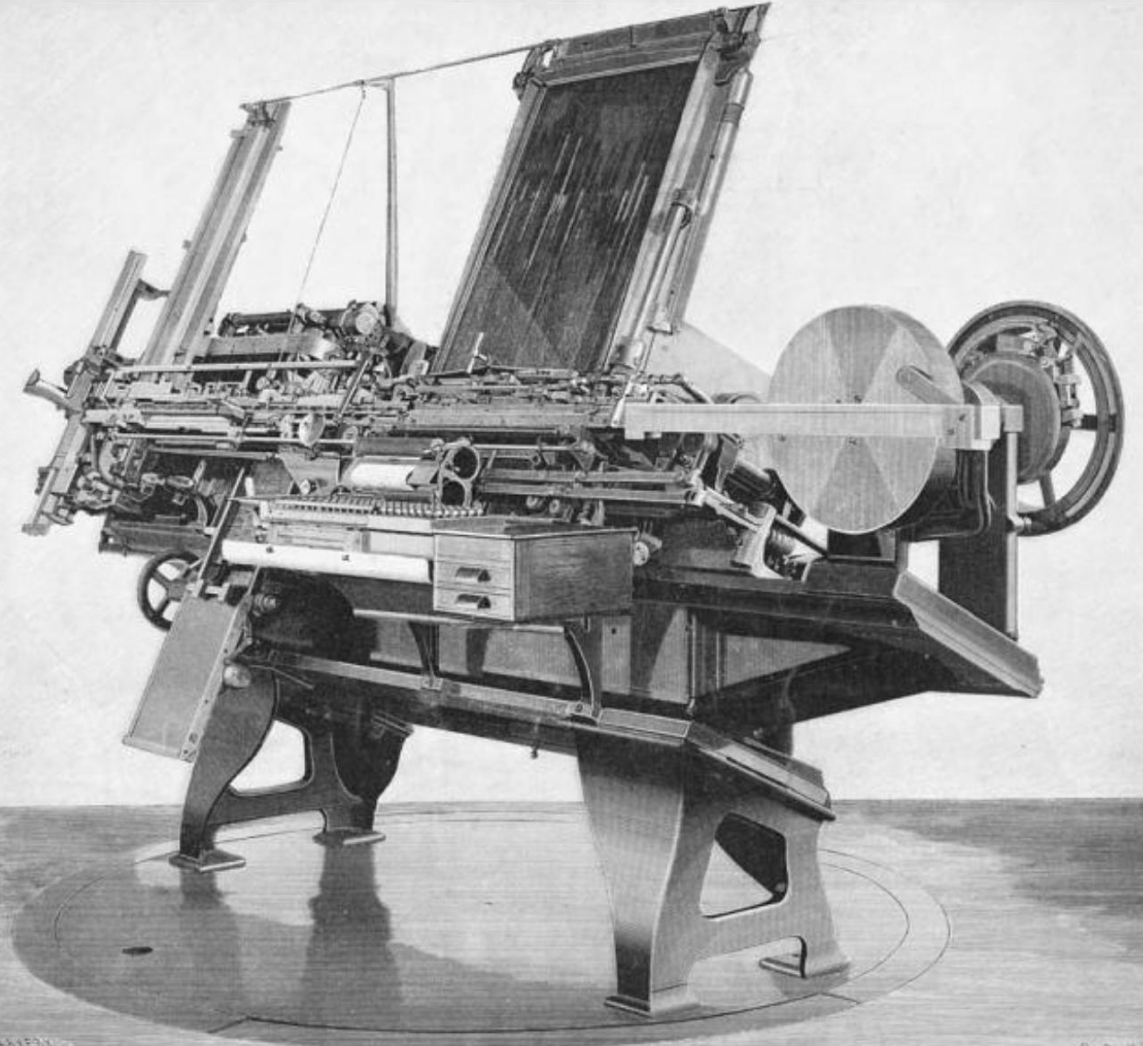
The Paige Compositor

The Paige Compositor was an invention developed by James W. Paige (1842–1917) between 1872 and 1888. It was designed to replace the human typesetter of a lead type-composed printing form with a mechanical arm.[1][2] In the early 1890s, a group of inventors signed a contract with Towner K. Webster in Chicago to produce 3,000 compositors.[3] However, the machine was not nearly as precise as it should have been and never turned a profit because of its complexity and continual need for adjustment based upon trial and error.[4][5] As a result, it was the Linotype typesetting machine, which composed in a hot metal typesetting process, that became the new popular typesetting machine.[6]

Writer Mark Twain made a substantial investment into the failed endeavor: $300,000 (~$8,000,000 today). Twain, a former printer, invested not only the bulk of his book profits but also a large portion of the inheritance of Olivia Clemens, his wife.[5] Many point to his over-investment in the Paige typesetting machine and other inventions as the cause of not only his family's financial decline but also the decline of his wit and humor.[7]

Webster Manufacturing made fewer than six machines costing $15,000 apiece, over three times as much as the initial production estimates. One was donated by Cornell University for a scrap metal drive during World War II. The only surviving machine is displayed at the Mark Twain House in Hartford, Connecticut.[8]

References

[edit]
[edit]
Revisions and contributorsEdit on WikipediaRead on Wikipedia
from Grokipedia
The Paige Compositor was a pioneering mechanical machine invented by American James W. Paige between 1872 and 1888, designed to automate the labor-intensive of setting, justifying, and distributing foundry type using a single operator from a common case. Featuring an extraordinary complexity with over 18,000 individual parts—including numerous cams, bearings, and springs—it could achieve speeds of up to 12,000 ems (a unit of type ) per hour, far surpassing manual methods. Paige's invention, patented in 1874 (U.S. Patent No. 157,694), combined elements of earlier gravity typesetters and distributors but innovated by integrating all functions into one device, marking it as the first such machine in the United States. The first prototype was completed in 1887, followed by a second in 1894, which underwent a 60-day trial at the Chicago Herald newspaper—its only documented commercial application—before the technology was rendered obsolete by the rise of hot-metal casting machines like the Linotype and Monotype, which produced fresh type rather than reusing foundry pieces. Only two machines were ever built, underscoring the project's limited production despite its ambitious scope. The Paige Compositor gained notoriety through its association with author Samuel Clemens, better known as , who became its primary financial backer starting in 1880 with an initial investment of $5,000. By 1887, Twain had committed around $50,000 and continued funding at approximately $3,000 per month as the principal investor, eventually totaling over $300,000—equivalent to millions today—drawn partly from royalties of works like . Twain's enthusiasm stemmed from his own youthful experience as a hand typesetter, viewing the machine as a revolutionary solution to printing inefficiencies, but chronic delays and technical issues led to his in the early 1890s, prompting a global lecture tour to recover his fortunes. Recognized as an engineering milestone, the Paige Compositor was designated an International Historic Mechanical Engineering Landmark by the (ASME) in 1975, with one surviving example preserved at the in . Its legacy endures as a symbol of 19th-century innovation's perils, illustrating the challenges of automating complex artisanal trades amid rapid technological evolution in the printing industry.

Invention and Development

Early Concepts and Patents

James W. Paige, born in 1842 in , was a skilled mechanic and inventor who initially worked in the oil fields before turning his attention to mechanical innovations in . By the early 1870s, Paige had relocated to , where he set up a workshop in Colt's Armory to pursue his inventions. His interest in stemmed from the recognized inefficiencies of manual composition, a labor-intensive process that relied on hand-sorting and assembling individual lead type pieces for printing presses. Paige began developing his typesetting machine in 1872, starting with a simple design intended to handle small agate (5½-point) type in a manner that mirrored the edge-to-edge grip of human compositors. This early concept aimed to automate the handling of lead type, reducing the physical demands and errors inherent in traditional methods. He received initial legal protection with U.S. Patent No. 157,694, granted on December 15, 1874, for improvements in type-setting machines. By 1877, Paige had advanced his idea into a gravity-based typesetter, which utilized downward force to move type pieces through channels, integrated with the Thompson automatic distributor to enable efficient type sorting and reuse. This combination formed the foundational mechanism for what would become the Paige Compositor, addressing the core challenge of mechanizing type assembly without hot-metal casting. The comprehensive legal foundation for the Paige Compositor solidified in the late 1880s, when Paige filed a on August 19, 1887, for a machine that automated the setting, distribution, and justification of type. After an eight-year examination process, the U.S. granted U.S. 547,860 on October 15, 1895, titled "Machine for Distributing, Setting, and Justifying Type," along with related patents 547,859 and 547,861 (co-invented with C.R. North for the justifying mechanism). The patent's claims detailed innovative features, including a that replicated the precise movements of a human typesetter to pick, position, and insert type, ensuring alignment and spacing in a single operation. This protection was crucial for attracting investors, such as , who later provided financial backing in the 1880s.

Prototyping and Key Collaborators

The development of the Paige Compositor began to take tangible form through a key partnership established in 1877 between inventor James W. Paige and the Farnham Typesetter Company of , which provided initial funding and manufacturing support in a workshop at the Colt Arms factory. This collaboration enabled Paige to integrate his gravity-based typesetter design with a Thompson distributor mechanism, laying the groundwork for a combined and distribution system. Under this arrangement, practical construction efforts advanced, culminating in the completion of the first in 1887, directed by mechanical engineer Charles E. Davis in . Davis oversaw the assembly of this initial model, which incorporated over 18,000 parts including numerous bearings, cams, and springs. Prototyping faced significant iterative challenges, particularly in achieving precision amid the machine's extraordinary . Engineers addressed ongoing issues with type handling, where minor imprecisions led to frequent mechanical adjustments, and problems across the interconnected components required repeated trial-and-error refinements to ensure reliable operation. These hurdles, compounded by the need for constant redesigns due to limited resources, extended the development timeline and highlighted the difficulties of coordinating such an intricate system. Collaborator Charles R. North, a skilled employed by Paige, played a crucial role in overcoming justification-related obstacles by inventing an automatic justifier that enabled lines to be spaced within 0.005 inches of perfection, a vital innovation for the machine's functionality. Building on these efforts, the second was completed in 1894, featuring key refinements such as a 109-key keyboard designed by printer Charles G. Van Schuyver, who analyzed language patterns to optimize the layout for efficient syllable- and word-based input after testing multiple configurations. This iteration represented a major step in , incorporating North's justifier and other adjustments to mitigate earlier and precision issues, though the overall persisted. Davis continued to guide the engineering, ensuring the prototype's mechanisms aligned more closely with Paige's foundational patents for .

Technical Design

Core Components and Mechanisms

The Paige Compositor was an imposing mechanical apparatus, measuring approximately 11 feet in length, 3.5 feet in width, and 6 feet in height, with a total weight of about 5,000 pounds. Its operation required a modest power input of 1/4 to 1/3 horsepower, delivered through a 1/4-inch round belt connected to a 14-inch grooved , enabling the intricate movements of its components without excessive energy demands. This scale and powering reflected the machine's ambition to consolidate multiple functions into a single, automated unit, distinguishing it from earlier, less integrated devices. At its core, the Compositor consisted of roughly 18,000 individual parts, encompassing a vast array of bearings, cams, and springs that facilitated precise mechanical interactions. Central to its functionality was a engineered to grasp and position individual pieces of type, emulating the dexterity of a hand in selecting and placing characters edge-to-edge. Type storage occurred in a shared case designed for standard foundry type, typically in nonpareil size (6-point), with adjustable compartments to handle slight variations in type dimensions and ensure reliable access. Key mechanisms included an automated rejection system that inspected and discarded imperfect or damaged type during handling, maintaining quality without manual intervention. Complementing this was the "time-lock" synchronization device, which regulated the timing of component actions to prevent jams or misalignments in the machine's complex sequence of operations. Overall, the design philosophy prioritized biomimetic precision, replicating the fluid motions of a skilled compositor to manipulate pre-existing type—avoiding the need for on-the-fly —thus aiming for versatility in handling diverse printing needs.

Keyboard and Control System

The Paige Compositor featured a specialized keyboard with 109 keys, each corresponding to characters, syllables, or even complete words, enabling efficient input that mimicked the flow of reading text from left to right. This design allowed operators to press multiple keys simultaneously for compound inputs, triggering the automatic selection and assembly of type without manual placement. The keyboard was positioned at a height suitable for standing operators, facilitating prolonged use during intensive sessions. Central to the control system was its automation of spacing and justification, where line length was continuously measured with an accuracy of 0.005 inches to determine required adjustments. Upon reaching the end of a line, the system automatically selected and inserted spaces from a set of eleven varying sizes, while leads and other spacing elements were mechanically handled to ensure even justification without operator intervention. A dedicated line key allowed the operator to finalize each line, prompting the machine to execute these adjustments seamlessly. Synchronization between operations was maintained by a mechanical "time-lock" mechanism, which prevented any overlap or interference between the type-setting and type-distributing functions, ensuring reliable sequential execution. This device acted as a timing controller, halting processes if discrepancies arose and even indicating fault locations to the operator. Consequently, a single operator could oversee the entire process—setting, justifying, and distributing type—directly from the keyboard, with commands executed by an integrated .

Operation

Typesetting and Assembly Process

The typesetting and assembly process of the Paige Compositor began with operator input through a specialized keyboard, which generated mechanical signals to initiate type selection. Each keystroke corresponded to characters, syllables, or words, activating a system of mechanical fingers or arms that retrieved individual pieces of movable foundry type from a central or containing thousands of sorted characters. This selection mechanism operated with precision, using mechanical fingers or arms to retrieve the correct type pieces from the based on keyboard input, fully automating the retrieval phase that traditionally required hand compositors to sort and pick from cases. Once selected, the type pieces were mechanically transported to the assembly area and positioned edge-to-edge to form complete lines of text. The machine aligned the characters precisely, building the line progressively as input continued, with mechanisms ensuring uniform height and orientation for readability in . During this assembly, dead matter—previously used type—was separated from the active composition area and directed toward distribution channels for later . The Paige Compositor achieved typesetting speeds of approximately 9,000 ems per hour under standard operation, scaling to 12,000 ems per hour with skilled operators, driven by a main shaft rotating at 220 . This performance represented a significant advancement over manual methods, which typically produced 1,500 to 3,000 ems per hour. A defining innovation of the machine was its exclusive use of existing movable type, handling prefabricated metal characters without any , , or recasting processes, thereby automating the entire manual composition workflow while preserving the sharpness and consistency of traditional typefaces. This approach contrasted with contemporary machines like the Linotype, which relied on hot-metal , allowing the Paige to maintain high-fidelity reproduction of printed matter through mechanical manipulation alone.

Justification and Type Distribution

The justification mechanism of the Paige Compositor automatically measured the length of each composed line of type and inserted the appropriate spaces or leads to achieve even right-hand alignment, utilizing 11 different space sizes for precision. This process was designed to eliminate manual intervention, ensuring uniform justification without disrupting the flow of operation. The mechanism featured a sophisticated locking system, often referred to as the machine's "," which coordinated movements to prevent jams or errors during insertion. Integrated directly with the typesetting process, justification occurred simultaneously as type was assembled into lines, allowing the machine to produce fully justified galleys in a continuous . This automatic justifier was invented by Charles E. Davis, a mechanical engineer who supervised much of the machine's construction and collaborated closely with James W. Paige. The design was detailed in U.S. Patent 547,860, issued to Paige in 1895, which described the combined apparatus for distributing, setting, and justifying type. After use, the distribution process automatically sorted and returned perfect type pieces to their designated channels in the common , while rejecting imperfect ones—such as those that were bent, bruised, or otherwise damaged—to preserve the integrity of the font inventory. During distribution, imperfect type pieces were rejected, with mechanisms to detect and separate bent or dirty pieces. Mechanical arms facilitated the precise placement and release of type into the case, enabling efficient without hand-sorting. This distribution alone achieved a rate of approximately 7,500 ems per hour, a notable advancement for handling foundry type. The process was outlined in U.S. Patent 547,859, also issued to Paige in 1895, covering the machine for setting, distributing, and justifying type. Encompassing the full cycle of setting, justifying, and distributing, the Paige Compositor delivered an average output of 12,000 ems per hour when operated by a single individual, demonstrating its capacity for high-volume production. This marked a significant , as it was the first U.S. machine to fully integrate these three functions—setting, justifying, and distributing type from a common case—under one operator, surpassing earlier compositors that required separate devices or manual steps.

Commercialization and Challenges

Investments and Financial Backing

The development of the Paige Compositor relied heavily on private investments from a network of promoters and local capitalists in , to support James W. Paige's iterative designs and prototypes. Early financial backing included stock purchases in the Farnham Typesetter Company by key investors such as Samuel L. Clemens () during the , reflecting initial enthusiasm for Paige's mechanical innovations in . Mark Twain emerged as the project's most prominent and substantial backer, investing a total of approximately $300,000—equivalent to about $10 million in 2025 dollars—primarily funded through royalties from his 1884 novel Adventures of Huckleberry Finn. By the mid-1880s, Twain had become the majority financier, committing around $3,000 monthly to the endeavor, including the outright purchase of development rights in 1889. This support extended to other Hartford-based investors like George S. Mallory and Marshall H. Mallory, who helped form the Paige Compositor Manufacturing Company in 1892. In the early 1890s, the company secured a production contract with the Webster Manufacturing Company, led by Towner K. Webster, to build operational machines and scale toward commercialization. However, the financial scale of the project escalated dramatically, with prototypes and engineering efforts costing far beyond initial estimates—totaling around $1 million by the mid-1890s, including $800,000 dedicated to experimental work and patents. The investments ultimately proved ruinous for key backers; Twain's heavy financial exposure contributed to his declaration in , amid ongoing delays and competition from more reliable machines like the Linotype. Paige himself died penniless on December 1, 1917, at the Oak Forest Infirmary in , and was buried in a .

Production Trials and Market Attempts

In the early 1890s, the Compositor Company, formed by investors including associates of , contracted with the Webster Manufacturing Company in to produce thousands of Paige Compositors on a large scale. The agreement aimed to redesign and manufacture the machines for commercial deployment, with estimates suggesting a target of around 3,000 to 4,000 units, though exact production figures in the contract varied across reports. However, the venture faced significant overruns, with total development and production costs exceeding $1 million—far above initial projections—due to the machine's mechanical complexity requiring extensive reengineering. A key production trial occurred in 1894, when the second completed machine underwent a 60-day test at the Chicago Herald newspaper, marking its only documented commercial application. Starting on September 20, the trial involved setting live copy, such as a story by Paul Bourget, and initially achieved speeds of 9,000 to 12,000 ems per hour, outperforming multiple Linotype machines in output. Despite this potential, the test revealed ongoing issues, including frequent stoppages, type breakage, and the need for constant mechanical adjustments, as the machine lacked on-site repair capabilities and required operator intervention for overflows or strains. Production efforts ultimately yielded only two full machines, highlighting the project's limitations in scalability and reliability. One, completed around 1887 with financial support from Mark Twain, is preserved at the Mark Twain House in Hartford, Connecticut. The other, from the 1894 model used in the Herald trial, was donated to Cornell University around 1898 but later scrapped during a World War II metal drive. Imprecision in type handling and recurrent breakdowns during testing prevented broader manufacturing, as the machines demanded excessive maintenance and failed to achieve consistent performance under real-world printing demands. The Paige Compositor was positioned for use in newspaper offices and book printing houses, where its promised speed and justification capabilities could automate composition and reduce labor costs compared to manual methods. Development delays pushed viable testing until the late 1880s, with the first operational model emerging around 1887, though full market readiness remained elusive amid mechanical refinements.

Legacy

Reasons for Commercial Failure

The Paige Compositor's extreme mechanical complexity, featuring approximately 18,000 individual parts including numerous cams, springs, and bearings, made it highly temperamental and susceptible to frequent breakdowns and imprecision. This intricate design, which sought to replicate human hand movements for assembling and justifying foundry type, demanded constant tuning and adjustments, rendering it unsuitable for reliable, high-volume operations. In its sole commercial trial at the Chicago Herald in 1894, the machine operated for 60 days but suffered from repeated stoppages and type breakage, underscoring its operational fragility. Despite efforts to scale production, the Webster Manufacturing Company built only 4-5 machines in the mid-1890s. Economically, the Compositor was undermined by soaring production expenses, with each unit costing around $15,000 to manufacture—well above initial projections of about $5,000—and prohibitive ongoing maintenance needs. Persistent design modifications delayed viable production until 1894, over a decade after development began, allowing sunk costs to balloon beyond $2 million while repelling further investor backing from wary capitalists. In the competitive landscape, the Paige Compositor arrived too late to challenge Ottmar Mergenthaler's , invented in 1884 and first commercially used in 1886, which revolutionized through a simpler hot-metal process that cast fresh type slugs efficiently, bypassing the need for type distribution. By 1891, 300 Linotype units were operational at 23 U.S. newspapers, offering superior speed, reliability, and affordability at roughly $3,500 per , which captured the market before the Paige could gain traction. The industry's rapid pivot to hot-metal methods during the Compositor's protracted development further obsolete its core reliance on reusable foundry type.

Historical and Cultural Impact

The Paige Compositor pioneered the integration of , justification, and type distribution in a single mechanical system operated by one person, representing a significant advancement in 19th-century despite its ultimate commercial failure. This innovation, with its complex array of 18,000 parts including cams, springs, and an automatic justifier, aimed to fully mechanize the handling of foundry type, setting the stage for later developments in the field even as the industry pivoted toward slug-casting machines like the Linotype. In recognition of its engineering ingenuity, the (ASME) designated the Paige Compositor a Historic Landmark in 1975. The sole surviving example of the machine is housed at the & Museum in , where it serves as a centerpiece exhibit demonstrating the pinnacle of Victorian-era mechanical design and the era's ambitious pursuit of . This artifact, donated to the museum in 1957, not only preserves Paige's intricate craftsmanship but also embodies the transitional challenges of pre-digital manufacturing technologies. Culturally, the Paige Compositor is indelibly linked to (Samuel Clemens), who invested approximately $300,000—equivalent to millions today—in its development, viewing it as a revolutionary tool informed by his own experience as a former printer. This investment contributed to Twain's near-bankruptcy in 1894, transforming the machine into a symbol of his financial overreach and obsession with invention, frequently referenced in his later writings and biographies as a personal lesson in the perils of unchecked enthusiasm for unproven technologies. On a broader scale, the Paige Compositor's legacy underscores the inherent risks of investing in complex mechanical automation during the late , particularly as printing evolved away from reusable foundry type toward more efficient disposable systems. Despite its shortcomings, James Paige's contributions advanced conceptual frameworks for automated , influencing subsequent innovations and highlighting the economic and technical hurdles that shaped the of before the digital revolution.
Add your contribution
Related Hubs
User Avatar
No comments yet.