


Community hub
Recent from talks
Contribute something
Nothing was collected or created yet.
Paula Raymond
View on Wikipedia
Key Information


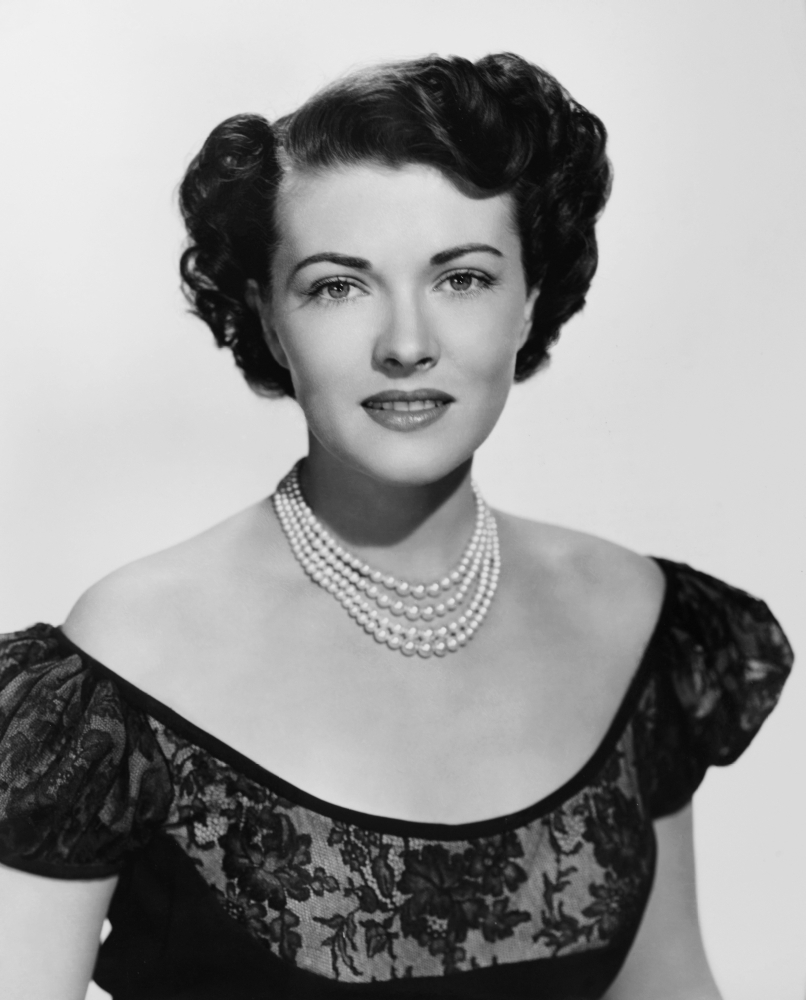
Paula Raymond (born Paula Ramona Wright; November 23, 1924 – December 31, 2003) was an American model and actress who played the leading lady in numerous films and television series, including Crisis (1950) with Cary Grant. She was the niece of American pulp-magazine editor Farnsworth Wright.[2]
Early years
[edit]Raymond was born on November 23, 1924, as Paula Ramona Wright in San Francisco, California.[3] Her father was a corporate lawyer. She attended St. Brigid School. Following her parents' divorce, Raymond and her mother moved to Los Angeles.[4]
As a child, Raymond studied ballet, piano and singing. She was a member of both the San Francisco Opera Company and the San Francisco Children's Opera Company. She graduated from Hollywood High School in 1942.[2] Following graduation, she returned to San Francisco to attend college and worked with two theater companies there.[5]
Modeling
[edit]Before she became an actress, Raymond was a model. She told author Leo Verswijver: "I got started modeling at $25 an hour and [I] forgot all about acting, because I was earning a living."[4] Her work included posing for the cover of True Confessions magazine.[5]
Film
[edit]Raymond's first acting role was as Bettina Bowman in Keep Smiling (1938),[5] in which she was credited as Paula Rae Wright. In 1950, she signed a contract with MGM, where she played opposite leading men such as Cary Grant and Dick Powell. Early in her career, Raymond acted in film noir thrillers such as the cult classic City That Never Sleeps, and later in her career, she acted in horror films including Blood of Dracula's Castle.
In 1950, Raymond played Cary Grant's leading lady in Crisis. MGM hoped to use the film to launch Raymond, whom they viewed as the next Norma Shearer, to stardom.[6]
In 1952, she costarred in The Beast from 20,000 Fathoms. In 1954, she starred as Queen Berengaria in the film King Richard and the Crusaders. She also starred in the 1955 Western The Gun That Won the West.
Raymond also used the screen name of Rae Patterson while working for Paramount Pictures.[5]
Television
[edit]In the late 1950s and 1960s, Raymond appeared in many television shows including Perry Mason (five episodes), Maverick, Hawaiian Eye (five episodes), M Squad (three episodes) with Lee Marvin, 77 Sunset Strip (four episodes), as Martha Harrington in Peter Gunn season 1, episode 11, in 1958. She turned down the role of saloon keeper Kitty Russell in the long-running western classic series Gunsmoke[7] and the role went instead to Amanda Blake. She said, "I didn't want to play a woman who worked in a saloon, week after week. I have a freckle on my face, and I sometimes put a beauty mark over it. They even put it on Amanda Blake, who finally got the part—although it was put on the opposite side from mine. I wanted them to soften the character but didn't think they’d do it. As it turned out, the character wasn't a trashy woman at all. She was just the type I would have liked to have played."[7]
Raymond appeared in a 1959 episode "The Paymaster" of the ABC/Desilu western series The Life and Legend of Wyatt Earp. In Have Gun - Will Travel, "Lady with a Gun", season 3, episode 30, she played Eve McIntosh, a woman seeking revenge for her brother's killing. In 1960, she appeared in two episodes of Bat Masterson, once as Angie in “Last of the Night Raiders” and as Linda Wells in “Mr. Fourpaws”. In 1961, she also played opposite Jack Kelly as Bart Maverick in an episode from the final season of the Western comedy television series Maverick titled "The Golden Fleecing".
She also appeared in the third episode of the first season, initially broadcast on February 3, 1959, in the science fiction series Alcoa Presents: One Step Beyond titled "Emergency Only", which also memorably featured Jocelyn Brando as a screaming fortune teller at a party.
In 1962, she portrayed the role of Franny Wells in the episode "House of the Hunter" on Rawhide.
Personal life
[edit]
Raymond bore a strong physical resemblance to actress Myrna Loy. In 1950, Raymond said: "I've been hearing it ever since I was 10 years old."[8]
In 1962, Raymond was a passenger in a car that crashed into a tree on Sunset Boulevard. Her nose was severed by the rearview mirror. After more than a year of extensive plastic surgery and recovery, she returned to acting. In 1977, while working on the soap opera Days of Our Lives, after only three appearances, she accidentally tripped on a telephone cord and broke her ankle, and her character was removed from the show.[9] In 1984, she broke both hips, and in 1994, she broke her shoulder.
In 1944, Raymond married Floyd Leroy Patterson. In 1946, they divorced shortly after the birth of their daughter, Raeme Dorene Patterson. In 1993, Raymond's daughter died.
Raymond was Roman Catholic.[10]
Death
[edit]On December 31, 2003, Raymond died at Cedars-Sinai Medical Center in Los Angeles[5] from a series of respiratory ailments. She was 79.[11] She is interred at Holy Cross Cemetery in Culver City, California.[citation needed]
Partial filmography
[edit]- Keep Smiling (1938) - Bettina Bowman
- Variety Girl (1947) - Variety Girl (uncredited)
- Night Has a Thousand Eyes (1948) - Companion (uncredited)
- Rusty Leads the Way (1948) - Louise Adams
- Sealed Verdict (1948) - WAC guard for Erika
- Racing Luck (1948) - Natalie Gunther
- Blondie's Secret (1948) - Dr. Mason's Nurse (uncredited
- Challenge of the Range (1949) - Judy Barton
- Adam's Rib (1949) - Emerald - Kip's Girlfriend (uncredited)
- Holiday Affair (1949) - Girl at Drinking Fountain (uncredited)
- East Side, West Side (1949) - Joan Peterson - Bourne's Secretary (uncredited)
- Crisis (1950) - Helen Ferguson
- Duchess of Idaho (1950) - Ellen Hallet
- Devil's Doorway (1950) - Orrie Masters
- Grounds for Marriage (1951) - Agnes Oglethorpe Young
- Inside Straight (1951) - Zoe Carnot
- The Tall Target (1951) - Ginny Beaufort
- Texas Carnival (1951) - Marilla Sabinas
- The Sellout (1952) - Peggy Stauton
- The Bandits of Corsica (1953) - Christina
- The Story of Three Loves (1953) - Mrs. Campbell (segment "Mademoiselle") (uncredited)
- City That Never Sleeps (1953) - Kathy Kelly
- The Beast from 20,000 Fathoms (1953) - Lee Hunter
- King Richard and the Crusaders (1954) - Queen Berengaria
- The Human Jungle (1954) - Pat Danforth
- The Gun That Won the West (1955) - Mrs. Maxine Gaines
- The Flight That Disappeared (1961) - Marcia Paxton
- The Law and Mr. Jones (1961) TV series - Carla Hayes - ep."The Concert"
- Hand of Death (1962) - Carol Wilson
- Blood of Dracula's Castle (1969) - Countess Townsend
- Five Bloody Graves (1969) - Kansas Kelly
- Mind Twister (1993) - Agnes
Bibliography
[edit]- Parla, Paul; Charles P. Mitchell (2000). "Paula Raymond: Pursuing the Beast from 20,000 Fathoms". Screen Sirens Scream! Interviews with 20 Actresses from Science Fiction, Horror, Film Noir and Mystery Movies, 1930s to 1960s. Jefferson, N.C. and London: McFarland. pp. 197–121. ISBN 0-7864-0701-8.
References
[edit]- ^ "Paula Raymond - The Private Life and Times of Paula Raymond. Paula Raymond Pictures". www.glamourgirlsofthesilverscreen.com.
- ^ a b Parla, Paul; Mitchell, Charles P. (2000). Screen Sirens Scream!: Interviews with 20 Actresses from Science Fiction, Horror, Film Noir and Mystery Movies, 1930s to 1960s. McFarland. pp. 197–199. ISBN 9780786445875. Retrieved 14 March 2017.
- ^ "Paula R Wright, Born 11/23/1924 in California | CaliforniaBirthIndex.org". www.californiabirthindex.org.
- ^ a b Verswijver, Leo (2003). "Movies Were Always Magical": Interviews with 19 Actors, Directors, and Producers from the Hollywood of the 1930s through the 1950s. McFarland. pp. 148–149. ISBN 9780786411290. Retrieved 14 March 2017.
- ^ a b c d e McLellan, Dennis (January 10, 2004). "Paula Raymond, 79; MGM Leading Lady in '50s, Prolific TV Actress". Los Angeles Times. California, Los Angeles. Archived from the original on 14 March 2017. Retrieved 14 March 2017.
- ^ "Heartache to the fans, headache to the studio". North-Western Evening Mail. Barrow-in-Furness, England. 1950-02-04. p. 5.
- ^ a b "Paula Raymond Interview". www.westernclippings.com.
- ^ Johnson, Erskine (1950-01-17). "Cary Grant Says He's Happy Even With Movie Honeymoon". The Daily Times. New Philadelphia, Ohio. p. 6.
- ^ Bergan, Ronald (January 14, 2004). "Paula Raymond". The Guardian. Archived from the original on 14 March 2017. Retrieved 14 March 2017.
- ^ Morning News, January 10, 1948, Who Was Who in America (Vol. 2)
- ^ Independent News and Media Limited (2009). Paula Raymond Leading actress in the 1950s. Retrieved August 19, 2009.
External links
[edit]
- Paula Raymond at IMDb
- Paula Raymond at Find a Grave
- Paula Raymond interview at www.westernclippings.com


| International | |
|---|---|
| National | |
| People | |
| Other | |

Paula Raymond
View on GrokipediaEarly Life
Childhood and Family Background
Paula Raymond was born Paula Ramona Wright on November 23, 1924, in San Francisco, California.[1] Her father, Paul Raymond Wright, was an attorney,[3] while her uncle, Farnsworth Wright, served as a prominent editor of the pulp magazine Weird Tales during its golden age from 1924 to 1940.[4][5] Her parents divorced when she was young, after which Raymond and her Irish-born mother, who leased property in Hollywood, moved to Los Angeles.[6][7] Raised in a supportive middle-class family, Raymond received strong encouragement from her mother to pursue artistic endeavors from an early age.[1] This environment fostered her interests in the performing arts, allowing her to explore various creative outlets.[8] As a child, Raymond began formal studies in ballet, music, piano, and voice, which laid the groundwork for her later involvement in entertainment.[1][2] These early activities reflected the family's emphasis on cultural and artistic development, shaping her formative years before the move to Los Angeles.[9]Initial Training and Entry into Entertainment
Paula Raymond received her early formal education in San Francisco, where she developed an interest in the performing arts through structured training programs.[1] Encouraged by her mother, she began studying ballet, music, piano, and voice as a child, performing coloratura roles in junior opera productions.[1] These lessons emphasized drama, dance, and music, providing her with a foundational skill set in the arts.[6] Following the move to Los Angeles, she attended Hollywood High School. As a young performer, Raymond gained initial stage experience through local theater groups, honing her acting abilities in community productions.[1] Her professional debut came in 1938 at age 13, when she accompanied her mother to Hollywood and secured a small role in the comedy film Keep Smiling, opposite Jane Withers, billed under her birth name, Paula Rae Wright.[1] This opportunity marked her entry into the entertainment industry, transitioning her from local stage work to screen appearances.[6]Career
Modeling Career
After her brief hiatus from the entertainment industry following an early marriage and the birth of her daughter in 1946, Paula Raymond returned to Hollywood in the mid-1940s as a single mother seeking financial stability. To support her family, she took on secretarial work while embarking on a modeling career, initially using the professional name Rae Patterson.[1][8] Raymond's modeling efforts in late 1940s Hollywood focused on photographic work that captured the era's glamour aesthetic, with her poised features and elegant presence making her a sought-after subject for fashion and lifestyle imagery. A key achievement came when she posed for the cover of True Confessions magazine, a prominent publication that showcased her as an emerging beauty and provided crucial exposure in the competitive entertainment landscape.[1][9][10] This phase of her career, spanning roughly 1946 to 1947, not only offered financial independence but also served as a bridge back to acting; her visibility as a model attracted attention from industry scouts, leading to a brief contract with Paramount Pictures in 1947, where she appeared uncredited in Variety Girl before being released and signing with Columbia Pictures, transitioning into on-screen roles.[1][9][11]Film Career
Paula Raymond began her film career in earnest after a brief contract at Paramount and time at Columbia Pictures, signing a contract with Metro-Goldwyn-Mayer (MGM) in 1949 following her success as a model.[1] At Columbia from 1947 to 1949, she appeared in supporting roles in B-movies, including her first leading role as Judy Barton in the Western Challenge of the Range (1949), opposite Charles Starrett.[2] Her MGM tenure started with a small part as the society girlfriend of David Wayne in the acclaimed comedy Adam's Rib (1949), directed by George Cukor and starring Spencer Tracy and Katharine Hepburn, marking her entry into more prominent productions.[6] During her time at MGM, which lasted less than two years, Raymond transitioned to leading lady roles in a variety of genres, including drama, film noir, and Westerns. She played the wife of a brain surgeon opposite Cary Grant in the suspense thriller Crisis (1950), and portrayed the love interest to Robert Taylor's Native American lawyer in the anti-racist Western Devil's Doorway (1950), which The New York Times praised as a "whopping action film" despite its box office underperformance.[2][6] Other notable MGM films included the romantic musical comedy Duchess of Idaho (1950) with Esther Williams and Van Johnson, and the noir-tinged historical drama The Tall Target (1951), where she starred as a Southern belle alongside Dick Powell in a tense train-bound plot to assassinate Abraham Lincoln.[1] After her MGM release in 1951, Raymond freelanced in over 20 additional films, establishing herself as a B-movie leading lady in adventure and sci-fi projects. She appeared in the British adventure The Human Jungle (1954) as Pat Danforth, navigating urban crime and corruption opposite Gary Merrill.[1] In the science-fiction film The Beast from 20,000 Fathoms (1953), she played research assistant Lee Hunter amid a rampaging dinosaur threat, a role in a low-budget production that grossed over $5 million against a $210,000 budget and later achieved cult status.[6] Her final notable Western was The Gun That Won the West (1955), portraying Maxine Gaines opposite Dennis Morgan in a story centered on the Springfield rifle's role in frontier conflicts.[2] She continued in lower-budget films into the early 1960s, including The Flight That Disappeared (1961) and Hand of Death (1962), but her career was disrupted by a severe car accident in August 1962 that required extensive facial reconstructive surgery (detailed further in Personal Life). Resuming work within a year, her later film roles included Blood of Dracula's Castle (1967) and Five Bloody Graves (1969). Critics often commended Raymond's striking beauty and poised screen presence, particularly in her MGM roles, but noted she was frequently typecast as glamorous supporting players or romantic interests, limiting her range in A-list features.[1] Her work in films like Crisis earned descriptions of her as "delightfully cool and chic," yet her career trajectory remained confined to B-pictures and mid-tier productions, with no major box office hits beyond the surprise success of The Beast from 20,000 Fathoms.[2]Television Career
Paula Raymond entered television in 1949 with a guest role in the anthology series Your Show Time, appearing in the episode "The Million Pound Bank Note."[12] This early appearance marked the beginning of her transition to the medium, following initial success in films. By the early 1950s, she had become active in anthology dramas, including episodes of General Electric Theater in 1954 and Four Star Playhouse in 1956.[9][12] Throughout the 1950s and 1960s, Raymond established herself as a prolific guest star, making dozens of television appearances that sustained her career after the decline of her major film roles.[1] Notable among these were five episodes of Perry Mason between 1958 and 1964, where she portrayed various characters in the long-running legal drama.[12] She also guest-starred on Westerns and detective series such as Maverick (1961), 77 Sunset Strip (1959), Death Valley Days (multiple episodes in the 1950s and 1960s), and Hawaiian Eye (five episodes from 1959 to 1963).[1][12] Other significant spots included The Untouchables (1961) and Have Gun – Will Travel (1961), showcasing her versatility in action-oriented and dramatic formats.[9] As her film opportunities waned following the 1962 accident, television provided a reliable outlet, allowing Raymond to adapt to episodic storytelling and frequently work in supporting parts.[1] In the 1960s, she continued with guest roles in adventure series like The Man from U.N.C.L.E. (1964) and Temple Houston (1964).[12] By the 1970s, her work evolved toward character-driven dramas and soap operas, including a brief appearance on Days of Our Lives in 1977.[2] This phase highlighted her endurance in the industry through steady, if smaller-scale, television engagements.[12]Personal Life
Marriages and Relationships
Paula Raymond's first marriage was to Marine Corps Captain Floyd Leroy Patterson on October 9, 1944, during World War II, while he was on leave from the Pacific theater.[3] The union was short-lived, ending in divorce on September 17, 1946, shortly after the birth of their only child, daughter Raeme Dorene Patterson, in 1946.[3][1] As a single mother, Raymond relocated to Los Angeles to support her daughter, which motivated her entry into modeling and acting to provide financial stability for her family.[2][12] Raymond's second marriage occurred nearly two decades later, to aircraft executive Harry Leslie Williams on November 22, 1965; he was 20 years her senior at the time.[8] This partnership also proved brief, dissolving after just five months when Williams filed for divorce on May 9, 1966, citing cruelty.[8] The couple had no children together, and Raymond remained childless thereafter.[6] Throughout her adult life, Raymond prioritized her role as a mother, with her daughter's needs influencing key decisions amid the instability of two divorces.[1] The personal upheavals from these marital endings contributed to periods of professional focus, as she balanced family responsibilities with her demanding career in film and television, though she maintained a private stance on subsequent romantic involvements.[12]Injuries and Health Challenges
Paula Raymond experienced several minor injuries during her early film work, particularly from performing stunts in Western productions. While filming an episode of the television series Bat Masterson in 1959, she sustained bruising to her arm after co-star Gene Barry repeatedly pulled at her during a close-up shot, resulting in a black-and-blue mark that highlighted the physical demands of on-set interactions.[13] Additionally, in 1961, Raymond stubbed her toe while rushing to answer a phone call from a casting director, causing significant swelling that forced her to miss an audition and affected her mobility during subsequent work on Maverick, where she required custom shoes to manage the limp.[13] These incidents, though not career-ending, underscored the risks of her active roles in action-oriented genres prior to more serious health setbacks.[13] The most severe incident occurred on August 20, 1962, when Raymond was a passenger in a car that lost control on Sunset Boulevard in Los Angeles and crashed into a tree, overturning at least six times before she was pulled from the wreckage moments before it exploded.[14] She suffered a skull fracture, severe facial trauma including a severed nose from the rearview mirror, and was initially pronounced dead on arrival (DOA) at the hospital, only to be revived by a neurologist who detected a faint pulse.[6] The accident necessitated immediate hospitalization and over five hours of reconstructive surgery to repair her face, which she later described as looking "like hamburger," leaving her without a sense of smell.[13] This near-fatal event required months of rehabilitation and extensive plastic surgery, profoundly interrupting her career as she took a temporary hiatus from acting.[1] In the years following the crash, Raymond shifted to less physically demanding television roles upon her return within a year, though the injuries effectively curtailed her prospects for leading film parts.[9] Later in life, she faced ongoing health challenges, including a series of respiratory ailments that contributed to her declining condition; she was in ill health during her final year and required hospitalization at Cedars-Sinai Medical Center in Los Angeles, where she ultimately succumbed to these issues on December 31, 2003.[1]Later Years and Death
Professional Decline and Later Work
Following the peak of her film career in the early 1950s, Paula Raymond experienced a gradual decline in major motion picture offers, transitioning primarily to television guest roles as opportunities in leading film parts diminished. In 1955, following the end of her freelancing period after leaving MGM in 1952, she took a voluntary three-year hiatus from acting to pursue non-entertainment jobs, including secretarial work, before returning to sporadic television appearances in the late 1950s, such as episodes of Perry Mason and Maverick. This shift was influenced by typecasting as a glamorous supporting actress and the need to provide financial stability for her daughter, as she later noted that many of her Columbia Pictures roles felt like "filler" rather than substantial characters.[13][1] A pivotal turning point came in August 1962, when Raymond was severely injured in a car accident on Sunset Boulevard, suffering facial trauma that severed her nose and required over a year of reconstructive surgery and rehabilitation; she was initially pronounced dead at the scene but revived. Her last significant film role prior to the accident was in the low-budget sci-fi thriller Hand of Death (1962), after which film work became scarce due to lingering health effects, advancing age—she was in her late 30s—and the industry's preference for younger leading ladies. Upon recovery, she resumed television guest spots, including appearances on Death Valley Days (1964) and Temple Houston (1964), but these were infrequent and often minor, reflecting a broader slowdown in her professional momentum. She appeared in films like Blood of Dracula's Castle (1969) during this period.[13][1][12] Into the 1970s, Raymond's output remained limited, with a late-career film role in the Western Five Bloody Graves (1970), her last western, where she portrayed a madame, and a brief 1977 stint on the soap opera Days of Our Lives as Nancy, cut short by another accidental fall that caused further injury. She entered semi-retirement in the 1980s, supplementing income through non-acting jobs like secretarial work, though she occasionally returned for small roles, such as in the erotic thriller Mind Twister (1993) as Agnes. In reflections shared in a 1990s interview, Raymond expressed satisfaction with her television experiences, particularly collaborations with actors like Richard Boone on Have Gun – Will Travel, but lamented being underutilized in her earlier contracts, stating she had intentionally gained weight to exit one to seek more meaningful parts; she emphasized acting primarily for financial necessity rather than stardom, with no overt regrets about the decline.[13][12][1]Death and Immediate Aftermath
In her final years, Paula Raymond resided in West Hollywood, California, where she experienced a prolonged decline in health marked by respiratory issues.[1][9] She had been in ill health for at least the preceding year, culminating in a series of respiratory ailments that led to her hospitalization.[3][8] Raymond passed away on December 31, 2003, at Cedars-Sinai Medical Center in Los Angeles at the age of 79.[1][15] The official cause was respiratory failure.[16] She was interred at Holy Cross Cemetery in Culver City, California, in Block 282.[15] No public funeral service details were reported, and her longtime friend Sally Carrocino confirmed the death to the press.[10] Raymond had been predeceased by her only child, daughter Raeme Dorene Patterson, who died in 1993 at age 46; no immediate family responses or tributes from colleagues were noted in contemporary accounts.[8][16]Legacy
Cultural References
Paula Raymond has been referenced in several works on Hollywood history, particularly those examining underappreciated actresses of the mid-20th century. In They Coulda Been Contenders: Twelve Actors Who Should Have Become Cinematic Superstars (2020) by Frank Miller, she is profiled as one of twelve promising talents whose careers were derailed by misfortune, highlighting her potential as a leading lady alongside stars like Cary Grant. Similarly, Westerns Women: Interviews with 50 Leading Ladies of Movie and Television Westerns from the 1930s to the 1960s (1999) by Boyd Magers and Michael G. Fitzgerald includes an interview with Raymond, discussing her roles in Westerns such as Devil's Doorway (1950) and her contributions to the genre's portrayal of strong female characters. These literary mentions underscore her place in overviews of 1950s cinema and MGM starlets, often portraying her as a resilient figure in a competitive industry. In media, Raymond appears in archival gossip columns from the era, such as those by Hedda Hopper in the Los Angeles Times, which noted her rising status at MGM and personal anecdotes from the set of films like Crisis (1950). Modern articles and obituaries frequently describe her as a "forgotten leading lady," with The Independent's 2004 obituary mentioning her roles in films such as The Tall Target (1951) and City That Never Sleeps (1953). She is also featured on the website Glamour Girls of the Silver Screen, an online compilation by David L. Meyer that chronicles the private lives of 1940s-1960s starlets, including Raymond's photographs and career highlights.[17] Raymond's cultural impact is evident in her roles within film noir and Western genres, where she embodied poised, morally complex women amid tense narratives. Her performance in the noir thriller Crisis (1950), opposite Cary Grant, has been analyzed in genre studies for its contribution to the era's exploration of political intrigue and personal sacrifice, as noted in discussions of Richard Brooks's directorial debut. In Westerns like Devil's Doorway (1950), she played a lawyer advocating for Native American rights, a role that prefigured progressive themes and earned retrospective praise in film histories for challenging genre conventions. Fan appreciation persists in retro cinema communities, where her work is celebrated for its blend of beauty and depth, often in online forums dedicated to classic Hollywood revivals. In the 21st century, Raymond's films have gained renewed visibility through streaming platforms, fostering modern recognition among audiences interested in vintage cinema. Titles such as The Beast from 20,000 Fathoms (1953) are available on Turner Classic Movies (TCM) and Amazon Prime Video, introducing her science-fiction and horror roles to new viewers and sustaining interest in her as a versatile B-movie staple.[18] This accessibility has contributed to her enduring, if niche, influence in discussions of overlooked Golden Age actresses.Filmography Overview
Paula Raymond appeared in approximately 20 feature films across her career, primarily in supporting and leading roles during the 1950s, with later work in low-budget productions. She also made more than 50 television guest appearances, often in Westerns, crime dramas, and anthology series from the late 1950s through the 1960s.[14]Selected Film Credits (Chronological)
- Rusty Leads the Way (1948) – Unspecified role[19]
- Adam's Rib (1949) – Doris Attinger's friend (uncredited)[14]
- Devil's Doorway (1950) – Orrie Masters[20]
- Duchess of Idaho (1950) – Ellen Dugan[20]
- Crisis (1950) – Helen St. James[20]
- The Tall Target (1951) – Ginny Jeffreys[20]
- Inside Straight (1951) – Pauline[20]
- Texas Carnival (1951) – Showgirl[19]
- The Beast from 20,000 Fathoms (1953) – Lee Hunter[20]
- City That Never Sleeps (1953) – Kathy Kelly[20]
- Bandits of Corsica (1953) – Anne[19]
- King Richard and the Crusaders (1954) – Lady Edith[20]
- The Gun That Won the West (1959) – Wanda Fuller[14]
- The Flight That Disappeared (1961) – Marcia Paxton[20]
- Hand of Death (1962) – Carol Tredman[20]
- Blood of Dracula's Castle (1969) – Countess Townsend[20]
- Five Bloody Graves (1969) – Kansas Kelly[20]
Selected Television Appearances
- State Trooper (1956) – Guest role[14]
- Mike Hammer (1958) – Guest role in "Letter of the Weak"[14]
- Yancy Derringer (1958) – Guest role[14]
- Peter Gunn (1958) – Guest role[14]
- Perry Mason (1958–1961) – Various roles in five episodes, including Joyce Ambrose in "The Case of the Spurious Sister" (1958)[21]
- 77 Sunset Strip (1958–1963) – Multiple guest roles[15]
- Maverick (1957–1962) – Guest role[22]
- Hawaiian Eye (1959–1963) – Various roles in five episodes, including Anne Hunter (1962)[21]
- The Untouchables (1959–1963) – Guest role[15]
- Have Gun – Will Travel (1957–1963) – Guest role[15]
- Rawhide (1959–1965) – Franny Wells in "The Blue Blue Stone" (1962)[21]
- General Electric Theater (1953–1962) – Guest role[15]