Hubbry Logo
Pouch Attachment Ladder SystemPouch Attachment Ladder SystemMain
Open search
Pouch Attachment Ladder System
Community hub
Pouch Attachment Ladder System
logo
8 pages, 0 posts
0 subscribers
Be the first to start a discussion here.
Pouch Attachment Ladder System
from Wikipedia
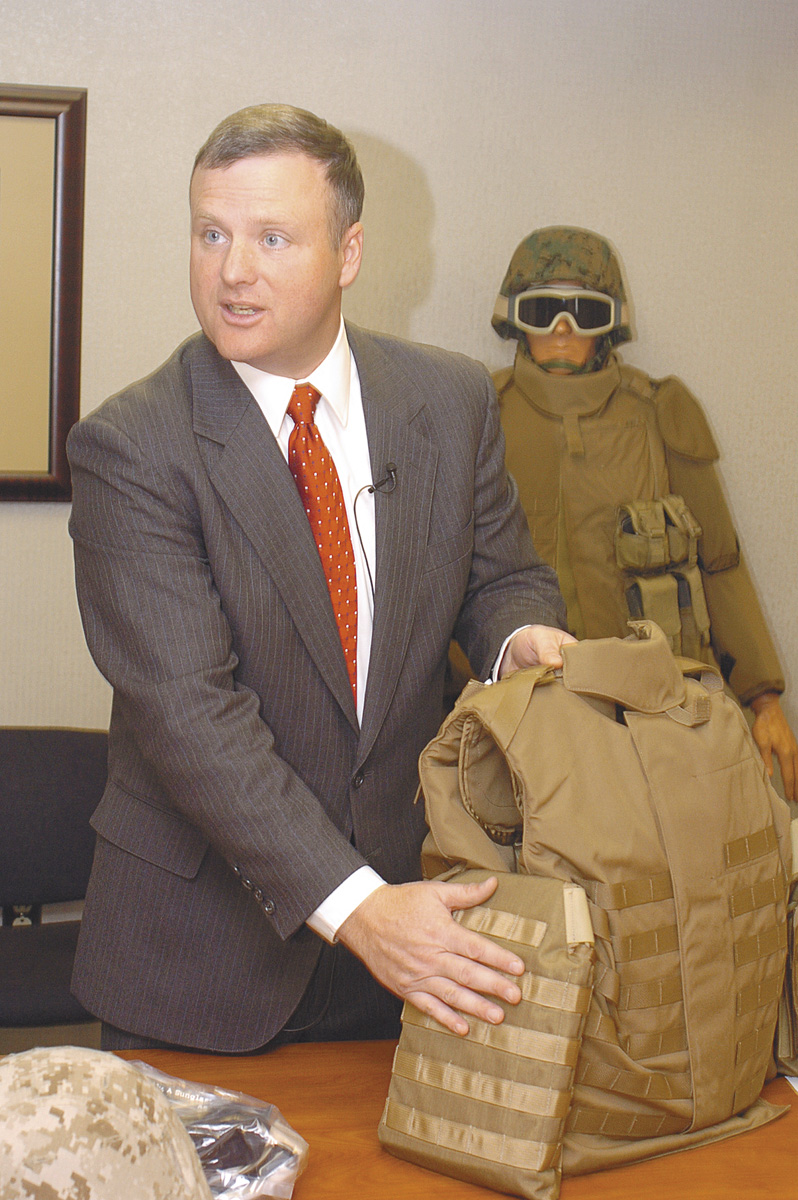
The PALS grid is easily visible in this image of the US Marine Corps' Interceptor Body Armor; note the pouches attached to the system in the background (2005)

The Pouch Attachment Ladder System or PALS is a grid of webbing invented and patented by United States Army Natick Soldier Research, Development and Engineering Center used to attach smaller equipment onto load-bearing platforms, such as vests and backpacks.[1][2] It was first used on MOLLE rucksacks, but is now found on a variety of tactical equipment, such as the U.S. Improved Outer Tactical Vest, Interceptor body armor, USMC improved load-bearing equipment backpack and Modular Tactical Vest. It is used to attach items such as holsters, magazine pouches, radio pouches, knife sheathes, and other gear.[1] A wide variety of pouches are commercially available, allowing soldiers to customize their kit. There is also a variety of attachment methods including the Alice Clip, the Natick snap, and soft, interwoven straps.[3] The PALS system has begun to be adopted by other forces, such as the British Army, who use it on their Osprey body armor.

PALS consists of webbing sewn onto the load-bearing equipment and corresponding webbing and straps on the attachment. The straps are interwoven between the webbing on each of two pieces and finally snapped into place, making for a very secure fit which can be detached with moderate effort. New types are laser cut out of single piece fabric rather than webbing straps sewn onto fabric. This is common on many new tactical items from backpacks to chest rigs. The spacing is the same standard so new lasercut ladders are 100% backwards compatible with older pouches made for webbing strap construction rigs.

Specifications

[edit]
Pattern for PALS and MOLLE grids of webbing, which are based on 25 mm (1 in) wide webbing with 38 mm (1.5 in) spacing between each sewing point.

The PALS grid consists of horizontal rows of 25 mm (1 in) commercial item descriptions (CID) A-A-55301A[4](replacing Mil-W-43668[5]) Type III nylon webbing (most commercial vendors use Type IIIa), spaced 25 mm apart, and reattached to the backing at 38 mm (1.5 in) intervals.[6] The stitchings are spaced 38 mm (1.5 in) apart, with a range of 35–40 mm (1.4–1.6 in) considered acceptable in practice.[citation needed]

Newer styles come in various laser cut fabric, most commonly 1000D cordura nylon (some vendors use 500D–600D). The benefits often quoted for laser cut single piece style is significant weight saving especially on plate carriers/rigs and items with large amount of ladder area as well as less bulk. Another consideration is fabrics can be made in new popular patterns without need to source webbing in compatible shades including viewing conditions under night vision devices. Many of these specialist patterns are also available in NIR treated forms for optimal camouflage viewed through such night vision devices.

[edit]

References

[edit]
[edit]
Revisions and contributorsEdit on WikipediaRead on Wikipedia
from Grokipedia
The Pouch Attachment Ladder System (PALS) is a modular grid of horizontal webbing strips sewn onto a fabric panel, enabling the secure, adjustable attachment of pouches, accessories, and equipment to load-bearing gear such as vests, backpacks, and belts through interlocking straps woven between the loops. Developed as a core component of the U.S. Army's Modular Lightweight Load-carrying Equipment (MOLLE) system, PALS allows users to customize and reconfigure their gear rapidly to suit specific mission needs, replacing earlier rigid attachment methods like the ALICE system. Invented by researchers at the U.S. Army Natick Soldier Research, Development and Engineering Center and patented under U.S. Patent No. 5,724,707 in 1998, the system features evenly spaced, heavy-duty nylon webbing—typically 1 inch wide and set 1 inch apart vertically—to provide stability, low bulk, and repositionability without specialized tools. Widely adopted by military forces globally, including the British Army, and in civilian tactical applications, PALS remains a foundational standard for modular load carriage, with modern variants incorporating laser-cut slots for enhanced durability and reduced weight.

History

Development

The Pouch Attachment Ladder System (PALS) was developed in the mid-1990s by the Natick Soldier Research, Development and Engineering Center (NSRDEC) as a key innovation to address the shortcomings of the All-Purpose Lightweight Individual Carrying Equipment (ALICE) load-carrying system, which had been in use since the 1970s but proved inadequate in terms of modularity, durability, and user comfort under varying loads and climates. The primary motivations stemmed from operational needs for a lightweight, customizable gear setup that could replace rigid harnesses and improve load distribution, enabling soldiers to tailor equipment to specific missions without excessive bulk or instability. Initial research began with a comprehensive front-end conducted from 1994 to 1995, involving surveys of over 1,200 soldiers and across seven military sites to gather feedback on existing systems and define requirements for enhanced and adaptability. This phase informed the design of as a grid of interwoven , allowing secure, removable attachments that simulated the stability of sewn-on pouches while facilitating rapid reconfiguration. Prototyping efforts focused on integrating this into load-bearing platforms, emphasizing low-profile materials to minimize discomfort during extended wear. Field trials commenced in 1997 with U.S. Army units, including evaluations at and Fort Benning, where prototypes were tested for load-bearing performance, attachment reliability, and ergonomic benefits during simulated missions. These trials, involving specialized groups such as Rangers, validated improvements in and customization, leading to refinements before full-scale integration. The culminated in U.S. 5,724,707, titled "Interlock Attaching Strap System," filed on June 17, 1996, and granted on March 10, 1998, to NSRDEC inventors John Kirk, Gerald E. Tatton, and Paul Dersain, with the design explicitly detailing the horizontal and vertical grid for modular pouch attachments. PALS was subsequently incorporated into the Modular Lightweight Load-carrying Equipment () framework for broader military application.

Adoption and Evolution

The Pouch Attachment Ladder System (PALS) was officially adopted by the Department of Defense in 1997 as a core component of the Modular Lightweight Load-carrying Equipment (MOLLE) program, replacing the older All-Purpose Lightweight Individual Carrying Equipment (ALICE) system. The system underwent field evaluations starting that year at sites like , where it demonstrated superior modularity for pouch attachments compared to predecessors. By the late , following extensive testing through 1999 at locations including Fort Benning and Fort Polk, PALS had become standard issue for both the Army and Marine Corps, enabling customizable load configurations across diverse operational environments such as . In the 2000s, PALS evolved through integration into advanced protective gear, notably the (IOTV), fielded by the Army in 2007 as an upgrade to the Interceptor . The IOTV incorporated expanded PALS for enhanced attachment of modular components, including side plate carriers and pouches, while reducing overall weight by approximately three pounds compared to prior vests without compromising protection levels. This iteration addressed feedback from early deployments, improving donning speed, stability, and quiet operation during movement. Internationally, PALS gained adoption among allies beginning in the early 2000s, with the incorporating it into the body armor system issued from 2006 onward for operations in and . The utilized PALS grids on its modular panels, adapting the US design for enhanced load-bearing on vests and plate carriers. Similarly, the Australian Defence Force integrated PALS-compatible systems into its load carriage equipment during the same period, aligning with coalition interoperability needs in joint exercises and deployments. Minor variants emerged in the mid-2010s to optimize weight and durability, including laser-cut panels that eliminated sewn straps in favor of precision-cut laminate fabric, reducing bulk while maintaining attachment compatibility. These were introduced in US Marine Corps Generation III plate carriers around 2018 via partnerships with manufacturers like FirstSpear, offering a 25% weight reduction for extended missions.

Design and Components

Core Structure

The Pouch Attachment Ladder System () features a ladder-like grid composed of horizontal strips of , each 1 inch (25 mm) wide, sewn flat onto a backing fabric such as a tactical vest or pack panel. These horizontal rows are positioned with 1 inch (25 mm) vertical spaces between them, forming a series of evenly spaced, parallel "rungs" that create interlocking loops for secure attachments. The is typically Mil-W-43668 Type III , providing durability under load. The grid is configured in a modular 1x1 inch matrix, where vertical stitching lines secure the horizontal to the backing at 1.5 inch (38 mm) horizontal intervals, defining individual channels approximately 1 inch wide for strap passage. This layout enables scalable attachment areas, such as a standard vest panel with a 6x6 array of loops, allowing users to customize gear placement across various platform sizes without fixed positions. The resulting structure resembles a , with the horizontal rows acting as rungs and the spaces between them forming vertical channels through which attachment straps can weave, ensuring a friction-based interlock that distributes weight evenly. For structural integrity, the is affixed using reinforced stitching at each , including box-X patterns and bartacks consisting of 4 to 5 dense stitches per side with a central "X" to prevent slippage or tearing under dynamic loads. These features, such as double-stitched seams along the vertical lines, enhance tensile strength and maintain the grid's during prolonged use, mitigating risks of strap pull-out or fabric failure. In practice, the horizontal rungs interlock with vertically threaded straps by passing through alternating channels—entering from above one row, exiting below the next, and repeating—creating a self-locking mechanism that secures pouches without additional hardware.

Materials and Specifications

The Pouch Attachment Ladder System (PALS) primarily employs Type III that adheres to the MIL-W-43668 specification (or its successor A-A-55301), featuring a width of 1 inch and a minimum tensile strength of 1000 pounds. Key include vertical spacing of exactly 1 inch (25.4 mm) between horizontal rows, with the rows themselves running continuously across the panel to form a uniform grid. Panels are constructed to withstand repeated attachment and removal cycles, contributing to overall system reliability in demanding conditions. Manufacturing for U.S. military use requires compliance with the , mandating 100% domestically sourced materials to support national production standards. The resulting panel weighs approximately 4-6 ounces per , balancing with portability. Durability metrics highlight resistance to abrasion, UV exposure, saltwater, and a broad range of environmental factors, as the composition maintains integrity under , chemical, and humidity stresses without specific quantified cycle limits in standard documentation.

Functionality and Usage

Attachment Mechanisms

The primary method for securing pouches to a involves a weaving technique where the vertical straps on the pouch are interlaced through the horizontal loops of the PALS grid, typically in an over-under pattern to ensure stability. This approach utilizes the PALS grid's structure of 1-inch-wide rows spaced 1 inch apart vertically, allowing for modular positioning without additional tools in the basic configuration. The step-by-step process for attachment begins with aligning the base of the pouch with the desired position on the PALS grid, ensuring the vertical straps correspond to the horizontal loops. Next, thread the straps through the first pair of horizontal loops on the grid, passing them downward into one vertical channel between the loops and then upward through the adjacent channel to create the over-under weave; repeat this pattern for each subsequent row covered by the pouch (typically two to four rows depending on size). Tension the straps evenly to prevent shifting or sagging under load, and finally secure the strap ends by tucking them behind the final weave or fastening them with hardware to lock the connection. This method provides a secure hold that distributes weight across multiple points, reducing wear on individual loops. Common hardware enhances quick-release capabilities or simplifies attachment for the weaving technique. MALICE clips, injection-molded plastic fasteners developed by Tactical Tailor, replace traditional straps by sliding over the pouch's attachment points and snapping into the loops for rapid mounting and removal without full weaving. G-hooks, lightweight aluminum or plastic hooks designed for 1-inch , allow users to hook directly into horizontal loops for faster, tool-free attachment, particularly useful for temporary or high-mobility setups. PALS-specific fasteners, such as the patented Natick snaps (also known as Lift-the-Dot press studs), secure the ends of woven straps with a reinforced tab that snaps into place, providing a standardized quick-release option originally developed by the U.S. Army Natick Soldier Research, Development and Engineering Center. Variations adapt the technique for specific needs, such as double-MOLLE weaving, where straps are doubled back through additional rows for heavier loads to increase friction and load-bearing capacity. Alternatively, side-release buckles integrated into the straps enable rapid detachment by allowing a single pull to disengage the entire pouch, ideal for scenarios requiring frequent reconfiguration.

Compatibility with Systems

The Pouch Attachment Ladder System () serves as the foundational grid for the Modular Lightweight Load-carrying Equipment () system, enabling seamless integration and 100% interchangeability of MOLLE-compatible pouches across various platforms. This compatibility arises from standardized 1-inch-wide nylon webbing rows spaced 1 inch apart vertically, allowing attachment straps to weave through the ladder-like structure without modification. As a result, PALS-equipped gear from different manufacturers can be mixed and matched on vests, packs, and plate carriers, promoting versatility in load configuration. PALS demonstrates cross-compatibility with older systems like the All-Purpose Lightweight Individual Carrying Equipment (ALICE) through adapters such as MALICE clips, which secure ALICE's metal slide fasteners into PALS webbing slots. Similarly, partial compatibility exists with the earlier Load-Carrying Equipment (LCE) system, where M-1956 components can be adapted to PALS using clips or ties, though full modularity requires custom modifications. In modern contexts, PALS offers full compatibility with variants like 5.11 Tactical's Hexgrid, a hexagonal array that accepts standard PALS/ straps for multi-angle attachments while maintaining the core 1-inch webbing standard. Despite its flexibility, has limitations, primarily requiring 1-inch-wide attachment straps to fit properly through the gaps; non-standard widths can lead to insecure fits or damage. Adapters like speed clips or universal clips from manufacturers such as High Speed Gear address this by enabling the attachment of non-standard gear, such as older pouches or accessories without built-in loops. However, is incompatible with rigid mounting systems like Velcro-only panels, which depend on hook-and-loop fasteners and lack the necessary infrastructure for secure integration. Standards for interoperability, particularly among allied forces, rely on the de facto adoption of / dimensions, ensuring that pouches and vests from U.S., , German, and other member nations fit interchangeably without proprietary barriers. This widespread standardization facilitates joint operations by allowing seamless gear sharing across international platforms.

Applications

Military and Tactical Use

The Pouch Attachment Ladder System (PALS) serves as a foundational component in load-bearing equipment, enabling soldiers to securely attach critical items such as pouches, hydration carriers, and medical kits to plate carriers and tactical vests during operations. In deployments to zones like and , PALS allows for rapid reconfiguration of gear to meet mission demands, with straps woven through the 1-inch grid for stable mounting under dynamic conditions. For instance, the Army's II system, which incorporates PALS, supports the attachment of up to 12 M4 rifle magazines via dedicated pouches on fighting load carriers (FLC) or tactical assault panels (TAP), ensuring quick access in high-threat environments. Tactically, provides significant advantages through its modularity, allowing customizable s that adapt to diverse operational scenarios, such as urban patrols requiring compact, quick-draw pouches or desert missions emphasizing extended hydration and sustainment carriers. This flexibility optimizes across the , reducing strain on the shoulders and hips compared to rigid systems, which helps mitigate fatigue during prolonged engagements. Load carriage research highlights how such even distribution enhances soldier mobility and endurance, with modular setups like enabling adjustments that lower the risk of overuse injuries in extended field operations. In case studies from (2001-2014), -equipped modular rifleman kits were standard for US Army infantry in , supporting varied terrains from mountainous regions to arid valleys by integrating ammo, grenades, and medical supplies into a cohesive fighting load. Post-2010 advancements saw integrated with next-generation , such as the (MSV) fielded starting in 2018, which combines ballistic protection with scalable grids for enhanced customization while reducing overall system weight by up to 25% over predecessors. Field maintenance protocols for PALS emphasize routine inspections to preserve webbing integrity during deployments, including checks for fraying, cuts, abrasion, or loose stitching after exposure to environmental stressors like sand, moisture, or heavy use. US Army technical manuals direct operators to visually examine attachments daily and perform repairs—such as re-securing snaps or replacing damaged straps—using basic tools, with more extensive repairs deferred to unit sections to ensure reliability in austere conditions.

Civilian and Commercial Adaptations

The (PALS), originally developed for applications, has been widely adapted for use, enabling modular customization in non-combat scenarios such as and professional duties. In , PALS is integrated into and backpacking gear to allow users to attach tool pouches, hydration systems, and accessories, enhancing versatility for extended treks. Brands like incorporate PALS on models such as the Rush series backpacks, which are popular among hikers for their durability and expandability during multi-day outings. Similarly, Mystery Ranch offers packs like the Terraframe, featuring PALS-compatible panels for securing items like straps or first-aid kits, catering to backpackers seeking lightweight modularity without traditional frame systems. Law enforcement personnel utilize PALS on tactical vests to organize essential equipment, including radios, batons, and , improving operational efficiency during patrols. For instance, the Stryke Vest employs PALS for quick-access attachments, allowing officers to tailor loadouts for urban or rural assignments. First responders, such as firefighters and EMS teams, also adopt PALS in modular gear like the Blackhawk Advanced Tactical Vest, which supports attachments for medical supplies, gloves, and tools, facilitating rapid response in emergencies. Commercial adaptations of PALS have proliferated through licensing by companies like and Blackhawk, extending to airsoft enthusiasts, survival kits, and (EDC) bags. Blackhawk's Omega VI Assault Pack, with extensive PALS coverage, is favored in airsoft for mounting replica gear pouches, while their EDC lines include sling bags for urban survival setups. The tactical gear industry, encompassing PALS-based products, has seen substantial growth, with the global market valued at approximately $14 billion in 2024 and projected to expand at a 6% CAGR through 2030, driven by civilian demand for versatile accessories. Innovations in civilian PALS include laser-cut variants on lightweight daypacks designed for urban commuters, offering sleeker profiles and reduced weight compared to traditional sewn . Products like the BACKFERRY Urban Tactical Backpack feature laser-cut PALS panels for attaching slim pouches for laptops or commute essentials, blending tactical functionality with everyday aesthetics for city professionals. These adaptations prioritize and compatibility with non-tactical items, such as bike lights or transit cards.

References

Add your contribution
Related Hubs
User Avatar
No comments yet.