Hubbry Logo
Principal dancerPrincipal dancerMain
Open search
Principal dancer
Community hub
Principal dancer
logo
8 pages, 0 posts
0 subscribers
Be the first to start a discussion here.
Principal dancer
Principal dancer
from Wikipedia
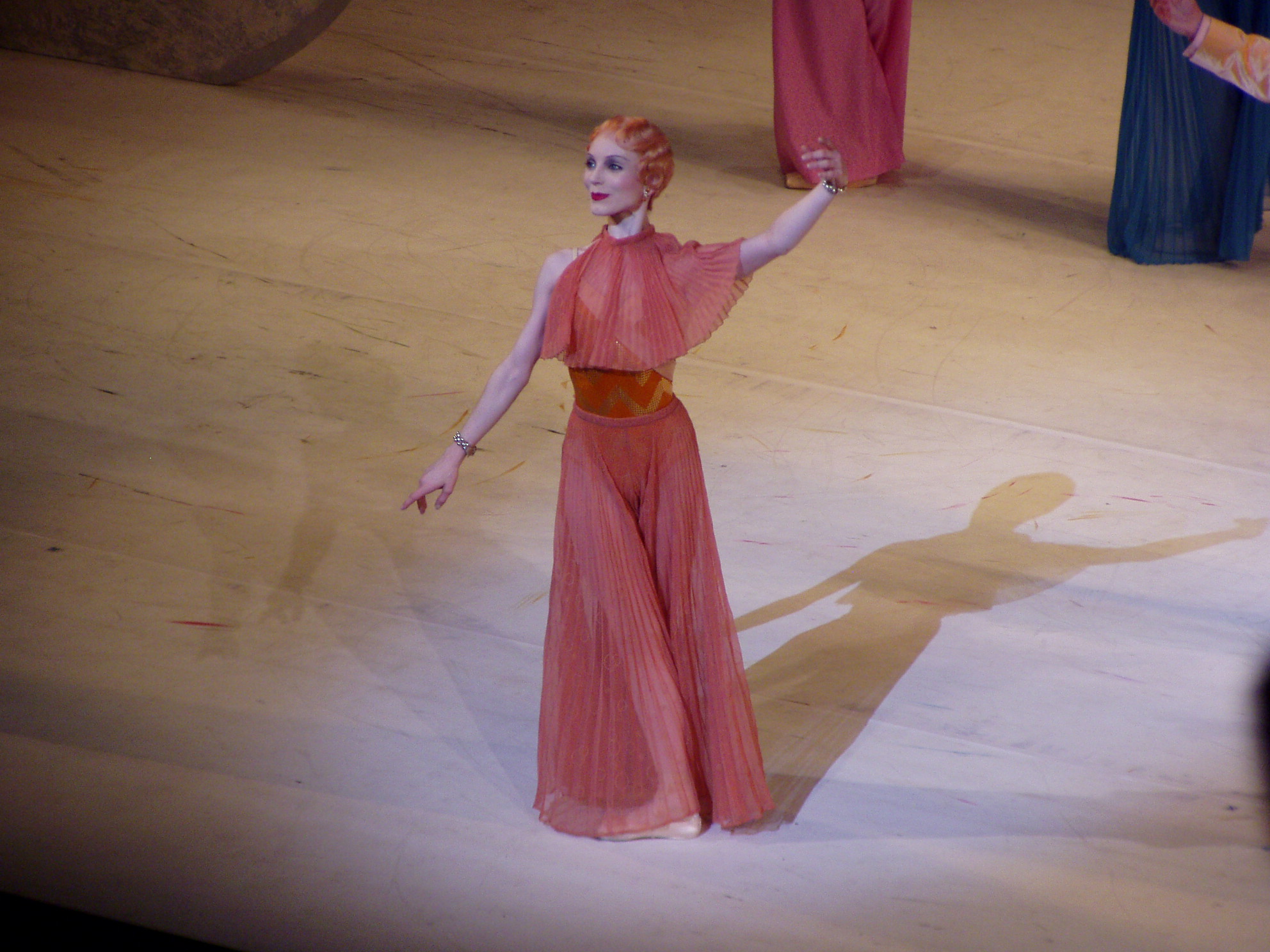
Sarah Lamb, a principal dancer with the Royal Ballet in London.

A principal dancer (often shortened to principal) is a dancer at the highest rank within a professional dance company, particularly a ballet company. A principal may be of any gender and is usually the star of the ballet. The term is used mostly in ballet but can be used in other forms as well, such as modern dance. The term senior principal dancer is sometimes used as well.[1]

The position is similar to that of soloist; however, principals regularly perform not only solos, but also pas de deux as well as headlining performances they participate in. Principal dancers can be hired into a dance company or can also be a company dancer that is a corps de ballet dancer that gets promoted from within the company. That process can take multiple performance seasons or even years to achieve based on skill level and company interest.[citation needed]

Synonyms and origin

[edit]

The Italian derived term prima ballerina (female dancers) (primo ballerino for male dancers) or the French derived term[2] premier danseur (male dancers) have been used to denote similar levels of prominence to the Principal Dancer. In the Paris Opera Ballet, principal dancers receive the title of danseur étoile.[citation needed]

France

[edit]

The title of premier danseur is awarded to the dancer who reaches the second-highest rung in the Paris Opéra ballet hierarchy, after having been a sujet.

As early as 1803–1804, the title was used by Jean-Georges Noverre as a synonym for "premier sujet", the highest echelon of the ballet company, before being replaced by "étoile" at the end of the 19th century.

Current principal dancers

[edit]

(as of 2023–2024 seasons)

(as of 2023–2024 seasons)

(as of 2018–2019 seasons)

Source:[3]

(as of 2023–2024 seasons)

  • Nathalia Arja
  • Dawn Atkins
  • Hannah Fischer
  • Samantha Hope Galler
  • Ashley Knox
  • Jennifer Lauren
  • Steven Loch
  • Yuliia Moskalenko
  • Stanislav Olshanskyi
  • Alexander Peters
  • Chase Swatosh

Source:[4]

(as of 2023–2024 seasons)

  • Alyona Kovalyova
  • Ekaterina Krysanova
  • Anna Nikulina
  • Evgenia Obraztsova
  • Eleonora Sevenard
  • Anastasia Stashkevich
  • Yulia Stepanova
  • Svetlana Zakharova
  • Artemy Belyakov
  • Vladislav Lantratov
  • Artem Ovcharenko
  • Igor Tsvirko
  • Semyon Chudin
  • Mikhail Lobukhin
  • Denis Rodkin
  • Egor Gerashchenko
  • Vyacheslav Lopatin
  • Denis Savin

Principal dancers in two or more companies

[edit]
  • Olga Smirnova
  • Tamara Rojo
  • Diana Vishneva
  • Roberto Bolle
  • David Hallberg
  • Isaac Hernandez
  • Jurgita Dronina
  • Vladimir Malakhov
  • Polina Semionova
  • Evan McKie
  • Alessandra Ferri
  • Maria Kochetkova
  • Svetlana Lunkina
  • Carlos Acosta
  • Sylvie Guillem
  • Daniil Simkin
  • Nina Ananiashvili
  • Yolanda Correa
  • Julian Mackay
  • Lucia Lacarra
  • Matthew Golding
  • Marijn Rademaker
  • Igor Zelensky
  • Julio Bocca

References

[edit]
Revisions and contributorsEdit on WikipediaRead on Wikipedia
from Grokipedia
A principal dancer is the highest rank within a , typically achieved after years of progression through lower levels such as apprentice, , and soloist, where they perform the leading roles in classical and contemporary ballets, embodying characters with technical precision, emotional depth, and artistic maturity. This position represents the pinnacle of a dancer's , demanding not only exceptional physical prowess but also qualities that inspire fellow artists and connect deeply with audiences. Principal dancers bear the narrative responsibility in productions, often starring in iconic works like or , and may create roles in new choreographies by renowned artists. Promotions to principal are at the discretion of the , based on demonstrated versatility, excellence, and sustained performance over time, with no fixed timeline but typically requiring around eight years of professional experience within the company. While the principal rank is standard across major companies, variations exist; for instance, designates it as the top tier above First Soloist, whereas some ensembles like the feature an even higher "Étoile" status for elite performers. Both male and female dancers hold this title equally, though female principals are sometimes colloquially referred to as ballerinas in leading roles. The role extends beyond performance to mentoring younger dancers and contributing to the company's artistic direction, underscoring its influence on the broader ecosystem.

Definition and Role

Responsibilities in Performances

Principal dancers are entrusted with the lead roles in full-length ballets, where they portray central characters and drive the narrative through their performances. These roles typically include complex solos, , and variations that demand unwavering precision and stamina, such as Odette/ in or Clara in . In these starring positions, principals must execute technically demanding elements like rapid turns (pirouettes), soaring jumps (grand jetés), and intricate partnering sequences, all while maintaining seamless transitions across acts that can last over two hours. Unlike soloists, who primarily support the ensemble and secondary characters, principal dancers anchor the production as the focal points of the story. Beyond technical prowess, principal dancers embody the artistic vision of the production by infusing their interpretations with expressive artistry to convey deep character emotions and thematic depth. This requires a synthesis of physical control and dramatic nuance, allowing them to transform archetypal figures—such as the tragic swan queen or the innocent heroine—into compelling, relatable personas that resonate with audiences. Their performances often highlight personal interpretive strengths, enabling choreographers to tailor movements that accentuate an individual dancer's unique style, whether through fluid or bold dynamism. To prepare for these demands, principal dancers engage in extensive rehearsals with choreographers and artistic directors, refining every gesture and partnering lift to align with the production's intent. These sessions, which can span weeks or months, involve iterative adjustments to ensure the dancer's embodiment of the role enhances the overall . Additionally, they frequently participate in high-profile galas and guest appearances at international festivals, where they showcase excerpts from signature roles to represent their company and elevate ballet's global profile. These responsibilities apply in a gender-neutral manner across the , with both female principals (often termed ballerinas) and male principals sharing the core duties of leading . However, male principals typically emphasize athleticism through powerful lifts and supports in partnering, complementing the female dancer's lines while demanding exceptional strength and spatial awareness.

Promotion Process

Dancers typically begin their professional careers in apprentice or positions within a , where they perform ensemble roles and support principal artists. Progression to soloist and eventually principal ranks requires years of consistent performance, with the average time from joining a company to principal promotion being 7.8 years across major American ballet companies. During this period, dancers demonstrate potential through increasingly prominent roles, often spending 5-10 years honing skills before advancing beyond the corps. Promotion to principal is determined by the company's , who evaluates candidates based on technical mastery, artistic versatility, and qualities during auditions, rehearsals, and live performances. Key criteria include exceptional technique—such as precision in classical steps and stamina for demanding schedules—alongside the ability to interpret diverse repertoires, from traditional ballets like to contemporary works, and to lead ensembles effectively. Critical acclaim from performances also plays a role, as directors seek dancers who can "own the stage" and inspire audiences, with annual evaluations common at companies like (ABT). For instance, ABT's was promoted in 2014 after showcasing brilliance in multiple roles. There is no fixed timeline for promotion, which can occur in a dancer's early 20s for prodigies or extend into the mid-30s for those who mature later, with the average age at promotion being 26.7 years. Decisions balance readiness and company needs, avoiding promotions too early that might hinder development or too late that could diminish a dancer's spark. Once achieved, principal status is generally permanent, though rare demotions can occur for sustained performance issues. The path presents significant challenges, including intense competition—principals comprise only about 15% of dancers in top companies—and the physical risks of injuries that can derail careers. remains essential, requiring daily classes to maintain technique amid weekly performances, while emotional resilience is needed to navigate subjective evaluations.

History and Origins

Etymology and Synonyms

The term "principal dancer" in derives from the French phrase premier danseur, meaning "first dancer," which entered English usage in the 1820s to denote the leading male performer in a . This terminology evolved from the Italian prima ballerina, or "first female dancer," prominent in 19th-century ballets, where itself stems from the Italian ballare, "to dance," as the feminine form of ballerino, referring to a professional dancer. The traces ballerina to a late-18th-century borrowing from Italian, initially signifying a female before specializing to elite performers. Synonyms for principal dancer vary by tradition and language, reflecting ballet's multicultural roots. In France, particularly at the Paris Opera Ballet, étoile—French for "star"—serves as an equivalent title for top-ranked dancers, a designation in use since the late 1800s to honor exceptional soloists. British and Australian companies, such as and , often employ "principal artist" to describe the highest rank, emphasizing artistic leadership alongside technical prowess. In institutions like the Mariinsky and Theatres, "first soloist" functions as a near-equivalent, denoting a senior soloist role just below full principal status. Guest performers across traditions may be termed "star dancers" to highlight their elite, often international, status. Gender distinctions in these terms underscore ballet's historical emphasis on specialized roles. Ballerina specifically applies to female dancers, rooted in the Italian ballare and reserved for principals or above, distinguishing them from general female performers. For males, premier danseur noble denotes a principal excelling in heroic or princely characters, a classification originating in 19th-century French ballet to categorize dancers by physique and dramatic type, such as tall, commanding figures for roles like Siegfried in Swan Lake. The honorific prima ballerina assoluta, or "absolute first ballerina," represents a rare pinnacle for female dancers, first widely applied in the late 19th century to icons like Pierina Legnani and later bestowed on figures such as Margot Fonteyn by the Royal Ballet in 1979, signifying unparalleled artistry beyond standard principal rank. In the , English-speaking ballet companies increasingly shortened the term to simply "principal," a shift that paralleled ballet's , as professional ranks became more standardized and accessible beyond European courts and opera houses, promoting merit-based advancement in institutions like . This evolution reflects broader adaptations in terminology, such as in the French tradition where étoile remains a performance-based rather than a fixed step.

Evolution in Ballet Companies

The principal dancer rank originated in the 17th-century French court , where transitioned from aristocratic entertainment to professional performance under the patronage of . The Académie Royale de Danse, established in 1661 under the direction of dance master Pierre Beauchamp, formalized training and technique, including the five basic positions, elevating skilled performers above the ensemble. The Académie Royale de Musique, founded in 1669 and later evolving into the Paris Opéra, integrated professional performances within its opera productions. By the early 18th century, this system highlighted individual talent, with Marie Camargo debuting at the Paris Opéra in 1726 and becoming its first principal dancer in 1730, renowned for technical innovations such as shortened skirts for greater mobility and perfected jumps like the entrechat-quatre. The rank solidified during the 19th-century Romantic era, as ballet emphasized emotional expression and female virtuosity, shifting focus from male-dominated court spectacles to ethereal ballerinas as central figures. Productions like La Sylphide (1832), choreographed for Marie Taglioni, showcased principals in roles demanding pointe work and dramatic solos, elevating their status as icons of artistry and technical prowess within companies like the Paris Opéra. This period marked a broader institutional growth, with principals embodying the Romantic ideal of the transcendent artist, influencing company structures across Europe. In , the principal rank was integrated into the Imperial Ballet through Marius Petipa's reforms in the , as he rose to Premier Maître de Ballet at the St. Petersburg Imperial Theatres and introduced hierarchical systems tailored to grand narrative . Petipa's works, such as (1877), assigned elaborate principal roles to dancers like Ekaterina Vazem, emphasizing their leadership in multi-act spectacles while maintaining strict company ranks from to . Following the 1917 , Soviet-era companies like and Mariinsky retained this structure, adapting it to state-sponsored professionalism and using principals to symbolize national prestige. The 20th century saw the rank spread globally, influenced by the Ballets Russes tours from the 1910s to 1920s, which exposed American audiences to Russian hierarchies and inspired U.S. companies to adopt principal positions for lead artists. In the United States, this evolution accelerated with the founding of ensembles like the New York City Ballet under George Balanchine in 1948, where principals gained creative input in neoclassical works, collaborating on choreography that balanced individual brilliance with ensemble dynamics. Post-World War II democratization in Western companies reduced the absolutism of star systems by promoting collaborative environments, yet the principal rank persisted as a pinnacle of achievement amid the shift from royal patronage to salaried professional institutions.

International Variations

French Tradition

In the French ballet tradition, particularly at the , the principal dancer rank is embodied by the title of danseur étoile or danseuse étoile, meaning "star dancer," which serves as the highest and most prestigious position within the company. This rank was formally established in 1940 by ballet master , although the term had been informally used since the to denote elite soloists. Appointments to étoile are made for life by the , typically following an exceptional performance as a premier danseur or danseuse, and there is no fixed limit on the number of active étoiles, with the company maintaining around 17 as of 2025 (10 women and 7 men). Unlike other ranks, this promotion bypasses the competitive concours system and recognizes sustained artistic excellence. The Ballet's hierarchy consists of five progressive levels, from lowest to highest: , coryphée, sujet, premier danseur/danseuse, and étoile. Promotions to all ranks except étoile occur through the annual concours de promotion, a rigorous competitive examination introduced in 1860 to ensure merit-based advancement and maintain high standards across the ensemble of approximately 154 dancers. This tradition, held at the , requires participants to perform classical variations before a of company members, teachers, and external experts, fostering a culture of discipline and technical precision unique to institutions. Étoiles hold a profound cultural role as symbols of French elegance and balletic heritage, often embodying the refined lyricism associated with Romantic and classical repertory, such as leading roles in or . They frequently debut in galas, including the annual opening Défilé du Ballet, where the entire company parades before performing excerpts that highlight star performers. Many étoiles receive state honors, such as the Légion d'honneur, underscoring their status as national treasures; for instance, legendary danseuse Yvette Chauviré was awarded this distinction in 1964 for her contributions to French arts. In contemporary practice, étoiles demonstrate versatility by excelling in neoclassical and modern works alongside traditional ballets, reflecting the Paris Opera's evolving repertoire under directors such as Aurélie Dupont (2016–2022) and José Martinez (since 2022). A notable example is Dorothée Gilbert, promoted to étoile in 2007 after performing Clara in Rudolf Nureyev's , who has since interpreted roles in George Balanchine's Jewels and John Neumeier's Sylvia, showcasing the rank's demand for adaptability while preserving classical poise.

British and American Systems

In the British ballet tradition, exemplified by , the dancer hierarchy consists of five primary ranks progressing from Artist (equivalent to ) to First Artist, Soloist, First Soloist, and Principal, with an additional category for Principal Character Artists specializing in dramatic roles. Principals, numbering approximately 20 to 25 as of 2025, represent the elite tier and are responsible for leading roles in the company's core repertoire, which emphasizes classical works by choreographers such as and Kenneth MacMillan. Promotions to Principal are determined by the , often announced annually based on a dancer's performances over the season, technical mastery, and artistic maturity. American ballet companies, such as (ABT) and (NYCB), typically employ a more streamlined three-rank structure: , soloist, and principal, reflecting a less rigid progression compared to European models. At ABT, principals number over 50 as of 2025, including a distinctive guest artist system that invites renowned international dancers for specific seasons or productions, allowing flexibility in casting star roles without permanent roster expansion. The company prioritizes full-length story ballets like and , where principals lead narrative-driven performances during its spring Metropolitan Opera House season and national tours. Promotions occur annually under the artistic director's discretion, evaluating dancers on their ability to excel in diverse repertory. NYCB maintains a similar rank structure to ABT but adapts it to its Balanchine-centric repertory, featuring abstract, neoclassical works that demand precision and musicality from its approximately 42 principals as of 2025. These dancers often transition post-career into choreography, teaching, or artistic direction, contributing to the company's legacy through roles like those in Balanchine's Apollo or Stravinsky Violin Concerto. Like ABT, NYCB's promotions are seasonal and director-led, with a fluid approach that can include temporary principal assignments for standout performances. Both British and American systems share annual promotion cycles tied to performance seasons and heavy influence from British methods, particularly through School, which has shaped generations of dancers in these companies. This structure contrasts with more competitive European traditions but traces shared roots to the Romantic era's French innovations in pointe work and dramatic expression. American companies exhibit greater fluidity, such as seasonal principal designations or guest integrations, enabling broader artistic experimentation.

Russian and Other Traditions

In the Russian ballet tradition, the Bolshoi Ballet employs a hierarchical structure that includes ranks such as , coryphée, first soloist, and principal, with principals representing the elite tier responsible for leading roles in both classical and dramatic works. Principals at the Bolshoi, numbering around 25 to 30 as of 2025, are distinguished by their prowess in physically demanding and expressive pieces, such as the titular role in Yuri Grigorovich's , which showcases athleticism and emotional depth through feats like high jumps and partnering lifts. Promotions to principal are determined through evaluations by the company's artistic leadership, often based on performances in major productions. Similarly, the maintains a comparable system with ranks progressing from and coryphée to second soloist, first soloist, and principal, where principals lead ensembles in iconic repertory. This structure emphasizes mastery of Marius Petipa's classical ballets, such as The Sleeping Beauty and , while incorporating the bold, athletic style developed during the Soviet era to highlight virtuosity and stamina. Russian principals are trained for exceptional endurance, enabling them to sustain high-intensity performances during extensive international tours that can span weeks or months. Beyond , other s adapt these models to local contexts. operates a five-rank system—, coryphée, soloist, senior artist, and principal artist—with principal artists at the apex, selected for their technical maturity and artistic leadership in a blending classical and contemporary works. In , the National Ballet of Japan uses a tiered structure culminating in First Artists, who function as principals by performing lead roles in Western-derived classics, reflecting post-war adaptations of European ballet techniques to cultivate national talent. Contemporary ensembles like eschew rigid hierarchies, organizing dancers into NDT 1 (senior) and NDT 2 (emerging) ensembles where all members share equal status, and lead assignments are made based on project-specific auditions and choreographer preferences rather than fixed ranks. These variations illustrate how Russian-influenced systems have evolved globally, often integrating state support in with merit-based progressions elsewhere to emphasize both and innovation, including recent efforts toward greater gender balance in promotions across major companies.

Notable Examples

Current Principals by Company

In major ballet companies worldwide, principal dancers represent the pinnacle of artistic achievement, often specializing in classical, neoclassical, or contemporary repertoires while embodying the unique stylistic traditions of their ensembles. As of November 2025, features several accomplished principals, including , who joined as a principal in 2013 after establishing herself at Ballet, where she was promoted to principal in 2010; she is renowned for her versatile dramatic roles in works like and . Another key figure is Matthew Ball, promoted to principal in 2018, celebrated for his partnering skills and musicality in ballets such as and . At (ABT), , promoted to principal in 2014, excels in dramatic classics like , where her technical precision and emotional depth shine in the dual role of Odette/. Following James Whiteside's retirement in 2024, Chloe Misseldine emerged as a rising star, promoted to principal in 2024 at age 22; she is noted for her buoyant athleticism and recent debuts in and . The New York City Ballet's roster highlights Balanchine specialists among its principals, such as , promoted in 2005, whose powerful stage presence and interpretive depth make her a standout in neoclassical works like and . Tyler Angle, promoted in 2009, is admired for his classical precision and partnering expertise in ballets including and Apollo. In the , Elizaveta Kokoreva, promoted to principal in 2023 at age 22—the youngest prima in the company's history—brings a lyrical elegance to roles in Pharaoh's Daughter and . Artemy Belyakov, elevated to principal in 2019, is recognized for his virtuoso jumps and dynamic energy in pieces like and . Among other notable companies, Miami City Ballet welcomed Macarena Giménez as a principal in 2025 after her tenure at Sarasota Ballet; she specializes in Balanchine-style works, showcasing speed and clarity in repertoires like Jewels and Symphony in C. Recent company rosters reflect ongoing evolutions, with no major principal changes announced for the 2025-2026 season across these ensembles.

Historical and Multi-Company Dancers

, a pioneering figure in early 20th-century , served as a principal dancer with the Imperial Russian Ballet from 1899 until 1913, when she departed to establish her own touring company that brought to global audiences for the first time on a large scale. Her innovative approach to international tours, including performances across , the , and , expanded ballet's reach beyond elite European theaters and democratized access to the art form. Rudolf Nureyev, after defecting from the Kirov Ballet in 1961, joined as a principal dancer in 1962 and remained until 1969, where he transformed the perception and technique of male ballet roles through his athleticism, expressiveness, and partnership with . His performances elevated male dancers from supporting figures to co-stars, influencing and training standards worldwide. Margot Fonteyn rose to principal status with (formerly Sadler's Wells Ballet) in 1935 and held the position until 1959, earning the rare title of in 1979 for her unparalleled artistry in roles like Odette in and Aurora in The Sleeping Beauty. Her career exemplified the pinnacle of British ballet elegance, setting benchmarks for musicality and dramatic depth that shaped subsequent generations of dancers. Key milestones in principal dancer achievements include Misty Copeland's promotion to principal at in 2015, marking her as the first African American woman to attain this rank in the company's 75-year history and challenging longstanding racial barriers in elite . Similarly, , a Cuban dancer, served as principal with from 1998 to 2015, bringing virtuosic flair and to the company while advancing opportunities for Latin American artists in Western institutions. Dancers who achieved principal status across multiple companies demonstrate exceptional versatility and adaptability. has been a principal with the since 1996 and concurrently served as a principal with from 2005 until her farewell performances in 2017, renowned for her ability to excel in both classical and contemporary repertoires across Russian and American styles. , an award-winning principal, led the as artistic director and principal dancer from 2012 to 2022 before becoming artistic director of in 2023, where she fosters innovative programming. Olga Smirnova, formerly a principal at the Bolshoi Ballet, made a high-profile transition to principal dancer with Dutch National Ballet in 2022 following her opposition to the war in , highlighting the role of principal artists in navigating geopolitical challenges. These historical and multi-company principal dancers profoundly shaped ballet's repertoire by introducing new interpretations and commissioning works that expanded dramatic and technical boundaries, while breaking barriers related to race, , and to elevate global standards of inclusivity and excellence in the art form. For instance, figures like Nureyev advanced equity by redefining , and success spurred institutional efforts to address racial exclusion, influencing training pipelines and company demographics worldwide.

References

Add your contribution
Related Hubs
User Avatar
No comments yet.