



Community hub
Recent from talks
Contribute something
Nothing was collected or created yet.
Standard RAID levels
View on Wikipedia | This article needs editing to comply with Wikipedia's Manual of Style. In particular, it has problems with MOS:FORMULA - avoid mixing <math>...</math> and {{math}} in the same expression. (July 2025) |
In computer storage, the standard RAID levels comprise a basic set of RAID ("redundant array of independent disks" or "redundant array of inexpensive disks") configurations that employ the techniques of striping, mirroring, or parity to create large reliable data stores from multiple general-purpose computer hard disk drives (HDDs). The most common types are RAID 0 (striping), RAID 1 (mirroring) and its variants, RAID 5 (distributed parity), and RAID 6 (dual parity). Multiple RAID levels can also be combined or nested, for instance RAID 10 (striping of mirrors) or RAID 01 (mirroring stripe sets). RAID levels and their associated data formats are standardized by the Storage Networking Industry Association (SNIA) in the Common RAID Disk Drive Format (DDF) standard.[1] The numerical values only serve as identifiers and do not signify performance, reliability, generation, hierarchy, or any other metric.
While most RAID levels can provide good protection against and recovery from hardware defects or defective sectors/read errors (hard errors), they do not provide any protection against data loss due to catastrophic failures (fire, water) or soft errors such as user error, software malfunction, or malware infection. For valuable data, RAID is only one building block of a larger data loss prevention and recovery scheme – it cannot replace a backup plan.
RAID 0
[edit]
RAID 0 (also known as a stripe set or striped volume) splits ("stripes") data evenly across two or more disks, without parity information, redundancy, or fault tolerance. Since RAID 0 provides no fault tolerance or redundancy, the failure of one drive will cause the entire array to fail, due to data being striped across all disks. This configuration is typically implemented having speed as the intended goal.[2][3]
A RAID 0 setup can be created with disks of differing sizes, but the storage space added to the array by each disk is limited to the size of the smallest disk. For example, if a 120 GB disk is striped together with a 320 GB disk, the size of the array will be 120 GB × 2 = 240 GB. However, some RAID implementations would allow the remaining 200 GB to be used for other purposes.[citation needed]
The diagram in this section shows how the data is distributed into stripes on two disks, with A1:A2 as the first stripe, A3:A4 as the second one, etc. Once the stripe size is defined during the creation of a RAID 0 array, it needs to be maintained at all times. Since the stripes are accessed in parallel, an n-drive RAID 0 array appears as a single large disk with a data rate n times higher than the single-disk rate.
Performance
[edit]A RAID 0 array of n drives provides data read and write transfer rates up to n times as high as the individual drive rates, but with no data redundancy. As a result, RAID 0 is primarily used in applications that require high performance and are able to tolerate lower reliability, such as in scientific computing[4] or gaming.[5]
Some benchmarks of desktop applications show RAID 0 performance to be marginally better than a single drive.[6][7] Another article examined these claims and concluded that "striping does not always increase performance (in certain situations it will actually be slower than a non-RAID setup), but in most situations it will yield a significant improvement in performance".[8][9] Synthetic benchmarks show different levels of performance improvements when multiple HDDs or SSDs are used in a RAID 0 setup, compared with single-drive performance. However, some synthetic benchmarks also show a drop in performance for the same comparison.[10][11]
RAID 1
[edit]
RAID 1 consists of an exact copy (or mirror) of a set of data on two or more disks; a classic RAID 1 mirrored pair contains two disks. This configuration offers no parity, striping, or spanning of disk space across multiple disks, since the data is mirrored on all disks belonging to the array, and the array can only be as big as the smallest member disk. This layout is useful when read performance or reliability is more important than write performance or the resulting data storage capacity.[12][13]
The array will continue to operate so long as at least one member drive is operational.[14]
Performance
[edit]Any read request can be serviced and handled by any drive in the array; thus, depending on the nature of I/O load, random read performance of a RAID 1 array may equal up to the sum of each member's performance,[a] while the write performance remains at the level of a single disk. However, if disks with different speeds are used in a RAID 1 array, overall write performance is equal to the speed of the slowest disk.[13][14]
Synthetic benchmarks show varying levels of performance improvements when multiple HDDs or SSDs are used in a RAID 1 setup, compared with single-drive performance. However, some synthetic benchmarks also show a drop in performance for the same comparison.[10][11]
RAID 2
[edit]
RAID 2 splits data at the bit level across multiple disks, unlike most RAID levels, which divide data into blocks. It uses a type of error correction known as Hamming code, which introduces redundancy to detect and correct errors in stored data. The hard drives are synchronized by the controller so they spin in unison, reaching the same position at the same time.[15] Due to this synchronization, the system typically processes only one read or write request at a time, limiting its ability to handle multiple operations concurrently.[16][17]
In early computing, RAID 2 offered high data transfer rates by using a high-rate Hamming code and many disks operating in parallel. This design was used in specialized systems such as the Thinking Machines' DataVault, which transferred 32 bits of data simultaneously with 7 bits of parity: a (39,32) code. IBM's Stretch system employed a similar approach, transferring 64 data bits along with 8 bits of error correction: a (72,64) code. Both codes are not basic Hamming codes, but the improved SECDED code, meaning that they can both detect and correct single-bit errors, but only detect two-bit errors.[18][19]
As modern hard drives incorporate built-in error correction, the added complexity of RAID 2's external Hamming code provides little benefit over simpler redundancy methods such as parity. Consequently, RAID 2 was rarely implemented and is the only original RAID level that is no longer used in practice.[16][17]
RAID 3
[edit]
RAID 3, which is also rarely used in practice, consists of byte-level striping with a dedicated parity disk. One of the characteristics of RAID 3 is that it generally cannot service multiple requests simultaneously, which happens because any single block of data will, by definition, be spread across all members of the set and will reside in the same physical location on each disk. Therefore, any I/O operation requires activity on every disk and usually requires synchronized spindles.
This makes it suitable for applications that demand the highest transfer rates in long sequential reads and writes, for example uncompressed video editing. Applications that make small reads and writes from random disk locations will get the worst performance out of this level.[17]
The requirement that all disks spin synchronously (in a lockstep) added design considerations that provided no significant advantages over other RAID levels. Both RAID 3 and RAID 4 were quickly replaced by RAID 5.[20] RAID 3 was usually implemented in hardware, and the performance issues were addressed by using large disk caches.[17]
RAID 4
[edit]
RAID 4 consists of block-level striping with a dedicated parity disk. As a result of its layout, RAID 4 provides good performance of random reads, while the performance of random writes is low due to the need to write all parity data to a single disk,[21] unless the filesystem is RAID-4-aware and compensates for that.
An advantage of RAID 4 is that it can be quickly extended online, without parity recomputation, as long as the newly added disks are completely filled with 0-bytes.
In diagram 1, a read request for block A1 would be serviced by disk 0. A simultaneous read request for block B1 would have to wait, but a read request for B2 could be serviced concurrently by disk 1.
RAID 5
[edit]
RAID 5 consists of block-level striping with distributed parity. Unlike in RAID 4, parity information is distributed among the drives. It requires that all drives but one be present to operate. Upon failure of a single drive, subsequent reads can be calculated from the distributed parity such that no data is lost.[4] RAID 5 requires at least three disks.[22]
There are many layouts of data and parity in a RAID 5 disk drive array depending upon the sequence of writing across the disks,[23] that is:
- the sequence of data blocks written, left to right or right to left on the disk array, of disks 0 to N.
- the location of the parity block at the beginning or end of the stripe.
- the location of the first block of a stripe with respect to parity of the previous stripe.
The figure shows 1) data blocks written left to right, 2) the parity block at the end of the stripe and 3) the first block of the next stripe not on the same disk as the parity block of the previous stripe. It can be designated as a Left Asynchronous RAID 5 layout[23] and this is the only layout identified in the last edition of The Raid Book[24] published by the defunct Raid Advisory Board.[25] In a Synchronous layout the data first block of the next stripe is written on the same drive as the parity block of the previous stripe.
In comparison to RAID 4, RAID 5's distributed parity evens out the stress of a dedicated parity disk among all RAID members. Additionally, write performance is increased since all RAID members participate in the serving of write requests. Although it will not be as efficient as a striping (RAID 0) setup, because parity must still be written, this is no longer a bottleneck.[26]
Since parity calculation is performed on the full stripe, small changes to the array experience write amplification[citation needed]: in the worst case when a single, logical sector is to be written, the original sector and the according parity sector need to be read, the original data is removed from the parity, the new data calculated into the parity and both the new data sector and the new parity sector are written.
RAID 6
[edit]
RAID 6 extends RAID 5 by adding a second parity block; thus, it uses block-level striping with two parity blocks distributed across all member disks.[27] RAID 6 requires at least four disks.
As in RAID 5, there are many layouts of RAID 6 disk arrays depending upon the direction the data blocks are written, the location of the parity blocks with respect to the data blocks and whether or not the first data block of a subsequent stripe is written to the same drive as the last parity block of the prior stripe. The figure to the right is just one of many such layouts.
According to the Storage Networking Industry Association (SNIA), the definition of RAID 6 is: "Any form of RAID that can continue to execute read and write requests to all of a RAID array's virtual disks in the presence of any two concurrent disk failures. Several methods, including dual check data computations (parity and Reed–Solomon), orthogonal dual parity check data and diagonal parity, have been used to implement RAID Level 6."[28]
The second block is usually labeled Q, with the first block labeled P. Typically the P block is calculated as the parity (XORing) of the data, the same as RAID 5. Different implementations of RAID 6 use different erasure codes to calculate the Q block. The classical choice is Reed-Solomon, but it requires CPU-intensive Galois field calculations, though this can be mitigated with a hardware implementation (ASIC or FPGA). There is a special choice of polynomial from Anvin used by Linux, which allows for efficient implementation using only addition and multiplication by two in GF(28) and opens the possibility of using SSSE3, AVX2, or other SIMD methods to implement efficiently.[29]
Newer erasure codes specialized to the k = 2 case go further than Anvin's optimization. These include EVENODD (1996), Row Diagonal Parity (RDP, 2004), Liberation codes (2008),[30][31][32][33] and Mojette (2015).[34]
Performance
[edit]RAID 6 uses a second parity code in addition to the simple XOR. As a result it requires more processing power to both read and write. Performance varies greatly depending on how RAID 6 is implemented in the manufacturer's storage architecture—in software, firmware, or by using firmware and specialized hardware accelerators (ASICs or FPGAs) for intensive parity calculations.[35]
RAID 6 generally do not show an obvious penalty for read operations: for undamaged data, only the simpler parity needs to be calculated and checked like in RAID 5. Only when there is a disagreement will the more complex parity be needed. Additional robustness can be obtained via background scrubbing instead of foreground reads. As a result, RAID 6 usually reads up to the same speed as RAID 5 with the same number of physical drives.[35]
The delayed-check strategy does not work when writing data. As a result, the full performance penalty of RAID 6 is seen during writes.
Comparison
[edit]The following table provides an overview of some considerations for standard RAID levels. In each case, array space efficiency is given as an expression in terms of the number of drives, n; this expression designates a fractional value between zero and one, representing the fraction of the sum of the drives' capacities that is available for use. For example, if three drives are arranged in RAID 3, this gives an array space efficiency of 1 − 1/n = 1 − 1/3 = 2/3 ≈ 67%; thus, if each drive in this example has a capacity of 250 GB, then the array has a total capacity of 750 GB but the capacity that is usable for data storage is only 500 GB. Different RAID configurations can also detect failure during so called data scrubbing.
Historically disks were subject to lower reliability and RAID levels were also used to detect which disk in the array had failed in addition to that a disk had failed. Though as noted by Patterson et al. even at the inception of RAID many (though not all) disks were already capable of finding internal errors using error correcting codes. In particular it is/was sufficient to have a mirrored set of disks to detect a failure, but two disks were not sufficient to detect which had failed in a disk array without error correcting features.[36] Modern RAID arrays depend for the most part on a disk's ability to identify itself as faulty which can be detected as part of a scrub. The redundant information is used to reconstruct the missing data, rather than to identify the faulted drive. Drives are considered to have faulted if they experience an unrecoverable read error, which occurs after a drive has retried many times to read data and failed. Enterprise drives may also report failure in far fewer tries than consumer drives as part of TLER to ensure a read request is fulfilled in a timely manner.[37]
| Level | Description | Minimum number of drives[b] | Space efficiency | Fault tolerance | Fault isolation | Array failure rate[c] |
|---|---|---|---|---|---|---|
| RAID 0 | Block-level striping without parity or mirroring | 2 | 1 | None | Drive Firmware Only | 1 − (1 − r)n |
| RAID 1 | Mirroring without parity or striping | 2 | 1/n | n − 1 drive failures | Drive Firmware or voting if n > 2 | rn |
| RAID 2 | Bit-level striping with Hamming code for error correction | 3 | 1 − 1/n log2 (n + 1) | One drive failure | Drive Firmware and Parity | 1 − (1 − r)n |
| RAID 3 | Byte-level striping with dedicated parity | 3 | 1 − 1/n | One drive failure | Drive Firmware and Parity | 1 − (1 − r)n |
| RAID 4 | Block-level striping with dedicated parity | 3 | 1 − 1/n | One drive failure | Drive Firmware and Parity | 1 − (1 − r)n |
| RAID 5 | Block-level striping with distributed parity | 3 | 1 − 1/n | One drive failure | Drive Firmware and Parity | 1 − (1 − r)n |
| RAID 6 | Block-level striping with double distributed parity | 4 | 1 − 2/n | Two drive failures | Drive Firmware and Parity | 1 − (1 − r)n |

Notes:
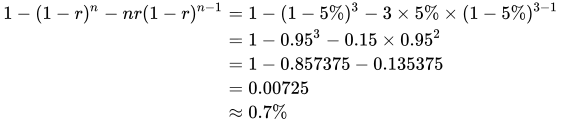
- Array failure rate is given as an expression in terms of the number of drives, n, and the drive failure rate, r (which is assumed identical and independent for each drive). For example, if each of three drives has a failure rate of 5% over the next three years, and these drives are arranged in RAID 3, then this gives an array failure rate over the next three years of:
- Speed is not included due to the combination of many factors beyond what can fit into a table. The theoretical maximum for read performance, given a space efficiency of E over n drives, is nE times the read-speed of a single disk. This is simply dictated by how much information is needed to be read out. The same applies to writing, where the hard cap is nE times the write-speed of a single disk. When disks with different speeds are used, the maximum sustained speed is reduced to nE times the speed of the slowest disk as any cache that may compensate for the speed difference eventually fills up.[14]
Full parity calculations at write-time are difficult especially for RAID 6 (as discussed above). As a result, the maximum write speed requires powerful hardware to perform the parity calculations at a rate matching what the disk drives are capable of.
The block-based parity methods (RAID 4, 5, 6) achieve full write speed for stripe-sized data assuming sufficiently capable hardware. However, when modifying less than a stripe of data, they requires the use of read-modify-write (RMW) or reconstruct-write (RCW) to reduce a small-write penalty. RMW writes data after reading the current stripe (so that it can have a difference to update the parity with); the spinaround time gives a fractional factor of 2, and the number of disks to write gives another factor of 2 in RAID 4/5 and 3 in RAID 6, for a theoretical efficiency factor of 1/4 or 1/6. RCW writes immediately, than reconstructs the parity by reading all associated stripes from other disks. RCW is usually faster than RMW when the number of disks is small, but has the downside of waking up all disks (additional start-stop cycles may shorten lifespan). RCW is also the only possible write method for a degraded stripe.[40] (This does not mean that RAID 4 or 5 is less performant than RAID 3. In practice, RAID 3 was even worse at small reads and writes due to the seek time involved.)
System implications
[edit]In measurement of the I/O performance of five filesystems with five storage configurations—single SSD, RAID 0, RAID 1, RAID 10, and RAID 5 it was shown that F2FS on RAID 0 and RAID 5 with eight SSDs outperforms EXT4 by 5 times and 50 times, respectively. The measurements also suggest that the RAID controller can be a significant bottleneck in building a RAID system with high speed SSDs.[41]
Nested RAID
[edit]Combinations of two or more standard RAID levels. They are also known as RAID 0+1 or RAID 01, RAID 0+3 or RAID 03, RAID 1+0 or RAID 10, RAID 5+0 or RAID 50, RAID 6+0 or RAID 60, and RAID 10+0 or RAID 100.
Non-standard variants
[edit]In addition to standard and nested RAID levels, alternatives include non-standard RAID levels, and non-RAID drive architectures. Non-RAID drive architectures are referred to by similar terms and acronyms, notably JBOD ("just a bunch of disks"), SPAN/BIG, and MAID ("massive array of idle disks").
Notes
[edit]References
[edit]- ^ "Common raid Disk Data Format (DDF)". SNIA. Storage Networking Industry Association. Retrieved September 1, 2025.
- ^ "RAID 0 Data Recovery". ADA. United States: Ace Data Recovery. Retrieved September 1, 2025.
- ^ "Understanding RAID". Data Protection Topics. Washington, United States: CRU. Archived from the original on January 30, 2015. Retrieved April 30, 2015.
- ^ a b Chen, Peter; Lee, Edward; Gibson, Garth; Katz, Randy; Patterson, David (1994). "RAID: High-Performance, Reliable Secondary Storage". ACM Computing Surveys. 26 (2): 145–185. CiteSeerX 10.1.1.41.3889. doi:10.1145/176979.176981. S2CID 207178693.
- ^ de Kooter, Sebastiaan (2015-04-13). "Gaming storage shootout 2015: SSD, HDD or RAID 0, which is best?". GamePlayInside.com. Retrieved 2015-09-22.
- ^ "Western Digital's Raptors in RAID-0: Are two drives better than one?". AnandTech.com. AnandTech. July 1, 2004. Archived from the original on July 7, 2004. Retrieved 2007-11-24.
- ^ "Hitachi Deskstar 7K1000: Two Terabyte RAID Redux". AnandTech.com. AnandTech. April 23, 2007. Archived from the original on May 1, 2007. Retrieved 2007-11-24.
- ^ "RAID 0: Hype or blessing?". Tweakers.net. Persgroep Online Services. August 7, 2004. Retrieved 2008-07-23.
- ^ "Does RAID0 Really Increase Disk Performance?". HardwareSecrets.com. November 1, 2006.
- ^ a b Larabel, Michael (2014-10-22). "Btrfs RAID HDD Testing on Ubuntu Linux 14.10". Phoronix. Retrieved 2015-09-19.
- ^ a b Larabel, Michael (2014-10-29). "Btrfs on 4 × Intel SSDs In RAID 0/1/5/6/10". Phoronix. Retrieved 2015-09-19.
- ^ "FreeBSD Handbook: 19.3. RAID 1 – Mirroring". FreeBSD.org. 2014-03-23. Retrieved 2014-06-11.
- ^ a b "Which RAID Level is Right for Me?: RAID 1 (Mirroring)". Adaptec.com. Adaptec. Retrieved 2014-01-02.
- ^ a b c "Selecting the Best RAID Level: RAID 1 Arrays (Sun StorageTek SAS RAID HBA Installation Guide)". Docs.Oracle.com. Oracle Corporation. 2010-12-23. Retrieved 2014-01-02.
- ^ "RAID 2". Techopedia. 27 February 2012. Retrieved 11 December 2019.
- ^ a b Vadala, Derek (2003). Managing RAID on Linux. O'Reilly Series (illustrated ed.). O'Reilly. p. 6. ISBN 9781565927308.
- ^ a b c d Marcus, Evan; Stern, Hal (2003). Blueprints for High Availability (2nd, illustrated ed.). John Wiley and Sons. p. 167. ISBN 9780471430261.
- ^ The RAIDbook, 4th Edition, The RAID Advisory Board, June 1995, p.101
- ^ "IBM Stretch (aka IBM 7030 Data Processing System)". www.brouhaha.com. Retrieved 2023-09-13.
- ^ Meyers, Michael; Jernigan, Scott (2003). Mike Meyers' A+ Guide to Managing and Troubleshooting PCs (illustrated ed.). McGraw-Hill Professional. p. 321. ISBN 9780072231465.
- ^ Natarajan, Ramesh (2011-11-21). "RAID 2, RAID 3, RAID 4 and RAID 6 Explained with Diagrams". TheGeekStuff.com. Retrieved 2015-01-02.
- ^ "RAID 5 Data Recovery FAQ". VantageTech.com. Vantage Technologies. Retrieved 2014-07-16.
- ^ a b "RAID Information - Linux RAID-5 Algorithms". Ashford computer Consulting Service. Retrieved February 16, 2021.
- ^ Massigilia, Paul (February 1997). The RAID Book, 6th Edition. RAID Advisory Board. pp. 101–129.
- ^ "Welcome to the RAID Advisory Board". RAID Advisory Board. April 6, 2001. Archived from the original on 2001-04-06. Retrieved February 16, 2021. Last valid archived webpage at Wayback Machine
- ^ Koren, Israel. "Basic RAID Organizations". ECS.UMass.edu. University of Massachusetts. Retrieved 2014-11-04.
- ^ "Sun StorageTek SAS RAID HBA Installation Guide, Appendix F: Selecting the Best RAID Level: RAID 6 Arrays". Docs.Oracle.com. 2010-12-23. Retrieved 2015-08-27.
- ^ "Dictionary R". SNIA.org. Storage Networking Industry Association. Retrieved 2007-11-24.
- ^ "bcachefs-tools: raid.c". GitHub. 27 May 2023.
- ^ James S. Plank. "The RAID-6 Liberation Codes".
- ^ "Optimal Encoding and Decoding Algorithms for the RAID-6 Liberation Codes".
- ^ James S. Plank. "Erasure Codes for Storage Systems: A Brief Primer".
- ^ "A Performance Evaluation and Examination of Open-Source Erasure Coding Libraries For Storage" (PDF).
- ^ Dimitri Pertin, Alexandre van Kempen, Benoît Parrein, Nicolas Normand. "Comparison of RAID-6 Erasure Codes". The third Sino-French Workshop on Information and Communication Technologies, SIFWICT 2015, Jun 2015, Nantes, France. ffhal-01162047f
- ^ a b Faith, Rickard E. (13 May 2009). "A Comparison of Software RAID Types". Archived from the original on 30 May 2015.
- ^ Patterson, David A.; Gibson, Garth; Katz, Randy H. (1988). "A case for redundant arrays of inexpensive disks (RAID)" (PDF). Proceedings of the 1988 ACM SIGMOD international conference on Management of data - SIGMOD '88. p. 112. doi:10.1145/50202.50214. ISBN 0897912683. S2CID 52859427. Retrieved 25 June 2022.
A single parity disk can detect a single error, but to correct an error we need enough check disks to identify the disk with the error. [...] Most check disks in the level 2 RAID are used to determine which disk failed, for only one redundant parity disk is needed to detect an error. These extra disks are truly "redundant" since most disk controllers can already detect If a dusk failed either through special signals provided in the disk interface or the extra checking information at the end of a sector
- ^ "Enterprise vs Desktop Harddrives" (PDF). Intel.com. Intel. p. 10.
- ^ Radu, Mihaela (2013). "Using Markov models to estimate the reliability of RAID architectures". 2013 IEEE Long Island Systems, Applications and Technology Conference (LISAT). pp. 1–5. doi:10.1109/LISAT.2013.6578246. ISBN 978-1-4673-6245-0.
- ^ M. Greenan, Kevin; S. Plank, James; J. Wylie, Jay (2010). "Mean time to meaningless: MTTDL, Markov models, and storage system reliability" (PDF). USENIX: Hotstorage.
- ^ Thomasian, Alexander (February 2005). "Reconstruct versus read-modify writes in RAID". Information Processing Letters. 93 (4): 163–168. doi:10.1016/j.ipl.2004.10.009.
- ^ Park, Chanhyun; Lee, Seongjin; Won, Youjip (2014). "An Analysis on Empirical Performance of SSD-Based RAID". Information Sciences and Systems 2014. Vol. 2014. pp. 395–405. doi:10.1007/978-3-319-09465-6_41. ISBN 978-3-319-09464-9.
{{cite book}}:|journal=ignored (help)
Further reading
[edit]- "Learning About RAID". Support.Dell.com. Dell. 2009. Archived from the original on 2009-02-20. Retrieved 2016-04-15.
- Redundant Arrays of Inexpensive Disks (RAIDs), chapter 38 from the Operating Systems: Three Easy Pieces book by Remzi H. Arpaci-Dusseau and Andrea C. Arpaci-Dusseau
External links
[edit]Standard RAID levels
View on GrokipediaIntroduction
Definition and Purpose
Redundant Array of Independent Disks (RAID) is a data storage virtualization technology that combines multiple physical disk drives into one or more logical units, enabling enhanced performance, capacity, or reliability compared to single large expensive disks (SLEDs).[5][1] Originally termed "Inexpensive Disks" to emphasize cost-effective small disks as an alternative to high-end SLEDs, the acronym evolved to "Independent Disks" to avoid implications of low quality.[5] The primary purposes of RAID include fault tolerance through data redundancy, which protects against disk failures by storing copies or parity information across drives; performance optimization via parallelism, allowing simultaneous operations on multiple disks to boost input/output (I/O) throughput; and efficient capacity utilization, which maximizes usable storage space in array configurations.[1][5] RAID emerged in the 1980s as computing demands grew beyond the limitations of single-disk systems, with researchers proposing disk arrays to achieve higher bandwidth and reliability using commodity hardware.[1] Key benefits encompass increased data throughput—up to an order of magnitude over SLEDs—improved availability exceeding typical disk lifetimes, and scalability for enterprise environments through modular expansion.[1][5] This article focuses on standard RAID levels 0 through 6, which form the foundation of these capabilities.[1]Historical Development
The concept of RAID (Redundant Arrays of Inexpensive Disks) originated in 1987 at the University of California, Berkeley, where researchers David A. Patterson, Garth Gibson, and Randy H. Katz coined the term to describe fault-tolerant storage systems built from multiple small, affordable disks as an alternative to costly single large expensive disks (SLEDs).[6] Their seminal 1988 paper formalized this approach, proposing the original five standard RAID levels—0 through 5—to balance performance, capacity, and redundancy through techniques like striping and parity, while emphasizing reliability for transaction-oriented workloads.[1] Following the paper's publication, RAID gained traction through early commercial efforts in the late 1980s and 1990s, with vendors such as Adaptec and Array Technology (founded in 1987) developing the first hardware controllers to implement these levels.[7] Standardization accelerated in 1992 with the formation of the RAID Advisory Board (RAB), an industry group that defined and qualified RAID implementations, expanding recognition to additional levels by 1997.[8] The Storage Networking Industry Association (SNIA) further advanced interoperability in the early 2000s via the Common RAID Disk Data Format (DDF), first released in 2006 and revised through 2009, which standardized data layouts across RAID levels including the later addition of RAID 6 for double parity to address growing disk capacities and failure risks.[9] By the mid-1990s, RAID transitioned from research to widespread hardware adoption in servers and storage systems, enabling scalable enterprise solutions.[7] Software integration followed in the early 2000s, with Linux incorporating robust support via the md (multiple devices) driver starting in kernel 2.4 (2001) and the mdadm utility for management, while Microsoft added dynamic disks for RAID 0, 1, and 5 in Windows 2000. However, levels like RAID 2 and 3, reliant on bit- and byte-level striping with dedicated error-correcting code (ECC) disks, declined in hardware implementations by the 2000s as modern hard drives incorporated advanced built-in ECC, rendering their specialized redundancy mechanisms inefficient and unnecessary.[5]Core Concepts
Data Striping
Data striping is a core technique in redundant arrays of inexpensive disks (RAID) that involves dividing sequential data into fixed-size blocks, known as stripes or stripe units, and distributing these blocks across multiple physical disks in a round-robin fashion. This distribution allows the array to present as a single logical storage unit while enabling parallel access to data portions on different disks.[1][10] The stripe unit size, often configurable during array setup, determines the granularity of data distribution and significantly affects I/O patterns; smaller units promote better load balancing for random accesses, while larger units favor sequential throughput by minimizing seek overhead across disks. By facilitating simultaneous read or write operations on multiple disks, data striping boosts overall I/O throughput, particularly for large transfers where the aggregate bandwidth of the array—potentially scaling linearly with the number of disks—can be fully utilized without the bottlenecks of single-disk access.[10] However, data striping inherently provides no data redundancy or fault tolerance, as there is no duplication or error-correction information; consequently, the failure of even a single disk renders the entire array's data irretrievable. For instance, in a three-disk array where each disk has a capacity of 1 TB, striping achieves full utilization of 3 TB total capacity but zero tolerance to disk failures. The capacity calculation is simple: total storage equals the product of the number of disks and individual disk size, with no overhead deducted for protection mechanisms.[1][10] This method forms the basis of non-redundant RAID configurations like RAID 0, emphasizing performance over reliability.[10]Data Mirroring
Data mirroring is a redundancy technique in storage systems where exact copies of data are written simultaneously to multiple disks, ensuring that data remains accessible even if one or more disks fail. This approach, foundational to RAID level 1, duplicates all data blocks across the mirrors without any computational overhead for redundancy calculation.[1] Common configurations include 1:1 mirroring, which uses two disks to create a full duplicate of the data on one disk to the other, providing basic redundancy. Multi-way mirroring extends this to three or more disks, such as triple mirroring, where each data block is replicated across three separate disks to increase fault tolerance in larger systems.[1][11] The primary benefits of data mirroring are its high fault tolerance, which allows the system to survive the failure of all disks in a mirror set except one, and fast recovery times achieved by simply copying data from a surviving mirror without complex reconstruction. This makes it particularly effective for maintaining data availability during disk failures.[1] However, data mirroring has notable drawbacks, including low capacity efficiency—such as 50% usable storage in a two-way configuration where half the total disk space is dedicated to duplicates—and a write penalty incurred from performing simultaneous writes to all mirrors, which can reduce write throughput.[1][11] The mathematical basis for usable capacity in mirroring is given by the formula: usable capacity = (total number of disks / number of mirrors per set) × individual disk size. For example, in a two-disk setup with one mirror set (n=2 mirrors), the usable capacity equals one disk's size, yielding 50% efficiency; for triple mirroring (n=3), efficiency drops to approximately 33%.[1][11] Data mirroring is commonly used for critical applications, such as transaction processing and database systems, where high availability and rapid recovery are prioritized over storage efficiency. It is implemented purely in RAID 1 configurations for environments requiring robust redundancy without striping.[10][1]Parity Mechanisms
Parity mechanisms in RAID employ exclusive OR (XOR) computations to generate redundant check information stored alongside data blocks, enabling the reconstruction of lost data following a disk failure.[1] This approach contrasts with mirroring by calculating redundancy rather than duplicating entire datasets, thereby achieving greater storage efficiency while providing fault tolerance.[1] In single parity schemes, the parity block is derived by performing a bitwise XOR operation across all data blocks in a stripe; this allows detection and correction of a single disk failure by recomputing the missing block using the surviving data and parity.[1] For example, given three data blocks A, B, and C, the parity P is calculated as P = A ⊕ B ⊕ C, where ⊕ denotes XOR; if block A is lost, it can be reconstructed as A = P ⊕ B ⊕ C.[1] This method requires one dedicated parity block per stripe, reducing usable capacity by a factor of 1/n, where n is the total number of disks (data disks plus one parity disk), resulting in overheads of approximately 10% for n=10 or 4% for n=25.[1] Compared to mirroring, which halves capacity, single parity offers superior space efficiency for large arrays.[1] Double parity extends this tolerance to two simultaneous failures by incorporating two independent parity blocks, typically denoted P and Q, per stripe.[12] Here, P is computed via XOR of the data blocks, while Q employs a more complex encoding, such as Reed-Solomon or diagonal parity, to ensure independent recovery paths.[12] This dual mechanism increases overhead to roughly 2/n of total capacity but enhances reliability in environments with higher failure risks.[12] Despite these advantages, parity mechanisms introduce limitations, including the "write hole" issue, where partial writes during power failures or crashes can lead to inconsistent parity across disks, potentially causing unrecoverable errors upon rebuild.[13] Additionally, parity calculations demand more computational resources than simple mirroring operations, particularly for updates involving read-modify-write cycles.[1]Mirroring and Striping Levels
RAID 0
RAID 0, also known as disk striping, employs data striping across multiple disks without any redundancy mechanisms to achieve high performance.[1] In this configuration, data is divided into fixed-size blocks called stripes, which are then distributed sequentially across the disks in a round-robin manner, enabling parallel I/O operations.[14] The array requires a minimum of two disks, with the number of disks (n) scalable to increase throughput, though practical limits depend on the controller and workload.[15] The storage capacity of a RAID 0 array achieves full utilization, equaling n multiplied by the size of the smallest disk in the array, as all space is dedicated to user data without overhead for parity or mirroring.[16] This contrasts with redundant RAID levels by offering no fault tolerance; the failure of even a single disk renders the entire array inaccessible, resulting in complete data loss.[17] Read and write operations in RAID 0 occur in parallel across all disks, significantly boosting aggregate throughput—potentially up to n times that of a single disk—for workloads involving large, sequential transfers.[1] This makes it suitable for non-critical data where rapid access outweighs durability concerns, such as scratch spaces or environments with separate backups. The stripe size, typically ranging from 64 KB to 128 KB, is configurable to optimize for specific access patterns, with larger sizes favoring sequential workloads and smaller ones benefiting random I/O. In contemporary systems, RAID 0 finds application in high-performance scenarios like video editing, caching layers, and temporary storage for rendering tasks, where data can be regenerated or backed up externally to mitigate the lack of inherent protection.[18]RAID 1
RAID 1, also known as disk mirroring or shadowing, is a redundancy scheme that duplicates data across two or more independent disks to provide fault tolerance. In this configuration, every logical block of data is written identically to each disk in the array, ensuring that the entire storage volume is fully replicated. The minimum number of disks required is two, though multi-way mirroring with more disks is possible for enhanced protection.[19][20] The usable capacity of a RAID 1 array is limited to that of a single disk, resulting in 50% storage efficiency for a standard two-disk setup; for example, two 1TB drives yield 1TB of usable space. In an n-way mirror using n disks, the efficiency is 1/n, as all disks hold identical copies. This design achieves high fault tolerance, surviving the failure of up to (n-1) disks without data loss, as any surviving mirror can provide complete access to the data.[20][21] During operations, write requests are performed simultaneously to all mirrors, which can halve write bandwidth compared to a single disk due to the duplication overhead. Read operations, however, benefit from load balancing across multiple disks, potentially doubling or multiplying read performance in multi-way setups by allowing parallel access to the same data. Rebuild after a disk failure is straightforward and typically fast, involving a simple full copy from a surviving mirror to a replacement disk.[20][22] Key advantages of RAID 1 include its simplicity in implementation and management, high reliability for critical data, and superior random read performance due to the ability to distribute reads. It also offers quick recovery times during rebuilds, minimizing exposure to further failures. Drawbacks encompass the high storage cost from 100% or greater overhead, making it inefficient for large-scale storage, and limited benefits from using more than two mirrors in most scenarios, as additional copies provide diminishing returns on reliability without proportional performance gains.[20] RAID 1 is commonly employed in scenarios requiring high data availability and simplicity, such as boot drives for operating systems and small databases where read-intensive workloads benefit from mirroring without complex parity calculations.[23]Bit- and Byte-Level Parity Levels
RAID 2
RAID 2 employs bit-level striping, where data bits are distributed across multiple data disks in parallel, with additional dedicated disks storing Hamming code parity for error correction. This configuration was designed to achieve high data transfer rates by synchronizing disk rotations and leveraging parallel access, making it suitable for environments requiring large sequential transfers, such as early supercomputing applications. Unlike higher-level RAIDs that use block striping, RAID 2 operates at the bit granularity to facilitate efficient computation of error-correcting codes across the array.[1] The parity mechanism in RAID 2 relies on Hamming codes, which enable the detection and correction of single-bit errors within each data word retrieved from the array. These codes are computed across all bits of a data word striped over the disks, with parity bits stored on separate disks; for instance, a basic Hamming code setup requires multiple parity disks proportional to the logarithm of the data disk count to cover the error-correction needs. Configurations typically involve multiple data disks plus parity disks determined by the Hamming code requirements, such as 10 data disks and 4 parity disks, ensuring the array can function with error correction overhead integrated at the bit level. This bit-level integration allows seamless error correction akin to memory ECC systems, reconstructing data from a failed disk using the parity information.[1] Storage capacity in RAID 2 is calculated as the ratio of data disks to total disks multiplied by the aggregate disk capacity, reflecting the overhead from dedicated parity disks. For example, an array with 10 data disks and 4 parity disks yields an efficiency of approximately 71% usable storage, as the parity disks consume a significant portion without contributing to data storage. Fault tolerance is limited to a single disk failure, after which the Hamming code enables full data recovery and continued operation, though performance degrades due to the need for on-the-fly reconstruction. The bit-level design enhances ECC integration by treating the array as a large-scale memory unit, but it requires all disks to spin in synchronization, adding mechanical complexity.[1] RAID 2 has become obsolete primarily because modern hard disk drives incorporate built-in error-correcting codes (ECC) at the drive level, negating the need for array-wide Hamming parity and reducing the value of its specialized error correction. Additionally, the high parity overhead—often 20-40% or more of total capacity—and the complexity of implementing bit-level striping and synchronized rotations have made it impractical compared to simpler, more efficient RAID levels. It saw implementation in early systems like the Thinking Machines DataVault around 1988, particularly in high-performance computing systems before advancements in drive reliability and ECC diminished its advantages.[24][1][25]RAID 3
RAID 3 employs byte-level striping across multiple data disks with a single dedicated parity disk, requiring a minimum of three disks in total.[20] Data is distributed sequentially byte by byte across the data disks, while the parity disk stores redundant information calculated for each stripe to enable error detection and correction.[10] This configuration assumes synchronized disk spindles to ensure that all drives access data in lockstep, facilitating high-throughput parallel operations.[20] Unlike finer bit-level approaches, RAID 3 uses coarser byte granularity, simplifying hardware requirements while maintaining parity protection.[26] The parity in RAID 3 is computed using the exclusive OR (XOR) operation across the corresponding bytes in each stripe from the data disks.[20] This results in a storage capacity of times the total disk capacity, where is the total number of disks, as one disk is fully dedicated to parity.[20] The system provides fault tolerance for a single disk failure, allowing data reconstruction on the failed disk by XORing the surviving data bytes with the parity bytes across the entire array.[10] Rebuild processes involve scanning the whole array, which can be time-intensive for large capacities but ensures complete recovery without data loss.[20] Performance in RAID 3 excels in sequential read and write operations, achieving near-linear scaling with the number of data disks due to parallel access across all drives.[20] For example, with 10 data disks, sequential throughput can reach up to 91% efficiency relative to the aggregate disk bandwidth.[20] However, it suffers for small or random I/O workloads because every operation requires involvement of all disks and the parity disk, creating a bottleneck that limits concurrency to effectively one request at a time.[10] RAID 3 has become largely obsolete in modern storage systems, superseded by block-level parity schemes like RAID 5 that better support concurrent random access and eliminate the dedicated parity bottleneck.[17] It found early adoption in parallel processing environments, such as supercomputers, where large sequential transfers were predominant.[20]Block-Level Parity Levels
RAID 4
RAID 4 implements block-level striping of data across multiple disks, augmented by a dedicated parity disk that stores redundancy information for the entire array. This configuration requires a minimum of three disks, consisting of at least two data disks and one parity disk, enabling the distribution of data in fixed-size blocks (stripes) across the data disks while the parity disk holds the computed parity for each stripe.[1] The parity mechanism uses the bitwise exclusive OR (XOR) operation applied to the blocks within each stripe, allowing reconstruction of lost data during recovery.[1] The usable storage capacity in RAID 4 is times the total capacity of all disks, where is the total number of disks, matching the efficiency of similar parity-based schemes with a single dedicated redundancy disk.[1] It offers fault tolerance for a single disk failure, whether a data disk or the parity disk itself, with mean time to failure (MTTF) metrics indicating high reliability for arrays of 10 or more disks, often exceeding 800,000 hours for smaller groups.[1] However, the dedicated parity disk creates a performance bottleneck, as all write operations—large or small—must access it to update parity values, resulting in reduced throughput for random small writes (approximately 0.5 writes per second for a 10-disk array).[1] Performance in RAID 4 excels for sequential read operations, achieving up to 91% of the aggregate disk bandwidth in arrays with 10 data disks, due to parallel access across data disks without parity involvement.[1] Write performance for large sequential operations approaches similar efficiency levels, but small writes suffer from the parity disk hotspot, requiring additional read-modify-write cycles.[1] Relative to byte-level parity approaches, RAID 4's block-level striping permits concurrent independent reads from individual disks, enhancing random read capabilities for workloads involving multiple small requests.[1] This level has found application in certain archival storage systems, where its simplicity supports efficient handling of sequential data access patterns.[27]RAID 5
RAID 5 is a block-level striping configuration that distributes both data and parity information across all member disks, requiring a minimum of three disks to implement. This approach eliminates the dedicated parity disk bottleneck found in RAID 4 by rotating the position of the parity block in each stripe, allowing parity to be placed on any disk in successive stripes. For example, in a stripe across disks 0, 1, and 2, the parity for the first row might reside on disk 0, shifting to disk 1 in the next row, and disk 2 in the following row, enabling balanced load distribution.[1] The storage capacity of a RAID 5 array with n disks is (n-1)/n times the total raw capacity, as one block per stripe is dedicated to parity. Fault tolerance is limited to a single disk failure, after which data can be reconstructed on a replacement drive using the XOR operation across the surviving data and parity blocks in each stripe. Performance suits mixed workloads, with reads benefiting from striping for high throughput and minimal parity overhead, while writes incur amplification due to the read-modify-write process for partial stripe updates, though distributed parity supports multiple concurrent small writes more efficiently than dedicated parity schemes.[1] A notable issue in RAID 5 is the "write hole," where a power failure or crash during a write operation can leave inconsistent parity, potentially leading to data corruption upon recovery since the system cannot distinguish completed from partial updates without additional safeguards like journaling or battery-backed caches. This configuration has seen widespread adoption in servers and network-attached storage (NAS) systems since the 1990s, becoming a standard for balancing capacity, performance, and redundancy in enterprise environments.[13][28][29]RAID 6
RAID 6 employs block-level striping across multiple disks, incorporating two independent parity blocks—typically denoted as P and Q—per stripe to provide enhanced fault tolerance. The parity information is distributed across all disks in the array, similar to RAID 5 but with an additional parity mechanism, requiring a minimum of four disks for operation. This configuration allows data to be written in stripes, where each stripe includes data blocks followed by the two parity blocks, enabling the array to reconstruct lost data from either parity in the event of failures.[12] The parity calculation for P involves a simple bitwise exclusive-OR (XOR) operation across the data blocks in the stripe, providing redundancy for a single failure. The Q parity serves as an additional syndrome, often computed using Reed-Solomon codes or alternative methods like row-diagonal parity, which also relies on XOR but applied diagonally across the array to detect and correct a second failure. This dual-parity approach ensures that the array can tolerate the simultaneous failure of any two disks without data loss. The usable capacity of a RAID 6 array with n disks is given by (n-2)/n of the total storage size, as two disks' worth of space is dedicated to parity.[12][30] In terms of fault tolerance, RAID 6 can withstand two disk failures, making it suitable for larger arrays with 10 or more disks where the risk of multiple concurrent failures increases. It also offers protection against unrecoverable read errors (UREs) during rebuilds, a critical advantage for high-capacity drives where URE rates can lead to data loss in single-parity schemes. Performance-wise, RAID 6 incurs a higher write overhead compared to RAID 5, typically requiring three reads and three writes per small data update due to the dual calculations, which can impact throughput in write-intensive workloads. Rebuild times are longer owing to the computational complexity of dual parity verification and reconstruction.[12][30][31] RAID 6 has become a standard in enterprise storage environments since the early 2000s, valued for its balance of capacity efficiency and reliability in large-scale deployments. The computation of Q parity often demands more CPU resources or dedicated hardware support, particularly in implementations using Reed-Solomon codes, though some variants like row-diagonal parity minimize this overhead through optimized XOR operations.[12][30]Comparative Analysis
Capacity and Efficiency
Standard RAID levels vary significantly in their storage capacity efficiency, defined as the ratio of usable data space to total raw disk capacity. RAID 0 achieves full utilization at 100%, as it employs striping without redundancy, making all disk space available for data. In contrast, RAID 1, which uses mirroring, provides only 50% efficiency in a two-way configuration, where each data block is duplicated across pairs of disks, prioritizing simplicity and reliability over space savings.[32][1] Parity-based levels offer improved efficiency compared to mirroring by distributing redundancy across fewer dedicated disks. For RAID 5, the usable capacity is given by the formula , where is the number of disks, as one disk's worth of space is allocated to parity information. RAID 2, 3, and 4 follow a similar pattern to RAID 5 with efficiency in byte- and block-level implementations, though RAID 2 historically incurred variances due to bit-level Hamming code parity requiring multiple check bits (approximately overhead), reducing efficiency to around 70-80% for small groups. RAID 6 extends this to double parity, yielding usable capacity to tolerate two failures, further trading space for enhanced protection.[32][1][33]| RAID Level | Usable Capacity Formula | Efficiency Example (n=4 disks) | Efficiency Example (n=10 disks) |
|---|---|---|---|
| RAID 0 | 100% | 100% (4 units) | 100% |
| RAID 1 | 50% (two-way) | 50% (2 units) | 50% |
| RAID 5 | 75% (3 units) | 90% | |
| RAID 6 | 50% (2 units) | 80% |
Fault Tolerance
Fault tolerance in standard RAID levels refers to the ability of an array to maintain data integrity and availability despite disk failures, achieved through redundancy mechanisms such as mirroring or parity. These levels vary in the number of concurrent failures they can tolerate without data loss, with recovery processes involving data reconstruction from redundant information. The mean time to failure (MTTF) of the array improves significantly with added redundancy, as it offsets the reduced reliability of larger disk aggregates; for instance, without redundancy, the MTTF of a 100-disk array drops to about 300 hours from a single disk's 30,000 hours, but redundancy can extend it beyond the system's useful lifetime.[20] RAID 0 provides no fault tolerance, offering zero redundancy and resulting in complete data loss upon any single disk failure.[20] In contrast, RAID 1 employs full mirroring across n drives, tolerating up to n-1 failures within the mirror set by reconstructing data directly from surviving mirrors via simple copying.[20] The bit- and byte-level parity schemes in RAID 2, 3, and 4, as well as the block-level parity in RAID 5, each tolerate only a single disk failure, with recovery relying on parity calculations—typically XOR operations on data blocks—to regenerate lost information.[20] Rebuild times for these levels are proportional to the array's total size and utilization, often spanning hours to days for large configurations, during which the array operates in a degraded state vulnerable to further issues.[35] RAID 6 extends this capability with double parity, tolerating any two concurrent disk failures without data loss, which provides enhanced protection against unrecoverable read errors (UREs) encountered during rebuilds—a common risk in RAID 5 where a single URE on a surviving disk can cause total failure.[35] In recovery processes, mirroring simply copies data from intact drives, while parity-based methods like those in RAID 5 and 6 recalculate missing blocks using XOR across the array; however, all parity levels carry the risk of a second (or third in RAID 6) failure during the extended rebuild window, potentially leading to data loss.[20][35] Redundancy generally boosts MTTF by orders of magnitude—for example, RAID 5 can achieve over 90 years for a 10-disk group assuming a 1-hour mean time to repair (MTTR)—but in large arrays (e.g., hundreds of disks), RAID 5's single-failure tolerance yields a higher probability of data loss from secondary failures or UREs compared to RAID 6, where the dual tolerance reduces this risk substantially.[20][35] To mitigate these risks, best practices include deploying hot spares—idle drives that automatically integrate during rebuilds to minimize MTTR and maintain redundancy—and implementing proactive monitoring for early detection of degrading disks through SMART attributes and error logging, thereby preventing cascading failures.[20] Parity mathematics, such as XOR for single parity or more advanced codes for double parity, enables these recovery mechanisms by allowing efficient reconstruction without full duplication.[20]Performance Metrics
Performance in standard RAID levels is evaluated through metrics such as throughput (measured in MB/s or GB/s), input/output operations per second (IOPS), read and write speeds, and scalability with the number of disks (n). These metrics vary significantly by RAID level due to the underlying mechanisms of striping, mirroring, and parity computation, with performance influenced by workload types—sequential accesses benefit from parallelism, while random small-block I/O suffers from overheads like parity updates. For non-parity levels like RAID 0, aggregate read bandwidth approximates single-disk bandwidth, enabling linear scaling for large sequential operations.[10] RAID 0 achieves the highest throughput among standard levels, with linear scaling across n disks for both reads and writes, making it ideal for sequential and large I/O workloads such as video streaming or scientific simulations. In benchmarks, RAID 0 with two disks typically doubles the bandwidth of a single disk, reaching up to 200-300 MB/s sequential reads on contemporary HDDs. However, it offers no fault tolerance, limiting its use to performance-critical, non-critical data environments.[10] RAID 1 provides read scaling proportional to n (via load balancing across mirrors), while write performance equals that of a single disk due to data duplication on all members. It excels in random read-heavy workloads, such as database queries, where read IOPS can approach n times a single disk's capability, but write IOPS remain unchanged. Typical benchmarks show RAID 1 delivering 1.5-2x read throughput over a single disk in mixed random/sequential scenarios.[10] RAID 2 and RAID 3, with bit- and byte-level striping respectively, perform strongly for sequential workloads due to fine-grained parallelism, achieving near-linear throughput scaling for large transfers. However, they exhibit weak random access performance because of the small stripe granularity, which leads to inefficient small-block handling and high synchronization overhead; small read/write IOPS scale poorly, often limited to 1/G (where G is group size) relative to RAID 0. These levels suit specialized applications like early multimedia servers but are less common today due to these limitations.[10] RAID 4 offers read scaling similar to RAID 0 (up to n times single-disk bandwidth for large reads), but writes are bottlenecked by the dedicated parity disk, which becomes a hotspot for all parity updates, reducing write throughput to approximately (n-1)/n of RAID 0 levels. This makes it suitable for read-dominated workloads but inefficient for write-intensive tasks.[10] RAID 5 and RAID 6 provide balanced performance, with reads scaling nearly linearly to n times single-disk bandwidth for both small and large blocks, thanks to distributed parity. Writes incur a penalty due to parity recalculation: for small writes in RAID 5, the effective throughput is about 1/4 of RAID 0 (a 4x penalty from four disk operations per logical write), while RAID 6 faces a higher 6x penalty from dual parity computations. Large writes in both approach (n-1)/n or (n-2)/n scaling, respectively, making them suitable for mixed workloads like file servers. In benchmarks, RAID 5 achieves 70-90% of RAID 0 write speeds for full-stripe writes.[10] Key factors affecting performance include stripe size, which optimizes transfer efficiency (e.g., larger stripes favor sequential workloads, smaller ones random I/O), controller cache (mitigating write penalties via NVRAM buffering), and workload characteristics—databases benefit from random I/O optimization, while video editing favors sequential throughput. On SSDs versus HDDs, RAID arrays show stark differences: SSDs excel in random I/O with 10-100x higher IOPS due to lack of seek times, making RAID 0/1/5/6 scale better for latency-sensitive tasks (e.g., SSD RAID 5 random reads up to 500,000 IOPS), whereas HDDs perform relatively better in pure sequential scenarios but suffer more from parity overheads. Benchmarks indicate SSD RAIDs deliver 2-5x overall throughput gains over HDD equivalents in mixed workloads.[10][36]| RAID Level | Read Scaling | Write Scaling | Small Write Penalty | Ideal Workload |
|---|---|---|---|---|
| 0 | n × single | n × single | None | Sequential/large I/O |
| 1 | n × single | 1 × single | None | Random reads |
| 2/3 | (n-1)/n × single (sequential) | Poor for random | High (1/G) | Sequential only |
| 4 | n × single | Bottlenecked | High on parity disk | Read-heavy |
| 5 | n × single | (n-1)/n × single (large); 1/4 (small) | 4x | Balanced/mixed |
| 6 | n × single | (n-2)/n × single (large); 1/6 (small) | 6x | Balanced/high reliability |