



Community hub
Recent from talks
Knowledge base stats:
Talk channels stats:
Members stats:
Rake (stock character)
In a historical context, a rake (short for rakehell, analogous to "hellraiser") was a man who was habituated to immoral conduct, particularly womanizing. Often, a rake was also prodigal, wasting his (usually inherited) fortune on gambling, wine, women, and song, and incurring lavish debts in the process. Cad is a closely related term. Comparable terms are "libertine" and "debauché".
The Restoration rake was a carefree, witty, sexually irresistible aristocrat whose heyday was during the English Restoration period (1660–1688) at the court of King Charles II. They were typified by the "Merry Gang" of courtiers, who included as prominent members John Wilmot, George Villiers, and Charles Sackville, who combined riotous living with intellectual pursuits and patronage of the arts. At this time the rake featured as a stock character in Restoration comedy.
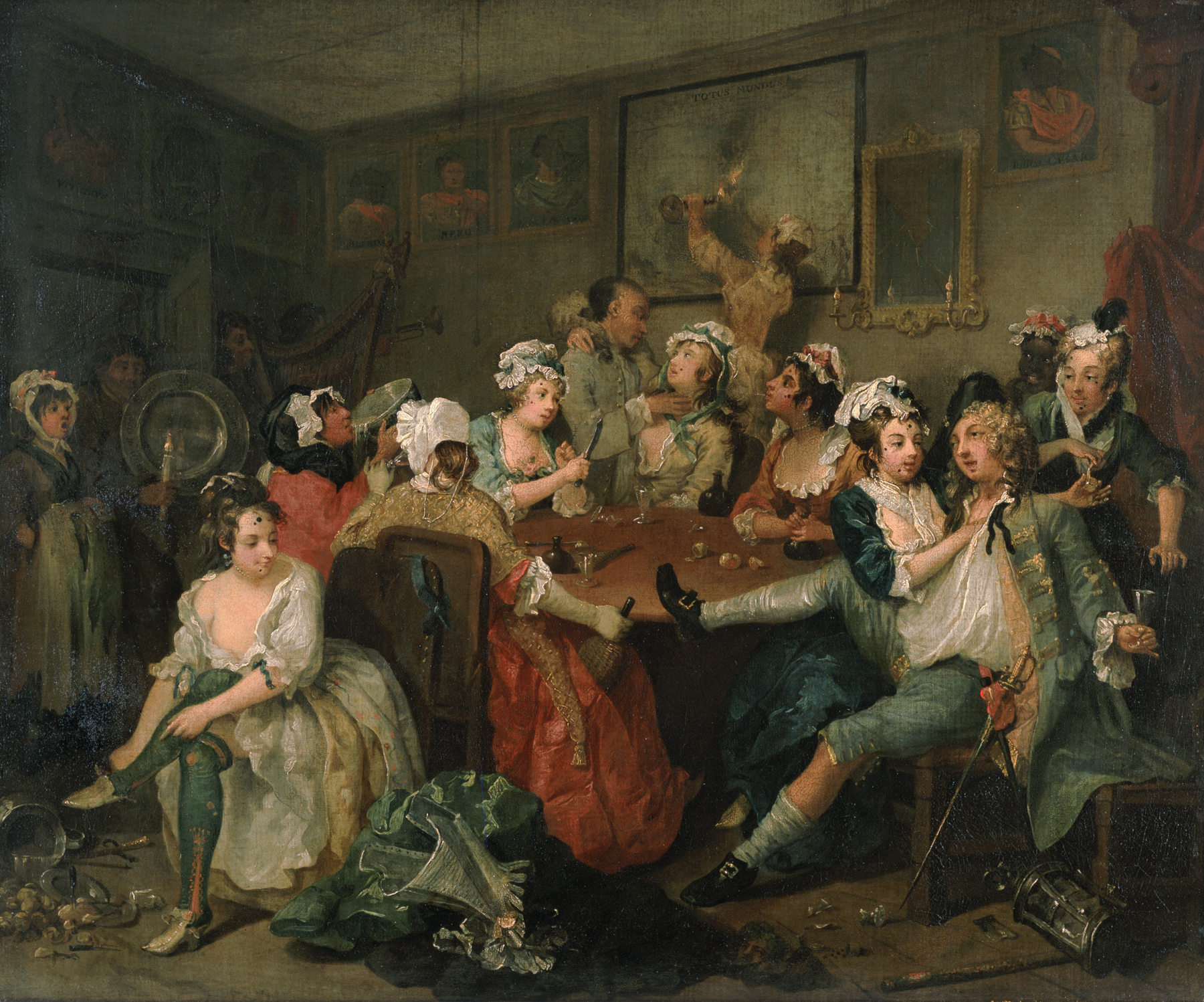
After the reign of Charles II, and especially after the Glorious Revolution of 1688, the cultural perception of the rake took a dive into squalor. The rake became the butt of moralistic tales, in which his typical fate was debtors' prison, venereal disease, or, in the case of William Hogarth's A Rake's Progress, insanity in Bedlam.
The defining period of the rake was at the court of Charles II in the late 1600s. Dubbed the "Merry Gang" by poet Andrew Marvell, their members included King Charles, George Villiers, John Wilmot, Charles Sedley, Charles Sackville, and playwrights William Wycherley and George Etherege. Following the tone set by the monarch, these men distinguished themselves in drinking, womanizing, and witty conversation, with Wilmot, the Earl of Rochester, outdoing all the rest.
Many of them were inveterate gamblers and brawlers. Some were duelists, but not with the approval of King Charles, who discouraged the practice of dueling. Highlights of their careers include Sedley and Sackville preaching naked to a crowd from an alehouse balcony in Covent Garden, as they simulated sex with each other. A lowlight was Buckingham's killing of Francis Talbot in a duel for Talbot's wife. In 1682, Thomas Wharton broke into a church at night and relieved himself against the communion table and in the pulpit.
In the 1700s, a later group of aristocratic rakes were associated with the Hellfire Club. These included Francis Dashwood and John Wilkes.
Other rakes include Francis Charteris, Alessandro Cagliostro, Lord Byron, Jimi Arundell, John Mytton, Giacomo Casanova, Charles Mohun, the Marquis de Sade, Robert Fielding, and Beauchamp Bagenal.
Within restoration comedies, rakes may be subdivided into the penitent and persistent ones, the first being reformed by the heroine, the latter pursuing their immoral conduct. Libertinistic attitudes, such as (sexual) licentiousness, alcoholism, vagrancy, cheating and gambling, can be discerned in characters belonging to the satiric norm as well as to the satiric scene. Only the degree of wit brings the rakish gentleman, the Truewit, closer to the satiric norm, whereas Falsewits are always exploded in the satiric scene. The motivation of a rake to change his libertine ways is either hypocritical (falsewits) or honest (truewits). In other words, penitent rakes among the falsewits only abandon their way of life for financial reasons. Penitent truewits ever so often succumb to the charms of the witty heroine and, at least, go through the motions of vowing constancy.
Hub AI
Rake (stock character) AI simulator
(@Rake (stock character)_simulator)
Rake (stock character)
In a historical context, a rake (short for rakehell, analogous to "hellraiser") was a man who was habituated to immoral conduct, particularly womanizing. Often, a rake was also prodigal, wasting his (usually inherited) fortune on gambling, wine, women, and song, and incurring lavish debts in the process. Cad is a closely related term. Comparable terms are "libertine" and "debauché".
The Restoration rake was a carefree, witty, sexually irresistible aristocrat whose heyday was during the English Restoration period (1660–1688) at the court of King Charles II. They were typified by the "Merry Gang" of courtiers, who included as prominent members John Wilmot, George Villiers, and Charles Sackville, who combined riotous living with intellectual pursuits and patronage of the arts. At this time the rake featured as a stock character in Restoration comedy.
After the reign of Charles II, and especially after the Glorious Revolution of 1688, the cultural perception of the rake took a dive into squalor. The rake became the butt of moralistic tales, in which his typical fate was debtors' prison, venereal disease, or, in the case of William Hogarth's A Rake's Progress, insanity in Bedlam.
The defining period of the rake was at the court of Charles II in the late 1600s. Dubbed the "Merry Gang" by poet Andrew Marvell, their members included King Charles, George Villiers, John Wilmot, Charles Sedley, Charles Sackville, and playwrights William Wycherley and George Etherege. Following the tone set by the monarch, these men distinguished themselves in drinking, womanizing, and witty conversation, with Wilmot, the Earl of Rochester, outdoing all the rest.
Many of them were inveterate gamblers and brawlers. Some were duelists, but not with the approval of King Charles, who discouraged the practice of dueling. Highlights of their careers include Sedley and Sackville preaching naked to a crowd from an alehouse balcony in Covent Garden, as they simulated sex with each other. A lowlight was Buckingham's killing of Francis Talbot in a duel for Talbot's wife. In 1682, Thomas Wharton broke into a church at night and relieved himself against the communion table and in the pulpit.
In the 1700s, a later group of aristocratic rakes were associated with the Hellfire Club. These included Francis Dashwood and John Wilkes.
Other rakes include Francis Charteris, Alessandro Cagliostro, Lord Byron, Jimi Arundell, John Mytton, Giacomo Casanova, Charles Mohun, the Marquis de Sade, Robert Fielding, and Beauchamp Bagenal.
Within restoration comedies, rakes may be subdivided into the penitent and persistent ones, the first being reformed by the heroine, the latter pursuing their immoral conduct. Libertinistic attitudes, such as (sexual) licentiousness, alcoholism, vagrancy, cheating and gambling, can be discerned in characters belonging to the satiric norm as well as to the satiric scene. Only the degree of wit brings the rakish gentleman, the Truewit, closer to the satiric norm, whereas Falsewits are always exploded in the satiric scene. The motivation of a rake to change his libertine ways is either hypocritical (falsewits) or honest (truewits). In other words, penitent rakes among the falsewits only abandon their way of life for financial reasons. Penitent truewits ever so often succumb to the charms of the witty heroine and, at least, go through the motions of vowing constancy.