Hubbry Logo
Recrystallization (metallurgy)Recrystallization (metallurgy)Main
Open search
Recrystallization (metallurgy)
Community hub
Recrystallization (metallurgy)
logo
8 pages, 0 posts
0 subscribers
Be the first to start a discussion here.
Recrystallization (metallurgy)
from Wikipedia
Crystallization
Fundamentals
Concepts
Methods and technology

In materials science, recrystallization is a process by which deformed grains are replaced by a new set of defect-free grains that nucleate and grow until the original grains have been entirely consumed. Recrystallization is usually accompanied by a reduction in the strength and hardness of a material and a simultaneous increase in the ductility. Thus, the process may be introduced as a deliberate step in metals processing or may be an undesirable byproduct of another processing step. The most important industrial uses are softening of metals previously hardened or rendered brittle by cold work, and control of the grain structure in the final product. Recrystallization temperature is typically 0.3–0.4 times the melting point for pure metals and 0.5 times for alloys.

Definition

[edit]
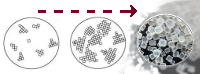
Three electron backscatter diffraction (EBSD) maps of the stored energy in an Al-Mg-Mn alloy after exposure to increasing recrystallization temperature. The volume fraction of recrystallized grains (light) increases with temperature for a given time.

Recrystallization is defined as the process in which grains of a crystal structure come in a new structure or new crystal shape.

A precise definition of recrystallization is difficult to state as the process is strongly related to several other processes, most notably recovery and grain growth. In some cases it is difficult to precisely define the point at which one process begins and another ends. Doherty et al. defined recrystallization as:

"... the formation of a new grain structure in a deformed material by the formation and migration of high angle grain boundaries driven by the stored energy of deformation. High angle boundaries are those with greater than a 10-15° misorientation"[1]

Thus the process can be differentiated from recovery (where high angle grain boundaries do not migrate) and grain growth (where the driving force is only due to the reduction in boundary area). Recrystallization may occur during or after deformation (during cooling or subsequent heat treatment, for example). The former is termed dynamic while the latter is termed static. In addition, recrystallization may occur in a discontinuous manner, where distinct new grains form and grow, or a continuous manner, where the microstructure gradually evolves into a recrystallized microstructure. The different mechanisms by which recrystallization and recovery occur are complex and in many cases remain controversial. The following description is primarily applicable to static discontinuous recrystallization, which is the most classical variety and probably the most understood. Additional mechanisms include (geometric) dynamic recrystallization and strain induced boundary migration.

Secondary recrystallization occurs when a certain very small number of {110}<001> (Goss) grains grow selectively, about one in 106 primary grains, at the expense of many other primary recrystallized grains. This results in abnormal grain growth, which may be beneficial or detrimental for product material properties. The mechanism of secondary recrystallization is a small and uniform primary grain size, achieved through the inhibition of normal grain growth by fine precipitates called inhibitors.[2] Goss grains are named in honor of Norman P. Goss, the inventor of grain-oriented electrical steel circa 1934.

Laws of recrystallization

[edit]

There are several, largely empirical laws of recrystallization:

  • Thermally activated. The rate of the microscopic mechanisms controlling the nucleation and growth of recrystallized grains depend on the annealing temperature. Arrhenius-type equations indicate an exponential relationship.
  • Critical temperature. Following from the previous rule it is found that recrystallization requires a minimum temperature for the necessary atomic mechanisms to occur. This recrystallization temperature decreases with annealing time.
  • Critical deformation. The prior deformation applied to the material must be adequate to provide nuclei and sufficient stored energy to drive their growth.
  • Deformation affects the critical temperature. Increasing the magnitude of prior deformation, or reducing the deformation temperature, will increase the stored energy and the number of potential nuclei. As a result, the recrystallization temperature will decrease with increasing deformation.
  • Initial grain size affects the critical temperature. Grain boundaries are good sites for nuclei to form. Since an increase in grain size results in fewer boundaries this results in a decrease in the nucleation rate and hence an increase in the recrystallization temperature
  • Deformation affects the final grain size. Increasing the deformation, or reducing the deformation temperature, increases the rate of nucleation faster than it increases the rate of growth. As a result, the final grain size is reduced by increased deformation.

Driving force

[edit]

During plastic deformation the work performed is the integral of the stress and strain in the plastic deformation regime. Although the majority of this work is converted to heat, some fraction (~1–5%) is retained in the material as defects—particularly dislocations. The rearrangement or elimination of these dislocations will reduce the internal energy of the system and so there is a thermodynamic driving force for such processes. At moderate to high temperatures, particularly in materials with a high stacking fault energy such as aluminium and nickel, recovery occurs readily and free dislocations will readily rearrange themselves into subgrains surrounded by low-angle grain boundaries. The driving force is the difference in energy between the deformed and recrystallized state ΔE which can be determined by the dislocation density or the subgrain size and boundary energy (Doherty, 2005):

where ρ is the dislocation density, G is the shear modulus, b is the Burgers vector of the dislocations, γs is the subgrain boundary energy and ds is the subgrain size.

Nucleation

[edit]
Recrystallization of a metallic material (a → b) and crystal grains growth (b → c → d).

Historically it was assumed that the nucleation rate of new recrystallized grains would be determined by the thermal fluctuation model successfully used for solidification and precipitation phenomena. In this theory it is assumed that as a result of the natural movement of atoms (which increases with temperature) small nuclei would spontaneously arise in the matrix. The formation of these nuclei would be associated with an energy requirement due to the formation of a new interface and an energy liberation due to the formation of a new volume of lower energy material. If the nuclei were larger than some critical radius then it would be thermodynamically stable and could start to grow. The main problem with this theory is that the stored energy due to dislocations is very low (0.1–1 J m−3) while the energy of a grain boundary is quite high (~0.5 J m−3). Calculations based on these values found that the observed nucleation rate was greater than the calculated one by some impossibly large factor (~1050).

As a result, the alternate theory proposed by Cahn in 1949 is now universally accepted. The recrystallized grains do not nucleate in the classical fashion but rather grow from pre-existing sub-grains and cells. The 'incubation time' is then a period of recovery where sub-grains with low-angle boundaries (<1–2°) begin to accumulate dislocations and become increasingly misoriented with respect to their neighbors. The increase in misorientation increases the mobility of the boundary and so the rate of growth of the sub-grain increases. If one sub-grain in a local area happens to have an advantage over its neighbors (such as locally high dislocation densities, a greater size or favorable orientation) then this sub-grain will be able to grow more rapidly than its competitors. As it grows its boundary becomes increasingly misoriented with respect to the surrounding material until it can be recognized as an entirely new strain-free grain.

Kinetics

[edit]
Variation of recrystallized volume fraction with time

Recrystallization kinetics are commonly observed to follow the profile shown. There is an initial 'nucleation period' t0 where the nuclei form, and then begin to grow at a constant rate consuming the deformed matrix. Although the process does not strictly follow classical nucleation theory it is often found that such mathematical descriptions provide at least a close approximation. For an array of spherical grains the mean radius R at a time t is (Humphreys and Hatherly 2004):

where t0 is the nucleation time and G is the growth rate dR/dt. If N nuclei form in the time increment dt and the grains are assumed to be spherical then the volume fraction will be:

This equation is valid in the early stages of recrystallization when f<<1 and the growing grains are not impinging on each other. Once the grains come into contact the rate of growth slows and is related to the fraction of untransformed material (1-f) by the Johnson-Mehl equation:

While this equation provides a better description of the process it still assumes that the grains are spherical, the nucleation and growth rates are constant, the nuclei are randomly distributed and the nucleation time t0 is small. In practice few of these are actually valid and alternate models need to be used.

It is generally acknowledged that any useful model must not only account for the initial condition of the material but also the constantly changing relationship between the growing grains, the deformed matrix and any second phases or other microstructural factors. The situation is further complicated in dynamic systems where deformation and recrystallization occur simultaneously. As a result, it has generally proven impossible to produce an accurate predictive model for industrial processes without resorting to extensive empirical testing. Since this may require the use of industrial equipment that has not actually been built there are clear difficulties with this approach.

Factors influencing the rate

[edit]

The annealing temperature has a dramatic influence on the rate of recrystallization which is reflected in the above equations. However, for a given temperature there are several additional factors that will influence the rate.

The rate of recrystallization is heavily influenced by the amount of deformation and, to a lesser extent, the manner in which it is applied. Heavily deformed materials will recrystallize more rapidly than those deformed to a lesser extent. Indeed, below a certain deformation recrystallization may never occur. Deformation at higher temperatures will allow concurrent recovery and so such materials will recrystallize more slowly than those deformed at room temperature e.g. contrast hot and cold rolling. In certain cases deformation may be unusually homogeneous or occur only on specific crystallographic planes. The absence of orientation gradients and other heterogeneities may prevent the formation of viable nuclei. Experiments in the 1970s found that molybdenum deformed to a true strain of 0.3, recrystallized most rapidly when tensioned and at decreasing rates for wire drawing, rolling and compression (Barto & Ebert 1971).

The orientation of a grain and how the orientation changes during deformation influence the accumulation of stored energy and hence the rate of recrystallization. The mobility of the grain boundaries is influenced by their orientation and so some crystallographic textures will result in faster growth than others.

Solute atoms, both deliberate additions and impurities, have a profound influence on the recrystallization kinetics. Even minor concentrations may have a substantial influence e.g. 0.004% Fe increases the recrystallization temperature by around 100 °C (Humphreys and Hatherly 2004). It is currently unknown whether this effect is primarily due to the retardation of nucleation or the reduction in the mobility of grain boundaries i.e. growth.

Influence of second phases

[edit]

Many alloys of industrial significance have some volume fraction of second phase particles, either as a result of impurities or from deliberate alloying additions. Depending on their size and distribution such particles may act to either encourage or retard recrystallization.

Small particles

[edit]
The effect of a distribution of small particles on the grain size in a recrystallized sample. The minimum size occurs at the intersection of the growth stabilized

Recrystallization is prevented or significantly slowed by a dispersion of small, closely spaced particles due to Zener pinning on both low- and high-angle grain boundaries. This pressure directly opposes the driving force arising from the dislocation density and will influence both the nucleation and growth kinetics. The effect can be rationalized with respect to the particle dispersion level where is the volume fraction of the second phase and r is the radius. At low the grain size is determined by the number of nuclei, and so initially may be very small. However the grains are unstable with respect to grain growth and so will grow during annealing until the particles exert sufficient pinning pressure to halt them. At moderate the grain size is still determined by the number of nuclei but now the grains are stable with respect to normal growth (while abnormal growth is still possible). At high the unrecrystallized deformed structure is stable and recrystallization is suppressed.

Large particles

[edit]

The deformation fields around large (over 1 μm) non-deformable particles are characterised by high dislocation densities and large orientation gradients and so are ideal sites for the development of recrystallization nuclei. This phenomenon, called particle stimulated nucleation (PSN), is notable as it provides one of the few ways to control recrystallization by controlling the particle distribution.

The effect of particle size and volume fraction on the recrystallized grain size (left) and the PSN regime (right)

The size and misorientation of the deformed zone is related to the particle size and so there is a minimum particle size required to initiate nucleation. Increasing the extent of deformation will reduce the minimum particle size, leading to a PSN regime in size-deformation space. If the efficiency of PSN is one (i.e. each particle stimulates one nuclei), then the final grain size will be simply determined by the number of particles. Occasionally the efficiency can be greater than one if multiple nuclei form at each particle but this is uncommon. The efficiency will be less than one if the particles are close to the critical size and large fractions of small particles will actually prevent recrystallization rather than initiating it (see above).

Bimodal particle distributions

[edit]

The recrystallization behavior of materials containing a wide distribution of particle sizes can be difficult to predict. This is compounded in alloys where the particles are thermally-unstable and may grow or dissolve with time. In various systems, abnormal grain growth may occur giving rise to unusually large crystallites growing at the expense of smaller ones. The situation is more simple in bimodal alloys which have two distinct particle populations. An example is Al-Si alloys where it has been shown that even in the presence of very large (<5 μm) particles the recrystallization behavior is dominated by the small particles (Chan & Humphreys 1984). In such cases the resulting microstructure tends to resemble one from an alloy with only small particles.

Recrystallization Temperature

[edit]

The recrystallization temperature is temperature at which recrystallization can occur for a given material and processing conditions. This is not a set temperature and is dependent upon factors including the following:[3]

  • Increasing annealing time decreases recrystallization temperature
  • Alloys have higher recrystallization temperatures than pure metals
  • Increasing amount of cold work decreases recrystallization temperature
  • Smaller cold-worked grain sizes decrease the recrystallization temperature
Common Recrystallization Temperatures in Selected Metals[4]
Metal Recrystallization Temp () Melting temp ()
Pb 99 327
Al 198 660
Mg 195 650
Cu 326 1085
Fe 462 1538
W 1024 3410

See also

[edit]

References

[edit]
Revisions and contributorsEdit on WikipediaRead on Wikipedia
from Grokipedia
Recrystallization in metallurgy is a solid-state transformation process that occurs during annealing of a deformed metal or alloy, in which new, strain-free grains nucleate and grow to replace the existing deformed microstructure, thereby reducing stored energy and restoring ductility. This phenomenon is driven primarily by the excess free energy stored in the material from prior plastic deformation, such as cold working, which introduces dislocations and other defects. The process typically requires temperatures between 0.3 and 0.5 of the absolute melting point (Tm) of the metal and is distinct from recovery, which involves only rearrangement of dislocations without new grain formation, and from grain growth, which enlarges existing grains post-recrystallization. Key mechanisms of recrystallization include at sites of high stored , such as grain boundaries, shear bands, or particle-matrix interfaces (via particle-stimulated ), followed by the migration of high-angle grain boundaries (>15° misorientation) that exhibit significantly higher mobility than low-angle boundaries. The process can be classified as static recrystallization (occurring after deformation ceases), dynamic recrystallization (during ongoing deformation at high temperatures), or metadynamic recrystallization (post-dynamic growth). Influencing factors encompass the degree of prior deformation (higher strain increases stored and accelerates recrystallization), annealing temperature and time, material purity (impurities slow boundary migration), initial , and deformation temperature, all of which determine the final , texture, and mechanical properties like strength and formability. In emerging metallic materials, such as or magnesium-based systems, recrystallization behavior is further modulated by factors like , solute clustering, and phase composition, enabling tailored microstructures for advanced applications. Overall, recrystallization plays a pivotal role in thermomechanical processing routes for metals, optimizing properties through controlled microstructure evolution.

Fundamentals

Definition and Types

Recrystallization in is the process by which new, strain-free s form and grow within a previously deformed metallic microstructure, replacing the deformed grains through the and migration of high-angle grain boundaries, typically those with misorientations greater than 10–15°; this is driven by the stored deformation and results in a reduction of dislocations and other defects. The process restores the material's while decreasing its strength and , as the elimination of deformation-induced defects lowers internal stresses and refines the structure. Unlike recovery, which involves only partial annihilation of defects without forming new grains, recrystallization fundamentally alters the orientation distribution across the material. Recrystallization is classified into several types based on timing relative to deformation and the nature of formation. Static recrystallization occurs after deformation ceases, typically during annealing, where new nucleate and grow in the absence of ongoing strain. Dynamic recrystallization, in contrast, takes place simultaneously with deformation at elevated temperatures, leading to real-time softening and microstructure refinement during processes like . Within these, discontinuous recrystallization involves distinct sites and the long-range migration of high-angle boundaries to form new with clear interfaces, often resulting in heterogeneous microstructures. Continuous recrystallization, however, proceeds gradually through the evolution and coalescence of subgrains into high-angle boundaries without prominent events, resembling an extended recovery process. A specialized form, secondary recrystallization, follows primary recrystallization and involves the selective, abnormal growth of a few favorably oriented grains that consume the surrounding matrix, often due to differences in mobility or pinning effects. This is particularly important in applications requiring specific textures, such as the development of the Goss orientation ({110}<001>) in grain-oriented electrical steels used for cores, where it minimizes magnetic losses by aligning grains to optimize paths. The phenomenon was first systematically observed and studied in the early , with key early investigations into annealing effects on deformed metals conducted by researchers like W. G. Burgers in the and , who examined recovery and texture changes preceding full recrystallization.

Driving Force

The driving force for recrystallization arises from the excess free energy stored in the deformed microstructure, which provides the thermodynamic impetus for the formation of new, strain-free grains. This stored energy originates primarily from dislocations, point defects such as vacancies, and high-angle grain boundaries introduced during plastic deformation. Among these, dislocations contribute the dominant portion, with the stored energy per unit volume approximated by the expression ΔE12ρGb2\Delta E \approx \frac{1}{2} \rho G b^2 where ρ\rho is the dislocation density, GG is the shear modulus, and bb is the magnitude of the Burgers vector. Vacancies and boundaries add smaller but notable contributions, particularly in heavily deformed materials where dislocation interactions increase overall energy levels. In microstructures that have undergone recovery, where dislocations rearrange into lower-energy configurations like subgrain boundaries, the stored energy can alternatively be quantified in terms of subgrain geometry as ΔE3γsds\Delta E \approx \frac{3 \gamma_s}{d_s} where γs\gamma_s is the energy of the low-angle subgrain boundaries and dsd_s is the average subgrain size. This expression highlights how finer subgrains, resulting from moderate deformation, store higher energy and thus drive recrystallization more effectively than coarser recovered structures. The energy influences the magnitude and accessibility of this stored energy; in metals like aluminum with high energy, cross-slip and annihilation occur more readily, facilitating easier recrystallization by maintaining sufficient but manageable energy levels. Conversely, alloys like with low energy exhibit planar slip and restricted recovery, which hinders recrystallization by promoting persistent high densities that are harder to reorganize. Recrystallization requires thermal activation at moderate to high temperatures, generally in the range of 0.3 to 0.5 TmT_m (where TmT_m is the absolute temperature), to provide the atomic mobility needed for and growth without inducing or excessive coarsening. This temperature window ensures that the stored energy can be dissipated through the formation of new s while minimizing competing processes like recovery.

Mechanisms

Nucleation

Nucleation in recrystallization represents the initial formation of new, strain-free grains within a deformed microstructure, primarily occurring through the evolution of subgrains or regions of high density rather than classical homogeneous driven by . This process is facilitated by the stored deformation energy, which provides the driving force for subgrain development into viable nuclei, as detailed in the mechanisms section on driving force.00170-3) A seminal explanation of this mechanism is provided by Cahn's 1950 theory, which posits that recrystallized grains emerge from preexisting subgrains and cells in the recovered deformed structure. According to this model, subgrains grow by absorbing surrounding dislocations, which increases their size and gradually elevates the misorientation angle across their boundaries. occurs when a subgrain achieves sufficient misorientation—typically forming a high-angle (>15°)—allowing it to expand rapidly into the surrounding deformed matrix, as the reduction in stored energy outweighs the energy cost of creating the new boundary. This subgrain coalescence pathway contrasts with traditional nucleation theories and has been experimentally validated in various metals, emphasizing recovery processes preceding full nucleation.00170-3) Preferred nucleation sites are localized in heavily deformed microstructures, including shear bands, deformation twins, and original grain boundaries, where rapid orientation gradients and elevated dislocation densities promote subgrain instability and misorientation buildup.00170-3) These regions exhibit higher stored energy compared to the bulk, accelerating the formation of viable nuclei. Additionally, crystallographic orientation plays a key role, with favorably oriented grains—those exhibiting relatively low stored energy—nucleating preferentially due to enhanced boundary mobility and reduced energy barriers for subgrain evolution. The quantitative aspect of nucleation involves the critical nucleus size, determined by the energetic balance where the decrease in stored within the nucleus volume compensates for the increase in interfacial energy from the new high-angle boundary.00170-3) Typically, this critical size is on the order of 1 μm, varying with deformation strain and microstructure, beyond which the nucleus becomes stable and transitions to the growth phase.

Growth

Once nucleation has produced initial strain-free seeds within the deformed matrix, the growth stage of recrystallization involves the expansion of these new grains through the migration of their high-angle boundaries into the surrounding deformed regions. This boundary migration is driven by the difference in stored energy between the low-dislocation-density recrystallized grains and the high-energy deformed matrix, as well as local effects at the boundaries that favor the reduction of total interfacial energy. The process replaces the distorted microstructure with equiaxed, defect-free grains, typically occurring at temperatures where atomic enables boundary mobility. The rate of this growth for an individual grain is often described by the R=G(tt0)R = G(t - t_0), where RR is the , GG is the boundary velocity, tt is the annealing time, and t0t_0 is the time of for that . The boundary velocity GG is approximately given by GMΔEG \approx M \cdot \Delta E, with MM representing the mobility—a thermally activated property that increases with and boundary misorientation—and ΔE\Delta E the driving force from the stored deformation , typically on the order of 1–10 MPa in metals like aluminum or . This mobility can be influenced by factors such as solute atoms exerting the moving boundaries, which slows migration without fully halting it under moderate concentrations. Growth continues until recrystallized grains impinge upon one another, at which point boundary migration ceases due to the lack of further driving force across the newly formed interfaces, resulting in the final recrystallized microstructure. This impingement limits the size of individual grains and contributes to the overall refinement of the material's texture and . In cases of primary recrystallization, the resulting grains are relatively uniform, but impingement dynamics can lead to variations based on site distribution. A specialized form of growth occurs during secondary recrystallization, where certain favorably oriented grains exhibit enhanced expansion, consuming the primary recrystallized matrix to form large, textured structures. For instance, in grain-oriented steels (Fe-3 wt.% Si), Goss-oriented grains ({110}<001>) selectively grow due to their higher boundary mobility relative to , often facilitated by inhibitors like MnS or AlN that suppress normal while permitting this oriented expansion. This process is critical for achieving sharp textures that optimize magnetic properties in electrical applications.

Kinetics

Empirical Laws

Recrystallization processes in metals are thermally activated, with the rate of boundary migration governed by the Arrhenius equation: k=k0exp(QRT)k = k_0 \exp\left(-\frac{Q}{RT}\right), where kk is the rate constant, k0k_0 is a pre-exponential factor, QQ is the activation energy (typically associated with solute drag or boundary migration, e.g., around 290 kJ/mol for Fe-3.5%Si alloys), RR is the gas constant, and TT is the absolute temperature. This relationship underscores the exponential dependence of recrystallization kinetics on temperature, enabling predictions of annealing times required for complete transformation at various temperatures. The progression of recrystallization is often described by the Avrami-Johnson-Mehl (AJM) equation for the recrystallized fraction XX: X=1exp(ktn)X = 1 - \exp(-k t^n) where tt is time, kk is a rate constant incorporating and growth rates, and nn is the Avrami exponent reflecting the dimensionality and mechanism of transformation (typically n34n \approx 3-4 for three-dimensional growth in metals, with n=4n = 4 for constant rate and isotropic growth, or n=3n = 3 for site-saturated ). This empirical model captures the sigmoidal kinetics observed in isothermal annealing, where impingement of growing grains limits the transformed volume. Empirical observations highlight practical constraints on recrystallization: a minimum deformation, such as 1-3% strain, is required to generate sufficient stored energy for . Additionally, time-temperature equivalence principles indicate that the critical for recrystallization decreases with longer annealing durations or greater prior deformation, as higher strain elevates the driving force and thus accelerates the process at lower temperatures. In single-phase metals, recrystallization rates increase with material purity, as impurities raise the and recrystallization (e.g., zone-refined aluminum recrystallizes at ~50°C versus ~200°C for commercial purity).

Rate-Influencing Factors

The rate of recrystallization in metals is significantly influenced by the level of prior deformation, as higher strains increase the stored and the density of sites. For instance, in deformed aluminum alloys, strains above 20-30% lead to a marked in recrystallization kinetics due to elevated dislocation densities, which provide greater driving force for , though rates saturate at very high strains where recovery competes. This effect has been extensively documented in studies on face-centered cubic metals, where the stored scales approximately with the square of the strain up to a point of . Annealing temperature plays a primary role in modulating recrystallization rates by affecting both the nucleation incubation time (t₀) and the boundary growth velocity (G), with higher exponentially reducing t₀ through enhanced atomic mobility while increasing G via thermal activation of boundary migration. In isothermal annealing, where the material is held at a constant , recrystallization proceeds more predictably and completes faster at temperatures 0.4-0.6 times the absolute , as observed in and systems. Non-isothermal annealing, involving continuous heating or cooling, introduces complexities such as varying driving forces, often resulting in slower overall kinetics compared to equivalent isothermal processes due to time spent at suboptimal ; for example, in low-carbon steels, ramp rates above 10°C/min can delay full recrystallization by 20-50%. The of the deformed microstructure directly impacts recrystallization speed, as finer grains offer a higher of sites, particularly at boundaries, leading to more rapid onset and completion of the process. In magnesium alloys like Mg-3Gd, specimens with below 10 μm exhibit recrystallization times reduced by up to an compared to those with 50 μm grains, owing to the increased boundary area per volume that favors heterogeneous . This relationship holds across various metals, where coarser structures delay kinetics by limiting site availability, though extreme refinement may introduce recovery effects that counteract acceleration. Solute atoms exert a drag effect on migrating grain boundaries during recrystallization, slowing growth rates by segregating to boundaries and increasing the for migration, thereby retarding overall kinetics. In nickel-based alloys, even low solute concentrations (e.g., 0.1-1 at.% carbon or ) can reduce boundary mobility by factors of 2-10, raising the effective recrystallization temperature and extending annealing times required for completion. Impurities like or oxygen similarly elevate activation energies, with studies on austenitic steels showing solute drag dominating over enhancements at moderate deformation levels. Orientation effects in textured starting materials introduce in recrystallization kinetics, where preferred orientations lead to spatially varying and growth rates, resulting in heterogeneous microstructural evolution. In rolled aluminum sheets with strong {110}<112> textures, favorably oriented grains (e.g., near cube orientation) nucleate and grow preferentially, accelerating local rates by 30-50% compared to misoriented regions, as evidenced by analyses. This anisotropic behavior is pronounced in body-centered cubic metals like iron, where deformation textures dictate boundary mobility variations, influencing the final recrystallized distribution.

Microstructural Influences

Second Phases

Second-phase particles, such as dispersoids, precipitates, or inclusions, play a dual role in recrystallization by either impeding grain boundary migration through pinning or promoting nucleation at sites of high local deformation. These effects depend critically on particle size, distribution, and volume fraction, influencing the overall kinetics and final microstructure of annealed metals. Small particles, typically less than 1 μm in diameter, exert a pinning force on migrating grain boundaries, retarding the growth stage of recrystallization. This phenomenon, known as Zener pinning, arises because the particles anchor the boundaries, requiring additional driving force to overcome the drag. The pinning pressure PzP_z is given by Pz3fvγ2rP_z \approx \frac{3 f_v \gamma}{2 r}, where fvf_v is the volume fraction of particles, γ\gamma is the grain boundary energy, and rr is the particle radius; smaller rr or higher fvf_v intensifies the pinning, often leading to finer recrystallized grains or even suppression of recrystallization. In contrast, large particles exceeding 1 μm in size can stimulate by creating deformation zones during prior , where incompatible strains accumulate around the particles. These zones exhibit high stored energy and orientation gradients, serving as preferential sites for particle-stimulated nucleation (PSN) of recrystallization. PSN occurs because subgrains within these regions rotate rapidly to form high-angle boundaries, enabling new grains to emerge in orientations misoriented from the deformed matrix. Alloys with bimodal particle distributions—containing both small and large particles—exhibit competing effects, where fine particles pin boundaries to slow growth while coarse ones promote via PSN. The net result frequently favors retardation of recrystallization if the small particles dominate in , as their pinning overrides the nucleation advantage, leading to slower overall kinetics and potentially coarser grains than expected from PSN alone. Representative examples illustrate these mechanisms in practice. In aluminum alloys, dispersed particles (e.g., Al₂O₃) below 1 μm effectively pin boundaries, slowing recrystallization and stabilizing fine microstructures during annealing after deformation. Conversely, in steels, coarse carbides such as provide sites for PSN, accelerating nucleation in deformed regions and refining the recrystallized , particularly in Nb-microalloyed variants.

Deformation and Initial Microstructure

Recrystallization in metals requires a sufficient magnitude of prior deformation to generate the necessary stored energy and defect density for . Typically, a minimum of about 5% cold work is needed to initiate the process, as lower levels fail to produce enough dislocations and substructures to drive recrystallization effectively. This critical deformation threshold varies with the metal and deformation mode but ensures the formation of viable sites. Uniform deformation distributes strain evenly across the microstructure, leading to a relatively consistent density of potential sites, whereas heterogeneous deformation concentrates strain in localized regions, such as shear bands or grain boundaries, thereby increasing the local site density and promoting faster, more selective recrystallization in those areas. The initial grain size of the undeformed material significantly influences recrystallization kinetics by affecting the availability of sites. Smaller initial grains provide a greater total area per unit volume, which serves as preferential locations for heterogeneous , thereby accelerating the overall recrystallization rate and reducing the time required for completion. In contrast, larger initial grains reduce boundary density, limiting opportunities and extending the recrystallization duration, though the effect is primarily on rather than growth. This relationship underscores how starting microstructure geometry modulates the transition from deformed to recrystallized states. During plastic deformation, the evolution of the substructure plays a crucial role in preparing the material for recrystallization by forming cells and enabling subgrain . As strain increases, dislocations rearrange into low-angle boundaries, creating cellular substructures where misorientations develop through and coalescence of subgrains, setting the stage for these cells to act as precursors to recrystallization nuclei. This substructure refinement increases with deformation intensity, enhancing the potential for oriented growth during annealing. Prior recovery processes, occurring at lower temperatures before full recrystallization, interact with deformation-induced features by partially annihilating dislocations and reducing stored , which consequently slows the subsequent recrystallization rate. This consumption during recovery diminishes the driving force for and boundary migration, often leading to coarser recrystallized grains and altered kinetics, particularly in materials with moderate deformation levels.

Practical Aspects

Recrystallization Temperature

The recrystallization temperature is defined as the temperature at which approximately 50% of the deformed microstructure has recrystallized within a reasonable timeframe, such as 1 hour of annealing. This threshold marks the onset of significant microstructural restoration, where new, strain-free grains replace the deformed ones, leading to softening and recovery of ductility. For pure metals, this temperature generally falls in the range of 0.3 to 0.4 times the absolute melting temperature (Tm), whereas alloys exhibit higher values, often approaching 0.5 Tm, due to solute drag effects on grain boundary mobility. Several factors influence the recrystallization temperature, primarily related to the material's composition and processing history. Greater prior deformation, such as higher cold work reductions, lowers the by increasing the stored energy available to drive . Similarly, extended annealing times effectively reduce the required , as the process follows an Arrhenius-type dependence on time and (as explored in Empirical Laws). Higher material purity also decreases the , since impurities in commercial metals impede atomic mobility and raise the barrier for recrystallization. In contrast, the presence of solutes or fine precipitates elevates the by pinning boundaries and slowing growth kinetics. Representative examples illustrate these variations across metals. For pure lead, the recrystallization temperature is room temperature (approximately 20°C or below); pure aluminum around 150°C; pure iron about 450°C; and pure 1200–1500°C. These values reflect the influence of melting points and purity levels, with lower-melting metals like lead recrystallizing at notably reduced temperatures. During , dynamic recrystallization can occur at even lower effective homologous temperatures compared to static annealing, enabling in-situ restoration without full cessation of deformation. Measurement of the recrystallization temperature commonly involves indirect techniques that track microstructural evolution. Hardness testing monitors the drop in as recovery and recrystallization progress, providing a practical indicator of the 50% completion point. Electrical resistivity measurements detect reductions in defect density due to annihilation of dislocations, while —such as optical or —offers direct visualization of new formation and boundary migration. These methods are selected based on the metal's properties and the desired precision, often corroborated by for texture changes.

Industrial Applications

In the steel industry, full annealing is widely employed to restore in cold-rolled sheets, particularly for automotive applications where formability is critical. This process involves heating the deformed material above the recrystallization temperature, typically around 600–700°C for low-carbon steels, followed by slow cooling to allow new strain-free grains to form and eliminate work-hardening effects from prior rolling. For instance, in producing automotive body panels from interstitial-free steels, continuous annealing lines achieve this restoration efficiently, enabling elongations exceeding 30% while maintaining yield strengths around 150–200 MPa. Texture control through secondary recrystallization plays a pivotal role in manufacturing grain-oriented electrical steels used in transformer cores, where high magnetic permeability is essential for efficient transmission. During high-temperature annealing at 1100–1200°C, primary grains are consumed by selective growth of {110}<001> Goss-oriented grains, promoted by inhibitors like AlN or MnS particles that pin boundaries until the critical stage. This results in materials with core losses below 1 W/kg at 1.7 T and 50 Hz, significantly reducing transformer dissipation. In processes such as and of aluminum alloys, dynamic recrystallization occurs concurrently with deformation to refine grains and improve workability at temperatures of 300–500°C. For alloys like 7075 or 2195, continuous dynamic recrystallization dominates, where subgrains evolve into high-angle boundaries, yielding equiaxed grains of 5–20 μm that enhance resistance and tensile strength up to 500 MPa post-processing. This mechanism is crucial for components, allowing complex shapes without intermediate annealing while controlling during deformation. Emerging applications in additive manufacturing leverage controlled recrystallization via post-build heat treatments to alleviate residual stresses and reduce mechanical anisotropy in 3D-printed metals like CoCrMo or . Annealing at 800–1000°C induces recrystallization that refines columnar grains into more isotropic structures, mitigating tensile property variations of up to 20–30% between build and transverse directions while lowering residual stresses from 500–800 MPa to below 200 MPa. This approach is vital for biomedical implants and parts, ensuring uniform performance without cracking. A key challenge in these industrial processes is balancing recrystallization to prevent excessive , which can coarsen microstructures and degrade strength according to the Hall-Petch relation, where yield strength decreases inversely with . For example, in aluminum alloys, unintended growth beyond 50 μm during prolonged annealing can reduce tensile strength by 20–50 MPa, necessitating precise control of heating rates and second-phase particles to stabilize fine grains. In electrical steels, overgrowth disrupts texture sharpness, increasing losses by 10–15%; thus, inhibitors and rapid cooling are employed to decouple recrystallization from growth.

Historical and Modern Context

Historical Development

The understanding of recrystallization in metallurgy emerged in the early through metallographic observations of microstructural changes in annealed, deformed metals, though mechanisms remained unclear and were often conflated with . Pioneering work by Albert Sauveur in the 1890s and early 1900s highlighted annealing effects on and structure in steels, laying groundwork for later interpretations, but early views erroneously emphasized homogeneous within deformed grains as the primary process. By , H. Carpenter and C. F. distinguished recrystallization from , proposing that stored deformation energy drives the formation of new, strain-free grains, a concept that resolved much of the prior confusion. In the 1930s, advances in and theoretical modeling clarified the distinction between recovery and recrystallization. W. G. Burgers and collaborators utilized optical to demonstrate that recovery involves dislocation rearrangement and polygonization without new formation, occurring at lower temperatures, whereas recrystallization requires higher temperatures for and growth of new orientations. This period also saw the seminal 1934 dislocation theory by , E. Orowan, and M. Polanyi, which explained plastic deformation's role in storing energy for subsequent annealing processes, while Burgers' 1939 introduction of the screw further refined models of defect mobility during recovery. Pre-1934 ideas, such as amorphous slip bands proposed by Rosenhain in 1915, were largely supplanted by these dislocation-based frameworks. The mid-20th century brought key theoretical milestones, starting with R. W. Cahn's 1949 subgrain theory, which posited that recrystallized grains originate from low-angle subgrain boundaries formed during recovery, rather than classical homogeneous ; this model, supported by observations in bent single crystals, became foundational for interpreting mechanisms. In the 1940s, C. Zener's analysis in C. S. Smith's 1948 work introduced pinning effects of second phases on grain boundaries, explaining retarded growth during recrystallization and refined through subsequent studies. The adapted the —originally for phase transformations—to model recrystallization kinetics in metals, quantifying the time-temperature dependence of the transformed fraction. From the to , concepts of particle-stimulated (PSN) developed, recognizing that large second-phase particles induce high local strains, serving as preferential sites for recrystallization nuclei, as evidenced in aluminum alloys and steels.

Recent Advances

Recent advances in the modeling of recrystallization have leveraged phase-field simulations to predict microstructure evolution during and in deformed metals. These models integrate stored energy from as the driving force, enabling quantitative predictions of migration and texture development in alloys like aluminum and . For instance, phase-field approaches have successfully simulated the coupled dynamics of recrystallization and evolution, revealing how curvature-driven motion influences overall kinetics in polycrystalline systems. Complementing these mesoscale methods, simulations provide atomic-scale insights into dynamics during early recrystallization stages. These simulations demonstrate how climb and annihilation facilitate subgrain formation, with mobility enhanced by thermal activation at boundaries in face-centered cubic metals like . Such atomic-level studies have quantified the role of stacking fault energy in accelerating rearrangement, leading to faster rates than predicted by classical theories. Characterization techniques have advanced significantly, with in-situ (EBSD) enabling real-time mapping of sites and growth fronts during annealing. In magnesium alloys, for example, in-situ EBSD has revealed that preferentially occurs at shear bands with high misorientation angles, allowing direct observation of boundary migration during annealing. X- diffraction further supports these findings by providing non-destructive, real-time kinetic data on phase transformations and texture changes. Recent experiments using high-energy beams have tracked the evolution of dislocation densities during laser-induced recrystallization in stainless steels, showing rapid reductions that correlate with improved . Post-2017 research has highlighted dynamic recrystallization in , where continuous mechanisms dominate under hot deformation, refining grains to submicron sizes and enhancing strength-ductility balance. In CoCrFeMnNi alloys, dynamic recrystallization has been shown to achieve microstructures, contributing to improved mechanical properties compared to conventional FCC metals. Similarly, nanoparticle effects in metal matrix nanocomposites have been explored, demonstrating that dispersed or particles pin boundaries and retard growth, leading to finer recrystallized grains and higher yield strengths. In aluminum nanocomposites reinforced with Al2O3 s, recrystallization is retarded due to Zener pinning while promoting heterogeneous at particle-matrix interfaces. Industrial applications have benefited from AI-optimized annealing schedules in additive manufacturing, where machine learning algorithms predict optimal heat treatments to control recrystallization and minimize residual stresses in printed titanium and nickel alloys. These data-driven approaches, trained on synchrotron datasets, enable more efficient annealing for uniform microstructures. Additionally, severe plastic deformation techniques, such as equal-channel angular pressing, enable low-temperature recrystallization processes in aluminum alloys through high accumulated strains, producing ultrafine-grained sheets with high tensile strengths exceeding 400 MPa. Emerging quantitative models address previous gaps in understanding bimodal particle distributions and solute drag effects in complex alloys. For bimodal particles in steels, phase-field models incorporating size-dependent pinning forces have predicted delayed when fine particles dominate. In solute-rich alloys like Nb-microalloyed variants, updated solute drag models account for segregation kinetics, enabling precise control of recrystallization in advanced high-strength steels. As of 2025, further advances include current-enhanced recrystallization, where applied currents accelerate recovery and through athermal effects, as demonstrated in pure metals. High-throughput methods using automated have also been developed to quantify recrystallization parameters in alloys like . Ongoing research in emphasizes high-temperature stability and creep resistance through optimized microstructures.

References

Add your contribution
Related Hubs
User Avatar
No comments yet.