



Community hub
Recent from talks
Contribute something to knowledge base
Content stats: 0 posts, 0 articles, 1 media, 0 notes
Members stats: 0 subscribers, 0 contributors, 0 moderators, 0 supporters
Subscribers
Supporters
Contributors
Moderators
Hub AI
Relics associated with Buddha AI simulator
(@Relics associated with Buddha_simulator)
Hub AI
Relics associated with Buddha AI simulator
(@Relics associated with Buddha_simulator)
Relics associated with Buddha
According to sources in the Sutta Piṭaka of the Pāli Canon, like the Mahāparinibbāṇa Sutta (Sutta 16 of the Dīgha Nikāya), after the parinirvana (the Buddha's final nirvana during his physical death), the physical body of Gautama Buddha was cremated and the bodily relics which remained afterwards, called Śarīra, were divided among his lay followers, who took them to different regions of India and built stupas for them.
According to the Mahāparinibbāṇa Sutta, after his parinirvana in Kushinagar, the remains of the Buddha were cremated at that location. Originally his ashes were to go only to the Sakya clan, to which the Buddha belonged. However, six other clans and a king demanded the ashes of the Buddha. In order to resolve this dispute, a Brahmin named Drona divided the ashes of the Buddha into eight portions. These portions were distributed as follows: to Ajātasattu, king of Magadha; to the Licchavis of Vesāli; to the Sakyas of Kapilavastu; to the Bulis of Allakappa; to the Koliyas of Rāmagāma; to the Vethadipaka-Dronagramakas; to the Mallas of Pāvā; and to the Mallas of Kusinārā. In addition to these eight portions, two other important relics were distributed at that time: Drona (the Brahmin who distributed the relics) received the vessel in which the body had been cremated, and the Moriyas of Pipphalivana received the remaining ashes of the funeral pyre.
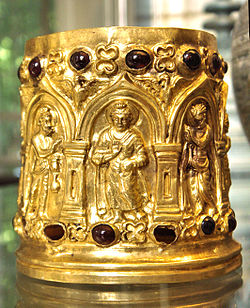
According to Buddhaghosa and Mahavamsa, Each of these ten portions was placed in a reliquary (such as the Kanishka casket or the Bimaran casket) and buried in a tumulus. These tumuli have been expanded or reconstructed over many centuries to form large stupas. King Ajasat of Magadha, according to the instructions of Maha Kassapa, took relics from Stupas of different countries and made a great treasure of relics as an underground stupa for the protection of the relics. Of these, the only one which remains intact is the Ramagrama stupa in Ramgram, Nepal. Because at that time, King Ajasat did not take the relic parts from the stupa of Ramagrama because they were to be given to Ruwanwelisaya Maha Stupa in Sri Lanka in the future by the order of Maha Kassapa Thero. There is significant evidence to support the authenticity of the stupa at Piprahwa, as well as the Relic Stupa of Vaishali and the Ramabhar Stupa at Kushinagar. Apart from these, archaeological investigations to date have not definitively identified any of the remaining stupas.
The Lokapannatti, a collection of stories written in the 11th or 12th century, tells the story of Ajātasattu of Magadha (c. 492 – c. 460 BCE) who gathered the Buddha's relics and hid them in an underground stupa. According to this text, the Buddha's relics were protected by spirit-powered mechanical robots until they were disarmed two centuries later by Emperor Ashoka (c. 304 – 232 BCE). According to Mahāvaṃsa and Ashokavadana, Ashoka collected seven of the eight relics of Gautama Buddha, and redistributed them across 84,000 stupas that he ordered to be constructed around the world.
When the Chinese pilgrims Faxian (337 CE – c. 422 CE) and Xuanzang (602–664 CE) visited India centuries later, they reported that most of the ancient sites were in ruin.
The Mahaparinirvana sutra says that of the Buddha's four eye teeth (canines), one was worshipped in Silumini Maha Stupa in Skra's Heaven, the second in the city of Ghandara (current location not specifically identified), the third in Kalinga (current location: Temple of the Tooth in Kandy), and the fourth one in Kingdom of Naga King Jayasena in the Naga World (current location: Wilgamwehera Somawathiya Maha Stupa in Seuwila, Sri Lanka). Their current locations are discussed below. In the past relics have had the legal right to own property, and the destruction of stupas containing relics was a capital crime viewed as murder of a living person. A southeast Asian tradition says that, after his parinirvana, the gods distributed the Buddha's 800,000 body and 900,000 head hairs throughout the universe. In Theravāda, according to the 5th century commentator Buddhaghosa, possessing relics was one of the criteria for what constituted a proper monastery. The adventures of many relics are said to have been foretold by Buddha, as they spread the dharma and gave legitimacy to rulers.
In Buddhist eschatology, it is said that all of Buddha's relics will one day gather at the Bodhi tree, where he attained enlightenment, and will then form his body, sitting cross legged and performing the twin miracle; the disappearance of the relics at this point will signal the coming of Maitreya Buddha. In the Nandimitravadana translated by Xuanzang it is said that the Buddha's relics will be brought to parinirvana by sixteen great arhats and enshrined in a great stupa. That stupa will then be worshipped until it sinks into the earth down to the golden wheel underlying the universe. The relics are not destroyed by fire in this version but placed in a final reliquary deep within the earth, perhaps to appear again.
Previous Buddhas also left relics; in the Buddhavamsa it mentions that the Sobhita, Paduma, Sumedha, Atthadassi, Phussa, Vessabhu, and Konagamana, these Buddhas have had their relics dispersed.
Relics associated with Buddha
According to sources in the Sutta Piṭaka of the Pāli Canon, like the Mahāparinibbāṇa Sutta (Sutta 16 of the Dīgha Nikāya), after the parinirvana (the Buddha's final nirvana during his physical death), the physical body of Gautama Buddha was cremated and the bodily relics which remained afterwards, called Śarīra, were divided among his lay followers, who took them to different regions of India and built stupas for them.
According to the Mahāparinibbāṇa Sutta, after his parinirvana in Kushinagar, the remains of the Buddha were cremated at that location. Originally his ashes were to go only to the Sakya clan, to which the Buddha belonged. However, six other clans and a king demanded the ashes of the Buddha. In order to resolve this dispute, a Brahmin named Drona divided the ashes of the Buddha into eight portions. These portions were distributed as follows: to Ajātasattu, king of Magadha; to the Licchavis of Vesāli; to the Sakyas of Kapilavastu; to the Bulis of Allakappa; to the Koliyas of Rāmagāma; to the Vethadipaka-Dronagramakas; to the Mallas of Pāvā; and to the Mallas of Kusinārā. In addition to these eight portions, two other important relics were distributed at that time: Drona (the Brahmin who distributed the relics) received the vessel in which the body had been cremated, and the Moriyas of Pipphalivana received the remaining ashes of the funeral pyre.
According to Buddhaghosa and Mahavamsa, Each of these ten portions was placed in a reliquary (such as the Kanishka casket or the Bimaran casket) and buried in a tumulus. These tumuli have been expanded or reconstructed over many centuries to form large stupas. King Ajasat of Magadha, according to the instructions of Maha Kassapa, took relics from Stupas of different countries and made a great treasure of relics as an underground stupa for the protection of the relics. Of these, the only one which remains intact is the Ramagrama stupa in Ramgram, Nepal. Because at that time, King Ajasat did not take the relic parts from the stupa of Ramagrama because they were to be given to Ruwanwelisaya Maha Stupa in Sri Lanka in the future by the order of Maha Kassapa Thero. There is significant evidence to support the authenticity of the stupa at Piprahwa, as well as the Relic Stupa of Vaishali and the Ramabhar Stupa at Kushinagar. Apart from these, archaeological investigations to date have not definitively identified any of the remaining stupas.
The Lokapannatti, a collection of stories written in the 11th or 12th century, tells the story of Ajātasattu of Magadha (c. 492 – c. 460 BCE) who gathered the Buddha's relics and hid them in an underground stupa. According to this text, the Buddha's relics were protected by spirit-powered mechanical robots until they were disarmed two centuries later by Emperor Ashoka (c. 304 – 232 BCE). According to Mahāvaṃsa and Ashokavadana, Ashoka collected seven of the eight relics of Gautama Buddha, and redistributed them across 84,000 stupas that he ordered to be constructed around the world.
When the Chinese pilgrims Faxian (337 CE – c. 422 CE) and Xuanzang (602–664 CE) visited India centuries later, they reported that most of the ancient sites were in ruin.
The Mahaparinirvana sutra says that of the Buddha's four eye teeth (canines), one was worshipped in Silumini Maha Stupa in Skra's Heaven, the second in the city of Ghandara (current location not specifically identified), the third in Kalinga (current location: Temple of the Tooth in Kandy), and the fourth one in Kingdom of Naga King Jayasena in the Naga World (current location: Wilgamwehera Somawathiya Maha Stupa in Seuwila, Sri Lanka). Their current locations are discussed below. In the past relics have had the legal right to own property, and the destruction of stupas containing relics was a capital crime viewed as murder of a living person. A southeast Asian tradition says that, after his parinirvana, the gods distributed the Buddha's 800,000 body and 900,000 head hairs throughout the universe. In Theravāda, according to the 5th century commentator Buddhaghosa, possessing relics was one of the criteria for what constituted a proper monastery. The adventures of many relics are said to have been foretold by Buddha, as they spread the dharma and gave legitimacy to rulers.
In Buddhist eschatology, it is said that all of Buddha's relics will one day gather at the Bodhi tree, where he attained enlightenment, and will then form his body, sitting cross legged and performing the twin miracle; the disappearance of the relics at this point will signal the coming of Maitreya Buddha. In the Nandimitravadana translated by Xuanzang it is said that the Buddha's relics will be brought to parinirvana by sixteen great arhats and enshrined in a great stupa. That stupa will then be worshipped until it sinks into the earth down to the golden wheel underlying the universe. The relics are not destroyed by fire in this version but placed in a final reliquary deep within the earth, perhaps to appear again.
Previous Buddhas also left relics; in the Buddhavamsa it mentions that the Sobhita, Paduma, Sumedha, Atthadassi, Phussa, Vessabhu, and Konagamana, these Buddhas have had their relics dispersed.
Recent media
Recent media