Hubbry Logo
Robbie RossRobbie RossMain
Open search
Robbie Ross
Community hub
Robbie Ross
logo
8 pages, 0 posts
0 subscribers
Be the first to start a discussion here.
Robbie Ross
Robbie Ross
from Wikipedia

Robert Baldwin Ross (25 May 1869 – 5 October 1918) was a British journalist, art critic and art dealer, best known for his relationship with Oscar Wilde, to whom he was a devoted friend, lover and literary executor. A grandson of the Canadian reform leader Robert Baldwin, and son of John Ross and Augusta Elizabeth Baldwin, Ross was a pivotal figure on the London literary and artistic scene from the mid-1890s to his early death, and mentored several literary figures, including Siegfried Sassoon. His open homosexuality, in a period when male homosexual acts were illegal, brought him many hardships.[1]

Key Information

Biography

[edit]

Family

[edit]

Ross was born in Tours, France. His mother, Elizabeth Baldwin, was the eldest daughter of Robert Baldwin, a Toronto lawyer and politician who in the 1840s, together with his political partner Louis Hippolyte Lafontaine, led Canada to autonomy from Britain. Ross's father, John Ross, was a Baldwinite and a Toronto lawyer who had a very successful political career, serving as Solicitor General for Upper Canada, Attorney General, Speaker of the Legislative Council, President of the Legislative Council, director, and, for a time, president, of the Grand Trunk Railway, and Canadian senator. He became Speaker of the Senate in 1869.

Ross was the youngest of five children, with two sisters, Mary and Maria, and two brothers, John and Alexander. The family moved to Tours, France, in 1866 while Elizabeth was pregnant with Maria, who was born in 1867, the year of Canadian Confederation. John fulfilled his duties as senator largely in absentia until he was chosen as Speaker of the Senate in 1869, the year of Robbie's birth, making his return to Canada unavoidable. The rest of the family followed in 1870. John died in January 1871 and Elizabeth moved the family to London the following April.

At Cambridge

[edit]

In 1888, Ross was accepted at King's College, Cambridge,[2] where he became a victim of bullying, probably because of his homosexuality, of which he made no secret, and perhaps also his outspoken journalism in the university paper. Ross caught pneumonia after being dunked in a fountain by other students who had, according to Ross, the full support of Arthur Augustus Tilley, the Junior Tutor of King's.[3] After recovering, he fought for and received an apology from his fellow students. He also sought Tilley's dismissal. The college refused to punish Tilley, who resigned as Junior Tutor. Ross dropped out and soon revealed his sexuality to his parents.

Oscar Wilde

[edit]
Robert Ross

Ross found work as a journalist and critic but he did not escape scandal. He is believed to have become Oscar Wilde's first male lover in 1886, even before he went to Cambridge. In 1893, a few years before Wilde's imprisonment, Ross had a sexual relationship with a boy of sixteen, the son of friends. The boy confessed to his parents that he had engaged in sexual activity with Ross and also admitted to a sexual encounter with Lord Alfred Douglas while he was a guest at Ross's house. After a good deal of panic and frantic meetings with solicitors, the parents were persuaded not to go to the police, since at that time their son might be seen as equally guilty and face the possibility of going to prison.[4]

On 1 March 1895, Wilde, Douglas, and Ross approached a solicitor, Charles Octavius Humphreys, with the intention of suing the Marquess of Queensberry, Douglas's father, for criminal libel. Humphreys asked Wilde directly whether there was any truth to Queensberry's allegations of homosexual activity between Wilde and Douglas, to which Wilde replied “No.” Humphreys applied for a warrant for Queensberry's arrest, and approached Sir Edward Clarke and Charles Willie Mathews to represent Wilde. His son, Travers Humphreys, appeared as junior counsel for the prosecution in the subsequent case of Wilde v Queensberry.[5]

The libel hearings unearthed evidence that caused Wilde to drop his charges and led to an arrest warrant for him on charges of sodomy and gross indecency. Ross found Wilde at the Cadogan Hotel, in Knightsbridge, with Reginald Turner. Both men advised Wilde to get a boat-train to France, but he refused. His mother had advised him to stay and fight, and Wilde reportedly said: "The train has gone. It's too late."[6] Following Wilde's imprisonment in 1895, Ross went abroad but he returned to offer both financial and emotional support to Wilde during his last years. Ross remained loyal to Wilde and was with him when he died in Paris on 30 November 1900.

After Oscar Wilde

[edit]

Ross became Wilde's literary executor, which meant that he had to track down and purchase the rights to all of Wilde's texts, which had been sold off along with Wilde's possessions when Wilde was declared bankrupt. It also meant fighting the rampant trade in black market copies of his books and, in particular, books, usually erotic, that Wilde did not write, but which were published illegally under his name.[citation needed]

Ross was assisted in this task by Christopher Sclater Millard, who compiled a definitive bibliography of Wilde's writings. Ross gave Wilde's sons the rights to all their father's works along with the money earned from their publication or performance while he was executor. In 1905, he attended the first performances in England of Wilde's Salome at the Bijou Theatre. One of the actors was Frederick Stanley Smith (1885–1953), with whom Ross had a relationship.[7]

About 1902, he arranged for the transfer of Wilde's remains "from the obscure Bagneux cemetery to Père Lachaise, the most celebrated cemetery in France", and later instructed his heirs to have his own ashes buried in Wilde's tomb.[8]

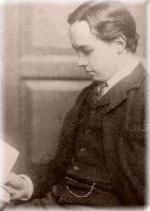
Robert Baldwin Ross, 1911

In 1908, some years after Wilde's death, Ross produced the definitive edition of his works. Ross was also responsible for commissioning Jacob Epstein to produce the sculpture that can now be seen on Wilde's tomb. He even requested that Epstein design a small compartment for Ross's own ashes. As a result of his faithfulness to Wilde even in death, Ross was vindictively pursued by Lord Alfred Douglas, who repeatedly attempted to have him arrested and tried for homosexual conduct.[citation needed]

From 1901 to 1908, in personal and professional partnership with the art critic More Adey, Ross managed the Carfax Gallery, a small commercial gallery in London co-founded by John Fothergill and the artist William Rothenstein.[9] The Carfax held exhibitions of works by such artists as Aubrey Beardsley, William Blake, Sylvia Gosse, and John Singer Sargent.[10] After leaving the Carfax, Ross worked as an art critic for The Morning Post.[11]

During the First World War, Ross mentored a group of young, mostly homosexual, poets and artists including Siegfried Sassoon and Wilfred Owen. He was also a close friend of Wilde's sons Vyvyan Holland and Cyril Holland.[citation needed]

In early 1918, during the German spring offensive, Noel Pemberton Billing, a right-wing member of Parliament, published an article entitled "The Cult of the Clitoris" in which he accused members of Ross's circle of being among 47,000 homosexuals who were betraying the nation to the Germans. Maud Allan, an actress who had played Wilde's Salome in a performance authorised by Ross, was identified as a member of the "cult". She unsuccessfully sued Billing for libel, causing a national sensation in Britain. The incident brought embarrassing attention to Ross and his associates.[citation needed]

Ross died suddenly on 5 October 1918 in London where he was preparing to travel to Melbourne to open an exhibition at the National Gallery of Victoria.[9]

In 1950, on the 50th anniversary of Wilde's death, an urn containing Ross's ashes was placed into Wilde's tomb in Père Lachaise Cemetery in Paris.[12]

Ross's work

[edit]

Ross was able to rely on an allowance and then an inheritance from his wealthy family, leaving him free to pursue his interests. His main contribution to literature lies in his work, not only as Wilde's executor, but also, earlier, as a friendly but critical reader of many of Wilde's texts. If Ross is to be believed, he frequently suggested changes and improvements.

Ross also tried his hand as a writer. He provided an introduction to Wilde's play Salome. His book Masques and Phases is a collection of previously published short stories and reviews. As an art critic, Ross was highly critical of the post-impressionist painters. Ross also wrote a book about Aubrey Beardsley.[13]

Appearances in media

[edit]

References

[edit]
[edit]
Revisions and contributorsEdit on WikipediaRead on Wikipedia
from Grokipedia
Robert Baldwin Ross (25 May 1869 – 5 October 1918), commonly known as Robbie Ross, was a Canadian-born British journalist, , and best remembered as the close friend, first acknowledged male lover, and literary executor of the writer . Born in Tours, , to a prominent Canadian family—his father, John Ross, was a noted who died when Ross was an infant—Ross was raised primarily in , where he received his education at and . He met Wilde in the early 1890s while still a student and quickly became part of the writer's intimate circle, providing intellectual companionship and defending Wilde during his 1895 trials for , where Ross testified as a witness. Following Wilde's imprisonment and death in 1900, Ross served as his literary executor, meticulously editing and publishing key works such as De Profundis and the first collected edition of Wilde's writings in 1908, efforts that helped rehabilitate Wilde's literary legacy despite opposition from Wilde's former lover . Ross's own career encompassed for outlets like and , where he championed modern artists, but his life was marked by ongoing controversies stemming from his open and loyalty to Wilde, including a high-profile 1913 libel suit against Douglas, whom he successfully prosecuted for falsely accusing him of criminal acts. He died in during the , leaving a legacy intertwined with Wilde's but notable for his principled stand against and personal vilification in an era hostile to such openness.

Early Life and Education

Family Background

Robert Baldwin Ross was born on 25 May 1869 in Tours, , the youngest of seven children born to John Ross (1818–1871) and Augusta Elizabeth "Eliza" Baldwin (1835–1906). His parents resided in at the time for health reasons related to his mother's delicate constitution following earlier childbirths. John Ross, a and Conservative , held key positions in the Province of Canada's government, including of from 1862 to 1863, and later served as one of Ontario's inaugural senators from 1867 until his death from in 1871. Born in , he emigrated to in 1835, built a successful legal practice in , and aligned with moderate Reform interests before shifting to Conservative alliances post-Confederation. Augusta Elizabeth Baldwin was the eldest daughter of (1804–1858), a lawyer and co-premier of the (1848–1851), renowned for championing and during the 1837–1838 Rebellions aftermath. The traced roots to Irish Protestant settlers in early 19th-century , with Robert Baldwin's father, William Warren Baldwin, also a physician, , and legislative councillor. This lineage positioned the Ross family within Canada's elite Anglo-Irish political and professional class, though Ross himself spent much of his life in Britain after early schooling in .

Schooling and Cambridge

Ross was educated at , a preparatory institution in , where he demonstrated proficiency in academic pursuits but limited aptitude for physical activities. His early schooling reflected a family emphasis on intellectual development, influenced by his mother's relocation to following his father's death in 1871 to secure superior educational opportunities for her children. In the autumn of 1888, at age 19, Ross matriculated at , intending to study history. During his tenure, he contributed articles to undergraduate periodicals, including and , showcasing an early interest in and literary commentary. Nonetheless, his academic performance proved lackluster, and he departed the university after completing only his first year, without obtaining a degree. This abbreviated stint at preceded his immersion in London's cultural and journalistic circles.

Professional Career

Journalism and Literary Criticism

Ross's journalistic endeavors commenced during his time at King's College, Cambridge, where he contributed articles to student publications including The Gadfly and Granta starting in the autumn of 1888. After departing Cambridge without a degree in 1890, he secured employment as a journalist with the Edinburgh-based Scots Observer, an experience that honed his skills in critical writing amid the periodical press of the fin de siècle. Throughout the 1890s and early 1900s, Ross produced short stories and articles for assorted British publications, though his journalistic output remained sporadic and secondary to his other pursuits. In the realm of , Ross's contributions were limited but notable for their incisive, reflective style. His 1909 volume Masques & Phases, published by Arthur L. Humphreys in , compiled previously published essays, reviews, short stories, and critical pieces on , offering commentary on authors and works of the era with a focus on aesthetic and cultural themes. The collection, spanning xii and 315 pages, exemplified Ross's engagement with literary discourse, though contemporaries observed his criticism often intertwined personal affiliations—particularly his defense of Oscar Wilde's oeuvre—with broader evaluative judgments. Ross's approach privileged stylistic analysis over didactic moralism, aligning with decadent literary sensibilities, yet his total literary-critical corpus was modest, overshadowed by his roles in and literary estate management.

Art Criticism and Dealing

In 1901, Robert Baldwin Ross assumed the directorship of the Carfax Gallery in , a venue dedicated to promoting and contemporary artists, in collaboration with More Adey and Arthur Clifton. Under his management, which lasted until 1908 or 1909, the gallery exhibited works by emerging talents and modernists, including post-Impressionists, marking a deliberate effort to introduce innovative European art to British audiences despite commercial risks. Ross's role extended to selecting artists, curating exhibitions, and facilitating sales, positioning him as an influential in the Edwardian . Following his departure from Carfax, Ross transitioned to , becoming the for The Morning Post in 1908, where he contributed regular columns such as "Art and Artists." In this capacity, he advocated for the critic's role as a stimulator of public discernment rather than a prescriptive authority, emphasizing the cultivation of independent viewer judgments informed by intelligent observation. Ross expressed strong preferences for French , praising its technical and aesthetic qualities, while delivering pointed critiques of ; for instance, at the 1910 Post-Impressionist Exhibition, he dismissed Paul Cézanne's contributions as failures. His reviews combined commendation and condemnation, reflecting a commitment to rigorous over to trends. Later in his career, Ross served as a trustee of the and advisor to institutions like the Gallery, influencing acquisitions and public engagement with art collections. These positions underscored his broader impact on British art institutions, bridging commercial dealing, criticism, and curatorial oversight.

Relationship with Oscar Wilde

Initial Encounter and Personal Ties

Robert Baldwin Ross first met in 1886, when Ross was seventeen years old and Wilde thirty-one. Their introduction likely occurred through social or literary circles in , though exact details remain unclear; sensational accounts, such as Frank Harris's claim of an encounter in a public lavatory, have been rejected by biographers including Maureen as uncorroborated and derogatory. The meeting quickly led to a sexual relationship, with Ross later described as having seduced Wilde and introduced him to male , marking Ross as Wilde's initial male lover. By early 1887, Ross had become a frequent guest and temporary resident at the Wilde family home at 16 Tite Street, Chelsea, living alongside Wilde, his wife Constance, and their infant son for several months. This domestic proximity highlighted the intimacy of their bond, which blended romantic attachment with intellectual companionship, as Ross—openly homosexual and unapologetic—shared Wilde's interests in and . Despite Wilde's marriage and family obligations, the relationship persisted as an open one, fostering a lifelong personal loyalty from Ross that extended beyond romance into devoted friendship.

Role in Wilde's Trials

Ross accompanied and to consult solicitor Charles Octavius Humphreys on 1 March 1895, initiating the criminal libel proceedings against the for his accusation that Wilde was "posing somdomite [sic]." This consultation followed Queensberry's delivery of a libelous card to Wilde's club on 18 1895, and Ross's presence underscored his close advisory role amid escalating tensions. The decision to pursue the suit, despite warnings from associates about potential exposure of Wilde's private life, directly precipitated the libel trial commencing on 3 April 1895 at the Central Criminal Court, where Queensberry's defense introduced evidence of Wilde's relationships, leading to the case's collapse and Queensberry's acquittal on 5 April. Following the libel verdict, as a warrant for Wilde's arrest on charges of was issued, Ross joined Wilde and Douglas at the Cadogan Hotel, where he urged Wilde to flee to the Continent via Dover rather than face imminent prosecution. Wilde initially hesitated but ultimately remained in , resulting in his arrest on 6 April 1895; Ross's counsel reflected his pragmatic concern for Wilde's safety, though it went unheeded amid emotional pressures from Douglas. Ross did not testify in the ensuing criminal trials against Wilde—the first ending in a on 26 April and the second culminating in conviction and a two-year sentence on 25 May 1895—nor did he assume a formal legal role therein. His involvement remained confined to pre-trial and immediate post-libel support, highlighting the personal risks borne by Wilde's intimates during the scandal.

Support During Imprisonment and Aftermath

During Oscar Wilde's imprisonment from May 1895 to May 1897, Robert Baldwin Ross demonstrated steadfast loyalty amid widespread social ostracism, visiting Wilde regularly at Reading Gaol and providing emotional sustenance as one of his few remaining contacts. Ross had initially fled abroad following Wilde's trials for personal safety but returned to maintain this support, including efforts to manage Wilde's finances and preserve his dignity against public condemnation. These visits offered Wilde rare human connection during harsh conditions of and isolation, with Ross documenting Wilde's deteriorated physical and mental state in personal correspondence. Upon Wilde's release on 19 May 1897, Ross facilitated immediate practical aid, contributing funds and coordinating relocation to Berneval-sur-Mer in , where he helped secure temporary lodging amid Wilde's penniless exile. In the ensuing years, Ross extended ongoing financial assistance and correspondence, countering Wilde's destitution even as Wilde resumed his volatile association with , which strained resources further. This support extended to receiving the manuscript of De Profundis, Wilde's prison reflections, which Ross safeguarded post-release. In Wilde's final months, Ross remained a constant presence, traveling to in October 1900 to attend his bedside during terminal illness from cerebral and arranging medical care alongside other loyal friends. On 29 November 1900, as Wilde's condition worsened, Ross procured a Catholic priest for , enabling Wilde's the following day, 30 November 1900, an act reflecting Ross's deep personal devotion despite the era's prevailing prejudices.

Literary Executorship

Editing and Publishing Wilde's Works

Following Oscar Wilde's death on November 30, 1900, Robert Ross, appointed as his literary executor in Wilde's will, undertook the task of editing and publishing his works to restore the author's reputation amid lingering scandal from the 1895 trials. Ross began with the posthumous release of an expurgated edition of De Profundis, Wilde's extended prison letter originally addressed to Lord Alfred Douglas, which Methuen published in February 1905 with a preface by Ross; this version omitted passages referencing Douglas and other sensitive personal details to mitigate potential controversy. The full, unexpurgated manuscript remained under Ross's control until later releases. In 1908, Ross oversaw the first collected edition of Wilde's works, issued by Methuen in 14 volumes limited to 1,000 numbered copies each, printed on handmade paper with uniform white buckram bindings. This edition encompassed Wilde's published books—including two volumes of poetry, three of short stories, The Picture of Dorian Gray (using the 1891 edition as copy-text with approximately 200 emendations for consistency), and Intentions—alongside previously unpublished materials such as fragments like La Sainte Courtisane and an expanded De Profundis, plus selections of journalism (73 out of 88 pieces from the Pall Mall Gazette in a volume titled Reviews). Ross's editorial approach prioritized a polished, coherent over strict fidelity to originals, resulting in around 3,500 emendations across journalistic texts alone, such as standardizing , altering word choices (e.g., "impassioned" to "ambitious" in reviews), and omitting or revising elements that could evoke Wilde's personal scandals. Lacking a formal textual apparatus, these interventions established authoritative texts still referenced by scholars, though later critics have noted their "creative" nature, which sanitized Wilde's voice to aid reputational recovery rather than preserve unaltered manuscripts. The edition's volumes appeared progressively through 1922, with some like bearing a imprint from Charles Carrington due to legal sensitivities around its content.

Preservation Efforts and Challenges

Ross played a pivotal role in safeguarding Wilde's manuscripts and papers immediately following Wilde's arrest on charges of , removing them from Wilde's Tite Street home to prevent seizure or destruction by authorities. This action preserved key documents, including unpublished letters and drafts, that might otherwise have been lost amid the . As literary executor appointed in Wilde's 1900 will, Ross systematically collected and authenticated these materials, ensuring their availability for future editions. A major effort was the 1905 publication of an expurgated version of Wilde's prison letter De Profundis, comprising roughly half the original manuscript, which Ross edited to omit passages potentially damaging to reputations or legally sensitive given prevailing obscenity laws. This was followed by the comprehensive 14-volume Collected Works of Oscar Wilde in 1908, which Ross compiled by incorporating previously unpublished journalism, poems, plays, and essays, thereby rehabilitating Wilde's literary standing after the trials' fallout. These editions drew on Ross's collation of texts from diverse sources, establishing textual bases still referenced by scholars. Challenges abounded, including the arduous procurement of copyright permissions from a fragmented array of publishers, theater managers, and collaborators who held rights to Wilde's output, complicating the assembly of uniform texts. Ross also navigated ongoing antagonism from , whose 1913 libel suit against —alleging defamation via references to Wilde—forced the introduction of De Profundis in court, where its contents undermined Douglas's claims and highlighted the persistent legal risks of unredacted disclosures. Broader societal taboos against further necessitated selective editing to evade or prosecution, delaying full revelations until after Ross's death. Despite these hurdles, Ross's interventions prevented the erasure of Wilde's oeuvre, countering efforts by detractors to suppress it.

Disputes with Lord Alfred Douglas

Following Oscar Wilde's death in 1900, Robert Baldwin Ross, as Wilde's literary executor, pursued efforts to rehabilitate Wilde's literary reputation while countering narratives that blamed Wilde's associates for his downfall. , Wilde's former lover who had since renounced upon converting to Catholicism in 1911, viewed Ross as a rival and obstacle, accusing him of perpetuating scandals tied to Wilde's trials. This animosity escalated into public and legal confrontations, with Ross perceiving Douglas's actions as attempts to rewrite history and defame Wilde's circle, while Douglas alleged Ross harbored personal vendettas, including jealousy over his past influence on Wilde. A pivotal clash occurred through Ross's collaboration with author on the 1912 book Oscar Wilde: A Critical Study. Ross supplied Ransome with an uncensored manuscript of Wilde's De Profundis, a letter excoriating Douglas for contributing to Wilde's "ethical degradation" and moral ruin, including quotes such as: "But most of all I blame myself for the entire ethical degradation I allowed you to bring on me." Published on February 12, 1912, the book portrayed Douglas as a destructive influence on Wilde, prompting Douglas to file a libel suit against Ransome and the publisher Martin Secker on March 9, 1912. commenced on April 17, 1913, at the , where De Profundis was read aloud in court, severely damaging Douglas's position by publicizing Wilde's unsparing criticisms. Ross provided key evidence and testimony for the defense, framing the content as factual reflection of Wilde's views. After three days, the jury acquitted Ransome following over two hours of deliberation, leaving Douglas financially ruined by legal costs exceeding £1,000 and further alienated from Wilde's legacy. The Ransome verdict intensified hostilities, leading to direct libel accusations against Ross. In January 1914, Thomas Crosland, a allied with Douglas, circulated a letter to newspapers branding Ross a "notorious sodomite" and implicating him in corrupting influences akin to those in Wilde's scandals. Ross responded by charging Douglas with in November 1914, arguing the letter's distribution defamed his character and professional standing. The case reached court, but the split—reportedly 10-2 in favor of —prompting Ross to withdraw the prosecution and cover Douglas's costs, avoiding a full defeat but marking a tactical retreat amid mounting personal strain. Historians attribute Ross's involvement in the Ransome affair partly to , as biographer Michael Kettle noted: "This, in fact, was Ross’s on Bosie for supplanting him in Wilde’s affections." Douglas retaliated further in 1915 by publishing a satirical poem implying illicit ties between Ross and Prime Minister , perpetuating the feud into I-era scandals. These disputes underscored broader tensions over Wilde's memory, with Ross prioritizing empirical preservation of texts like De Profundis against Douglas's efforts to sanitize or vilify it through litigation and public invective.

Personal Prosecutions and Public Scrutiny

In early 1914, associates of , including journalist Thomas William Hodgson Crosland, circulated letters and pamphlets accusing Robert Baldwin Ross of engaging in acts, including and acts of , as well as corrupting young men. These allegations were part of a broader campaign by Douglas to discredit Ross, whom he viewed as a rival in the posthumous management of Oscar Wilde's legacy, portraying Ross as morally depraved and a threat to public decency. The materials explicitly referenced Ross's close relationship with Wilde and implied ongoing illicit behavior, drawing on Victorian-era stigmas against to incite outrage. Ross responded by initiating a prosecution against Douglas in November 1914, seeking to counter the defamatory claims that had been widely distributed and damaged his reputation. During the proceedings, defense arguments centered on substantiating the accusations through about Ross's personal life and associations, including his admitted early sexual relationship with Wilde, though no evidence of criminal acts post-Wilde's era was conclusively proven. The jury failed to reach a unanimous , leading Ross to abandon the case; he was subsequently ordered to pay Douglas's legal costs, approximately £500, which exacerbated the financial and reputational strain. The trial's publicity intensified scrutiny of Ross's private life, prompting the Board of to demand his resignation from his position as Valuer of Pictures and Drawings, a role he had held since around 1907, due to the perceived incompatibility with standards amid the . Ross complied promptly in 1914, effectively retiring from public administrative duties and withdrawing from prominent roles in London's art and literary circles to avoid further controversy. This episode highlighted the precarious position of individuals associated with Wilde's circle in Edwardian Britain, where even unproven allegations of could derail professional careers, despite the absence of formal criminal charges against Ross himself.

Later Life and Death

Involvement in World War I

During , Robert Baldwin Ross, residing in , maintained his focus on literary and artistic endeavors rather than military service, given his age of 45 at the war's outset in 1914. He formed close friendships with soldier-poets and , providing mentorship and encouragement to their work amid the conflict's horrors. These relationships, as noted by biographer Maureen Borland, represented some of Ross's most significant wartime associations, with Sassoon and Owen drawing inspiration from his literary circle. Ross's home became a hub for a coterie of young artists and writers, many of whom were serving or had served in the armed forces, fostering discussions on that often critiqued the war's brutality. His support extended to figures like , another prominent war poet, reinforcing Ross's role in sustaining creative output during national mobilization. This non-combat involvement aligned with his pre-war expertise as an and dealer, though specific wartime exhibitions or publications under his direct auspices remain sparsely documented beyond personal correspondences.

Final Years and Cause of Death

In the closing months of , Ross maintained his professional engagements in the London art scene, advising on significant acquisitions such as the March 1918 purchase of William Blake's watercolours illustrating Dante's Divine Comedy for Australia's , whose shipment he helped delay due to maritime hazards posed by ongoing hostilities. He planned to travel to to inaugurate an exhibition of these works but succumbed before departure. Ross died suddenly on 5 October 1918 at his residence, 40 Half Moon Street, , , aged 49. The cause was a heart attack. In his will, he stipulated cremation followed by scattering of his ashes over the sea; however, his remains were cremated and buried instead at in .

Legacy and Reception

Contributions to Literature and Art

Ross served as the literary executor of Oscar Wilde following the author's death in 1900, taking responsibility for editing and publishing unpublished or revised works to preserve his legacy. He prepared the first edition of De Profundis, Wilde's prison letter, for publication in 1905, selecting and editing portions from the manuscript held by Wilde's estate. In 1908, Ross edited the Collected Works of Oscar Wilde, a multi-volume set that included the first trade edition of The Picture of Dorian Gray with an expanded preface, establishing textual baselines still referenced by scholars. These efforts involved meticulous collation of manuscripts and correspondence, countering attempts by others, such as Lord Alfred Douglas, to suppress or alter Wilde's writings amid ongoing scandals. In the field of art, Ross worked as a and for The Morning Post from around 1900, reviewing exhibitions and advocating for British artists while expressing conservative preferences. He managed the Carfax Gallery in from 1901 to 1908, curating shows of contemporary works by artists including and , which helped promote modern British painting during the . Later, Ross became a trustee of the Gallery and advised the on acquisitions, influencing public collections with his emphasis on established aesthetics over avant-garde movements; he notably criticized Roger Fry's 1910 Post-Impressionist exhibition as promoting incoherent novelty. His role as a member of the New English Art Club further connected him to progressive yet restrained artistic circles.

Criticisms and Historical Reassessments

Ross endured sustained personal attacks from , who repeatedly libeled him as a sodomite responsible for Oscar Wilde's moral and legal ruin, culminating in pamphlets published around 1912 that prompted Ross to initiate a suit in 1913. Douglas's accusations, rooted in his post-conversion renunciation of and resentment toward Wilde's circle, led to his conviction and a six-month prison sentence, though the proceedings further exposed Ross's open to public scrutiny in an era when such relations remained illegal under British law. These libels reflected Douglas's broader campaign against perceived influences on Wilde, including antisemitic undertones absent from Ross's documented actions. Critics, including Douglas through his journal The Academy, faulted Ross's administration of Wilde's literary estate for alleged mismanagement and self-interested control, particularly after Ross secured executorship via litigation in 1907-1908 against competing claims from Wilde's family. Despite such charges, Ross actively combated unauthorized editions and established textual bases still referenced in scholarly work, though his editions of works like De Profundis omitted passages critiquing Douglas and detailing homosexual experiences to mitigate scandal and legal risks. This editorial caution, while pragmatically preserving Wilde's marketability amid post-trial stigma, has drawn retrospective critique for diluting the author's unexpurgated voice and personal candor. Historical reassessments have largely vindicated Ross's stewardship, portraying him as instrumental in rehabilitating Wilde's reputation from near-erasure following the trials, through persistent advocacy, canonical publications like the collected edition, and defense against . Scholars now emphasize his —evident in wartime service and personal sacrifices—and role as an early openly gay figure navigating institutional hostility, crediting him with foundational preservation efforts that enabled later uncensored revelations, such as the full De Profundis in 1962. This shift counters earlier narratives overshadowed by Douglas's vitriol, highlighting Ross's causal contributions to Wilde's enduring literary influence over expedient suppression.

Depictions in Media and Culture

Ross has been depicted in multiple biographical films centered on 's life, emphasizing his roles as confidant, lover, and literary executor. In the 1960 production Oscar Wilde, directed by and starring as Wilde, portrayed Ross as a steadfast supporter amid Wilde's legal troubles. That same year, , directed by with as Wilde, featured Emrys Jones in the role, focusing on the courtroom dramas and Ross's advisory presence. Later adaptations continued this pattern. played Ross in Brian Gilbert's 1997 film Wilde, starring as Wilde, where the character introduces Wilde to and remains loyal through his downfall. In Rupert Everett's 2018 directorial debut The Happy Prince, which chronicles Wilde's post-imprisonment exile, Edwin Thomas depicted Ross as a devoted managing Wilde's declining years and estate. Fictional literary portrayals of Ross are less prominent, though he appears as a historical figure in Timothy Findley's 1999 novel Pilgrim, integrated into a narrative exploring and literary circles. These media representations generally underscore Ross's to Wilde, drawing from documented correspondences and biographies, while varying in emphasis on his personal sacrifices and professional advocacy for Wilde's works.

References

Add your contribution
Related Hubs
User Avatar
No comments yet.