Hubbry Logo
Roger PiantoniRoger PiantoniMain
Open search
Roger Piantoni
Community hub
Roger Piantoni
logo
8 pages, 0 posts
0 subscribers
Be the first to start a discussion here.
Roger Piantoni
Roger Piantoni
from Wikipedia

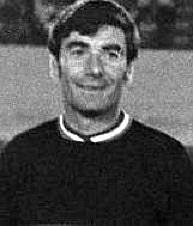
Roger Piantoni (26 December 1931 – 26 May 2018) was a French footballer who played as an inside-forward and was a star on the France national team in the late 1950s. During the 1949–1950 season, he was the champion of Lorraine with his team, and was the top scorer in the league with 35 goals. At the 1958 FIFA World Cup, Piantoni was considered one of the best French players of his time. He was nicknamed Bout d'chou, meaning "Cabbage Tip", ranking as the sixth top scorer in the French Championship with a total of 203 goals in Division 1.[2][3]

Key Information

Early life

[edit]

Roger Piantoni spent his youth in the mining town of La Mourière, in the community of Piennes in Meurthe-et-Moselle. There he was known for playing with Thadée Cisowski in the local club, US Piennes. In 1948, with the youth team of Lorraine, he won the National Youth Cup by beating a youth team from the South-East in the championship. Henri Biancheri and Francis Méano were also on the South-Eastern team. He also played later against Raymond Kopaszewski who was on a northern youth team. The following year, he was accepted onto the French Junior team for the European championship. However, he performed poorly due to insufficient cardio. Fellow France national team player Michel Plantini later experienced the same disappointment.

Club career

[edit]

Nancy

[edit]

Piantoni began his career at the age of 19 with FC Nancy during 1950–1951 season. In the first match of the championships, against RC Lens on 27 August 1950, he scored two goals. In his first season, he managed to become the top scorer of the championship with 27 goals. He scored five goals on the 28th day against Le Havre (6–1) and two quadruples (four goals) during the return match against RC Lens (4–2) and RC Strasbourg on the final day (5–1). In November 1952, in a friendly match against Ireland, he was selected to join the France national team for the first time.

Over the course of seven seasons with FC Nancy, he scored a total of 92 goals. He and his teammates achieve some top performances in the Coupe de France. They reached the semi-finals of the season of 1950–1951, and the finals in 1953 (which was played on 31 May in Colombes.) FC Nancy, led by Jacques Favre, lost 2–1 against Lille. A few months later, on 23 September 1953, FC Nancy beat Real Madrid 4–2 on their Chamartin field (later renamed Santiago Bernabéu) in a friendly match. This match was remarkable as the official debuts of Piantoni for FC Nancy, and Alfredo Di Stéfano for Madrid.

However, FC Nancy faced major financial problems. During the 1956–1957 season, they were demoted to the second division and the club was forced to let its best players go. Piantoni was transferred for 250,000 francs (25 million former francs before 1960, which is about $256,000 US) to Stade de Reims which had just sold Raymond Kopa to Real Madrid.

Reims

[edit]

At Stade de Reims, along with Just Fontaine and Jean Vincent, Piantoni won the France championship. In 1958, with the help of his teammates, they landed in the capital of Champagne. They quickly forgot the departure of Raymond Kopa, the hero of the Stage Auguste-Delaune, who left a year earlier for Real Madrid. In March 1958, Piantoni recorded a quadruple against the regional rival, Sedan. On 1 May, Reims were French champions, giving Piantoni his first national trophy just a few weeks before the 1958 French Cup.

He scored 17 goals in 32 games in the 1957–1958 season, then scored a further 20 goals the following season. It appeared to be the perfect match with Just Fontaine on the front of the attack, and they dominated the championship of France during the 1950s and the early 1960s.

At that time, Piantoni and several of his teammates also participated in the 1958 World Cup in Sweden, where Albert Batteux (the coach, also his club coach, was beaten in the semifinal by Brazil).

After his exploits in Sweden, Piantoni returned with the Rémois but the defending championship team was struggling; it finished fourth with eight points at the end of the year. As an individual, he found success with 20 goals in 30 matches. On the European stage, the Reims reached their second European Cup final of the champions clubs in their history. In a final in Stuttgart on 3 June 1959, they lost to Real Madrid (0–2), in the European champion title game.

A few weeks after the end of this remarkable European run, Piantoni and his teammates took the field for the 1959–1960 edition of the French championship. The scored 109 goals in 38 matches. This remarkable dominance was matched only by RC Paris, the only other club able to compete with them offensively. With two titles already for Piantoni, he scored 18 goals that season (ten fewer than Fontaine).

The 1960–61 season was less glorious for Stade de Reims who finished seven points behind AS Monaco in May, due to the serious injury that hit their star forward Fontaine just a few months earlier. He had a double fracture in his leg, effectively ending his career. As a result of this injury, Fontaine ended discussions for a possible transfer of Piantoni to the Argentinian club of River Plate. Piantoni then became the team's leading scorer, and the country's best playmaker that season, eleven years after his title as top scorer with FC Nancy.

In the international match up of France-Bulgaria, 11 October 1959, he was injured by Nikola Kovatchev, who broke his knee. The injury required several operations and made a lasting impact on the rest of his career. This recurring injury caused him to go through long periods of rehabilitation where he was unable to play. In his last three seasons in Reims, from 1961 to 1964, he played only 37 league games, achieving 23 goals. In 1961–1962, they won their sixth national title and, despite his physical problems, he achieved 16 goals in just 18 matches.

He scored his last goal with the Champenois on 3 May 1964, during a home game defeat (1–4) against Valenciennes.

Nice

[edit]

In 1964, Piantoni joined OGC Nice, in the second division, where he played a full season. The Niçois won the second division championship and gained their promotion in the 1st division for the following season, after which he announced his retirement.

International career

[edit]

Piantoni received his first selection on 16 November 1952, in a friendly match in Dublin between the French team and Ireland (1–1). Piantoni tied the score for French at the 67th minute mark.

In 1954, he did not participate in the World Cup in Switzerland. Injured a few months earlier during a France-Italy, he was unable to recover in time.

Selected for the 1958 World Cup, he was one of the French players who brought the team to the semifinals, losing to the Pele's Brazilian team (2–5). Teaming with Just Fontaine and Raymond Kopa, Piantoni played the first five games where he scored four goals, including the second in the semi-final against the Seleção. Due to emergency surgery for appendicitis, he did not play during the game against Germany, whom they beat 6–3 to secure third place. He played his last match with Les Bleus on 28 September 1961, a qualifying match for the 1962 World Cup in Chile against Finland (5–1). In the 79th minute of play on a free kick, he scored the last goal of his international career.

From 1952 to 1961, Piantoni played 37 matches under the blue jersey, scoring 18 goals.

Post-playing career

[edit]

After leaving Nice he became coach of the club of Carpentras from 1967 to 1971. He was later a member of the Federal Council of the French Football Federation (FFF) from 29 August 1970 to 31 December 1988.

He remained attached to the Lorraine and the club of Nancy. He also worked for several years as a commentator on football matches on Antenne 2 alongside Michel Drucker and Bernard Père.

A tribune at the Stade Marcel Picot, where AS Nancy-Lorraine is, bears his name.

Honours

[edit]

References

[edit]
[edit]
Revisions and contributorsEdit on WikipediaRead on Wikipedia
from Grokipedia
Roger Piantoni (26 December 1931 – 26 May 2018) was a French professional footballer who played primarily as a left winger and inside-forward, best known for his starring role in ' successful teams of the late and early , as well as his contributions to the national team at the , where he helped secure a third-place finish. Born in Étain, Lorraine, Piantoni began his career in local football with ES Piennes before joining AS Nancy-Lorraine in 1950, where he made his professional debut and played until 1957, scoring prolifically in the French first division. In 1957, he transferred to , forming a dynamic attacking partnership and contributing to three titles (1958, 1960, 1962), a win in 1958, and a runners-up finish in the against Real Madrid. Over his club career in , spanning clubs including Nancy, , and later (1964–1966), he amassed 203 goals in 394 appearances, ranking him as the sixth-highest scorer in the competition's history. Internationally, Piantoni earned 37 caps for between 1952 and 1961, scoring 18 goals, with his most notable performances coming during the 1958 World Cup in , where he netted three times, including in the semi-final loss to . After retiring as a player, he served as a for FC (1967–1971) and later as a member of the French Football Federation's executive council from 1970 to 1988, influencing the sport's development in .

Early life

Childhood and family

Roger Piantoni was born on 26 December 1931 in , in the region of . His mother died when he was two years old, after which he was raised by his grandparents in the nearby town of Piennes, . The family had Italian roots, as his grandparents had emigrated from as children. Piantoni grew up in the working-class neighborhood of La Mouillère in Piennes, where his grandparents provided his primary upbringing amid modest circumstances. His father, an amateur footballer who had played for La Mourière following his release from a German prisoner-of-war camp during the , had limited direct influence on his early life due to the family separation. During his childhood, Piantoni developed interests in French history and detective stories, often immersing himself in these subjects. He also cherished family holidays along the banks of the River, which deepened his connection to 's historical landscape.

Youth football career

Piantoni began playing football informally as a young boy in the town square of Piennes, a mining community in , where he honed his skills alongside future international Thadée Cisowski. In 1946, at the age of 14, he joined the local club US Piennes (also known as ES Piennes or FC Piennes), where he continued to develop alongside Cisowski until 1950. During his time with US Piennes, Piantoni emerged as a prolific scorer in youth competitions, notably netting 18 goals in a single match and establishing himself as a standout talent in the region. In the 1949–1950 season, he led his team to the championship and became the top scorer in the regional youth league with 35 goals. That same year, Piantoni was selected for the French junior national team ahead of the but was ultimately rejected due to inadequate stemming from respiratory issues. Despite this setback, his performances caught the attention of scouts, leading to his recruitment by FC Nancy, which marked the transition toward his professional career. His grandparents, who raised him after the early death of his mother, provided crucial support by encouraging football as a positive outlet amid the hardships of post-war Lorraine.

Club career

Nancy

Roger Piantoni signed his first professional contract with AS Nancy-Lorraine at the age of 18 in 1950, marking the start of his senior career in the top flight of French football. He made an immediate impact, debuting on 27 August 1950 in the opening match of the Division 1 season against RC Lens, where he scored twice in a 2–0 victory for Nancy. In his debut 1950–1951 season, Piantoni emerged as one of the league's most prolific forwards, finishing as the top scorer in Division 1 with 28 goals in 28 appearances, a remarkable achievement for a teenager in his first professional campaign. Over the next six seasons, he continued to develop, adapting to the inside-right position at the request of one of Nancy's managers, which enhanced his overall game assessment and proficiency with his right foot despite being naturally left-footed. His early talent, honed during youth stints at US Piennes, provided a solid foundation for this professional breakthrough. Piantoni's contributions helped elevate AS Nancy-Lorraine, a mid-table side often fighting relegation, to notable successes in domestic competitions. The team reached the semi-finals of the in 1950–1951, defeating several stronger opponents before falling to . Two years later, in 1953, Nancy advanced to the final but lost 2–1 to at Stade Olympique Yves-du-Manoir in . That same year, on 23 September, Nancy secured a memorable 4–2 friendly victory over Real Madrid at the Chamartín Stadium (later Santiago Bernabéu), a result that highlighted the team's potential against elite European opposition. Across seven seasons from 1950 to , Piantoni made 239 appearances for Nancy, scoring 104 goals across all competitions, establishing himself as the club's all-time leading scorer during that era. His departure came in amid the club's severe financial difficulties, which led to relegation to the second division and forced the sale of key assets; Piantoni transferred to for a reported around 25–45 million francs.

Reims

Piantoni joined in the summer of 1957 following a successful stint at Nancy, where his scoring prowess had prepared him for elite competition. Under manager Albert Batteux, he integrated into a formidable attacking line featuring , , and , contributing to ' fluid, offensive style that emphasized quick transitions and creative play. Over seven seasons until , Piantoni appeared in 198 matches for the club, scoring 132 goals across all competitions. In his debut 1957–58 Ligue 1 campaign, Piantoni netted 17 goals in 32 appearances, helping secure the league title. The following season, 1958–59, he elevated his performance with 20 goals, finishing among the league's top scorers as defended their domestic dominance. On the European stage, Piantoni played a pivotal role in ' run to the , scoring crucial goals including two in the 6–1 aggregate semi-final victory over . Despite his strong showing in the final at Stuttgart's Neckarstadion, fell 2–0 to Real Madrid, with and Francisco Gento proving decisive. Reims claimed further Ligue 1 titles in 1959–60 and 1961–62, with Piantoni leading the scoring in the latter despite persistent injuries limiting him to 18 appearances and 16 goals. A severe injury sustained in 1959 during an international match against , caused by a tackle from Kovatchev, significantly impacted his mobility and shortened his peak years. Nevertheless, his contributions solidified as a European powerhouse and elevated his career tally to 203 Division 1 goals, placing him sixth on the all-time .

Nice

In 1964, at the age of 32, Roger Piantoni joined in the French second division after leaving , marking the beginning of the final phase of his professional playing career. During his two seasons with the club, from 1964 to 1966, he appeared in 48 matches and scored 20 goals, with 32 appearances and 14 goals in the 1964–65 campaign alone. Piantoni played a key role in Nice's successful 1964–65 season, helping the team win the Division 2 title and earn promotion to Division 1. As a veteran forward with prior experience in multiple titles and international success, he provided leadership to a rebuilding squad, contributing his scoring prowess and tactical insight to their promotion push. His efforts were instrumental in elevating the club back to the top flight after their relegation. In the following 1965–66 season, Piantoni's involvement was more limited, with 16 appearances and 6 goals, partly due to accumulating injuries carried over from his demanding years at . He retired from professional football at the end of that season in June 1966, at age 34, closing out a distinguished club career that saw him make 486 appearances and score 256 goals across Nancy, , and .

International career

Early caps

Roger Piantoni made his international debut for the national team on 16 November 1952, in a friendly match against in , which ended in a 1–1 draw; he scored the equalizer in the 67th minute. This appearance came shortly after his strong performances at AS Nancy-Lorraine, which earned him the national team call-up at the age of 20. Over the course of his international career from 1952 to 1961, Piantoni earned 37 caps and scored 18 goals for . In his early years with the national team, prior to the , he featured in 24 matches and netted 12 goals, establishing himself as a reliable forward during a period of team rebuilding following . 's squad in the early 1950s was in transition, integrating emerging talents to form a competitive unit after inconsistent results in the late 1940s and early 1950s. Key early contributions included scoring in World Cup qualifiers, such as a goal against in a 6–1 victory on 20 September 1953 and two goals in a 5–3 win over on 4 October 1953, helping France advance in the . He also netted against in a 1–3 defeat on , despite the loss. However, Piantoni missed the due to an injury sustained earlier that year during a match against , from which he did not recover in time. During this phase, he began building on-field partnerships with fellow Reims teammate , who had debuted shortly before him, as both contributed to France's attacking play in matches like the 2–2 draw against the on 23 October 1955, where Piantoni scored.

1958 FIFA World Cup

Roger Piantoni played a pivotal role in France's historic third-place finish at the in , marking the nation's best performance in the tournament until their runners-up finish in 1998. He featured in five of France's six matches, starting each as a left winger and contributing to an exhilarating attacking line alongside and that propelled the team to score 21 goals overall. In the group stage, Piantoni scored his first in 's 7–3 opening victory over on 8 June in , netting the third goal in the 52nd minute to help restore a three-goal lead after Paraguay had clawed back. advanced from Group 3 with a further win against (2–1). His influence grew in the quarter-final against on 19 June in , where he sealed a 4–0 triumph with the fourth goal in the 68th minute, showcasing his speed and finishing on the left flank. Piantoni's standout performance came in the semi-final against on 24 June in , despite the 5–2 defeat that ended France's title hopes. provided the assist for Fontaine's opener in the 9th minute, and Piantoni scored France's second goal in the 82nd minute via a solo run, briefly injecting hope as the score stood at 4–2 before 's late strike. Praised for his tenacity against a formidable Brazilian side featuring the emerging , Piantoni's efforts highlighted his role as the fulcrum of France's dynamic attack, combining creativity and goal threat. An emergency prevented him from playing in the third-place , a 6–3 win over on 28 June, but his earlier contributions had already cemented his status. With three goals in total, Piantoni emerged as one of the competition's top performers and a national hero in , where his exploits alongside Fontaine (13 goals) and Kopa helped elevate football's popularity amid a rugby-dominated sporting culture. The campaign's success transformed Piantoni into a symbol of French football's potential, inspiring a new generation of fans and players.

Later international appearances

Following the successes of the 1958 FIFA World Cup, which highlighted his contributions as a key attacker, Piantoni's international appearances for France diminished in frequency due to recurring injuries and shifts in the national team's composition as the era's prominent players aged or faced their own setbacks. Between October 1958 and September 1961, he earned seven additional caps, scoring once in competitive and friendly fixtures. A significant setback came during a friendly match against Bulgaria on 11 October 1959, when a tackle resulted in a severe knee injury that kept him sidelined for nearly a year, limiting his availability for selection. This, combined with broader team transitions—such as Just Fontaine's career-ending leg fracture in 1960—contributed to his reduced role amid France's failure to qualify for the 1962 World Cup. Piantoni's last international outing occurred on 28 September 1961, in a 5–1 qualifying win over at in , where he netted his final goal for the national team via a left-footed . At age 29, he retired from international duty shortly thereafter, marking the end of his tenure with the Bleus. In total, Piantoni recorded 37 caps and 18 goals across his eight-year international spell from 1952 to 1961, solidifying his status as a cornerstone of French football during its golden era in the and early .

Playing style and reputation

Positions and attributes

Roger Piantoni primarily played as an inside-forward, starting his in the inside-left role before adapting to inside-right at the request of a Nancy manager. This versatility allowed him to contribute effectively across attacking positions, emphasizing his tactical flexibility. His key attributes included a powerful left-footed shot, which enabled him to score prolifically and create scoring opportunities for teammates through precise playmaking. Piantoni demonstrated a sharp goal-scoring instinct, amassing 203 goals in Division 1 over his career, while his speed facilitated effective breakaways and positioning in attack. Physically, he stood at 1.74 meters tall and weighed 64 kilograms, maintaining agility even amid later career injuries, including persistent that contributed to his at age 34. Over time, Piantoni evolved by enhancing his game-reading abilities, which improved his positioning and overall effectiveness on the pitch. These developments proved particularly valuable in systems like ' fluid attacking setup, where his multifaceted contributions shone.

Nickname and impact

Roger Piantoni earned the affectionate nickname "Bout d'chou," translating to "Cabbage Tip" or "Little Cabbage," during his , stemming from his small stature that belied his exceptional talent on the pitch. Growing up in the mining town of Piennes in , Piantoni faced early skepticism from doubters who questioned his potential due to his slight build, yet he amused himself by proving them wrong through prolific scoring, including 18 goals in a single match. This moniker stuck throughout his career, symbolizing his unassuming yet sharp presence as a player. Renowned as one of France's premier left-wingers and post-war forwards, Piantoni's reputation was built on his powerful left foot, which he attributed to a natural gift possibly linked to his partial Italian heritage through his grandparents who immigrated from Italy. He ranks seventh on the all-time Ligue 1 scoring list with 203 goals in 394 appearances, a testament to his consistency and lethality that placed him among the division's historical elite. His influence extended beyond personal accolades, shaping Reims' fluid attacking style under Albert Batteux and contributing to France's adoption of dynamic, offensive football philosophies in the late 1950s. Piantoni's cultural impact resonated deeply in his native , where his rise from local youth teams—capped by winning the 1948 National Youth Cup—inspired a generation of aspiring players in the region. As a key figure in France's historic third-place finish at the , where he scored three goals in five matches, Piantoni helped elevate the sport's popularity nationwide, embodying the exciting, attacking generation that transformed French football from a peripheral pursuit into a national passion.

Post-playing career

Coaching roles

After retiring from his professional playing career with in 1966, Roger Piantoni transitioned into a role at the amateur club FC Carpentras in the Division d'Honneur, the top level of regional French football at the time. He served in this dual capacity from 1967 to 1971, combining limited on-field appearances with hands-on team management. During his tenure at Carpentras, Piantoni oversaw 58 matches across league and cup competitions, recording 27 wins, 10 draws, and 21 losses, for a win percentage of 47%. In championship play alone, he managed 47 games with 21 victories (45% win rate), focusing on developing young talent in a lower-division environment. Despite the modest competitive achievements, with no promotions secured, his experience from and the informed his approach to mentoring players. Piantoni later took on brief advisory roles in regional football, leveraging his playing expertise before shifting to broader administrative positions.

Administrative and media contributions

Following his coaching career, Roger Piantoni took on significant administrative responsibilities within French football governance. He served as a member of the Federal Council of the (FFF) from 29 August 1970 to 31 December 1988, a role in which he participated in key decision-making processes for the during an era of expansion and professionalization. In parallel, Piantoni contributed to football broadcasting as a commentator and analyst for Antenne 2 (now ), beginning in the mid-1970s and continuing through the 1980s. He provided expert insights during live match coverage, frequently collaborating with hosts and Bernard Père on high-profile games, including qualifiers and finals. Notable examples include his analysis of the France-Brazil semifinal at the and various international fixtures in 1984 and 1985. His prominence from France's third-place finish at the lent authenticity to his commentary, bridging generational perspectives on the game. Piantoni also remained engaged with football at the regional level in , his home region, through informal advisory involvement that supported local clubs and youth initiatives, drawing on his legacy as a former AS Nancy-Lorraine star.

Honours and legacy

Team honours

During his tenure with from 1957 to 1964, under the guidance of coach Albert Batteux during the club's golden era, Piantoni contributed to three titles in the 1957–58, 1959–60, and 1961–62 seasons. He also helped secure the in 1958 and reached the European Cup final as runners-up in 1959, where lost 2–0 to Real Madrid. With in the 1964–65 season, Piantoni played a role in winning the Division 2 title, earning promotion to the top flight. On the international stage, Piantoni was part of the national team that finished third at the in . Earlier in his career with FC Nancy from 1950 to 1957, Piantoni experienced the final as runners-up in 1953, losing 2–1 to , and reached the semi-finals in the 1950–51 edition, though the club claimed no major titles during this period.

Individual accolades

Roger Piantoni began his career with notable youth achievements, including serving as the top scorer in the regional league during the 1949–1950 season with 35 goals for Piennes, where he also once scored 18 goals in a single . In his professional debut season with FC Nancy, Piantoni earned the top scorer title in 1950–1951, netting 28 goals. He repeated this honor in 1960–1961 with , again scoring 28 goals to lead the league. Additionally, he finished as the runner-up in the 1957–1958 top scorers list with 26 goals for , third in 1958–1959 with 20 goals, and among the leaders in 1961–1962 despite 16 goals that season. Over his career spanning 394 matches, Piantoni amassed 203 goals, ranking sixth on the all-time list. Internationally, Piantoni scored three goals across five matches at the 1958 FIFA World Cup, contributing to France's third-place finish and earning recognition as one of the tournament's standout performers. His transfer from Nancy to Reims in 1957 for 250,000 francs set a record fee for a French player at the time.

Lasting legacy

Roger Piantoni is recognized as a pioneer of modern French attacking play, particularly through his role in Stade de Reims' stylish, short-passing game under Albert Batteux, which emphasized fluid creativity and directly influenced the French national team's dynamic style during the late 1950s and early 1960s. His partnership with Jean Vincent on the left wing exemplified this approach, contributing to Reims' successes and France's third-place finish at the 1958 World Cup, where he scored three goals. This innovative offensive philosophy, blending technical skill with tactical intelligence, helped shape the evolution of French football beyond his playing days. A lasting tribute to Piantoni's contributions is the naming of a in his honor at Stade Marcel Picot, home of AS Nancy-Lorraine, where he began his professional career; ASNL president Jacques Rousselot expressed pride in this gesture, calling Piantoni a "legend" whose impact on French and football endures. Historically, he ranks among the top 50 French players of all time, placed 42nd by Pantheon World, and stands as a key figure in the successes of and the national team during the and . His prolific scoring—203 goals in Division 1, making him one of the league's all-time leading marksmen—further cements his status as one of France's greatest attackers. Piantoni's cultural impact was profound, as his performances in the 1958 World Cup helped boost football's popularity in post-war , showcasing an exciting national team that captured public imagination and inspired a new generation of players. Hailing from , he served as a particular inspiration for youth in the region, remaining deeply attached to his roots and contributing to the local football scene through his early career with Nancy. Following his death on May 26, 2018, at age 86, obituaries praised him as the "fulcrum" of the 1958 squad, highlighting his pivotal role without noting any major controversies in his life.

References

Add your contribution
Related Hubs
User Avatar
No comments yet.