Hubbry Logo
Ross AlexanderRoss AlexanderMain
Open search
Ross Alexander
Community hub
Ross Alexander
logo
8 pages, 0 posts
0 subscribers
Be the first to start a discussion here.
Ross Alexander
Ross Alexander
from Wikipedia

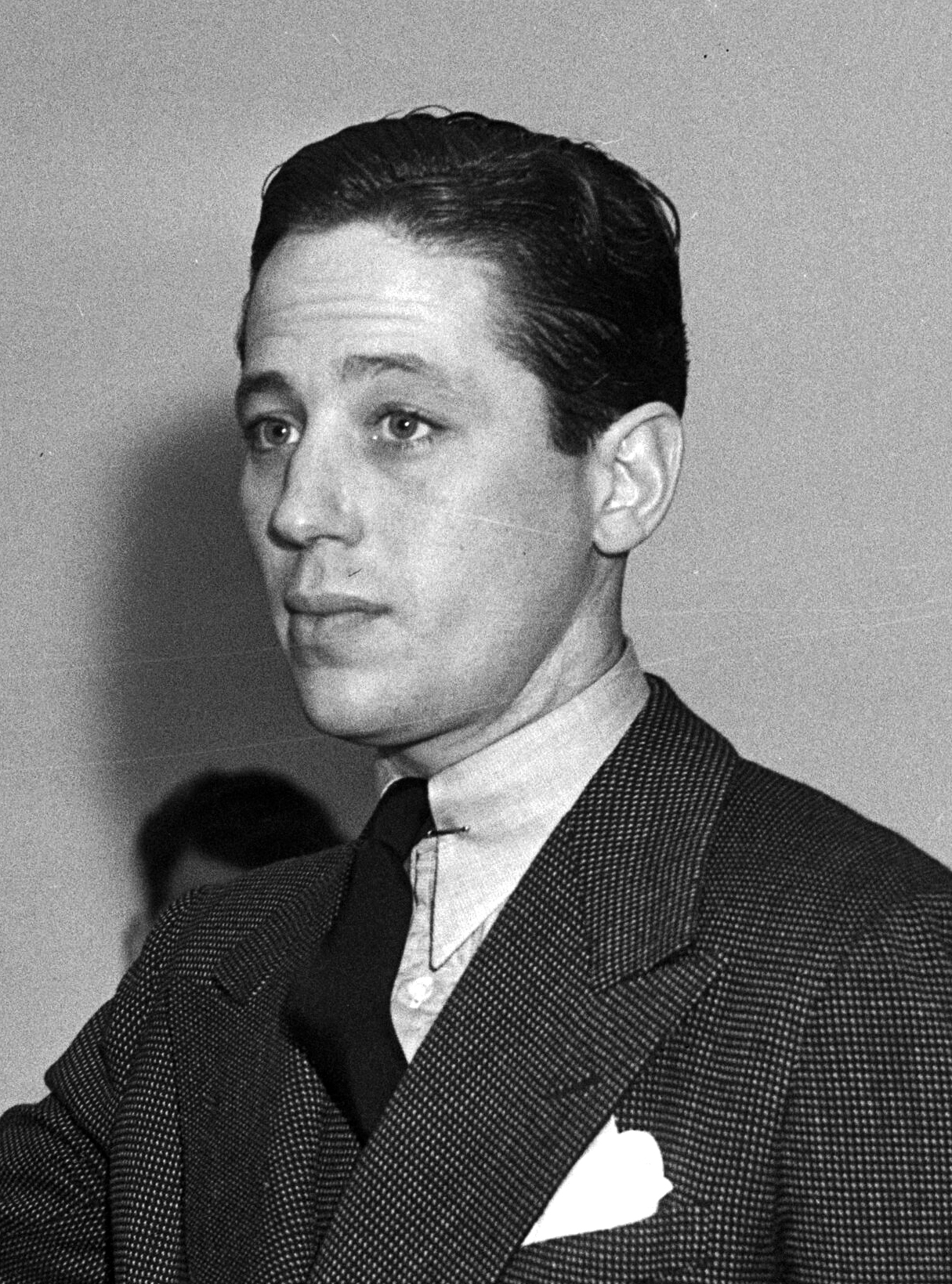
Ross Alexander (born Alexander Ross Smith, Jr.; July 27, 1907 – January 2, 1937) was an American stage and film actor.

Key Information

Early years

[edit]

Alexander was born Alexander Ross Smith. Jr. in Brooklyn, New York,[1] the son of Maud Adelle (nee Cohen) and Alexander Ross Smith.[2]

Alexander attended Erasmus Hall High School in Brooklyn until he and his family moved to upstate Rochester, New York. He attended high school there, but dropped out before graduating.[3] Alexander claimed in interviews that the high-school principal recommended to his parents that the student should follow the acting profession.[citation needed]

When he was 17, he went to New York City and studied acting at the Packard Theatrical Agency.[4]

Stage

[edit]

Alexander began his acting career with the Henry Jewett Players in Boston, debuting in Enter Madame.[5] By 1926, he was regarded as a promising leading man with good looks and an easy, charming style, and began appearing in more substantial roles.[citation needed]

His Broadway credits include Enter Madame (1920), The Ladder (1926), Let Us Be Gay (1928), That's Gratitude (1930), After Tomorrow (1931), The Stork Is Dead (1932), Honeymoon (1932), and The Party's Over (1932).[6] Alexander looked back at The Ladder with bemusement because its oilman backer, who had declared that the play would have a record-breaking run, kept his word by keeping the show open -- despite audiences of perhaps a dozen people at each performance. Ross Alexander stayed with the ailing show for almost two years.[7]

Film

[edit]

Alexander was signed to a film contract by Paramount Pictures, and made his film debut in The Wiser Sex[8] (1932). Paramount dropped his option and he returned to Broadway. In 1934, casting director Max Arnow signed him with Warner Bros. His bigger successes from this period were Flirtation Walk (1934), A Midsummer Night's Dream and Captain Blood (both 1935).

In 1936, he starred in Hot Money. It was a defining role in his persona as a glamorous, well-dressed and dapper leading man, not in the usual Warner gangster mold of rough-hewn stars such as Edward G. Robinson or Paul Muni.[citation needed]

His final film Ready, Willing and Able, a Ruby Keeler musical, was released posthumously. Alexander was the male lead, but he was now billed sixth. According to a commentator on the history of American cinema, Kenneth Anger, supposedly Ronald Reagan was signed by Warner Bros. as a replacement for Alexander due to similarities in their radio voices and mannerisms.[9]

Personal life

[edit]

Alexander married actress Aleta Freel on February 28, 1934, in East Orange, New Jersey.[4] Freel committed suicide on December 7, 1935, shooting herself in the head with a .22 rifle.[10] On September 17, 1936, Alexander married actress Anne Nagel,[11] with whom he had appeared in the films China Clipper and Here Comes Carter (both 1936).[12]

Death

[edit]

Alexander always had problems with money. According to a studio biography, "He ruefully says that he doesn't know how to save money, and guesses that he'll have to get a business manager. And the only thing he collects is -- not first editions or etchings -- but debts!"[13] By the end of 1936, despite his movie employment, he was deeply in debt. On January 2, 1937, three months after marrying Nagel, with his professional and personal life in disarray, Alexander shot himself in the head with a .22 pistol in the barn behind his home.[14] That was not the same weapon his first wife had used. He is buried in lot 292 of the Sunrise Slope section of Forest Lawn Cemetery in Glendale, California.[15]

Filmography

[edit]
Year Title Role Notes
1932 The Wiser Sex Jimmy O'Neill
1934 Social Register Lester Trout
Gentlemen Are Born Tom Martin
Flirtation Walk Oskie
1935 Maybe It's Love Rims O'Neil (starring role)
Going Highbrow Harley Marsh
We're in the Money C. Richard Courtney, aka Carter
A Midsummer Night's Dream Demetrius
Shipmates Forever Lafayette "Sparks" Brown
Captain Blood Jeremy Pitt
1936 Boulder Dam Rusty Noonan (starring role)
Brides Are Like That Bill McAllister (starring role)
I Married a Doctor Erik Valborg
Hot Money Chick Randall (starring role)
China Clipper Tom Collins
Here Comes Carter (working title: The Voice of Scandal) Kent Carter (starring role)
1937 Ready, Willing, and Able Barry Granville (starring role, released posthumously)

References

[edit]
[edit]
Revisions and contributorsEdit on WikipediaRead on Wikipedia
from Grokipedia
Ross Alexander (July 27, 1907 – January 2, 1937) was an American stage and film actor best known for his supporting roles in Warner Bros. pictures during the 1930s, including Demetrius in the Shakespeare adaptation A Midsummer Night's Dream (1935) and Jeremy Pitt in the swashbuckler Captain Blood (1935). Born Alexander Ross Smith in Brooklyn, New York, to a family that later relocated to Rochester, New York, Alexander developed an interest in theater during high school, where he participated in productions and athletics before dropping out to pursue acting professionally. His Broadway debut came in Enter Madame (1920), with notable later appearances in plays such as Honeymoon (1932), where his engaging personality and versatile charm earned praise from critics. He made his film debut in 1932 with Paramount Pictures in The Wiser Sex, before signing as a contract player with Warner Bros. in 1934 and appearing in over a dozen movies, often in light comedic or romantic roles that showcased his breezy demeanor and youthful appeal. Key credits included Flirtation Walk (1934), Shipmates Forever (1935), and China Clipper (1936), contributing to the studio's popular musicals and adventure films during the pre-World War II era. Alexander's personal life was marked by instability, including two marriages to fellow actresses. He wed Aleta Freile in , in February 1934, but she died by via self-inflicted in December 1935 at age 28. He remarried in September 1936, but their union was brief. On January 2, 1937, at age 29, Alexander died by from a self-inflicted in a barn on his ranch near , at the height of his rising career; authorities ruled it a deliberate act, leaving his second wife prostrated. His estate, valued modestly at the time, reflected recent changes that would have added $31,500 had his death occurred a month later. Alexander's untimely death overshadowed his talent, though his performances remain appreciated in classic Hollywood retrospectives for their vitality and promise.

Early life

Birth and family background

Ross Alexander was born Alexander Ross Smith on July 27, 1907, in , New York, the son of Maud Adelle (née ), a homemaker, and Alexander Ross Smith, a . The family came from a middle-class background, with the father's trade providing a stable but unremarkable livelihood in the urban environment of early 20th-century New York. Little is documented about his siblings, if any, reflecting the limited public records available on his immediate family beyond these core details. During Alexander's high school years, his family relocated from to , where he continued his education at a local high school before dropping out prior to graduation. This move shifted the family from the bustling boroughs of New York City to a more provincial upstate setting, though no specific reasons for the relocation—such as business opportunities for his father—are detailed in surviving accounts. The Smith household maintained no notable ties to the theater or entertainment industry, distinguishing Alexander's origins from those of many performers who grew up in artistic families.

Education and entry into theater

Alexander attended high school in , following his family's relocation from , where he became deeply involved in school theatrical productions and local amateur theater groups. These experiences ignited his passion for performance, blending dramatic pursuits with athletic activities such as soccer and . Determined to forge a path, Alexander dropped out of high school before completing his studies, forgoing graduation to dedicate himself fully to acting. At the age of 13, he secured his first engagement with the Henry Jewett Players, a prominent repertory company in , debuting in a minor role in the comedy Enter Madame. This production marked his entry into structured theater, where he performed for 22 weeks, honing basic and delivery under the company's rigorous ensemble format. Building on this foundation, Alexander transitioned to New York, reprising his small role in the Broadway mounting of Enter Madame (1920–1922), which ran for 350 performances across multiple theaters. His early tenure with the Henry Jewett Players provided essential training through a series of minor roles in various plays, allowing him to develop versatility and poise in repertory settings before advancing to larger opportunities.

Career

Stage career

Alexander began his professional stage career on Broadway as a teenager, debuting in the long-running Enter Madame, which opened on August 16, 1920, and ran for 350 performances. In this production, he appeared in a supporting role, marking his entry into the New York theater scene at age 13. Following his early involvement in high school theater, Alexander expanded his Broadway presence with nearly a dozen appearances between 1926 and 1934, demonstrating versatility across genres. A key early opportunity came with The Ladder, a initially scheduled for production in the early but postponed due to rewrites; it finally premiered on , , and ran for 640 performances. In this play, Alexander portrayed multiple characters, including William Matteson, Master William Warren, Lord William Sedley, and William Covill, highlighting his range in ensemble work. During the delay, he honed his skills in regional theater by joining the Wright Players in , where he delivered 63 performances across seven plays in the mid-1920s, building practical experience in productions. Alexander's Broadway tenure included several successes in the late 1920s and early 1930s, often in comedic roles that showcased his boyish appeal. In Let Us Be Gay, a comedy by Rachel Crothers that opened on February 19, 1929, he played Bruce Keen opposite Tallulah Bankhead; the production ran for 353 performances before closing in December 1929 amid the economic fallout from the Wall Street Crash, after which Alexander joined the Chicago touring company. He followed with roles in The Stork Is Dead (1932, as Comte Rene de Gaumont), Honeymoon (1932, as Sam Chapman), The Party's Over (1933, as Martin), and Under Glass (1933, as Tony Pell), along with the role of William North in the comedy That's Gratitude (1930–1931, 197 performances), Pete Piper in the drama After Tomorrow (1931, 77 performances), Andre in the musical comedy The Wooden Slipper (1934, 5 performances), and Sonny Raeburn in No Questions Asked (1934, 16 performances). Contemporary reviews praised his performances for their charm and versatility, noting his ability to infuse roles with youthful energy and emotional depth, which helped solidify his reputation as a promising leading man on the New York stage.

Film career

Alexander made his Hollywood debut in the pre-Code crime drama The Wiser Sex (1932), produced by , where he was sixth-billed as Jimmy O'Neill alongside and . This marked his transition from Broadway stage work, bringing his charismatic presence to the screen in a supporting role amid a story of gangsters and mistaken identities. Following minor roles in early films such as (1934) at Astoria Studios and Gentlemen Are Born (1934) with , Alexander signed a contract with in 1934, which propelled him into a prolific period of over a dozen films by 1937. His early Warner output included the musical Flirtation Walk (1934) opposite and , showcasing his light comedic timing in a tale of West Point romance, and Going Highbrow (1935). Standout dramatic performances followed, including the role of Demetrius in the lavish Shakespeare adaptation (1935), co-starring , , and , and Jeremy Pitt in the swashbuckling adventure Captain Blood (1935) with . Alexander continued as a versatile contract player in lighter fare, such as Maybe It's Love (1935) with , We're in the Money (1935), Boulder Dam (1936), Brides Are Like That (1936), Hot Money (1936), I Married a Doctor (1936), Two Against the World (1936), China Clipper (1936), and Here Comes Carter (1936). His final film, Ready, Willing and Able (1937), featured him fifth-billed in a musical comedy with . However, by late 1936, his momentum slowed due to typecasting in youthful, romantic leads and emerging personal challenges, limiting him to supporting parts despite his earlier promise.

Personal life

Marriages

Alexander married actress Aleta Friele, professionally known as Aleta Freel, in early 1934 following a backstage romance in theater circles. Freel, a Broadway performer with roles in productions like The Party's Over, shared a parallel acting career with her husband. The couple wed on February 23, 1934, in . Their union ended tragically less than two years later when Friele died by on December 7, 1935, shooting herself with a .22 outside their Laurel Canyon home in . The incident occurred amid Friele's growing frustrations with her stalled Hollywood ambitions, reportedly due to disappointment in the results of her . Biographers have characterized the marriage as a possible lavender arrangement intended to conceal Alexander's . Alexander's first marriage, around 1928 to vaudeville performer Helen Burroughs, had ended in divorce prior to his union with Freel. In September 1936, Alexander wed actress Anne Nagel, whom he had met while filming China Clipper and Here Comes Carter. The elopement took place on September 17 in Yuma, Arizona, marking his second attempt at a stabilizing personal life amid professional pressures. Nagel, known for supporting roles in B-films and serials, maintained her career post-marriage, appearing in titles like The Green Hornet serial. The relationship faced strains from Alexander's faltering studio prospects at Warner Bros., yet it persisted until his death months later.

Sexuality and personal struggles

Ross Alexander navigated his career in an era when was not only but could end a performer's livelihood, leading him to maintain a existence. Reports indicate he engaged in discreet relationships, including one with producer and songwriter John Golden, whom he met while performing in the 1926 Broadway production The Ladder, and a rumored with actor during the 1935 filming of Captain Blood. These liaisons, kept hidden amid the strict moral codes of Hollywood, contributed to his internal conflicts and a pattern of emotional volatility evident from his youth. Alexander's personal struggles intensified with , which worsened under the relentless pressures of studio contracts and in light comedic roles that limited his artistic range. By late 1936, mounting financial debts from poor investments and lifestyle demands compounded his fears of being forever pigeonholed, eroding his sense of stability. His depression deepened following the of his first wife, Aleta Friele, on December 7, 1935, an event that left him wracked with guilt and increasingly isolated; contemporary accounts noted his heavy drinking and persistent fretting over the tragedy. No prior suicide attempts are documented, but his marriages appeared to function partly as covers for his private identity, adding layers to his emotional burden.

Death and legacy

Circumstances of death

On January 2, 1937, Ross Alexander died by suicide at the age of 29 in the hayloft of the barn on his estate in Van Nuys, Los Angeles. He had informed his chauffeur, Cornelius Stevenson, earlier that evening around 7 p.m. that he was heading to the barn to "kill a duck," after which a single gunshot was heard; Stevenson discovered Alexander's body slumped over, with a .22-caliber pistol lying beside him and a self-inflicted wound to the temple. The incident occurred roughly three and a half months after Alexander's marriage to actress on September 17, 1936, and roughly thirteen months after the of his first wife, Aleta Freel, on December 7, 1935. Nagel, who was at home during the event, became hysterical upon learning of the discovery and was initially unable to provide coherent details to authorities. Police and the coroner's office quickly ruled the a , attributing it primarily to despondency stemming from Freel's , which had exacerbated Alexander's ongoing personal struggles with depression. Funeral services were held on January 8, 1937, at the Little Church of the Flowers in , followed by burial in Forest Lawn Memorial Park. Alexander's parents, Mr. and Mrs. A. Ross Smith, were notified and en route from , but the body remained in for the proceedings.

Posthumous impact

Alexander's at the age of 29, amid the era's pervasive stigma surrounding and , contributed to a limited immediate legacy, with Warner Brothers actively suppressing potentially scandalous personal materials from his home to protect the studio's image. His youth and abrupt end overshadowed any emerging stardom, leaving no major awards or significant estate; instead, he died deeply in debt, which further diminished prospects for posthumous financial or institutional recognition. Despite this, his screen work endured through key films such as (1935) and Captain Blood (1935), which preserved his charismatic presence for later audiences via archival availability on platforms like . Occasional revivals of these productions have highlighted his charm as an underrated contract player in 1930s Hollywood. Modern scholarly interest culminated in John Franceschina's 2020 biography Ross Alexander: The Life and Death of a Contract Player, the first full-length study of his career and closeted life, drawing on unpublished documents to illuminate his overlooked contributions during , the , and the Production Code era. In queer history contexts, Alexander features in analyses of 1930s Hollywood, particularly his effeminate portrayal of in , which aligns with stereotypes of male and enriches queer readings of Shakespearean adaptations.

References

Add your contribution
Related Hubs
User Avatar
No comments yet.