Hubbry Logo
search
logo
Sea Org
Sea Org
current hub
2227623

Sea Org

logo
Community Hub0 Subscribers

Wikipedia

from Wikipedia

Key Information

The Sea Organization or Sea Org is the senior-most status of staff within the Church of Scientology network of corporations, but is not itself incorporated. In the 1960s and 1970s, the Sea Org was started as L. Ron Hubbard's private navy, and adopted naval uniforms and ranks.[2]: 263 [3]: 124  Today, all Scientology management organizations are exclusively staffed with Sea Org members.[4] The Sea Org maintains strict codes for its members, beginning with a billion-year pledge of service to Scientology upon initiation.[3]: 125  David Miscavige, the leader of Scientology, is the highest-ranking Sea Org officer with the rank of captain. The higher rank of commodore is permanently reserved for the reincarnation of the late L. Ron Hubbard, founder of Scientology.[1]: 139  Some ex-members and scholars have described the Sea Org as a totalitarian organization marked by intensive surveillance and lack of freedom.[3]: 125 

In a 1992 memorandum by the Church of Scientology International, the following information was provided to the Internal Revenue Service with regards to the nature of the Sea Org:[5]

[The Sea Org] does not have an ecclesiastical organizing board or command channels chart or secular existence such as an incorporated or unincorporated association. [...] Although there is no such "organization" as the Sea Organization, the term Sea Org has a colloquial usage which implies that there is. There are general recruitment posters and literature for "The Sea Org" which implies that people will be employed by the Sea Org when in reality they will join, making the billion year commitment, at some church that is staffed by Sea Org members and become employees of that church corporation. [...] The Sea Org exists as a spiritual commitment that is factually beyond the full understanding of the [Internal Revenue] Service or any other but a trained and audited Scientologist.

History

[edit]

The Sea Org was established on August 12, 1967, by L. Ron Hubbard, the founder of Dianetics and Scientology, initially aboard three ships, the Avon River, the Enchanter, and HMS Royal Scotsman. Hubbard later rechristened the three vessels the Diana, the Athena, and the Apollo. The Apollo served as the flagship, or simply called "Flag", and Hubbard was referred to as Commodore.[1]: 93 [6]: 26 

In 1971, the Sea Org assumed responsibility for the delivery of the upper levels of its auditing and training, known as the Operating Thetan or "OT" levels.[7]: 46–47  In 1981, under the aegis of the Commodore's Messenger Organization led by David Miscavige, Sea Org members dissolved the Guardian's Office (GO) and assumed full responsibility for the church's international management, later reassigning the GO's duties to the Office of Special Affairs in 1983 during the corporate restructuring of the Church.[8]

It moved to land-based organizations in 1975, though maritime customs persist, with many members wearing naval-style uniforms and addressing both male and female officers as "sir".[9] In 1985, the church purchased a 440-foot (130 m) motor vessel, the Freewinds, which docks in Curaçao in the southern Caribbean and is used as a religious retreat and training center, staffed entirely by Sea Org members.[10] Sea Org members make a lifetime commitment to Scientology by signing a billion-year contract officially described as a symbolic pledge.[7]: 53  In exchange, they are given free room and board, as well as a small weekly allowance. Sea Org members agree to strict codes of discipline, such as disavowing premarital sex, working long hours (on average at least 100 hours per week)[11] and living in communal housing called berthing.[12] They are allowed to marry, but must leave the Sea Org if they have or want to raise children.[13]

Background

[edit]
L. Ron Hubbard founded the Church of Scientology in 1953 and the Sea Org in 1967.

According to Hubbard, much of the galaxy, including Earth (known as "Teegeeack"), was ruled tens of millions of years ago by the Galactic Confederacy. The confederacy was controlled by Xenu, a tyrant who was eventually overthrown by a group within the Galactic Confederacy known as the "Loyal Officers". Religious scholar Hugh Urban writes that the Sea Org is modeled after these Loyal Officers.[3]: 124  Urban also describes the Sea Org, with the naval uniforms and ranks, as an idealized re-creation of Hubbard's own World War II military career. He says the Sea Org is reminiscent of the "Soldiers of Light" in Hubbard's science fiction story collection Ole Doc Methuselah.[3]: 124  The publicized goal of the Sea Org is to "get ethics in on the planet".[3]: 125 

Academic Stephen A. Kent has argued that at least part of the reason for the establishment of the Sea Org was that the Church of Scientology's practices encountered resistance from the American Food and Drug Administration and the Internal Revenue Service, as well as from the governments of the United Kingdom, Australia, and Rhodesia. Sailing on the high seas meant the church could escape their attention.[14]

In 2000 the number of Sea Org members was listed at around 5,800.[7]: 53  Most Sea Org members reside in church complexes in Los Angeles, Clearwater, Copenhagen, London, Saint Hill, and Sydney, with some at smaller centers or on assignment elsewhere.[7]: 53  According to reports filed with the Australian Charities and Not-for-profits Commission in 2022, the Church of Scientology Religious Education College Incorporated, Scientology's UK arm, claimed to have a total of 700 "volunteers" (including Sea Org) across Saint Hill, London, Manchester, Birmingham and other UK organizations.[15][failed verification]

According to scholar Susan Raine, Hubbard created the Sea Org as a "kind of space navy, melding [sci-fi] space ideas with Earthbound naval ones." Hubbard biographer Jon Atack recalled a confidential Sea Org executive directive that claimed that governments of the world were on the verge of collapse: "The Sea Org would survive and pick up the pieces."[16]: 21 

Structure

[edit]

Sea Org Day is August 12, when ceremonies are held to commemorate the achievements and contributions of Sea Org members, and when rank and promotion ceremonies take place.[17][18][19][20]

High Winds is the magazine of the Sea Org. The first issue was released on Sea Org Day 1980.[21]

Estates Project Force

[edit]

All new recruits are required to complete compulsory novitiate before they are allowed to join the Sea Org, which has been described as a boot camp.[22] During this phase, known as the Estates Project Force (EPF), recruits are not considered full Sea Org members. They are required to address all members as "sir", regardless of rank, and must run everywhere instead of walking.[23] Married couples are separated for the duration of the EPF and not allowed to have private or intimate contact with each other.[citation needed]

While on the EPF, recruits are assigned an intensive daily regimen divided between five hours of manual labor and five hours of study and indoctrination known as "Product Zero". Scientology courses required to complete the EPF include:[24][25]

  • Basic Study Manual, an introductory course in Study Technology, a simplified version of the Student Hat course.
  • Introduction to Scientology Ethics, a basic course in Scientology ethics and justice.
  • Basic Sea Org Member Hat, a course on the basics of membership in the Sea Org and what is expected.
  • Welcome to the Sea Org, a series of taped lectures Hubbard originally gave new recruits in October 1969.
  • Personal Grooming Course, a course on personal hygiene.

The EPF has no definite schedule. Recruits graduate from the EPF when all required courses have been completed and upon successfully undergoing a mandatory "7A Security Check" and approval by a "Fitness Board".[26] They may then join the Sea Org as full members.[23]

Code of a Sea Org Member

[edit]

Sea Org recruits verbally agree to an 18-point pledge as part of a swearing in ceremony. Members formally reaffirm their acceptance of this code annually on Sea Org Day, August 12, the anniversary of the day the Sea Org was founded.[7]: 54–56  The Code of a Sea Org Member includes such promises as:

1. I promise to help get ethics in on this planet and the universe, which is the basic purpose of the Sea Org.
2. I promise to uphold, forward and carry out Command Intention.
5. I promise to uphold the fact that duty is the Sea Org member's true motivation, which is the highest motivation there is.
12. I promise to be competent and effective at all times and never try to explain away or justify ineffectiveness nor minimize the true power that I am.
18. I promise to make things go right and to persist until they do.

Billion-year commitment

[edit]

According to Hubbard, the Sea Org's mission is "an exploration into both time and space".[3]: 124  Sea Org members act as goodwill representatives and administrators of Scientology; all policy and administrative posts in the church's key organizations are held by Sea Org members.[7]: 49  Sea Org are housed in communal housing called berthing, and receive a basic allowance of about $50 per week.[13]

In accordance with Scientology beliefs, members are expected to return to the Sea Org when they are reborn; the Sea Org's motto is Revenimus ("We Come Back").[16]: 175  Members must therefore sign a symbolic billion-year commitment, pledging to "get ethics in on this planet and the universe".[3]: 125  The church contends that the agreement is not a legally binding contract but merely a symbolic demonstration of the dedication members are expected to give to the organization, and that they are free to leave if they wish. After signing, members report to the Estates Project Force, the Sea Org's induction program; J. Gordon Melton writes that members may take several years between signing the commitment and attending the induction. Once induction is completed, the final decision to join is made.[7]: 54 

Members who leave the Sea Org are issued a "freeloader's bill", retroactively billing them for any auditing or training they received. Although the bill is not legally enforceable, these Scientologists may not receive services at any Scientology organization until they pay it and perform an amends program.[27]

Marriage and family

[edit]

From the early 1970s to the start of the 21st century, Sea Org members' children were often placed in the Cadet Org. Sea Org members may marry one another but are not permitted to marry outside the organization; extramarital sex is also prohibited. Couples with children must leave the Sea Org and return to other staff positions within the church until the child is six years old; thereafter the children are raised communally and allowed to visit their parents in the Sea Org on weekends or about an hour a day.[28] Children of members have themselves joined the Sea Org when they came of age.[7]: 57  Several former members have said they were advised (or even forced) to have an abortion to avoid being sent to lower organizations. Scientology presents itself as opposed to abortion and actively speaks out against it in its publications.[29][30][31]

Ships and land bases

[edit]
The church's cruise ship, the Freewinds, staffed by Sea Org members

In 1967, the Church of Scientology purchased the 1936-built ferry Royal Scotsman, which it renamed the Apollo, for use as Sea Org's flagship.

In 1975, the church sold the Sea Org's ships and moved the organization to land bases around the world, which as of 2003 operated in Clearwater, Copenhagen, London, Los Angeles, Mexico City, Saint Hill Manor in the UK, and Sydney, with smaller offices in Budapest, Johannesburg, Madrid, Milan, Moscow, and Toronto.[7]: 53 

In 1987, the church purchased a ship, La Bohème, which it renamed Freewinds. OT VIII, the highest auditing level of Scientology available, is exclusive to the Freewinds and can only be undertaken there. The ship also hosts various courses, seminars, conventions, and events, including the annual Maiden Voyage celebration.[1]: 284 [32]

Rehabilitation Project Force

[edit]
Sea Org members performing manual labor on the Rehabilitation Project Force

The Rehabilitation Project Force (RPF), established in January 1974, is an immersive disciplinary program aimed at isolating and reconditioning members through intensive ideological re-education and labor. Originally it was for Sea Org members who had fallen short of church expectations, failed security checks, or violated certain policies, but it was increasingly used as a form of punishment or a cheap labor pool for construction work. RPF groups operate within Sea Org compounds; while there are no physical locks on the doors, participants are closely watched and their movements controlled. Many ex-Sea Org members have reported grueling work and harsh treatment. On the RPF, one works eight hours of physical work six days a week, such as painting, plumbing, and upkeep of grounds. Members also spend five hours a day studying with a partner.[7]: 62–68 

Former Scientologist Jon Atack argued, in A Piece of Blue Sky (1990), that treatment of Sea Org members in the RPF was a "careful imitation of techniques long-used by the military to obtain unquestioning obedience and immediate compliance to orders, or more simply to break men's spirits".[16]: 206  One former member, Gerry Armstrong, said that during his time in the Sea Org in the 1970s he spent over two years banished to the RPF as a punishment. He wrote,

It was essentially a prison to which crew who were considered nonproducers, security risks, or just wanted to leave the Sea Org, were assigned. Hubbard's RPF policies established the conditions. RPF members were segregated and not allowed to communicate to anyone else. They had their own spaces and were not allowed in normal crew areas of the ship. They ate after normal crew had eaten, and only whatever was left over from the crew meal. Their berthing was the worst on board, in a roach-infested, filthy and unventilated cargo hold. They wore black boilersuits, even in the hottest weather. They were required to run everywhere. Discipline was harsh and bizarre, with running laps of the ship assigned for the slightest infraction like failing to address a senior with "Sir". Work was hard and the schedule rigid with seven hours' sleep time from lights out to lights on, short meal breaks, no liberties and no free time ...

When one young woman ordered into the RPF took the assignment too lightly, Hubbard created the RPF's RPF and assigned her to it, an even more degrading experience, cut off even from the RPF, kept under guard, forced to clean the ship's bilges, and allowed even less sleep.

— Jon Atack in A Piece of Blue Sky[16]: 206 

Uniform insignia

[edit]

Source: [33]

Officer ranks - Shoulder board insignia
Ratings - Sleeve insignia†

† No sleeve insignia for Able Bodied Seaman and Swamper ratings.

Analysis

[edit]
Interview of someone who joined the Sea Org at 16 years old

Several scholars, writers, and former members have compared the Sea Org to a paramilitary group.[34] In Tom Cruise: An Unauthorized Biography (2008), Andrew Morton called it a "fraternal paramilitary organization", and wrote that members are instructed to read The Art of War by Sun Tzu, and On War by Carl von Clausewitz. He wrote that Scientology leader David Miscavige created an elite unit within the Sea Org called the "SEALs", named after the United States Navy SEALs, who receive better lodging, sustenance, and uniforms than other Sea Org members.[35]

Lawrence Wright wrote in The New Yorker in 2011 that the Sea Org used small children drawn from Scientology families for what he described as forced child labor. The article described extremely inhumane conditions, with children spending years in the Sea Org, sequestered from mainstream life.[13]

See also

[edit]

References

[edit]

Grokipedia

from Grokipedia
The Sea Organization, abbreviated as Sea Org, is the paramilitary-style religious order and ecclesiastical management structure of the Church of Scientology, founded by L. Ron Hubbard in 1967 to support advanced doctrinal research, supervise international church operations, and ensure fidelity to Scientology's spiritual objectives.[1][2] Initially based on a fleet of ships commanded by Hubbard, reflecting his naval experiences, the group later shifted to land bases such as those in California and Florida while preserving maritime customs including uniforms, hierarchical ranks from midshipman to captain, and a code of conduct emphasizing discipline and eternal service.[3][1] Members voluntarily enlist by signing a symbolic billion-year contract, representing commitment across lifetimes to the thetan's immortal nature central to Scientology cosmology, and typically receive minimal stipends while forgoing external careers, family autonomy, and personal assets to prioritize the church's expansion and planetary "clearing" mission.[4][5] The Sea Org's defining role involves directing Scientology's administrative apparatus, auditing advanced levels like Operating Thetan processes, and maintaining doctrinal purity amid growth to millions of adherents worldwide, achievements the church attributes to the order's rigorous structure modeled on historical religious monastic traditions.[6][7] However, the organization has drawn persistent scrutiny for reported practices such as extended work hours without proportional compensation, separation of children from parents, and the Rehabilitation Project Force—a corrective program for underperformers—allegations primarily from defectors in lawsuits like Headley v. Church of Scientology International, though church defenses frame these as voluntary religious disciplines akin to ascetic orders, with empirical verification complicated by limited independent access and potential biases in adversarial testimonies.[8][9] Under current leader David Miscavige, a Sea Org captain, the group continues to oversee key assets like the Freewinds vessel for confidential services, embodying Scientology's blend of hierarchical authority and metaphysical ambition despite external critiques questioning its operational ethics.[1]

Origins and Development

Founding and Initial Purpose (1967)

The Sea Organization (Sea Org) was formally established on August 12, 1967, by L. Ron Hubbard, the founder of Scientology, initially operating from a small fleet of ships in the Mediterranean Sea, including vessels that Hubbard had acquired earlier that year such as the former Royal Scotsman (renamed Apollo and serving as flagship).[10] [11] This maritime base allowed for a mobile headquarters amid Hubbard's decision to step back from land-based executive positions within Scientology organizations.[12] According to official Church of Scientology accounts, the Sea Org's initial purpose was to form an elite cadre of dedicated members—selected from those who had attained the spiritual state of "Clear" or higher—to assist Hubbard in conducting advanced spiritual research and to supervise the management and expansion of Scientology organizations worldwide.[1] [13] Members adopted naval-style uniforms, ranks, and protocols, reflecting Hubbard's background and vision for a disciplined, hierarchical structure modeled loosely on maritime traditions to ensure operational efficiency and loyalty.[11] This founding coincided with escalating legal and regulatory pressures on Scientology, including a 1965 UK government inquiry that criticized the organization and led to visa restrictions for Hubbard, prompting his relocation from land-based operations in England to international waters for greater autonomy.[14] [15] Historical analyses, often drawing from Hubbard's contemporaries and declassified documents, indicate that the sea-based structure was strategically designed to circumvent bureaucratic interference and potential raids on fixed facilities, enabling continued dissemination of Scientology technologies without immediate jurisdictional constraints—though Church sources frame it solely as a proactive step for research and oversight rather than evasion.[11] [15]

Transition from Ships to Land Bases (1968–1970s)

In the late 1960s, as the Sea Organization expanded its administrative and delivery functions, Sea Org personnel began establishing land-based Advanced Organizations to handle higher-level auditing and training, supplementing the ongoing shipboard operations of the fleet led by L. Ron Hubbard. Between 1968 and 1969, teams dispatched from the mobile units set up such facilities in Los Angeles, California; Edinburgh, Scotland (later relocated within the UK); and Copenhagen, Denmark, marking the initial shift toward terrestrial infrastructure while the ships, including the Apollo, remained the central hub for Hubbard's research and command.[16][17] These outposts enabled the organization to serve growing numbers of Scientologists ashore, addressing logistical constraints of sea-based mobility amid increasing international scrutiny and operational demands.[18] Throughout the early 1970s, the Sea Org continued to dispatch members to manage and expand these land facilities, with the fleet persisting as the symbolic and functional core despite challenges such as mechanical issues, port denials, and Hubbard's peripatetic voyages across the Mediterranean and Atlantic. This hybrid model facilitated administrative oversight of global Scientology missions, but mounting pressures—including Hubbard's health concerns, escalating legal entanglements with governments, and the need for scalable infrastructure—prompted a reevaluation of the maritime focus. By mid-decade, preparations accelerated for a comprehensive relocation, reflecting pragmatic adaptations to sustain the organization's mission of planetary dissemination.[17] The pivotal phase culminated in 1975, when the church divested the fleet, selling the vessels including the Apollo, and consolidated operations onto land, with Hubbard directing the establishment of the Flag Land Base in Clearwater, Florida. Utilizing covert purchases through straw corporations, the organization acquired key properties such as the Fort Harrison Hotel (under the alias "Southern Land Development and Leasing Corp.") and the former Jack Tar Hotel, transforming them into the spiritual headquarters for advanced services.[19][20] This move, involving over 5,000 personnel initially, provided fixed bases for training, auditing, and management, enhancing efficiency but also exposing the group to heightened local and regulatory oversight in the United States.[17] Subsequent bases, such as those in Los Angeles and Copenhagen, solidified the land-centric structure, with the Sea Org adopting permanent compounds worldwide by the late 1970s.[1]

Expansion Under Hubbard and Miscavige (1970s–Present)

In 1975, under L. Ron Hubbard's direction, the Sea Organization sold its fleet of ships and shifted operations to land bases, establishing the Flag Land Base as its spiritual headquarters in Clearwater, Florida.[21] This involved the secretive acquisition of the Fort Harrison Hotel and adjacent properties on December 1, 1975, under corporate aliases to avoid public scrutiny, expanding the organization's capacity for delivering advanced auditing and training services.[21] [22] The move addressed overcrowding on vessels like the Apollo and enabled larger-scale operations, with the Flag site growing from two initial buildings to a complex spanning over 3 million square feet across 56 properties by the 2020s.[23] Hubbard, who entered seclusion in late 1975 following U.S. government investigations into Scientology, continued to oversee the Sea Org remotely from undisclosed properties in Southern California, including purchases directed in 1979 for secure facilities.[24] This period saw the consolidation of administrative control under the Sea Org, which assumed management of international Scientology structures by the late 1970s.[17] Hubbard's death on January 24, 1986, marked the end of his direct involvement, leaving the organization under the leadership of emerging executives. David Miscavige, who joined the Sea Org at age 16 in 1976 and rose through the Commodore's Messenger Organization—a youth cadre Hubbard tasked with executing his directives—emerged as the dominant figure by the early 1980s, effectively consolidating power after Hubbard's passing.[25] [26] Under Miscavige, the Sea Org directed the "Ideal Organization" program starting in the early 2000s, renovating and constructing large-scale church facilities worldwide to standardize services and purportedly increase public dissemination.[27] This initiative involved Sea Org oversight of property acquisitions and builds, such as the 2013 Flag Building in Clearwater, claimed to support expanded auditing delivery.[22] Key Sea Org bases under Miscavige include the Gold Base (also known as Int Base) in Hemet, California, established in the 1980s as the ecclesiastical management hub for global operations, housing Commodore's Messenger units and policy execution teams.[28] The Freewinds, a refitted cruise ship commissioned in 1988, serves as a floating base for confidential upper-level Scientology training, accommodating Sea Org staff and advanced parishioners in international waters to evade regulatory scrutiny.[29] By the early 2000s, Sea Org membership stabilized around 5,000 to 6,000, primarily stationed at these and other continental bases like those in Los Angeles and Copenhagen, though independent accounts question sustained recruitment amid high attrition rates.[30] Official church statements attribute ongoing expansion to these efforts, citing increased org openings, while critics, including former executives, argue resources were diverted to real estate over membership growth.[31] [32]

Organizational Framework

Hierarchical Structure and Ranks

The Sea Organization maintains a rank system modeled on naval hierarchies, with members wearing uniforms and insignia that denote their status and authority within the group. This structure emerged from its maritime origins aboard L. Ron Hubbard's fleet in 1967, emphasizing discipline, chain of command, and rapid execution of orders. Ranks are assigned based on tenure, demonstrated competence in Scientology practices, and fulfillment of organizational posts, though promotions can be fluid and subject to performance evaluations. While the Church of Scientology describes the Sea Org as lacking a rigid formalized structure beyond ecclesiastical lines of authority, internal practices include distinct enlisted and officer grades, complete with sleeve stripes and epaulets akin to military traditions.[2][33][34] Entry-level recruits often start as "Swampers," performing menial tasks before advancing to Midshipman status after basic training. Enlisted ranks include Petty Officer Third Class (PO3), Second Class (PO2), and First Class (PO1), followed by Chief Petty Officer (CPO), which involves supervisory roles over junior members. These positions focus on operational duties such as maintenance, administration, and enforcement of policies at Sea Org bases. Warrant Officers bridge enlisted and commissioned tiers, handling specialized technical or advisory functions.[33][35][36] Commissioned officer ranks begin with Ensign and progress through Lieutenant, Lieutenant Commander, Commander, to Captain, the highest active rank held by figures like David Miscavige, Chairman of the Board of Religious Technology Center. The superior rank of Commodore is reserved exclusively for Hubbard, reflecting his founding role as the group's supreme authority. Officers oversee strategic initiatives, base commands, and international coordination, with authority extending across Sea Org divisions like the Watchdog Committee and flagship operations. Insignia for these ranks, displayed on uniforms, mirror U.S. Navy designs, underscoring the paramilitary ethos despite the religious framing.[33][34][37]
Rank CategoryExamplesTypical Responsibilities
EnlistedSwamper, PO3/PO2/PO1, CPORoutine operations, discipline enforcement, junior supervision[35][33]
WarrantWarrant OfficerTechnical expertise, intermediate leadership[33]
CommissionedEnsign to CaptainStrategic oversight, base command, policy execution[33][34]
This system fosters a culture of absolute obedience to superiors, with demotions or reassignments possible for perceived underperformance, as reported by former high-ranking members.[33][35]

Training and Indoctrination Processes

New recruits to the Sea Organization enter the Estates Project Force (EPF), a provisional novice program serving as the initial onboarding phase, where participants receive foundational training in Scientology principles and organizational duties.[38] This boot camp-style regimen typically involves a structured daily schedule combining manual labor—such as cleaning, maintenance, and estate projects—with intensive study of L. Ron Hubbard's policy letters, executive directives, and basic Scientology courses to build discipline, competence, and alignment with the group's ecclesiastical objectives.[2] The EPF emphasizes drills akin to military basic training, including confrontational exercises (Training Routines or TRs) to enhance environmental handling abilities, and is completed before full assignment to operational posts.[1] Following EPF completion, Sea Org members maintain ongoing training integrated into their routines, dedicating a portion of each day—often several hours—to auditing sessions and coursework drawn from Hubbard's writings, aimed at applying Scientology technology for personal advancement and mission effectiveness.[1] [2] This includes specialized staff training for hierarchical roles, such as officer positions, focusing on administrative, ethical, and operational policies to ensure loyalty and productivity; higher ranks require progressive certifications in Hubbard's administrative directives. Auditing, a confessional counseling process using an E-meter device, reinforces doctrinal adherence by addressing "reactive mind" influences and ethical issues, with sessions tailored to detect and resolve potential deviations from organizational ethics.[1] Indoctrination elements manifest through mandatory security checks (sec checks), interrogative auditing variants designed to probe for suppressive influences, disloyalty, or ethical violations, often triggered by performance issues or routine ethics reviews.[39] These processes, rooted in Hubbard's 1960 directives, involve repetitive questioning under the E-meter to elicit confessions, fostering self-censorship and group conformity; critics, including academic analyses, describe them as intrusive mechanisms for control, though the Church frames them as rehabilitative integrity processing.[40] For those deemed ethically compromised, assignment to the Rehabilitation Project Force (RPF)—established in 1974—intensifies re-indoctrination via extended manual labor, amplified study of Hubbard materials, and auditing to restore ecclesiastical standing, with participants isolated and under strict oversight until rehabilitation criteria are met.[41] Such measures, while presented officially as voluntary second chances for dedication renewal, have been contested in legal contexts as coercive, underscoring tensions between the Church's religious order model and external evaluations of autonomy.[42]

Key Facilities and Operational Bases

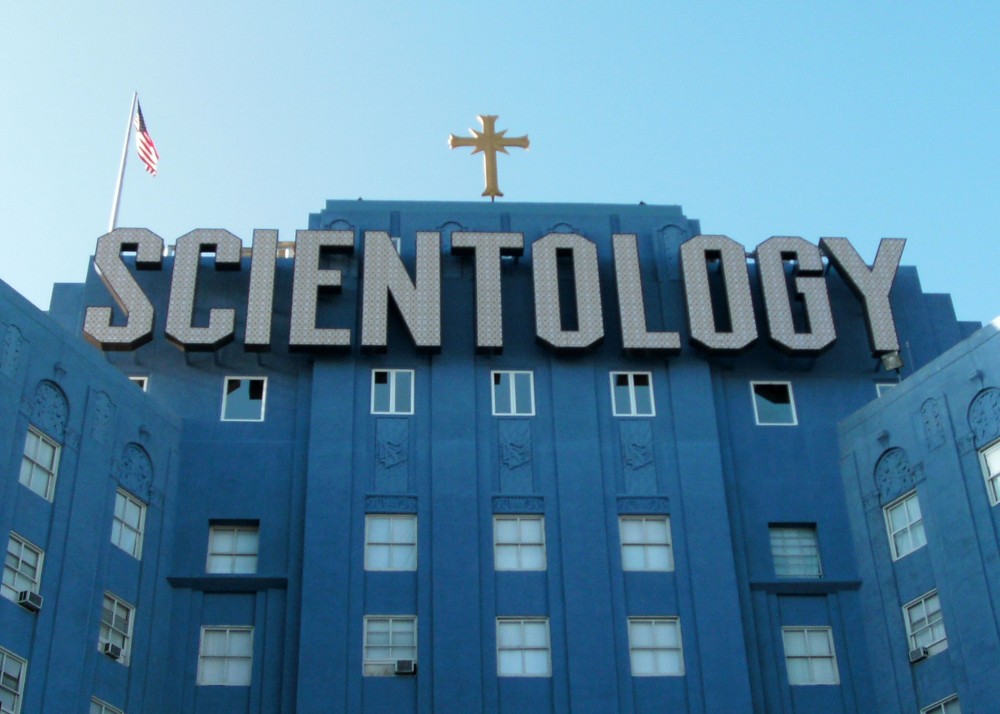
The Sea Organization maintains several primary land-based facilities and one maritime vessel as operational hubs for administering Church of Scientology activities, including management, training, auditing, and dissemination. These bases, staffed predominantly by Sea Org members, support the organization's hierarchical functions and are strategically located to oversee continental and international operations. Key sites include the International Base in California, Flag Land Base in Florida, the Pacific Area Command Base in Los Angeles, and the MV Freewinds ship. The International Base, commonly known as Gold Base or Int Base, is situated on a 500-acre compound in Gilman Hot Springs near Hemet and San Jacinto, California, approximately 90 miles east of Los Angeles. Established in the late 1970s after the transition from sea operations, it serves as the de facto international headquarters, housing entities such as the Church of Scientology International (CSI), the Religious Technology Center (RTC), and other senior management bodies responsible for doctrinal purity, licensing, and global oversight. The facility includes production studios for religious materials, administrative offices, and secure residential areas for Sea Org personnel, with reported features like extensive surveillance and restricted access.[43][44] Flag Land Base in Clearwater, Florida, functions as the spiritual epicenter for advanced religious services, particularly high-level auditing and training. Acquired in 1975 through secretive purchases under aliases, the complex encompasses the historic Fort Harrison Hotel, the Sandcastle Hotel, and surrounding properties totaling over 160 acres in downtown Clearwater. It hosts the Flag Service Organization (FSO), where Sea Org members deliver elite spiritual counseling, and includes museums and facilities dedicated to L. Ron Hubbard's legacy. The site was selected for its isolation from urban distractions, aligning with Hubbard's vision for a dedicated ecclesiastical base.[45][19] The Pacific Area Command (PAC) Base, referred to as "Big Blue" due to its blue-tinted glass facade, is located at 6331 Hollywood Boulevard in Los Angeles, California. Operational since 1969, it manages Scientology activities across the Pacific region, including public dissemination, celebrity services, and regional administration through the Continental Liaison Office (CLO). The seven-story building, expanded in the 1970s, accommodates Sea Org divisions for finance, personnel, and outreach, serving as a major recruitment and operational nerve center in a high-visibility urban setting.[46][47] The MV Freewinds, a 440-foot former cruise ship, operates as a floating religious retreat with its home port in Curaçao, Netherlands Antilles, in the Caribbean. Acquired in 1987 and extensively refitted for ecclesiastical use, it exclusively delivers Operating Thetan Level VIII (OT VIII), the highest auditing level, in a purportedly distraction-free maritime environment echoing the Sea Org's nautical origins. Staffed entirely by Sea Org members, the vessel includes counseling rooms, study areas, and amenities for short-term parishioner stays, though it has faced operational challenges like a 2019 shutdown for asbestos remediation.[48][49] Additional Sea Org facilities support continental operations, such as the Advanced Organization in Copenhagen, Denmark, for European management, and similar bases in Sydney, Australia, though these are subordinate to the primary U.S.-centric hubs.[17]

Core Commitments and Policies

The Billion-Year Contract

The billion-year contract, also known as the Sea Organization pledge, is a formal commitment document signed by all members of the Sea Organization upon joining, obligating them to dedicate the next one billion years to advancing Scientology's aims of spiritual rehabilitation and clearing the planet of reactive influences. Originating in 1967 with the founding of the Sea Org aboard the ship Apollo under L. Ron Hubbard's direction, the pledge was drafted by the initial cadre of approximately 20-30 members to embody a transcendent loyalty extending beyond a single lifetime, reflecting Scientology's doctrine of the immortal thetan and reincarnation across trillions of years. The Church of Scientology describes it as a symbolic religious vow comparable to monastic oaths in other faiths, emphasizing voluntary eternal service rather than temporal employment.[4] Prospective members, typically aged 18 or older and having completed significant auditing and training within the church, sign the contract following an interview process to assess dedication and fitness for the order's rigorous demands. The document pledges adherence to Sea Org flags—such as "Rehabilitation of all aberrated beings"—and submission to the organization's command structure, with provisions for recommitment in future existences if the full term cannot be fulfilled in one life. While the exact wording is not publicly disseminated in full by the church, analyses indicate it functions primarily as an internal rite of initiation, reinforcing the paramilitary discipline and hierarchical ethos of the Sea Org without conferring legal enforceability under civil law, as affirmed in various jurisdictions where such vows have been scrutinized for lacking mutual consideration or finite obligations.[5] Internally, the contract serves as a foundational policy tool for instilling long-term accountability, with members expected to uphold its spirit through ongoing performance evaluations and security checks; deviation, such as route-out attempts, can trigger disciplinary programs like the Rehabilitation Project Force. Church representatives maintain that signing is a profound affirmative act of faith, undertaken after informed consent and probationary periods, countering external portrayals of coercion by highlighting voluntary retention rates and the pledge's role in fostering elite cohesion among roughly 5,000 members worldwide as of recent estimates. Independent scholarly examinations, such as those framing it within comparative religious commitments, note its uniqueness in specifying a quantified cosmic duration, yet underscore its non-secular intent precludes standard contractual remedies.[4][50]

Marriage, Family, and Reproductive Policies

Sea Organization members are permitted to marry one another, with ceremonies conducted according to Scientology rites emphasizing affinity, reality, and communication as foundational to marital success.[51] However, premarital sex and intimate relations are prohibited prior to marriage, reflecting strict moral codes enforced within the group.[52] Marriages often involve spouses assigned to different bases or divisions, resulting in limited personal time together due to the demanding schedules exceeding 100 hours weekly, which prioritize organizational duties over familial bonds.[53] The Sea Org explicitly prohibits members from raising children within the organization, a policy formalized in 1986 and reinforced in 1996, requiring any pregnant member to either terminate the pregnancy or leave the group to pursue family life elsewhere.[53] Prior to 1986, some children were born to Sea Org parents and raised in communal settings or on bases, but subsequent directives banned procreation to maintain undivided focus on the group's mission, with minors allowed to join only with parental consent but barred from forming families.[2] This stance aligns with the billion-year contract's emphasis on eternal service, subordinating personal reproduction to spiritual and operational imperatives.[54] Reproductive policies reflect Scientology's broader doctrine viewing fetuses as potentially inhabited by thetans (immortal spirits), which discourages abortion generally but conflicts with Sea Org restrictions, leading to reported pressures on women to abort to remain in good standing.[55] Multiple former members, including in lawsuits filed in 2010 and 2016, have alleged coercion into abortions—sometimes multiple per individual—through threats of expulsion, disconnection from family, or assignment to the Rehabilitation Project Force, though the Church maintains such decisions are voluntary and denies forcible measures.[56][53][57] Over a dozen ex-Sea Org women interviewed by investigative outlets described a cultural norm pushing abortions to avoid disrupting operations, with settlements in related human trafficking claims in 2018 and 2022 underscoring ongoing disputes without admission of liability.[58][59]

Code of Conduct and Disciplinary Measures

The Code of a Sea Org Member, issued by L. Ron Hubbard via Flag Order 3281 on January 7, 1973, consists of 18 promises that recruits publicly affirm during induction ceremonies and reaffirm annually on August 12. These vows bind members to a lifetime (and purportedly eternal) commitment to the organization's purposes, prioritizing ethical enforcement, technological fidelity, hierarchical obedience, and proactive defense against opposition.[17][60] The promises mandate actions such as spreading ethics across planetary and universal dynamics as the Sea Org's core aim; upholding and executing "Command Intention"; applying Dianetics and Scientology for optimal survival across eight dynamics; preserving technologies exactly; maintaining personal discipline and leading subordinates with fair but firm measures; exemplifying service-oriented command; advancing personal competencies; setting production exemplars; protecting the Sea Org's image; and persisting relentlessly in tasks. A distinctive clause, promise 17, requires members to "through my actions, increase the power of the Sea Org and decrease the power of any enemy," endorsing offensive strategies against perceived threats.[60][17] Violations of conduct standards—encompassing overts like drug use, theft, negligence, or extramarital sex, and withholds of such acts—are self-reported to ethics officers, per Hubbard's Introduction to Scientology Ethics (1968, revised 1973), which posits ethics as removing environmental counter-intentions to ensure organizational survival.[17] Non-disclosure itself violates policy, fostering a culture of mutual surveillance among the approximately 5,000 members as of the early 2000s.[17][61] Disciplinary processes, administered by ethics officers under Hubbard's directives, begin with condition assignments—from "affluence" for high performance to "liability" or "treason" for breaches—each dictating remedial formulas like written successes/failures logs, public amends, financial restitution, or heightened output quotas to ascend ethically. Escalation for unresolved issues involves security checking: prolonged E-meter sessions probing for suppressed transgressions, often lasting hours or days.[17] Formal probes may convene a Board of Investigation or Committee of Evidence, ecclesiastical bodies adjudicating facts, imposing admonitions, or mandating penances such as isolation, fasting, or manual labor, analogous to monastic corrections in other traditions.[62][17] Ultimate sanctions include suspension, demotion, or expulsion via "declare" orders labeling individuals suppressive persons, severing communal ties. For elite Sea Org personnel, the Rehabilitation Project Force (introduced 1974) serves as a terminal measure for chronic underperformance or ethical lapses, requiring 8–12 hours daily of physical toil (e.g., cleaning, construction), mandatory auditing, and study in confined facilities to eradicate "false purposes," with reported participant numbers reaching 350 by 2000 and durations up to years. Church statements portray RPF as voluntary rehabilitation enhancing spiritual causation, while defectors recount coercive elements and physical strain.[17][62][61]

Operational Realities

Daily Work and Living Conditions

Sea Organization members typically adhere to demanding schedules involving 12 to 16 hours of daily work, often extending into late nights to meet production quotas, with minimal sleep of five to six hours per night. This routine includes early morning musters for announcements and inspections, followed by administrative, operational, or promotional tasks specific to their posts, such as managing church facilities, auditing sessions, or recruitment efforts. Mandatory study or auditing periods last 2.5 hours per day, five days a week, focusing on Scientology materials or administrative training, though these are frequently curtailed by workload demands.[63][64] Living arrangements emphasize communal austerity, with members housed in shared quarters—often six to a room with bunk beds—provided by the organization alongside uniforms, meals, and basic medical care. Meals, served in canteen-style settings, consist of simple fare like rice, beans, or processed eggs, with breaks reduced to as little as 15 minutes in high-pressure bases to prioritize productivity. Sundays typically offer limited downtime, with one full day off every two weeks and two weeks of annual vacation, during which personal time is restricted to maintain organizational focus.[1][65][63] These conditions, described by former members as akin to monastic dedication but criticized as exploitative, vary by base—such as the more isolated Int Base or urban PAC facilities—but consistently prioritize mission advancement over personal comfort, with reports of physical exhaustion and limited recreation corroborated across multiple accounts from executives who served in the 1980s through the 2000s.[66][67]

Compensation, Benefits, and Economic Aspects

Sea Organization members receive a nominal weekly stipend, typically $50, in lieu of a traditional salary, as documented in federal court proceedings involving former members Marc and Claire Headley.[68] This amount has remained stagnant for decades, with earlier reports from the 1970s to 1990s citing stipends as low as $17 to $50 per week, reflecting Hubbard's policies designed to minimize financial compensation for staff.[69] The stipend is framed by the Church as an allowance for a religious order, not wages for employment, enabling the organization to classify members as volunteers exempt from standard labor regulations.[70] In exchange for this stipend, the Church provides basic living necessities, including communal housing, meals, uniforms, and limited medical care, though conditions are often described as austere with members living in shared barracks or berthing areas. Benefits do not include health insurance, retirement plans, or paid leave; instead, members are expected to forgo personal savings or external income, with any pre-existing assets often routed to the Church upon joining.[58] Children recruited into cadet organizations or early Sea Org roles receive even less, sometimes no stipend at all, while performing labor from ages as young as 10, as alleged in ongoing lawsuits against the Church for forced labor. Economically, the structure incentivizes total dependence on the Church, as members work extended hours—often 12-18 daily, seven days a week—without accrual of wealth or financial independence, contributing unpaid or minimally compensated labor to Church operations estimated to generate billions in annual revenue from public auditing and courses.[68] Former members report that upon exit, they leave with negligible savings, facing barriers to reintegration due to lack of marketable skills or credentials developed during service, compounded by non-compete clauses and potential repayment demands for "training" received.[71] This model has drawn scrutiny in legal contexts for resembling coerced labor rather than voluntary religious service, though courts have variably upheld the Church's religious exemption defenses.[72]

Exit Procedures and Retention Mechanisms

The Church of Scientology maintains that Sea Org members may leave at any time, subject to completing administrative procedures to wind up their staff affairs and transfer ongoing projects to successors.[73] These steps, known as "routing out," include participation in a religious program to address any perceived ethical outnesses, restore standing as a parishioner, and provide financial recompense for damages caused to the organization, such as unpaid obligations.[73] Official policy emphasizes orderly departure to ensure continuity, with dismissal for severe violations—such as ecclesiastic policy breaches or corporate misconduct—triggering similar processes, potentially including restitution.[73] In practice, routing out is described by former members as a protracted ordeal lasting months, involving intensive security checks (confessional auditing sessions) to uncover reasons for departure, repayment of accumulated debts, and repeated efforts to dissuade the individual from leaving through offers of promotions, counseling, and handling of personal "barriers."[74] Defectors report tactics such as aggressive interviews, group pressure sessions, emotional appeals invoking the existential mission to "clear the planet," and warnings of dire personal consequences outside the organization, including spiritual downfall or societal failure.[74] Some ex-Sea Org members, like those interviewed in investigative reports, resorted to extreme measures—such as threats of self-harm, policy violations like unauthorized sexual activity, or feigning chronic unfitness—to force expulsion when routing out stalled.[74] Members who depart without authorization, termed "blowing," face declaration as a suppressive person (SP), entailing expulsion, loss of ecclesiastical status, and issuance of a "freeloader's bill" retroactively charging discounted auditing and training services received—often amounting to tens or hundreds of thousands of dollars.[75] While the Church discourages blowing and asserts such bills reflect fair accounting for benefits provided, critics and defectors argue they serve as financial deterrents, though courts have not enforced them as legally binding debts.[75] [68] Retention is anchored in the billion-year contract signed upon entry, symbolizing commitment across lifetimes to the Sea Org's goals, reinforced by doctrinal emphasis on the organization's indispensable role in planetary salvation.[54] This is compounded by the disconnection policy, under which SPs—including blown members—are severed from family and friends still in Scientology, creating social isolation as a disincentive to exit; former executives like Mike Rinder have detailed how this enforces compliance, with refusal to disconnect risking one's own SP status.[76] Economic dependence further binds members, given minimal stipends (around $50 weekly as of reports from the 2010s), communal living, and lack of external skills or savings after years of service, making post-departure reintegration challenging.[77]

Role and Impact Within Scientology

Administrative and Strategic Functions

The Sea Organization staffs the highest levels of the Church of Scientology's management hierarchy, including Church of Scientology International (CSI), the mother church headquartered in Los Angeles, California, and other upper-level entities responsible for global oversight.[78][1] All such management organizations are exclusively composed of Sea Org members, who handle administrative functions such as policy implementation, organizational compliance, and coordination across Scientology's international network.[1] This structure ensures that core ecclesiastical administration aligns with L. Ron Hubbard's foundational directives, with Sea Org personnel occupying essential positions in senior churches worldwide.[79] In strategic capacities, the Sea Org was established on August 12, 1967, aboard Hubbard's vessel Apollo to support advanced research operations and supervise Church expansion.[1] Members direct initiatives for disseminating Scientology services globally, including the operation of facilities like the Motor Vessel Freewinds, which delivers confidential upper-level auditing exclusively to Sea Org staff.[1] They also oversee major applied social programs, such as the largest nongovernmental drug education and human rights campaigns, contributing to the Church's broader mission of planetary dissemination.[1] These roles position the Sea Org as the ecclesiastical order entrusted with long-term strategic planning to achieve Scientology's aims of spiritual enlightenment on a worldwide scale.[3]

Contributions to Church Growth and Global Reach

The Sea Organization, established by L. Ron Hubbard on August 12, 1967, serves as the ecclesiastical management structure overseeing the Church of Scientology's international operations, including the supervision of local churches, missions, and advanced service delivery centers. Sea Org members, bound by their commitment to Hubbard's directives, are dispatched on missions to establish, staff, and administer organizations worldwide, providing specialized training and policy enforcement to ensure operational standardization. This centralized command has enabled the Church to maintain a presence in over 150 nations through a network of affiliated entities, with Sea Org personnel filling key executive roles in continental management offices and publishing arms that disseminate Hubbard's writings globally.[1][17][80] A primary contribution to physical expansion lies in the Sea Org's oversight of the Church's building programs, particularly the "Ideal Organizations" initiative initiated under Chairman David Miscavige in the mid-2000s. Sea Org teams coordinate site selection, renovation, and grand openings of flagship facilities designed to accommodate increased public participation in introductory and intermediate Scientology services, such as the Purification Rundown and introductory auditing. Between 2004 and 2024, this effort facilitated the opening or upgrading of dozens of such properties, contributing to a reported doubling of the Church's international assets and property holdings, alongside a 300,000-square-foot increase in global footprint in 2024 alone. These projects, often involving multimillion-dollar investments—like the $103 million in downtown Clearwater acquisitions from 2016 to 2019—aim to enhance visibility and capacity in urban centers, with Sea Org members embedding as on-site administrators to bootstrap local staffing and operations.[81][31][19] To extend advanced services beyond land-based infrastructure, the Sea Org operates the MV Freewinds, a cruise ship retrofitted since 1988 as the exclusive venue for certain confidential upper-level auditing levels, such as OT VIII. Stationed primarily in the Caribbean, the vessel accommodates international parishioners, reducing logistical barriers for those in remote regions and thereby broadening access to elite spiritual progression without reliance on fixed global hubs. Sea Org crews handle all onboard management, technical auditing delivery, and maintenance, underscoring their role in sustaining the Church's hierarchical service structure amid geographic dispersion. This maritime outpost, crewed by approximately 300 Sea Org members, exemplifies how the organization's mobile and dedicated workforce supports sustained global dissemination efforts.[82][79]

Empirical Metrics of Effectiveness

The Sea Organization, established in 1967 to oversee the Church of Scientology's global expansion and administrative functions, has sustained a core membership estimated at 5,000 to 8,000 individuals worldwide, with figures hovering around 5,800 in 2000 and showing no substantial increase in subsequent decades despite recruitment drives.[17][83] This stable but modest size contrasts with the group's foundational pledge to achieve planetary spiritual enlightenment over a billion-year timeframe, as internal metrics on progress—such as the production of "Clears" and "Operating Thetans"—have remained stagnant, with fewer than 120,000 Clears produced in over 70 years against goals implying millions.[32] Independent analyses attribute limited overall Church growth to Sea Org efforts, with global Scientology membership estimated at 25,000 to 50,000 active participants as of 2023-2025, far below official claims of millions and reflecting decline or stagnation since peak estimates of around 100,000 in the 1990s.[84][85] While Sea Org-managed initiatives have facilitated property acquisitions—such as $103 million in downtown Clearwater real estate from 2016 to 2019 and expansions adding 300,000 square feet in 2024—these correlate more with asset accumulation than verifiable membership gains or auditing completions.[19][31] Retention metrics underscore operational challenges, with high attrition rates reported among Sea Org members, many departing after one to several years due to demanding conditions, contributing to reliance on continuous recruitment rather than sustained growth in the cadre.[32] Confidential internal statistics, graphed weekly to assess "conditions" of affluence or emergency, reveal trends of fluctuation without consistent upward trajectories in key outputs like public dissemination or organizational proliferation, as corroborated by former executives.[86][87] No peer-reviewed studies quantify Sea Org-specific contributions to Church objectives, but available data from ex-members and demographic surveys indicate inefficacy in scaling beyond a niche adherent base amid broader societal disinterest.[85]

Controversies and External Scrutiny

Rehabilitation Project Force (RPF) Practices

The Rehabilitation Project Force (RPF) is an internal disciplinary program for Sea Organization members, introduced by L. Ron Hubbard in January 1974 through Flag Order 3434RB, aimed at rehabilitating those accused of serious ethical breaches such as dereliction of duty, theft, or adultery by providing a structured path to restore ecclesiastical standing.[88][12] Assignment typically follows an ecclesiastical Committee of Evidence hearing or voluntary request, with participants signing agreements acknowledging the program's conditions.[12] Church policy outlines a regimen of 5 hours daily dedicated to studying Scientology materials and receiving auditing sessions paired with a "twin," combined with 8 hours of team-based physical labor on Church facilities, including tasks like carpentry, grounds maintenance, cleaning, and renovations to contribute productively to the organization.[42][12] This schedule allows for 7 hours of sleep and 4 hours for meals and personal needs, with communal housing and provided meals emphasizing spiritual introspection over punitive measures.[12] Former participants' affidavits and court testimonies, however, report more demanding routines, with manual labor extending to 12 hours or longer per day on strenuous activities such as shifting bricks, emptying garbage bins, scrubbing bathrooms and stairways, and facility overhauls, sometimes without proper tools or safety gear, alongside extended study periods.[41][89] Work shifts could reach 30-36 hours continuously in some cases, with total daily commitments approaching 17.5 hours excluding sleep.[41] Dietary provisions in these accounts consisted mainly of rice and beans, institutional leftovers, or basic rations deemed inadequate for the physical demands, contrasting official assurances of sufficient meals.[41] Living conditions involved crowded, substandard quarters like damp mattresses on floors, trailers, or chain lockers on ships, with poor ventilation and minimal privacy under constant supervision by guards restricting movement and external contact.[41][89] Additional practices included "running programs" as amends, requiring up to 12 hours of continuous exercise around poles or decks, and self-denunciation sessions involving forced confessions and humiliation for perceived infractions.[41][89] Some reports detail physical restraints like chaining or confinement in cages for rule violations.[89] Program length varied indefinitely until successful completion of conditions formulas, often spanning months to over a year, with possibilities of re-assignment or an intensified "RPF's RPF" for failures, established April 24, 1974.[41][12] These divergent accounts appear in legal proceedings, such as Wollersheim v. Church of Scientology (1986), where RPF experiences contributed to a $30 million damages award later appealed, and affidavits from declarants like Hana Whitfield and Gerry Armstrong detailing labor exceeding 100 hours weekly in extreme cases.[90][89] Consistency across multiple ex-member testimonies from varied locations and eras suggests practices deviated from stated policies, though the Church maintains the program is voluntary and rehabilitative.[42][41]

Allegations of Coercion, Abuse, and Human Rights Violations

Former members of the Sea Org have filed multiple lawsuits alleging human trafficking and forced labor under the Trafficking Victims Protection Reauthorization Act (TVPRA), claiming they were recruited as minors and subjected to involuntary servitude. In a 2009 lawsuit, Claire and Marc Headley asserted that the Church of Scientology compelled them to join the Sea Org as teenagers—Claire at age 16 and Marc at 17—through psychological coercion and threats of spiritual harm, requiring them to sign billion-year contracts and work excessive hours for minimal pay without freedom to leave.[68] The Headleys described being confined to church properties, monitored constantly, and facing retaliation including pursuit by security personnel when attempting escape, such as their 2005 flight from a California base where they were chased in vehicles. A 2012 U.S. Ninth Circuit ruling partially addressed their TVPRA claims, affirming that allegations of threats and confinement could constitute serious harm under the statute, though some counts were dismissed on other grounds.[68] Allegations of physical and psychological abuse include routine humiliation, verbal degradation, and physical confinement as punitive measures to enforce compliance. Plaintiffs in a 2022 federal lawsuit filed by Laura Baxter, Sarah Goldberg, and another unnamed individual claimed they were induced into the Sea Org as children—ages 6, 10, and 12—via promises of elite status but instead endured isolation from family, mandatory disconnection policies, and interrogations to suppress dissent.[58] These former members alleged working up to 100 hours per week on menial and high-pressure tasks for approximately $50 weekly allowance, with exit attempts met by imprisonment in isolated facilities, sleep deprivation, and threats of eternal damnation.[91] The suit further accused church executives of coercing abortions to maintain operational efficiency, citing cases where pregnant Sea Org women, including one plaintiff, were pressured into procedures without alternatives, under threat of expulsion or demotion.[58] Human rights violations cited in these complaints encompass child exploitation and sexual abuse within Sea Org ranks. The 2022 Baxter et al. filing detailed children performing forced labor instead of education, such as cleaning and administrative duties from dawn to midnight, while senior executives allegedly perpetrated repeated sexual assaults on minors, including plaintiffs, during the 1990s and 2000s.[58] A separate 2019 lawsuit by a former personal steward to church leader David Miscavige alleged child sexual abuse and human trafficking, claiming grooming and assaults starting at age 12 in Sea Org facilities.[92] Critics, including ex-members, have likened these practices to indentured servitude, pointing to the Sea Org's paramilitary structure and auditing sessions used to extract confessions and enforce loyalty, though the church maintains such accounts are fabrications by disgruntled apostates.[59] These allegations have prompted judicial scrutiny, including FBI investigations into potential forced labor as early as the 1970s, but no criminal convictions have resulted directly from Sea Org-specific claims.[93] The Church of Scientology maintains that membership in the Sea Organization constitutes a voluntary religious commitment akin to historical monastic orders, where participants dedicate their lives to spiritual advancement and the dissemination of Scientology teachings.[1] Official statements emphasize that Sea Org members sign a symbolic billion-year contract representing devotion across multiple lifetimes, with no coercion involved; participants receive modest weekly stipends, communal housing, meals, and medical care in exchange for their service.[2] Church representatives argue that long work hours—often exceeding 100 per week—and strict discipline reflect the demanding nature of ecclesiastical roles, not exploitation, and that exit is permitted at any time, though it may entail personal and familial repercussions such as disconnection from the church community.[6] In defending against allegations of abuse and human trafficking, Scientology invokes the First Amendment's ministerial exception, asserting that courts lack jurisdiction over internal religious employment disputes involving clergy-like roles.[68] For instance, in Headley v. Church of Scientology International (2010, affirmed by the Ninth Circuit in 2012), plaintiffs claimed forced labor under the Trafficking Victims Protection Act due to low pay, extended hours, and retention pressures in the Sea Org; the court dismissed the case, ruling that the religious context and plaintiffs' ability to leave—despite spiritual consequences—precluded findings of involuntariness or serious harm required by the statute.[94] Similarly, arbitration clauses in Sea Org contracts have been upheld as enforceable, channeling disputes into ecclesiastical proceedings rather than civil litigation, with federal courts affirming this as consistent with religious autonomy. While some suits, such as Baxter v. Church of Scientology International filed in 2022 alleging human trafficking, remain pending, prior rulings have consistently shielded the organization from liability on constitutional grounds, prioritizing ecclesiastical independence over secular labor standards.[95]

Empirical Evidence and Independent Analyses

Legal proceedings against the Church of Scientology have yielded limited but verifiable admissions regarding physical mistreatment within the Sea Org. In a 2009 deposition during Headley v. Church of Scientology International, church spokesperson Tommy Davis acknowledged at least 50 instances of physical abuse against Sea Org members at the Gold Base facility between 2001 and 2004.[8] The case, involving former Sea Org members Marc and Claire Headley, alleged forced labor and human trafficking under the Trafficking Victims Protection Act but was ultimately dismissed by the Ninth Circuit Court of Appeals in 2012, citing signed contracts and religious exemptions.[68] Similar lawsuits, such as a 2022 complaint by former members detailing coerced labor and abortions to enforce the Sea Org's no-children policy, have relied on personal accounts but faced procedural hurdles like mandatory arbitration clauses.[96] Government investigations have examined Sea Org practices but produced no prosecutions. The FBI probed allegations of human trafficking and involuntary servitude in the Sea Org starting around 2010, interviewing dozens of ex-members across multiple states about low pay, long hours, and retention tactics; the inquiry concluded without charges.[97] U.S. Citizenship and Immigration Services has scrutinized Sea Org visa applications under R-1 religious worker provisions, questioning the group's structure and member conditions in decisions like a 2005 denial, but approvals have continued amid church appeals.[98] No comprehensive federal reports quantify abuse or retention metrics, partly due to the church's classification of Sea Org as a religious order exempt from standard labor laws. Membership estimates provide basic demographic data, though unreliable due to self-reporting and lack of audits. The church stated in 2014 that the Sea Org comprised over 6,500 members operating internationally.[99] Earlier figures from 2000 placed it at approximately 5,800, concentrated in facilities like Los Angeles and Clearwater.[100] Former high-ranking members, such as Mike Rinder, contend current numbers are far lower—potentially under 2,000—citing recruitment shortfalls and high attrition, though without public verification.[32] No independent census or longitudinal studies track retention or defection rates; anecdotal reports from defectors suggest frequent turnover, with some serving decades before exiting amid reported pressures like "freeloader bills" for auditing received during membership.[101] Scholarly examinations offer descriptive rather than quantitative analyses. J. Gordon Melton's ethnographic study portrays the Sea Org as a disciplined religious order akin to monastic groups, emphasizing voluntary commitment and hierarchical structure based on direct observation.[7] Critical academic work, such as analyses of the billion-year contract, highlights its role in enforcing indefinite service, signed by recruits as young as minors, as a mechanism of long-term control.[54] Studies on internal policies, including restrictions on sexuality and family, conclude these serve organizational control, drawing from doctrinal texts and member accounts rather than surveys.[102] Overall, peer-reviewed empirical research remains sparse, constrained by limited access and reliance on partisan sources—church materials or defector testimonies—precluding robust, unbiased metrics on efficacy or prevalence of reported issues.

References

User Avatar
No comments yet.