Recent from talks
Nothing was collected or created yet.
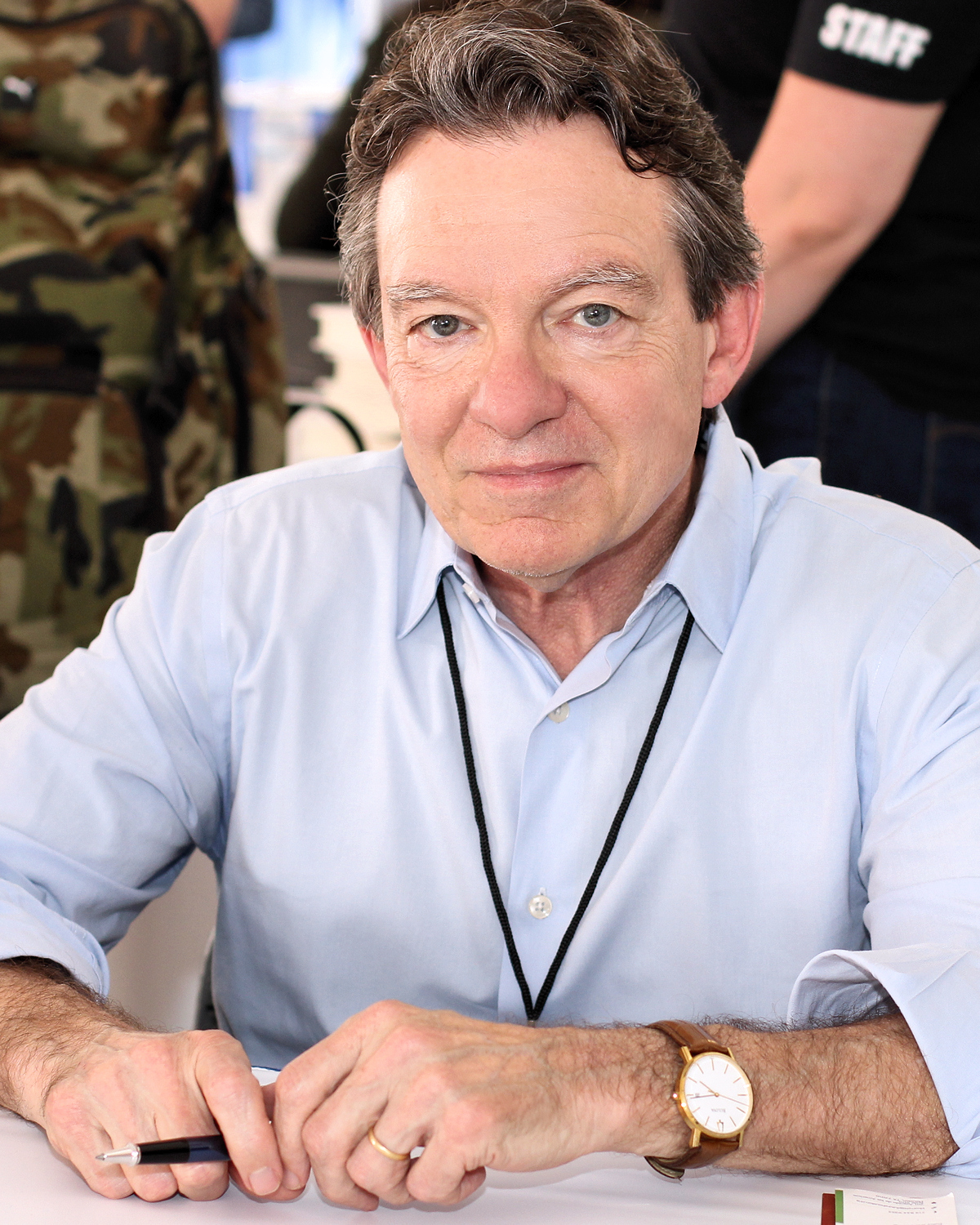
Lawrence Wright
View on Wikipedia
Lawrence Wright (born August 2, 1947) is an American writer and journalist, a staff writer for The New Yorker magazine, and fellow at the Center for Law and Security at the New York University School of Law.
Key Information
Wright is best known as the author of the 2006 nonfiction book, Looming Tower: Al-Qaeda and the Road to 9/11.
He is also known for his work with documentarian Alex Gibney, who directed film versions of Wright's one-man show, My Trip to Al-Qaeda, and his book Going Clear.
Early life
[edit]Wright graduated from Woodrow Wilson High School in Dallas, Texas, in 1965 and was inducted into the school's Hall of Fame in 2009.[1] He is a graduate of Tulane University and taught English at the American University in Cairo (from which he was awarded a Master of Arts in Applied Linguistics in 1969) in Egypt for two years.[2] Wright lives in Austin, Texas.[3]
Career
[edit]In 1980 Wright began working for the magazine Texas Monthly and contributed to Rolling Stone magazine. In late 1992 he joined the staff of The New Yorker.[2]
The Looming Tower
[edit]Wright is the author of six books but is best known for his 2006 publication, The Looming Tower: Al-Qaeda and the Road to 9/11.[4] A quick bestseller, The Looming Tower was awarded the J. Anthony Lukas Book Prize,[5] the 2007 Pulitzer Prize for General Nonfiction, and is frequently referred to by some media pundits as being an excellent source of background information on Al Qaeda and the September 11 attacks. The book's title is a phrase from the Quran 4:78: "Wherever you are, death will find you, even in the looming tower," which Osama bin Laden quoted three times in a videotaped speech seen as directed to the 9/11 hijackers.[6]
Going Clear
[edit]In 2011 Wright wrote a profile of former Scientologist Paul Haggis for The New Yorker.[7][8]
Starting with Haggis and eventually speaking with 200 current and former Scientologists,[9] Wright's book, Going Clear: Scientology, Hollywood, and the Prison of Belief, was published in 2013. The book contains interviews from current and former Scientologists and examines the history and leadership of the organisation.[9][10] In an interview for The New York Times, Wright disclosed that he had received "innumerable" letters threatening legal action from lawyers representing the Church of Scientology and celebrities who were members of it.[9]
The New York Times published Michael Kinsley's review of the book, where he wrote: "That crunching sound you hear is Lawrence Wright bending over backward to be fair to Scientology. Every deceptive comparison with Mormonism and other religions is given a respectful hearing. Every ludicrous bit of church dogma is served up deadpan. This makes the book's indictment that much more powerful."[11]
In 2015, Alex Gibney produced a documentary based on Wright's book, titled Going Clear: Scientology and the Prison of Belief. The film was nominated for seven Emmy Awards, winning three,[12] and received a 2015 Peabody Award "for its detailed documentation of Scientology's history and abuses."[13]
Other projects
[edit]Among Wright's other books are Remembering Satan: A Tragic Case of Recovered Memory (1994), about the Paul Ingram false memory case. On June 7, 1996, Wright testified at Ingram's pardon hearing.[citation needed]
His 2020 novel, The End of October, a thriller about a pandemic, was released in April 2020 during the COVID-19 pandemic,[14] to generally positive reviews.
Wright co-wrote the screenplay for the film The Siege (1998), which tells the story of a terrorist attack in New York City that leads to curtailed civil liberties and rounding up of Arab-Americans.[15] A script that Wright originally wrote for Oliver Stone was turned instead into thed Showtime movie, Noriega: God's Favorite (2000).[citation needed]
A documentary featuring Wright, My Trip to Al-Qaeda, premiered on HBO in September 2010. It was based on his journeys and experiences in the Middle East during his research for The Looming Tower.[16] My Trip to Al-Qaeda looks at al-Qaeda, Islamist extremism, anti-American sentiment and the U.S. military presence in Afghanistan and Iraq and combines Wright's first-person narrative with documentary footage and photographs.[17]
Wright plays the keyboard in the Austin, Texas, blues collective WhoDo.[2]
Wright is also a playwright. He has worked on a script over several years concerning the making of the epic film Cleopatra that starred Elizabeth Taylor, Richard Burton and Rex Harrison. The play is titled Cleo and was to have opened September 2017 in Houston, Texas, but was delayed by catastrophic flooding caused by Hurricane Harvey. It eventually opened in April 2018.[18]
Awards and honors
[edit]- 2006 Los Angeles Times Book Prize for The Looming Tower
- 2006 New York Times bestseller for The Looming Tower
- 2006 New York Times Notable Book of the Year for The Looming Tower
- 2006 New York Times Best Books of the Year for The Looming Tower
- 2006 IRE Award for The Looming Tower
- 2006 National Book Award finalist for The Looming Tower
- 2006 Los Angeles Times Book Prize finalist for The Looming Tower
- 2006 Time magazine's Best Books of the Year for The Looming Tower
- 2007 Pulitzer Prize for General Nonfiction for The Looming Tower
- 2007 Helen Bernstein Book Award for Excellence in Journalism for The Looming Tower
- 2007 J. Anthony Lukas Book Prize for The Looming Tower
- 2007 Lionel Gelber Prize for The Looming Tower
- 2007 Arthur Ross Book Award shortlist for The Looming Tower
- 2007 PEN Center USA Literary Award (Research Nonfiction) for The Looming Tower
- 2009 Newsweek 50 Books for Our Times for The Looming Tower
- 2013 National Book Award for Nonfiction finalist for Going Clear[19]
- 2013 National Book Critics Circle Award (Nonfiction) shortlist for Going Clear[20]
- 2015 Primetime Emmy Award for Outstanding Documentary or Nonfiction Special.
Bibliography
[edit]Books
[edit]- Nonfiction
- City Children, Country Summer: A Story of Ghetto Children Among the Amish. Scribner. 1979.
- In the New World: growing up with America, 1964–1984. Alfred A. Knopf. 1988.
- Saints and Sinners. Alfred A. Knopf. 1993. ISBN 978-0-679-76163-1.
- Remembering Satan: A Tragic Case of Recovered Memory. Vintage Books. 1994. ISBN 978-0-679-75582-1.
- Twins: And What They Tell Us About Who We Are. John Wiley & Sons. 1997. ISBN 978-0-471-29644-7.
- The Looming Tower. Alfred A. Knopf. 2006. ISBN 978-0-375-41486-2.
- Going Clear: Scientology, Hollywood, and the Prison of Belief. Alfred A. Knopf. 2013. ISBN 978-0-307-70066-7.
- Thirteen Days in September: Carter, Begin and Sadat at Camp David. Alfred A. Knopf. 2014. ISBN 978-0-385-35203-1.[a]
- The Terror Years: From Al-Qaeda to the Islamic State. Alfred A. Knopf. 2016. ISBN 978-0-385-35205-5.
- God Save Texas: A Journey into the Soul of the Lone Star State. Alfred A. Knopf. 2018. ISBN 978-0-525-52010-8.
- The Plague Year: America in the Time of Covid. Alfred A. Knopf. 2021.
- Fiction
- God's Favorite: A Novel. Simon and Schuster. 2000. ISBN 978-0-684-86810-3.
- The End of October: A Novel. Alfred A. Knopf. April 28, 2020. p. 400. ISBN 978-0-52565-865-8.
- Mr. Texas: A Novel. Alfred A. Knopf. 2023. ISBN 978-0-593-53737-4.
- The Human Scale: A Novel. Alfred A Knopf. 2025. ISBN 978-0-593-53783-1
Plays
[edit]- Camp David (premiered at Arena Stage (Washington, D.C.) in March 2014)
Essays and reporting
[edit]- "The Agent". The New Yorker. July 3, 2006.
- "Intolerance". The Talk of the Town. Comment. The New Yorker. 86 (28): 47–48. September 20, 2010.
- "The apostate : Paul Haggis vs. the Church of Scientology". Profiles. The New Yorker. February 14, 2011.
- "Homage to Zenobia". The Talk of the Town. Comment. The New Yorker. 91 (20): 17–18. July 20, 2015.[b]
- "America's future is Texas". The New Yorker. July 7, 2017.
- "The plague year : the mistakes and the struggles behind an American tragedy". A Reporter at Large. The New Yorker. 96 (43): 20–59. January 4–11, 2021.
- "No city limits "my town, Austin, known for laid-back weirdness, is transforming into a turbocharged tech capital". Letter from Texas. The New Yorker. 99 (1): 34–49. February 13–20, 2023.[c]
———————
- Bibliography notes
- ^ "Pulitzer Prize-winning Journalist Lawrence Wright". YouTube. November 3, 2015. Archived from the original on December 18, 2021. Retrieved May 20, 2020.
- ^ Title in the online table of contents is "Palmyra, from Zenobia to ISIS".
- ^ Online version is titled "The astonishing transformation of Austin".
References
[edit]- ^ Unmuth, Katherine Leal (April 26, 2009). "Alumni gather to celebrate Woodrow Wilson High's 80th anniversary". The Dallas Morning News. Archived from the original on April 28, 2009. Retrieved August 21, 2010.
- ^ a b c "Lawrence Wright: About". Archived from the original on June 11, 2016. Retrieved September 17, 2013.
- ^ Kevin Williamson (February 21, 2019). "AUSTIN CITY LIMITS". Claremont Review of Books. Archived from the original on August 24, 2025. Retrieved August 24, 2025.
Wright doesn't live in Texas—he lives in Austin
- ^ "Lawrence Wright: "The Looming Tower" | Talks at Google". YouTube. October 5, 2007. Archived from the original on December 18, 2021. Retrieved May 20, 2020.
- ^ "J. Anthony Lukas Prize Project winners". Nieman Foundation for Journalism at Harvard. Archived from the original on July 13, 2009. Retrieved March 16, 2011.
- ^ Wright, Lawrence (2006). The Looming Tower: Al-Qaeda and the Road to 9/11. New York: Knopf. p. 350. ISBN 978-0-375-41486-2.
- ^ "The Apostate : Paul Haggis vs. the Church of Scientology". The New Yorker. February 6, 2011. Archived from the original on May 6, 2015. Retrieved January 7, 2023.
- ^ Thornton, Kim (November 17, 2012). "Lawrence Wright's Book on Church of Scientology Coming in January". Knopf Publishers. Archived from the original on January 7, 2023. Retrieved January 7, 2023.
- ^ a b c Mcgrath, Charles (January 3, 2013). "Scientology Fascinates the Author Lawrence Wright". The New York Times. Archived from the original on November 5, 2017. Retrieved February 27, 2017.
- ^ "Evening With Lawrence Wright on Scientology". YouTube. May 10, 2013. Archived from the original on December 18, 2021. Retrieved May 20, 2020.
- ^ Kinsley, Michael (January 17, 2013). "Eyes Wide Shut : 'Going Clear,' Lawrence Wright's Book on Scientology". The New York Times. Archived from the original on February 1, 2013.
- ^ "Creative Arts Emmys 2015: Full Winners List". Variety. September 12, 2015. Archived from the original on September 13, 2015. Retrieved January 7, 2023.
- ^ "Going Clear: Scientology and The Prison of Belief". Peabody Awards. 2015.
- ^ "The End of October". Penguin Random House. Archived from the original on November 10, 2022. Retrieved April 28, 2020.
- ^ Amos, Deborah (March 30, 2007). "Lawrence Wright's 'Trip to Al-Qaeda'". National Public Radio. Archived from the original on April 5, 2018. Retrieved April 2, 2018.
- ^ "Journalism and Media Lecture Series: Lawrence Wright". YouTube. February 26, 2010. Archived from the original on December 18, 2021. Retrieved May 20, 2020.
- ^ "Synopsis". HBO Documentaries: My Trip to Al-Qaeda. Archived from the original on August 25, 2010. Retrieved May 11, 2015.
- ^ Hoinski, Michael (March 30, 2018). "This Movie Romance Scandalized a Nation. Now It's a Drama Onstage". New York Times. Archived from the original on September 13, 2018. Retrieved September 12, 2018.
- ^ "2013 National Book Award Finalists Announced". PublishersWeekly.com. Archived from the original on August 29, 2021. Retrieved August 29, 2021.
- ^ "Announcing the National Book Critics Awards Finalists for Publishing Year 2013". National Book Critics Circle. January 14, 2014. Archived from the original on January 15, 2014. Retrieved January 14, 2014.
External links
[edit]- lawrencewright.com
- Lawrence Wright at IMDb
- Wright on NPR
- Appearances on C-SPAN
- The Looming Tower Reviews Archived October 13, 2006, at the Wayback Machine at Metacritic
- AuthorViews video interview about The Looming Tower
- Audio of Paul Ingram Pardon Hearing
- Lawrence Wright articles at Byliner
- Lawrence Wright Interview: Conversations with History; Institute of International Studies, UC Berkeley, November 12, 2006
- Reporting The Bin Laden Beat, Journalist Lawrence Wright Knows More About Al Qaeda's Leader Than Many CIA Operatives
- Lawrence Wright interviewed on Charlie Rose
- Lawrence Wright at the Muck Rack journalist directory
Lawrence Wright
View on GrokipediaEarly Life and Education
Family Background and Upbringing
Lawrence Wright was born on August 2, 1947, in Oklahoma City, Oklahoma.[8] His family, of upper-middle-class standing, relocated to Abilene, Texas, before moving again to Dallas in 1960 when Wright was thirteen years old, following his father's career as a bank officer.[9][10] These relocations within the Southwest instilled in him a strong sense of regional identity tied to the burgeoning post-war economy and cultural shifts of mid-century Texas.[11] Wright's upbringing occurred amid the Protestant religious milieu of Dallas, where his family's Methodist affiliation exposed him to mainstream Christian practices, contrasted by the surrounding fundamentalist fervor of Southern Baptists and Pentecostals. This environment highlighted the diversity of American religious expressions, fostering an early fascination with faith's role in personal and communal life without rigid doctrinal adherence.[12] Family dynamics, shaped by his father's professional stability and the frequent moves, cultivated a pragmatic skepticism toward entrenched institutions, including those of authority and tradition.[13] Local events, such as the 1963 assassination of President John F. Kennedy in Dallas, marked Wright's adolescence and sparked nascent interests in storytelling and cultural analysis, drawing from the narrative traditions of family discussions and the city's rapid transformation.[11] These experiences in the Texas suburbs emphasized themes of ambition, community, and upheaval that would inform his later worldview, though they remained rooted in personal observation rather than formal pursuits.[14]Academic Pursuits and Early Influences
Wright earned a Bachelor of Arts degree in English from Tulane University in New Orleans in 1969.[15] His undergraduate studies emphasized literary analysis and composition, fostering an early interest in narrative storytelling that would underpin his later investigative work.[1] During this period at Tulane, amid the broader U.S. campus unrest of the late 1960s, Wright encountered discussions of anti-war protests, though the Southern university's cultural milieu distanced him from direct participation in such movements. Following graduation, Wright moved to Cairo, Egypt, where he taught English as a foreign language at the American University in Cairo from 1969 to 1971.[15] During this time, he also obtained a Master of Arts in Applied Linguistics from the same institution in 1969. Immersed in post-Nasser Egypt under President Anwar Sadat's regime, Wright gained direct exposure to authoritarian governance structures, including state-controlled media and political suppression, which contrasted sharply with American democratic norms.[16] This period introduced him to the dynamics of Islamic society, daily religious observances, and underlying social tensions, offering empirical grounding in cultural and ideological factors that shape regional stability.[3] These experiences cultivated a discerning approach to analyzing power, faith, and extremism through observable causes rather than abstracted ideologies.Early Career
Initial Journalism and Writing
Wright began his journalism career as a staff writer for The Race Relations Reporter in Nashville, Tennessee, from 1971 to 1972.[15] This Vanderbilt University-affiliated publication documented legal, legislative, and social developments in U.S. race relations, including court rulings on desegregation and civil rights enforcement.[17] His reporting there centered on empirical accounts of racial tensions and policy outcomes in the South, laying groundwork in objective sourcing amid polarized debates.[1] In 1980, Wright transitioned to Texas Monthly as a staff writer, producing in-depth coverage of state politics, governance scandals, and cultural idiosyncrasies through 1992.[18] Articles examined topics such as legislative maneuvering in Austin and regional power structures, relying on interviews with officials, archival records, and on-the-ground observation to dissect causal factors in Texas affairs.[1] Parallel freelance contributions to Rolling Stone during this period advanced his proficiency in extended investigative narratives.[1] Notable was his July 1988 feature "False Messiah," which probed televangelist Jimmy Swaggart's prostitution scandal via timelines of events, witness testimonies, and financial audits, exposing inconsistencies in evangelical leadership without speculative flourishes.[19] Such pieces on Southern religious institutions demonstrated Wright's method of prioritizing documented evidence to reveal underlying realities over stylized storytelling.[20]Teaching Experience in Egypt
In 1969, shortly after graduating from Tulane University, Lawrence Wright served as an English teacher at the American University in Cairo for two years as part of his conscientious objector status during the Vietnam War era.[3][21] This period coincided with the final year of Gamal Abdel Nasser's presidency, whose secular Arab nationalist policies shaped Egyptian society through state socialism, suppression of Islamist groups like the Muslim Brotherhood, and a focus on modernization, though underlying religious tensions simmered beneath the surface.[16] Wright, then 21 and unfamiliar with the region—"I didn't even know what language they spoke in Egypt"—immersed himself in daily life, residing in a modest apartment where a local servant, Shaffei Mohammed Helal, assisted with household tasks, shopping, and cultural navigation, fostering a paternal bond that eased his integration.[22][16] Wright's observations of Cairo's society highlighted a relatively casual approach to religion at the time, with practices kept private and modest; hijabs were uncommon among female students at the university, reflecting the Nasser-era emphasis on secularism over overt Islamism.[16] Interactions in the classroom and beyond exposed him to the rhythms of urban Egyptian life under authoritarian stability, including economic constraints from state controls and the lingering effects of Nasser's pan-Arabism, though specific student debates on secularism versus emerging Islamist ideas were not prominently documented in his accounts. This direct engagement contrasted with remote Western perceptions, allowing Wright to witness societal dynamics firsthand, such as the subdued role of faith in public spheres before later shifts toward greater piety under Anwar Sadat.[16] Adapting to the foreign environment posed challenges for the young American, including language barriers, cultural differences in social norms, and the practical demands of living amid Cairo's chaos without prior preparation, which built personal resilience through reliance on local relationships like that with Helal.[16][22] These experiences emphasized the value of on-the-ground verification over mediated narratives, as Wright later reflected on bypassing filtered views by embedding in the community, a method that honed his approach to understanding complex environments devoid of institutional biases.[16]Journalistic Career at The New Yorker
Staff Writer Role and Investigative Reporting
Lawrence Wright joined The New Yorker as a staff writer in 1992, where he has since contributed long-form investigative pieces characterized by meticulous scrutiny of complex global issues.[2] In this role, he focuses on developing in-depth profiles and multi-part series that examine threats ranging from ideological extremism to institutional failures, drawing on his prior experience in international journalism to unpack interconnected historical and human elements.[1] Wright's methodology emphasizes exhaustive primary sourcing, including hundreds of hours of recorded interviews with key participants and witnesses, which he transcribes meticulously from handwritten notes on legal pads to ensure precision in reconstructing events.[23] He supplements this with archival research into declassified documents, correspondence, and institutional records, enabling a causal analysis that traces precipitating factors and decision-making chains in opaque networks such as terror organizations or insular groups.[24] This approach prioritizes firsthand accounts over secondary interpretations to minimize distortion from filtered narratives. Throughout the reporting process, Wright collaborates closely with The New Yorker's editors and fact-checking department to verify details amid intricate timelines and contested claims, subjecting drafts to rigorous scrutiny that often reveals overlooked inconsistencies or requires additional sourcing.[24] This institutional framework upholds a commitment to empirical accuracy, distinguishing his work by integrating narrative drive with verifiable causality rather than speculative conjecture.[25]Key Long-Form Articles on Religion and Terrorism
Wright's investigative reporting on terrorism began with profiles of key al-Qaeda figures and the intelligence lapses preceding major attacks. In his September 16, 2002, New Yorker article "The Man Behind Bin Laden," he detailed Ayman al-Zawahiri's evolution from an Egyptian surgeon to al-Qaeda's chief strategist, drawing on interviews with Zawahiri's associates, family members, and Egyptian intelligence officials to trace the ideological fusion of jihadist thought with operational tactics that targeted Western interests.[26] This piece underscored al-Qaeda's reliance on personal networks and religious motivation, sourced from defectors and primary documents, challenging U.S. assessments that downplayed the group's cohesion before 9/11.[26] Subsequent articles expanded on bureaucratic obstacles to counterterrorism. Wright's July 10, 2006, profile "The Agent" focused on FBI counterterrorism specialist Ali Soufan, who led investigations into the 2000 USS Cole bombing and uncovered early al-Qaeda connections to the 9/11 plot through interrogations yielding actionable intelligence without enhanced techniques.[27] Soufan's accounts, corroborated by declassified reports and fellow agents, revealed CIA withholding of critical data on hijackers like Khalid al-Mihdhar, illustrating inter-agency silos that allowed threats to persist despite specific warnings as early as 2000.[27] These reports relied on firsthand operative testimonies rather than secondary analyses, exposing systemic underestimation of al-Qaeda's adaptive religious ideology.[27] On religion, Wright's February 14, 2011, New Yorker article "The Apostate" examined Scientology's doctrines and enforcement through the experiences of defector Paul Haggis, an Oscar-winning director who confronted church leaders over inconsistencies in teachings and policies like "disconnection" from critics.[7] Drawing from Haggis's documents, interviews with other ex-members, and archival materials, the piece detailed auditing sessions, hierarchical control, and financial demands totaling millions from adherents, presenting evidence of coercive elements without accepting church rebuttals at face value.[7] This exploratory work, balancing apostate narratives with historical context on L. Ron Hubbard's writings, highlighted tensions between religious autonomy and verifiable internal practices.[7]Major Non-Fiction Books
The Looming Tower: al-Qaeda, Intelligence Failures, and 9/11
The Looming Tower: Al-Qaeda and the Road to 9/11, published in August 2006 by Alfred A. Knopf, traces the origins and ascent of al-Qaeda through the intertwined biographies of its key figures, including Osama bin Laden and Ayman al-Zawahiri.[4] The narrative begins with the ideological foundations of modern jihadism in the writings of Sayyid Qutb and the Muslim Brotherhood's experiences under Egyptian repression, evolving into al-Qaeda's formation amid the Soviet-Afghan War, where bin Laden, a Saudi financier, and Zawahiri, an Egyptian surgeon radicalized by imprisonment and torture, forged a transnational terrorist network.[28] Wright details specific operational milestones, such as the 1998 U.S. embassy bombings in East Africa that killed 224 people and the USS Cole attack in 2000 that claimed 17 American sailors, illustrating al-Qaeda's shift from regional insurgency to direct confrontation with the United States.[4] Wright's research drew from over 600 interviews with al-Qaeda operatives, jihadist sympathizers, U.S. intelligence officials, and Arab intelligence leaders, supplemented by court transcripts from terrorism trials and publicly available records rather than classified materials.[29] Among the sources were rare accounts from figures like John O'Neill, the FBI's counterterrorism chief who warned of bin Laden's threat before dying in the World Trade Center, and Prince Turki al-Faisal, former head of Saudi intelligence.[4] This methodology enabled a granular reconstruction of jihadist motivations rooted in anti-Western grievances, such as U.S. military presence in Saudi Arabia post-Gulf War, while avoiding unsubstantiated speculation by cross-verifying personal testimonies against timelines of events.[30] The book attributes pre-9/11 intelligence lapses primarily to institutional silos between the CIA and FBI, where the CIA's focus on covert operations and human intelligence in foreign theaters clashed with the FBI's domestic law enforcement mandate, preventing data-sharing on al-Qaeda cells.[4] Wright highlights specific instances, including the CIA's withholding of information on hijackers Khalid al-Mihdhar and Nawaf al-Hazmi from the FBI despite their attendance at a 2000 al-Qaeda summit in Malaysia, and bureaucratic resistance under both Clinton and Bush administrations to aggressive pursuit of bin Laden due to legal and resource constraints.[31] Rather than partisan finger-pointing, the analysis emphasizes structural causal factors, such as inter-agency rivalries predating al-Qaeda and the NSA's signal intelligence silos, which collectively obscured warnings like the August 2001 President's Daily Brief titled "Bin Ladin Determined to Strike in US."[4] The Looming Tower received the 2007 Pulitzer Prize for General Nonfiction, with jurors citing its "masterly work that draws connections among an array of terrorists, intelligence agents and national leaders" in exposing systemic failures.[4] The book informed post-9/11 discourse on intelligence reform by underscoring the need for unified analysis, contributing to public support for measures like the 2004 Intelligence Reform and Terrorism Prevention Act that established the Director of National Intelligence to bridge agency divides.[29] Its revelations prompted congressional hearings and policy reviews, though entrenched bureaucratic inertia limited full implementation of recommended changes.[31]Going Clear: Exposé on Scientology Practices
Going Clear: Scientology, Hollywood, and the Prison of Belief, published on January 17, 2013, by Alfred A. Knopf, presents Lawrence Wright's investigation into the Church of Scientology's founding by L. Ron Hubbard in 1954, its doctrinal practices, operational structure, and alleged internal abuses, primarily drawn from over 200 interviews with former high-ranking members, including executives like Mike Rinder and Marty Rathbun, as well as archival documents and Hubbard's own writings.[32][33] Wright traces Hubbard's evolution from Dianetics: The Modern Science of Mental Health in 1950, which introduced auditing—a confessional process using an E-meter device to detect emotional "engrams"—to Scientology's expansion into a hierarchical system promising spiritual enlightenment through progressive "Operating Thetan" (OT) levels, where adherents purportedly gain abilities to operate outside the physical body.[34] The book details the Sea Organization (Sea Org), an elite clerical order formed in 1967 with members signing billion-year contracts for purported past-life service, involving rigorous labor under conditions of minimal pay (around $50 weekly) and strict discipline.[35] Under David Miscavige, who assumed leadership after Hubbard's death on January 24, 1986, Wright alleges a regime of authoritarian control, including physical assaults on subordinates documented through multiple ex-member testimonies, such as Rathbun's accounts of being punched by Miscavige, and the disappearance of Miscavige's wife, Shelly, last seen publicly in August 2007, with the church claiming she is alive but secluded.[33] Practices like "disconnection"—a policy mandating severance of ties with declared "suppressive persons" (critics or family members deemed antagonistic), enforced since the 1960s—severely impacted families, as reported by interviewees like actress Leah Remini, who later cited it in her 2015 departure.[36] Financial demands escalated for auditing sessions and courses, with costs to achieve OT VIII estimated at $300,000 to $500,000 per member, leading to exploitation through encouraged borrowing, asset liquidation, and second mortgages, amassing the church an estimated $2-3 billion in liquid reserves by the 2010s from member contributions rather than traditional tithing.[37] Wright documents harassment tactics against critics via the Guardian's Office (reorganized as the Office of Special Affairs in 1983), including the historical Operation Snow White in the 1970s, where up to 5,000 Scientologists infiltrated 136 U.S. government agencies to purge unfavorable records, resulting in 11 convictions including Hubbard's wife Mary Sue in 1979.[35] Though the church officially canceled its "Fair Game" policy in 1968—which permitted deceptive or harmful actions against enemies—ex-members claim its application persisted, with examples like private investigators tailing Wright during research and smear campaigns against sources.[38] The Church of Scientology rejected the book's portrayals as fabrications by "apostates" with axes to grind, maintaining that Wright relied on discredited individuals motivated by bitterness after expulsion, and declined on-record interviews while issuing statements asserting all practices are voluntary and beneficial; they launched a dedicated website refuting claims point-by-point, emphasizing Hubbard's credentials and the church's growth to over 10 million members worldwide.[39][40] Wright countered by noting efforts to verify accounts through cross-corroboration and church-provided documents, where inconsistencies emerged, such as Hubbard's embellished war record claims disproven by naval records showing no combat injuries despite assertions of blindness and lameness.[38][35] The exposé prompted increased public defections and legal scrutiny, though the church attributes any departures to personal failings rather than systemic issues.God Save Texas: Analysis of State Politics and Culture
God Save Texas: A Journey into the Soul of the Lone Star State, published on April 17, 2018, by Alfred A. Knopf, chronicles Lawrence Wright's road trips across Texas, framing the state as a microcosm of American political and cultural fault lines amid its projected population doubling by 2050.[41] Wright interviews diverse figures, including death row inmates on criminal justice, former Governor Rick Perry on state governance, border residents on immigration pressures, oil executives on energy extraction, and evangelical leaders on religion's role in politics.[42] These encounters illuminate Texas's economy, dominated by oil production that accounts for over 40% of U.S. crude output, alongside immigration dynamics where undocumented crossings strain resources in sectors like agriculture and construction.[43] Wright attributes Texas's Republican hegemony—uninterrupted statewide victories since 1994 despite a nonwhite majority population exceeding 50% by 2018—to causal factors beyond demographics, such as Hispanic voters' social conservatism on issues like abortion and guns, GOP gerrymandering that locks in legislative majorities, and the political inertia from migrants self-selecting into low-tax havens without importing blue-state voting patterns.[13] He critiques the liberal exodus from high-cost states like California, noting that while it fuels growth—adding over 4 million residents from 2000 to 2018—newcomers often reinforce rather than erode conservative entrenchment, as suburban developments vote reliably red and fail to mobilize urban Democrats.[11] This resilience persists even as Texas leads in technology exports, surpassing California with $53 billion in 2016, driven by deregulation and energy booms from fracking that reduced U.S. dependence on foreign oil.[43] While praising Texas's innovation ecosystem, including Austin's tech hubs and Houston's petrochemical dominance that generated 9% of U.S. GDP in 2017, Wright highlights policy trade-offs like education underfunding, where per-pupil spending trailed the national average by over $1,000 in 2018, exacerbating inequities via reliance on local property taxes.[44] This approach, prioritizing minimal state intervention, yields economic dynamism but yields suboptimal student outcomes, with Texas ranking 42nd in high school graduation rates that year, potentially constraining future workforce skills amid rapid urbanization.[45] Wright's analysis underscores causal realism in these disparities, linking low public investments to a governing philosophy favoring business incentives over equitable services.[46]Fictional and Dramatic Works
Novels Including Mr. Texas and The Human Scale
Lawrence Wright has employed fiction to examine complex social and political dynamics that resist straightforward journalistic documentation, allowing for the construction of hypothetical scenarios that illuminate potential causal pathways in real-world conflicts. Unlike his non-fiction, which adheres to verifiable events, his novels utilize narrative invention to probe "what if" outcomes, such as escalatory spirals in entrenched disputes, where empirical data alone cannot predict or test variables like individual agency amid systemic hatred.[47][48] In Mr. Texas (2023), Wright delivers a satirical portrayal of Texas state politics, centering on Sonny Lamb, a novice rancher who unexpectedly wins a legislative seat and navigates corruption, lobbying influences, and partisan absurdities. Published on September 19, 2023, by Knopf, the novel draws from observed political eccentricities, including improbable outsider candidacies and the outsized role of moneyed interests, to critique governance without direct reportage constraints.[49][50][51] Wright's The Human Scale (2025) extends this approach to the Israeli-Palestinian conflict, envisioning a thriller where a Palestinian-American FBI agent collaborates with a staunch Israeli operative to avert all-out war amid rising tensions. Released on March 11, 2025, by Knopf, the work incorporates insights from Wright's on-the-ground observations in contested areas like the West Bank, employing fictional escalation—culminating near October 7, 2023—to dissect the interpersonal mechanics of animosity and policy failures that journalism cannot simulate prospectively. This narrative tests causal chains of retaliation and mistrust, revealing human-scale tolls unverifiable through historical analysis alone.[52][53][47][54]Plays Such as The Human Factor on CIA Operations
Lawrence Wright's dramatic works often adapt his journalistic investigations into stage formats to illuminate the human elements of global conflicts and security challenges, distinct from his narrative prose by employing performative dialogue and direct address to engage audiences viscerally. "My Trip to Al-Qaeda," a one-man play written and performed by Wright, premiered on September 30, 2006, at the New Yorker Festival in New York City before transferring to an extended off-Broadway production directed by Gregory Mosher at the Culture Project's Lynn Redgrave Theater from February 26 to April 8, 2007, which sold out its six-week run.[6][55] Drawing directly from interviews and fieldwork detailed in his 2006 book The Looming Tower, the play dramatizes the origins and expansion of al-Qaeda through Wright's persona recounting encounters with key figures like Sayyid Qutb and Ayman al-Zawahiri, alongside depictions of U.S. intelligence responses, including CIA efforts to track and disrupt the network prior to the September 11, 2001, attacks.[56] Structured as a multimedia monologue incorporating projected footage from Wright's travels, it employs conversational reenactments to expose operational tensions, such as bureaucratic silos between the CIA and FBI that hindered threat detection—evidenced by specific failures like the non-sharing of data on hijackers Khalid al-Mihdhar and Nawaf al-Hazmi, who attended an al-Qaeda summit in Malaysia in January 2000.[55] Central themes revolve around moral ambiguities in counterterrorism, portraying intelligence operatives not as faceless bureaucrats but as individuals navigating ethical dilemmas, such as the pressure to prioritize actionable intelligence over interagency cooperation amid rising jihadist threats. Wright uses first-person testimony to underscore causal realities: how ideological inspirations from Qutb's writings fueled al-Qaeda's transnational strategy, compelling CIA case officers to weigh aggressive surveillance against legal constraints, a dynamic rooted in over 500 interviews Wright conducted with agency personnel.[56] The format humanizes these "spies" by revealing personal stakes—e.g., officers' frustrations with political oversight—contrasting with public narratives that often abstract counterterrorism into policy debates.[55] Productions emphasized intimacy, with Wright's solo performance fostering audience immersion in the "human factor" of intelligence work, later adapted into a 2010 HBO documentary but retaining its stage essence in live stagings. Critics noted its effectiveness in demystifying covert operations without sensationalism, though some observed it provoked reflection on post-9/11 methods like rendition by contextualizing pre-attack lapses that arguably necessitated escalated measures.[56][55] This approach distinguished the play from Wright's books by leveraging theatrical immediacy to convey how individual decisions in CIA black sites and field ops shaped broader outcomes, informed by verifiable timelines like the agency's 1998 cruise missile strikes on al-Qaeda camps following embassy bombings.[6]Awards, Honors, and Recognitions
Pulitzer Prize and National Magazine Awards
Lawrence Wright received the Pulitzer Prize for General Nonfiction in 2007 for The Looming Tower: Al-Qaeda and the Road to 9/11, awarded by Columbia University for a distinguished American nonfiction book on a subject other than history, biography, or autobiography, emphasizing original research and analytical rigor in tracing causal factors behind major events.[4] The selection jury highlighted the work's objective portrayal of intelligence dynamics and ideological origins of al-Qaeda, grounded in extensive interviews and declassified materials. Wright has earned three National Magazine Awards from the American Society of Magazine Editors for The New Yorker contributions, recognizing excellence in reporting and feature writing through precise, evidence-based long-form journalism.[5] These include the 2012 award for Reporting for "The Apostate," the 2021 award for Feature Writing for "The Plague Year," and an earlier 1994 award for Reporting, each honoring investigative depth and editorial craftsmanship in addressing complex societal issues.[57][58][59] His fellowship at the Center for Law and Security at New York University School of Law further validates Wright's authority in national security analysis, facilitating interdisciplinary research on terrorism and policy responses.[60]Other Accolades and Fellowships
Wright received a Guggenheim Fellowship, acknowledging his sustained excellence in investigative nonfiction and its application to complex societal issues.[61] In September 2022, he was elected to the American Academy of Arts and Sciences, an honorary society that selects members for distinguished contributions to scholarly inquiry and public policy, thereby affirming the analytical depth of his reporting on security and institutional dynamics.[62] His memberships in the Council on Foreign Relations and the Society of American Historians reflect peer recognition of his capacity to integrate empirical evidence with causal analysis in foreign affairs and historical journalism.[1] In July 2024, The Looming Tower was ranked number 55 on The New York Times' list of the 100 Best Books of the 21st Century, a compilation derived from votes by over 500 writers and critics, validating its enduring evidentiary foundation in dissecting intelligence shortcomings.[63] Wright's invitation to testify before the U.S. House of Representatives on July 30, 2008, during hearings on "Reassessing the Threat: The Future of Al Qaeda and Its Implications for Homeland Security," positioned his fieldwork-derived insights as integral to congressional evaluations of counterterrorism strategies.) These distinctions, distinct from premier literary prizes, collectively endorse the precision and source-driven methodology that underpins Wright's examinations of power structures and ideological movements, fostering broader discourse on evidence-based policy formulation.Reception, Impact, and Controversies
Critical Acclaim and Influence on Public Understanding
Lawrence Wright's The Looming Tower: Al-Qaeda and the Road to 9/11 (2006) garnered acclaim for its rigorous reconstruction of al-Qaeda's ideological and operational evolution, drawing on over 500 interviews to delineate the U.S. intelligence community's internal divisions that hindered threat detection prior to September 11, 2001.[64] Reviewers highlighted the book's narrative clarity in tracing jihadist networks from Egypt and Afghanistan, fostering a broader comprehension among readers and policymakers of systemic lapses in inter-agency coordination.[65] This analysis contributed to ongoing discussions of counterterrorism structures, as evidenced by its adaptation into a 2018 Hulu miniseries that dramatized these pre-9/11 dynamics for a mass audience of over 5 million viewers in its premiere week.[31] In Going Clear: Scientology, Hollywood, and the Prison of Belief (2013), Wright earned praise for methodically unpacking the Church of Scientology's doctrines and administrative mechanisms through accounts from more than 200 interviewees, including defectors from executive levels, thereby elucidating patterns of internal discipline and financial extraction.[32] The work's empirical focus on verifiable records and firsthand narratives was noted for amplifying the credibility of ex-member testimonies, which had previously faced institutional dismissal.[66] Its influence extended to spurring the 2015 HBO documentary adaptation, directed by Alex Gibney, which drew 4.5 million viewers and prompted additional ex-Scientologists to share experiences publicly, elevating scrutiny of the organization's opaque governance.[33] Wright's oeuvre, including God Save Texas: A Journey into the Soul of the Lone Star State (2018), has been commended for employing data-rich reporting to dissect entrenched institutional behaviors, from federal intelligence silos to religious hierarchies and state-level political machinery.[67] Critics appreciated the integration of quantitative details—such as Texas's $1.8 trillion economy juxtaposed against gerrymandered districts—with qualitative insights from key figures, enhancing public discernment of how cultural ideologies perpetuate operational inertia in large-scale entities.[13] Collectively, these texts have advanced lay and expert appreciation for causal chains in institutional dysfunction, prioritizing evidentiary chains over anecdotal sensationalism.[68]Criticisms from Subjects and Ideological Opponents
The Church of Scientology has denounced Going Clear: Scientology, Hollywood, and the Prison of Belief (2013) as defamatory, claiming Wright selectively relied on accounts from disaffected ex-members while ignoring contradictory evidence from current adherents and official records.[69] The Church's dedicated rebuttal site catalogs over 100 purported factual errors, including distortions of L. Ron Hubbard's biography, Scientology's doctrines like auditing, and its organizational structure, asserting these fabrications stem from Wright's bias against the religion.[69] In a 2015 letter responding to the HBO documentary adaptation, Church spokesperson Karin Pouw accused Wright of "jealousy" toward Hubbard and of promoting a narrative that incites violence and harassment against Scientologists.[70] Although the Church has pursued lawsuits against other critics, it opted for public refutations and media letters rather than litigation directly targeting Wright or Knopf for the book.[33] Conservative reviewers of God Save Texas: A Journey into the Future of America (2018) have accused Wright of liberal bias, pointing to his derisive depictions of Republican leaders like Governor Greg Abbott and Senator Ted Cruz alongside laudatory profiles of Democrats such as Beto O'Rourke, which they attribute to his Austin-based perspective in a predominantly liberal enclave.[71] These critics argue the book imbalances its cultural and political analysis by amplifying progressive concerns over environmentalism and urbanization while downplaying conservative achievements in economic growth and energy independence.[71] Liberal detractors, in turn, have faulted Wright for insufficiently excoriating Texas conservatism's role in fostering policies they view as regressive, such as restrictions on abortion and voting access, contending the narrative softens accountability for the state's right-wing dominance.[72] Ideological opponents across the spectrum have similarly questioned Wright's neutrality in other works, with pro-Israel watchdogs critiquing a 2009 New Yorker article on Gaza operations for advancing a Palestinian-centric viewpoint that overlooks Hamas tactics and inflates Israeli faults, undermining factual rigor.[73] Such responses highlight perceptions of Wright's alignment with establishment media tendencies, though he has defended his reporting as evidence-based rather than ideologically driven.Broader Societal and Policy Impacts
Wright's The Looming Tower (2006) detailed pre-9/11 intelligence silos between the CIA and FBI, reinforcing the 9/11 Commission's findings on structural barriers to threat-sharing despite subsequent legislative reforms like the 2004 Intelligence Reform and Terrorism Prevention Act.[74] The book's accounts of missed opportunities, such as unshared warnings on hijacker flight training, have been referenced in U.S. congressional hearings on Al Qaeda's evolution, sustaining policy debates on the limits of bureaucratic reorganization amid persistent failures, including delayed responses to later threats like the 2009 Christmas Day bomber attempt.[75] Exposés in Going Clear (2013) and related reporting spotlighted Scientology's internal practices, correlating with empirical trends of U.S. membership falling from an IRS-estimated peak of around 55,000 active members in the early 1990s to approximately 20,000-25,000 by the 2010s, as tracked by independent surveys and defectors' accounts. This period saw heightened legal scrutiny, including multiple lawsuits from former executives alleging fraud and abuse, such as those following high-profile defections post-publication, though the Church attributes declines to media distortions and maintains official figures near 100,000 worldwide.[7] The works prompted church-initiated countersuits and public rebuttals, escalating policy discussions on religious organizations' tax-exempt status and labor practices under the Fair Labor Standards Act. God Save Texas (2018) dissected factors bolstering the state's Republican hegemony, such as rural-urban divides, energy sector policies, and Hispanic voter conservatism, countering 2010s narratives of demographic destiny flipping Texas blue via immigration-driven shifts. Empirical outcomes include sustained GOP control of all statewide offices through the 2022 elections and a 52.1% Republican presidential margin in 2024, informing reform debates on education funding and border security that emphasize cultural assimilation over federal interventions.[72] Wright's emphasis on Texas's economic model—low taxes and business incentives yielding 4.2% GDP growth in 2023—has echoed in analyses of red-state policy resilience against progressive urban pressures.[76]Bibliography
Non-Fiction Books
Wright's non-fiction works examine institutional and ideological power dynamics through case studies grounded in archival research, interviews, and historical records. His bibliography includes investigations into religious movements, intelligence failures, political negotiations, and public health crises, often highlighting causal mechanisms in organizational behavior and societal responses.- City Children, Country Summer: A Story of Ghetto Children Among the Amish (1979, Simon & Schuster): Documents the experiences of urban youth from New York participating in a summer exchange program with Amish and Mennonite farm families in Pennsylvania, focusing on cultural clashes and adaptation.[11][77]
- In the New World: Growing Up with America, 1964–1984 (1987, Knopf): Recounts personal and societal transformations in Dallas amid civil rights advancements, the Vietnam War, and cultural shifts.[11]
- Saints & Sinners: Walking Among the Famous and the Notorious (1993, Knopf): Profiles American religious figures and institutions, including televangelists like Jimmy Swaggart, through examinations of faith, scandal, and influence.[11]
- Remembering Satan (1994, Knopf): Analyzes a 1980s case in Olympia, Washington, involving allegations of satanic ritual abuse based on recovered memories, including legal and psychological outcomes.[11]
- Twins: And What They Tell Us About Human Identity (1999, John Wiley & Sons): Explores twin studies to assess genetic versus environmental influences on behavior, drawing on scientific data and individual cases.[11]
- The Looming Tower: Al-Qaeda and the Road to 9/11 (2006, Knopf): Traces the organizational development of al-Qaeda from its origins in the 1980s Afghan mujahideen through internal rivalries and the path to the September 11, 2001, attacks (483 pages).[11]
- Going Clear: Scientology, Hollywood, and the Prison of Belief (2013, Knopf): Investigates the Church of Scientology's doctrines, recruitment practices, celebrity involvement, and internal disciplinary structures (430 pages).[11]
- Thirteen Days in September: The Dramatic Story of the Struggle for Peace (2014, Knopf): Details the 1978 Camp David Accords negotiations involving U.S. President Jimmy Carter, Egyptian President Anwar Sadat, and Israeli Prime Minister Menachem Begin.[11]
- The Terror Years: From al-Qaeda to the Islamic State (2016, Knopf): Compiles reporting on jihadist groups' evolution, including operational tactics and ideological expansions in the Middle East post-9/11.[11]
- God Save Texas: A Journey into the Soul of the Lone Star State (2018, Knopf): Surveys Texas's political, economic, and cultural institutions through regional travels and historical context.[11]
- The Plague Year: America in the Time of Covid (2021, Knopf): Chronicles U.S. governmental and scientific responses to the COVID-19 pandemic from early 2020 detections through vaccine development.[11]
