


Community hub
Recent from talks
Contribute something
Nothing was collected or created yet.
Secondo Pia
View on Wikipedia

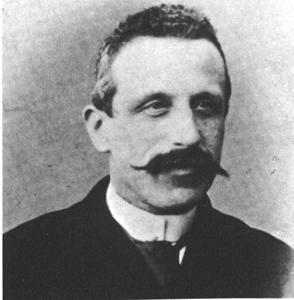
Secondo Pia (9 September 1855 – 7 September 1941) was an Italian lawyer and amateur photographer. He is best known for taking the first photographs of the Shroud of Turin on 28 May 1898 and, when he was developing them, noticing that the photographic negatives showed a positive image of the man in the shroud in addition to a clearer rendition of the image. The image he obtained from the shroud has been approved by the Roman Catholic Church as part of the devotion to the Holy Face of Jesus.
Pia was born in Asti, Piedmont, and was an attorney who was also interested in art and science. In the early 1870s he began to explore the new technology of photography, and by the 1890s he was a city councilor and a member of Turin's Amateur Photographers' Club.[1] He became a well known photographer in Turin, and examples of his other photographs are now part of the historical collection at the Turin Cinema Museum.[2] Pia can be considered a pioneer in the field of photography for using electric lightbulbs in the 1890s, as lightbulbs were a novelty in the late nineteenth century, with Thomas Edison's reliable incandescent light bulb having been invented in 1879.
The accidental photographer
[edit]
It was by accident that Secondo Pia unwittingly took the first step in the field of modern sindonology (the formal study of the shroud of Turin).[3] In 1898 the city of Turin was celebrating the 400th anniversary of Turin Cathedral along with the 50th anniversary of Italy's Statuto Albertino constitution of 1848 in favor of the House of Savoy. As part of the celebration, a sacred art exhibition was planned. Since a public display of the shroud would have required permission from King Umberto I of Italy, who owned it, plans were made for two artists to paint realistic replicas of the shroud to be used instead. These paintings were made, but they were never used as part of the exhibition.
The head of the Shroud Commission, Baron Manno, petitioned the king for a public display and also asked for the right to photograph the shroud – with the help of Secondo Pia – to promote the exhibition. The king approved the public display of the shroud for the exhibition and later also allowed for it to be photographed. At that time the House of Savoy was based in Turin, and the shroud was already in Turin since it belonged to the king. No one knew yet that the clearer reverse image existed on the shroud, for the faint face image on the shroud cannot be clearly observed or recognized with the naked eye.
Secondo Pia was named the official photographer for the exhibition at a late date. The eight-day exhibition was just about to start, and it was too late for his proposed photograph to be part of the promotional campaign. Yet he took the opportunity to take the first photograph of the shroud.
The famed photograph
[edit]On 25 May 1898, after the opening ceremony and during the noon closure of the exhibition, Pia set up equipment in Turin Cathedral. Two other people, Father Sanno Salaro and the head of cathedral security, Lieutenant Felice Fino, were also present and took part in the photography. It was one of the first times an electric light bulb was used to take a photograph.
The logistics of organizing the photographic session and the required equipment were a challenge to Pia, but he managed to set up two electric lamps of about 1000 candelas each. Since there was no electricity in the cathedral, Pia set up a portable generator. He managed to make a few exposures in the resulting heat before the session was interrupted by the opening of the cathedral doors after the noon closure. The results of this session were not successful once the plates were developed.
Three days later, on the evening of 28 May, Pia returned for a second session at about 9:30 pm and took a few more exposures. Based on his experience of 25 May, he varied the exposure times and the lighting. At around midnight the three men went back to develop the plates. Pia later said that he almost dropped and broke the photographic plate in the darkroom from the shock of what appeared on it: the reverse plate showed the positive image of a man and a face in a detail that could not be seen with the naked eye.
Ongoing developments
[edit]
On 2 June 1898, the exhibition ended and the shroud was returned to its casket in the royal chapel. Genoa's Il Cittadino newspaper reported Pia's photograph on 13 June, and a day later the story appeared in the national newspaper Corriere Nazionale. On 15 June the Vatican newspaper Osservatore Romano covered the story.
The next few years witnessed a number of debates about Pia's photograph, with various suggestions of supernatural origin versus accusations of errors in his work, his doctoring of the photographs, etc. In the meantime, King Umberto I of Italy, whose permission was instrumental for the Pia photograph, was assassinated in July 1900 and did not see the full story unfold.
Some definite support for Secondo Pia eventually arrived in 1931 when a professional photographer, Giuseppe Enrie, also photographed the shroud and his findings supported Pia. When Enrie's photograph was first exhibited, Secondo Pia, then in his seventies, was among those present for viewing. Pia reportedly breathed a deep sigh of relief when he saw Enrie's photograph.[4]
The scientific and religious discussions and debates about the origins of the image that Pia photographed continued. On the religious front, in 1939 Pia's negative image was used by Sister Maria Pierina De Micheli, a nun in Milan, to coin the Holy Face medal, as part of the Catholic devotion to the Holy Face of Jesus. Pope Pius XII approved the devotion and the medal and in 1958 declared the Feast of the Holy Face of Jesus as Shrove Tuesday (the Tuesday before Ash Wednesday) for all Roman Catholics. On the occasion of the 100th year of Secondo Pia's first photograph, on 24 May 1998, Pope John Paul II visited Turin Cathedral. In his address on that day, he said, "the Shroud is an image of God's love as well as of human sin", and he called the shroud "an icon of the suffering of the innocent in every age".[5]
On the scientific front, in 2004 the optical journal of the Institute of Physics in London published a reviewed article[6] on new imaging techniques applied to the shroud during its restoration in 2002. Scientific debate about the image and the shroud continues with international conferences.
See also
[edit]Notes
[edit]- ^ Joan Carroll Cruz, 1984, Relics OSV Press ISBN 0-87973-701-8 page 49
- ^ Turin cinema museum Archived 18 May 2007 at the Wayback Machine
- ^ Arthur Barnes, 2003 Holy Shroud of Turin Kessinger Press ISBN 0-7661-3425-3 pages 2–9
- ^ Architecture for the shroud: relic and ritual in Turin by John Beldon Scott 2003 ISBN 0-226-74316-0 page 302
- ^ "The Holy See – Vatican web site". Vatican.va. 2 May 1998. Retrieved 29 January 2012.
- ^ "The double superficiality of the frontal image of the Turin Shroud". Iop.org. Retrieved 29 January 2012.
Sources and external links
[edit]- Exhibition in spring 2010 in the Cinema Museum, Torino
- Museum of the Shroud Website
- Sineklik
- Turin Cinema Museum
- Joan Carroll Cruz, OCDS. Saintly Men of Modern Times. (2003) ISBN 1-931709-77-7
- Summary of the notes of Don Coero Borga by Remi Van Haelst
- Bernard Ruffin, 1999, The Shroud of Turin ISBN 0-87973-617-8
- Secondo Pia, Fotografie (in Italian) ISBN 978-88-422-0214-1
- Sindonology.org
| History | | |
|---|---|---|
| Location | ||
| Investigations | ||
| Researchers | ||
| Related | ||

Secondo Pia
View on GrokipediaEarly Life and Education
Birth and Family Background
Secondo Pia was born on 9 September 1855 in Asti, Piedmont, within the Kingdom of Sardinia (present-day Italy).[1][4][5] He grew up in Asti, immersing himself in the vibrant cultural milieu of 19th-century Piedmont, a region marked by its blend of religious devotion—centered around Turin's Cathedral of St. John the Baptist, home to the Shroud of Turin—and artistic traditions influenced by the Risorgimento era's intellectual ferment.[1] This environment provided a stable foundation for his development, reflecting the typical socioeconomic stability of provincial Italian families during the unification period, which supported pursuits in law and public service.[2] Pia's family background, from a bourgeois family in Asti, aligned with the middle-class strata common in Piedmontese society, enabling access to education and urban opportunities in Turin.[1][6]Legal Training and Early Influences
Secondo Pia enrolled in the Faculty of Law at the University of Turin, pursuing a degree in giurisprudenza during a pivotal era for Italian legal education. The post-unification period saw Piedmont's longstanding civil law tradition, rooted in the Napoleonic Code and Statuto Albertino, serve as the foundation for the Kingdom of Italy's unified legal framework, including the Civil Code of 1865.[7] As a leading Piedmontese institution, the University of Turin emphasized these principles, shaping the jurisprudence of the new nation through curricula focused on civil, criminal, and administrative law adaptations.[6] Pia graduated from the University of Turin and immediately entered professional practice in Turin, completing the required apprenticeships in local law firms to qualify as an avvocato. This practical training immersed him in the day-to-day application of Italy's emerging national legal system, where Piedmontese influences remained prominent in judicial proceedings and statutory interpretation. His family's support from Asti, a hub of bourgeois culture, facilitated this transition into Turin's vibrant legal community.[6] In parallel with his legal formation, Pia's early influences extended to emerging technologies and arts. At age 21 in 1876, he received his first camera as a gift from his maternal uncle, Orazio Mussi, a photography enthusiast, marking his initial foray into the medium.[8] This exposure occurred amid the rapid adoption of photographic techniques in late-19th-century Italy, where wet-plate collodion processes were giving way to drier methods. By the 1880s, Pia had gained access to contemporary equipment through amateur circles in Piedmont, experimenting with portraits and landscapes that honed his technical skills and foreshadowed his deeper engagement with visual documentation.[6]Professional Career
Legal Practice in Turin
After completing his legal training, Secondo Pia established a practice as an avvocato in Turin during the late 19th century.[8] His role extended to public administration, including service as a consigliere comunale in the city, which underscored his involvement in local governance and demonstrated his professional competence as a mid-level lawyer by the 1890s.[9][10] Pia's socioeconomic status was comfortable, stemming from his bourgeois family background in Asti, which provided financial stability without elevating him to prominence and afforded him leisure for personal pursuits.[6] In his professional routine during the 1880s and 1890s, he married Enrichetta Pianazzi, a widow, and together they had two children, Giuseppe and Chiara, integrating family life into his settled career in Turin.[6][11] This stability allowed occasional downtime for his emerging interest in amateur photography.[8]Development as an Amateur Photographer
Secondo Pia entered the realm of photography as an amateur in the 1870s, acquiring his initial equipment during a period when amateur photography was gaining popularity across Italy, facilitated by advancements in accessible dry-plate technology and the formation of local photographic societies.[12] His legal practice in Turin provided the financial stability to pursue this hobby without professional ambitions. By 1886, Pia had begun producing photographs that survive in the archival collection spanning his work from that year onward.[13] Largely self-taught, Pia honed his skills through experimentation with prevailing techniques, starting with the wet-plate collodion process before transitioning to more convenient gelatin dry plates by the 1890s, which allowed for greater flexibility in outdoor shooting.[1] He employed glass plate negatives, positives, and later autochromes for color work, capturing images with a focus on precision and detail that reflected his methodical approach. This period of skill-building culminated in his affiliation with the Turin Amateur Photographers' Club in the 1890s, where he participated in local exhibitions that showcased his growing expertise among fellow enthusiasts.[1] Pia's photographic output prior to 1898 centered on non-commercial subjects, particularly landscapes and architectural documentation, as he systematically recorded Piedmont's artistic and monumental heritage to create a visual inventory for personal and scholarly use. Examples include detailed views of ancient monuments and regional sites, demonstrating his technical proficiency in composition and exposure without venturing into portraiture on a large scale. Over time, this hobby amassed a vast personal archive exceeding 13,000 images, underscoring his dedication to the medium as a recreational pursuit intertwined with his interest in art history.The 1898 Shroud of Turin Photography
Context of the Turin Exhibition
The 1898 public exhibition of the Shroud of Turin was organized under the patronage of King Umberto I of Italy, who owned the relic as a member of the House of Savoy, to allow for a rare display in Turin Cathedral following decades of storage in the adjacent Chapel of the Holy Shroud.[14] This event marked the first major public showing since 1868, attracting large numbers of pilgrims, clergy, and dignitaries eager to view the ancient linen cloth believed by many to be the burial shroud of Jesus Christ.[3] The exhibition occurred amid a broader cultural and religious context in late 19th-century Italy, where the Shroud's veneration had been revitalized, though access remained tightly controlled to preserve its condition.[15] Secondo Pia, a Turin-based lawyer and respected amateur photographer, was appointed by the exhibition committee to document the Shroud, selected for his local prominence and demonstrated proficiency in photography gained through personal pursuits.[3] His dual expertise as a legal professional and hobbyist photographer made him a trusted choice for the sensitive task, as the committee sought someone reliable and familiar with Turin's ecclesiastical circles.[2] Preparations for the photography presented significant challenges, primarily due to the cathedral's dim interior lighting, which was intentionally restricted to safeguard the Shroud's delicate fibers from potential damage.[16] Electric lamps were positioned approximately 10 meters away on either side of the relic to provide illumination without direct exposure, though inconsistencies in light intensity arose from power supplied by separate stations, complicating the setup.[17] Additionally, the Shroud's fragile state—marked by age, previous fire damage from 1532, and repairs by nuns—necessitated extreme caution in handling and positioning to avoid further deterioration during the exhibition.Execution of the Photographs
On the evening of May 28, 1898, during the Shroud of Turin's public exhibition in the Cathedral of Turin to commemorate the marriage of Crown Prince Vittorio Emanuele III and other religious centenaries, Secondo Pia conducted the photography session using a large-format camera equipped with 50 x 60 cm orthochromatic plates, a Voigtländer lens set to a 2 mm diaphragm, and a faint yellow filter.[3] The Shroud was displayed full-length on an altar behind a protective grille, allowing capture of the frontal and dorsal images.[18][2] The session faced several technical challenges, including dim and uneven artificial lighting provided by two electric arc lamps—one rated at 1000 candela and the other at 950 candela—positioned approximately 10 meters away on either side of the Shroud to minimize reflections, though the unstable electric current occasionally caused fluctuations in intensity.[3] Earlier issues with heat from the lights had shattered diffusion glasses on May 25, prompting the addition of protective crystal panels and the use of frosted glass for better light diffusion during Pia's shoot; the camera was positioned about 8 meters from the subject to further reduce glare.[3] Pia, assisted by a technician managing the electric current, took multiple exposures over several hours, exposing two orthochromatic plates for durations of 14 and 20 minutes each to account for the low light levels and ensure adequate image density.[3] The plates were developed on-site using a sodium hyposulfite fixing solution, and the resulting positive prints—created from the developed negatives—appeared faint and indistinct, consistent with expectations for photographing delicate relics under such constrained conditions.[3]Revelation from the Negative Image
Following the photographs taken during the Shroud of Turin's public exhibition in 1898, Secondo Pia developed the glass plates that night in a makeshift darkroom at the Palazzo Reale.[3] Using orthochromatic dry plates, Pia carefully processed the images under controlled darkroom conditions to avoid any artifacts or errors in the emerging prints.[3] This process involved immersing the plates in developer, followed by rinsing and fixing to reveal the latent image captured earlier that evening.[19] As the first plate developed, Pia experienced profound shock upon observing the negative: a clear, positive-like image of a crucified man materialized, dramatically reversing the faint, negative-toned sepia markings visible on the Shroud itself.[3] The negative unveiled detailed facial features—including a prominent nose, mustache, and eye sockets—that appeared convex and darker, while concave areas like the cheeks and orbits showed lighter tones; wounds from apparent scourging, a crown of thorns, and side piercing became distinctly visible across the torso and limbs, alongside a coherent full-body outline from head to feet.[19] This unforeseen transformation highlighted the Shroud's image as a true photographic negative, an anomaly unprecedented in Pia's experience with portraiture or landscapes.[3] Overwhelmed by the revelation, Pia broke the silence in his darkroom with an exclamation to his assistant, Carlino: "Look, Carlino, if this is not a miracle!"[3] The intensity of the moment prompted him to immediately develop the second plate, which he had exposed for a longer duration to ensure comprehensive coverage, confirming the identical positive characteristics and ruling out any processing flaw.[3] This private verification solidified Pia's conviction of the discovery's authenticity, marking a pivotal personal encounter that would later reshape scholarly inquiry into the relic.[19]Impact and Later Developments
Initial Public and Scientific Reactions
The photographs taken by Secondo Pia during the 1898 Turin Exhibition elicited immediate interest among officials upon their development, with Pia sharing the negative's positive image revelation with the custodian, Count Luigi Leonardi da Porta, on the evening of May 28.[17][3] This discovery transformed perceptions of the relic, shifting it from a primarily devotional object to one inviting broader scrutiny.[17] Italian newspapers quickly covered the development, with publications such as Italia Reale on June 1, 1898, hailing the images as a "success" of exceptional importance for religion, history, and science, while other reports described the negative's clarity in evoking a lifelike visage.[3] These reports fueled public fascination but also sparked early controversy, as some journalists, lacking technical expertise, questioned the authenticity of Pia's results and accused him of manipulation.[17] King Umberto I, the Shroud's legal custodian, demonstrated keen interest by personally authorizing Pia's exclusive photographic access through his aide Baron Antonio Manno, reflecting royal endorsement of the endeavor despite the relic's sensitive status.[3] In contrast, the Vatican's response remained cautious, with no official pronouncement on the images' implications; Pope Leo XIII expressed personal "joy and emotion" upon learning of the photographs, yet the Church refrained from endorsing their evidentiary value to avoid doctrinal entanglements.[17] Initial scientific curiosity emerged promptly among photographers and anatomists, who noted the image's striking realism—including precise wound placements and proportional anatomy—that lacked precedents in medieval art or known photographic techniques, prompting early examinations by experts like Prof. Benedetto Porro.[17] These observers highlighted the negative's photographic fidelity without artificial enhancements, setting the stage for further technical validations in the subsequent years.[20]Long-Term Influence on Shroud Studies
Pia's 1898 photographs sparked a significant revival in the veneration of the Shroud of Turin, transforming public and religious perceptions by revealing a strikingly lifelike positive image from the negative plates, which Pope Leo XIII described as evoking "joy and emotion."[17] This discovery enhanced devotional practices, particularly the cult of the Holy Face of Jesus, where the negative image became a central icon for prayer and meditation among Catholics, leading to increased expositions of the Shroud and broader ecclesiastical interest.[17] The heightened reverence prompted further photographic documentation, culminating in Giuseppe Enrie's high-resolution images taken in 1931 during another Turin exposition, which built directly on Pia's pioneering work by confirming the negative's properties with superior technical clarity and involving Pia himself in the process.[17] In scientific studies, Pia's negatives served as a foundational baseline for analyzing the Shroud's image properties, notably influencing the Shroud of Turin Research Project (STURP) in 1978, whose multidisciplinary examination referenced Pia's and Enrie's photographs to investigate the image's superficiality—limited to the topmost 200-600 nanometers of linen fibers without penetration or directionality—and its encoding of three-dimensional spatial information, as demonstrated by the VP-8 Image Analyzer producing a relief map unlike any artistic or photographic artifact.[21] These findings, which Pia's revelation first hinted at through the negative's tonal gradations, underscored the image's uniformity and lack of pigments, dyes, or brushstrokes, challenging conventional formation theories and establishing photography as an essential tool in sindonology. The 1988 radiocarbon dating, which dated the Shroud to 1260–1390 CE, intensified debates, with proponents of authenticity using Pia's images to argue for pre-medieval origins based on anatomical and photographic anomalies inconsistent with 14th-century forgery techniques.[21][22] Pia's work has enduringly shaped debates on the Shroud's authenticity versus forgery, providing key evidence against medieval painting hypotheses by revealing an anatomically precise, three-dimensional negative image that pre-photographic artists could not have intentionally created, as its details emerge only through inversion.[22] Scholars like Paul Vignon argued that the image's complexity, including its superficial coloration and absence of organic binders, defies replication with 14th-century techniques, positioning Pia's photographs as a critical benchmark that has sustained pro-authenticity arguments amid radiocarbon dating controversies.[22] This baseline has informed ongoing forensic analyses, emphasizing properties inconsistent with known forgeries. Culturally, the negative image from Pia's plates proliferated in reproductions starting in the early 1900s, appearing in scholarly books such as Yves Delage's La Grande Option scientifique (1902) and later works like Ian Wilson's The Shroud of Turin (1978), which analyzed its historical and artistic implications.[23] In art, it influenced depictions of Christ, with studies identifying up to 45 congruence points between the negative and Byzantine icons from the 6th century onward, as well as Renaissance paintings by artists like Rubens, while inspiring modern religious icons and medals based on the Holy Face.[23] Media coverage, from early 20th-century journals to 1980s features in National Geographic and Applied Optics, amplified its visibility, embedding the image in popular culture as a symbol of mystery and faith.[23]Political Involvement and Final Years
Following his groundbreaking photographs of the Shroud of Turin in 1898, Secondo Pia's public profile was elevated, facilitating his involvement in local politics as a city councillor in Turin during the early 1900s.[1] Pia maintained his residence in Turin for the remainder of his life, where he continued his legal practice and amateur photography pursuits into the 1920s and 1930s.[24] He engaged in occasional Shroud-related correspondences during this period, including unpublished letters exchanged with scholars and personalities interested in the relic's photographic properties from the 1900s through the 1930s.[20] In his personal life, Pia was married and had at least two children, Giuseppe and Chiara, who later preserved and donated his extensive photographic archive.[3] By the 1930s, he had largely retired from active legal work, focusing on his photographic legacy amid the rising political tensions in Italy under Fascism. Pia died on September 7, 1941, in Turin at the age of 85.[6] His obituaries and contemporary accounts highlighted his enduring legacy as the photographer of the Shroud, crediting him with revealing its negative image and sparking modern scientific interest in the artifact.[17]References
- https://www.wikidata.org/wiki/Q890523