Hubbry Logo
search
logo
769344

Shai Linne

logo
Community Hub0 Subscribers
Read side by side
from Wikipedia

Key Information

Shai Linne (born August 21, 1974)[2] is an American East Coast Christian rapper, author, and assistant pastor. Linne has been collaborating with other Christian rap artists and releasing studio albums since 2002. Linne has recorded studio albums under the Lamp Mode Records label.

Early life

[edit]

Linne was an atheist for most of his childhood and dates his conversion to 1999.[3] Linne is Calvinist in his soteriology (doctrine of salvation), and his 2008 album The Atonement included a song "Mission Accomplished", which defended limited atonement.[4]

Career

[edit]

Linne has collaborated with Lecrae, Trip Lee, Timothy Brindle, Flame,[5] Hazakim, and numerous other Christian rappers. He appeared on the 116 Clique album 13 Letters. In 2011, Linne was featured on "The Lord is a Warrior", the tenth track from Matt Papa's This Changes Everything.[6]

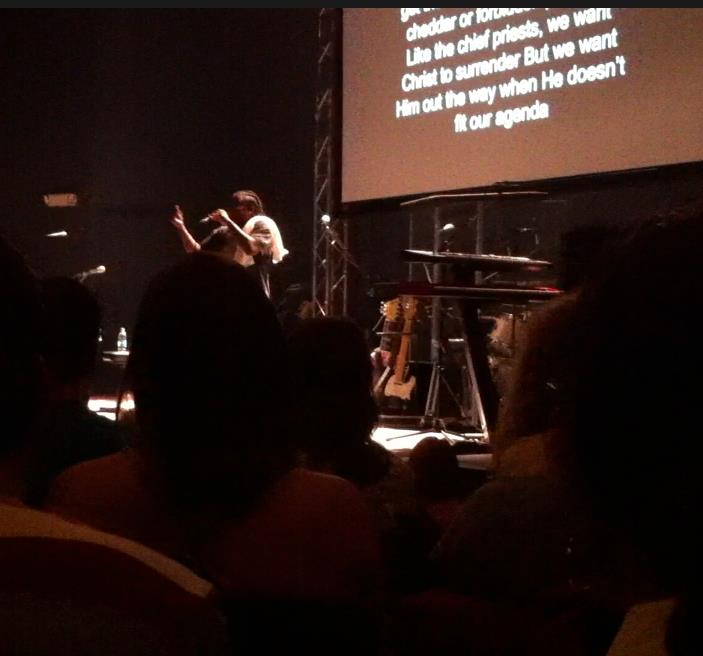
In 2013, Linne released a single called "Fal$e Teacher$", in which he criticized prosperity theology, and named false teachers, including Joel Osteen, Kenneth Copeland, Creflo Dollar, T. D. Jakes, Benny Hinn, Paula White, and Joyce Meyer.[7][8]

In addition to being recognized as a pioneer in "lyrical theology", Linne has been touted for the complexity of his rhyme schemes when rapping.[citation needed] According to a study performed by a Finnish doctoral candidate, Eric Malmi, Linne placed as the fourth as measured by rhyme density. The study took the lyrics of 94 artists and plugged 10,082 songs into an algorithm that Malmi created to detect assonance rhymes. Linne was preceded in the rankings only by Inspectah Deck of Wu-Tang Clan, Rakim and Redrama.[9][10][11]

Ministry

[edit]

In 2016 Linne, along with Brian Davis, planted Risen Christ Fellowship in Philadelphia.[12] Linne served as an assistant pastor and elder at Del Ray Baptist Church in Alexandria, Virginia,[13][14] having previously been a member of Capitol Hill Baptist Church in Washington, D.C.,[15] and Epiphany Fellowship in Philadelphia.[3]

Following his two-year tenure at Del Ray Baptist Church, Shai Linne took a step back from touring full-time.[16][17][citation needed] In May of 2024, he launched a podcast with Lamp Mode, cohosted with The Ambassador and Ben Otero, called The Halftime Podcast. Later in the year he also served as a guest preacher and speaker at various conferences.[18][19][20]

Personal life

[edit]

Linne is married to Blair Wingo, and together they have three children.

Discography

[edit]

Studio albums

[edit]
List of studio albums, with selected chart positions
Title Album details Peak chart positions[21]
US US
Chr
US
Gos
US
Ind
US
Rap
The Solus Christus Project
The Atonement
Storiez 31[22]
The Attributes of God 14[22] 5[22] 32[22] 15[22]
Lyrical Theology, Pt. 1: Theology 136[23] 7[23] 4[23] 26[23] 12[23]
Lyrical Theology, Pt. 2: Doxology 13[23] 6[23] 37[23] 17[23]
Still Jesus
  • Released: July 21, 2017
  • Label: Lamp Mode
  • CD, digital download
16[24] 25[24]
Jesus Kids
  • Released: September 21, 2018
  • Label: SDGFella Music
  • digital download
Lyrical Theology, Pt. 3: Sociology
  • Release: TBA
  • Label: LampMode
  • Digital Download

References

[edit]
Revisions and contributorsEdit on WikipediaRead on Wikipedia
from Grokipedia
Shai Linne (born August 21, 1974) is an American Christian hip-hop artist, author, and assistant pastor recognized for integrating Reformed theology into rap music through dense, doctrinally focused lyrics often termed "lyrical theology."[1][2][3] Raised in Philadelphia as an atheist, Linne converted to Christianity in 1999 and released his debut album, The Solus Christus Project, in 2005, establishing himself within the East Coast Christian rap scene.[4][3] He founded Lamp Mode Recordings to promote theologically substantive hip-hop and has produced acclaimed albums such as The Attributes of God (2009), The Atonement (2008), Lyrical Theology Part 1: Theology (2013), and Still Jesus (2017), emphasizing themes like divine sovereignty, atonement, and biblical exposition.[5][6][7] Linne's work adheres to Calvinist soteriology, as evident in tracks defending limited atonement, and extends to authorship of books like those on Christ-centered living.[1] A notable controversy arose from his 2013 track "FaleTeachere Teacher" on Lyrical Theology Part 1, which explicitly critiqued prosperity gospel proponents including Joel Osteen, T.D. Jakes, Paula White, and Benny Hinn as false teachers based on scriptural criteria from passages like Matthew 7:15-16 and 2 Peter 2:1-3, prompting public responses and debates over naming specific figures in polemical rap.[8][9][10]

Early Life and Conversion

Childhood and Pre-Christian Influences

Shai Linne was born on August 21, 1974, in Philadelphia, Pennsylvania.[1][4] Raised in the city's urban East Coast environment, he experienced the cultural dominance of hip-hop, which shaped his early worldview and interests.[11] Linne identified as an atheist for the majority of his childhood and teenage years, reflecting an absence of religious instruction or family faith tradition in his upbringing.[1][4] This secular orientation aligned with the materialistic and self-expressive themes common in Philadelphia's street and music scenes during the 1980s and 1990s.[11] As a youth, Linne pursued rapping recreationally, drawing inspiration from the secular hip-hop artists and local freestyle battles that defined the genre's raw, competitive ethos in his neighborhood.[4][11] This early engagement with hip-hop's lyrical and rhythmic elements provided a foundational outlet for personal expression amid his atheistic perspective.[1]

Conversion to Christianity and Theological Shift

Shai Linne, raised in an atheist household in Philadelphia, rejected theism during his childhood but experienced a profound shift in 1999 upon attending Tenth Presbyterian Church, where he encountered the gospel message.[12] Initially skeptical of Christianity due to cultural associations portraying it as a "white man's religion" and hip-hop influences favoring Islam, Linne engaged directly with biblical preaching and texts, leading him to affirm the truth claims of Scripture over prior atheistic convictions.[12] This encounter marked his conversion, as he later described being transformed by the realization of Christ's supremacy and the gospel's unifying power beyond ethnic or cultural barriers.[12] Post-conversion, Linne rapidly adopted Reformed soteriology, emphasizing God's sovereignty in salvation and the doctrine of justification by faith alone. Hearing teachings on Romans 4:4-5 from figures like James Montgomery Boice at events such as Ligonier conferences reinforced his grasp of imputed righteousness, where God declares sinners righteous through Christ's atonement prior to their moral transformation—a concept he described as foundational to his worldview.[3] This theological framework, rooted in biblical texts highlighting divine election and limited atonement, supplanted his earlier naturalistic assumptions, prompting a causal reevaluation of human agency and divine initiative in redemption.[13] Linne's early realizations centered on the holiness and sovereignty of God, which he credited with reshaping his understanding of sin, grace, and eternal security.[3] The faith shift altered Linne's perspective on cultural expressions like hip-hop, transitioning from secular appreciation to discerning its potential for conveying doctrinal truths amid a worldview reordered by Reformed convictions.[14] This doctrinal pivot, evident in his personal reflections, underscored a commitment to biblical fidelity over autonomous reasoning, influencing subsequent pursuits without immediate public output.[3]

Musical Career

Initial Releases and Independent Work

Shai Linne entered the Christian hip-hop scene in the early 2000s, with his first recorded song appearing around 2000 and subsequent collaborations with other artists beginning in 2002.[15][1] These early features on independent Christian rap projects helped establish his presence in underground circles, where he focused on rhyme schemes emphasizing biblical themes without major label backing.[3] His debut full-length album, The Solus Christus Project, was independently released on March 10, 2005, through Lamp Mode Recordings, a label he founded to promote theologically driven hip-hop.[16][17] The 15-track project, titled after the Reformation principle of "Christ alone," featured dense lyrical content on topics like justification and the cross, produced with contributions from collaborators such as DJ Official and a live band called Vessels of Mercy.[18][19] Clocking in at over 70 minutes, it showcased Linne's raw delivery and self-directed approach amid a Christian music industry that offered little infrastructure for hip-hop subgenres.[20] The album garnered initial traction within Reformed Christian communities, where its explicit doctrinal focus—such as tracks dissecting soteriology—resonated with listeners seeking alternatives to mainstream contemporary Christian music.[3] Through grassroots distribution and word-of-mouth in niche online forums and rap compilations, Linne cultivated a dedicated following, demonstrating viability for independent rap centered on scriptural exposition despite broader market constraints.[1]

Association with Lamp Mode Recordings

Shai Linne began releasing music through Lamp Mode Recordings in 2005 with his debut album The Solus Christus Project, marking the start of his longstanding association with the Philadelphia-based independent label dedicated to theologically-rooted hip hop.[2] Lamp Mode, established around 2003, emphasizes content that prioritizes doctrinal depth over mainstream appeal, often aligning with Reformed theological perspectives in its artist roster and output.[17] Linne's contributions helped define the label's focus on "lyrical theology," using hip hop to expound biblical truths and attributes of God.[21] In 2008, Linne released The Atonement via Lamp Mode, a concept album delving into the doctrine of Christ's atoning work, featuring tracks such as "In Adam All Die" and interludes reinforcing soteriological themes drawn from Scripture.[22] This project exemplified the label's production approach, blending dense lyrical content with beats crafted to support theological exposition rather than commercial hooks. Three years later, in November 2011, Linne issued The Attributes of God, his fourth studio album under the imprint, which systematically explores divine characteristics through songs like "The Glory of God (Not to Us)" and "The Perfection of Beauty," shifting emphasis from human-centered narratives to God-centered reverence.[23][24] Lamp Mode's collaboration with Linne extended to instrumental production and artist development, fostering a catalog of releases that maintained high doctrinal fidelity, as seen in the label's curation of Reformed-leaning hip hop artists.[25] By 2013, Linne contributed to the label's momentum with Lyrical Theology Part 1: Theology, released on April 9, which continued the pattern of album-length treatments of systematic theology topics, including tracks on the Trinity and divine immutability.[26] These efforts underscored Lamp Mode's role in sustaining a niche for intellectually rigorous Christian rap, with Linne as a pivotal figure in its artistic direction.[27]

Lyrical Theology and Doctrinal Focus

Shai Linne's concept of lyrical theology refers to the integration of systematic theology into hip-hop lyrics, employing artful rhyme schemes to foster deeper knowledge of God through explicitly theocentric content.[2] In Linne's formulation, this approach prioritizes scriptural exposition over mere emotional expression, using rap as a vehicle to unpack doctrines such as divine sovereignty and human depravity.[13] His work in this vein emerged prominently through albums like Lyrical Theology, Pt. 1: Theology (2013), which features tracks dissecting regeneration and other Reformed emphases.[9] Linne's albums exemplify this doctrinal embedding, with The Attributes of God (2011) dedicating songs to specific divine characteristics, such as "The Glory of God (Not to Us)" exploring God's self-sufficiency and "Taste and See" highlighting His immutability, drawn directly from biblical texts like Psalm 34:8 and Exodus 3:14.[28] Similarly, The Atonement (2008) includes "Atonement Q&A," a track systematically addressing penal substitutionary atonement through question-and-answer format, citing passages like Isaiah 53 and Romans 3:25 to affirm Christ's active obedience and propitiation.[29] These works maintain rigorous adherence to confessional standards, such as those in the Westminster Confession, ensuring lyrics serve as catechism rather than vague inspiration.[30] In doctrinal focus, Linne consistently advances Reformed tenets, including unconditional election and the hypostatic union, as seen in explanatory verses that clarify Trinitarian unity against common misconceptions.[31] This scriptural fidelity distinguishes his output from broader contemporary Christian music trends, which frequently emphasize anthropocentric themes—such as personal empowerment or prosperity—over God's transcendent attributes, often reducing theology to superficial hooks.[32] Linne counters this by centering lyrics on God's holiness and wrath alongside mercy, arguing that true worship demands awe-inspired orthodoxy rather than feel-good sentimentality.[33] Linne's efforts have cultivated audiences attuned to these priorities, evidenced by his Patreon community of over 500 supporters dedicated to ongoing lyrical theology production and study.[34] Interviews and reviews highlight how his discography functions as an educational tool, equipping listeners with precise doctrinal knowledge amid diluted mainstream alternatives.[13]

Ministry and Public Teachings

Pastoral Roles and Church Planting

Prior to establishing his own church, Linne completed a pastoral internship at Capitol Hill Baptist Church in Washington, D.C., which equipped him for subsequent leadership roles within Reformed Baptist congregations.[35] Following this, he served as an assistant pastor and elder at Del Ray Baptist Church in Alexandria, Virginia, where he contributed to preaching, teaching, and eldership duties aligned with confessional Reformed ecclesiology.[1] In 2016, Linne co-founded Risen Christ Fellowship, an inner-city Reformed Baptist church in Philadelphia, Pennsylvania, alongside Brian Davis, focusing on gospel-centered ministry in urban contexts.[36] At Risen Christ Fellowship, Linne has functioned as a pastor, delivering sermons on topics such as ecclesial unity and Christology, as evidenced by his recorded messages from 2021 onward.[37] [38] His pastoral approach integrates elements of hip-hop's rhetorical structure—such as rhythmic exposition and cultural relevance—into doctrinal teaching and discipleship, leveraging his background to make theological content accessible for evangelism and member edification without diluting scriptural fidelity.[9] Linne experienced pastoral burnout around 2018, prompting a temporary step-back from intensive duties to prioritize recovery and family, a common risk in high-demand urban church planting.[39] By 2021, he had resumed active involvement at Risen Christ Fellowship, continuing to preach and contribute to the church's stability amid ongoing challenges of inner-city ministry.[35] This resumption underscores a pattern in Reformed church planting where leaders balance personal sustainability with covenantal commitments to congregational oversight.

Writings on Doctrine and Ethnic Unity

In 2021, Shai Linne published The New Reformation: Finding Hope in the Fight for Ethnic Unity through Moody Publishers, a 240-page work framing ethnic division in the contemporary church as analogous to the doctrinal crises of the sixteenth-century Reformation. Linne grounds his argument in Genesis 1–11, asserting God's sovereign orchestration of ethnic diversity from creation's origins—through the dispersion at Babel—as intentional rather than accidental, thereby rejecting both past church-sanctioned segregation, which denied shared humanity, and modern pressures toward ethnic homogenization that overlook scriptural distinctions in favor of uniformity. He identifies sin's corrupting influence as the primary causal agent in ethnic strife, proposing gospel reconciliation—rooted in Christ's atonement—as the mechanism for unity that preserves rather than erases ethnic particularities, without reliance on secular social frameworks.[40][41] Linne extended these principles to younger audiences with the children's book God Made Me and You: Celebrating God's Design for Ethnic Diversity, published by B&H Kids and targeted at children aged four to eleven, which illustrates ethnic variation as a deliberate aspect of divine creation, countering reductionist narratives that attribute diversity solely to post-Fall accidents or cultural constructs. Complementing the book, his 2018 album Jesus Kids—a 12-track project released independently—incorporates doctrinal songs like "Only Jesus" and "Gotta Know the Books" to instill foundational orthodoxy, including affirmations of God's purposeful ethnic designs amid teachings on prayer, Scripture, and salvation. These materials have garnered empirical affirmation within conservative Reformed circles, evidenced by the book's alignment with creation theology emphases and the album's uptake in family discipleship settings, alongside The New Reformation's honorable mention in The Gospel Coalition's 2021 Book Awards for its biblically anchored approach.[42][43][40] Beyond these publications, Linne has disseminated related doctrinal expositions through interviews and platforms like The Gospel Coalition, where he delineates sin's exacerbation of ethnic barriers against the gospel's directive for patient, humble pursuit of unity across divides, prioritizing scriptural fidelity over ethnic partiality. In a 2020 TGC podcast, he outlined three biblical imperatives for ethnic discourse: centering the gospel's reconciling work, acknowledging sin's universal role in fragmentation, and fostering church practices that reflect creation's diversity without compromising orthodoxy. Such teachings, echoed in outlets like Modern Reformation, underscore his consistent emphasis on doctrinal purity as prerequisite for genuine ethnic harmony, distinct from politically motivated integrations.[44][45]

Opposition to Prosperity Theology

Shai Linne's opposition to prosperity theology arises from his commitment to Reformed soteriology, which emphasizes salvation by grace through faith in Christ's atoning work alone, independent of material outcomes. He contends that the health-and-wealth variant of the gospel distorts core Christian doctrines by portraying physical prosperity and health as automatic entitlements purchased through faith, tithes, or positive confession, thereby redefining atonement as a transaction for earthly benefits rather than reconciliation with God.[8] This perspective, Linne argues, elevates human agency over divine sovereignty, implying that believers can manipulate God's provision through techniques akin to spiritual mechanics, in contravention of biblical portrayals of God's providential rule.[46][30] Linne's critiques draw from scriptural exegesis prioritizing passages on suffering, contentment, and warnings against covetousness—such as 1 Timothy 6:3-10, which condemns the pursuit of gain as a root of evil—over promises of abundance misinterpreted from Old Testament contexts or isolated New Testament verses. He highlights observed spiritual harms in affected communities, including disillusionment when promised blessings fail to materialize, leading individuals to question their faith or attribute absence of wealth to insufficient belief, thus fostering a works-oriented soteriology that undermines assurance of grace.[47] These concerns stem from his encounters with teachings that minimally reference Scripture before emphasizing personal enrichment, creating a Christ-peripheral message where Jesus serves as a conduit for "your best life now" rather than the object of worship.[10] Through his lyrical expositions, Linne has contributed to broader evangelical discourse by modeling biblically grounded discernment, eliciting affirmations from Reformed theologians and prompting examinations of doctrinal fidelity within Christian hip-hop circles. His emphasis on scriptural primacy over cultural appeals for prosperity has influenced discussions on false teaching, evidenced by engagements from figures in confessional traditions who endorse his call to prioritize gospel-centered living amid materialistic distortions.[48][49] This work underscores a commitment to causal realism in theology, where eternal truths about sin, substitutionary atonement, and God's unchallenged rule supersede temporal accommodations.

Controversies and Criticisms

Response to "FaleTeachere Teacher" Single

In the track "FaleTeachere Teacher", released on April 2, 2013, as part of Shai Linne's album Lyrical Theology, Pt. 1: Theology, Linne explicitly names twelve prosperity theology advocates—including Joel Osteen, Creflo Dollar, Benny Hinn, T.D. Jakes, Joyce Meyer, and Paula White—accusing them of promulgating doctrines that prioritize material success and physical health as normative for Christians, in opposition to scriptural emphases on suffering, self-denial, and salvation by grace through faith alone.[50][51] Linne substantiates these critiques by referencing specific teachings, such as Osteen's assertion that poverty indicates a lack of faith and Dollar's advocacy for financial seed-faith giving as a means to prosperity, which Linne contrasts with biblical passages like James 2:5 on God choosing the poor and 1 Timothy 6:3-10 warning against gain as godliness.[50][52] Linne's rationale, articulated in a April 2013 video explanation and subsequent open letter to Paula White's son, centers on the observable causal effects of these teachings: fan correspondence detailing financial exploitation, disillusionment upon unmet prosperity promises, and doctrinal confusion leading to distorted views of God's sovereignty and atonement.[8][53] He emphasizes that the intent is protective rebuke, not personal vendetta, drawing from empirical patterns of harm reported by affected listeners rather than direct engagement with the teachers themselves.[47] The song garnered approbation from Reformed and confessional Christian circles, with theologian John Piper publicly endorsing it on April 9, 2013, for aligning with biblical imperatives to expose error and safeguard doctrine, citing precedents like Paul's naming of Hymenaeus and Alexander in 1 Timothy 1:20 and 2 Timothy 2:17-18.[54] Defenders, including contributors to The Gospel Coalition, praised the track's fidelity to passages such as Matthew 7:15-16 and 2 Peter 2:1-3, which mandate discernment of false prophets by their fruits and warn of destructive heresies, arguing that silence on such deviations enables spiritual casualties.[9][52] Conversely, ecumenically inclined observers and representatives of the named figures criticized the approach as unnecessarily confrontational and divisive, with Paula White's management responding via a public statement decrying the characterizations as unloving, while prioritizing broader Christian unity over doctrinal specificity.[55] Some receptions highlighted potential risks of alienating seekers or fostering judgmentalism, though Linne countered in his letter that biblical love entails warning against teachings empirically linked to shipwrecked faith, as in 1 Timothy 1:19.[8][47]

Debates Over Christian Hip-Hop Direction

In July 2017, Shai Linne released "Random Thoughts 3" as the opening track on his album Still Jesus, critiquing perceived shifts in Christian hip-hop (CHH) toward mainstream commercialization and cultural compromise at the expense of doctrinal emphasis.[56] In the lyrics, Linne questioned the genre's trajectory, rapping lines such as "Christian Hip-hop found a different algorithm / And crossed over without taking the cross over," highlighting a prioritization of rap careers and fame over gospel fidelity, while brothers faced persecution abroad.[57] He specifically challenged the glorification of artists and trends influenced by secular sin patterns, arguing that Christ-centered content had become less trendy amid pursuits of broader appeal.[58] The track elicited rebuttals from CHH artists advocating cultural engagement as a missional strategy. Rapper Ruslan, formerly of theBREAX, responded with "Random Thoughts 4 (Shai Linne)" on July 22, 2017, defending collaborations and mainstream outreach as akin to Paul's adaptability in 1 Corinthians 9:22 to win more souls, rather than rigid separation that risks irrelevance.[59] Other voices echoed this, portraying Linne's critique as overly insular and disconnected from evangelism in a pluralistic culture, emphasizing that worldly exposure could redeem hip-hop elements without endorsement.[60] Linne countered in his August 12, 2017, open letter "Dear CHH," affirming his love for the genre but rooting concerns in biblical calls to separation from darkness (2 Corinthians 6:14–17), citing Paul's public rebuke of Peter in Galatians 2 as precedent for addressing influential public errors.[15] He clarified that true engagement redeems culture without assimilation, warning against algorithms driven by secular metrics over scriptural purity, and urged self-examination without personal attacks.[15] These exchanges unfolded against empirical trends of CHH's growing commercialization; for instance, NF's album Perception debuted at #1 on the Billboard 200 in October 2017 with over 88,000 first-week units, reflecting mainstream crossover success but raising Linne's flagged tensions between chart viability and uncompromised theology.[61] The debates spurred genre-wide dialogue on priorities, fostering calls for introspection on worldly drifts, though mainstream integration and collaborations persisted without evident doctrinal reversals by late 2017.[60]

Defenses of Reformed Rap Against Genre Critiques

Critics of Reformed rap, including some traditionalist Christians, have argued that hip-hop's origins in urban environments associated with rebellion, violence, and secularism render the genre inherently incompatible with gospel proclamation, claiming its rhythmic and cultural elements carry an indelible sinful connotation that cannot be fully redeemed.[62][63] Shai Linne counters this by invoking scriptural principles that affirm the redeemability of cultural forms through thanksgiving and proper use, citing 1 Timothy 4:4-5 to assert that no created element, including sound and rhythm, is to be rejected if received gratefully and aligned with doctrine, and Romans 14:14 to emphasize that nothing is unclean in itself when transformed by intent.[62][63] He further draws on Colossians 3:16, which commands the use of psalms, hymns, and spiritual songs for teaching and admonishing, arguing that hip-hop's dense lyrical capacity—packing substantial theological content into concise tracks—exemplifies this mandate more effectively than some traditional forms, as seen in tracks like those on his 2013 album Lyrical Theology Vol. 1.[9][63] Linne and supporters substantiate the genre's viability through demonstrable outcomes, including his own career spanning over two decades since his 2002 debut The Solus Christus Project, during which he has maintained doctrinal fidelity while influencing Reformed-leaning youth via albums emphasizing attributes of God and soteriology.[31] Empirical successes include live performances where rap serves as an entry to explicit evangelism, such as halting beats mid-set to preach the gospel, leading to conversions among hip-hop immersed audiences who might otherwise remain unreached by conventional methods.[62] This approach leverages common grace, where even forms from flawed origins can yield honorable fruit when subordinated to truth, paralleling historical Christian adaptations of secular tunes into hymns.[63] While secular observers often dismiss hip-hop as aesthetically inferior or culturally parochial, and some Christian traditionalists insist on outright rejection due to perceived unbreakable ties to worldly associations (echoing 1 Corinthians 8 debates on idol-linked practices), Linne's case rests on causal evidence: transformed lyrics and delivery have empirically advanced doctrinal education and outreach without scriptural violation, shifting the onus to detractors for concrete proof of inherent prohibition.[62][63]

Personal Life

Family Background and Current Affiliations

Shai Linne keeps details of his early family background private, with no publicly available information on his parents or upbringing beyond his Philadelphia origins.[39] He has been married to Blair Linne since July 2010, and the couple has three children: Sage, Maya, and Ezra.[64][65][7] Linne is a member of Risen Christ Fellowship, a church he co-planted in Philadelphia in 2016, reflecting his ongoing ties to Reformed Baptist communities.[39][37]

Experiences with Burnout and Recovery

In July 2018, Shai Linne publicly announced his resignation from eldership at Risen Christ Fellowship, the church he had helped plant in Philadelphia since 2015, citing severe burnout characterized by emotional and spiritual exhaustion.[39] He described symptoms including diminished affections for God, a lack of delight in ministry tasks, and an overwhelming sense of burden, attributing these to overcommitment across pastoral responsibilities—such as fundraising and facility searches—combined with personal strains like his wife Blair's ongoing health challenges that began in November 2015, which blurred boundaries between work and home life.[39] Linne emphasized that his decision aligned with biblical qualifications for oversight in 1 Timothy 3:1, prioritizing personal restoration over continued leadership amid unhappiness in the role.[39] Linne's recovery involved stepping back to his prior roles as an artist and writer, where he reported renewed joy through focused family time and a reorientation of identity rooted in grace rather than vocational titles: "my identity is not in being a pastor, but in being a sinner saved by grace."[39] This process underscored a reliance on Christ for refreshment, countering the depletion from unsustainable demands without adequate rest or delegation. By 2021, Linne had resumed public engagements, including discussions on doctrinal topics like ethnic unity in the church, signaling partial reintegration into teaching and creative output.[12] Linne's experience illustrates the causal risks of high-output ministry without boundaries, where chronic overextension can erode spiritual vitality even among theologically grounded leaders, advocating for proactive self-care to sustain long-term service without compromising doctrinal fidelity.[39]

Discography and Legacy

Studio Albums

Shai Linne's debut studio album, The Solus Christus Project, was released in October 2005 by Lamp Mode Recordings and emphasizes the Reformation sola of Christ alone in salvation.[66] Standout tracks include "Christ Crucified" and "Mic Check 1, 2" featuring Stephen the Levite and Phanatik.[66] His second album, The Atonement, followed on February 22, 2008, also via Lamp Mode, presenting a lyrical examination of Christ's atoning work on the cross.[67][68] Key tracks feature theological reflections on substitutionary atonement.[67] Storiez, released November 18, 2008, by Lamp Mode, shifts toward narrative storytelling with biblical and personal themes, including tracks like "Passover" and "Simple Love Story."[69][70] The fourth studio album, The Attributes of God, came out on November 1, 2011, under Lamp Mode, systematically exploring divine attributes through rap.[71][23] It includes "The Perfection of Beauty" featuring Blair Linne.[23] Lyrical Theology Part 1: Theology, released April 9, 2013, by Lamp Mode, delves into core Christian doctrines in a style reminiscent of early Christian hip-hop.[27][72] The sequel, Lyrical Theology Part 2: Doxology, arrived May 30, 2014, incorporating hymn influences to praise God's works.[73] Still Jesus, issued July 21, 2017, by Lamp Mode, reinforces Christ's supremacy with tracks like "Supreme" and "Lord of All."[74] Linne's most recent studio album as of 2018, Jesus Kids, was released September 21, 2018, continuing doctrinal emphases on Christ-centered faith.[75]

Singles, Collaborations, and Broader Impact

Shai Linne released the single "FaleTeachere Teacher" in April 2013, which explicitly critiques prosperity theology proponents by name, including Joel Osteen and Benny Hinn, as part of his broader emphasis on doctrinal precision in rap.[8] Other notable singles include "Supreme" featuring Beautiful Eulogy in 2017, "Happy Father's Day" in 2020, "Elder Statesman" in 2023 as the lead for his forthcoming Lyrical Theology 3: Sociology, and "Farm Talk (A Modern Parable)" in 2024.[76] These tracks exemplify Linne's pattern of releasing standalone singles that advance theological themes outside full-length albums. Linne has engaged in collaborations with fellow Reformed-leaning Christian hip-hop artists, such as Beautiful Eulogy on "Supreme," which integrates production from the trio known for introspective, scripture-saturated beats.[77] Since 2002, he has partnered with various artists in the genre through features and label affiliations under Lamp Mode Recordings, fostering a network that prioritizes soteriological accuracy and theocentric lyrics over mainstream appeal.[1] Linne's work has contributed to the "lyrical theology" subgenre in Christian hip-hop, defined by dense, explicitly theocentric content that packs biblical doctrines into rhythmic structures for educational purposes.[2] This approach, as Linne describes, leverages hip-hop's capacity to convey substantial truth efficiently, influencing artists to prioritize theological depth over entertainment.[9] His ongoing Patreon initiative sustains this legacy by funding continued production of such material, enhancing doctrinal rap's credibility among listeners seeking rigorous exposition rather than vague inspiration.[2] However, the subgenre's emphasis on Reformed soteriology and complex systematics has drawn observations of niche limitations, potentially hindering wider evangelistic penetration compared to more relatable Christian hip-hop styles.[15]

References

User Avatar
No comments yet.