Recent from talks
Nothing was collected or created yet.
Spinster
View on Wikipedia

Spinster or old maid is a term referring to an unmarried woman who is older than what is perceived as the prime age range during which women usually marry. It can also indicate that a woman is considered unlikely to ever marry.[1] The term originally denoted a woman whose occupation was to spin.[2] The closest equivalent term for males is "bachelor" or "confirmed bachelor" (or, in cases of gay men, "he never married"), but this generally does not carry the same connotations in reference to age and perceived desirability in marriage.
Etymology and history
[edit]

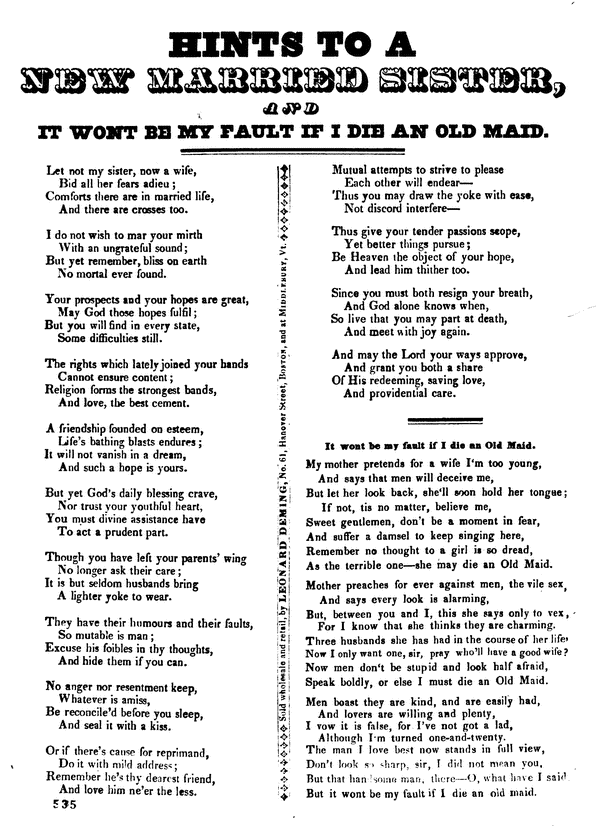
Long before the Industrial Age, "the art and calling of being a spinster" denoted girls and women who spun wool. According to the Online Etymological Dictionary, spinning was "commonly done by unmarried women, hence the word came to denote" an unmarried woman in legal documents from the 1600s to the early 1900s, and "by 1719 was being used generically for 'woman still unmarried and beyond the usual age for it".[3] As a denotation for unmarried women in a legal context, the term dates back to at least 1699,[4] and was commonly used in banns of marriage of the Church of England where the prospective bride was described as a "spinster of this parish".[5]
The Oxford American Dictionary tags "spinster" (meaning "...unmarried woman, typically an older woman beyond the usual age for marriage") as "derogatory" and "a good example of the way in which a word acquires strong connotations to the extent that it can no longer be used in a neutral sense."[6]
The 1828 and 1913 editions of Merriam Webster's Dictionary defined spinster in two ways:
- A woman who spins, or whose occupation is to spin.
- Law: An unmarried or single woman.[7]
By the 1800s, the term had evolved to include women who chose not to marry. During that century middle-class spinsters, as well as their married peers, took ideals of love and marriage very seriously, and spinsterhood was indeed often a consequence of their adherence to those ideals. They remained unmarried not because of individual shortcomings but because they didn't find a man "who could be all things to the heart".[8]
One 19th-century editorial in the fashion publication Peterson's Magazine encouraged women to remain choosy in selecting a mate — even at the price of never marrying. The editorial, titled "Honorable Often to Be an Old Maid", advised women: "Marry for a home! Marry to escape the ridicule of being called an old maid? How dare you, then, pervert the most sacred institution of the Almighty, by becoming the wife of a man for whom you can feel no emotions of love, or respect even?"[8]
Current use
[edit]The Oxford American English Dictionary defines spinster as "an unmarried woman, typically an older woman beyond the usual age for marriage". It adds: "In modern everyday English, however, spinster cannot be used to mean simply 'unmarried woman'; as such, it is a derogatory term, referring or alluding to a stereotype of an older woman who is unmarried, childless, prissy, and repressed."[6]
Currently, Merriam-Webster's Dictionary defines the "unmarried woman" sense of the term in three ways: (1) an archaic usage meaning "an unmarried woman of gentle family", (2) a meaning related to (1) but not tagged as archaic: "an unmarried woman and especially one past the common age for marrying" and (3) "a woman who seems unlikely to marry".[9]
Dictionary.com describes the "woman still unmarried beyond the usual age of marrying" sense of the term as "Disparaging and Offensive". A usage note goes on to say that this sense "is ... perceived as insulting. It implies negative qualities such as being fussy or undesirable". Also included is a sense of the word used specifically in a legal context: "a woman who has never married".[10]
Wordreference.com describes the "woman still unmarried" sense of spinster as "dated".[11]
Age is a crucial part of the definition, according to Robin Lakoff's explanation in Language and Woman's Place: "If someone is a spinster, by implication she is not eligible [to marry]; she has had her chance, and been passed by. Hence, a girl of twenty cannot be properly called a spinster: she still has a chance to be married".[12] Yet other sources on terms describing a never-married woman indicate that the term applies to a woman as soon as she is of legal age or age of majority (see bachelorette, single).
The title "spinster" has been embraced by feminists like Sheila Jeffreys, whose book The Spinster and Her Enemies (1985) defines spinsters simply as women who have chosen to reject sexual relationships with men.[13] In her 2015 book, Spinster, Making a Life of One's Own, Kate Bolick has written, "To me, the spinster is self-reliant and inscrutable. We think we know what the wife is up to and what the mother is up to but the single woman is mysterious. I like that mystery. So the term is a useful way to hold onto the idea of autonomy that can get so easily lost inside of marriage or motherhood".[14]
In 2005, in England and Wales, the term was abolished in favour of "single" for the purpose of marriage registration.[15] However, it is still often used when the banns of marriage are read by Church of England parish churches.[citation needed]
In the journal Critical Studies in Television, Lauren Jade Thompson proposes that one of the male characters in How I Met Your Mother is portrayed as a spinster, rather than as a bachelor.[16]
Research
[edit]A 2009 University of Missouri study of 32 women found that modern "spinsters" feel a social stigma attached to their status and a sense of both heightened visibility and invisibility. "Heightened visibility came from feelings of exposure and invisibility came from assumptions made by others".[17][18]
Women and marriage
[edit]Women may not have married for a variety (and/or combination) of reasons, including personal inclination, a dearth of eligible men (whose numbers can decrease dramatically during war conflicts), and socio-economic conditions (that is, the availability of livelihoods for women). Writer and spinster Louisa May Alcott famously wrote that "liberty is a better husband than love to many of us".[19] Social status issues could also arise where it was unacceptable for a woman to marry below her social rank but her parents lacked the funds to support a marriage within their social rank.[20]
In the early 19th century, particularly in England, women would fall under coverture, stating that all property and contracts in their name would be ceded to their husbands. This was particularly common in women who owned businesses.[citation needed]
The First World War (1914–1918) prevented many within a generation of women from experiencing romance and marriage or having children.[21]

In modern peacetime societies with wide opportunities for romance, marriage and children, there are other reasons that women remain single as they approach old age. Psychologist Erik Erikson postulated that during young adulthood (ages 18 to 39), individuals experience an inner conflict between a desire for intimacy (i.e., a committed relationship leading to marriage) and a desire for isolation (i.e., fear of commitment).[22] Other reasons women may choose not to marry include a focus on career, a desire for an independent life, economic considerations, or an unwillingness to make the compromises expected in a marriage.[23]
Some writers have suggested that to understand why women do not marry, one should examine reasons women do marry and why it may be assumed they should marry in the first place. According to Adrienne Rich:
Women have married because it was necessary, in order to survive economically, in order to have children who would not suffer economic deprivation or social ostracism, in order to remain respectable, in order to do what was expected of women, because coming out of ‘abnormal’ childhoods they wanted to feel ‘normal’ and because heterosexual romance has been represented as the great female adventure, duty, and fulfillment[24]
In law, a 'spinster' refers to an unmarried woman who had reached her majority. This was, in part, to reinforce the right to own property outside of marriage.
See also
[edit]References
[edit]- ^ "Spinster", Merriam-Webster Dictionary, 25 June 2023
- ^ "Spinster". WordReference.com. Retrieved 2 April 2016.
- ^ Douglas Harper (2010). "spinster defined". Online Etymology Dictionary. Dictionary.com Unabridged. Retrieved 5 June 2014.
- ^ "John West, Sexual Offences: assault with intent". Old Bailey Proceedings Online. 13 December 1699. Retrieved 28 July 2012.
for assaulting on Mary Bowden, Spinster, a Virgin, under the Age of Ten Years
- ^ "Marriage service rubric". The Book of Common Prayer.
- ^ a b "spinster defined". American English. Oxford dictiionaries. Archived from the original on 14 December 2012. Retrieved 11 June 2014.
- ^ "Webster's Revised Unabridged Dictionary (1913 + 1828)". Archived from the original on 22 February 2014. Retrieved 8 November 2012.
- ^ a b Berend, Zsuzsa (2000). "'The Best or None!' Spinsterhood in Nineteenth-Century New England". Journal of Social History. 33 (4): 935–957. doi:10.1353/jsh.2000.0056. PMID 18050547. S2CID 40799246.
- ^ "spinster definition". Merriam-Webster. Retrieved 5 June 2014.
- ^ "spinster defined". Based on the Random House Dictionary, Random House, Inc. Dictionary.com Unabridged. 2014. Retrieved 5 June 2014.
- ^ "Spinster". WordReference.com. Retrieved 19 October 2016.
- ^ Lakoff, Robin (1975). Language and Woman's Place. New York: Harper and Row. ISBN 9780060903893.
- ^ Jeffreys, Sheila (1985). The Spinster and Her Enemies: Feminism and Sexuality 1880–1930. Pandora Press. ISBN 9780863580505.
- ^ Bielski, Zosia (7 May 2015). "In her new book, Kate Bolick argues why there’s nothing wrong with being a 'spinster'". The Globe and Mail.
- ^ "R.I.P Bachelors and Spinsters". BBC. 14 September 2005. Retrieved 8 April 2013.
- ^ Thompson, Lauren Jade (1 July 2015). "Nothing Suits Me like a Suit: Performing Masculinity in How I Met Your Mother". Critical Studies in Television. 10 (2): 21–36. doi:10.7227/CST.10.2.3. ISSN 1749-6020.
- ^ "Single Women Still Feel Spinster Stigma, Study Finds". LiveScience. March 2010.
- ^ Sharp, Elizabeth A.; Ganong, Lawrence (2011). "'I'm a Loser, I'm Not Married, Let's Just All Look at Me': Ever-Single Women's Perceptions of Their Social Environment". Journal of Family Issues. 32 (7): 956–980. doi:10.1177/0192513X10392537. S2CID 146368386.
- ^ "Louisa May Alcott, Spinster, Enjoys Valentine's Day 1868". New England Historical Society. 14 February 2015. Retrieved 19 October 2016.
- ^ Hill, Bridget (2001). Women Alone Spinsters in England 1660–1850. Yale University Press. p. 10. ISBN 0300088205.
- ^ Nicholson, Virginia (2007). Singled Out: How Two Million Women Survived Without Men After the First World War.
- ^ Harder, Arlene (2009). The Developmental Stages of Erik Erikson.
- ^ Schwartz, Pepper (15 October 2014). "Why more women choose not to marry". CNN.
- ^ Rich, Adrienne (1980). "Compulsory Heterosexuality and Lesbian Existence". Signs: Journal of Women in Culture and Society. 5 (4): 631–660. doi:10.1086/493756. S2CID 143604951.
Further reading
[edit]- Mustard, Deborah J. (2000). "Spinster: An Evolving Stereotype Revealed Through Film". Journal of Media Psychology. 4. Archived from the original on 26 September 2012.
- Goodbye to the Spinster by Wendy Braitman
- Barbie: Always a Bridesmaid, Never a Bride by Wendy Braitman
External links
[edit]Spinster
View on GrokipediaEtymology and Historical Development
Origins in Occupational Terminology
The term "spinster" originated as an occupational descriptor for a woman who spun thread or yarn from raw fibers such as wool, a common task in medieval households and workshops.[2] It derives from the Middle English word spynnestere or spinnestre, formed by combining the verb "spin" with the suffix "-ster," which denoted a female agent or practitioner of a trade, similar to "webster" for a female weaver.[6] This suffix traces back to Old English and was specifically used for women's roles in fiber processing and textile production.[6] The earliest recorded uses of "spinster" in this occupational sense appear in the mid-14th century, including in William Langland's allegorical poem Piers Plowman (c. 1370–1390), where it refers directly to women engaged in spinning.[2] In medieval England, spinning was a labor-intensive process typically performed by women using a spindle and distaff, often as piecework or domestic production to support the textile industry, which was a cornerstone of the economy.[7] Legal documents, such as court records and guild registrations from the period, appended "spinster" to women's names to indicate their profession, distinguishing it from other female trades like weaving or brewing.[8] Spinning's prevalence as a female occupation stemmed from the division of labor in agrarian societies, where men focused on plowing and herding while women handled fiber preparation, enabling independent economic contribution, particularly for those without male providers.[9] Skilled spinsters could produce fine yarns for sale, though the work was undervalued and tied to low-status domestic roles, reflecting broader gender-based economic constraints.[7] By the late Middle Ages, the term's application in parish registers and censuses solidified its identification with women's primary textile labor, predating its later association with marital status.[8]Shift to Marital Status Descriptor
The term "spinster" originated in the mid-14th century as an occupational descriptor for a woman who spun thread or yarn, derived from Middle English spinnen (to spin) combined with the feminine agent suffix -stere.[1] This reflected the prevalent domestic and trade role of spinning among women in medieval England, where it was a primary means of producing textiles before industrialization.[2] The semantic shift toward a marital status indicator began in the 16th century, as "spinster" increasingly denoted a never-married woman in legal and ecclesiastical documents, such as parish registers and marriage banns.[9] This evolution stemmed from practical conventions: unmarried women, lacking spousal support, often relied on spinning as an independent livelihood, making the term a convenient proxy for their civil status in records where occupation doubled as a marital signifier—contrasted with "wife" for married women.[2] By the 17th century, it had solidified as a neutral legal descriptor for any never-married woman, irrespective of age or actual spinning activity, appearing routinely in English court and probate documents to clarify inheritance and contractual rights.[10] This transition was reinforced by socioeconomic realities: in pre-industrial societies, single women comprised a significant portion of the spinning workforce due to limited alternatives, embedding the occupational label within marital norms without implying derision initially.[1] However, by the early 18th century, the term began acquiring pejorative undertones for women remaining unmarried beyond typical ages (often post-25), associating it with economic dependency or social failure, though it retained formal usage in official contexts until reforms like the 2005 discontinuation in UK marriage registers.[9][11]Legal and Social Usage Through the Centuries
In medieval England, prior to 1500, the term "spinster" primarily referred to a woman employed in spinning wool into thread, a staple occupation in the wool-based economy that accounted for much of the nation's cloth production.[12] This usage reflected economic reality, as spinning was a low-wage, home-based task often performed by unmarried or widowed women, granting them partial financial independence in a society where women's labor contributed to household survival.[13] Socially, such women held varied status depending on class; elite single women were rarer, while lower-class spinsters faced economic vulnerability but retained control over earnings from piecework. Legally, unmarried women, including spinsters, could own and manage property independently, unlike married women under the doctrine of coverture, which subsumed a wife's legal identity into her husband's from the 12th century onward.[14] By the 16th century, "spinster" had evolved into a legal descriptor for never-married women of full age, appearing in English parish registers and contracts to denote civil status rather than occupation.[9] This shift reinforced property rights: spinsters could inherit, buy, sell, and bequeath land or goods without spousal interference, a autonomy denied to feme covert (married women) until reforms like the Married Women's Property Act of 1870, which began granting married women separate ownership of earnings.[15] Socially, the term carried neutral to pejorative connotations by the 17th century, implying economic self-reliance for some—such as independent tradeswomen—but stigma for those unmarried past typical ages (around 25-30), often portraying them as burdens on families or parishes amid patriarchal norms favoring marriage for women's legitimacy.[16] In colonial contexts, like early America, spinsters similarly enjoyed feme sole status, enabling contracts and litigation akin to men's, though societal pressures limited their numbers to about 10-20% of adult women in some regions.[17] Through the 18th and 19th centuries, "spinster" persisted in legal documents, such as wills and deeds, to affirm unmarried women's majority and testamentary capacity, distinguishing them from minors or dependents.[4] For instance, in Regency-era England, it denoted women beyond prime marriageable years, often entailing social isolation or reliance on kin, yet also opportunities in emerging female trades like millinery.[18] By the 20th century, while retaining legal utility—such as in UK marriage banns listing brides as "spinster of this parish" to verify eligibility—the term's social freight intensified, associating spinsters with eccentricity or failure in a culture equating female value to matrimony.[3] This culminated in 2005, when the UK Home Office removed "spinster" from official forms, citing outdated and derogatory implications, though it had denoted legal independence for centuries.[9] Throughout, spinsters' status highlighted causal tensions between legal personhood and social norms, where autonomy in property coexisted with marginalization in inheritance and public life.Cultural and Literary Representations
Depictions in Literature and Media
In 19th-century English literature, spinsters were frequently portrayed as marginalized figures embodying societal anxieties about women's unmarried status, often depicted as grotesque or pitiful warnings against failing to secure a husband. Charles Dickens's Miss Havisham in Great Expectations (1861) exemplifies this archetype: a jilted bride who decays in her decaying mansion, clad eternally in her wedding dress, symbolizing arrested emotional development and vengeful isolation.[19] Victorian novelists commonly rendered spinsters as psychologically unstable or objects of ridicule, such as desperate, withered failures desperate for marriage, reflecting patriarchal norms that equated female value with matrimony.[20] [21] Later 19th-century works began introducing more autonomous spinster protagonists, challenging these stereotypes by foregrounding intellectual independence and critique of marriage. George Gissing's Rhoda Nunn in The Odd Women (1893) stands as a pivotal example: a feminist activist who rejects marriage to advocate for women's self-sufficiency, highlighting economic redundancy of surplus unmarried women in industrial society.[22] Such characters presaged early 20th-century "New Woman" narratives, where single heroines pursued careers or personal fulfillment over domesticity.[23] Mid-20th-century literature offered nuanced portrayals, blending wry humor with quiet resilience. Barbara Pym's novels, such as Excellent Women (1952), feature spinsters like Mildred Lathbury, an unassuming churchgoer navigating clerical circles with acute observation and understated agency, subverting expectations of bitterness.[24] Agatha Christie's Miss Marple, debuting in The Murder at the Vicarage (1930), inverts the "old maid" trope into a shrewd detective whose spinsterhood enables perceptive detachment from village scandals.[25] In film and media, spinster depictions have historically reinforced tropes of emotional incompleteness or eccentricity, often framing solitude as a feminine pathology. Early Hollywood portrayals, as analyzed in cinematic studies, categorized "old maids" into types like the lovelorn busybody or repressed eccentric, with solitude signaling inherent brokenness rather than choice.[26] Science fiction films frequently cast spinsters as "frustrated" archetypes, such as overlooked scientists whose intellect compensates for romantic failure, perpetuating narratives that subordinate women's achievements to marital status.[27] More recent media, including adaptations of literary works, occasionally reclaim the figure for empowerment, though stereotypes persist in associating prolonged singleness with menace or pathos, as seen in politicized "cat lady" motifs critiquing independent women.[28]Associated Stereotypes and Societal Perceptions
In literary works, spinsters have frequently been depicted through negative stereotypes emphasizing undesirability and social deviance. Jane Austen's Emma portrays Miss Bates as a meddlesome figure whose loquacity connects Highbury's social fabric but invites satire for its excess, reflecting Regency-era views of spinsters as intrusive or powerless busybodies.[29] Broader perceptions from the period, as outlined by William Hayley, cast spinsters as gullible, envious, or even sexually monstrous, contrasting with attributed virtues like charity and patience that Miss Bates partially embodies through community care.[29] Honoré de Balzac's 19th-century novels entrenched the spinster as a figure of sexual ignorance, existential boredom, and frustrated vice, often manifesting as manipulative destruction of family ties.[30] Characters such as Cousin Bette embody bitterness and scheming, portrayed with physical unattractiveness and androgynous traits that render them threats to patriarchal order due to their independence and non-maternity.[30] These representations amplified cultural anxieties over unmarried women as societal anomalies, historically rooted in policies like celibacy taxes and evolving into warnings against female autonomy outside marriage.[30] Societal perceptions have reinforced stereotypes of spinsters as frumpy, dowdy, unloved, and chronically alone, positioning prolonged singleness in women as a marker of personal failure.[31] Empirical research indicates that such views contribute to stigma, with single women ranked lowest among parental types in stereotype studies and facing discrimination that undervalues their relational worth.[32][33] Older unmarried women encounter particular derision, often seen as misfits evoking pity or suspicion rather than respect for self-sufficiency.[33]Modern Usage and Interpretations
Definitions and Connotations in Contemporary Language
In contemporary English dictionaries, "spinster" is defined as an unmarried woman, typically one who is older than the expected age for marriage and unlikely to wed.[2] This usage emphasizes never-married status rather than widowhood or divorce, distinguishing it from terms like "bachelor" for men, which lacks the same age-laden implication.[34] The word retains a legal echo in some contexts, such as historical British marriage registers where, until 2005, brides were classified as "spinster" or "widow" absent other marital history.[9] The term's connotations in modern language are predominantly negative and derogatory, evoking stereotypes of eccentricity, bitterness, or social failure, often applied to women past their perceived reproductive or marital prime.[35] Usage surveys and linguistic analyses describe it as old-fashioned and offensive, with critics noting its role in stigmatizing prolonged singleness as a personal deficit rather than a choice.[2] [36] In everyday discourse, it is largely supplanted by neutral phrases like "single woman," reflecting a broader aversion to gendered labels that imply judgment on women's relational status.[37] Despite occasional ironic or self-applied uses in niche cultural discussions, the word's pejorative freight persists, deterring its routine employment outside archival or humorous contexts.[35]Feminist Reclamation Efforts
In the early 21st century, feminist writers began advocating for the reclamation of "spinster" to destigmatize unmarried women and emphasize independence, drawing on the term's medieval origins as a descriptor for women engaged in spinning thread as a viable trade.[38] This effort posits the word as a symbol of economic self-sufficiency predating its pejorative marital connotation, framing singlehood as a deliberate rejection of patriarchal dependency rather than failure.[39] Proponents, often from literary and cultural commentary circles, argue that such reclamation mirrors successful reappropriations like "queer," transforming insult into empowerment.[40] A pivotal contribution came from Kate Bolick's 2015 book Spinster: Making a Life of One's Own, which chronicles her personal embrace of prolonged singlehood and profiles historical unmarried women as models of autonomy.[41] Bolick explicitly seeks to rehabilitate the term, portraying spinsterhood not as isolation but as a fulfilling alternative to marriage, influenced by feminist icons and echoing the 1970s slogan "a woman without a man is like a fish without a bicycle."[42] Her work, reviewed positively in outlets like Time for its blend of memoir and cultural history, inspired discussions on single women's agency amid rising rates of unmarried adulthood.[43] By the 2020s, this reclamation extended into broader literature and online feminist discourse, with authors reframing spinster narratives to highlight creative and intellectual pursuits over relational deficits.[44] However, critics within these circles, such as in New Statesman analyses, contend that such efforts may gloss over empirical challenges like social isolation, prioritizing ideological uplift over documented outcomes of extended singleness.[44] These initiatives remain niche, largely confined to progressive media and academia, where sources often exhibit a bias toward valorizing non-traditional life paths without robust counterbalancing data on marital benefits.[40]Criticisms and Debates Over the Term
The term "spinster" has faced criticism primarily for its pejorative connotations, which portray unmarried women as failures in fulfilling societal expectations of marriage and motherhood, often evoking images of bitterness, unattractiveness, or social isolation.[7][45] Critics, including feminist scholars, argue that the word reinforces patriarchal norms by implying that a woman's value derives from marital attachment, thereby stigmatizing independence as a defect rather than a choice.[46][47] This view holds that the term's evolution from a neutral descriptor of wool-spinning labor in the Middle Ages to a marker of marital deficiency by the 17th century deliberately pathologized singlehood for women, unlike the more neutral or positive associations with "bachelor" for men.[7][6] Debates over the term center on whether its negative freight is inherent or a product of outdated cultural pressures, with some commentators questioning the push to abandon it entirely as an overreaction that obscures empirical realities of sex differences in mating markets and life outcomes.[31] For instance, while academic analyses decry "spinster" as laden with stigma—equating it to "old maid" and implying emotional incompleteness—others contend that such labels reflect observable patterns where prolonged singlehood correlates with lower reported happiness and health metrics for women compared to married peers, suggesting the term's critique stems more from ideological aversion to traditional roles than linguistic neutrality.[48][47][31] Proponents of retaining or reclaiming "spinster" argue it honors historical self-sufficiency, as in medieval contexts where it denoted economically independent women, and warn that euphemisms like "single" or "self-partnered" dilute accountability for choices amid data showing delayed marriage linked to fertility declines and regret in later life.[7][37] Critics of this reclamation, however, maintain that any positive reframing ignores the term's entrenched ridicule in literature and media, where spinsters are depicted as pitiable or predatory, perpetuating a double standard absent for male equivalents.[49][50] These tensions highlight broader disputes over language policing, with evidence from surveys indicating that while younger women increasingly reject the label, its persistence in legal documents (e.g., British wills until the 20th century) underscores its descriptive utility over performative offense.[36][7]Demographic Trends and Contributing Factors
Historical and Current Marriage Rates Among Women
In the United States, historical marriage patterns among women featured near-universal marriage by early adulthood, with the median age at first marriage remaining stable around 21-22 years from 1890 to the mid-20th century. U.S. Census Bureau data show that in 1950, approximately 80% of adult women were or had been married, reflecting a societal norm where fewer than 10% of women aged 45-54 remained never-married as late as 1960. This high prevalence of marriage persisted through the post-World War II era, driven by economic stability and cultural expectations, with first marriage rates peaking at over 76 per 1,000 unmarried women aged 15 and older in the 1970s.[51][52] Since the 1970s, however, women's marriage rates have declined sharply, coinciding with shifts in education, workforce participation, and delayed family formation. The first marriage rate for U.S. women aged 15 and older dropped 60% over the subsequent half-century, reaching levels that left 43% of women aged 18-49 never-married by 2020, up from 28% in 1995. By age cohort, the share of never-married women aged 25-54 who were married fell from 67% in 1990 to 53% in 2019, with the proportion of 40-year-olds never-married hitting a record 25% in 2021—more than double the rate from 1980.[52][52][53] This trend extends across OECD countries, where crude marriage rates for women declined an average of 25% from 2000 to 2020, before a partial rebound in 2021 due to postponed weddings amid the COVID-19 pandemic. The mean age at first marriage for women rose to 31.0 years by the early 2020s, compared to under 25 years in many nations during the 1970s, contributing to higher lifetime singleness. In the U.S., the overall marriage rate stood at 6.1 per 1,000 population in 2022, with women comprising a slight majority of the unmarried population aged 15 and over (49.3% of adults total). These shifts have elevated the demographic footprint of prolonged singleness, historically rare among women but now affecting over 30% of midlife adults in some metrics.[54][55][56][57]Economic, Social, and Biological Influences on Singleness
Economic factors contribute significantly to prolonged singleness among women, as rising female labor force participation and educational attainment enable financial independence that reduces the economic imperative for marriage. In the United States, women who delay marriage until age 30 or later experience an annual income premium, with college-educated women in their mid-thirties gaining approximately $18,152 more per year compared to those marrying earlier, according to analysis from the National Marriage Project.[58] This premium arises from uninterrupted career progression, but it also correlates with later family formation, as professional demands often prioritize career over partnering. However, lower-income women face barriers like housing insecurity and debt, which depress marriage rates more sharply; since the 1980s, marriage among this group has declined precipitously, while higher-earning women maintain higher rates, exacerbating economic divides in family formation.[53][59] Social influences, including shifts in mating norms and market dynamics, further promote singleness by amplifying women's selectivity in partner choice. Hypergamy—the tendency for women to seek mates of higher socioeconomic status—persists even in gender-egalitarian societies like Norway, where data show women pairing with men of superior economic standing on average, leaving a surplus of lower-status men unmatched.[60] In the U.S. dating market, this dynamic intensifies due to online platforms, where women disproportionately message top-tier men, resulting in 80% of women competing for 20% of men, as observed in app usage patterns that favor hypergamous preferences.[61] Cultural emphasis on personal freedom and differing priorities, such as career or self-fulfillment, also ranks high among reasons for remaining single, with surveys indicating that being "too picky" or prioritizing independence deters commitment for many women.[62] Biological constraints, particularly female fertility timelines, impose causal limits on delayed partnering, as reproductive capacity peaks in the early twenties and declines sharply thereafter. Women's fertility potential drops by about 50% by age 35 due to diminishing ovarian reserve and egg quality, with conception failure rates reaching 50-80% by age 45, independent of lifestyle factors.[63] This biological clock interacts with social delays: the U.S. median age for women's first marriage now exceeds 28, pushing many past peak fertility and contributing to fertility rates falling below replacement levels, as childbearing shifts to the thirties where success rates plummet.[64] Evolutionarily, women's mate preferences for high-status providers—rooted in ancestral selection for resource-securing partners—clash with modern assortative mating patterns, where educated women outnumber comparably qualified men, heightening involuntary singleness risks as age advances.[65][66]Empirical Outcomes of Prolonged Singleness
Psychological and Health Data
Empirical studies indicate that never-married women experience elevated risks of depressive symptoms compared to their married counterparts, with unmarried individuals overall showing an 80% higher likelihood across multiple countries. Longitudinal analyses further reveal that marriage is associated with a reduced risk of first-onset mood disorders, anxiety, and substance use disorders in women, suggesting a protective effect against psychological distress.[67] In South Korea, remaining never-married beyond the mean marriage age correlates with higher prevalence of major depressive disorder, obsessive-compulsive disorder, and other mood disorders among women.[68] Loneliness, a key psychological factor, disproportionately affects older single women, with prevalence rates exceeding 30% in global elderly female populations and intensifying social isolation in never-married or widowed individuals during stressors like the COVID-19 pandemic.[69] This isolation contributes to frailty progression and mental health decline, independent of marital status transitions but amplified in prolonged singleness.[70] On physical health metrics, unmarried women face significantly higher all-cause mortality, cardiovascular disease, and cancer-related death risks compared to married women, based on large cohort data.[71] Population-based longitudinal research consistently demonstrates shorter life expectancy among never-married women versus married ones, with marital status conferring a survival advantage of several years in the U.S. and other Western populations.[72][73] These patterns hold across sexes, though the longevity gap persists even after adjusting for socioeconomic factors, underscoring marriage's role in health maintenance.[74]Economic and Long-Term Well-Being Metrics
Unmarried women, particularly those who remain single lifelong, exhibit lower levels of wealth accumulation compared to their married counterparts, with married couples benefiting from pooled resources and often higher combined earning potential. A 2022 analysis of U.S. data found that even assuming identical saving rates, married women accumulate more wealth over time due to men's generally higher earnings and the structural advantages of joint households.[75] Similarly, married families hold significantly higher median wealth—$136,101—than single-headed households at around $29,000, with single female-headed households facing additional constraints from solo income reliance.[76] Poverty rates underscore these disparities, especially in later life. Among women aged 65 and older, never-married individuals face a poverty rate of 25.7%, substantially higher than the 14.2% for widows and lower rates for continuously married women, reflecting limited access to spousal Social Security benefits or shared assets.[77] Overall, elderly women experience poverty at 12%, nearly double the 7% rate for men, with marital status amplifying vulnerability for the unmarried.[78] Retirement savings further highlight long-term deficits. Approximately 50% of women aged 55-66 lack personal retirement savings, compared to 47% of men, with never-married women showing even lower participation—only 40% have accounts versus 60% of continuously married women.[79] Married women hold average retirement balances of $102,442, about 56% of comparable men's $182,806, but unmarried women trail further due to absent dual contributions and benefit pooling.[80]| Metric | Never-Married Women (65+) | Married Women (65+) |
|---|---|---|
| Poverty Rate | 25.7%[77] | ~5.8%[81] |
| Median Household Wealth | ~$29,000 (single-headed)[76] | $136,101[76] |
| Retirement Account Ownership (55-66) | 40%[79] | 60%[79] |
Comparative Analysis with Married Women
Empirical studies consistently indicate that married women exhibit higher levels of overall life satisfaction and psychological well-being compared to never-married women, particularly when accounting for marital quality and family structure. Analysis of General Social Survey data from 2023 reveals that married mothers report the highest happiness levels among demographic subgroups, with 40% describing themselves as "very happy" versus 22% for unmarried childless women.[84] Longitudinal research further demonstrates that the transition to marriage correlates with improved mental health outcomes for women, including reduced depressive symptoms and higher subjective well-being, independent of pre-marital selection effects.[85] However, never-married women often report greater satisfaction with their single status itself compared to married women, though this does not extend to broader metrics of life satisfaction or emotional stability over time.[86] Health outcomes favor married women, with lower incidences of chronic conditions and better self-reported physical functioning. A synthesis of longitudinal evidence shows married individuals, including women, experience reduced mortality risks and fewer cardiovascular risk factors, such as hypertension and obesity, attributable in part to spousal support and shared health behaviors.[87] In particular, women in high-quality marriages demonstrate a 28% lower likelihood of developing precursors to heart disease compared to unmarried peers, based on data from the Framingham Heart Study cohort.[88] Never-married women, by contrast, exhibit higher rates of physical impairments and functional limitations in midlife, trends that persist even after adjusting for socioeconomic factors.[89] Economic metrics highlight disparities, with married women benefiting from dual-household incomes and accumulated wealth. Pew Research analysis of U.S. Census data indicates that never-married women at prime working age have median household incomes 20-30% lower than those of married women, alongside reduced net worth accumulation over the life course.[53] While never-married women may accrue personal earnings more rapidly in early career stages due to uninterrupted workforce participation, their long-term household wealth lags, with ratios showing $0.71 in net worth per dollar earned compared to married counterparts.[90] Federal Reserve studies confirm that marital status correlates with higher lifetime earned income for women when including spousal contributions, mitigating penalties from career interruptions for family.[91] Longevity data reinforces protective effects of marriage for women. Cohort studies report that married women outlive never-married women by 3.5 to 5.5 years on average, with never-married status emerging as the strongest predictor of premature mortality among unmarried categories.[92] National Vital Statistics from the CDC indicate lower age-adjusted death rates for ever-married women across causes, including cancer and cardiovascular disease, with singles facing 15-20% elevated all-cause mortality risks.[93][74] These patterns hold in multivariate models controlling for education and income, suggesting causal pathways via social integration and health monitoring within marriage.[94]| Metric | Married Women Advantage | Key Evidence Source |
|---|---|---|
| Life Satisfaction | +18% "very happy" rate | GSS 2023[84] |
| Mortality Risk | 15-20% lower all-cause | CDC/NCHS 2019[93] |
| Household Income | 20-30% higher median | Pew Census 2021[53] |
| Life Expectancy Gap | 3.5-5.5 years longer | Demographic Economics 2023[92] |
