Hubbry Logo
Steve YeagerSteve YeagerMain
Open search
Steve Yeager
Community hub
Steve Yeager
logo
8 pages, 0 posts
0 subscribers
Be the first to start a discussion here.
Steve Yeager
Steve Yeager
from Wikipedia

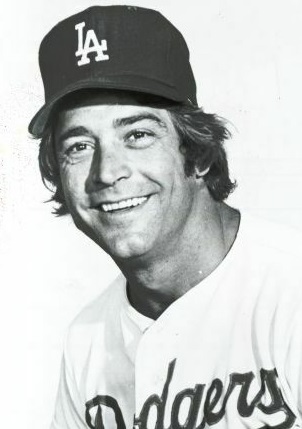
Stephen Wayne Yeager (born November 24, 1948) is an American former professional baseball catcher. Yeager spent 14 of the 15 seasons of his Major League Baseball career, from 1972 through 1985, with the Los Angeles Dodgers. His last year, 1986, he played for the Seattle Mariners. From 2012 to 2018, Yeager was the catching coach for the Dodgers. He was co-MVP of the 1981 World Series.

Key Information

Early and personal life

[edit]

Yeager was born in Huntington, West Virginia.[1] He attended Meadowdale High School in Dayton, Ohio.[1] Yeager hit two grand slams in a single game while playing for Meadowdale.

He is the cousin of the late test pilot Chuck Yeager.[2] Los Angeles Mayor Tom Bradley was the best man at his wedding to local rock musician Gloria Giaone.[1] Yeager is Jewish, having converted to Judaism when his career was over.[3] He later moved to Granada Hills, California.[4]

Minor league career

[edit]

The Los Angeles Dodgers selected Yeager in the fourth round of the 1967 Major League Baseball draft.[5][6] After one game with the rookie level Ogden Spikers of the Pioneer League, Yeager was sent to the Dodgers' Single-A affiliate, the Dubuque Packers of the Midwest League.[6] The following season, in 1968, Yeager played 59 games for the Single-A Daytona Beach Dodgers of the Florida State League.[6] In 1969, he played 22 games for the Bakersfield Dodgers, the Dodgers' Single-A affiliate in the California League, where he threw out 26 runners from behind the plate.[6] That season he suffered a fractured leg in a first-inning collision with a runner at home plate, but was not aware how bad his injury was, and finished the game.[5]

Yeager was promoted to Double-A before the end of the 1969 season, playing in one game for the Albuquerque Dodgers of the Texas League.[6] He spent the next two-and-2/3 seasons with the Double-A franchise.[6] In 162 games played over the 1970 and 1971 seasons, he hit .276, with 77 RBIs in 490 at bats.[6] He threw out 84 runners, second in the league that year, and was named to the Texas League All-Star team as a catcher in 1971.[6]

In spring training in 1972 he won the Dodgers writers' Dearie Mulvey Memorial Trophy as the best rookie.[5] With the Dukes becoming the new Pacific Coast League Triple-A affiliate for the Dodgers in 1972, Yeager was promoted while remaining in Albuquerque for another season.[6] “You won't beat that arm of his,” Tommy Lasorda said that season.[5] With the Triple-A Dukes, he played 82 games, batting .280 with 45 RBIs and a slugging percentage of .502, in 257 at bats.[6][5]

Major league career

[edit]

Los Angeles Dodgers (1972–1985)

[edit]

Yeager made his Major League debut with the Dodgers on August 2, 1972, and went on to play 15 seasons in the major leagues.[6] He started 34 games that season and batted .274/.374/.406.[6] In the winter before the 1973 season he was named to the Dominican League All Star team.[5] He backed up Joe Ferguson in 1973, and split time with Ferguson for the pennant-winning 1974 club as he hit .266 with 12 home runs.[6] Thereafter, Yeager was the starting catcher for the Dodgers and became an integral part of the Dodgers' success in the 1970s and early 1980s.

In 1976, he led NL catchers in assists, with 77.[6] In 1977, he came in second in voting for the Gold Glove Award.[5] He led NL catchers in baserunners caught stealing percentage in both 1978 (46.7%) and 1982 (43.1%).[6]

Yeager helped the Dodgers get to the World Series in 1974, 1977, 1978, and 1981.[6] In the '81 Series against the New York Yankees, he shared the World Series Most Valuable Player award with teammates Pedro Guerrero and Ron Cey. Yeager, who was backing up Mike Scioscia by that time, did not have overwhelming stats for the Series, as he went 4-for-14 (.286), but one of his hits was a double and two were home runs.[6] One of the homers, off Ron Guidry, turned out to be the game-winner in Game 5.[5]

While with the Dodgers, Yeager caught Jerry Reuss' no-hitter on June 27, 1980.[7]

Yeager injured his knee in 1982 and broke his wrist the next year, which severely limited his playing time.

Seattle Mariners (1986)

[edit]

He was traded from the Dodgers to the Seattle Mariners for Ed Vande Berg on December 11, 1985.[8] He retired after hitting .208 in 130 at bats in 1986.[6]

Characteristics

[edit]

Lou Brock called Yeager "the best-throwing catcher in the game."[5] His specialty was defense and his command of the game on the field. In one nationally televised game, he made a putout to second base – and the radar gun in place to record pitches caught his throw to second (from a crouch) at 98 mph. He was very good at managing the game from his position and was even more highly regarded for his abilities with young pitchers. In 1974, he had 806 putouts, the most in the National League.[6] This compensated for his overall subpar offense, as illustrated by arguably his best offensive year occurring in 1974 when he batted .266 in fewer than 100 games.[6] Despite this reputation, Yeager was still somewhat of a clutch hitter as he had an average of .321 when hitting with the bases loaded during his career, as well as hitting 4 home runs in 21 World Series games.[6] He also had success hitting off pitcher Ken Forsch. While never hitting more than two home runs off any other pitcher, he managed to hit 5 against Forsch in his career.

With the Dodgers, whenever knuckleballer Charlie Hough pitched, Yeager would use a special enlarged catcher's mitt and would hold it in a cupped style, palm facing upward, instead of the normal upright "target" position.

Throat protector

[edit]

In 1976, Yeager was injured when teammate Bill Russell's bat shattered as he hit a ground ball and a large, jagged piece from the heavy end of the bat slammed into the throat of Yeager, who was in the on-deck circle.[5] The wood hit him in the neck and pierced his esophagus, necessitating surgery.[5] After the incident, at Yeager's urging Dodger trainer Bill Buhler invented and patented a device that hangs from the catcher's mask to protect the throat.[5] It was soon worn by most catchers throughout the Majors and other leagues.

Steve Yeager signing autographs before the 2008 NLCS Game 3

Coaching career

[edit]

Steve Yeager coached the Dodgers catchers from 2012–2018.[9]

Minor league coaching career

[edit]

In 1999, Yeager was the hitting coach for the Dodgers' Single-A San Bernardino Stampede, which won the California League championship. He managed the Long Beach Breakers in the independent (now-defunct) Western Baseball League in 2001.[6] The team won the league championship in their inaugural season that year, beating the Chico Heat 3 games to 2. He was the Jacksonville Suns hitting coach in 2004, when the team won the championship, and in 2005-06 he was the hitting instructor/coach for the Dodgers AAA farm club, the Las Vegas 51s. He later joined the A Dodgers affiliate Inland Empire 66'ers and became the hitting coach in 2007.

Yeager was instrumental in the conversion of Russell Martin from third base to behind the plate.

In 2007, he became the manager for the Long Beach Armada of the independent Golden Baseball League.[6]

Personal life

[edit]

In September 1979, he and his family appeared on an episode of Family Feud. They played for a total of 6 days.

In 1982, Yeager posed semi-nude in Playgirl magazine.[10][5]

In 1991, Yeager filed for Chapter 7 bankruptcy.[11]

In July 1996, Yeager was sued by the New York City Department of Consumer Affairs in the United States District Court for the Southern District of New York for allegedly misleading dozens of investors into donating between $2,900 and $3,500 into a fraudulent sports card brokering business.[12] He was sued for the same scheme in November of that year in Illinois and in 1997 in California.[11]

By 1997, Yeager had been divorced three times.[11]

Yeager served as a technical advisor and also played a small role as Coach Duke Temple, in Major League, Major League II, and Major League: Back to the Minors.

In 2008, Yeager sued two filmmaking companies for nonpayment of $50,000 allegedly promised to him to serve as a technical advisor on the film Playing with the Enemy: A Baseball Prodigy, a World at War and a Field of Broken Dreams. Yeager allegedly had been hired to teach the film's lead actor to play baseball like a convincing professional ballplayer.[13]

Yeager is a co-owner of a Jersey Mike's Subs franchise.[14]

References

[edit]
[edit]
Revisions and contributorsEdit on WikipediaRead on Wikipedia
from Grokipedia
Stephen Wayne Yeager (born November 24, 1948) is an American former who played 15 seasons in (MLB), primarily for the from 1972 to 1985, and briefly for the Mariners in 1986. Yeager was drafted by the Dodgers in the fourth round of the 1967 MLB Draft out of Meadowdale High School in , after a standout amateur career that included hitting two grand slams in a single high school game. He debuted in the majors in 1972, quickly establishing himself as a reliable defensive known for his toughness and ability to handle pitchers, despite a career of .228 with 102 home runs and 410 RBIs over 1,265 games. One of his most notable moments came on September 6, 1976, when he suffered a near-fatal injury after being struck in the throat by shards from a broken during a game against the Padres, an incident that highlighted his resilience as he returned to play shortly thereafter. Yeager's career peaked with the Dodgers' championship over the New York Yankees, where he was named co-MVP alongside teammates and Pedro Guerrero for his contributions, including a .286 and strong defensive play in the postseason. A Dayton native, Yeager was inducted into the Greater Dayton Baseball Hall of Fame on November 8, 2025, recognizing his local roots and MLB legacy. After retiring, he pursued acting roles, including appearances in the Major League film series, and worked as a consultant and coach.

Early life

Youth and family

Steve Yeager was born on November 24, 1948, in . He was raised in , where he spent his formative years. Yeager is the cousin of , the renowned who broke the sound barrier in 1947. The family connection highlights a shared heritage of resilience and achievement, though details on his background remain limited in public records. In his youth in Dayton, Yeager began pursuing athletics, setting the stage for his high school career.

High school and draft

Yeager attended Meadowdale High School in , where he graduated in 1967. As a multi-sport , he excelled in , football, and , earning all-state recognition in . A standout for the Meadowdale team, Yeager demonstrated exceptional power at the plate during his high school career. In one notable game, he hit two grand slams, showcasing the offensive prowess that would define his playing style. His performance culminated in being named MVP of the Ohio North/South High School , highlighting his status as one of the top prospects in the state. Following his graduation, Yeager was selected by the in the fourth round of the 1967 MLB June Amateur Draft, as the 80th overall pick. He signed with the organization shortly after the draft on June 6, 1967, marking the beginning of his professional journey.

Playing career

Yeager was drafted by the in the fourth round of the 1967 MLB Draft and spent five seasons in their system before his major league debut. His early professional career was marked by struggles at the plate, batting .171 in 15 games split between the rookie-level Ogden Dodgers (Pioneer League) and Class A Dubuque Packers () in 1967. In 1968, he hit .153 with 1 in 59 games for the Class A Daytona Beach Dodgers (). Yeager continued to face challenges in 1969, posting a .152 average in 23 games across Class A Bakersfield Dodgers () and Double-A Albuquerque Dodgers (). He showed improvement in 1970, batting .278 with 3 home runs and 24 RBIs in 55 games for the Double-A Albuquerque Dodgers. In 1971, Yeager had a breakout season at Double-A, hitting .274 with 8 home runs and 53 RBIs in 107 games for Albuquerque (now in the Dixie Association). Promoted to Triple-A () in 1972, he batted .280 with 13 home runs and 45 RBIs in 82 games, earning a mid-season call-up to the majors. His experience, particularly behind the plate, honed his defensive skills that became a hallmark of his MLB career.

Los Angeles Dodgers

Steve Yeager made his major league debut with the Los Angeles Dodgers on August 2, 1972, appearing as a pinch hitter in a game against the Atlanta Braves. Initially serving as a backup catcher behind Joe Ferguson, Yeager split time with him during the 1974 pennant-winning season, where he hit .266 with 12 home runs. By the mid-1970s, he transitioned into a more prominent role, starting regularly from 1975 to 1977 before resuming primarily as a backup to Mike Scioscia starting in 1981. Over his 14 seasons with the Dodgers from 1972 to 1985, Yeager appeared in 1,219 games, batting .228 with 100 home runs and 398 RBIs. Renowned for his defensive skills, he led National League catchers in percentage multiple times, including a career mark of 34% with the Dodgers, and was particularly effective at throwing out base stealers like . His experience honed this defensive reliability, preparing him for the demands of major league pitching staffs. Yeager's tenure included six postseason appearances (1974, 1977, 1978, 1981, 1983, 1985), contributing to four National League pennants. In the against the New York Yankees, which the Dodgers won 4-2, Yeager shared the Award with teammates and Pedro Guerrero after hitting .286 with two s and four RBIs. His key contributions included a pinch-hit in Game 4 to secure a 2-1 victory and a seventh-inning in Game 5 alongside Guerrero's back-to-back shot, helping extend the Dodgers' lead. Manager frequently platooned Yeager with Scioscia during the 1981 postseason to counter left-handed pitching, praising Yeager's toughness and leadership behind the plate. , who had mentored Yeager since his days, often highlighted his resilience, such as after the near-fatal broken bat injury in 1976, when a shard pierced his throat during a game against the Padres, sidelining him briefly but not diminishing his contributions to the team's championship runs in the 1970s and 1980s.

Seattle Mariners

Yeager joined the Seattle Mariners via trade from the on December 11, 1985, in exchange for pitcher Ed Vande Berg, bringing his extensive experience as a veteran to support a young pitching staff. In this final chapter of his playing career, he served primarily as a backup to primary Bob Kearney, appearing in 50 games during the 1986 season. His role emphasized defensive stability and mentorship rather than everyday play, drawing on his prior Dodgers tenure where he had established himself as a reliable presence behind the plate. Yeager's offensive output was modest in limited opportunities, as he recorded a .208 with 2 home runs and 12 RBIs across 130 at-bats. The Mariners struggled overall, concluding the year with a 67-95 record and finishing last in the division. Despite the team's challenges, Yeager's contributions focused on guiding pitchers and providing leadership in the clubhouse. At age 37, Yeager was granted free agency on November 12, 1986, following the season's end, and he chose to retire from rather than pursue further opportunities. This marked the conclusion of a 15-year professional career, during which he reflected on his journey from a defensive specialist to a champion, though specific comments on his Mariners stint emphasized the transitional nature of his final year.

Playing style

Steve Yeager was renowned for his exceptional defensive skills behind the plate, earning praise as one of the premier catching talents of his era. His strong throwing arm was particularly notable, with Hall of Famer describing him as "the best-throwing catcher in the game" after being thrown out multiple times by Yeager. He led National League catchers in caught stealing percentage twice, achieving 46.7% in 1978 and 43.1% in 1982, which underscored his ability to deter base runners effectively. Yeager's game-calling prowess was equally impressive; Dodgers manager Tom Lasorda highlighted his command, noting, "You won’t beat that arm of his," while emphasizing Yeager's role in setting up hitters strategically. Yeager excelled at handling a diverse pitching staff, including high-profile arms like , whom he helped develop during the rookie's Rookie of the Year season in 1981. Dodgers coach Monty Basgall credited him with doing "a tremendous job in developing our young pitchers," reflecting Yeager's astute preparation and in-game adjustments that contributed to the team's success. Standing at 6 feet tall and weighing 190 pounds, Yeager's sturdy build allowed him to absorb the physical demands of the position, including frequent foul tips, yet he maintained durability throughout his career, appearing in over 1,200 games as a . Offensively, Yeager's production was limited, with a career batting average of .228 that highlighted his struggles at the plate against major league pitching. Despite these shortcomings, he earned the nickname "Boomer" for his powerful swing, which occasionally produced hits, such as in postseason play where his timely contributions proved valuable. His focus remained on defense, aligning with the traditional archetype that prioritized fielding excellence over batting prowess.

Innovations and contributions

Throat protector

In the mid-1970s, catcher Steve Yeager became a key figure in enhancing safety following a near-fatal injury on September 6, 1976, during a game against the Padres. While standing in the on-deck circle, Yeager was struck in the by a jagged shard from a broken swung by teammate , resulting in a three-inch-deep that required immediate on-field treatment and but narrowly missed vital structures like his windpipe and . This incident, which sidelined him for only three weeks, prompted Yeager to collaborate with Dodgers trainer Bill Buhler on a protective device specifically designed to shield catchers' throats from similar hazards, including foul tips encountered behind the plate. Buhler, drawing from Yeager's firsthand experiences with foul tips during his playing career, developed a lightweight plastic guard that attached to the bottom of the catcher's , providing a dangling shield for the neck area. The prototype evolved from early concepts into a practical attachment, with Buhler filing for a in 1978; it was granted as U.S. D258322 in 1981, crediting Buhler as the sole inventor for the ornamental design of the " protecting attachment for a catcher's ." This innovation addressed a vulnerability in catchers' , where traditional masks left the exposed due to one-handed signaling techniques, building on rudimentary neck extensions that had appeared as early as 1903 but lacked widespread use. The Dodgers adopted the throat protector for Yeager and their catchers starting in , marking its initial major league implementation amid growing awareness of foul-tip risks. By the mid-1980s, it had become a standard feature across , integrated into most catchers' masks and later extended to umpires' gear, significantly reducing the incidence of severe throat and neck injuries from batted balls. Yeager's advocacy and the device's patent are widely credited with preventing potentially life-threatening incidents, influencing the broader evolution of protective equipment toward more comprehensive, standardized designs that prioritize player safety without compromising mobility.

Team leadership

Throughout his 14 seasons with the from 1972 to 1985, Steve Yeager served as a stabilizing force in the team's catching corps, offering consistency amid roster changes and injuries. As a clubhouse veteran, he mentored young pitchers, earning high praise for his guidance; Dodgers coach Basgall noted, "He did a tremendous job in developing our young pitchers," while manager Tom Lasorda highlighted Yeager's all-around reliability behind the plate. His defensive acumen further supported this leadership role, allowing him to effectively direct pitching staffs during games. Yeager was also renowned for injecting humor into the Dodgers' clubhouse, fostering camaraderie through pranks alongside teammates like and . One notable escapade involved tying manager Tommy Lasorda's motel-room doorknob to a palm tree, a lighthearted that boosted morale during road trips. These antics, often playful and -oriented, helped maintain a positive atmosphere, particularly among the pitching staff he guided. In the strike-shortened 1981 season, Yeager's leadership shone during the Dodgers' run, where he shared co-MVP honors with and Pedro Guerrero after batting .286 with two home runs and four RBIs. As the primary , he made key on-field adjustments, such as calling pitches that neutralized hitters in critical moments, including a game-winning homer in Game Five. His motivational presence in the clubhouse contributed to the team's resilience, helping them overcome a 2-0 series deficit against the New York Yankees.

Coaching career

Major League Baseball

After retiring from his playing career, Steve Yeager returned to the Los Angeles Dodgers organization in 2012 as their major league catching instructor, a position he held through the 2018 season. Leveraging his background as a durable defensive who appeared in over 1,200 major league games primarily with the Dodgers, Yeager's responsibilities centered on refining the skills of the team's catchers during and home games. He emphasized fundamental defensive techniques, particularly pitch blocking and framing, which had gained increased attention due to advanced in the sport. Yeager worked extensively with catchers A.J. Ellis and , helping them elevate their defensive proficiency. For Ellis, Yeager highlighted the player's relentless work ethic as key to his daily improvements behind the plate. Grandal, in turn, credited Yeager's guidance for significant gains in blocking pitches in the dirt and presenting pitches to umpires for potential called strikes.

Minor leagues

Yeager first joined the Los Angeles Dodgers organization as a coach in 1999, serving as hitting coach for the San Bernardino Stampede of the , where the team won the league championship with an 80–61 record. He returned in 2004 as hitting coach for the Double-A Jacksonville Suns of the Southern League, guiding them to a 79–61 record and the league championship in 2005. In 2006, he was the hitting coach for the Triple-A Las Vegas 51s of the , where the team finished third in their division with a 67–77 record. The following year, , he took on the same role with the Inland Empire of the , guiding them to a 72–67 mark and a playoff appearance before a first-round loss. In 2008, Yeager managed the independent Golden Baseball League's Long Beach Armada to a 48–40 record, losing in the semifinals. From 2009 to 2011, he did not hold a formal position but remained involved with as a consultant. Throughout his tenure with the Dodgers, Yeager emphasized defensive fundamentals, drawing from his own experience as a premier to mentor young players on positioning, pitch framing, and game management. He played a key role in developing several prospects, notably assisting in the positional conversion of Russell Martin from third base to during Martin's early professional years in 2005. Yeager also provided instruction to emerging talents like , , and , helping refine their skills in the Dodgers' system. His success in nurturing talent at the level, particularly in bolstering defensive capabilities among position players, paved the way for his transition to the major league coaching staff in as a special-assignment catching instructor.

Personal life

Marriages and relationships

Yeager's first marriage was to , lasting eight years until their divorce in the mid-1970s. In 1976, following the divorce, he married Gloria Giaone, a local rock musician, in a high-profile ceremony on the steps of , where Mayor Tom Bradley served as best man. Yeager and Giaone were still married as of 1982, when she publicly endorsed his decision to pose nude for magazine ahead of its publication. By 1997, Yeager had been divorced three times. He later married Charlene. The couple resided in Westlake Village, California, during the late 2000s with Yeager's two sons from a previous marriage, Josh (born circa 1992) and Evan (born circa 1995), and co-owned a Jersey Mike's Subs franchise in Granada Hills starting in 2009.

Later interests and residence

After retiring from professional baseball, Steve Yeager resided in , a suburb near , where he lived with his wife Charlene and their sons Josh and Evan. Earlier in life, he had strong ties to , having grown up in Dayton after being born in . Yeager has remained engaged with youth baseball through clinics and motivational appearances for local leagues, such as sending seasonal messages to players at Santa Susana Baseball in 2021 and participating in camps with Hermosa Little League that same year. He makes occasional media appearances, including interviews reflecting on his career during the 2024 and receiving the "I Bleed Dodger Blue" Award. At age 59 in , Yeager was described as maintaining a chiseled physique and spirited demeanor, indicative of an active lifestyle. No major public health issues have been reported in his . In his , Yeager has received support from his , including his Josh's involvement in local politics.

Awards and honors

Playing accolades

Yeager's most notable playing accolade came in the , where he shared the award with teammates and Pedro , the first time co-MVPs were named in history. During the series against the New York Yankees, Yeager batted .286 with two s and four RBIs over six games, including a game-tying RBI single in the fourth inning of Game 6 that scored and helped spark a 9-2 Dodgers victory to clinch the championship. He also delivered a crucial back-to-back with Guerrero in the seventh inning of Game 5, securing a 2-1 win that shifted momentum after the Dodgers trailed 2-0 in the series. Despite a solid 15-year major league career, Yeager was never selected to the National League team. However, his defensive prowess and longevity behind the plate earned him recognition in franchise retrospectives, including a No. 5 ranking among the Dodgers' all-time s by MLB.com analysts. Yeager holds a prominent place in Dodgers history as a , ranking third all-time in games caught with 1,181, trailing only and . His steady presence contributed to the leadership core of four pennant-winning teams, including the 1981 champions.

Post-career recognitions

In 2024, Yeager received the third annual "I Bleed Dodger Blue" Award from the organization, honoring his lifelong loyalty and significant contributions as a player and coach. The award, presented by Tommy Lasorda's daughter Laura during a game against the Colorado Rockies, recognizes individuals who embody the spirit of the Dodgers franchise, with Yeager praised for his gritty performance and dedication over nearly four decades with the team. On November 9, 2025, Yeager was inducted into the Greater Dayton Baseball Hall of Fame as one of five honorees, celebrating his roots in , and his distinguished career. The induction ceremony highlighted his journey from Meadowdale High School to becoming a champion and MVP with the Dodgers, underscoring his impact on baseball both locally and nationally. Yeager's post-career legacy has also been documented in a comprehensive by the (SABR), published in 2012, which details his career achievements and contributions to the game. While he has not received consideration for the National Hall of Fame, these recognitions affirm his enduring influence on the Dodgers and .

References

Add your contribution
Related Hubs
User Avatar
No comments yet.