Hubbry Logo
Subhasis ChaudhuriSubhasis ChaudhuriMain
Open search
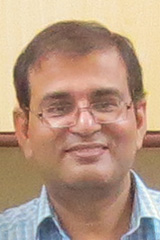
Subhasis Chaudhuri
Community hub
Subhasis Chaudhuri
logo
8 pages, 0 posts
0 subscribers
Be the first to start a discussion here.
Subhasis Chaudhuri
Subhasis Chaudhuri
from Wikipedia

Subhasis Chaudhury (born 1 March 1963) is an Indian electrical engineer, former director at the Indian Institute of Technology, Bombay (IIT Bombay) and currently Chairman of the Board of Directors of BSE Limited.[1] He is a former K. N. Bajaj Chair Professor of the Department of Electrical Engineering of IIT Bombay.[2][3] He is known for his pioneering studies on computer vision[4] and is an elected fellow of all the three major Indian science academies viz. the National Academy of Sciences, India,[5] Indian Academy of Sciences,[6] and Indian National Science Academy.[7] He is also a fellow of Institute of Electrical and Electronics Engineers,[8] and the Indian National Academy of Engineering.[9] The Council of Scientific and Industrial Research, the apex agency of the Government of India for scientific research, awarded him the Shanti Swarup Bhatnagar Prize for Science and Technology, one of the highest Indian science awards, in 2004 for his contributions to Engineering Sciences.[10][note 1]

Key Information

Biography

[edit]

Subhasis Chaudhuri, born on 1 March 1963 at Bahutali, a small village in Murshidabad district, West Bengal to Santa and Nihar Kumar Chaudhuri, earned his graduate degree in Electronics and Electrical Communication Engineering from the Indian Institute of Technology, Kharagpur in 1985.[11] Moving to Canada, he obtained a master's degree in Electrical Engineering from the University of Calgary in 1987 and joined the University of California, San Diego for his doctoral studies from where he secured a PhD in 1990.[12] He returned to India the same year and started his career at the Indian Institute of Technology, Bombay as an assistant professor.[13] He was promoted as an associate professor in 1994 and as a professor in 1998 and in 2005, he became the head of the department of electrical engineering, a post he held till 2008.[14] During this period, he had three sabbaticals abroad; as a visiting professor at University of Erlangen-Nuremberg (1996) and at University of Paris XI (2002–03)[15] and as an Alexander von Humboldt Fellow at Technical University of Munich (May–June 2007).[16] He served as director of IIT Bombay from April 2019 to April 2024 [17] and holds the K. N. Bajaj Chair.[3]

Chaudhuri is married and the couple has two children. The family lives in Powai, a suburb of Mumbai.[5]

Legacy

[edit]
Face recognition by special software

Chaudhuri's work have been mainly in the areas of pattern recognition, image processing, and computer vision.[14] He is known to have developed a number of techniques including a methodology for acquiring super-resolved depth map from defocus and is one of the pioneers of researches in motion-free super-resolution.[4] His work covered the fields of motion estimation, restoration, computational photography and biomedical image analysis which has applications in cytology, microscopy, material science, biomedical science and pharmaceutics.[7] Computational haptics is another area of his researches. He has developed several new methodologies and holds US and Indian patents for a number of them.[18][19] He has documented his researches by way of several articles;[20][note 2] Google Scholar and ResearchGate, online article repositories of scientific articles, have listed many of them.[21][22] Besides, he has co-authored six books viz. Motion-Free Super-Resolution,[23] Hyperspectral Image Fusion,[24] Blind Image Deconvolution: Methods and Convergence,[25] Depth From Defocus: A Real Aperture Imaging Approach,[26] Video Analysis and Repackaging for Distance Education[27] and Ambulation Analysis in Wearable ECG[28] and edited two more, Perspectives and Policies on ICT in Society: An IFIP TC9 (Computers and Society) Handbook[29] and Super-Resolution Imaging.[30]

Chaudhuri sat in the editorial boards of several journals including International Journal of Computer Vision of Springer, IEEE Transactions on Pattern Analysis and Machine Intelligence of Institute of Electrical and Electronics Engineers and IET Computer Vision of Institution of Engineering and Technology.[7] He chaired a program at the 2005 edition of International Conference on Computer Vision (ICCV) at Beijing and served as the program chair of Indian Conference on Computer Vision, Graphics and Image Processing (ICVGIP) held in 2006 at Mumbai; he also co-chaired the 2002 edition of ICVGIP.[31] He has delivered invited or plenary speeches in several conferences including the Fifth National Conference on Computer Vision, Pattern Recognition, Image Processing and Graphics (NCVPRIPG) held in December 2015 at Patna[15] and has been involved in external teaching programs of IIT Bombay[32] and other institutions.[17][33][34] He serves as a member of the Council of the Indian National Science Academy,[35] the Publications Committee of International Conference on Robotics and Automation for Humanitarian Applications (RAHA 2016)[36] and the Advisory Council of the Information Technology Research Academy.[37] As the Dean of International Relations of IIT Bombay, he has been involved in inter-institutional cooperations;[38] spearheading the IITB's efforts to open an off-campus in New York[39][40] and the establishment of cooperation with International Cooperation Between the Advanced Institute of Manufacturing With High-Tech Innovations (AIM-HI), Taiwan count among them.[41]

Selected Patents

[edit]
  • Visual Object Tracking With Scale and Orientation Adaptation[42]
  • Image Object Tracking and Segmentation Using Active Contours.[43]
  • Device and Method for Automatically recreating a Content Preserving and Compression Efficient Lecture Video.[44]
  • System for creating a capsule representation of an instructional video.[45]
  • System and method for fusing images.[46]

Awards and honors

[edit]

Chaudhuri received the Shri Hari Om Ashram Prerit Vikram Sarabhai Research Award of the Physical Research Laboratory in 2011,[47] followed by the Prof. S. V. C. Aiya Memorial Award of the Institution of Electronics and Telecommunication Engineers, the same year.[48] The Council of Scientific and Industrial Research awarded him the Shanti Swarup Bhatnagar Prize, one of the highest Indian science awards in 2004.[49] The Prof. H.H. Mathur Excellence in Research Award of the Indian Institute of Technology, Bombay reached him in 2007[50] and he received the G. D. Birla Award for Scientific Research from the K. K. Birla Foundation in 2010.[51] A year later, he was awarded the 2011 NASI-Reliance Industries Platinum Jubilee Award.[52]

Chaudhuri has received three major research fellowships in his career; starting with Swarnajayanti Fellowship of the Department of Science and Technology in 2003,[53] followed by the Alexander von Humboldt fellowship in 2007[13] and J. C. Bose National Fellowship of the Science and Engineering Research Board (SERB) in 2008.[14] The year 2003 brought him two more honors viz. the elected fellowships of the National Academy of Sciences, India.[54] and Indian National Academy of Engineering.[55] Indian Academy of Sciences elected him as their fellow in 2005[6] and he became a fellow of the Institute of Electrical and Electronics Engineers in 2011.[8] In 2012, he received the elected fellowship of the Indian National Science Academy.[56]

Selected bibliography

[edit]

See also

[edit]

Notes

[edit]

References

[edit]
[edit]
Revisions and contributorsEdit on WikipediaRead on Wikipedia
from Grokipedia
Subhasis Chaudhuri (born 1 March 1963 in Bahutali, ) is an Indian electrical engineer, academic administrator, and researcher renowned for his pioneering work in , image processing, , and computational haptics. He serves as the K.N. Bajaj Chair Professor in the Department of at the (), where he previously held leadership roles including Director (2019–2024), Head of the Department, Dean of , and Deputy Director. Additionally, Chaudhuri is the Chairman of the Governing Board at () Limited, a position approved by the Securities and Exchange Board of India (SEBI) in 2024. Chaudhuri earned his B.Tech. in Electronics and Electrical Communication Engineering from the Indian Institute of Technology in 1985, an M.Sc. in from the in 1987, and a Ph.D. in from the in 1990. He joined the faculty at in 1990 and has since guided over 33 Ph.D. students and 120 M.Tech. theses, while authoring or co-authoring more than 110 journal papers, 240 conference papers, eight monographs, and holding 13 patents. His research has garnered over 12,000 citations with an of 51, focusing on applications in , image analysis, and AI-driven . Throughout his career, Chaudhuri has received numerous prestigious awards, including the Prize in Engineering Sciences (2004), the Swarnajayanti Fellowship (2003), the J.C. Bose National Fellowship (2008), the Award for Industrial Leadership in Science and Technology (2010), and the IEEE Fellowship (2011). More recently, he was honored with the Distinguished Alumnus Award from (2017) and UC San Diego (2025), an honorary D.Sc. from the (2023), and the TWAS Fellowship (2025). He is a Fellow of the Indian National Science Academy (INSA), (IASc), Indian National Academy of Engineering (INAE), , India (NASI), and the Institute of Electrical and Electronics Engineers (IEEE).

Early life and education

Family background and early years

Subhasis Chaudhuri was born on March 1, 1963, in Bahutali, a small village in the of , , one of the country's poorer regions. As the son of a schoolteacher, Chaudhuri grew up in a modest rural that placed a strong emphasis on education as a path to stability and opportunity. His father's profession provided early exposure to the value of learning, shaping his formative years amid economic simplicity and the natural surroundings of rural Bengal. Chaudhuri's childhood was marked by influences that nurtured his curiosity in science and , including family-driven focus on academic pursuits and the era's growing fascination with fields like . He later recalled fond memories of studying by the banks of the River, even on rainy days, which highlighted the intellectual environment of his early life and local schooling in Bahutali. This background paved the way for his transition to higher education at .

Academic qualifications

Subhasis Chaudhuri obtained his B.Tech. degree in Electronics and Electrical Communications Engineering from the Indian Institute of Technology (IIT) Kharagpur in 1985. The program's curriculum emphasized core electronics principles, including analog and digital circuit design, electromagnetic theory, and foundational communication systems, providing a strong base in electrical engineering applications. Following his undergraduate studies, Chaudhuri pursued an M.Sc. in Electrical Engineering at the , , which he completed in 1987. His master's thesis, titled "Digital image processing techniques for quantitative analysis of collagen fibril alignment in ligaments," explored methods to assess biomedical structures. Chaudhuri then earned his Ph.D. in Electrical and Computer Engineering from the , in 1990. His doctoral research focused on image processing techniques relevant to .

Professional career

Faculty roles at IIT Bombay

Subhasis Chaudhuri joined the in 1990 as an in the Department of , immediately following the completion of his Ph.D. in from the . In this initial role, he focused on teaching undergraduate and graduate courses in and , while beginning to mentor projects that laid the groundwork for interdisciplinary applications in . Chaudhuri was promoted to in 1994, during which time he played a key role in establishing and leading the Vision and Image Processing Lab (VIP Lab) within the department. This initiative fostered a collaborative environment for hands-on and , emphasizing practical training in computer vision techniques through supervised student theses and lab-based coursework. His contributions extended to departmental enhancements, integrating emerging topics in processing into the electrical engineering syllabus to better prepare students for industry and academia. In 1998, Chaudhuri advanced to the position of full , where he intensified his mentorship efforts, guiding numerous Ph.D. and M.Tech. students in developing foundational skills in image processing and . His faculty tenure emphasized building departmental capacity through collaborative teaching initiatives and advising on resource allocation for lab infrastructure, which supported over a decade of sustained growth in the program's research output. Chaudhuri was appointed as the K.N. Bajaj Chair Professor in 2018, a distinguished role that involved advanced supervision of research projects in image processing and leadership in for specialized electives. In this capacity, he oversaw interdisciplinary mentorship programs, fostering collaborations between students and industry partners while refining course modules to incorporate cutting-edge pedagogical methods in visual computing. His chair responsibilities underscored a commitment to elevating teaching standards and nurturing talent within IIT Bombay's Department.

Leadership as Director of IIT Bombay

Subhasis Chaudhuri was appointed Director of the in February 2019 by the , succeeding Devang V. Khakhar, and assumed office on April 18, 2019. His five-year tenure, which concluded in May 2024, focused on strengthening the institute's position as a global leader in and . During his leadership, Chaudhuri prioritized enhancing research funding to support cutting-edge projects across disciplines. Under his stewardship, IIT Bombay secured over INR 1,300 crore in external research funding from agencies, industry, and other sources over the five years from to 2024, marking a substantial increase that enabled investments in high-impact areas like and . He spearheaded the expansion of interdisciplinary centers to foster collaborative innovation, including the establishment of the Koita Centre for Digital Health (KCDH) in 2021, which integrates , , and to address healthcare challenges, and the Centre for Machine Intelligence and Data Science (C-MInDS) to advance AI-driven solutions. These initiatives not only boosted cross-departmental research but also attracted partnerships, such as the INR 150 crore donation from the Koita Foundation for KCDH. Chaudhuri's tenure saw a remarkable 68% surge in intellectual property (IP) filings during the COVID-19 pandemic year of 2020-21, rising from 156 to 262 applications, including approximately 24 patents (around 15% of filings) related to mitigation technologies, such as diagnostic tools and protective equipment. This growth reflected his emphasis on translating into societal impact amid global challenges. He also oversaw significant campus developments, including the completion of the Himadri faculty housing tower with 78 units, the nearing operationalization of a new Research Park building, and planning for Hostel 19 to accommodate 1,052 students, all funded through internal resources and alumni contributions exceeding INR 180 annually by 2022-23. These enhancements improved facilities, such as state-of-the-art labs in and physics, supporting over 2,375 journal publications in 2022-23 alone. To elevate IIT Bombay's global standing, Chaudhuri expanded international collaborations, signing 47 memoranda of understanding (MoUs) with foreign institutions like the University of Alberta and National Taiwan University during 2022-23, facilitating joint research in areas such as clean energy and quantum technologies. These efforts, including participation in forums like the U7+ alliance and hosting high-profile visits from UN officials, resulted in 65 international job offers for students in 2022-23 and strengthened funding streams, such as the $18.6 million alumnus donation for a green energy research hub in 2023. His prior experience as a faculty member at IIT Bombay since 1990 informed these strategic policies, ensuring alignment with the institute's academic ethos.

Involvement with BSE Limited

In May 2022, Subhasis Chaudhuri was appointed as a Public Interest Director (PID) on the Board of BSE Limited, India's leading stock exchange, effective from May 19, 2022, following approval by the Board of Directors via circular resolution. This role, mandated under SEBI regulations for stock exchanges, emphasizes governance, regulatory compliance, and public interest oversight in market operations. Chaudhuri's appointment leveraged his extensive background in technology policy from his prior leadership at IIT Bombay, enabling him to contribute to strategic decisions at the intersection of finance and innovation. Chaudhuri's involvement expanded significantly in November 2024, when the BSE Board approved his elevation to Chairman of the Governing Board on November 12, 2024, with SEBI approval confirming the appointment effective immediately from November 21, 2024. As Chairman, he oversees the board's collective responsibilities, including strategic direction and risk oversight, succeeding previous leadership to ensure robust market integrity. In this capacity, he has actively participated in key committees, serving as a member of the (attending all six meetings in FY 2023-24), the (attending all seven meetings), the (attending all four meetings), the Stakeholders' Relationship Committee, the Standing Committee on and Cyber , and the Committee of PIDs for Review of Claims of Clients Against Defaulting Members. These roles have positioned him to influence financial audits, , enterprise-wide risk frameworks, and . Under Chaudhuri's board tenure, BSE has advanced its technological infrastructure, including achieving a trading latency of 6 microseconds—recognized as the world's fastest exchange matching engine—and enhancing surveillance through Big Data and AI/ML implementations for real-time monitoring and anomaly detection. He has contributed to the oversight of innovative trading platforms, such as the launch of the Equity Derivatives (EGR) segment on October 24, 2022, and the growth of the Request for Quote (RFQ) platform, which captured 5% market share by volume in FY 2023-24. These developments underscore BSE's focus on scalable data analytics and secure trading systems, aligning with global standards for efficiency and resilience. In January 2025, his PID role was extended for another three years effective May 19, 2025, affirming his ongoing governance impact.

Research focus

Core areas of expertise

Subhasis Chaudhuri has specialized in , image processing, and since the early 1990s, focusing on foundational techniques for analyzing and enhancing visual data. His work emphasizes the development of algorithms to interpret complex imagery, addressing challenges in feature extraction, scene understanding, and image restoration in real-world applications. This expertise stems from his doctoral research at the , where he earned a PhD in in 1990, laying the groundwork for his contributions to visual computing. Chaudhuri's research extends into applications tailored for visual data analysis, particularly in domains requiring precise pattern detection and classification. Notable extensions include for human motion and collagen alignment assessment in biomedical imaging, where models integrate with imaging data to quantify structural and functional properties. These efforts highlight his approach to leveraging computational methods for non-invasive diagnostics and motion studies, bridging visual processing with practical health-related insights. Interdisciplinary overlaps in Chaudhuri's expertise encompass , , and high-frequency technologies to tackle real-world challenges, such as in dynamic environments and adaptive filtering for high-resolution capture. By combining AI-driven with principles, his work addresses limitations in traditional systems, enabling robust solutions for multimedia and biomedical contexts. This holistic integration supports advancements in areas like and haptic feedback, emphasizing scalable, efficient processing for diverse visual datasets.

Methodological advancements

Chaudhuri's work on depth-from-defocus methods represents a significant advancement in passive techniques, leveraging real to recover depth information from naturally illuminated scenes without active illumination or mechanical adjustments. This approach treats defocus blur as a primary cue for estimating scene depth, modeling the process where variations in blur across an image correspond to depth discontinuities in the 3D world. By analyzing the point spread function induced by the camera's , Chaudhuri's enables accurate depth mapping through the inversion of defocus equations, addressing challenges such as partial occlusions and in real-world . The theoretical foundation relies on the of defocus, where the blur circle size is inversely proportional to object , allowing for robust passive ranging applicable to fields like and autonomous navigation. In parallel, Chaudhuri pioneered motion-free super-resolution algorithms that enhance spatial resolution of images without relying on sub-pixel shifts or mechanical motion between frames, instead utilizing multi-frame fusion based on complementary low-resolution observations. These methods exploit inherent redundancies and aliasing patterns in multiple under-sampled images captured from the same viewpoint, formulating super-resolution as an optimization problem that reconstructs high-frequency details through regularization techniques. By avoiding motion estimation errors common in traditional super-resolution, Chaudhuri's framework improves image quality for static scenes, with theoretical underpinnings rooted in sampling theory and Bayesian inference to ensure stable fusion and minimize artifacts. This innovation has facilitated higher-fidelity imaging in resource-constrained environments, such as handheld devices. Chaudhuri also advanced blind image deconvolution approaches for restoring degraded images affected by unknown blur, emphasizing iterative optimization schemes that operate without prior knowledge of the blur function or . These techniques employ alternating minimization between image and blur estimates, incorporating sparsity-inducing priors to guide convergence toward non-trivial solutions and prevent ill-posedness in the joint estimation . The core analyzes convergence in the image using properties like the three-point and four-point conditions, ensuring that quadratic or higher-order priors enforce meaningful restoration even under severe degradation. This work has established a rigorous basis for handling real-world degradations like atmospheric turbulence or motion blur in applications.

Innovations and intellectual property

Key patents

Subhasis Chaudhuri has co-invented several patents that innovate in visual tracking, video summarization, and decoding technologies, often assigned to the Indian Institute of Technology Bombay. He has filed 13 patents in total. A prominent example is U.S. Patent 8,335,348, granted in 2012 and titled "Visual Object Tracking with Scale and Orientation Adaptation." This invention develops adaptive contour models that dynamically adjust to variations in object scale and orientation, providing robust performance in challenging imaging conditions such as motion blur or viewpoint changes; it was filed on December 14, 2009, with co-inventors V. Srikrishnan and T. Nagaraj. Another key contribution is Chinese Patent CN102612707A, published in 2012 under the title "System for Creating Education Video Summary" (noted in Indian inventor profiles as an Indian-originated filing). The system employs automated extraction algorithms to generate concise summaries of educational videos, enhancing and retention by identifying salient content segments; filed on July 2, 2010, with co-inventor Ranjit Lahm.

Applications and broader impact

Chaudhuri's depth-from-defocus techniques enable passive depth estimation from natural light illumination, facilitating non-invasive diagnostics in by accurately recovering scene depth without active sensors or patient discomfort. These methods have potential applications in for disease detection. In , the approach supports autonomous through real-time depth mapping, allowing robots to perceive environments using standard cameras for avoidance and path planning. His super-resolution innovations, which reconstruct high-resolution images from low-resolution inputs using cues like blur and zoom, have influenced in cameras, enabling sharper images from compact sensors. These techniques also improve low-light performance in systems by reducing noise and enhancing detail in video feeds, aiding real-time monitoring and . Chaudhuri's broader impact includes filing 13 patents that extend his research into practical domains, such as AI-driven video analysis for through automated lecture summarization systems that extract key segments for efficient learning.

Awards and honors

National and international prizes

Subhasis Chaudhuri received the Prize in Sciences in 2004 from the Council of Scientific and Industrial Research (CSIR), India's highest science award, for his seminal work in , including the development of sophisticated techniques for obtaining the super-resolved from defocus and pioneering motion-free super-resolution, with applications in cytology, , material, biomedical, and pharmaceutical sciences. In 2001, he was awarded the Shri Hari Om Ashram Prerit Research Award by the in the category of electronics and telecommunication, recognizing his contributions to , such as , , and recovery of depth from defocus. Chaudhuri was conferred the ACCS-CDAC Foundation Award in 2021 by the Advanced Computing and Communications Society (ACCS) and the Centre for Development of Advanced Computing (CDAC), honoring his seminal contributions to the advancement of computational sciences, particularly in and . In 2003, he received the Swarnajayanti Fellowship from the Department of Science and Technology, , for outstanding research in engineering sciences. The J.C. Bose National Fellowship was awarded to him in 2008 by the Department of Science and Technology, recognizing sustained excellence in scientific research. In 2010, Chaudhuri was honored with the Award for Industrial Leadership in Science and Technology by the . He received the Distinguished Alumnus Award from in 2017. In 2023, the conferred an honorary D.Sc. upon him.

Fellowships and distinctions

Subhasis Chaudhuri's stature in engineering and science is affirmed by his election to several esteemed academies and fellowships, reflecting peer recognition of his scholarly impact. He is a Fellow of the Indian National Academy of Engineering (FNAE), recognizing his contributions to engineering research. Chaudhuri also holds fellowships in the (FNASc) and the National Academy of Sciences, India (FNA), positions that underscore his leadership in scientific inquiry within . As an IEEE Fellow (FIEEE) since 2011, Chaudhuri was honored for contributions to graduate-level education in . In 2025, he was elected a Fellow of (TWAS), joining an elite global cohort for excellence in scientific research from developing countries. That same year, the , conferred upon him the ECE Distinguished Alumnus Award in Applied Mathematics, celebrating his PhD alumni achievements and ongoing influence in the field. He is also a of the (FASc), elected in 2005.

Bibliography

Authored monographs

Subhasis Chaudhuri has authored several influential monographs in the field of image processing and , focusing on advanced techniques for depth estimation, resolution enhancement, and image restoration. These works provide in-depth theoretical foundations, algorithmic developments, and practical applications, establishing key methodologies that have influenced subsequent research in passive imaging systems. His first major , Depth From Defocus: A Real Aperture Imaging Approach, published in 1999 by Springer, explores passive from defocused images captured with real apertures. The book details the effects of aperture settings on image blur, deriving models for defocus blur kernels and proposing reconstruction algorithms that recover depth maps without active illumination or correspondence. Chapters cover parametric and non-parametric methods, including frequency-domain for blur parameter extraction, and demonstrate applications in range sensing for and , advancing the understanding of defocus as a cue for in unconstrained environments. This work has been cited over 390 times and remains a foundational reference for defocus-based depth recovery techniques. In 2005, Chaudhuri co-authored Motion-Free Super-Resolution with Manjunath V. Joshi, published by Springer, which addresses the challenge of enhancing from multiple low-resolution images without relying on sub-pixel motion shifts. The introduces methods to exploit temporal in video sequences or static image sets, reducing through regularization-based fusion and iterative optimization frameworks that preserve edges and textures. It covers topics such as kernel for shift-invariant models, multi-frame registration techniques, and performance evaluations on natural scenes, highlighting the technique's utility in and where motion is limited or undesirable. This book compiles recent advancements in non-motion-based super-resolution, offering practical algorithms that improve resolution by factors of 2-4x while minimizing artifacts, and has contributed to the evolution of stationary image enhancement strategies. Chaudhuri co-authored Ambulation Analysis in Wearable ECG with Tanmay D. Pawar and Siddhartha Duttagupta, published in 2009 by Springer, which examines ambulatory electrocardiogram (ECG) signal processing for motion artifact removal and heart rate estimation during . The book details hardware designs for wearable ECG devices, adaptive filtering techniques to suppress motion-induced noise using accelerometers, and approaches for , with applications in remote health monitoring and telemedicine. In 2013, Chaudhuri co-authored Hyperspectral Image Fusion with Ketan Kotwal, published by Springer, presenting pixel-level fusion methods for hyperspectral data visualization. It covers , spectral unmixing, and multi-sensor integration algorithms to generate false-color images that preserve spectral information, with evaluations on datasets for and mineral detection. Chaudhuri's 2014 co-authored monograph Blind Image Deconvolution: Methods and Convergence, published by Springer with Rajbabu Velmurugan and Renu Rameshan, delves into the restoration of degraded images where both the original signal and degradation operator are unknown. It contrasts non-blind deconvolution, which assumes known blur, with blind approaches that jointly estimate the image and using priors like sparsity or natural image statistics. The text includes case studies from astronomy, where atmospheric causes blur, and , applying maximum frameworks to recover high-fidelity details. Emphasizing convergence guarantees and computational , the book provides algorithms for space-variant blurs and real-world validations, underscoring blind 's role in enhancing resolution in observational sciences. This work has shaped practical implementations in inverse problems, bridging theory with domain-specific applications. In 2018, Chaudhuri co-authored Kinesthetic Perception: A Machine Learning Approach with Amit Bhardwaj, published by Springer, focusing on haptic data acquisition and processing for virtual touch simulation. The monograph introduces adaptive sampling strategies for force and texture rendering, models for predicting kinesthetic feedback from visual cues, and applications in and rehabilitation . Chaudhuri co-authored Image Co-segmentation with Avik Hati, Rajbabu Velmurugan, and others, published in 2022 by Springer, which explores joint segmentation of common objects across multiple images using graph-based and methods. It discusses foreground-background separation, semantic consistency enforcement, and evaluations on benchmark datasets for object discovery in cluttered scenes.

Edited works and selected publications

Chaudhuri edited the volume in 2001, published by Springer as part of the International Series in Engineering and , which compiles contributions from international experts on techniques for enhancing in images beyond the limits of conventional . The book covers topics such as iterative methods, regularization approaches, and learning-based reconstruction, emphasizing collaborative advancements in the field. Chaudhuri also co-edited Heritage Preservation: A Computational Approach in 2018 with Bhabatosh Chanda and others, published by Springer, addressing digital techniques for conserving cultural artifacts through 3D modeling, image restoration, and virtual reality applications. The volume includes chapters on multispectral imaging, crack detection in paintings, and haptic rendering for artifact interaction. Among his selected journal articles, a notable early contribution is "A Fourier domain directional filtering method for analysis of collagen alignment in ligaments," co-authored with H. Nguyen, R. M. Rangayyan, S. Walsh, and C. B. Frank, published in IEEE Transactions on Biomedical Engineering in 1987; this work introduces a frequency-domain technique to quantify fiber orientation in biological tissues using polarized light microscopy. Chaudhuri has authored or co-authored over 350 peer-reviewed publications, including more than 110 journal articles, with numerous appearances in IEEE Transactions on Image Processing on topics ranging from image restoration to feature extraction. His scholarly impact is reflected in an h-index of 51 and over 12,800 citations on Google Scholar (as of November 2025). In recent collaborative efforts post-2010, Chaudhuri has focused on AI-driven video summarization and analysis for educational applications, such as predicting lecture effectiveness through feature extraction from video content and developing voice-activated platforms for lectures. These works often link to his patents on video analytics systems, including real-time intrusion detection and multimodal fusion for and educational tools.

References

Add your contribution
Related Hubs
User Avatar
No comments yet.