



Community hub
Recent from talks
Knowledge base stats:
Talk channels stats:
Members stats:
Taichung
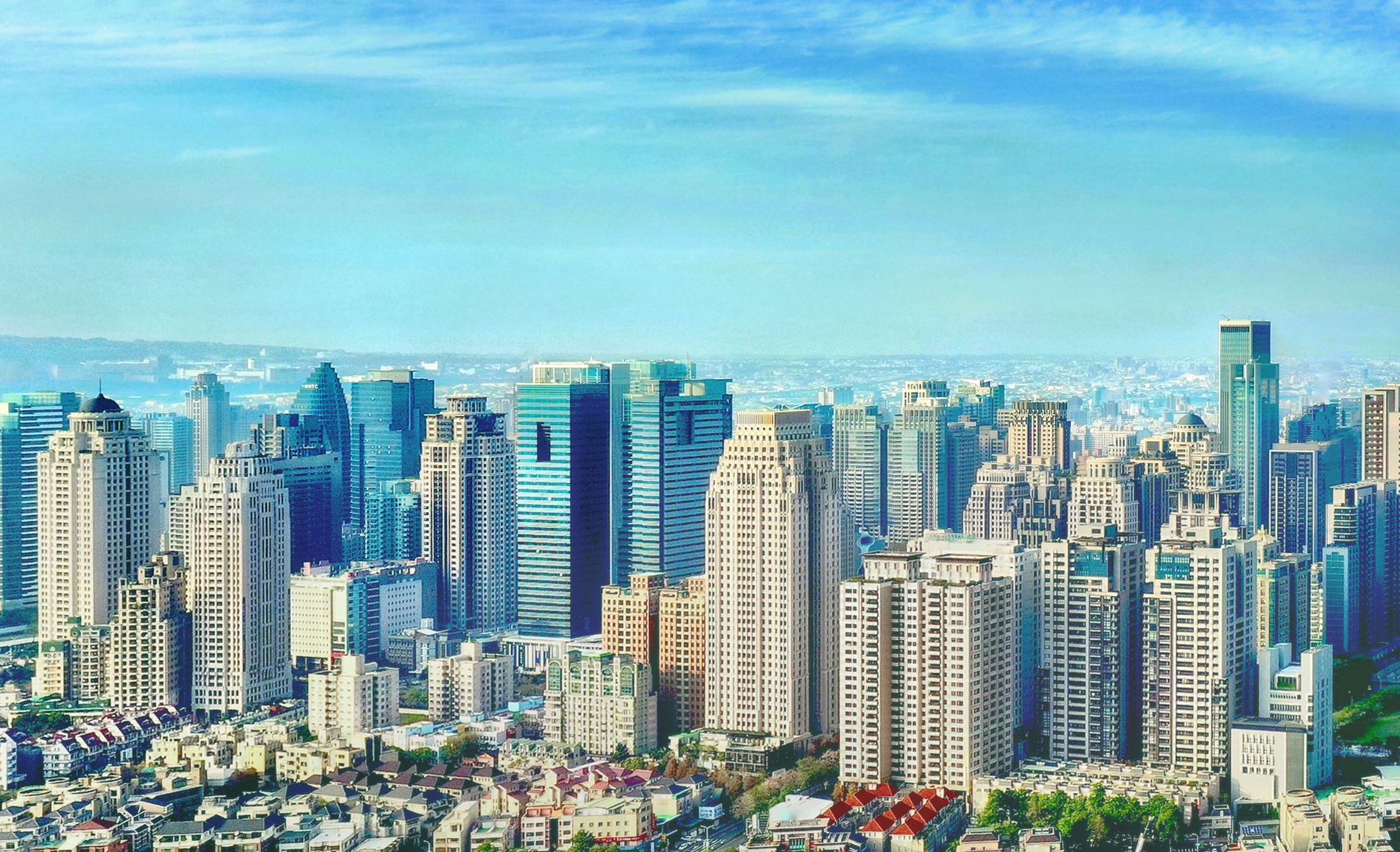
Taichung (/ˌtaɪˈtʃʊŋ/, Wade–Giles: Tʻai2-chung1, Pinyin Táizhōng), officially Taichung City, is a special municipality in central Taiwan. Taichung is Taiwan's second-largest city, with more than 2.86 million residents.
Located in the Taichung Basin, the city was initially developed from several scattered hamlets helmed by the Taiwanese indigenous peoples. It was constructed to be the new capital of Taiwan Province and renamed "Taiwan-fu" in the late Qing dynastic era between 1887 and 1894. During the Japanese era from 1895, the urban planning of present-day Taichung was performed and developed by the Japanese. The urban area of Taichung was organized as a provincial city from the start of ROC rule in 1945 until 25 December 2010, when the original provincial city and Taichung County were merged into a new special municipality.
The city is home to the National Museum of Natural Science, the National Taiwan Museum of Fine Arts, the National Taichung Theater, the National Library of Public Information, National Taiwan Museum of Comics, National Taiwan Symphony Orchestra, as well as many cultural sites, including the historic Taichung Park, the Lin Family Gardens, and many temples.
The Atayal aborigines as well as several Taiwanese Plains Aboriginal tribes (including the Taokas, Papora, Pazeh, Hoanya and Babuzas) populated the plains that make up modern Taichung. They were originally hunter gatherers who later lived by cultivating millet and taro. In the 17th century, the Papora, Babuza, Pazeh, and Hoanya established the Kingdom of Middag, occupying the western part of present-day Taichung.[citation needed]
In 1684, Zhuluo County was established, encompassing the underdeveloped northern two-thirds of Taiwan. Modern-day Taichung traces its beginnings to a settlement named Toatun (Chinese: 大墩; pinyin: Dàdūn; Wade–Giles: Ta4-tun1; Pe̍h-ōe-jī: Toā-tun; lit. 'large mound') in 1705. To strengthen Qing control, a garrison was established in 1721 near the site of present-day Taichung Park by Lan Ting-chen.
North of the city, on the Dajia River, an aboriginal revolt broke out in 1731 after Chinese officials moved in and compelled them to provide labor. The revolt spread through the city as far south as Changhua County in May 1732 before the rebels were chased into the mountains by Qing forces. In 1786, another rebellion against the Qing, known as the Lin Shuangwen rebellion, began as an attempt to overthrow the government and restore the Ming dynasty. Unfortunately, as the rebels moved northward, they turned to slaughter and looting. They were eventually defeated by a coalition of Qing forces, Hakka, Quanzhou Fujianese descendants, and aboriginal volunteers.
When Taiwan Province was declared an independent province in 1887, the government intended to construct its capital city at the centrally located Toatun, which was also designated as the seat of Taiwan Prefecture. Thus the city took the title of "Taiwan-fu", meaning "capital city of Taiwan", from modern-day Tainan, which had held the title for more than 200 years. Qing official Liu Ming-chuan received permission to oversee development of the area, which included constructing a railway through the city. However, the provincial capital was ultimately moved to Taipei.
After the Qing dynasty lost the Sino-Japanese War in 1895, Taiwan was ceded to Japan by the Treaty of Shimonoseki, and the name of the city was changed to Taichū (Japanese: 臺中). The Japanese sought to develop the city to make it the first "modern" area of Taiwan and invested in roads, dams, and levees. In 1901, Taichū Chō (臺中廳) was established as one of 20 local administrative districts on the island. In 1904, the town of Taichū had a population of 6,423, and Taichū District had more than 207,000.
Hub AI
Taichung AI simulator
(@Taichung_simulator)
Taichung
Taichung (/ˌtaɪˈtʃʊŋ/, Wade–Giles: Tʻai2-chung1, Pinyin Táizhōng), officially Taichung City, is a special municipality in central Taiwan. Taichung is Taiwan's second-largest city, with more than 2.86 million residents.
Located in the Taichung Basin, the city was initially developed from several scattered hamlets helmed by the Taiwanese indigenous peoples. It was constructed to be the new capital of Taiwan Province and renamed "Taiwan-fu" in the late Qing dynastic era between 1887 and 1894. During the Japanese era from 1895, the urban planning of present-day Taichung was performed and developed by the Japanese. The urban area of Taichung was organized as a provincial city from the start of ROC rule in 1945 until 25 December 2010, when the original provincial city and Taichung County were merged into a new special municipality.
The city is home to the National Museum of Natural Science, the National Taiwan Museum of Fine Arts, the National Taichung Theater, the National Library of Public Information, National Taiwan Museum of Comics, National Taiwan Symphony Orchestra, as well as many cultural sites, including the historic Taichung Park, the Lin Family Gardens, and many temples.
The Atayal aborigines as well as several Taiwanese Plains Aboriginal tribes (including the Taokas, Papora, Pazeh, Hoanya and Babuzas) populated the plains that make up modern Taichung. They were originally hunter gatherers who later lived by cultivating millet and taro. In the 17th century, the Papora, Babuza, Pazeh, and Hoanya established the Kingdom of Middag, occupying the western part of present-day Taichung.[citation needed]
In 1684, Zhuluo County was established, encompassing the underdeveloped northern two-thirds of Taiwan. Modern-day Taichung traces its beginnings to a settlement named Toatun (Chinese: 大墩; pinyin: Dàdūn; Wade–Giles: Ta4-tun1; Pe̍h-ōe-jī: Toā-tun; lit. 'large mound') in 1705. To strengthen Qing control, a garrison was established in 1721 near the site of present-day Taichung Park by Lan Ting-chen.
North of the city, on the Dajia River, an aboriginal revolt broke out in 1731 after Chinese officials moved in and compelled them to provide labor. The revolt spread through the city as far south as Changhua County in May 1732 before the rebels were chased into the mountains by Qing forces. In 1786, another rebellion against the Qing, known as the Lin Shuangwen rebellion, began as an attempt to overthrow the government and restore the Ming dynasty. Unfortunately, as the rebels moved northward, they turned to slaughter and looting. They were eventually defeated by a coalition of Qing forces, Hakka, Quanzhou Fujianese descendants, and aboriginal volunteers.
When Taiwan Province was declared an independent province in 1887, the government intended to construct its capital city at the centrally located Toatun, which was also designated as the seat of Taiwan Prefecture. Thus the city took the title of "Taiwan-fu", meaning "capital city of Taiwan", from modern-day Tainan, which had held the title for more than 200 years. Qing official Liu Ming-chuan received permission to oversee development of the area, which included constructing a railway through the city. However, the provincial capital was ultimately moved to Taipei.
After the Qing dynasty lost the Sino-Japanese War in 1895, Taiwan was ceded to Japan by the Treaty of Shimonoseki, and the name of the city was changed to Taichū (Japanese: 臺中). The Japanese sought to develop the city to make it the first "modern" area of Taiwan and invested in roads, dams, and levees. In 1901, Taichū Chō (臺中廳) was established as one of 20 local administrative districts on the island. In 1904, the town of Taichū had a population of 6,423, and Taichū District had more than 207,000.