Hubbry Logo
logo
Tandem
Community hub

Tandem

logo
0 subscribers
Read side by side
from Wikipedia

Horses hitched in tandem pulling a carriage

Tandem, or in tandem, is an arrangement in which two or more animals, machines, or people are lined up one behind another, all facing in the same direction.[1] Tandem can also be used more generally to refer to any group of persons or objects working together, not necessarily in line.[1]

The English word tandem derives from the Latin adverb tandem, meaning at length or finally.[2] It is a word play, using the Latin phrase (referring to time, not position) for English "at length, lengthwise".[3]

Horse driving

[edit]
Draft horses chain-hitched in tandem; carter standing in usual position beside rear horse

When driving horses, tandem refers to one horse harnessed in front of another to pull a load or vehicle. A tandem arrangement provides more pulling power than a single horse, such as for pulling a heavy load up a steep hill, out of heavy mud or snow, or pulling heavy loads on narrow tracks or through narrow gates and doorways (too wide for a pair of horses side-by-side).[4]: 52,75  For example, a Brewer's van fully loaded with 25 barrels might weigh 8 tons, requiring 2 or 3 horses.[5]: 45 

In carting, when pulling heavy loads with tandem harness, the carter walks to the left of the shaft horse holding its left rein with his right hand, and holding the reins of the lead horse in his left hand.[5]: 62–63 

The harness for the leader (front horse) is slightly different than for the wheeler (rear horse). For instance, the leader doesn't have shafts, so shaft holders are not needed, but often there are straps to support the traces (pulling straps) from sagging too low. Any straps running across the back of the leader should be sewn or use special buckles which don't leave a loose tab that might catch a rein in it.[5]: 14, 20, 267  In carriage driving, the driver should carry a whip long enough to reach the shoulder of the leader.[5]: 63 

The driver sits high enough to see over the leader and is carrying a whip long enough to reach the lead horse's shoulder

A tandem cart is constructed in the style of a dogcart and used mainly for show, and should be tall enough for the driver to look over the head of the lead horse.[4]: 159 [5]: 263 [6]: 23  A drayel is hardware at the tip of the shafts to attach the traces (pulling straps) from the front horse.[4]: 185  Alternative to using a drayel, the leader's traces are hooked or buckled into the forward end of the wheeler's traces.[5]: 267 

Driving a tandem is challenging and led to the creation of tandem driving clubs and matches in the 19th century.[5]: 264 

The art of tandem driving requires an alert brain and sensitive fingers. It has been compared with playing a harp. It is, in many ways, more difficult than driving a team [of four horses]. Whereas the leaders of a team balance one another and keep each other straight, there is nothing other than the skill of the Whip (driver) to prevent a tandem leader from turning to face his driver.

— Sallie Walrond [5]: 264 

Three horses in a row is sometimes called a randem/random or trandem/trandom.[7][5]: 222 [4]: 19 

Bicycles

[edit]
Tandem bicycle

Tandem bicycles are named for their tandem seating, a more common arrangement than side-by-side "sociable" seating. Tandem bikes are also used in road racing, track racing, and para-cycling.

Motor vehicles

[edit]

The Messerschmitt KR200 was an example of a very small automobile that used tandem seating; one passenger behind the driver.

Tandem parking means parking one car in front of the other.

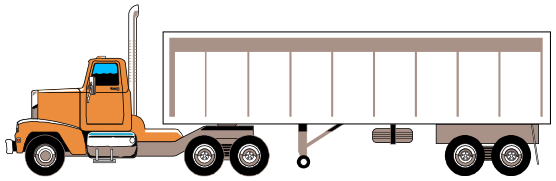
The word tandem is also used to indicate a semi-trailer truck pulling more than one trailer.

Tandem axles means one axle mounted closely in front of another. For trailers, the purpose is to bear heavier loads than a single axle provides.

In heavy trucks, tandem refers to two closely spaced axles. Legally defined by the distance between the axles (up to 2.5 m (8 ft 2+38 in) in the European Union, 40–96 inches (1.02–2.44 m) in the United States), mechanically there are many configurations. Either or both axles may be powered, and often interact with each other. In the United States, both axles are typically powered and equalized; in the European Union, one axle is typically unpowered, and can often be adjusted to load, and even raised off the ground, turning a tandem into a single-axle.[8][9]

Aviation

[edit]
Instructor and student pilots in a McDonnell Douglas T-45 Goshawk aircraft

The two seating configurations for trainer, night and all-weather interceptor or attack aircraft are pilot and instructor side by side or in tandem.[10] Usually, the pilot is in front and the instructor behind. In attack helicopters, sometimes the pilot sits in back with the weapons operator in front for better view to aim weapons, as the Bell AH-1 Cobra was a tandem cockpit redesign which produced a much slimmer profile than the Bell UH-1 Iroquois on which it was based. Attack aircraft and all-weather interceptors often use a second crew member to operate avionics such as radar, or as a second pilot. Bombers such as the Convair B-58 Hustler seated three crew members in tandem. A common engineering adaptation is to lengthen the cockpit or fuselage to create a trainer with tandem seating from a single-seater aircraft.

Side-by-side seating

[edit]
Tandem seat Gloster Meteor (top right) and side-by-side seat Hawker Hunter (trainer)

An alternative configuration is side-by-side seating, which is common in civil aircraft of all sizes, trainers and large military aircraft, but less so in high performance jets and gliders where drag reduction is paramount. The Boeing B-47 Stratojet and Boeing XB-52 bombers used fighter-style tandem seating, but the final B-52 bomber series used a conventional side-by-side cockpit. The Grumman A-6 Intruder, General Dynamics F-111 Aardvark, Saab 105, Sukhoi Su-24 and the Sukhoi Su-34 are examples of combat aircraft that use this configuration. For training aircraft, it has the advantage that pilot and instructor can see each other's actions, allowing the pilot to learn from the instructor and the instructor to correct the student pilot. The tandem configuration has the advantage of being closer to the normal working environment that a fast jet pilot is likely to encounter.[11]

In some cases, such as the Northrop Grumman EA-6B Prowler, a two-place aircraft can be lengthened into a four-place aircraft. Also, a single seat cockpit can be redesigned into a side-by-side arrangement in the case of the Douglas A-1 Skyraider, TF-102 trainer or the Hawker Hunter training versions.

Insects

[edit]

During mating among odonata (dragonflies and damselflies), a male uses claspers at the end of his abdomen to grab a female between the head and thorax, forming a tandem. The pair may take flight while in tandem.[12][13]

References

[edit]
[edit]
Revisions and contributorsEdit on WikipediaRead on Wikipedia
from Grokipedia
Tandem is an arrangement in which two or more people, animals, vehicles, or machines are positioned one behind the other, all facing the same direction, often to enable cooperative effort or enhance performance.[1] The term functions as a noun to denote such a setup (e.g., a tandem bicycle or team of horses), an adverb meaning "one behind the other," and an adjective describing elements arranged or operating in conjunction.[1] The word tandem derives from the Latin adverb tandem, meaning "at length," "at last," or "so much," formed from tam ("so") and the demonstrative suffix -dem.[2] It entered English around 1785 as a jocular university slang term for a two-wheeled carriage drawn by horses harnessed one in front of the other, with adverbial use ("one behind the other") appearing by 1795 and adjectival forms by 1801.[2] By 1884, the concept extended to the tandem bicycle, reflecting its adaptation to mechanical and vehicular contexts.[2] In transportation, tandem configurations have long been applied to bicycles and carriages for practical and social purposes. The tandem bicycle, designed for two riders pedaling in synchronization, originated in the late 19th century as a solution for shared mobility, with the first publicized model created by Danish inventor Mikael Pedersen in 1898—weighing just 24 pounds and part of his innovative Pedersen bicycle line.[3] These "courting bikes" surged in popularity during the 1890s, promoted through cultural references like the 1892 song "Daisy Bell" (later famously recreated in 2001: A Space Odyssey), and were produced by early brands such as Humber, Singer, and Raleigh.[3] Tandem bicycles allow pairs to achieve higher speeds than solo riders and remain popular today for recreation, racing, and accessibility, with modern designs emphasizing balanced control for both participants regardless of strength or experience.[3] Beyond personal transport, tandem principles underpin critical technologies in computing and engineering. Tandem Computers, Incorporated, founded in 1974 by James G. Treybig and former Hewlett-Packard engineers in Cupertino, California, pioneered fault-tolerant systems known as NonStop computers, featuring 2 to 16 paired processors that mirrored operations to prevent downtime.[4] These machines, powered by the Guardian operating system and Enscribe database, were vital for high-stakes environments like banking and telecommunications, with the first Tandem/16 system delivered to Citibank in 1976.[4] The company's innovations in redundancy and continuous processing influenced modern high-availability architectures, achieving peak revenues of $1.92 billion in 1991 before its acquisition by Compaq in 1997.[4] Tandem arrangements also appear in genetics as short tandem repeats (STRs)—variable DNA sequences used in forensics and population studies—and in heavy vehicles as close-coupled axle pairs for stability and load distribution.[1]

Etymology and general usage

Etymology

The word tandem originates from Latin, where it functions as an adverb meaning "at length" or "finally," denoting a sense of extension in time. This term is derived from the combination of tam, an adverb meaning "so much" or "to such an extent," and dem, a form of the deictic stem -de- (indicating "at that" or "in that manner") with an adverbial suffix -m.[2][1] The earliest documented use of tandem in English appears in 1785, in Francis Grose's A Classical Dictionary of the Vulgar Tongue, where it is applied humorously to describe a two-wheeled carriage or chaise drawn by two horses harnessed one behind the other. This usage plays on the Latin adverb's implication of length, reinterpreting it spatially as a "lengthwise" arrangement of the team, marking the term's initial adoption in a slang or colloquial context related to equestrian setups.[5][6][7] By the early 19th century, tandem had solidified as a noun referring specifically to the harness configuration itself, encompassing arrangements of horses or draft animals in single file for pulling vehicles or loads. This evolution is evidenced in period texts on carriage design and sporting activities, where the term denoted the practical alignment for enhanced traction over tandem side-by-side hitching. Adverbial use ("one behind the other") appeared by 1795, and adjectival forms ("having one before the other") by 1801.[1][5][2]

Definition and idiomatic expressions

Tandem refers to an arrangement in which two or more entities—such as people, animals, or objects—are positioned one directly behind the other, all facing the same direction.[1] This primary meaning emphasizes a linear, sequential alignment, often applied to harnessed animals or coordinated movement.[8] The phrase "in tandem" functions as an idiom denoting two or more elements working together, progressing simultaneously, or operating in coordination, without requiring physical proximity or alignment.[1] This figurative extension, which conveys harmony or mutual support, developed from the literal sense by the late 19th century. Derived briefly from the Latin adverb tandem meaning "at length," the term's evolution highlights a shift from spatial description to metaphorical cooperation. Examples of its idiomatic usage include modern applications like "economic policies advancing in tandem" in reports on synchronized fiscal strategies.[9]

Land transportation

Horse-drawn vehicles

In the tandem configuration for horse-drawn vehicles, horses are harnessed in a single file, with the front animal designated as the leader and the rear one as the wheel horse. The leader's traces connect directly to the wheel horse's collar or hames, typically behind the bellyband or via the singletree, enabling coordinated pulling while the wheel horse provides stability near the vehicle. This setup is particularly suited for navigating narrow paths or tight spaces, such as in logging or urban transport, and allows two to three horses to exert combined force sufficient to haul loads up to approximately 12 tons when using strong draft breeds like Belgians, though tandem arrangements were more commonly used for lighter carriages rather than maximum heavy draft work.[10][11][12] The practice of tandem horse driving originated in 18th-century England, where it was initially adopted by sportsmen for transporting hunters to the field ahead of hunts, evolving into a fashionable mode for coaching routes and public exhibitions by the 19th century. Its popularity surged as a display of equestrian skill, with elaborate harnesses and matched horses showcased in urban settings and rural meets. Driving clubs played a key role in formalizing and preserving the tradition; for instance, the Coaching Club, established in England in 1871, organized events that included tandem demonstrations alongside four-in-hand coaching, fostering standards for safety and style that influenced practitioners across Europe and America.[13][14] Terminology for tandem arrangements distinguishes basic setups from extended teams: a pair in line is simply termed a tandem, derived from the Latin for "at length," while three horses aligned similarly are known as a randem or trandem, a term coined in the early 19th century to evoke an extended tandem. This linear formation contrasts with side-by-side harnesses, such as pairs or teams hitched abreast to a common pole, which distribute weight more evenly across the animals' shoulders for broader vehicles but require wider turning radii and greater synchronization to avoid collisions. The randem, though less common, highlighted advanced training in exhibitions, as the middle horse bore additional strain from both leaders and wheelers.[13][15] Practical implementation of tandem harnesses emphasized balance and control, with the carter or driver positioned either astride the wheel horse for short hauls or seated in a rear-facing perch on the cart to maintain oversight of the entire team. Carts designed for tandem use, like the Whitechapel cart or specialized exhibition vehicles, featured elevated bodies mounted on adjustable steel slides or screw mechanisms, allowing the load to shift forward or backward for optimal weight distribution and preventing the leader from being overpowered during starts or turns. In shows and coaching displays, these designs ensured smooth performance, with ornate traces and collars underscoring the tandem's role as both functional transport and spectacle of horsemanship.[16][17]

Bicycles

Tandem bicycles are human-powered vehicles designed for two or more riders positioned in a linear, fore-and-aft arrangement, enabling synchronized pedaling to propel the craft. These bicycles typically feature two or more seats and corresponding pedal sets aligned along the frame, with the front rider (often called the captain or pilot) handling steering and braking while the rear rider (stoker) contributes power. The cranks are synchronized through a dedicated timing chain connecting identical chainrings on each bottom bracket, ensuring both riders pedal in unison; this chain is tensioned via an eccentric bottom bracket for adjustment. Some designs incorporate timing pins on the cranks for synchronization without a chain, though chain-based systems predominate. Overall, tandem frames extend to approximately 2.5 meters in length to accommodate the additional riders and components, making them longer and more stable than single-rider bicycles.[18][19][20][21] The invention of the modern tandem bicycle emerged in the late 1880s, shortly after the development of the safety bicycle, with early prototypes credited to British innovators like Dan Albone, who built the first tandem safety without a patent around 1885-1890. Danish inventor Mikael Pedersen publicized a lightweight tandem in 1898, weighing just 24 pounds, which helped popularize the design for couples during the bicycle boom of the era. By the early 20th century, tandems gained traction for recreational touring, often marketed as romantic vehicles for pairs, and evolved into longer variants like quads for four riders in the mid-1900s to support family outings.[22][3][23] Tandem bicycles serve diverse purposes beyond basic transport, including recreational touring where couples or families cover extended distances together, fostering shared experiences on bike paths and roads. In para-cycling, they enable visually impaired riders (stokers) to participate by pairing with a sighted pilot in front who guides navigation and controls the bike, promoting inclusivity in competitive and leisure cycling. Racing applications highlight their potential, with events like the UCI Track Cycling World Championships' tandem category, introduced in 1978, showcasing elite pairs in sprint and pursuit disciplines until the event's discontinuation in the 1990s.[24][25][26] The primary advantage of tandem bicycles lies in their doubled pedaling power, which allows fit riders to achieve sustained speeds up to 50 km/h on flat terrain, surpassing solo bicycle capabilities due to combined effort and aerodynamic drafting for the rear rider. This makes them ideal for touring loaded with gear or climbing hills more efficiently than individuals. However, challenges arise from the need for precise coordination between riders, including synchronized starts, cadence matching, and communication to avoid imbalances that could lead to instability or fatigue; mismatched fitness levels or poor teamwork often amplifies these issues, requiring practice for effective use.[27][28][29]

Motor vehicles

In motor vehicles, tandem axles refer to two closely spaced axles, typically more than 40 inches (1.02 m) but not exceeding 96 inches (2.44 m) apart under U.S. federal regulations, designed to distribute weight more evenly across the vehicle.[30] This configuration allows a maximum weight of 34,000 pounds per tandem pair, enabling heavier loads on trucks and buses while complying with bridge formula limits that prevent excessive stress on infrastructure.[31] Tandem axles are widely used in commercial heavy-duty vehicles to enhance stability and load capacity without requiring wider tracks or additional overall length. Tandem trailers extend this principle by connecting multiple semi-trailers in a linear arrangement, often called doubles (two trailers) or triples (three trailers), for heavy haulage applications such as logging and construction material transport.[32] These setups maximize payload efficiency, with U.S. regulations permitting up to 80,000 pounds gross vehicle weight for such combinations when axles are properly spaced.[32] In industries like forestry, triple trailers facilitate the transport of oversized logs over long distances, though they require specialized coupling systems for maneuverability.[33] In the European Union, tandem axle spacing is limited to a maximum of 2.5 meters to ensure vehicle stability and reduce rollover risks, with allowable weights ranging from 11.5 to 19 tonnes per pair depending on the exact distance between axles.[34] This regulation supports safer operation on varied road networks while promoting even weight distribution that minimizes pavement damage and extends road lifespan compared to single-axle setups.[35] Overall, tandem axle benefits include reduced road wear through lower per-axle loading, which can decrease maintenance costs by up to 20-30% in high-traffic freight corridors.[36] Tandem seating, where passengers are arranged fore-and-aft rather than side-by-side, is uncommon in conventional automobiles due to space and visibility constraints but appears in niche microcars for compact urban mobility. The Messerschmitt KR200, a 1950s German bubble car, exemplified this with its two-seat tandem layout in a narrow, aircraft-inspired body, achieving a low center of gravity for better handling despite its three-wheeled design.[37] In modern examples, vehicles like the Renault Twizy electric quadricycle and the Mobilize Duo microcar employ tandem seating to minimize footprint while accommodating two occupants, prioritizing efficiency in city environments over traditional comfort.[38]

Aviation and watercraft

Aviation

In aviation, a tandem cockpit configuration positions the pilot and instructor or passenger in fore-and-aft seating, with the rear occupant typically equipped with duplicate flight controls to facilitate training. This arrangement enhances weight and balance by aligning occupants closer to the aircraft's center of gravity, reducing the need for compensatory ballast, and provides the forward pilot with unobstructed visibility while allowing the rear seat to oversee operations effectively.[39][40] Historically, tandem seating gained prominence in early military trainers, such as the de Havilland DH.82 Tiger Moth, a 1930s biplane primary trainer featuring open tandem cockpits that improved access and visibility for instruction during World War II-era pilot training programs. In modern applications, this design persists in advanced jet trainers like the Beechcraft T-6 Texan II, used by the U.S. Air Force and Navy for joint primary flight training, and the McDonnell Douglas T-45 Goshawk, a carrier-capable aircraft employed by the U.S. Navy for intermediate and advanced jet training, both incorporating stepped tandem seating for interchangeable student-instructor roles.[41][39][40] The advantages of tandem cockpits include superior aerodynamics due to a narrower frontal profile, which minimizes drag and enables higher speeds and longer ranges compared to wider configurations, as well as better forward visibility for the lead pilot and simplified handling characteristics that mimic single-seat operations. These benefits make tandem seating prevalent in the majority of military trainers, where dual controls in the rear seat allow instructors to intervene seamlessly without compromising the student's solo-like experience.[42][43] In contrast, side-by-side seating, common in civil training aircraft like the Cessna 172 for its facilitation of direct communication and shared instrument viewing, is less aerodynamic and often reserved for multi-crew operations such as in the Boeing B-52 Stratofortress bomber, where crew coordination outweighs solo performance needs; however, tandem remains preferred in high-performance military contexts for its efficiency and training fidelity.

Watercraft

Tandem kayaks and canoes are two-person watercraft featuring fore and aft seating arrangements, allowing synchronized paddling for enhanced propulsion and stability on the water.[44] These vessels typically measure 4 to 5 meters in length, providing ample space for two paddlers while maintaining maneuverability for activities such as touring calm waters or navigating whitewater rapids.[45] The design emphasizes linear positioning to distribute weight evenly, reducing the risk of tipping compared to solo craft.[46] In tandem kayaks, the rear paddler assumes primary steering responsibilities, often using a foot-operated rudder for directional control or employing paddle techniques like the j-stroke to correct course without losing momentum.[47] Materials such as high-density polyethylene (HDPE) are commonly used for their durability against impacts and UV exposure, making these kayaks suitable for rugged recreational use.[48] Similarly, tandem canoes, often exceeding 4.5 meters, feature open hulls with the stern paddler steering via j-strokes or sweeps to maintain alignment during forward propulsion by both occupants.[49] Aluminum or composite materials enhance longevity in these designs, particularly for expedition paddling.[50] Tandem configurations gained popularity in the 20th century, evolving from early 20th-century aluminum canoes for flatwater travel to home-built kayak kits in the late 1960s that accommodated couples or families on recreational outings.[51] By the mid-century, they became staples for expeditions and leisure, with variants like tandem rowboats incorporating shared oarlocks for coordinated sculling by two rowers.[52] These watercraft support diverse uses, from multi-day tours carrying gear in dedicated storage compartments to thrilling whitewater descents where tandem balance aids navigation.[53] Safety in tandem watercraft is bolstered by their inherent stability, which benefits beginners through wider beams and lower centers of gravity, though effective communication between paddlers is essential to synchronize efforts and avoid imbalances.[54] In competitive contexts, tandem canoe events (C2) appeared in the Olympics from 1936, with longer distances like the 10,000-meter race discontinued after 1956 due to evolving formats favoring shorter sprints.[55] The men's C2 500-meter event was introduced in 1988, held through 2008, and discontinued after 2008 to balance gender quotas, but was reintroduced for the 2024 Paris Olympics.[55][56]

Biology

Tandem repeats in genetics

Tandem repeats consist of short nucleotide motifs, typically 2 to 100 base pairs in length, that are repeated contiguously in a head-to-tail manner within the genome.[57] These sequences are prevalent in eukaryotic genomes, with short tandem repeats comprising approximately 3% and total tandem repeats around 8% of the human genome, and can vary in repeat unit size and copy number among individuals.[57] For instance, a simple direct tandem repeat might appear as CACACACA, where the motif "CA" is duplicated adjacently.[58] Tandem repeats are classified by repeat unit length and orientation. Microsatellites, or short tandem repeats (STRs), feature motifs of 1 to 6 base pairs and are the most abundant type, while minisatellites involve longer units of 10 to 60 base pairs.[57] Variable number tandem repeats (VNTRs) represent a polymorphic subset, often minisatellites, where the number of copies varies between alleles, making them useful in genetic profiling and forensics for DNA fingerprinting due to their high variability.[59] Repeats can be direct (head-to-tail) or inverted (palindromic, forming mirror-image structures).[57] In biological contexts, tandem repeats play key roles in gene regulation and evolutionary processes. They influence gene expression by altering chromatin structure or serving as binding sites for transcription factors, particularly when located in promoter or regulatory regions.[57] Evolutionarily, tandem repeats promote genetic diversity through replication slippage, a mechanism where DNA polymerase errors during replication lead to insertions or deletions of repeat units, facilitating rapid adaptation in genes like those in the immune system (e.g., HLA loci).[57] Additionally, they contribute to centromere and telomere function, with telomeric repeats (TTAGGG motifs) protecting chromosome ends.[57] Instability in tandem repeats, often due to expansions or contractions, is implicated in various diseases. In Huntington's disease, expansions of CAG trinucleotide repeats in the HTT gene beyond 36 copies lead to toxic polyglutamine protein aggregates, causing neurodegeneration; normal alleles have fewer than 27 repeats, while 27-35 are intermediate with reduced penetrance.[60] Similar expansions in other trinucleotide repeats underlie disorders like fragile X syndrome and myotonic dystrophy, highlighting how repeat length thresholds determine pathogenicity.[57] Microsatellite instability also drives cancers, such as colorectal cancer in Lynch syndrome, by disrupting DNA mismatch repair.[57] Detection of tandem repeats commonly employs polymerase chain reaction (PCR) amplification of targeted loci, followed by fragment analysis to profile repeat numbers.[57] For STR and VNTR genotyping, primers flank the repeat region, and the amplicon size is measured via electrophoresis. The repeat count is estimated using the formula:
Repeat count=amplicon lengthlength of flanking regionsmotif length \text{Repeat count} = \frac{\text{amplicon length} - \text{length of flanking regions}}{\text{motif length}}
This approach allows precise allele sizing, essential for forensic identification and disease diagnostics, though long expansions may require specialized tools like ExpansionHunter for accurate resolution.[61][57]

Tandem formations in animals

Tandem formations in animals refer to coordinated physical or behavioral arrangements where individuals align sequentially to facilitate mating, locomotion, or social interactions. In insects, particularly the order Odonata (dragonflies and damselflies), males form mating tandems by grasping the female's head (in dragonflies) or prothorax (in damselflies) with specialized abdominal appendages, allowing the pair to fly together during copulation and oviposition.[62] This "tandem linkage" position enables the male to transfer sperm and remain attached or nearby while the female lays eggs in water or vegetation, preventing interference from rival males.[63] Such behavior is widespread across Odonata, observed in nearly all of the approximately 6,442 known species.[64] Among other arthropods, ants exhibit tandem running as a recruitment strategy, where an informed "leader" ant guides a single naive follower to a food source or new nest site. The leader maintains contact through physical touches with its antennae and legs, supplemented by chemical trails from its venom gland or pygidial gland, allowing the follower to learn the route in real-time.[65] This one-to-one teaching behavior, documented in species like Temnothorax albipennis and Lasius niger, contrasts with mass recruitment via pheromones in other ants and emphasizes individual instruction for complex navigation.[66] In vertebrates, tandem formations appear less commonly but occur in avian migration. Nocturnally migrating terrestrial birds, such as songbirds, sometimes engage in interspecific tandem flights, where individuals or pairs fly closely together over distances up to several kilometers.[67] This arrangement may enhance route accuracy and reduce overall flight distance by providing social cues for orientation during long migrations.[67] Evolutionarily, these formations serve adaptive functions like mate guarding in Odonata, where tandem flight minimizes female remating opportunities and ensures paternity, potentially increasing male reproductive success by up to 50% in some species.[68] In ants, tandem running promotes efficient resource discovery and colony-level coordination through spatial learning transfer.[65] For birds, tandem or formation flying optimizes aerodynamics; formation flying, such as V-formations, can reduce energy expenditure by 20-30% via upwash from leading individuals' wingtips, and tandem flights may provide similar aerodynamic benefits, though specific savings are less quantified.[69] Overall, these behaviors highlight tandem arrangements as mechanisms for load sharing, protection, and information exchange across taxa.

References

User Avatar
No comments yet.