Hubbry Logo
TashirojimaTashirojimaMain
Open search
Tashirojima
Community hub
Tashirojima
logo
8 pages, 0 posts
0 subscribers
Be the first to start a discussion here.
Tashirojima
Tashirojima
from Wikipedia

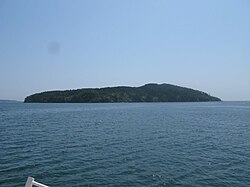
Tashirojima (Japanese: 田代島) is a small island in Ishinomaki, Miyagi Prefecture, Japan. It lies in the Pacific Ocean off the Oshika Peninsula, to the north of Aji Island. The population was around 80 people in 2015, compared to around 1,000 in the 1950s.[1][2] It has become known as "Cat Island" owing to its large stray cat population, which thrives due to the local belief that feeding cats brings wealth and good fortune. The cat population now exceeds the human population on the island. Pet dogs are not allowed due to the large number of cats.[3]

Key Information

The island is divided into two villages/ports, Oodomari and Nitoda. Aji Island previously belonged to the town of Oshika, while Tashirojima was part of Ishinomaki. In April 2005, Oshika merged with Ishinomaki,[4] so both islands are now part of the city.

Since 83% of the population is classified as elderly, the island's villages have been designated a "terminal village" (限界集落, genkai-shūraku), meaning that with over half the population aged 65 or older, the survival of the village is threatened.[3] Most residents are involved in fishing or hospitality.

The island is also known as Manga Island, as mangaka Shotaro Ishinomori had planned to move there shortly before his death. The island features manga-themed lodges designed to resemble cats.[5]

History

[edit]

In Japan's late Edo period, much of the island raised silkworms for textiles. Residents kept cats to chase mice away from the silkworms.[6] In 1602, all pet cats in Japan were freed by decree to combat the rampant rodent population that threatened the silkworm industry. The release of Tashirojima's pet cats is what created the island's thriving wild population.[7][2]

In 1989, Tashiro Elementary School closed and was turned into an educational center, which itself closed in 2008. In 2000, Manga Island, a tourist facility, was built. In 2007, a 6 km (4 mi) and 10 km (6 mi) race called the Hyokkori Hyōtan Tashirojima Marathon was held.[citation needed]

In 2011, the island was hit by the Tōhoku tsunami, which destroyed the harbor and caused ground subsidence, leaving the villages more exposed to flooding during high tides and strong coastal winds. The local cat population fled inland to escape the tsunami, and only a portion returned to the villages afterward. The tsunami also caused an outbreak of parva in the region, and at least 80 cats on Tashirojima were captured and vaccinated in a matter of days to prevent the disease. Due to the loss of the harbor, which had supported the ferry service and the island's small fishing industry, several fishers and their families moved away.[2]

By 2015, government workers had rebuilt much of the harbor to raise the coastline and stop the floods, but the island's fishing industry remained diminished. Tourism, however, remained steady, and at least two regular visitors to the island had taken up residence there.[2]

Feline population

[edit]

By 2015, the human population numbered around 80, while the total cat population exceeded that by several hundred, with at least 150 cats permanently residing in one of the villages. A vet visited the island every two months to examine the village-dwelling cats. While the cat population consists mainly of crossbreeds and mixed breed cats, one distinct breed commonly seen among the island's feline population is the Japanese Bobtail.[2][8]

In Japanese culture, cats are considered to bring good luck, said to attract money and good fortune to those who cross their path.[9] Some[according to whom?] even claim that it was the cats who kept the majority of the island from being destroyed during the Tōhoku earthquake and tsunami in 2011.[citation needed]

Cat shrine

[edit]
Small wooden cat shrine surrounded by greenery on Tashirojima
Tashirojima's cat shrine

There is a small cat shrine, known as neko-jinja (猫神社), in the middle of the island, roughly situated between the two villages. In the past, islanders raised silkworms for silk, and cats were kept to control the mouse population, as mice are natural predators of silkworms. Fixed-net fishing became common on the island after the Edo period, and fishers from other areas would stay on the island overnight.[10]

The cats would visit the inns where the fishers stayed and beg for scraps. Over time, the fishers developed a fondness for the cats and began interpreting their actions as predictors of the weather and fish behavior. One day, while collecting rocks for use with fixed nets, a stray rock fell and killed one of the cats. Feeling remorse, the fishers buried the cat and enshrined it at that location on the island.[10]

There are at least ten cat shrines in Miyagi Prefecture. There are also 51 stone monuments shaped like cats, an unusually high number compared to other prefectures. These shrines and monuments are primarily concentrated in the southern part of the island, where silkworm cultivation was once a common practice.

Mentions in media

[edit]

In 2004, a couple moved to the island from Sendai and opened an inn for travelers called Hamaya. In 2006, they started a blog about the island and its inhabitants.[11] In May 2006, Terebi Asahi filmed an episode of Jinsei no Rakuen (人生の楽園) on the island, which mentioned the large cat population. Fuji Terebi's film Nyanko the Movie (にゃんこ the Movie) featured a story about Droopy-Eared Jack (たれ耳ジャック, Tare Mimi Jack), one of the island's cats. The movie was spun off into a series, the latest of which, Nyanko the Movie 4, was released in July 2010. Each installment has included an update on Jack. As a result, many cat lovers visit the island, and package tours specifically to "look for Jack" are now available. Cat photo contests and exhibitions are also held on the island.

In 2012, the BBC in the UK aired a short television series titled Pets – Wild at Heart, which featured the behaviour of pets, including the cats on Tashirojima.[12]

In 2015, Landon Donoho, an independent filmmaker, crowd-funded a documentary titled Cat Heaven Island. It follows the stories of the island's inhabitants, both human and feline.[13]

Local products

[edit]

Access

[edit]
  • 40 minutes on the Ajishima Line ferry. Tashirojima is about 15 km (9 mi) from downtown Ishinomaki.

See also

[edit]

References

[edit]
[edit]
Revisions and contributorsEdit on WikipediaRead on Wikipedia
from Grokipedia
Tashirojima (田代島) is a small, rural in City, , , situated approximately 17 kilometers southeast of the Kitakami River mouth off the western coast of the Oshika Peninsula in the . Renowned globally as "Cat Island," it is home to a large of cats that significantly outnumber the island's human residents, who numbered 48 as of March 2024. The spans about 3 kilometers in length and features a forested interior connected by narrow roads and walking trails, attracting visitors primarily for its feline inhabitants and serene natural environment. The cats of Tashirojima trace their origins to the , when islanders introduced them to protect cocoons from in local operations. Over time, as fishing became the dominant industry, residents began revering the cats for their perceived ability to predict weather and ensure bountiful catches, leading to the construction of a dedicated Cat Shrine (Neko Jinja) at the island's center where visitors offer cat toys and figurines in homage. The impacted the island with partial flooding and structural damage, but recovery efforts restored much of its infrastructure within a year, preserving its cat-centric culture. Key attractions include the Cat Shrine, which honors the felines as island guardians, and Manga Island, a themed camping and lodging resort featuring cat-shaped bungalows available seasonally from late to . Visitors can explore historical sites such as a Jōmon-era shell mound and the Sanshiko Kannon temple, while enjoying stargazing opportunities due to the island's low . Access is primarily via the Ajishima Line ferry from 's Chūō Pier, with trips taking 40 to 60 minutes and operating several round trips daily; the island has limited facilities, including one and a café, emphasizing its quiet, off-the-beaten-path appeal for cat enthusiasts and nature lovers.

Geography

Location and Physical Features

Tashirojima is a small located in Ishinomaki Bay, off the central coast of City in , . It lies approximately 17 kilometers southeast of City and is reachable by ferry from the city's Chuou Port, with the voyage taking 45 to 60 minutes. The island is situated about 2 hours northeast of , combining train travel to with the ferry crossing. Administratively, Tashirojima forms part of City, encompassing the two main villages of Odomari in the north and Nitoda in the south, which together constitute a unified . The island spans an area of approximately 3.1 square kilometers, with a coastline measuring 11.5 kilometers. Its terrain is predominantly hilly, covered in dense forests that rise into forested mountains, interspersed with coastal zones featuring rocky shores. These natural features provide scenic ocean views and support activities such as and along the rugged coastline. Limited flat, on the island was historically utilized for farming, contributing to its early economic focus. Key access points include the small ports of Odomari and Nitoda, which serve as the primary ferry landings and connect the island's villages via narrow roads and walking trails. The isolated position of Tashirojima in the bay has fostered a self-contained habitat.

Climate and Environment

Tashirojima experiences a humid subtropical climate (Köppen classification Cfa), characterized by cool winters and warm, humid summers, moderated by the warm Kuroshio Current flowing along the Sanriku Coast. This oceanic influence results in milder conditions compared to the mainland Tohoku region, with virtually no snowfall despite the island's northern latitude. The climate supports year-round habitability, though seasonal variations affect outdoor activities and natural resource availability. The average annual temperature is approximately 12.1°C (53.8°F), with summer highs reaching up to 25–26°C (77–79°F) in and winter lows dropping to around 2°C (36°F) or slightly below in . is abundant, totaling about 1,260 mm (49.6 inches) annually, with the highest rainfall occurring during the summer season from June to October, when monthly amounts can exceed 150 mm (5.9 inches). These patterns contribute to a lush, environment but also necessitate adaptations for moisture-related challenges in daily life. The island's coastal ecosystem, part of the biodiverse Sanriku Coast, features nutrient-rich waters influenced by the convergence of the warm Kuroshio and cold Oyashio currents, fostering marine life such as fish stocks and beds essential for local . Forested hills covering much of the interior provide shaded habitats for birds and insects, while the historical need for rodent control—initially to protect farms—has shaped the island's ecological balance through natural pest management. However, Tashirojima's location on the Pacific exposes it to tectonic activity, including frequent earthquakes and potential tsunamis, heightening environmental vulnerability along its coastline.

History

Early Settlement and Development

Tashirojima's human habitation began during the (1603–1868), when it served initially as a before developing into a small centered on coastal marine resources. Early residents relied on traditional methods such as fixed-net fishing to harvest fish from the surrounding waters of the Sanriku Coast, establishing the island's foundational economy around and seafood processing. This period marked the transition from punitive use to permanent settlement, with communities forming around the island's two main ports, Odomari and Nitoda. In the late 19th century, at the start of the (1868–1912), was introduced to Tashirojima, diversifying the local economy beyond as residents began raising for production. To protect the delicate silkworm cocoons from , cats were imported from the mainland during the , initiating a pivotal ecological and cultural shift on the island. This development boosted agricultural output, with becoming a key industry that attracted more settlers and supported the island's growing community. By the mid-20th century, following , the silkworm industry on Tashirojima declined sharply due to the global rise of synthetic fibers, which reduced demand for natural . Residents shifted their focus to full-time and oyster cultivation by the and , leveraging the island's coastal location for as the primary economic mainstay. The human population, which had peaked at around 1,000 in the early to mid-20th century amid these economic expansions, began a gradual decline thereafter due to broader rural depopulation trends in .

Impact of the 2011 Tōhoku Earthquake and Tsunami

On March 11, 2011, a 9.0-magnitude struck off Japan's Tōhoku coast, triggering a with waves reaching approximately 10 meters in the area, which inundated low-lying coastal zones of Tashirojima. The disaster severely impacted the island's ports and waterfront structures, causing partial flooding of both Oodomari and Nitoda villages, destruction of several buildings, and ground that heightened future flood risks. Fishing boats were damaged or lost, disrupting the local economy reliant on marine activities. Despite the widespread devastation in the region, Tashirojima experienced no human fatalities among its roughly 100 residents, a outcome locals attributed to the island's and timely warnings from its feline population. Many cats instinctively fled to higher ground ahead of the waves, prompting residents to follow and seek safety on the hillsides, where most homes remained intact. The cat population suffered losses but was not decimated; survivors demonstrated resilience in the aftermath. This underscored the animals' role in the island's survival narrative. In the short term, all residents were evacuated by ferry to mainland for safety, enduring temporary relocation in shelters while facing shortages of essentials. and teams delivered supplies. Early recovery efforts, supported by Japanese government funding, focused on stabilizing infrastructure, with partial rebuilding of the damaged harbor and homes commencing within months. By , a portion of the had returned, and media coverage highlighted the cats as enduring symbols of hope and fortitude amid the broader Tōhoku tragedy.

Populations

Human Residents

As of March 2024, Tashirojima is home to approximately 48 permanent human residents, a figure that reflects ongoing depopulation trends in rural Japanese islands. The community is predominantly elderly, with the average age exceeding 60 years and a significant portion classified as seniors, leading to its designation as a "terminal village" where the population struggles to sustain itself due to aging demographics. This aging profile has been exacerbated by a historical decline in residents, accelerated by the that devastated the surrounding region. Administratively, the island operates as a single village under Ishinomaki City following the 2005 municipal merger that incorporated nearby areas, including the former Oshika District, streamlining governance for its two main settlements of Odomari and Nitoda. Community structure emphasizes cooperative mutual aid, with residents relying on shared responsibilities to maintain island functions amid limited numbers, fostering tight-knit social ties essential for daily operations. Daily life on Tashirojima revolves around traditional livelihoods, primarily in the surrounding waters and in the coastal bays, supplemented by small-scale such as cultivation for personal use. Residents integrate care into their routines, feeding the island's felines as a longstanding practice tied to local customs, which reinforces community bonds through collective involvement. The aging population presents key challenges, including the closure of Tashirojima Elementary School in 1989 due to insufficient enrollment, symbolizing the youth exodus to mainland opportunities for and . This outmigration has left the community increasingly dependent on ferries to for medical services, supplies, and administrative support, highlighting vulnerabilities in sustaining isolated island life.

Feline Population and Care

Tashirojima, often called "Cat Island," is home to several hundred that significantly outnumber the island's human residents by nearly four to one, as of early 2025. These cats are primarily domestic shorthairs native to , exhibiting a variety of colors and patterns typical of the region's stray populations. The cats' presence traces back to the island's silkworm farming era in the late (mid-18th to mid-19th century), when they were introduced by fishermen to control that threatened the production used for fishing nets. As the silkworm industry declined in the early due to economic shifts, the cats adapted to a lifestyle, their numbers expanding unchecked in the absence of the original purpose. Residents maintain a of caring for the cats, providing daily feedings primarily consisting of scraps from local activities, which fosters a symbiotic relationship between the islanders and the felines. This practice includes communal feeding events where cats gather in anticipation, reinforcing the community's no-kill policy that prohibits harm to the animals and bans dogs to protect the cat population. Veterinary support, when needed, is arranged from the mainland, ensuring basic health maintenance despite the island's isolation. A longstanding belief among inhabitants holds that feeding and protecting the cats brings good fortune and , a cultural reverence that underscores their ecological role in maintaining balance on the small island. The cats exhibit typical behaviors, roaming freely across the island's paths and congregating at feeding spots near ports and residential areas, where they interact amiably with both locals and visitors. Following the , the feline population demonstrated remarkable resilience, with minimal losses reported as the cats instinctively sought higher ground ahead of the waves, aiding in the island's swift recovery by continuing to thrive. The island's remote location contributes to relatively low disease rates among the cats, as limited external contact reduces exposure to common pathogens, though ongoing monitoring supports their overall well-being. While population control measures like have been discussed in broader Japanese "cat island" contexts, specific programs on Tashirojima emphasize humane care over aggressive intervention to preserve the cats' natural presence.

Cultural Significance

Cat Shrine

The Cat Shrine, known as Neko-jinja, is situated in the central part of Tashirojima, along the road approximately halfway between Odomari and Nitoda villages in , . This small wooden honors cats for their historical role in protecting silkworm farms from rats and aiding fishermen by predicting and fish movements, traditions rooted in the island's Edo-period economy. It was established by local fishermen following an incident where a cat was accidentally killed by a falling rock during stone collection for fishing nets, leading them to enshrine the animal as a gesture of apology and gratitude for felines' contributions to island life. The shrine's structure consists of a modest building with a distinctive cat-shaped roof, accessible via a gate and a steep staircase set amid wooded surroundings on higher ground. Key features include a central representing the cat , surrounded by smaller cat figurines and (beckoning cat) motifs that emphasize themes of and . Ema plaques with visitors' wishes, along with offerings such as coins, toys, and small amounts of food, adorn the site, while bells may be rung for prayers; there is no dedicated priesthood, and maintenance is handled informally by the island's residents. After the devastated parts of the island's coastal areas, the —located inland on elevated terrain—remained undamaged and symbolized the resilience of Tashirojima's cat population, many of which sought refuge on higher ground and later returned. Open to visitors year-round, it serves as a popular photo spot where frequently gather nearby, though guidelines prohibit feeding them at the shrine to prevent dependency on human provisions.

Traditions and Beliefs

On Tashirojima, cats are deeply revered as bringers of and good , a rooted in their historical role as protectors of silkworm farms from rats during the island's production era in the 19th and early 20th centuries. This utility evolved into a cultural against harming or killing cats, enforced through community norms that view such acts as inviting misfortune, particularly for fishermen who credit felines with ensuring bountiful catches and prosperity. The extends to banning dogs and other potential threats from the island, preserving the cats' sacred status as symbols of fortune. Folk practices reinforce these beliefs, including the widespread display of figurines in homes and along paths to attract prosperity, reflecting broader Japanese customs adapted to the island's cat-centric identity. Residents share oral stories of s predicting disasters, such as their mass flight to higher ground before the 2011 Tōhoku tsunami, which locals interpret as protective guidance that spared the island significant loss. While no formal annual cat appreciation events are documented, informal gatherings occur around the Cat Shrine, where rituals honor felines as guardians of community well-being. The traditions have evolved notably since the 2011 earthquake and tsunami; pre-disaster, the focus was primarily on cats' practical utility in and luck, but afterward, they came to symbolize resilience and communal spirit, helping survivors rebuild emotional ties amid depopulation. This shift integrates elements, with the serving as a brief focal point for prayers invoking cats' enduring protective role in fostering hope and recovery. Social norms emphasize harmony with the feline population, including island that requires respecting cats' space by avoiding chasing, excessive petting, or feeding to prevent health issues and maintain ecological balance.

Economy and Tourism

Local Economy and Products

The local of Tashirojima relies primarily on and oyster aquaculture, which form the backbone of resident livelihoods in this island community within . Traditional targets species such as sardines and using fixed-net methods that have been practiced since the , while oyster farming in the nutrient-rich waters of Miyagi Prefecture's Sanriku Coast yields high-quality through a two-year cultivation cycle. These marine industries account for the majority of income for the island's small population, with producing approximately 60% of the prefecture's oysters, known for their tender, juicy texture. Key local products encompass both and cat-inspired goods, reflecting the island's dual identity as a outpost and feline haven. Processed items, including and oyster-based sauces, are crafted and sold at small island shops, supporting self-sufficiency. Cat-themed souvenirs, such as figurines symbolizing good fortune, cat-shaped snacks like chocolates, and illustrated postcards, are handmade or sourced locally, capitalizing on the island's cultural appeal. The 2011 Tōhoku earthquake and tsunami severely disrupted these sectors, destroying gear, facilities, and infrastructure, prompting reliance on government subsidies for rebuilding. An aging resident population has exacerbated challenges, contributing to reduced yields and labor shortages in manual . To adapt, the community has increasingly incorporated eco-tourism elements, such as guided experiences, to supplement traditional revenues while promoting sustainable practices. Sustainability initiatives emphasize community-led efforts, including fisheries cooperatives that manage resource distribution and enforce low-impact farming techniques to protect marine ecosystems. These cooperatives facilitate collective harvesting and sales, ensuring environmental preservation amid ongoing recovery. Tourism briefly boosts product sales by drawing visitors to local vendors.

Visitor Attractions and Access

Tashirojima is accessible exclusively by operated by the Ajishima Line from the Chuo in , a short 10- to 15-minute walk or taxi ride (approximately 900 yen) from Ishinomaki Station. The journey takes 45 to 60 minutes and costs 1,250 yen one way, with three to four round trips daily stopping at the island's Odomari and Nitoda ports; schedules should be checked in advance via the operator's website to avoid stranding. For visitors based in , the trip involves a 1-hour ride on the Tohoku Line to followed by the , totaling about 3 hours one way, making it feasible as a . The island lacks bridges or road connections to the mainland and has no cars, requiring exploration on foot along its paths or via rentals available near the ports. Key attractions include observing and respectfully interacting with the island's several hundred free-roaming cats, which outnumber human residents and gather prominently around Nitoda . Visitors can hike easy coastal trails offering panoramic ocean views and pass by abandoned houses remnants of the island's former farming industry and depopulated areas affected by the 2011 . The Shrine (Nekokamisama), a small forest shrine dedicated to felines as guardians of good fortune, features cat statues and is a short walk between the ports. Seasonal experiences, such as guided boat tours departing from and combining views of sites with a stop at Tashirojima, highlight the region's marine heritage during winter harvests. Visitor guidelines emphasize responsible to protect the cats and environment: feeding is strictly prohibited to avoid health risks and dependency, and all trash must be carried off-island due to limited facilities like public restrooms and vending machines at Nitoda's Fisheries Development Center. fees apply beyond the cost, though donations at the Cat Shrine are appreciated. Spring and summer offer the best weather for visits, with mild temperatures ideal for , while accommodations are scarce and limited to a few minshuku guesthouses near Nitoda Port, available Wednesday through Sunday (daily in July and August) and requiring advance reservations. As of 2025, all COVID-19-related restrictions have been lifted, allowing unrestricted access. has steadily rebounded since the 2011 , drawing global cat enthusiasts while promoting ethical interactions to minimize stress on the feline population.

Mentions in Media

Tashirojima gained notable attention in Japanese media around 2010 through publications and blogs, with its population highlighted as a unique feature of the island's fishing community. Around 2010, English-language blogs began referencing the island's "cat island" moniker, drawing initial international curiosity to its feline residents. Following the 2011 Great East Japan Earthquake and , which impacted the surrounding region, Tashirojima received widespread coverage as a symbol of resilience, with reports confirming the safety of both residents and cats amid the disaster. In 2011, Japanese media outlets documented relief efforts reaching the island, emphasizing the cats' survival and the community's recovery. International broadcasters amplified this narrative, with featuring a 2015 video segment showcasing its recovering cat population outnumbering humans. Similarly, the aired a 2015 report on surging to the "Cat Island," portraying it as a beacon of hope. In , Tashirojima's cats achieved superstardom through Fuji Television's Nyanko the Movie (にゃんこ the Movie), which starred a local feline named Droopy-Eared Jack and spotlighted the island's unique environment. The island has inspired collaborations, including manga-themed cabins at its "Manga Island" resort designed by artists such as and Machiko Saonaka, blending feline lore with pop culture aesthetics. Social media propelled its fame further, with and posts featuring the cats going viral since 2015, peaking in trends like #CatIsland during 2020–2025 amid global interest in stories. Books capturing the island's charm include photographer Mitsuaki Iwago's 2016 collection Mr. Iwago's Favorite Cat, a general portrait of cats. Recent media has focused on the island's ongoing recovery and appeal, with 2024–2025 YouTube vlogs and series documenting visitor experiences amid post-tsunami rebuilding efforts. Travel influencers have collaborated on promotional content via and , highlighting cat interactions and . The 2015 documentary Cat Heaven Island, crowdfunded by filmmaker Landon Donoho, remains a seminal portrayal, with renewed discussions in 2025 reviews tying it to the island's enduring legacy. In 2024, media coverage shifted to the island's cat population management, with reports on a spaying and program started in under the Aoshima Cat Protection Society's guidance. This led to announcements that the feral cat numbers may soon decline significantly, potentially altering the island's iconic status. Coverage in outlets like AP News highlighted the Cat Shrine's role amid these changes, while a May 2025 YouTube video questioned if the "Cat Island" is doomed.

References

Add your contribution
Related Hubs
User Avatar
No comments yet.