Hubbry Logo
logo
Team
Community hub

Team

logo
0 subscribers
Read side by side
from Wikipedia
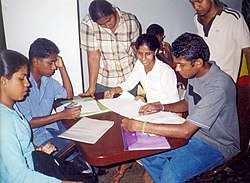
A team at work

A team is a group of individuals (human or non-human) working together to achieve their goal.

As defined by Professor Leigh Thompson of the Kellogg School of Management, "[a] team is a group of people who are interdependent with respect to information, resources, knowledge and skills and who seek to combine their efforts to achieve a common goal".[1]

A group does not necessarily constitute a team. Teams normally have members with complementary skills[2] and generate synergy[3] through a coordinated effort which allows each member to maximize their strengths and minimize their weaknesses. Naresh Jain (2009) claims:

Team members need to learn how to help one another, help other team members realize their true potential, and create an environment that allows everyone to go beyond their limitations.[4]

While academic research on teams and teamwork has grown consistently and has shown a sharp increase over the past recent 40 years, the societal diffusion of teams and teamwork actually followed a volatile trend in the 20th century.[5] The concept was introduced into business in the late 20th century, which was followed by a popularization of the concept of constructing teams. Differing opinions exist on the efficacy of this new management fad.[6] Some see "team" as a four-letter word: overused and under-useful.[7]

Others see it as a panacea that realizes the Human Relations Movement's desire to integrate what that movement perceives as best for workers and as best for managers.[8]

Many people believe in the effectiveness of teams, but also see them as dangerous because of the potential for exploiting workers — in that team effectiveness can rely on peer pressure and peer surveillance.[9] However, Hackman sees team effectiveness not only in terms of performance: a truly effective team will contribute to the personal well-being and adaptive growth of its members.[10]

English-speakers commonly use the word "team" in today's society to characterise many types of groups. Peter Guy Northouse's book Leadership: theory and practice[11] discusses teams from a leadership perspective. According to the team approach to leadership, a team is a type of organizational group of people that are members.[citation needed] A team is composed of members who are dependent on each other, work towards interchangeable achievements, and share common attainments. A team works as a whole together to achieve certain things. A team is usually located in the same setting as it is normally connected to a kind of organization, company, or community. Teams can meet in-person (directly face-to-face) or virtually when practicing their values and activities or duties. A team's communication is significantly important to their relationship.[citation needed] Ergo, communication is frequent and persistent, and as well are the meetings.[citation needed] The definition of team as an organizational group is not completely set in stone, as organizations have confronted a myriad[quantify] of new forms of contemporary collaboration. Teams usually have strong organizational structured platforms and respond quickly and efficiently to challenges as they have skills and the capability to do so.[citation needed] An effective organizational team leads to greater productivity, more effective implementation of resources, better decisions and problem-solving, better-quality products/service, and greater innovation and originality.[citation needed]

Alongside the concept of a team, compare the more structured/skilled concept of a crew, the advantages of formal and informal partnerships, or the well-defined – but time-limited – existence of task forces.

A team becomes more than just a collection of people when a strong sense of mutual commitment creates synergy, thus generating performance greater than the sum of the performance of its individual members.[12]

Thus teams of game players can form (and re-form) to practise their craft/sport. Transport logistics executives can select teams of horses, dogs, or oxen for the purpose of conveying passengers or goods.

Types

[edit]

Of particular importance is the concept of different types of teams.[citation needed]

Categories by subject

[edit]
A Japan Air Self-Defense Force (JASDF) team looks on after the Type 91 Kai MANPAD fires a rocket at a mock airborne target.

Although the concept of a team is relatively simple, social scientists have identified many different types of teams. In general, teams either act as information processors, or take on a more active role in the task and actually perform activities. Common categories and subtypes of teams include:

Action teams

[edit]

An action team is a group of people with leadership skills. It devises strategies, analyze situations and execute needed actions.

Advisory teams

[edit]

Advisory teams make suggestions about a final product.[13][page needed] For instance, a quality-control group on an assembly line would be an example of an advisory team: they may examine the products produced and make suggestions about how to improve the quality of the items being made. A product reaches the final stage and is put for sales after getting approved by the advisory teams. The advisory team consists of experts who possess extraordinary skills.

Command team

[edit]

The goal of the command team is to combine instructions and to coordinate action among management. In other words, command teams serve as the "middle man" in tasks.[13][page needed] For instance, messengers on a construction site, conveying instructions from the executive team to the builders, would be an example of a command team.[clarification needed]

Executive team

[edit]

An executive team is a management team that draws up plans for activities and then directs these activities.[13][page needed] An example of an executive team would be a construction team designing blueprints for a new building, and then guiding the construction of the building using these blueprints.

Project teams

[edit]

A team used only for a defined period of time and for a separate, concretely definable purpose, often[quantify] becomes known as a project team. This category of team includes negotiation-, commission- and design-team subtypes. In general, these types of teams are multi-talented and composed of individuals with expertise in many different areas. Members of these teams might belong to different groups, but receive assignment to activities for the same project, thereby allowing outsiders to view them as a single unit. In this way, setting up a team allegedly facilitates the creation, tracking and assignment of a group of people based on the project in hand.[citation needed] The use of the "team" label in this instance often has no relationship to whether the employees work as a team.

Lundin and Soderholm define project teams as a special case in the more general category of temporary organizations which also includes task forces, program committees, and action groups. All of these are formed to "make things happen". This emphasis on action leads to a demarcation between the temporary organization and its environment. The demarcation is driven by four interrelated concepts (the four T's):

  1. Time – the time horizons and limits are crucial to the existence of temporary organizations "whose very existence helps spread a sense of urgency".
  2. Task – the raison d` ètre for the temporary organization; no other party is attending to the same task at the same time in the same way
  3. Team – provides the human resources to accomplish the task in the time available
  4. Transition – an accomplishment or some sort of qualitative difference is expected after the time horizon

"The concepts also differ from the crucial concepts that define the permanent organization. Permanent organizations are more naturally defined by goals (rather than tasks), survival (rather than time), working organization (rather than team) and production processes and continual development (rather than transition)" [14]

Sports teams

[edit]

A sports team is a group of people which play sports (often team sports) together. Members include all players (even those who are waiting their turn to play), as well as support members such as a team manager or coach.

Virtual teams

[edit]

Developments in information and communications technology have seen the emergence of the virtual work-team. A virtual team is a group of people who work interdependently and with shared purpose across space, time, and organisational boundaries using technology to communicate and collaborate. Virtual team members can be located across a country or across the world, rarely meet face-to-face, and include members from different cultures.[15]

In their 2009 literature-review paper, Ale Ebrahim, N., Ahmed, S. and Taha, Z. added two key issues to definition of a virtual team: "as small temporary groups of geographically, organizationally and/ or time dispersed knowledge workers who coordinate their work predominantly with electronic information and communication technologies in order to accomplish one or more organization tasks".[16] Many virtual teams are solving customer problems or generating new work processes.

Work teams

[edit]

Work teams are responsible for the actual act of creating tangible products and services.[13][page needed] The actual workers on an assembly line would be an example of a production team, whereas waiters and waitresses at a diner would be an example of a service team.

Interdependent and independent

[edit]

One common distinction is drawn between interdependent and independent teams.[17] The difference is determined by the actions that the team members take while working.

Interdependent teams

[edit]
A rugby union scrum

A rugby team provides a clear example of an interdependent team:

  • no significant task can be accomplished without the help and cooperation of every member;
  • within their team members typically specialize in different tasks (r.r the ball, goal kicking and scrum feeding), and
  • the success of every individual is inextricably bound to the success of the whole team. No rugby player, no matter how talented, has ever won a game by playing alone.

Independent teams

[edit]

On the other hand, a track-and-field team is a classic example of an independent team:[18]

  • races are run, or points are scored, by individuals or by partners
  • every person in a given job performs basically the same actions
  • how one player performs has no direct effect on the performance of the next player

If all team members each perform the same basic tasks, such as students working problems in a maths class, or outside sales employees making phone calls, then it is likely that this team is an independent team. They may be able to help each other—perhaps by offering advice or practice time, by providing moral support, or by helping in the background during a busy time—but each individual's success is primarily due to each individual's own efforts. Runners do not win their own races merely because the rest of their teammates did, and maths students do not pass tests merely because their neighbours know how to solve equations.

In the business environment, sales teams and traditional professionals (such as doctors, lawyers, and teachers), work in independent teams.[17] Most teams in a business setting are independent teams.[17]

Coaching differences between interdependent and independent teams

[edit]

Coaching an interdependent team like a football team necessarily requires a different approach from coaching an independent team like a gymnastics team, because the costs and benefits to individual team members—and therefore the intrinsic incentives for positive team behaviors—differ markedly. An interdependent team benefits from members getting to know the other team members socially, from developing trust in each other, and from conquering artificial collective challenges (such as those offered in outdoors ropes courses)[citation needed]. Interdependent teams respond well to collective rewards, and independent teams perform better with individual rewards.[19]

Hybrid teams and hybrid rewards, which try to combine characteristics of both, are sometimes created in the hope of getting the best of both types. However, instead, they tend instead to produce the negative features of each and none of the benefits, and consequently under-perform.[19][need quotation to verify]

Pressuring teams to become independent or interdependent, on the grounds that management has decided that one type is intrinsically better than the other, results in failure.[18] The nature of the team is defined by the type of work that is done, and not by management's wishes or by the fashions of the latest management fad.

Multidisciplinary and interdisciplinary

[edit]

Teams in areas of work or study such as in the medical field, may be multidisciplinary or interdisciplinary.[20]

Multidisciplinary teams involve several professionals who independently treat various issues a patient may have, focusing on the issues in which they specialise. The problems that are being treated may or may not relate to other issues being addressed by individual team members.

The interdisciplinary team approach involves all members of the team working together towards the same goal. In an interdisciplinary team approach, members of the core team will often rôle-blend, taking on tasks usually filled by people in different roles on the team.[20]

Self-directing or self-designing teams

[edit]

These types of teams result in the highest potential for innovative work and motivation among its members. Team members determine the team's objectives and the means to achieve them. The management's only responsibility among self-directing teams is the creating the team's organizational context.[21] Self-directed teams offer the most potential for innovation, enhance goal commitment and motivation, and provide opportunity for organizational learning and change.[21]

Team size, composition, and formation

[edit]

Team size and team composition affect team processes and team outcomes. The optimal size (and composition) of teams is debated[22] and will vary depending on the task at hand. At least one study of problem-solving in groups showed an optimal size of groups at four members. Other works estimate the optimal size between 5–12 members or a number of members that can consume two pizzas.[22][23] The following extract is taken from Chong (2007):[24]

The interest in teams gained momentum in the 1980s with the publication of Belbin's (1981)[25] work on successful teams. The research into teams and teamwork followed two lines of inquiry. Writers such as Belbin (1981, 1993),[25][26] Woodcock (1989),[27] Margerison and McCann (1990),[28] Davis et al. (1992),[29] Parker (1990),[30] and Spencer and Pruss (1992)[31] focused on team roles and how these affected team performance. These studies suggested that team performance was a function of the number and type of roles team members played. The number of roles for optimal performance varied from 15 (Davis et al., 1992)[29] to four (Parker, 1990).[30] This variation has been attributed to how roles were defined. Lindgren (1997)[32] believed that, in a social psychological sense, ‘roles’ were behaviours one exhibited within the constraints assigned by the outside world to one's occupational position e.g. leader, manager, supervisor, worker etc. Personality traits, on the other hand, were internally driven and relatively stable over time and across situations. These traits affected behavioural patterns in predictable ways (Pervin, 1989)[33] and, in varying degrees, become part of the ‘role’ definition as well.
The other line of inquiry focused on measuring the ‘effectiveness’ of teams. Writers such as Deihl and Stroebe (1987),[34] Gersik (1988),[35] Evenden and Anderson (1992),[36] Furnham et al. (1993),[37] Cohen and Ledford (1994)[38] and Katzenbach (1998)[39] were concerned with high performing teams and the objective measurement of their effectiveness. McFadzean (2002)[40] believed that the appearance of a number of models of team effectiveness was indicative of a variety of variables such as personality, group size, work norms, status relationships, group structure etc. that can impact on team ‘effectiveness’ and its measurement.

David Cooperrider suggests that the larger the group, the better. This is because a larger group is able to address concerns of the whole system. So while a large team may be ineffective at performing a given task, Cooperider says that the relevance of that task should be considered, because determining whether the team is effective first requires identifying what needs to be accomplished.

A team of oxen yoked together

Regarding composition, all teams will have an element of homogeneity and heterogeneity. The more homogeneous the group, the more cohesive it will be. The more heterogeneous the group, the greater the differences in perspective and increased potential for creativity, but also the greater potential for conflict.

Team members normally have different roles, like team leader and agents. Large teams can divide into subteams according to need.

Many teams go through a life-cycle of stages, identified by Bruce Tuckman as: forming, storming, norming, performing and adjourning.

Team cognition

[edit]

Team cognition has been defined as an "emergent state that refers to the manner in which knowledge important to team functioning is organized, represented, and distributed within team."[41] This emergent state can manifest in two ways. Compositional emergence occurs when individual level cognition is similar in form and function to its manifestation at team-level. Compilational emergence, on the other hand, represents a greater degree of synergy among team members and represents a new-team level construct. As such, higher degrees of compilational emergence are more closely related to team process and performance than is compositional emergence.

Research into team cognition has focused on how teams develop mental models and transactive memory systems. Mental models refer to the degree in which team members have similar cognitive understanding of the situation and performance goals which include shared representations of the task. Transactive memory systems relate to how knowledge is distributed among team members and retrieved in a coordinated fashion, the way that team member rely on knowledge that is possessed by other members and how knowledge sets are differentiated within a team. The emergence of team cognition is thought to impact team effectiveness because it can positively affect a team's behavioural process, motivational states, and performance.

Team cognition consists of two broad types of content. Task related models are related to knowledge of the major duties and resources possessed by the team. Team-related models refer to interactions and interdependence among the team members.

Team effectiveness

[edit]

When companies are in trouble, they often restructure into teams. However, putting people into teams does not solve problems; if not done thoughtfully, this may even cause more problems.[21] The formation of teams is most appropriate for tasks that are difficult, complex and important. These types of tasks are often beyond the skills and abilities of any single individual. However, the formation of a team to complete such tasks does not guarantee success. Rather, the proper implementation of teams is positively related to both member satisfaction and increased effectiveness. Organizations who want to receive the benefits afforded by teams need to carefully consider how teams are built and implemented. Often, teams are created without providing members any training to develop the skills necessary to perform well in a team setting. This is critical, because teamwork can be cognitively and interpersonally demanding. Even when a team consists of talented individuals, these individuals must learn to coordinate their actions and develop functional interpersonal interactions.[42] In their review of the relevant scientific literature, Kozlowski and Ilgen demonstrated that such training can greatly benefit team effectiveness.[43] Finally, teams are more likely to be successful when they are fully supported by the organization. Take for example New United Motor Manufacturing Inc (NUMMI). Originally it was a General Motors automotive manufacturing plant that had to close due to numerous issues, causing it to be the worst performing GM plant. NUMMI was the collaborative creation of General Motors and Toyota. These two companies took most of the same work force and created one of the most productive automotive plants, producing high quality cars. They did this by implementing a new team structure, where management and the company was more supportive of the union workforce.[44]

Not all groups are teams

[edit]

Some people use the word "team" when they mean "employees". A "sales team" is a common example of this loose or perhaps euphemistic usage, though inter-dependencies exist in organisations, and a sales group can be let down by poor performance in other parts of the organisation upon which sales depend, like delivery, after-sales service, etc. However "sales staff" is a more accurate description of the typical arrangement.

Groups develop into teams in four stages:[45]

  1. dependency and inclusion
  2. counter dependency and fighting
  3. trust and structure
  4. work

In the first stage, group development is characterized by members' dependency on the designated leader (identical to 'Forming' in Tuckman's model). In the second stage, the group seeks to free itself from its dependence on the leader and groups have conflicts about goals and procedures (identical to 'Storming' in Tuckman's model). In the third stage, the group manages to work through the conflicts (identical to 'Norming' in Tuckman's model). And in the last stage, groups focus on team productivity (identical to 'Performing' in Tuckman's model).[clarification needed]

One aspect of teams that can set them apart from other groups is their level of autonomy. Hackman developed a hierarchical model of team autonomy which consists of four levels of team self-management. It is imagined along a continuum, starting with a manager-led team in which team members complete the required tasks but someone outside the team performs the executive functions. As the person's job it is who performs the executive functions is to define the goals and methods for the team, the team itself holds the sole responsibility of the execution of the work that needs to be performed.[46] Next in the hierarchy are self-managing teams, followed by self-designing teams. Finally, at the top of the hierarchy, come self-governing teams. The model describes four different types of control that fully self-governing teams can possess. These include control over the execution of the task, monitoring and managing work processes, control over the design and performance of a team, and setting the overall direction of the team.[42]

To understand how teams deliver extra performance, we need to distinguish between teams and working groups. A working group's performance is made up of the individual results of all its individual members. A team's performance is made up of both individual results and collective results. Teams produce work products/results though the joint contributions of team members. This is what makes the team's collective performance greater than the sum of all individual members’ best performance. In short, a team is more than the sum of its parts.[47]

Leadership

[edit]

The “team” portion of team leadership is based on individuals and how each share the work between one another. First, individuals must see that they are a team, not simply a group. Each member takes on a portion of the group's leadership and responsibility. Each member helps other members to see their strengths and how they complement each other.

Second, the team sets result driven goals. To achieve this, the designated leader guides the team based decision making process. The team clarifies or agrees on attainable goals. Additionally, they agree on steps to obtain them. Furthermore, the team determines if they need to take an immediate action, or if they can simply watch a situation for a period of time.

Third, if the team decides to take an action, it may be something they change internally, such as clarifying their goals, receiving training, collaborating, or building commitment as a team. If not internally, this action can be something they will act on outside of the team, such as networking with others or negotiating for support.

Lastly, the team's leader will contribute by finding ways to improve team work. This may be done through questionnaires given to the team. These can address any problems, or seek avenues the team would like to see improved. A strength of the team is its continuous stride for improvement and openness to interventional assistance.

In Leadership – Theory and Practice 7th Edition by Peter G. Northouse, he states that, “A team is a type of organizational group that is composed of members who are interdependent, who share common goals, and who must coordinate their activities to accomplish these goals,” (Northouse, 363). Overall, the team will lead each other to bring forth their own individual ideas and strengths, which create opportunities for great success.

A common myth is that to function effectively, teams need a strong, powerful, and charismatic leader. In general, leaders who control all the details, manage alle the key relationships in the team, have all the good ideas, and use the team to execute their "vision" are usually overworked and underproductive.[21]

Teams are in need of transformational leaders not more managers, with the important caveat that the world does not function well without managers. Transformational leaders engage in the following behaviors:[48]

  • Idealized Influence: The ability to engage other people by your actions. They like the way that you do things, they like the way the you treat people, and they like your approach to problems. Charisma is often associated with idealized influence.
  • Inspirational Motivation: The ability to inspire others with your vision. Those who lead with inspirational motivation will enable their followers to achieve things they did not believe were possible.
  • Intellectual Stimulation: The ability to stimulate others to be creative and challenge preconceptions they possess. This behavior enables a leader to tap into creativity as a competitive advantage.
  • Individualized Consideration: The ability to truly know those that you wish to lead. This behavior enables leaders to realize and draw out the full potential of others.

See also

[edit]

References

[edit]
Revisions and contributorsEdit on WikipediaRead on Wikipedia
from Grokipedia
A team is a cohesive group of individuals with complementary skills and abilities who collaborate to achieve a shared purpose, set of performance goals, and approach for which they hold themselves mutually accountable.[1] This distinguishes teams from mere groups, as teams emphasize interdependence, collective responsibility, and a commitment to high performance beyond individual contributions.[2] In organizational contexts, teams have become essential structures for driving efficiency, innovation, and adaptability in businesses and institutions.[3] They facilitate the integration of diverse expertise, enabling faster problem-solving and better decision-making compared to traditional hierarchical models.[4] Common types include functional teams, which operate within a single department to handle routine tasks; cross-functional teams, drawing members from various areas to tackle complex projects; self-managed teams, where members assume leadership and decision-making roles without direct supervision; and project teams, formed temporarily for specific initiatives before disbanding.[5] The rise of team-based approaches gained momentum in the late 20th century, influenced by societal shifts toward collaboration in the 1960s and 1970s, and popularized through frameworks like Tuckman's stages of team development—originally forming, storming, norming, and performing in 1965, later expanded with adjourning in 1977.[6][7][8] Effective teams contribute significantly to organizational success by boosting employee engagement, fostering trust, and leveraging distributed expertise to meet goals.[9] However, challenges such as resource constraints and interpersonal conflicts can hinder performance, underscoring the need for clear goals, strong leadership, and ongoing development.[10] In modern workplaces, virtual and remote teams have also emerged, adapting traditional principles to digital collaboration tools while maintaining core elements of mutual accountability.[5]

Definition and Fundamentals

Definition

A team is defined as a small number of people with complementary skills who are committed to a common purpose, performance goals, and approach for which they hold themselves mutually accountable.[11] This definition emphasizes the distinction between mere groups and true teams, highlighting the necessity of mutual commitment and skill synergy to achieve collective outcomes beyond individual capabilities. Early examples of interdependent coordinated units appear in ancient military formations like the Greek phalanx and Roman legions, which relied on soldiers working together to execute strategies effectively.[12] The modern concept of teams in organizations developed in the 20th century, building on early studies like the Hawthorne experiments (1920s-1930s) that highlighted social factors in productivity, and gaining prominence post-World War II through sociotechnical systems theory and quality circles in the 1950s-1980s.[13] At its core, a team comprises shared goals that align members toward unified objectives, interdependence that requires collaborative input for task success, and accountability that fosters collective responsibility for results. These elements ensure teams function as cohesive units, with interdependence underscoring the reliance on one another's contributions to meet performance standards.[14][13]

Key Characteristics

A fundamental characteristic of teams is the interdependence among members required for task completion, where individual contributions are linked such that the overall outcome depends on collective coordination. James D. Thompson (1967) identified three primary types of interdependence: pooled, in which members perform independent tasks whose outputs are simply aggregated; sequential, where the work flows linearly from one member to another; and reciprocal, involving ongoing mutual adjustments and feedback between members.[15] This interdependence distinguishes teams from mere groups of individuals working in proximity.[16] Teams also feature boundedness, defined by clear membership boundaries that delineate who belongs to the team and a specified duration that may be temporary or ongoing. This bounded structure fosters a sense of stability and collective identity, enabling members to focus on internal dynamics without constant flux in composition.[17] Stable membership, in particular, supports the accumulation of shared experiences over time.[18] Effective teams typically consist of 3 to 15 members, a range that balances the need for diverse inputs with the ability to maintain cohesive interaction and avoid coordination overload. Within this size, psychological boundaries—such as defined roles and norms—help sustain focus and prevent diffusion of responsibility.[19] Smaller teams in this spectrum often enhance communication efficiency, while larger ones require stronger structures to manage complexity. In addition to structural elements, teams are marked by emergent states that arise from member interactions, including trust and shared mental models. Trust reflects the confidence members have in each other's reliability and intentions, facilitating risk-taking and cooperation. Shared mental models, meanwhile, represent collectively held understandings of tasks, roles, and objectives, enabling synchronized efforts without explicit communication.[20] These states evolve dynamically and are essential for team cohesion and adaptability.[21]

Types of Teams

By Purpose and Function

Teams are often classified by their primary purpose and function, which reflects their operational goals, task demands, and contextual demands within organizations. This classification, rooted in ecological models of team effectiveness, distinguishes teams based on the nature of their work cycles, integration with external units, and differentiation in membership and skills. Seminal taxonomies identify key types such as advice, production, project, and action teams, later expanded to include advisory/management, production/service, project/development, and action/performing teams.[22] Action teams operate in high-stakes, time-pressured environments requiring rapid coordination and skill integration for real-time performance. These teams feature high differentiation through exclusive membership and specialized training, combined with high integration via synchronized events with external stakeholders. Examples include surgical units, where precise, interdependent actions save lives under intense pressure, and emergency response groups like firefighting crews that must adapt instantly to dynamic crises. Sports teams also exemplify this type, emphasizing strategy, physical coordination, and competitive execution in brief, repeated cycles. Effectiveness hinges on rigorous training, reliable technology, and seamless external synchronization to mitigate risks in unpredictable settings.[22] Advisory teams serve consultative functions, generating recommendations and fostering input without direct execution authority. Characterized by low differentiation and integration, they often involve inclusive, short-term membership with brief or extended work cycles focused on deliberation. Board committees, for instance, review policies and advise on governance, while quality circles solicit employee suggestions for process improvements. These teams prioritize diverse perspectives to enhance decision quality, with effectiveness driven by members' social skills and task-related expertise despite limited interaction time.[22] Project teams are temporary assemblies dedicated to specific, innovative deliverables over a single extended work cycle. They exhibit high differentiation via expert specialists and autonomous pacing with minimal external synchronization, enabling creativity in isolated environments. Common in software development, these teams tackle complex problems like app creation, disbanding upon completion. Research and engineering task forces similarly innovate solutions, such as designing new products. Success depends on clear missions, team autonomy, and mandates for novelty to navigate ambiguity.[22] Executive teams, often subsumed under advisory and management categories, function at organizational pinnacles to provide strategic oversight and high-level decision-making. These teams integrate advisory input with managerial execution, focusing on long-term direction amid moderate differentiation and integration. Corporate leadership groups, for example, align resources and vision across units. Their purpose centers on balancing stakeholder needs and risk, with effectiveness tied to cohesive leadership and adaptive strategies. Virtual teams transcend physical boundaries, collaborating via technology for shared objectives in dispersed settings. Defined as groups working interdependently across locational, temporal, and relational divides, they leverage tools like videoconferencing and email to mediate interactions. Geographically distributed software development squads or global marketing units illustrate this, enabling access to diverse talent pools. Their function emphasizes flexibility and efficiency, though challenges like reduced social cues demand strong trust-building; purposes include cost savings and enhanced innovation through boundary-spanning.[23]

By Interdependence and Autonomy

Teams can be classified based on the degree of interdependence among members, which refers to the extent to which individuals rely on one another to complete tasks and achieve collective goals, and the level of autonomy in managing their operations.[16] Interdependence influences coordination needs, while autonomy determines self-management capabilities. This classification highlights structural variations that affect team dynamics, performance, and support requirements. In interdependent teams, members depend on each other's inputs, outputs, or both to accomplish work, necessitating high levels of coordination and collaboration. According to James D. Thompson's framework, this includes sequential interdependence, where outputs from one member serve as inputs for the next, as seen in assembly line production where each worker's task flows to the subsequent role, and reciprocal interdependence, involving mutual exchanges of resources and feedback among members. Such teams require synchronized efforts to minimize disruptions, with examples including manufacturing processes where timing and quality from prior stages directly impact later ones.[24] Conversely, independent teams feature low interdependence, often characterized by pooled interdependence, where members perform parallel tasks without direct reliance on colleagues' outputs, contributing individual efforts that aggregate toward a shared outcome. In sales organizations, for instance, representatives in distinct territories operate autonomously, with overall performance measured by combined results rather than ongoing interactions.[25] This structure allows flexibility but may limit opportunities for collective problem-solving. Self-directing teams represent a form of high autonomy within interdependent or semi-interdependent settings, where groups handle their own planning, execution, and decision-making without constant supervision. Originating from socio-technical systems theory developed in the 1950s by researchers at the Tavistock Institute, these teams emerged from studies of British coal mining operations, where multi-skilled, self-regulating groups controlled the full work cycle to enhance productivity and job satisfaction amid technological changes. Such teams integrate social and technical elements, fostering adaptability through member expertise rather than hierarchical direction.[26] Self-designing teams extend this autonomy further, empowering members not only to manage operations but also to modify their own structure, roles, and processes to align with evolving needs. As outlined by Susan Albers Mohrman and Allan M. Mohrman Jr., these teams possess the authority to redesign composition and boundaries, promoting resilience in dynamic environments like agile organizations where rapid adaptation to market shifts is essential. This level of self-determination contrasts with more rigid structures, enabling teams to experiment with workflows and membership to optimize performance. Coaching approaches differ based on interdependence and autonomy levels to address specific team needs. For interdependent teams, coaching emphasizes relational and motivational functions, such as facilitating coordination, resolving conflicts, and building shared accountability to enhance collective efficacy. In contrast, coaching for independent teams prioritizes individual skill development and goal alignment, focusing on personal performance enhancement with less emphasis on interpersonal dynamics. Self-directing and self-designing teams benefit from consultative coaching that supports internal reflection and structural adjustments, reinforcing their autonomy while guiding long-term effectiveness.

By Composition and Structure

Teams are often classified by their composition and structure, which refer to the makeup of members in terms of expertise diversity and the organizational framework governing their interactions. This classification highlights how teams integrate or segregate specialized knowledge to achieve objectives, influencing collaboration patterns and outcomes.[27] Multidisciplinary teams consist of members from diverse fields who contribute specialized knowledge independently, often working in parallel to address distinct aspects of a problem without deep integration of perspectives. These teams leverage individual expertise to provide comprehensive input, such as in product design where engineers, marketers, and designers each focus on their domain to inform overall development. For instance, in complex product creation, multidisciplinary structures allow for targeted contributions that enhance innovation while maintaining disciplinary boundaries.[28][29] In contrast, interdisciplinary teams emphasize the integration of expertise from multiple fields to produce holistic solutions, where members actively blend insights to transcend traditional boundaries. This approach fosters collaborative synthesis, as seen in research consortia that combine biology and engineering to tackle challenges like synthetic biology or biomedical innovations. Such teams agree on shared goals upfront and coordinate efforts, leading to emergent outcomes that neither discipline could achieve alone.[27]01145-9) Command teams operate within hierarchical, military-style structures characterized by clear chains of authority, where decisions flow top-down from leaders to subordinates to ensure rapid execution in high-stakes environments. These teams, common in military and analogous organizational settings, prioritize discipline and accountability, with modular designs that scale across units while maintaining centralized control. Effectiveness in command teams relies on structured communication and role clarity to manage complex operations under pressure.[30][31] Work teams function as ongoing operational units in workplaces, focusing on routine execution of tasks through coordinated efforts among members with complementary skills. In manufacturing, for example, crews assemble products or maintain production lines, where sustained collaboration boosts efficiency and problem-solving on the floor. These teams emphasize practical interdependence in daily workflows, often benefiting from diversity in experience to adapt to operational demands.[22][32]

Formation and Composition

Team Size and Optimal Composition

The optimal size for most teams falls between 5 and 9 members, as this range strikes a balance between incorporating diverse perspectives and maintaining effective coordination and decision-making. This recommendation stems from J. Richard Hackman's model of team effectiveness, which emphasizes that teams in this size allow for sufficient skill coverage without overwhelming interpersonal dynamics. Larger teams, typically exceeding 10 members, often encounter challenges such as social loafing, where individuals reduce their effort due to perceived diffusion of responsibility among group members.[33] In contrast, smaller teams with fewer than 5 members may suffer from limited skill variety, restricting the team's ability to address complex tasks comprehensively and increasing vulnerability to overload on individual members.[34] Effective team composition hinges on criteria like skill complementarity, where members' expertise aligns to cover necessary functions without redundancy; personality fit, particularly alignment with Big Five traits such as conscientiousness and agreeableness to foster collaboration; and demographic balance to ensure broad representation without compromising cohesion.[35] Empirical studies consistently demonstrate an inverted U-curve relationship between team size and performance, indicating peak effectiveness at moderate sizes before declining due to coordination costs in larger groups.[36] For instance, analyses of research collaborations show that citation impact rises with team size up to an optimal point, then falls as responsibility diffusion intensifies.[37]

Formation Processes

The formation of teams typically follows structured stages that facilitate the transition from individual contributors to a cohesive unit. One of the most influential models is Tuckman's stages of group development, originally proposed in 1965 and later expanded.[38] In the forming stage, team members come together, often with uncertainty about goals and roles, leading to polite interactions and dependence on the leader for direction.[38] This is followed by the storming stage, where conflicts arise over tasks, power, and interpersonal differences as members assert themselves.[38] The norming stage involves establishing norms, resolving differences, and building cohesion through shared agreements.[38] During performing, the team achieves high functionality, focusing on tasks with mutual support and adaptability.[38] In 1977, Tuckman and Jensen added the adjourning stage, which addresses the disbanding of the team after goal completion, involving reflection, closure, and potential emotional disengagement.[39] Selection methods play a critical role in assembling teams by evaluating individual and collective fit. Structured interviews allow assessors to probe candidates' experiences, skills, and interpersonal styles relevant to team roles.[40] Psychometric assessments, such as personality inventories and cognitive tests, help identify traits like conscientiousness and emotional intelligence that predict team contributions.[40] Team fit simulations, often conducted through assessment centers, replicate work scenarios to observe interactions, problem-solving, and collaboration in group exercises.[41] Organizational factors influence how teams are formed, with two primary approaches: top-down assignment and voluntary formation. In top-down assignment, leaders or HR departments select members based on strategic needs, skills alignment, and organizational goals, ensuring balanced composition but potentially overlooking personal motivations.[42] Voluntary or self-selection formation allows individuals to choose teammates, often fostering initial enthusiasm and compatibility but risking imbalances in expertise or size.[43] Research indicates that self-selection can enhance motivation in creative tasks, while top-down methods excel in structured environments requiring diverse skills.[44] Challenges during formation often stem from initial role ambiguity and the need to build trust. Role ambiguity occurs when expectations and responsibilities are unclear, leading to confusion and reduced efficiency in early interactions.[45] Building trust requires intentional efforts, such as open communication and shared experiences, to mitigate uncertainties and foster psychological safety.[46] These hurdles, if unaddressed, can prolong the storming phase and hinder progression to higher performance levels.[46]

Diversity and Inclusion Factors

Diversity in teams is broadly classified into surface-level and deep-level categories. Surface-level diversity refers to observable demographic attributes such as age, gender, race, ethnicity, and physical abilities, which are readily apparent and often trigger initial social categorization among members. In contrast, deep-level diversity involves underlying psychological and cognitive differences, including values, beliefs, attitudes, personalities, knowledge, skills, and prior experiences, which become more salient over time as team members interact.[47] These distinctions, first systematically explored in organizational research, highlight how initial perceptions based on surface traits may evolve into appreciation or conflict as deeper attributes emerge. Inclusion practices are essential for leveraging diversity effectively during team assembly and operation, focusing on creating environments where all members feel valued and empowered to contribute. A cornerstone of these practices is psychological safety, defined as a shared belief held by team members that the environment is safe for taking interpersonal risks, such as voicing ideas, admitting errors, or challenging the status quo without fear of negative consequences. Introduced by Edmondson in her 1999 study of work teams, psychological safety facilitates open dialogue and collective learning, particularly in diverse settings where differing viewpoints might otherwise be suppressed. Complementing this, equitable participation involves deliberate mechanisms to ensure balanced input from all members, such as structured turn-taking protocols, inclusive decision-making tools, and bias-awareness training, which help mitigate dominance by certain subgroups and promote fair representation in team processes.[48] The benefits of diversity, particularly cognitive diversity as a deep-level form, include enhanced innovation through the integration of varied perspectives that broaden problem-solving approaches and generate novel ideas.[49] Research demonstrates that teams with high cognitive diversity outperform homogeneous ones in creative tasks by pooling diverse knowledge bases, leading to more comprehensive analyses and breakthrough solutions.[50] However, these advantages come with risks, such as the formation of faultlines—alignments of multiple surface- and deep-level attributes that divide teams into cohesive subgroups, fostering ingroup favoritism, communication barriers, and relational conflicts that undermine unity.[51] Faultlines, theorized by Lau and Murnighan in 1998, are particularly pronounced in teams with aligned demographic splits, amplifying subgroup tensions and reducing overall collaboration if not actively managed.[52] Following the 2020 COVID-19 pandemic, diversity, equity, and inclusion (DEI) efforts initially intensified in remote and hybrid teams, driven by global workforce shifts toward distributed work models. These shifts highlighted and exacerbated inequities, such as digital access disparities and unconscious biases in virtual interactions. However, as of 2025, DEI initiatives have encountered significant challenges, including anti-DEI activism, legal uncertainties from executive actions, and rollbacks or rebranding of programs in many organizations (e.g., shifting focus to "employee resource groups" or targeted inclusion training). Despite this, the U.S. Equal Employment Opportunity Commission (EEOC) has reaffirmed the legality of voluntary DEI efforts, and some companies continue tailored strategies like virtual inclusion training and equitable hybrid policies to address proximity bias and sustain psychological safety across distributed environments.[53][54][55][56][57]

Team Processes and Dynamics

Team Cognition and Communication

Team cognition refers to the collective mental processes that enable teams to understand, anticipate, and coordinate their actions toward shared goals. A key component is the development of shared mental models, which are compatible representations of tasks, roles, equipment, and team interactions that facilitate mutual understanding and effective performance. These models, as conceptualized by Cannon-Bowers, Salas, and Converse, allow team members to predict others' behaviors and responses, enhancing coordination in dynamic environments such as military operations or emergency response. Transactive memory systems (TMS) complement team cognition by enabling the distribution and tracking of knowledge across members, where individuals specialize in different domains and rely on each other to encode, store, and retrieve information. Introduced by Wegner, TMS operates through metamemory—awareness of who knows what—combined with communication processes that direct queries to the appropriate expert, thereby improving overall team efficiency without requiring each member to possess comprehensive knowledge. Empirical studies have shown that well-developed TMS correlates with higher team performance, particularly in knowledge-intensive settings like research collaborations. Recent research as of 2025 also explores AI intelligent assistants enhancing TMS in virtual "superteams" by automating knowledge retrieval and boosting trust, further improving coordination in dispersed settings.[58][59] Effective team communication underpins these cognitive processes through structured patterns that influence information flow and decision-making. In wheel networks, communication is centralized around a single leader who relays information to and from members, promoting efficiency for simple tasks but potentially bottlenecking complex discussions. In contrast, all-channel networks allow unrestricted exchange among all members, fostering innovation and thorough deliberation, though they may increase coordination demands. These patterns, originally examined by Leavitt in experimental group tasks, demonstrate that network structure impacts speed, accuracy, and morale, with decentralized forms often superior for ambiguous problems.[60] Barriers to communication, such as information overload, can disrupt these patterns by overwhelming team members with excessive data, leading to reduced attention, errors, and delayed responses. Information overload arises from high volumes of messages across multiple channels, impairing cognitive processing and team cohesion, as evidenced in organizational studies where it correlates with decreased productivity. To mitigate this, teams may adopt filtering mechanisms or prioritization protocols to maintain clarity.[61] In virtual teams, where members are geographically dispersed, communication challenges intensify due to reliance on asynchronous tools like email or shared platforms, which delay feedback and hinder real-time coordination. Reduced nonverbal cues in text-based or video interactions further complicate interpretation of intent and emotions, exacerbating misunderstandings compared to co-located settings. Research highlights that these issues are particularly pronounced in high-interdependence tasks, necessitating strategies like structured check-ins to build shared understanding. Post-pandemic as of 2025, hybrid models have evolved with advanced AI-driven tools mitigating some delays, though challenges persist in maintaining cohesion across time zones and formats.[62][63]

Roles and Responsibilities

In team settings, roles refer to the expected patterns of behavior and contributions that individuals undertake to achieve collective goals, while responsibilities encompass the specific duties and accountabilities assigned to fulfill those roles. Formal roles are typically predefined by organizational structures, such as job titles or hierarchical positions, dictating clear expectations like project manager or technical specialist.[64] In contrast, informal roles emerge organically from team interactions and individual strengths, influencing dynamics without official designation, such as a natural mediator who facilitates discussions.[65] A seminal framework for understanding team roles is Meredith Belbin's model, developed through observational studies of teams in the 1970s and published in 1981, which identifies nine behavioral roles essential for effective team functioning. These roles are categorized into action-oriented (implementer, shaper, completer finisher), people-oriented (coordinator, teamworker, resource investigator), and thought-oriented (plant, monitor evaluator, specialist) types. For instance, the coordinator delegates tasks effectively to harness team strengths, the implementer turns ideas into practical plans, and the shaper drives progress by challenging inertia.[66] Belbin's roles emphasize that balanced contributions across these types enhance team performance, as no single individual can excel in all.[67] Responsibility allocation in teams is often based on members' expertise to optimize efficiency and output quality, with mechanisms like regular reviews ensuring accountability. Expertise-driven assignment leverages individual knowledge and skills, such as directing analytical tasks to those with domain proficiency, which improves knowledge integration and task completion.[68] Accountability is reinforced through tools like shared performance metrics or feedback loops, holding members responsible for their contributions while allowing flexibility for emergent needs.[69] Dysfunctions arise when roles are imbalanced, such as role overload—where individuals face excessive demands exceeding their capacity—leading to reduced performance and increased psychological strain.[70] Conversely, role underutilization occurs when members' skills are not fully engaged, resulting in boredom, lower motivation, and overall team inefficiency, as underused talents fail to contribute to collective goals.[71] Effective role management mitigates these issues by periodically assessing and adjusting assignments to align with team objectives.

Conflict and Cohesion

In teams, conflict manifests in distinct forms that influence dynamics and outcomes. Task conflict involves disagreements over the content and goals of the work, such as differing views on strategies or ideas, and is often considered productive as it stimulates critical thinking. Relationship conflict, by contrast, centers on interpersonal incompatibilities, including personal clashes or emotional tensions, and tends to be destructive by undermining trust and morale. Process conflict arises from disputes about logistical aspects, such as resource allocation, task delegation, or decision-making procedures, which can disrupt coordination if unresolved. Team cohesion, the degree to which members bond and unite toward shared objectives, operates along social and task dimensions as outlined in Carron et al.'s (1985) multidimensional model. The social dimension encompasses interpersonal attraction and group integration based on personal relationships and emotional bonds, fostering a sense of belonging. The task dimension focuses on individual commitment to group tasks and perceptions of collective efficacy in achieving goals, emphasizing instrumental unity. This framework, operationalized through the Group Environment Questionnaire, highlights how cohesion buffers against destructive conflicts while amplifying benefits from productive ones. Effective management of conflict in teams relies on strategies like negotiation, which promotes open dialogue to integrate diverse perspectives, and team-building interventions, such as structured exercises to enhance trust and communication.[72] Negotiation encourages collaborative problem-solving, reducing escalation by addressing underlying interests rather than positions.[72] Team-building activities, including role-playing or facilitated discussions, strengthen cohesion by clarifying roles and resolving tensions proactively.[72] Outcomes of conflict vary by type and intensity: moderate task conflict enhances team creativity by encouraging idea exploration and innovation, as evidenced in studies showing curvilinear effects where optimal levels boost performance without overwhelming the group. High levels of relationship or process conflict, however, diminish performance by increasing stress, reducing satisfaction, and eroding cohesion, with meta-analyses confirming negative correlations with overall team effectiveness. Post-pandemic research as of 2025 indicates that remote and hybrid settings have reduced some relationship conflicts due to less face-to-face interaction but heightened process conflicts over coordination, necessitating updated cohesion strategies like relational leadership. Diversity in team composition can elevate task conflict due to varied viewpoints, potentially fostering creativity if cohesion mechanisms are in place to mitigate relational strains.[73]

Leadership and Effectiveness

Leadership Styles

Transformational leadership in teams emphasizes inspiring members through a shared vision, intellectual stimulation, and individualized support, encouraging innovation and higher performance levels. This style, originally conceptualized by Burns (1978) and expanded by Bass (1985), involves leaders acting as role models who foster intrinsic motivation and collective commitment among team members.[74][75] In team contexts, transformational leaders promote knowledge sharing and adaptive behaviors, leading to enhanced team cohesion and creative problem-solving. Transactional leadership, in contrast, relies on structured exchanges where leaders clarify expectations, provide rewards for meeting goals, and apply corrective actions for underperformance. Introduced by Burns (1978) as a basis for routine operations, this style suits teams with clear tasks by maintaining focus through contingent rewards and management by exception.[74] In practice, it supports team stability and accountability, particularly in hierarchical settings where roles are well-defined.[76] Laissez-faire leadership adopts a hands-off approach, granting teams full autonomy with minimal intervention from the leader. Stemming from Lewin et al.'s (1939) experimental studies on group dynamics, this style can empower highly skilled teams to innovate independently but often results in decreased productivity, coordination issues, and diffused responsibility in less mature groups.[77] It works best when team members possess strong self-management skills and clear role awareness. Situational leadership theory, developed by Hersey and Blanchard (1969), advocates adapting leadership behaviors to the team's developmental stage, balancing directive and supportive elements across four styles: directing, coaching, supporting, and delegating.[78] This framework enables leaders to assess team maturity—considering competence and commitment—and adjust accordingly, enhancing flexibility in diverse team environments.[79] For instance, newer teams may require more direction, while experienced ones benefit from delegation. Shared leadership distributes influence across team members in self-managing structures, allowing multiple individuals to guide processes based on expertise rather than a single authority. As outlined by Pearce and Conger (2003), this emergent form thrives in flat organizations, boosting team decision-making and performance through collaborative input.[80] It aligns with roles where members rotate leadership responsibilities, fostering ownership in agile teams. Gender variations in leadership styles reveal that women often exhibit more transformational and participative approaches, emphasizing relational aspects, while men tend toward transactional methods focused on task achievement. A meta-analysis by Eagly, Johannesen-Schmidt, and van Engen (2003) supports these patterns, attributing them to social role expectations that influence how genders enact leadership in teams, though differences are generally small.[81] Cultural differences further shape styles; collectivist societies, as identified in the GLOBE project (House et al., 2004), prefer team-oriented and collaborative leadership over individualistic directive approaches.[82]

Performance Metrics

Assessing team performance involves evaluating output and efficiency through established metrics that capture both quantitative and qualitative dimensions. Productivity is commonly measured as the ratio of outputs to inputs, such as tasks completed per unit of time or resources expended, providing insight into operational efficiency.[83] For instance, in manufacturing teams, this might involve tracking units produced per labor hour. Quality metrics focus on error rates or defect percentages, which indicate the reliability and accuracy of team deliverables; lower error rates correlate with higher standards in collaborative settings like healthcare teams.[84] Innovation metrics emphasize the generation of new ideas, often quantified by the number of novel concepts proposed or implemented within a period, reflecting a team's creative capacity.[85] Multilevel evaluation extends these metrics across individual, team, and organizational levels to provide a holistic view of performance impacts. At the individual level, assessments examine personal contributions, such as skill application or motivation, which aggregate to influence team dynamics.[86] Team-level metrics aggregate these into collective outcomes, like coordination effectiveness or shared goal attainment. Organizational impacts are gauged by broader effects, such as contributions to overall profitability or adaptability, ensuring alignment with enterprise objectives.[86] Tools like the balanced scorecard facilitate comprehensive team assessment by integrating financial and non-financial indicators across perspectives, including productivity through efficiency targets and quality via defect reduction goals.[87] Similarly, 360-degree feedback gathers input from peers, subordinates, and superiors to evaluate team interactions and individual roles within the group, promoting balanced insights into collaborative effectiveness.[88] Challenges arise in measuring intangible outcomes, such as team morale, which indirectly boosts productivity and quality but resists quantification due to subjective biases in surveys and the influence of external factors.[89] High morale, for example, correlates with reduced turnover and better cohesion, yet capturing its effects requires triangulating self-reports with observable behaviors to avoid incomplete assessments.[89]

Factors Influencing Success

The success of teams is fundamentally shaped by the input-process-output (IPO) model, which posits that team performance emerges from the interplay of antecedent inputs, dynamic processes, and resultant outputs. Inputs encompass resources such as team composition, individual skills, and available tools, which set the foundation for team functioning. Processes involve the interactions among members, including communication patterns and decision-making protocols, that transform inputs into collective actions. Outputs reflect the tangible results, such as task completion and innovation, influenced by how effectively processes leverage inputs. This framework, originally proposed by McGrath, provides a foundational lens for analyzing team dynamics beyond isolated elements.[90] Environmental factors play a critical role in modulating team success by either facilitating or constraining internal operations. Organizational support, including access to training, feedback mechanisms, and resource allocation from the broader institution, enhances team motivation and capability to execute tasks effectively. For instance, perceived organizational support fosters trust and commitment among team members, leading to higher performance levels. External pressures, such as market competition or regulatory demands, can impose stressors that test team boundaries, requiring adaptive strategies to maintain productivity. These pressures often amplify the need for robust internal processes to counteract disruptions.[91] Team resilience, defined as the capacity to adapt to disruptions and recover from setbacks, is increasingly vital in volatile contexts. This adaptability enables teams to reconfigure roles and strategies during crises, preserving cohesion and output quality. Post-COVID-19 studies of healthcare teams highlight how resilience manifests through collective sense-making and resource improvisation, allowing sustained performance amid resource shortages and heightened demands. Such adaptability not only mitigates immediate threats but also builds long-term robustness against unforeseen changes.[92] As of 2025, emerging trends such as the integration of artificial intelligence for decision-making support, heightened emphasis on emotional intelligence in hybrid and remote team environments, and prioritization of employee well-being and agile practices are increasingly influencing team leadership and effectiveness. These developments, driven by technological advancements and post-pandemic shifts, enhance adaptability and trust but require leaders to upskill in digital tools and inclusive strategies.[93][94] Common pitfalls undermining team success often stem from misalignments in foundational elements, such as poor goal alignment, where divergent individual objectives erode collective focus. This misalignment can lead to inefficiencies, reduced motivation, and suboptimal outputs, as members pursue conflicting priorities rather than unified aims. Other failures include inadequate resource distribution or overlooked interpersonal tensions, which compound over time and hinder process effectiveness. Addressing these through clear goal-setting and regular alignment checks is essential to avert such derailments.

Distinctions from Groups

Teams vs. Groups

Groups are typically characterized as larger collections of individuals who interact to some degree but lack strong interdependence and shared accountability for outcomes. Unlike teams, groups often consist of loosely connected members pursuing individual or parallel objectives, with collective performance merely the sum of individual contributions rather than a synergistic product. For instance, an audience at a lecture represents a group, where members may share a common interest but do not collaborate or hold one another accountable for a joint result.[95] In contrast, teams are smaller, more cohesive units of interdependent members who align around a common purpose, specific performance goals, and a shared approach, fostering mutual accountability that drives collective success. This structure enables the "1+1=3" synergy effect, where the combined efforts of team members produce outcomes greater than the additive total of individual inputs, often through complementary skills and collaborative problem-solving. Seminal work emphasizes that true teams outperform mere groups by leveraging this interdependence to achieve innovative and efficient results.[96] Boundary conditions between groups and teams often hinge on the emergence of goal alignment, where a collection of individuals shifts from independent actions to unified commitments that create interdependence and collective ownership. This evolution occurs when members redefine their interactions to prioritize shared objectives, transforming a nominal assembly into a functional team capable of sustained performance.[97] Theoretically, distinctions in decision-making highlight functional (interacting) groups, where members deliberate collaboratively, versus nominal groups, in which individuals generate ideas independently before pooling them to mitigate social influences like conformity. Research shows nominal groups often yield more diverse and numerous ideas due to reduced interaction biases, while functional groups excel in refining and integrating those ideas through discussion, illustrating how group structures influence cognitive outputs without evolving into full team dynamics.[98][99]

When Groups Function as Teams

Groups that are nominally structured as teams but operate without genuine interdependence often manifest as pseudo-teams, where members work in silos despite shared labels or meetings. These entities lack mutual accountability, coordinated efforts, and a collective purpose, leading to fragmented performance and unaddressed individual contributions. For instance, departmental units in organizations may be called teams but function independently, resulting in duplicated efforts and missed synergies.[100][101] In crisis situations, ad-hoc groups—assembled rapidly from diverse individuals without prior cohesion—can transition into functioning teams through emergent interdependence and adaptive communication. Such groups, common in emergency healthcare settings like intensive care units, rely on designated leaders to foster shared situational awareness and coordinated actions, enabling effective responses to acute events like cardiac arrests. This temporary shift elevates performance by promoting improvisation and mutual support, though it demands clear role assignments to sustain efficacy.[102] Interventions such as targeted training programs can transform existing groups into team-like structures by cultivating essential behaviors like role clarification and collaborative problem-solving. Team-building activities, for example, emphasize setting shared objectives and improving interpersonal dynamics, which evidence shows enhances cognitive and process outcomes in organizational settings. These evidence-based approaches, including debriefing sessions that reflect on performance, help groups develop mutual monitoring and backup behaviors, bridging the gap from isolated work to integrated efforts.[46] When boundaries and goals are explicitly clarified in these groups, outcomes include heightened performance potential, reduced role ambiguity, and improved overall satisfaction. Research indicates that specific, challenging group goals lead to superior results compared to vague directives, with meta-analyses confirming gains in productivity.[103]

References

User Avatar
No comments yet.